


Likes
Comments
Share


@Jays_Not_Here_Man
Follow
This beauty is on autopilot at the moment. I’ve been watching the temps and doing what I can when I am home. It’s been soooo hot. My tent has been getting to 84 degrees regularly, I’m hoping that it won’t stress her out. I will be ordering a T8 in-line fan from AC infinity to accommodate the summer temps and RH and ensure good air circulation. Couple
Of weeks still to go, she is a 9-10 week strain , but she is definitely proving to be worth the extra time. Her colas are getting nice and fat, and should be a good producer for me.

Likes
34
Share


@Ashbash
Follow
Stardawg 2 is doing it's thing. Still got some budding to do so another 2-3 weeks I think at least. Partly because I have moved to a 12-12 light cycle now for #1 to try and flower, as well as a couple of photoperiods I have in the tent.
I have attempted to supercrop the tops of #1 as it's above my reflector now. Too big lol. About 70-80cm.

Likes
53
Share


@Hempface86
Follow
Ladies and gentlemen, today is the 66th of flower and i'm thinking another week, and a half, and she's getting the chop .. Weedseedexpress thank you for these genetics, she really smells like strawberries and her nugs are hard as a rock.. Literally.. I'm really excited for this girl to be done so I could transfer the Sundae Driver into this tent and get her going into bloom.. I hope everybody's doing well this girl like many others are only getting water as they are.On the final stretch.. hope all is well, God bless and happy growing ✌️https://weedseedsexpress.com/us

Likes
30
Share


@Dunk_Junk
Follow
Day 104 - Final harvest taken place after I noticed a sprinkling of amber trichomes over most of her flowers. I will update this diary in a week or so with dry weights. I did not bother to weigh it wet. Upper buds seem nice and dense.

Likes
23
Share


@BarrieGrower
Follow
Plant is really budding out and some leaves are turning dark. A pretty sight.
Added silicate to the mix, read good tings about it. Would love to get some feedback from people that have or are using it. Thanks in advance.
Did some super cropping to level the canopy out, have not done that before (on purpose). Interested to see how it turns out. So far looks good.
Cheers.

Likes
5
Share

@godido
Follow
Week 2 — Faster Growth, Strange Structure, and More Stable Conditions
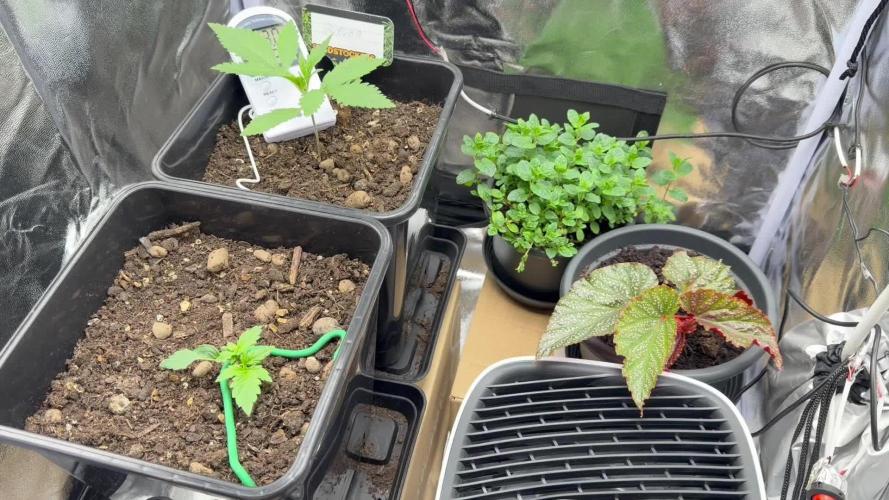
Strains: Guava Auto & Triton Biscotto Lime Auto
Planted: August 25, 2026
Grow space: 60 × 60 × 160 cm tent
Medium: Regular pre-fertilized soil
Pot size: 5.7 L
This week, the plants finally started to speed up exactly as I hoped. The difference compared with the first week is very noticeable now, and growth seems to be getting faster day by day.
Overall, I am much more relaxed about the slow start. Both plants are clearly developing, even though they are doing it in very different ways.
🍑 Guava Auto
Guava looks quite good at first glance and is definitely the more normal-looking plant of the two.
My only concern is the stem. I think I may have had the circulation fan running too strongly for a while, and it seems like the plant reacted to the constant movement. The stem looks like it may have been under a little too much mechanical stress.
I have already reduced the airflow, so from now on I just want a gentle movement around the plant rather than having it constantly pushed around.
Other than that, Guava looks healthy and continues to grow steadily.
🥦 Triton Biscotto Lime Auto
Biscotto is still the strange one.
Its growth pattern looks very unusual because it seems to be splitting into two main stems almost from the beginning. Instead of developing as one obvious central stem, the structure already looks like it wants to grow into two separate arms.
I am very curious to see how this develops.
In a way, this could actually make future LST easier because I may not need to top the plant at all. If both sides continue growing evenly, I could potentially work with two naturally formed main arms and let each of them develop their own branches.
For now, though, I am not assuming anything. The plant has looked unusual since germination, and I still have the feeling that the root system may not be developing perfectly. I will simply keep watching how it responds over the next week.
☀️ ENVIRONMENT
The biggest improvement this week is that the environment finally feels much more stable.
Temperature and humidity are now in a range I am happy with, which makes the whole setup feel much more predictable than during the first week.
The light is currently running on a 24-hour schedule.
Watering is roughly once every two days at the moment. I am not using huge amounts of water — just enough to make sure the root zone receives moisture without completely soaking the entire pot unnecessarily.
🍃 Current Thoughts:
So far, I am happy with the progress.
Guava is developing fairly normally, while Biscotto is turning into a bit of an experiment because of its unusual two-stem structure. It may become a problem, or it may turn into something interesting and useful for training later.
For now, I am trying not to interfere too much and simply let both plants establish themselves.
Growth is finally accelerating, the environment is much more stable, and the grow is starting to become a lot more interesting.
Fingers crossed for Week 3!🍀

Likes
11
Share


@PinkFloydLover
Follow
Flushing the bigger girl since day 140. Harvested the smaller girl on day 141, but will show you the results after I harvest the other one. I had a little of it, but I had cut some branches to smoke some weed previously!

Likes
Comments
Share


@cultivateorganic420
Follow
An incredible sweet cheesy smell and taste with amazing depth no mould very strong smoke covered in thc so yummy

Likes
7
Share


@Ieiogrow94
Follow
Eccoci qui...
Ormai manca davvero poco ci siamo quasi.... Ora niente più fertilizzanti solo acqua ed attendiamo la maturazione..
Seguiranno aggiornamenti, grazie a tutti per il supporto🔥🌲❤️

Likes
2
Share


@ao_grows1978
Follow
Week 2 for the solo Afghani went smooth. Looked a little slow to develop her first proper set of leaves, but the root development should help speed up her progression. Still feeding off the slow release 444 and is now regularly drinking about 2oz of water every other day. I also spritz the bottom of the outer cup to keep moisture levels high for stretching roots. She's about 36" from the light. Hoping to get a little stretch to make training easier. Added a couple new pics to get the week caught up. Stay tuned, week 3 starts training.


Processing
Likes
96
Share


@The_Projexx
Follow
Things are going well , almost done 2 weeks of flowering already tops are forming up nicely very excited to see what the future hold in store for me with these 2 lovely ladies I might start training them soon depending on growth so stay tuned for that !
Thanks for coming by and reading !
-Happy Growing!

Likes
12
Share

@GoodTimesOrganics
Follow
Hi liebe Community and Welcome Back! 🌿💚
Willkommen zur sechsten vergangenen Blütewoche!
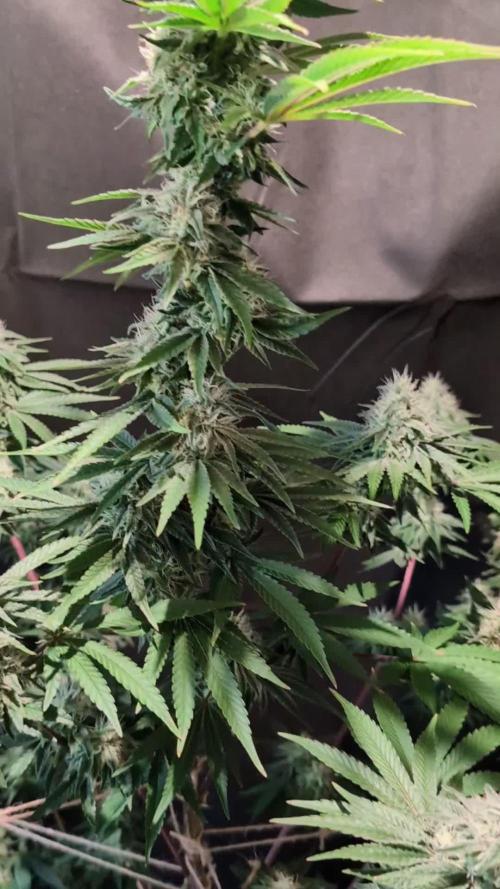
Hier im Bio Tabs NL Grow, erreichen wir aktuell eine höhe von 140cm. Und eine richtig krasse Breite von 70cm.
Insgesamt zeigt sich hier in diesem Grow eine stärkere Blütenausbildung, als bei der anderen Pflanze.
Auf jeden Fall zeigen sich Phenotypische unterschiede in der Gesamtstruktur.
Die Pflanze hat ihren Stretch beendet und konzentriert sich nun völlig auf die Blütenausbildung.
Beide Pflanzen sind jetzt tatsächlich gleich hoch.
Das Aroma hat bei dieser Pflanze einen stärkeren süsslichen Zitrustouch mit nun ausreifend fruchtigen Noten.
Die Umgebungsgegebenheiten sind aktuell gut:
—————
🌞 Temp: 26
🌚 Temp: 18°C bis 19°C
💨 RH: 56%
VPD: 1,10kPa
💡ppfd: 830 mpm
—————
Viele Grüße 👋
Processing
Likes
1
Share


@Teddy01500
Follow
Bonjour à tous, ces derniers jours ce sont bien passé pour mes petit bébés elles grandissent doucement mais sûrement.C’est la première fois que je travail avec cette gamme de produits (je vous est mis des photos des produits 😉) pour l’instant j’en suis satisfait après, il faut voir le résultat final ce qui est moins facile 😂. Mes petit bébés commence leurs 5ème semaine (je me suis trompé d’une semaine 😕 désolé 😉) trop pressé!!! 😂 de mettre de nouvelles photos 😜. Je vous dis à là semaine prochaine vivement 😉 bonne journée à tous. Je vous remercie 😉.


Likes
77
Share


@SooSan
Follow
Dans l'ordre:
1) Afghan Peach x Blue Monkey
2) Gelato Cake
3) Fast Critical Poison
4) Tropical Fuel
5) Hindu Kush
6) (Blueberry x Black Domina) X (Kosher Kush x Mk-Ultra)
7) Blueberry
8) Herz OG
9) (Blueberry x Black Domina) X (Kosher Kush x Mk-Ultra)


Likes
6
Share


@Skinnytalls420
Follow
Day 39-02/09/22 back on track here we go started to give bloom and top max aswell this week!! The one that topped itself is looking good!! One of them does look abit stressed but still to early to tell really!!!
Likes
23
Share


@DE_BW
Follow
The plant showed clear signs of maturity, with slowed growth and stabilized bud structure.
A strong, complex aroma developed, combining sweet and slightly sour notes that filled the space.
No further swelling was expected, as the plant fully shifted into its final ripening phase.
Likes
142
Share


@MadeInGermany
Follow
Hi everyone :-)
This week a lot of nice things happened in the flower tent :-)
Everyone looks super nice, and is growing stronger and more beautiful week by week 😍👌.
The blue cheese smells like a dream ;-) As usual from this variety 👍.
The kosher tangie is also very, very tasty 👏🏻.
Both got Pk 13/14 this week for the last time :-)
Everyone else is developing very well 👍, That will be the last diary with several strains together :-)
In future everyone will come individually 👌.
I wish you a lot of fun with the videos, have a nice weekend, stay healthy 🙏🏻 and let it grow 😎👌


Likes
9
Share


@Staffedition
Follow
Привет друзья.
Наше знакомства продолжается с новым сортом автоцветущих растений от Smail_Seeds сорт ORIGINAL AUTO CHEMZKITTLEZ F1 reg.
Сегодня растению 73 дня.
Растение очень хорошо развилось, ни каких сбоев в генетике не наблюдалось за весь цикл.
Шишки наливаются очень хорошо😀
Так же стрессую, что бы получить пыльцу.
Скоро будут феминизированные растения.
Сорт выводим сами.
Смотри мой профиль, у нас всегда есть что то интересное.
Не забудь поставить лайк❤️, если понравилась как прошла неделя
И читайте наш TELEGRAM: https://t.me/smail_seeds
#Smail_Seeds 😀
Likes
45
Share


@Ultraviolet
Follow
The cannabis strain Grape Guava can be a purple strain, depending on its specific phenotype and genetic makeup. While not all phenotypes of Grape Guava are purple, some variations, such as the Zatix Grape Guava, are noted for their striking purple appearance due to the genetic expression of anthocyanin pigments.
https://www.youtube.com/watch?v=cKdVmdoKJ5k
In a garden of green, Grape Guava gleams,
With its fruity aroma, enchanting dreams.
Clusters of grapes, guava's sweetness ignite,
A strain so divine, in purple and white.
Euphoria whispers, a lush fruity haze,
Grape Guava's embrace, a tranquil daze.
Off and away.@1400ppm. The increased CO2 allows plants to thrive at higher temperatures, which in turn necessitates higher humidity to maintain the ideal VPD for healthy growth and transpiration. 80F -5F = 75F LST with 70% RH = 0.72 kPa. Higher temperatures and humidity promote rapid growth, nutrient uptake, and photosynthesis while maintaining a lower stress level. Temperature influences the rate of enzymatic reactions involved in aerobic respiration. Enzymes, such as those involved in glycolysis, the Krebs cycle, and the electron transport chain, work most efficiently at an optimal temperature range. In low temperatures, enzymatic activity will slow down, thus reducing the rate of aerobic respiration. In high temperatures, enzymes can become denatured, thus impairing their function and stopping the process of aerobic respiration. Glucose is the primary fuel for aerobic respiration. The rate of aerobic respiration increases with the availability of glucose, as it is the starting point for glycolysis. If glucose levels are low, cells may rely on alternative energy sources such as fatty acids or amino acids , but these processes may yield less ATP or be less efficient. To determine this effect, carbon dioxide volume was measured (as carbon dioxide is an output of aerobic respiration)
18/6 with the 6 being IR. The near infrared (IR-a) borders around 700nm up to 1400nm @ photon par flux density of 1.8 instead of darkness, keeping temps overnight a neat 77F-80F.
Think of my tent as a lung. What goes in must come out. When the rate of air going out exceeds the amount of air coming in, it creates a negative pressure. Tent concaves (bends in). If set up correctly, your RH will begin to drop slowly to the desired level you set, and the extraction turns off when it reaches 50% RH. The plant, as it performs cellular respiration, will always be releasing more water into the air, so the RH% of the tent overnight will always increase, so long as oxidative phosphorylation is occurring. As soon as the RH% creeps back up to 55%, the extraction turns back on, over and over. This creates a strong pressure differential which will work wonders on your grow. Replicating high and low-pressure fronts in nature. Critical for oxygen diffusion at the critical time of peak cellular respiratory function..
Moisture will not transfer from a saturated atmosphere to another if that air is already at or above its saturation point, meaning the air can't hold any more water vapor. Once I understood that water is produced as a by product during cellular respiration, specifically at the very end of the electron transport chain (ETC) where electrons are finally transferred to molecular oxygen, the higher the RH of the air, the more resistance there is for more moisture to be added to that environment, and effects the ease with which it does so. But none of that water comes from the pot; it's pulled from the air. If you run high daytime RH, your medium/pot is 100% reliant on transpirational root pull to move water. ZERO evaporation happens across the atmosphere if the tent air has high RH%, the medium cannot release its water through evaporation. Once a canopy develops, light no longer slowly wicks and evaporates from the topsoil. The Soil-Plant-Atmosphere Continuum (SPAC) describes the continuous pathway and process of water movement, driven by a gradient in water potential, from the soil, through the plant's roots, stem, and leaves, and finally evaporating into the atmosphere through transpiration. There is evaporation, there is transpiration, and then there is evapotranspiration; Evapotranspiration (ET) is the combined total of two processes: evaporation (water lost directly from soil and surface water into the atmosphere) and transpiration (water released from plants to the atmosphere through their leaves). Evapotranspiration represents the total amount of water that moves from the medium into the air. There is no such thing as a medium with too much water, only a medium that retains too much for too long.
The water must always flow efficiently from one atmosphere(Medium) to another(Air) in a timely manner. Moisture is a critical factor for bacterial growth and decay. Dictating how long it's allowed to sit in any one location for any given period is a key preferred control. To ensure a net reduction in a bacterial population, the rate of removal (ET) must exceed the rate of bacterial growth (decay rate), which is often modeled as a growth rate for the specific bacterium under the given conditions. By optimizing daytime VPD, we also optimize conditions for bacterial growth to explode exponentially above 77°F.. If water is allowed to sit in a medium without an escape within a timeframe, nothing good will happen. IF High RH is maintained overnight as well as during the day, placing 100% of water movement at the behest of daytime transpiration, roots can only pull where they can reach, and if soil is compressed above a certain point, moisture will become trapped in a medium with no way of moving day or night. This will begin the countdown for decay to take hold. When water stagnates in a medium, it loses oxygen, creating anaerobic conditions that foster the growth of harmful microorganisms like bacteria and fungi, which can produce toxins and disease vectors.
Thigmomorphogenesis, the process by which plants respond to mechanical stimuli like touch by altering their growth and development, results in significant morphological changes to improve survival against mechanical perturbations. This complex response involves sensing touch and initiating physiological and genetic responses, leading to changes in form and structure over days or weeks. The process is triggered by physical forces such as wind, rain, or touch. Plants adapt to these stimuli by changing their shape and structure, which may include slower growth, thickened stems, or altered leaf development. Plants possess sophisticated mechanisms to detect even subtle mechanical stimuli and initiate responses. A variety of molecules, including calcium ions, jasmonates, ethylene, and nitric oxide, are involved in signaling these mechanical inputs. Touch can induce the expression of genes that encode proteins for calcium sensing, cell wall modification, and defense mechanisms. A plant exposed to constant wind may become shorter and sturdier. A plant that is touched frequently might grow more slowly to conserve energy and develop thicker cell walls. These changes increase a plant's resilience and ability to survive in harsh environments.
Let's get Thiggy with it.