


Likes
Comments
Share


@eurorack
Follow
A good week's growth, they are drinking more and I've started to feed, and I think they enjoyed the nutes as they clearly stretched over this last 24 hours.

Likes
24
Share


@CanarianGrow92
Follow
I just removed the lower leafs, im not sure if i screwed it or not as maybe this causes some stress, but we will see, i think soon she will start to flower, at least i think so 🤔
Also provided some grow food this week and continued the LST, the stem is getting fatter which is obviously good 👍😊

Processing
Likes
12
Share


@2Stones1Bird
Follow
Checkout my Instagram @smallbudz to see the Small budget grow setup for indoor use, low watt, low heat, low noise, step by step.
17/02/2020 - Fed her 1.5l of 6.4PH water with 0,2ml of each: Cal Mag (Atami), Grow, Bloom and Max, and 0,5ml of each: Heaven, Alga-mic and Vera, noticed some run off, I use about 1/4 of the nutrient dosage on the chart, to achieve about 100/150PPM (500 scale).
She's starting to smell like smelly feet.
22/02/2020 - Last feed, gave her 1.5l of 6.5PH water with 0,2ml of each: Cal Mag (Atami), Grow, Bloom and Max, and 0,5ml of each: Heaven, Alga-mic and Vera, noticed some run off, I use about 1/4 of the nutrient dosage on the chart, to achieve about 100/150PPM (500 scale).

Likes
2
Share


@Gromie
Follow
FLUSH WEEK! Since it's coco coir, I made sure the water was pH to 5.87-5.96 & continued watering every other day.
Likes
2
Share


@Ultraviolet_
Follow
Wakíŋyaŋ, I am who I am, the salt of the earth.
Thunderbird is an allegory; his conflicts with other forces in nature are then an attempt to allegorize relationships observed in the natural order, such as the changing of the weather. He is essentially an attempt to represent the patterns of activity of a powerful, mysterious force in a way that can be understood simply and easily – sort of the way in which a weather map functions today.
Moving from18x60x60 = 64,800 seconds in 18 hours.
64800x860(ppfd) = 55,728,000 umol per daylight.
Into Flower
12x60x60 = 43,200 seconds in 12 hours.
43200x1145(ppfd) = 49,464,000 umol per daylight.
It's asking a lot of Rubisco regeneration to maintain 50 DLI in the 12 instead of 18. Raised the ambient CO2 to 1200 to 1500 ppm to achieve efficient gas exchange.
Not particularly recommended, but adding sugar to an indoor growing medium is a highly effective way to stimulate microbial activity, which rapidly breaks down the sugars and releases CO2 through cellular respiration. You can safely capture this CO2 to fertilize indoor crops and boost photosynthesis. While this process works, the setup requires precise understanding and management to avoid common indoor growing hazards.
The plant Carbon to Nitrogen C:N ratio defines the balance between structural carbon (sugars/cellulose) and nitrogen (proteins/enzymes). It acts as a master regulator of plant health, growth, and metabolism.
Rubisco (Ribulose-1,5-bisphosphate carboxylase/oxygenase) is the engine of photosynthesis responsible for fixing atmospheric CO2 into sugars. It is intimately tied to the C:N ratio for three primary reasons. It is the Plant’s Biggest Nitrogen Sink, Drives the Carbon Side, and it is the Nitrogen Control Knob. Understanding this relationship allows you to predict how plants respond to environmental stress or fertilizer.
Rubisco acts as the primary storage sink for leaf nitrogen, accounting for up to 30% to 50% of a C3 plant's soluble protein. Deep Green Leaves signal a rich abundance of both chlorophyll and Rubisco proteins. The plant possesses the heavy enzymatic machinery required to handle 1145 PPFD. Pale or yellowing leaves indicate a nitrogen deficiency. The plant is actively breaking down its own Rubisco to salvage nitrogen for newer growth, drastically reducing its light-tolerance threshold. Subtle difference, but understanding is important in order to be able to judge when to dial light intensity up and light intensity down, when to push, and when to back off. An extra dose of magnesium is vital if a plant is going to push through the growing pains of high-intensity lighting.
Foliar application of magnesium is an excellent and rapid way to assist with Rubisco regeneration within a plant, so long as it is applied correctly.
Spray strictly in the early morning or late evening, mixing your magnesium with a little fulvic acid or chelator, but only when she gets a little limey on top.
This, for me, is the experience of growing, akin to "riding the surf" maintaining efficient Rubisco regeneration through visual identification of the shade of green. Surf a razor-thin wave when balancing light intensity, nutrient availability, and transpiration to maximize Rubisco enzyme efficiency. Keeping the Calvin cycle fully charged without tipping into nutrient toxicity, light stress, or the dreaded chlorosis requires paying close attention to the visual cues the plant provides. By monitoring these subtle shifts in color, turgor pressure, and leaf posture, you adjust your environmental controls and surf that exact razor-thin wave.
Nute recycling acts as the vital execution mechanism for autophagy, which defines senescence. Natural senescence is a genetically programmed developmental stage aimed at nutrient recycling, whereas triggered autophagy is a rapid survival response activated by environmental stress. While both processes utilize the vacuole to break down cellular material, their triggers, selectivity, and overall goals are entirely different. Cannabis plant senescence is not separate from nutrient recycling protocols; rather, nutrient recycling is the primary physiological purpose of senescence, and autophagy serves as the core switch mechanism executing both processes.
Takes about 24 to 48 hours to notice visible changes once the signals have initiated the autophagic response. Not too late at all. A little bit of fade from senescence 2 weeks from harvest is normal and genetically expected. Send the C:N 32:1 signal 1 week from harvest for the best effect in your organic grow.
Understanding what makes leaves fade is not always senescence, but also strongly linked to Rubisco regeneration. That's a whole other subject. Vital to understand the differences if you want a correct diagnosis and to transition from hobby grower to master stoner, differentiating between a true genetic fade and a decline in photosynthetic proteins.
Nitrate is nitrate, whether it oxidizes or not is not up for debate. If it's not sunk by the plant you are smoking some if not all of, it's regardless of what your feelings are on the matter. Senescence is highly critical. It is the natural end-of-life stage where the plant redirects energy to ripen flowers. Properly managed, it breaks down harsh chlorophyll, allowing the terpenes (which provide taste and aroma) to peak. Harvesting outside this window leads to an "unripe" or degraded flavor comparable to going without.
To initiate the response you seek, you can trigger it multiple ways, when growing synthetically its triggered by nutrient starvation, generally when the entire medium is flushed. This is more to do with N starvation than being entirely empty. Nonetheless. PK boosters are N starvation through maximizing P and K. (Generally only works for synthetic grows)
Normally, a medium only holds 10-30% of its nitrogen as ammoniacal ta part boosts this to 50% as it triggers the "ripen" signal, but you don't want to keep ammoniacal above 30% for more than 7-10 days if you can help it. Its a trigger mechanism no more.
PK BOOST with 50% ammoniacal N signals floral maturation.
PK BOOST with N starvation signals nutrient recycling/sinking.
Because you are using organic nutes and you want to maintain the rhizosphere, what you want to do is add carbon in the form of sugars (powdered molasses). It's almost impossible to empty a medium enough when microorganisms are constantly releasing nutrients into the direct EC. Very difficult to initiate starvation responses with ammoniacal nitrogen. Manipulating the C:N ratio is the key to triggering an autophagic response and resulting nutrient recycling in the last days using organic nutes and without having to flush.
Generally not recommended for new growers. So do what you want. But if you don't trigger the plant to dump its nitrates into root zones, you will smoke nitrates as NO3- does not oxidize during the dry and cure no matter what you do or how long you dry or cure. Doesn't matter what anyone "feels" about it, how many grows they had with no fade.
"Clover steals valuable nutrients."
Crop and drop the clover come flipping to flower, its benefit comes from creating an airy and porous rootzone. I don't need to crop and drop once the plant fills the canopy, she blotches out the light, and the clovers die. This is the nitrogen the microorganisms use to convert carbon for respiration throughout the flowering stage.
Likes
7
Share


@Giovi
Follow
Hi guys! How are you? I had to disconnect for a while but now we are! I am in the fourth week with and my cuttings, I have repot in the final jar of 22 liters. It was a bit difficult and stressful for the plants. I had to put the main stem further down to allow it to root and I used tppping. The plants took a little longer to react but now it's better! Thanks a lot to everyone I will keep you updated!

Likes
8
Share


@pHilosophy420
Follow
She is almost there as most trichomes are cloudy. One more week on nuts then one week flush and harvest time.
Should be enjoyable harvest as the plant is quite small but pack so I will trim it on the plant 😁

Likes
8
Share

@McBubatz
Follow
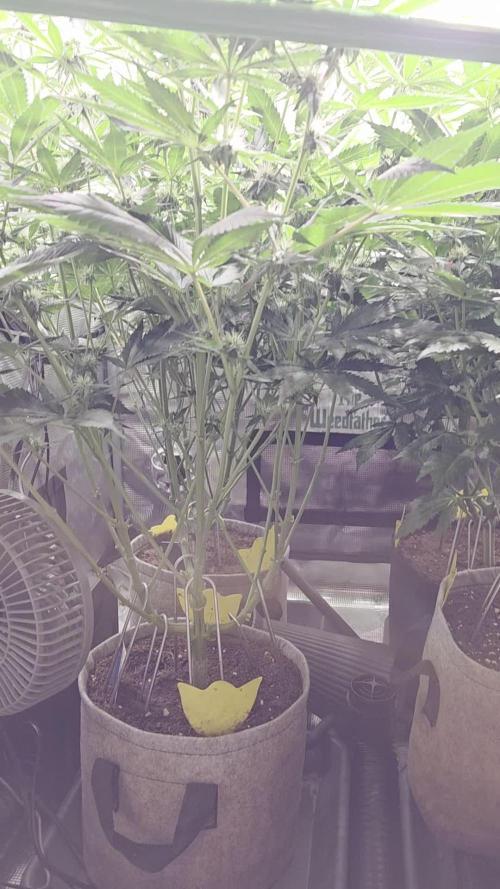
10 Woche, BW 4. Die White Truffle is ordentlich gewachsen, produziert schon eineges an Pistillen und Trichome. Ist die höchste und breiteste von allen, glaube 2x toppen wäre hier ne gute Lösung gewesen um sie besser auf gleicher höhe zu halten, is aber nur 1 Trieb der hier etwas über"trieben" hat🤣. Ansonsten gehts ihr gut, oben die paar Blätter hab ich leider etwas beschädigt beim rein und raus is die an ner Gelbtafel hängengeblieben, aber die steck es easy weg.
BW4 Tag 5, Foto 5 und Video, White Truffle vorne links.
Wünsche euch allen eine schöne Woche und bleibt gesund 🙏, bis nächste Woche dann.

Likes
3
Share


@BudsBanditUK
Follow
Well she looks ok but still no smell. Always looking hungry but still healthy. This will be my second tastbudz strain. The last one was peanut butter cookies. Lets just see what happens.

Likes
Comments
Share


@Forgotten_souls
Follow
Start these by mistake, wasn't quite prepared or set up correctly, these are being grown in a two by four budget


Likes
68
Share


@Roberts
Follow
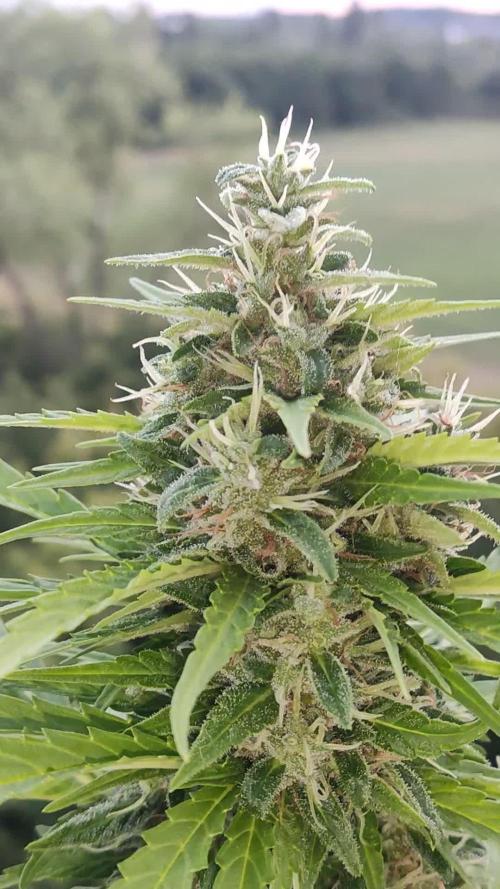
Auto Northern Dragon Fuel is doing well. She just got her first feeding today. Coco ph is a little high, but still in range. I am gonna work on dropping it over the week. Everything is looking good so far. Thank you Medic Grow, and Super Sativa Seed Club. 🤜🏻🤛🏻🌱🌱🌱
Thank you grow diaries community for the 👇likes👇, follows, comments, and subscriptions on my YouTube channel👇. ❄️🌱🍻
Happy Growing 🌱🌱🌱
https://youtube.com/channel/UCAhN7yRzWLpcaRHhMIQ7X4g





Likes
73
Share


@HirdoWeirdo
Follow
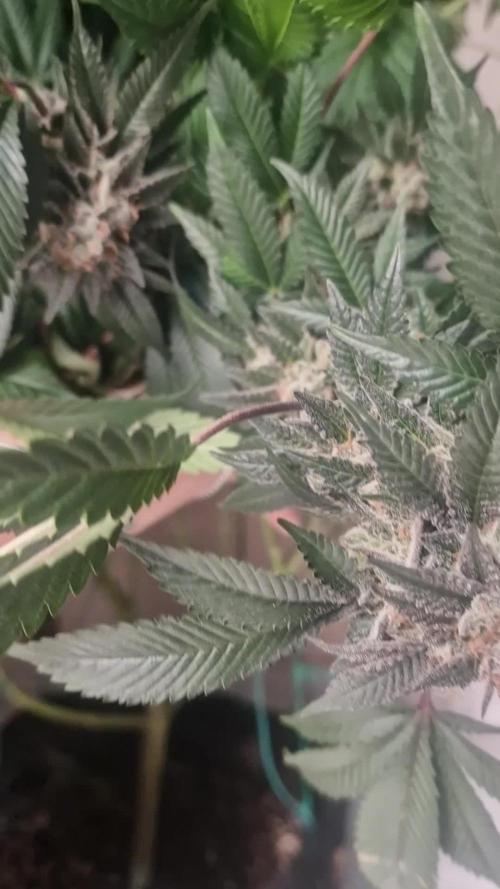
Welcome to the first week of my Anesia Seeds Bola Mintz!!💪
A new adventure begins and in the new cycle I have decided to put this powerful and fruity wonder 🍓
The seed germinated in just over a day and four days after sowing the cotyledons opened, revealing the first leaflets. Good job!
News are not over, I have recently received a new line of fertilizers from @greenbuzzliquids which I sincerely thank for the vastness of products sent to me. I started using More Roots to stimulate the roots, Growzyme to help the seedling and Humic Acid Plus to enrich the soil. We will see how it goes on! 😎
I deeply thank the Anesia Seeds team for sponsoring this new grow and @greenbuzzliquids of which I can't wait to use every single product!🙏🙏❤️


Likes
3
Share

@FeebleSnane
Follow
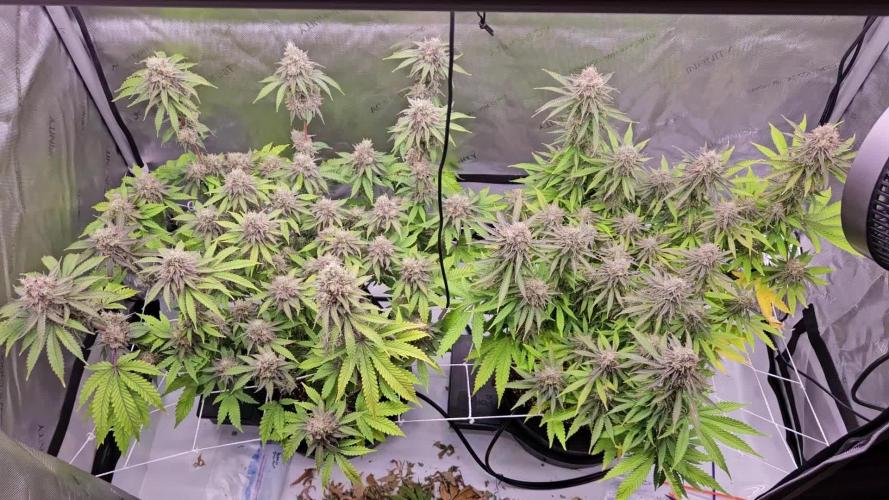
Today is day 105 since the plants sprouted, and day 49 of flower (week 7).
The plants look like they'll be finishing up nicely. I haven't seen any more pollen sacks or nanners forming on the Papaya Sherbert, and the buds on that plant don't look like they've been affected by pollen.
The buds on both plants are hard as rocks, and still getting a little bulkier. The buds on the Papaya Sherbert (left plant in the tent) are getting pretty big, and I really look forward to seeing them after getting trimmed. The buds on the Orange Sherbert have definitely been smaller than the buds on the Papaya, but the buds still look nice. I think the Orange Sherbert naturally has more buds sites, however.
Trichomes are developing nicely. The flower time on Orange Sherbert is 7 weeks, and I think it still needs closer to 2 weeks to form more amber trichomes, but the milky trichomes are looking great. The Papaya Sherbert has a 9-10 week flower time, so hopefully it lines up with the Orange Sherbet. The trichomes on Papaya Sherbert are noticeably behind, but not too far.
Likes
9
Share


@TeamQuality420
Follow
Well the flower week is finally upon us they are getting a huge block opening up the canopy exposing Bud sites letting the wind blow through those beautiful structures. I will have more updates as the week goes on stay tuned.
I took ALOT off , I know , I know , lots of people will say , what the heck is this grower doing ?!? Well all I can say is
..........
WAIT .
This ain't my first rodeo.
Pictures will follow ,
Why did I get rid of all the leaves ?
1) increase airflow
2) increase light to bud sites
3) to prevent mold .
So many times I have done this and everytime, I ask myself , was it too much ???
A week later the plant will have pretty much , somehow, grown all the leaves back !!! You will have to wait and see just like me !!!
