


Likes
Comments
Share


@eurorack
Follow
A good week's growth, they are drinking more and I've started to feed, and I think they enjoyed the nutes as they clearly stretched over this last 24 hours.

Likes
19
Share


@GoldenWeedGrower
Follow
21/05
Last day of this res
EC: 1,2
PH: 6,1
22/05
CHANGED RES
Made Defolation
EC: 1,6
PH: 6,04
23/05
EC: 1,58
PH: 6,3
24/05
something wrong in the leafs. it looks like light burn: so I've choose to keep on only red light (bloom) and lowered the lighting time to 18-6
EC: 1,48
PH: 5,5
👍👍👍👍👍👍👍👍👍👍👍👍👍👍👍👍👍👍
Lesson Learned:
IN THIS PHASE IT'S POSSIBLE TO USE ONLY BLOM LIGHT (RED)
👍👍👍👍👍👍👍👍👍👍👍👍👍👍👍👍👍👍
25/05
EC: 1,47
PH: 5,9
26/05
EC: 1,38
PH: 5,51
27/05
EC: 1,47
PH: 6,1

Likes
11
Share


@adam_pawloski87
Follow
What another great week it’s been!! The babies are looking super healthy! We will be letting them veg out hardcore through this next week or 2 an will give them that flip into flower , but let’s take one week at a time y’all! Keep them eyes peeled for next weeks update ! I hope you all enjoy and have an amazing productive day as well as a great safe weekend! Peace love an positive vibes to y’all Cheers 😶🌫️💨💨💨💨💨🤙🏻

Likes
56
Share


@Island
Follow
Week 8 -
Dead line is coming, starting week 8 of flowering.
The routine is maintained, feeding only with water.
The pistils take on an orange color.
I think Gorilla Girl will pass 10 weeks of flowering.

Likes
21
Share


@Trickybis82
Follow
Things going well so far (fingers crossed) I did have a slight problem with a tray and it's pump. Hence why 2 plants smaller then the other 2. However have fixed that (put a new pump in) will keep an eye on them over next couple days..


Likes
28
Share


@GreenHouseLab
Follow
Shes a cute one, great structure on this one for sure. Can’t wait to see what she’ll put out from 1 Gal.

Likes
36
Share


@GYOweed
Follow
Cytokinins stopped stretch so ima keep lights at current height given havent seen burn or bleaching.
One pheno sharp candy getting sweeter n milder, 2nd pheno is similar to my bubba diagonal i grew here.
I guess not bad for week 4 in 3 gallon bags but i hope they start filling in?
Likes
77
Share


@Puffdamagikchillum
Follow
Day 91) 12/24 Merry Christmas 🎄 Eve growers. Another week gone by and I made satisfactory changes to nutrients this past week. I am just a tad bit worried 😬 about nute lockout cause it seems like slow bud growth is my only issue. Buds are getting fat but I don't like seeing the empty spots on the stalk. Could be environmental issues as well, temps been weird here at home. Other than that trichomes are shiny but I don't see any cloudy ones yet and pistils are still mostly white so come along on another week and see if she comes ready for starting the flush.
Happy Growing and
Happy Harvesting
Likes
2
Share


@TheBudWhisperer
Follow
2nd week of transition in the books and development has been advanced and remains very vigorous.
Had to pull out one more plant that was showing balls and we’re now down to a total of 6 plants of the original 10. Regardless the scrog net has filled in substantially while the canopy remains airy and light in terms of overall foliage space. The mains have been tied to the net over 2 or 3 rounds of bending and training to allow the lower side branches opportunity to catch up to the same rough height.
No deficiencies and we’ve now apparently found the sweet spot for nutrient ratios. Everything remains on point and we’re mostly on auto pilot to the finish now. Alls good!
Likes
74
Share


@Mr_Maes
Follow
I will be starting the flush a week earlier then I expected these girls are clouding up super fast. The Jack Herer will need another 2 week at the least. But the Tangie and Durban Poison will for sure be done sooner.


Likes
45
Share


@Natrona
Follow
Sour Jealousy Auto FastBuds 2025 Outside Grow
Week 4 April 27-May 3 Veg
Not much to say. Our weather is roller coaster. One day high of only 72 and low of 44 while most of the others in the mid-80s and low in the 50s. Most of the days were sunny and there was one day of thunderstorms. I can see with the erratic conditions; she has not grown as full and leafy as she should have by now. She only grew about an inch and now 6" tall. I fed kelp and TPS1 once this week.
The last pic is a heron i saw in our ditch.
Your likes and comments are appreciated. Thanks for stopping by.
Growers love 💚🌿
💫Natrona💫
Likes
Comments
Share

@Benjamin81
Follow
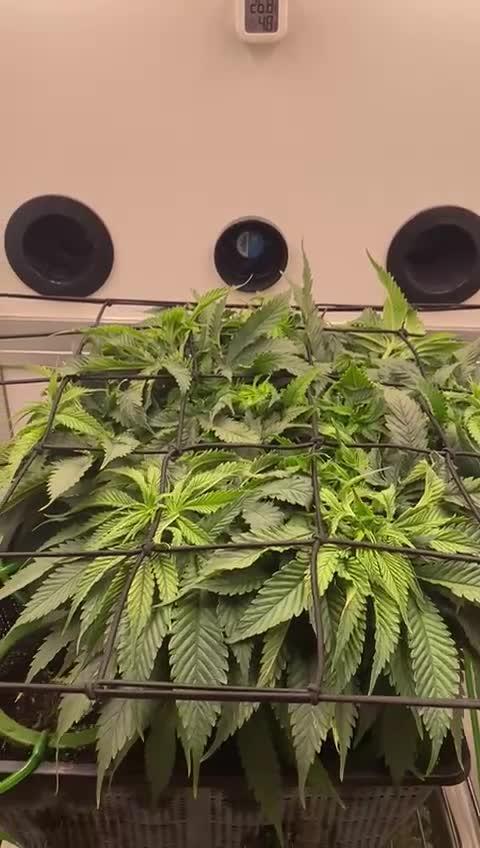
Wat kleine aanpassingen, mocht je geïnteresseerd zijn vragen mag altijd 😉

Likes
15
Share


@Meisterwulle
Follow
Hi zusammen,
das Wetter spielte die letzten Wochen leider nicht so mit und das betrifft auch den Wachstum von #2. Sie hinkt sehr hinterher und bildet nur Mini Buds. Es fehlt einfach an Licht und auch die hohe Luftfeuchtigkeit macht ihr zu schaffen. Im Zelt sieht das ganz anders aus: Zwar ist auch hier die Luftfeuchtigkeit relativ hoch mit im Schnitt 65% diese Woche, aber die Entwicklung zu letzter Woche ist erstaunlich. Hoffe, dass ich in späteren Wochen kein Problem mit Schimmel bekomme.
Ansonsten sehr schöne Blütenbildung und Wachstum, die Trichome erkennt man mit bloßem Auge sehr gut. Den Dünger hab ich gut angepasst und noch mal ordentlich was draufgepackt. Gießen muss ich so etwa jeden 1 1/2 Tag mit knapp 3 L pro Pflanze, die draußen bekommt etwa 3 L jeden zweiten Tag.
Bin gespannt, ob sich bei #2 noch mal was tut, ansonsten wird’s ne schöne Garten Deko 😅
Wünsche euch ein schönes Wochenende und stay high 🏻🍀
Gruß Wulle
Likes
31
Share


@The_Bearded_Grower
Follow
I'm loving red poison, not only does it look great my god am I high. also on the upside it helped me with my pain enough for me to get more than 3-4 hrs of sleep in 3 months 😭
Processing
Likes
13
Share


@Silverback_Guerilla
Follow
SUNDAY 5/5:
Rearranged the gardens..have 17 plants in the 4 x 5 now...yowsa!
MONDAY:
Plucked some dead leaves and did a trichrome check on the furthest along. She's ready! I'll start flushing her tomorrow or Wednesday.👍
TUESDAY:
I observed some white spots(maybe powdery mildew) on a few leaves here and there throughout the garden, so I sprayed them today with Trifecta Crop Cure, a concoction of a bunch of natural plant oils. I already decreased the humidity in the room to 45% with my new 70L dehumidifier, so I think they'll be fine. I'll spray them again tomorrow and the next day, then I'll have to hope that did the trick, because a couple of these hybrids are already in the harvest window.
WEDNESDAY:
I flushed one of them and watered the rest today and included a bunch of terpinator, bud candy, bembe, and cha ching. It was possibly their last dose of any nutes...but a couple might get one more dose...
THURSDAY:
Took a couple of photos and tried installing my new Solacure FlowerPower UVB light, but it was dead on arrival.😢..back to the 15.0 reptile UVB lights for now I guess...
Likes
19
Share


@Budha420
Follow
Oh boy my first ever harvest is making its way💜💚
Day 61: So these girls have been fattening their budsites and #3 isnt mad about how close the light is😅 these plants have really strong resistance and amazing genetics 🔥
On that note highly recommend Fastbuds seeds. First ever grow and these seed did not let me down. Amazing frost, incredible resistance againts overfeed and high temp (also low).
Plant #1 and #2 are further into flower than #3. 3 has still almost 90% white hairs and definitely non tris that are cloudy. 1 and 2 however have almost all hairs turned to beatiful dark orange🧡 They still have ways to go before harvest. Might start flushing soon.
Day 63: Morning fellow growers 🌅 💜
Checked trichomes this morning with my quite annoying small ass 30x lens. Almost impossible to see them but by the looks of it, atleast on lower buds almost all of em al clear. So imo they have still time to get fat 😎 i think ill start flushing when i see cloudy tris on top buds atleast 90% and chop down when 75/25 cloud/amber.
So far my first grow has gone very well all things considered! What to remeber to do for my cookies and runtz, is that i will keep the cannopy level so i dont have one 120cm plant and two 60cm plants😂 also i have doubts about my offbrand light. Prolly will see 2 harvests trough and see if both times i get skinny nugs i will switch it out😎 stay lifted💚
Day 66: harvest is getting closer but seems like trichomes are mostly glassy still. Been feeding normally but cut the gro out this week. So only calmabg bloom and micra. Ph round 6.1. It seems like buds wont get that much denser or wont do much anymore. Would love some opinions what to do at this point!
Edit: since growquestions are bugging, decided to harvest 1 top from 2 plants. Just to see hows the high and some closer looks. Seems like i might be a day or two early for my liking but opinions and comments are appreciated 💚


Likes
27
Share


@Mookzer
Follow
Elle fleurissent bien malgré un manque de chaleur et et lumière elle tienne bon au grand froid :)
Likes
14
Share

@420DeepGrow
Follow
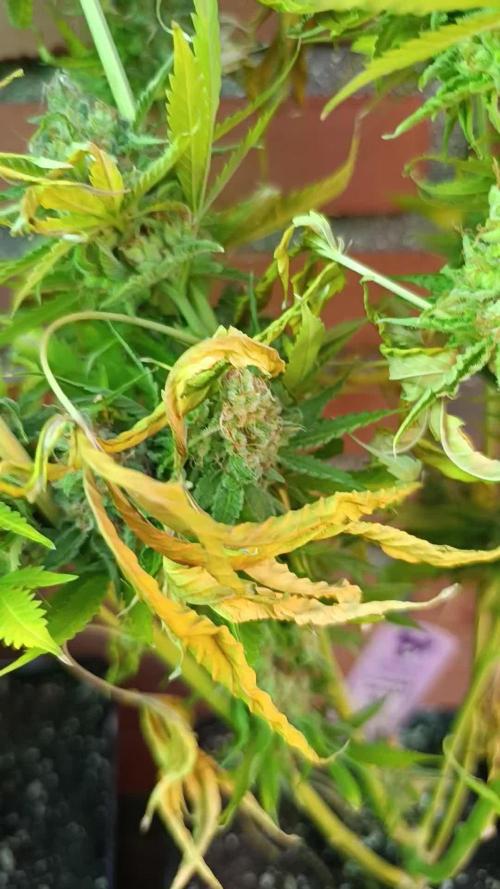
📆 Semana 9
Los cogollos llegan al final del ciclo completamente desarrollados, con una gran densidad, dureza y una producción de resina muy elevada. Los cálices terminan de hincharse y las flores alcanzan su máxima compactación y peso, mientras los pistilos se encuentran mayoritariamente oscuros y retraídos.
Los aromas alcanzan una intensidad máxima y el perfil terpénico se muestra completamente definido, mientras el fade avanza de forma natural y la planta concentra sus últimos recursos en completar la maduración de las flores.
Esta última semana estuvo marcada por la evacuación, dificultando el mantenimiento de la rutina habitual de cultivo. A pesar de ello, la planta consiguió completar el ciclo y llegar a cosecha con un resultado muy satisfactorio.
¡Seguimos creciendo fuerte! 💪
Likes
43
Share


@R_Dank
Follow
It’s not all glam fam, Im being challenged by the heat so I added another fan + adjusted hps light to max! These biches have sprouted like no other I’ve experienced in the past, and the smell is incredible already, strawberry being the most pungent 💯
Jah bless 🙏💨


