


Likes
Comments
Share


@Kokot
Follow
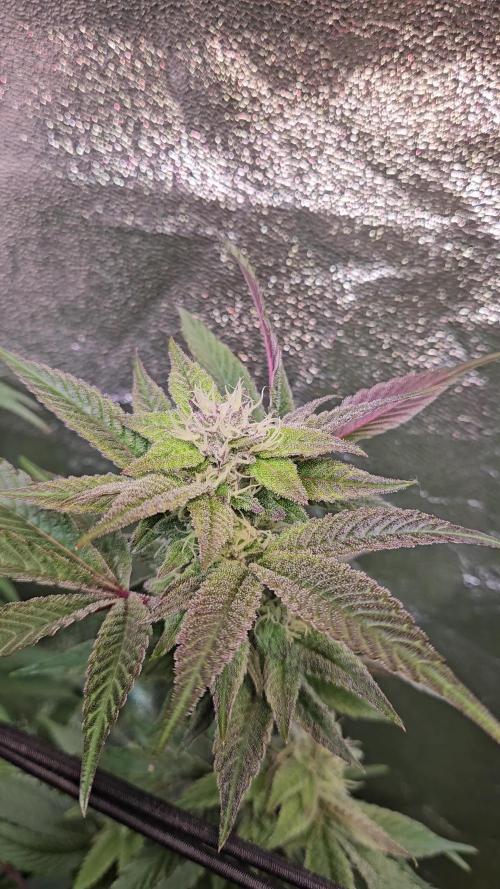
It was cold at night, so every evening i would put them in to the pool cover (there is like 3 degrees more) BTW because of the wind i lost my strain tag papers… So let me know if you know the strains😂



Likes
16
Share


Likes
35
Share


@StonedandSteady
Follow
7th W/Flower: 7th Feed of #HumboldtCountysOwn Packed, Stacked Up and Lights Upgrading under way! Cloned with my Steady's Saliva!!!
7th w/ Flower: Budz getting Outstandingly Huge, Plump, Dense, Juicy and Everything is Supreme, Savory, Stinky, Sweet, Swelling Out, Skunky and Gasy at thier 7th week of Flower!
7th Week of Flower: 7th Flower Feed of #HumboldtCountysOwn and the Ladies Love the Bloom portion of Nutrients! They're Stacking Up Great and Filling Out thier Mighty Branches with Giant Gorgeous Budz! 5 Confirmed Females!!!
It's been a few days since I gave the Ladies thier 7th Feed of #HumboldtCountysOwn Nutrients and they look Fantastically Divine!!! We'll definitely Grow back to everything here soon! 11th w/ Veg and Flowers Update #Pre-Sexed🚺 #SuperCropped #Defoliated #Lollipoped
Good Day and Happy Growing Everyone! These Ladies were Growing into thier 11th Week of Veg and Looking Totally Tight and Phenomenally *Femed* from the Right!
#Pre-Sexed 4/9/21 #Opium/#PabloEscobar *Fems* breed by Team #DivineSeeds #DivineSeedsSquad #DivineSeedsBreedingCompany and #SuperCropping continued! I'm Very Excited and Extremely Gracious!!!
Heck Yeah Growmies and Growmets!!! Check Out these Confirmed Females with thier Wild Pistol Hairs popping and I'm still Training and Widening them Out with #SuperCropping Everything looks Expanded and Growing Great!
After #SuperCropping the plant will Grow Bushier, Produce More Buds, and possibly even Produce More THC! This is how the plant naturally responses to danger and protects itself! Growers take advantage of this technique to get Bigger Yields and More Potent Buds than would be produced otherwise!
Getting Trained out into thier 11th Week of Veg and Looking Mighty Fine!!! Thier getting Humongous and Hearty in thier 10 gallon Grow Bag from Broski #www.as420.ca These Cannabis plants are Camping out in the Closet for a week or so! Lol
This is my 2nd run using the Osree.Light QB1000w and Everything is Mesmerizing!!!
My #Opium and #PabloEscobar *Fems* from #DivineSeeds Regs: SalamiLegF3's×2 and FireAlienRomulan look$ Outstandingly Awesome and Growing Up Phenomenally Fine into thier 11th week of Veg in our 2- 10 gallon The Grow Bags from Broski #www.as420.ca and also 2- 5 gallons as Well! Our others are Super and Breed by #thehumancannabiniod #AlienBloodGenetix #TNBNaturals #Foop
Yo!!! Thanks Again for All the Love and Support my fellow Growmies and Growmets!!! These Magnificent and Magical Ladies were Growing in our 48×24×60 ViparSpectra Official Club 🌿 ®️ Grow Tent and under our #Osree QB1000w and #GrowStarStore Kokokala QB1000w and our Purple Rose Cutting×2, Aloe Vera Cutting, Maters×3, Morel Mushroom, Lavender×3, Sunflowers×5 and The 5 Brand New and Fresh Starts are Wonderful with a Huge Hint of Fantastical Fire is my #SalamiLegF3×2 by Broski #thehumancannabiniod #DankFlowGenetics #EastCoastSeedBank #FireAlienRomulan by Broski #AlienBloodGenetix my #PabloEscobar and #Opium by Team #DivineSeeds #DivineSeedsBreedingCompany We Grow with #Growatt 600w with #FoopOrangicBioSciences and #TNBNaturals The Enhancer Co2 Despersal canister and ph'd them w/ Declorinated watering w/ TNB ph Up and Down! Totally Top Quality Topz all Around! Thanks Again #GallowGlas420 #HarleyGrower #thehumancannabiniod #AlienBloodGenetix #TNBNATURALS #FoopOrangicBioSciences #www.as420.ca #divineseeds #divineseedssquad #divineseedsbreedingcompany #BioFlux Family's and Teams!!! Your Genetics are Merry Magnificent, Mega Marvelous and Mighty Medical! Love um!!! I really Can't stress enough how Thankful and Grateful I am of All of you and what you've Shared with Us! Means the World!!! It's definitely a Pleasure being able to Grow with these Phenomenal Grow Lights! Please Enjoy! BudBrothers4-Life! Cheers Famz!!! Much Props and Much Topz!💯🔥 #Osree #GrowStarStore #Growatt #TNBNaturals #TNBTeam #FoopOrangics #GrowYourOwn #Bliss
HumboldtCounty'sOwn:
Email: info@humboldtbottling.com
Phone: (707) 725-4119
Toll free: (866) 872-9434
Humboldt Bottling
Po Box 429 · Fortuna, CA 95540
HumboldtCounty'sOwn Website Link: https://humboldtcountysown.com/
HumboldtCounty'sOwn Instagram Link: https://instagram.com/humboldtcountysown?igshid=1qj809qkkwych
https://instagram.com/osree.light?igshid=1vrsbdyhzg2h8
https://instagram.com/growstarstore?igshid=2yjn0r00r6ru
https://instagram.com/divine.seeds?igshid=1r90iwe9xiwz8
https://instagram.com/thehumancannabinoid?igshid=17k159pumklkq
https://www.instagram.com/alienblood_genetix_official/
https://instagram.com/as420.ca?igshid=1f116alw054wp
The Grow Bags: https://www.as420

Likes
3
Share

@PhinolaGreen
Follow
Harvest
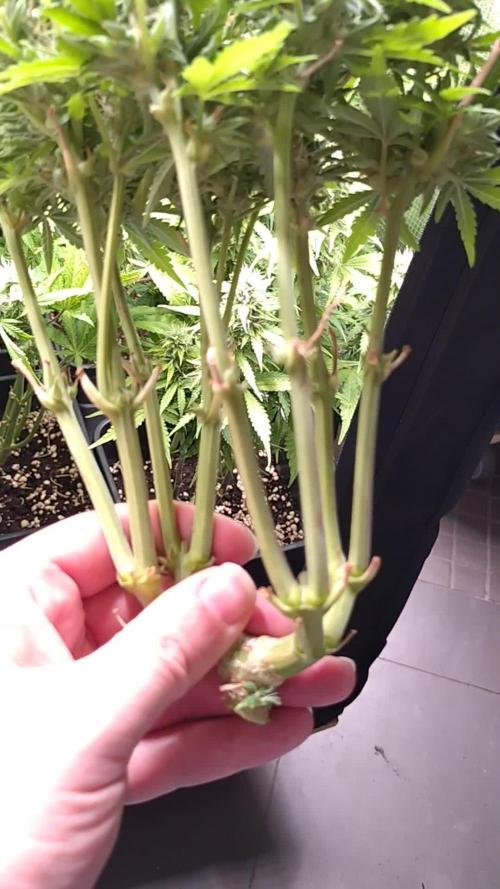
Die erste Hulkberry Auto hängt zum Trocknen 😌 Sie wächst wirklich wunderschön und ich bin gespannt, wie weit sie noch wird.
Der zweite Phänotyp braucht noch etwas Zeit, um fertig zu werden, und dann werde ich ein Update mit dem Erntebericht posten 😀

Likes
24
Share


@Basementganja
Follow
Harvested the Clones!
I'm stoked how #4 grew out, I think she's the winner!
With limited space in my grow, I'm only going to be able to bloom out the rest of the phenos clones to week 3-4.. The show must go on..
It's the price I must pay for using non-ideal cloning methods... Next round of phenohunting will have 100% cloning success, using my new aeroponics cloning machine.

Likes
35
Share


@Rap_a_cap
Follow
This is exactly the 🇲🇦 morroccan 🇲🇦 way of sifting resin from kief. Traditionally, apart the hand rubbing method, dry sifting through a mesh is the most used way to obtain resin, from 🇦🇫 Afghanistan 🇦🇫 or 🇳🇵Nepalese 🇳🇵 Mountains to 🇲🇦 Morocc 🇲🇦 Rif passing through Bekaa valley in 🇱🇧Lebanon 🇱🇧. The average size of meshes used vary from 90 to 180 microns and are mostly made by silk and for this reason uneven.
I think the most productive ways to sift are Dry Ice and rotating pollinator + CO2, I've tried a DIY pollinator built by a friend and it can reach up to 20/25% of resin extracted at 120 microns and 15% at 90 microns. But smell and taste don't reach that traditionally extracted but this is another story.
Morroccan way is good compromise between a stashbox or more evolute methods.
It requires less than 10 dollar of expenses.
You need:
a basin or pot without handles
a heavy-duty plastic bag that contains the basin
a pair of chopsticks
a good 120 microns net
an elastic band
tape
Kif or trim q.s.
Here is the link where I buy my meshes. Very high quality, customable size and material (steel or nylon) and length and very kind vendor on AliExpress
https://a.aliexpress.com/_uwfQzq
Drum for 3 minutes.
.....perhaps you will find that you have an innate talent as a drummer, throw the shit away and put your head right......
Likes
9
Share


@russrahl
Follow
Had a bad week 4 as my PH pen decided to go wonky. Once I got it all straitened out plants took a few days to bounce back and took some lower leaf damage but nothing to bad and it will mostly be trimmed off soon anyway. Still waiting to start LST on 3 of these girls until they get a few days of normalcy after the ph shock. Will probably be end of week five we tie the other 3 down and get the screens in place to prep for Scrog.

Likes
41
Share


@TheBulldozerSicily
Follow
Questa settimana cambierò l'acqua per rinnovare i nutrienti, per il momento tutto procede nel verso giusto, seguiranno aggiornamenti. Happy growing everybody!!


Likes
14
Share


@Biggy2k20
Follow
Great strain and amazing taste. Very relaxed and doesn't get you high. Beware you may still fail a drugs test with this. Would reccomend for topical, smoking or edibles, real game changer.
Likes
20
Share


@Mr_nugs_lover_David
Follow
I had some problems this season with dumping off because of too strong sunlight on the seedlings,that's one of the problems on germinating at the end of may however it's gonna be a beautiful outdoor season anyways

Likes
2
Share


@EtnoGrow
Follow
this is the beginning of the 4th week along with the publication of the end of the 3rd week, this is how the fourth week is received, another intensive pruning that has no choice but to do it due to the size of the indoor, which is working great for us and we believe that I will always work like this, I am happy, here then the pruning of its results a little before and after and how it is receiving this fourth week, with the threads I touch a little bit of hair I hope it does not affect much but all in favor of opening the field to all the branch buds alike.WE CHANGE THE MESH FOR A BETTER ONE AND OF THE IDEAL SIZE AND AGAIN WE USE THREADS THAT HELP US VERY WELL, WONDERFULLY
Likes
40
Share


@Hempface86
Follow
Another week has stared and thease girls are monsters! The Gummiebears is in a 4 gal pot and is 41 inches tall ( 52 from the floor ) and is outgrowing the tent ( who says you shouldn't too autos? Lmao ) and as you can see the other 3 are in 1.5 gallon pots and are monsters as well .. if I don't pull 20-24 ounces this run I will be surprised honestly..
side note.. I cut the 2 lines branches early on from the Cream auto and put them in a vase for 2 weeks and they rooted so I stuck them both in the same little container and they have settled in nicely as I see new growth daily.. it's gonna yeild me an additional half ounce possibly? Idk 🤷♂️ fun experiment tho .. hope everyone is doing well! Happy growing! Likes and comments are appreciated! ✌️


Likes
19
Share


@420DeepGrow
Follow
Gracias al equipo de Royal Queen Seeds, Marshydro, XpertNutrients y Trolmaster, sin ellos esto no seria posible.
💐🍁 Gelato #44:
Los criadores de Tyson 2.0 criaron Gelato 44 a partir de cepas finas. Al cruzar la Sunset Sherbet y la Thin Mint Girl Scout Cookies, crearon un híbrido de dominancia índica que asesta fuertes golpes en el cuerpo y la cabeza.
Su contenido de THC del 22% crea sinergia con terpenos colocantes para ablandar los músculos
Mantenla hidratada y con una dieta constante y pasará por la fase de floración en unas ocho semanas. Las plantas de interior alcanzan una altura máxima de 120 cm y producen 400-450 g/m², mientras que sus homólogas de exterior alcanzan los 180 cm y producen hasta 600 g por planta.
🚀 Consigue aqui tus semillas:
https://www.royalqueenseeds.es/rqs-semillas-cannabis-tyson/664-dynamite-diesel.html
💡TS-3000 + TS-1000: se usaran dos de las lámparas de la serie TS de Marshydro, para cubrir todas las necesidades de las plantas durante el ciclo de cultivo, uso las dos lámparas en floracion para llegar a toda la carpa de 1.50 x 1.50 x 1.80.
https://marshydro.eu/products/mars-hydro-ts-3000-led-grow-light/
🏠 : Marshydro 1.50 x 1.50 x 1.80, carpa 100% estanca con ventanas laterales para llegar a todos los lugares durante el grow
https://marshydro.eu/products/diy-150x150x200cm-grow-tent-kit
🌬️💨 Marshydro 6inch + filtro carbon para evitar olores indeseables.
https://marshydro.eu/products/ifresh-smart-6inch-filter-kits/
💻 Trolmaster Tent-X TCS-1 como controlador de luz, optimiza tu cultivo con la última tecnología del mercado, desde donde puedes controlar todos los parametros.
https://www.trolmaster.com/Products/Details/TCS-1
🍣🍦🌴 Xpert Nutrients es una empresa especializada en la producción y comercialización de fertilizantes líquidos y tierras, que garantizan excelentes cosechas y un crecimiento activo para sus plantas durante todas las fases de cultivo.
Consigue aqui tus Nutrientes:
https://xpertnutrients.com/es/shop/
📆 Semana 12:
Ella se ha quedado pequeña y está floreciendo mucho antes de lo previsto, se está cargando de resina.
Cambio los nutrientes de crecimiento por los de floración.


Likes
Comments
Share


@gr3g4l
Follow
Semana de transición cromática y formación de lindas porras.
La nº6 sigue mostrando albinismo aunque parece que no aumenta de tamaño, se mantiene.
subí los led 5ctms y parece que funcionó bastante bien.
Entramos en una fase delicada por lo que añadí un deshumidificador que se enciende cuando se apagan los led. Más adelante añadiré otro ventilador y mantendré el deshumidificador las 24h. encendido.
Me pregunto como pudo entrar una mariposa o polilla pero pasó, en algun momento del cultivo entró alguna y dejó sus huevos o es que se coló un gusano por algun orificio.
Likes
23
Share


@Jackweed77
Follow
Eccoci qua arrivati all'ultima settimana di questa corsa...che chiude quest'anno in bellezza...le ragazze 🌱🔥sono passate sotto la tormenta di neve❄️ e sono belle imbiancate come piace a me...e anche a voi😉❤️...questa BISCOTTI di zamnesia 👌alimentate da plagron mi hanno dato davvero tanta soddisfazione durante la fioritura⚘️❤️ sono veramente ansioso di provare il fumo di queste ragazze..💘🧐💣.
27/12 raccolta qualche cima dopo tre giorni con soluzione senza nutrienti per aver la possibilità di provarla a capodanno...🧐
Likes
3
Share


@Joaka
Follow
se ve un incremento en tricomas, ya el olor esta muy penetrante. ademas algunos brazos se doblaron lo que provoco que las amarrara para poder sostenerlas. en la proxima semana se sacara todo nutriente que contenga nitrogeno, dando ya el engorde final.



Processing
Likes
225
Share


@The_Projexx
Follow
This is the start of week 6! I finally topped both the ladys ! Hopefully it turns out well and they heal nicely ! They're showing sings of going into pre-flower ! Im getting very excited to see what future has in store for these young ladies