




Likes
18
Share


@TheGrowHouse
Follow
Wow these girls are growing fast now they have been flipped, had to put net in to control stretch over the next few weeks, slight smell at the moment mostly a slight ammonia smell mainly.
See you next week 💚🌴🌱🙏

Likes
3
Share


@Grow_Mate_de
Follow
Let me guys know what you think! Feedback is always appreciated! 😎😎🙌
[DE]
Tage sind an den Bildern angegeben
- Pflanzen entwickeln sich sehr gut
- ich entferne immer wieder Blätter
- pH fällt, werde bald NL tauschen
[EN]
Days are on pictures
- Plants are developing very well
- I keep removing some leaves
- pH is dropping, might need to change the res


Likes
6
Share


@eldruida_lamota
Follow
Que pasa familia, vamos con la tercera semana de vida de estas Lemonpaya feminizada de fastbuds.
Vamos al lío, de las 3 plantas, me quedaré con 2 por espacio, siempre pongo alguna semilla de más por si no abriese alguna por no perder ese hueco del indoor.
También se trasplantaron a su maceta definitiva, en este caso de 7 litros.
El ph se controla en 6.2 , la temperatura la tenemos entre 20/22 grados y la humedad ronda el 50%.
Hasta aquí todo, Buenos humos 💨💨💨
Likes
178
Share


@NuggetPawn
Follow
Another quiet week, plants are slowly loosing lower shaded leaves as expected, luckily they aren’t growing any taller anymore. Will be surprised if no foxtails appear as the par is 1300-1400 around some of the taller colas. My lights in total are using 810w, as I have had to dim the light at the front down by 30% a couple weeks ago.
DWC really is a breeze during flowering, barely any work to do, kinda miss having a reason to go in there for anything other than observing 😊
Happy growing all ✌️
Likes
18
Share


@Dr_Green_Thumb87
Follow
Cal Mag Issue occured, today i start feeding CalMag the first time.


Likes
8
Share

@cdxxbuds
Follow
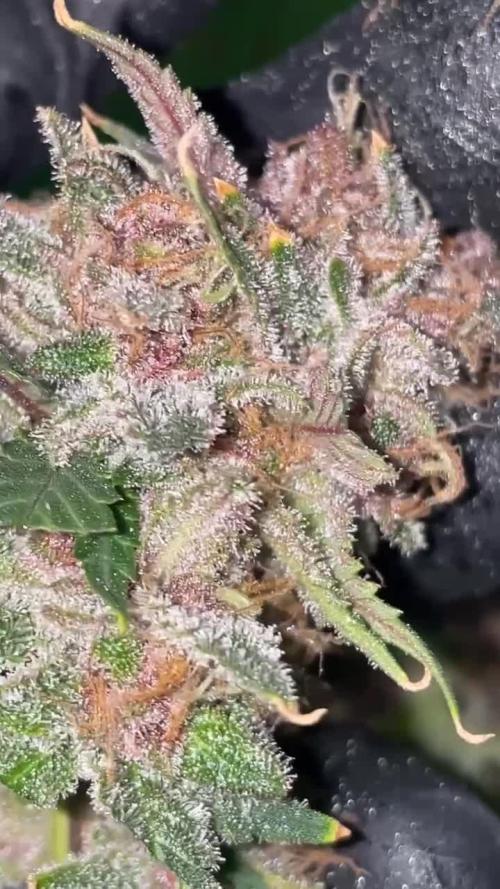
Fruity aroma all over. This run came out better than i expected even though she took some abuse.
Drying with herbnow dryer.

Likes
55
Share


@Ultraviolet
Follow
2nd net is up. Early bud formations are promising. holding up to the extremes pretty well, some leaves taking minor damage, but overall, she is holding up, gave her 1 night at 50F see how she would react, stressful. Not advised as it messes with her metabolism, but I want to see if it triggers any anthocyanin response. Love to see her purp up but no signs yet. Remember, For every molecule of glucose produced during photosynthesis, a plant needs to split six molecules of water. This process provides the hydrogen needed for synthesizing glucose and other organic compounds, while oxygen is released as a byproduct.
Homework.
If Rubisco activity is impaired and it cannot properly function or regenerate its substrate, the plant's leaves are likely to turn a pale green or lime green, a condition known as chlorosis. Essentially, Rubisco activity is highly regulated and susceptible to various environmental and metabolic factors that can cause it to become inhibited, leading to an apparent failure in RuBP regeneration due to a lack of consumption.
Rubisco regeneration is intrinsically linked to nitrogen supply because Rubisco is a major sink for nitrogen in plants, typically accounting for 15% to over 25% of total leaf nitrogen. The regeneration phase itself consumes nitrogen through the synthesis of the Rubisco enzyme and associated proteins (like Rubisco activase), and overall nitrogen status heavily influences the efficiency of RuBP regeneration. RuBisCO is a very large enzyme that constitutes a significant proportion (up to 50%) of leaf soluble protein and requires large investments in nitrogen. Insufficient nitrogen supply limits the plant's ability to produce adequate amounts of RuBisCO, thereby limiting the overall capacity for photosynthesis and carbon fixation. Maintaining the optimal, slightly alkaline pH is crucial for the proper function and regeneration of Rubisco. Deviations in either direction (too high or too low) disrupt the enzyme's structure, activation state, and interaction with its substrates, leading to decreased activity and impaired RuBP regeneration. (Lime/yellowing)
Structural Component: Nitrogen is an essential building block for all proteins, and the sheer abundance of the Rubisco protein makes it the single largest storage of nitrogen in the leaf.
Synthesis and Activity: Adequate nitrogen supply is crucial for the synthesis and maintenance of sufficient Rubisco enzyme and Rubisco activase (Rca), the regulatory protein responsible for maintaining Rubisco's active state. Nitrogen deficiency leads to a decrease in the content and activity of both Rubisco and Rca, which in turn limits the maximum carboxylation rate, Vmax, and the rate of RuBP regeneration Jmax, thus reducing overall photosynthetic capacity.
Nitrogen Storage and Remobilization: Rubisco can act as a temporary nitrogen storage protein, which is degraded to remobilize nitrogen to other growing parts of the plant, especially under conditions of nitrogen deficiency or senescence.
Nitrogen Use Efficiency (NUE): The allocation of nitrogen to Rubisco is a key determinant of a plant's photosynthetic nitrogen use efficiency (PNUE). In high-nitrogen conditions, plants may accumulate a surplus of Rubisco, which may not be fully activated, leading to a lower PNUE. Optimizing the amount and activity of Rubisco relative to nitrogen availability is a target for improving crop NUE.
Photorespiration and Nitrogen Metabolism: Nitrogen metabolism is also linked to the photorespiration pathway (which competes with carboxylation at the Rubisco active site), particularly in the reassimilation of ammonia released during the process.
To increase RuBisCO regeneration, which refers to the process of forming the CO2 acceptor molecule Ribulose-1,5-bisphosphate (RuBP) during photosynthesis, the primary methods involve optimizing the levels and activity of Rubisco activase (Rca) and enhancing the performance of other Calvin-Benson-Bassham (CBB) cycle enzymes.
Biochemical and Environmental Approaches:
Optimize Rubisco Activase (Rca) activity: Rca is a crucial chaperone protein that removes inhibitory sugar phosphates, such as CA1P (2-carboxy-D-arabinitol 1-phosphate), from the Rubisco active site, thus maintaining its catalytic competence.
•Ensure optimal light conditions: Rca is light-activated via the chloroplast's redox status. Adequate light intensity ensures Rca can effectively maintain Rubisco in its active, carbamylated state.
•Maintain optimal temperature: Rca is highly temperature-sensitive and can become unstable at moderately high temperatures (e.g., above 35°C/95F° in many C3 plants), which decreases its ability to activate Rubisco. Maintaining temperatures within the optimal range for a specific plant species is important.
•Optimize Mg2+ concentration: Mg2+ is a key cofactor for both Rubisco carbamylation and Rca activity. In the light, Mg2+ concentration in the chloroplast stroma increases, promoting activation.
•Manage ATP/ADP ratio: Rca activity depends on ATP hydrolysis and is inhibited by ADP. Conditions that maintain a high ATP/ADP ratio in the chloroplast stroma favor Rca activity.
Enhance Calvin-Benson-Bassham (CBB) cycle enzyme activity: The overall rate of RuBP regeneration can be limited by other enzymes in the cycle.
•Increase SBPase activity: Sedoheptulose-1,7-bisphosphatase (SBPase) is a key regulatory enzyme in the regeneration pathway, and increasing its activity can enhance RuBP regeneration and overall photosynthesis.
•Optimize other enzymes: Overexpression of other CBB cycle enzymes such as fructose-1,6-bisphosphate aldolase (FBA) and triose phosphate isomerase (TPI) can also help to balance the metabolic flux and improve RuBP regeneration capacity.
Magnesium ions, Mg2+, are specifically required for Rubisco activation because the cation plays a critical structural and chemical role in forming the active site: A specific lysine residue in the active site must be carbamylated by a CO2 molecule to activate the enzyme. The resulting negatively charged carbamyl group then facilitates the binding of the positively charged Mg2+ion. While other divalent metal ions like Mn2+ can bind to Rubisco, they alter the enzyme's substrate specificity and lead to dramatically lower activity or a higher rate of the non-productive oxygenation reaction compared to Mg2+, making them biologically unfavorable in the context of efficient carbon fixation. The concentration of Mg2+ in the chloroplast stroma naturally increases in the light due to ion potential balancing during ATP synthesis, providing a physiological mechanism to ensure the enzyme is activated when photosynthesis is possible. At the center of the porphyrin ring, nestled within its nitrogen atoms, is a Magnesium ion (Mg2+). This magnesium ion is crucial for the function of chlorophyll, and without it, the pigment cannot effectively capture and transfer light energy.
Mg acts as a cofactor: Mg2+ binds to Rubisco after an activator CO2 molecule, forming a catalytically competent complex (Enzyme-CO2-Mg2+). High light + CO2) increases demand: Under high light (60 DLI is a very high intensity, potentially saturating) and high CO2, the plant's capacity for photosynthesis is high, and thus the demand for activated Rubisco and the necessary Mg2+ cofactor increases. Mg deficiency becomes limiting: If Mg2+ is deficient under these conditions, the higher levels of Rubisco and Rubisco activase produced cannot be fully activated, leading to lower photosynthetic rates and potential photo-oxidative damage.
Optimal range: Studies show that adequate Mg2+ application can enhance Rubisco activation and stabilize net photosynthetic rates under stress conditions, but the required concentration is specific to the experimental setup.
Monitoring is key: The most effective approach in a controlled environment is to monitor the plant's physiological responses e.g., leaf Mg2+ concentration, photosynthetic rate, Rubisco activation state, and adjust the nutrient solution/fertilizer to maintain adequate levels, rather than supplementing a fixed "extra" amount.
In practice, this means ensuring that Mg2+ is not a limiting factor in the plant's standard nutrient solution when pushing the limits with high light and CO2.
Applying Mg2+ through foliar spray is beneficial to Rubisco regeneration, particularly in alleviating the negative effects of magnesium (Mg) deficiency and high-temperature stress (HTS). While Mg can be leached from soil, within the plant it is considered a mobile nutrient, particularly in the phloem. Foliar-applied Mg is quickly absorbed by the leaves and can be translocate to other plant parts, including new growth and sink organs.
Foliar application of: NATURES VERY OWN MgSO4 @ 15.0g L-1 in a spray bottle. For those high-intensity workouts when 1 meal a day is just not enough!
Foliar sprays are often recommended as a rapid rescue measure for existing deficiencies or as a supplement during critical growth stages, when demand for Mg is high. Application in the early morning or late evening can improve absorption and prevent leaf burn. The plant was getting a little limey yellow in the centre. Shortly thereafter, she was back in business, green mostly regenerated. The starting point [of creativity] is curiosity: pondering why the default exists in the first place. We’re driven to question defaults when we experience vuja de, the opposite of déjà vu. Déjà vu occurs when we encounter something new, but it feels as if we’ve seen it before. Vuja de is the reverse—we face something familiar, but we see it with a fresh perspective that enables us to gain new insights into old problems.
Confidence is evidence... nothing more. You are confident because you have driven 10,000 times, you are confident because you have spoken 10,000 times. People think confidence is a feeling, but it's not. If you want more confidence, then you need to create evidence, take more shots, collect more data, build more experiences, take more risks; fail, confidence doesn't come first; it is the reward you get for doing the work. no one else wants to do.
Likes
33
Share


@Master_weeda
Follow
Bonjour à tous les padawans et maîtres jedis
Si vous voulez des buds d'apparence bien givré et "gras" c'est ici les gars.
Les trichomes sont bien laiteux et certains sont ambrés je fini mon rinçage et je procéde à la récolte bientôt
Les bourgeons sont bien purples ils sont vraiment beaux un vrai plaisir à les voir mûrirs
Je me languis la récolte

Processing
Likes
16
Share


@Dunk_Junk
Follow
Marching through flowering!
She's doing very well all things considered.
Last week I said I broke a few branches? Last picture this week is a close up on the area. She has repaired herself and it's as if nothing has happened!
Nature really is miraculous. I honestly expected to loose at least 2 branches!!!
Likes
21
Share

@Borberad
Follow
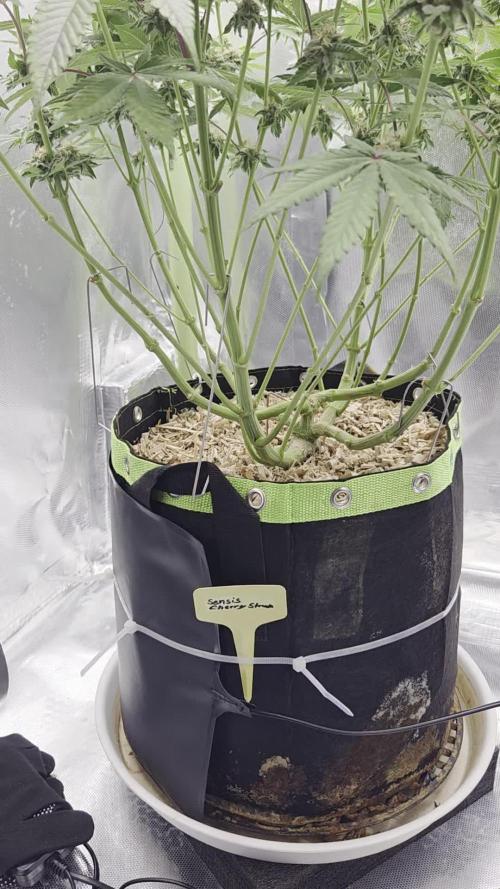
Woche 12
Solange gsam wird sie bunt es es deutet sich an das sie aus dem Soil nicht mehr viel hinaushohlt. Da sie noch gut 20 bis 30 Tage stehen soll gibt es zur Unterstützung weiter etwa Hesi Boost.

Likes
14
Share

@Dunk_Junk
Follow
Growing well for her first week of life.
Planted straight into her 20L airpot with new compost. No perlite added.

Likes
13
Share


@GrandmasBoy2021
Follow
I had a fun experience growing this strain. She started out strong and finished pretty strong! The buds are covered in THC and smells sweet. The only thing I would really do better next time is trying not to nutrient burn her as much as I did towards the end. I also experimented with harvest time and came to the conclusion that the it's best to harvest a few weeks after their recommended time if you want denser buds (in my opinion). I do wish the buds were a bit more dense but I'm not a pro grower and that could be the reason for that. It's all a learning experience. It could be the strain because I'm going a Gorilla Cookies (FastBuds) and those buds are huge and don't have as many leaves. Overall I'm blessed with the outcome and I'm going to enjoy the perfectly dried buds soon :D
I hope you all enjoy the little videos and music! haha I've only grown one plant before this which resulted in less than an eighth of bud so I'm beyond happy to say the least lol
Let me know if you have any questions regarding growing and for some possible tips! Happy growing Growmies!
Likes
3
Share

@birdmountain
Follow
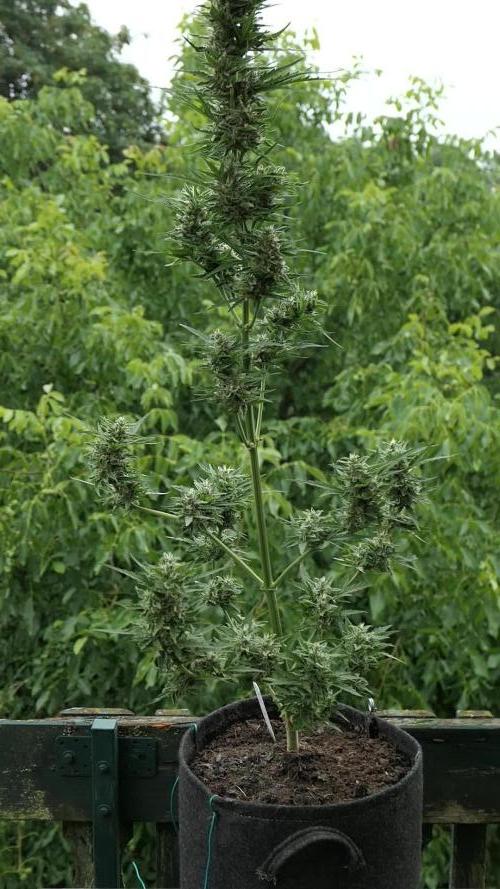
Die extrem hohe Luftfeuchtigkeit, verursacht durch die vielen Regen dieser Woche hat auch bei ihr Spuren hinterlassen. Ich musste eine daumennagelgroße Stelle aufgrund Budrot säubern. Der Ventilator lief zwar die ganze Zeit im Folienzelt, aber oszillierend, ich habe auf Dauergebläse direkt auf den Haupttrieb gestellt (Etwas ernten möchte ich schon noch.). Die Luftfeuchtigkeit war teilweise nachts bei 91%, der Ventilator kann es auf 74-81% herunterdrücken. Es sollen zwei regenreiche Tage kommen, danach solle wieder wärmer werden und damit höhere Temperaturen und auch hohe Luftfeuchtigkeit.
Ansonsten ist sie auf dem Höhepunkt der Blüte, nur die kleinen unteren Buds sind noch im Wachstum. Der Duft ist stark und sehr süßlich geworden, die Buds werden harzig.
Auch um Schimmelbildung zu minimieren habe ich die Wasserversorgung sehr eingeschränkt, sie wird von nun an auch ohne Dünger für die letzten zwei Wochen auskommen.
Wenn sie es bis zur Ernte in ca. zwei Wochen schafft, ist noch eine gute Ernte für Outdoor zu erwarten. Aber bis dahin kann viel passieren.
Wünscht mir viel Glück, ich kann es diesen Sommer gebrauchen.
---
The extremely high humidity caused by the heavy rainfall this week has also left its mark on her. I had to clean a thumbnail-sized area due to bud rot. The fan was running continuously in the foil tent, but oscillating, so I set it to continuous operation directly on the main shoot (I would still like to harvest something). The humidity was sometimes 91% at night, but the fan can reduce it to 74-81%. Two rainy days are forecast, followed by warmer weather with higher temperatures and high humidity.
Otherwise, it is at the peak of flowering, with only the small lower buds still growing. The scent has become strong and very sweet, and the buds are becoming resinous.
To minimize mold growth, I have also greatly restricted the water supply, and from now on it will have to manage without fertilizer for the last two weeks.
If it makes it to harvest in about two weeks, a good outdoor harvest is still to be expected. But a lot can happen between now and then.
Wish me luck, I can use it this summer.

Likes
3
Share


@kingcola384
Follow
Here in week 5 she starting to produce little Budlets she's moving fast I'll reamend the soil with some Earth Juice dry nutrients for bloom she gets worm castings Cal Mag and hybrix molasses once a week during this week I'll also drop the light to 20 inches

Likes
4
Share


@richthegrower
Follow
Welcome to my chaos. The 2x2 is becoming an early veg and seedling tent I think for now she has the giant Manhattan girl from Twenty20. She was taking too much room up for herself in the 2x3.

Likes
5
Share


@DariaFarms
Follow
06/09: increased light from 50 to 55%
07/09: Gave her a litre of water with biogrow, rootjuice & bio-heaven
08/09: Measured her at 41cm tall today!
09/09: increased light from 60% tot 65%
10/09: Watered 1L with no added nutrients & increased her light to 75%. She has little pistol hairs so I assume its preflowering!!? I am so excited, its beautiful.
12/09: watered with 1L with rootjuice, bioheaven, biogrow, activera and calmag
Likes
4
Share


@cannacat777
Follow
That’s a wrap! Wow some really sizable nugs. Paid off to wait to stress train til later on as I feel like this plant had a lot more size and cola count to her than her sisters harvested a few weeks back. A treat to grow! On to the next 😘
