


Likes
Comments
Share


@Finsfan
Follow
Things are started to get some size to the buds. I upped the nutes PPM this week to 1050.
The durban clearly has awhile longer to go while the green crack looks like it might be done sooner then later.
I'm debating giving green crack it's first overdrive feeding next week.. we will see how the buds are looking then.. I used to feed a week earlier then I should have so I'm trying not to get too ancy with it yet.
Both look great.. some slight light burn so the light went from 100% to 80%... just put up to 90% to see how it reacts.. if any issue I'll go back to 80%.. that might be the most it can handle at 18 inches at this point.
Gave a heavy defoliation to both plants tonight after nutrient freeding. I defoliated more of the top leaves to expose more bud sites. Then I defoliated the bottom buds sites that I know won't amount to anything and the twig branches coming from the bottom that don't get any light neither.
Took 3 hours to get it all accomplished.. forgot to take before and after pics but both plants were monsters.. not much light could really get thru the top canopy
Now light gets thru the entire plant so the lower buds are exposed to light and better air flow for sure.
My final defoliation will be 1.5 weeks before harvest.. pretty much at the point I start to consider beginning my flush. That way it will fatten up the buds and help finish the buds that haven't been getting much light.
Excited to see the final results.. this my first time really doing a heavy defoliation throughout a plants entire life cycle. It defintely helps final yield if done correctly from what I've seen. I figured I'd give it a try and see how it goes.. so far I'm satisfied with the results.

Processing
Likes
43
Share


@DaSofaSurfer
Follow
-mom-
So I had a tiny problem with my plant (the mom). pests. this is the problem I have with soil. tiny little cuntz. I don't know their name. tbh not interested. I've had them before. they suck the sap from leaves leaving tiny lighter spots (check vid if interested)
so I gave an aggressive foliar spray. then I watched a movie, smoked some bowls and fell asleep before washing residue. the lights came on and before I was even awake the light was burning spots on my leaves.
I was kinda bummed out. it's not serious, I know she will recover so I wasn't too worried but one never likes to see plants with problems. to me personally the eyesore physically hurts. plus this could have been avoided so it annoys even more.
the good news is no more pests. I can't see them and the new leaves don't have the tell tale sign these suckers leave. all good
today I went to water her and first pistils. I was kinda expecting that to happen since days are getting shorter (13.5 hours of wich only about 3 are DIRECT sunlight) but I was also hoping she would hold off for another week at least since I still don't have real estate for her under the lights. I'mma hold off 4 or 5 days and put her and her clones under the light so they can flower out in style. nature calls one must oblige.
Besides I don't like when plants flower and reveg and reflower. all kinds of weirdness happens, messes up their structure.
-clones-
I cut 2 clones and stuck 'em in same 3" rockwool cube. I had never done so but I only had room for the one pot. I did so because I only had 4 weeks to veg something out to replace the ak47 that flowered and I dripped off in the woods (didn't abandoned her, I still go and cater to her needs every 3 days) so I needed a plant fast and thought two plants in one pot would dramatically save veg time and I might just make it) my idea was to simulate a mainline but each clone would be half of a traditional mainline shooting 4 tops each. unfortunately one of the clones rooted much quicker and it screwed up the simmetry I was after. Now I'm thinking maybe one side will have 6 tops and the other 4. I'm pushing it a bit hopefully I won't regret this decision since I'm very limited in the grow space I have. one has to be resourceful in dealing with such problem.
Apart from that clones are doing great. vigorous growth and just beautiful foliage. in 2 or 3 days I'll step them up into a new home. a 20 liter fabric pot. can't wait to see her flowers and experience the aroma she has to offer.
I'm really looking forward to growing this strain.
LETS GROWWWW !!! 💪👨🚒👊

Likes
8
Share


@Inceptionist
Follow
Melonade Runtz got harvested 16/11 and I'm planning to let her dry for 14-21 days before trimming and put them in glass+boveda (58%) and grove bags for final cure.
Drying conditions are as follows:
16-18°C
55-60% RH


Likes
22
Share


@RDWCGrowing
Follow
1/25/2024 Vegetation Week 3 Day 1- took 2 Tops today and cleaned up a few lower leaves that were hanging down. The FiM seems to have worked well and looks like I have three branches coming in where it was FiMed.
1/26/2024 Vegetation Week 3 Day 2- took 2 Tops from the sides and took a little of the foliage that was touching the lid. She seems to be doing very well.. Water change day tomorrow.. YAY!! will get a good picture of the roots and see how she is doing.
1/27/2024 Vegetation Week 3 Day 3- Water Change Day! I noticed a slight red coming in on the STEMS which I added a pinch of EPSOM salt to help correct.
I added 36 Gallons of Water
I added the following Nutes:
Silica = .5Mil/Gal= 18Mil
CalMag= .75Mil/Gal= 27Mil
FloraMicro = 4.2Mil/Gal= 187Mil
FloraGro= 3.8Mil/Gal= 137Mil
FLoraBloom= 3.0Mil/Gal= 108Mil
ORCA = .5Mil/Gal= 18Mil
EPSOM- 1 big pinch
1/28/2024 Vegetation Week 3 Day 4- I cleaned her up just a little bit on stuff hanging down. I also made sure the PH is balanced so she could soak up the New Nutes.
1/29/2024 Vegetation Week 3 Day 5- I Got sick, Possibly food poisoned.. Luckily for me the system was able to do what it do and hold it down until I was feeling better.
1/30/2024 Vegetation Week 3 Day 6- I was still to sick to go to my grow room... Possibly food poisoned.. Luckily for me the system was able to do what it do and hold it down until I was feeling better.
1/31/2024 Vegetation Week 3 Day 7- First day back.. Her PH was down to 5.72 so I raised the PH back up closer to 6.0, I took a few pictures and got her height.. Feeling better through prayer so was able to get some pics today.


Likes
7
Share


@Staffedition
Follow
Привет друзья!
Сегодня нам 26 дней
Растение по виду здоровое и счастливое.
Всем мира и добра!

Likes
20
Share


@Vegetoo420
Follow
New week they are good , I put second pheno into the big room with her sister!
Add green sensation to the soup!

Likes
19
Share

@MaryJaneJo
Follow
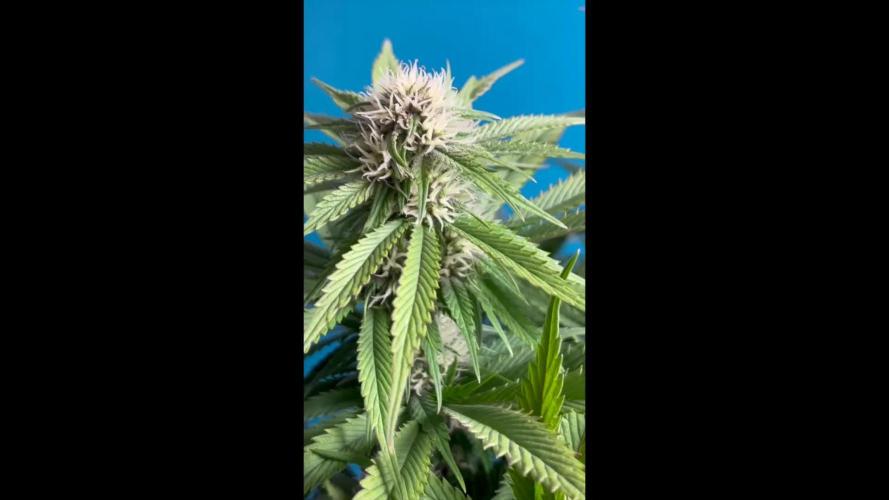
Hats off to this F3 strain. All healthy, no leaf discolouration. She is drinking her tonics twice a day & really enjoying the side lighting. The buds are picking up weight at quite a speed. No purple hues yet.
Midweek update: I added additional side lighting, bringing the total up to 268 W. Her feeds will be more frequent too.
Let there be light! 👽

Likes
37
Share


@masterofsmeagol
Follow
6/16 Fed today. Left out the microbe and kangaroots due to time. I'm adding the kelp me kelp you as well but it was a rush this morning. Didn't get spinosid applied last night. I found a spittle bug in it's bubbles and killed the nymph. I noticed random little munch's so that makes me think the spinosid is a good idea. Plants seem very happy.
6/17 Transplanted the rooted cuttings of 9lb kush and NYC Skunk Ape into a gallon of happy frog. From there they'll go in either a five gallon bucket, 10 gallon bag or right in the bag. Considering how late it is I think the two ten gallon grow bags would be perfect. The two Black Widow/GSC seeds kinda dried out but got transplanted to two red solo cups of happy frog. It will be interesting to see which strains do well in this harsh climate. Didn't get the spinosid sprayed and I'm unsure of I will tonight. Looks like rain. I'd rather apply when sky is clear. I love being able to do this. Every morning I start my day off right. Great boost to mental health! Internet is fucking up so I'm having difficulty loading pictures. Rrrrr
6/20 Took a bunch of pictures but forgot to add them and my internet connection is to slow to upload right now. I haven't had to water this crop only a couple times this year. Temperature shot down to 45 last night. I noticed some more WPM on the interior of some of the GDPs. Also leaf hopper damage and random munches from other bugs. I did some interior defoliation and spot treated with k bicarb and dawn. I'll attempt to upload pictures again. Black widow/GSC has germinated.
6/21 Watered the girls with the hose. Was super pressed for time so I couldn't pH the water. The hose looks like it's about 6.5 but I know it's a little more alkaline. Oh well it's what I've always used. I should've fed but again...crisis. girls look wonderful. I took a bunch of great photos but I used the app to take them and the didn't upload. On the plus side I got some older ones up. I haven't spent nearly the amount of time I usually do on my garden. However I will say the k bicarb has been stellar. Even using it as spot treatment.
6/22 FED 3 gallons today. Kept the same schedule but added a 1/4 tsp microbe brew and a 1/4 tsp kangaroots. Didn't have the kelp with me so I left it out. PM seems to be controlled pretty well. A few interior leaves were defoliated but overall things look great. Especially considering the 35-40 degree temperature swing we've been seeing. I don't really see any insect damage. I'll wait until the temps settle before I do a foliar spray.


Likes
4
Share

@Samsationalseeds
Follow
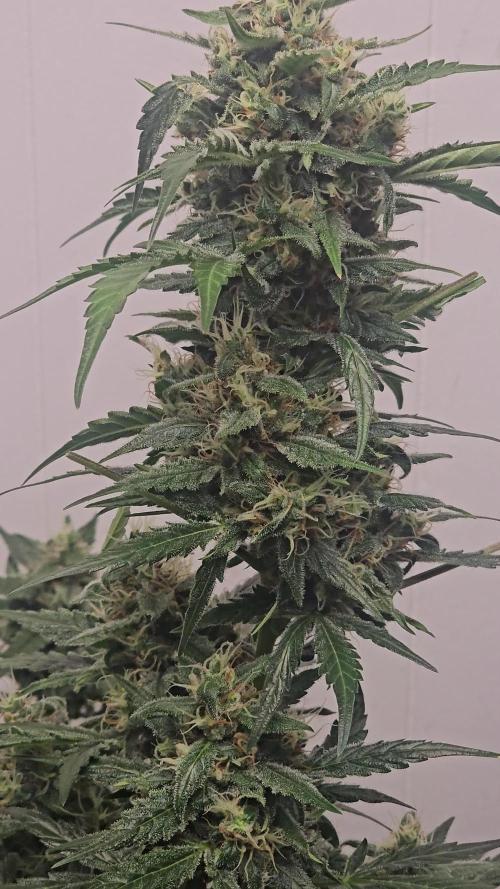
Last week's vidoe. For some reason, it's taking like minutes to upload thirty second videos.
I will try my best to show the updated videos on a lot of these plants.Now i'm impressed with a lot of my autos growing in this naturally derived nutrient.Solution
Likes
18
Share


@The_Lonely_Farmer
Follow
Shes looking strong so far I'm quite excited 🌱
Tiny stretch but dont mind shows shes willing 👌
Likes
6
Share


@eldruida_lamota
Follow
Acabamos la octava semana de floración de las Original de GrowBarato familia, y no podéis imaginaros lo bien que huelen.
Tienen un buen color, se ven sanas, y van progresando adecuadamente la flor va poco a poco engordando y tirando bien de tricomas.
Ya se les a practicado su lavado de raíces ya lo que quede de vida solo agua y pa alante que huelen de miedo
Agrobeta:
https://www.agrobeta.com/agrobetatiendaonline/36-abonos-canamo
Mars hydro:
Code discount: EL420
https://www.mars-hydro.com/
Las maximas de temperatura no superan los 26 grados y las mínimas no bajan 20, así que no me puedo quejar.
Los niveles de humedad también son los correctos van entre 45%/55% de humedad relativa.
Por supuesto el Ph lo estamos dejando alrededor de 6.
Hasta aquí es todo, buenos humos 💨💨💨.


Likes
5
Share


@GanjaGecko
Follow
Alle 5 Samen wurden in ein Glas mit Wasser und 2 Tropfen Seedbooster von Plagron für ca 20 Stunden eingelegt. Nach ca 20h im Wasserglas ging es für die Ladys in kleine Anzuchttöpfe. Nach 3 Tagen in den Anzuchttöpfen haben 4 Ladys und nach 4 Tagen hat dann auch die 5 Lady das Licht der Welt erblickt. Nächste Woche werden die Ladys dann in jeweils 8l Stofftöpfen Platz finden. Durch die kurze Vegetation sollten die 8L Töpfe ausreichen. Die 4 Ladys die den stabilsten Eindruck machen und sich am meisten im Wachstum ähneln werden behalten.
Das Substratgemisch besteht aus ca 70% BioBizz Lightmix und ca 30% Cocos mit Perlien. Ich gebe bei dem Run etwas mehr Cocos hinzu damit das Substrat noch etwas luftiger wird und die Ladys es etwas leichter haben ihre Wurzeln zu bilden und damit vielleicht einen kleinen Wachstumsschub zu erhalten.
Auf das ganze kommen dann noch ca 10% Megaworm von Plagron und ein wenig BioGrow das es den Ladys anfangs an nichts fehlt.
Die Ladys haben leider etwas weniger Zeit für ihr Wachstum, weil der Contest zeitlich begrenzt ist. Der letzte Grow hat leider auch etwas Zeit in Anspruch genommen. Mal gucken, ich hoffe das es reicht. Mit FarRed als Einschlafhilfe in der Blütephase kann man vielleicht ein paar Tage einsparen.
Ich hoffe auf das Beste. Am Ende muss man ja auch etwas Glück mit den Phenos haben.
Angegossen wurde mit 1g/L BioEnhancer und 1ml/L PowerRoots. Der ph-Wert wurde vor dem gießen auf 6.0 korrigiert. Jede Lady bekam für den Anfang ca 30-40ml in die Anzuchttöpfe.
Mit einer kleinen Heizmatte und den Kuppeln auf den Töpfen wird für das warm/feuchte Klima gesorgt, das die Ladys anfangs benötigen um zu keimen.
Am Tag an dem die Ladys das Licht der Welt erblickt haben, kamen die Kuppeln ab und die Ladys spüren dann auch ihre ersten Luftzüge.

Likes
11
Share


@LiamF
Follow
Day 29 : removed the LST (later note - BIG MISTAKE)
Day 29: First signs of flowering😍
800ml water with nutes on day 31
1L water with nutes on day 33
1L water with nutes on day 35

Likes
1
Share


@Urunascar
Follow
Branches are completely full of buds, some are probably featherweight but I didn't really got the chance to do any mainlining on this one because of how weird she grew
Likes
2
Share

@Weedman268
Follow
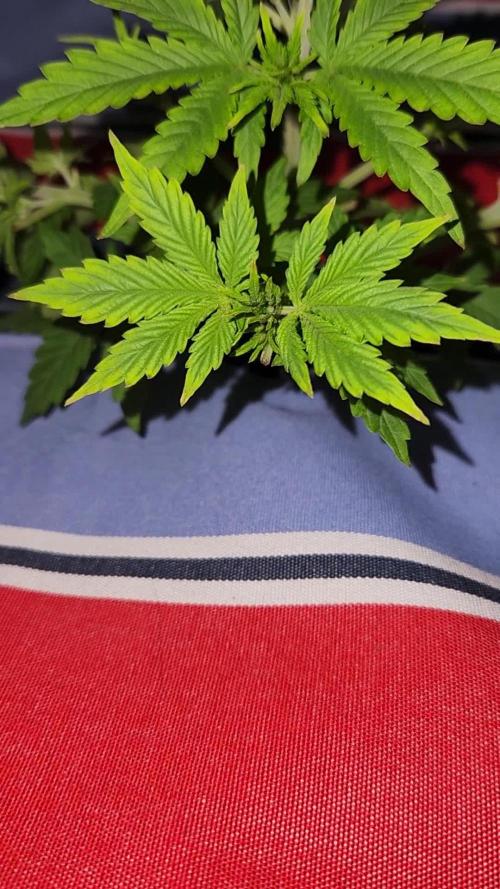
She going good,humidifier went dry,so the light was burning her but catch it in time,she catching her self now, haven't water since I transplanted her so just observing..
Likes
6
Share

@xTaps
Follow
05.09.
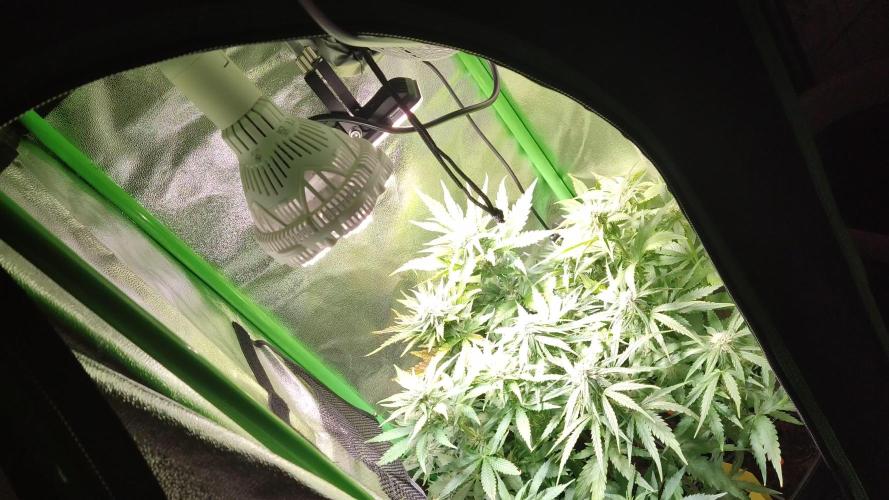
Dimmed one light to the half, they begin to smell lightly.
10.09.
Moved the Spiderfarmer Dehumidifer into the room, lowering the humidity from 80% down to 52%.

Likes
53
Share


@Hempface86
Follow
Ladies and gentlemen, today is the 66th of flower and i'm thinking another week, and a half, and she's getting the chop .. Weedseedexpress thank you for these genetics, she really smells like strawberries and her nugs are hard as a rock.. Literally.. I'm really excited for this girl to be done so I could transfer the Sundae Driver into this tent and get her going into bloom.. I hope everybody's doing well this girl like many others are only getting water as they are.On the final stretch.. hope all is well, God bless and happy growing ✌️https://weedseedsexpress.com/us

Likes
31
Share


@Reaper
Follow
next time i wont Veg under fluorescent lights, needs more power from the start for bigger stem and root system, i cant complain by the end result lol