


Likes
Comments
Share


@MisterFlavonoid
Follow
This one was Baked in Paris by PerfectTreeSeeds, grown with AptusPlantTech only! Check the other weeks to see the ones with GreenPlanetNutrients!
Great gassy notes, awesome structure, beautiful colours. I know this one came out a little too early, but I was having problems with humidity and also with smell so I decided to take 'em all out at the same time.
Forgot to take pictures of her on the drying screen, will update soon (:

Likes
22
Share


@chupacabra80
Follow
привет всем, все идет нормально !я не смог найти точно когда и сколько нужно runtz для цвета (((((( он вроде начинает цвести а уже 49 дней прошло (((( а в остальном я превысил рост каждого растения почти ,мне пришлось все поднимать и перестраивать ,высота Do si Dos достигает почти 180 см ,думаю на этом он остановится,или мне нужно будет вешать лампы на потолок 😂
и так
glue gelato & wedding cake 140 cm
gorilla glue 150 cm
Dos si Dosi 170 cm runtz 105 cm

Likes
10
Share

@Cukito
Follow
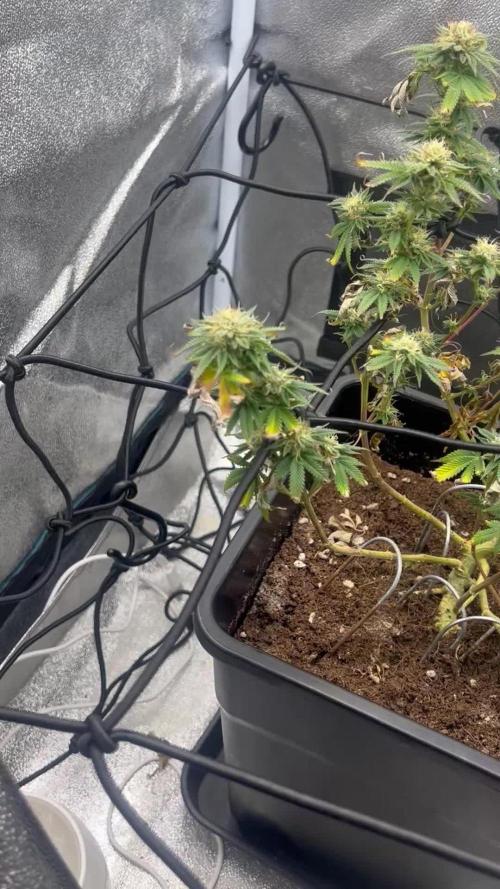
Man the smell is so fucking strong☠️ Also the resin has increased a lot!! The buds are smaller than I would like but It's fine we will solve that problem in the next grow!!
Likes
24
Share

@TrickzCutz
Follow
Servus Moin!
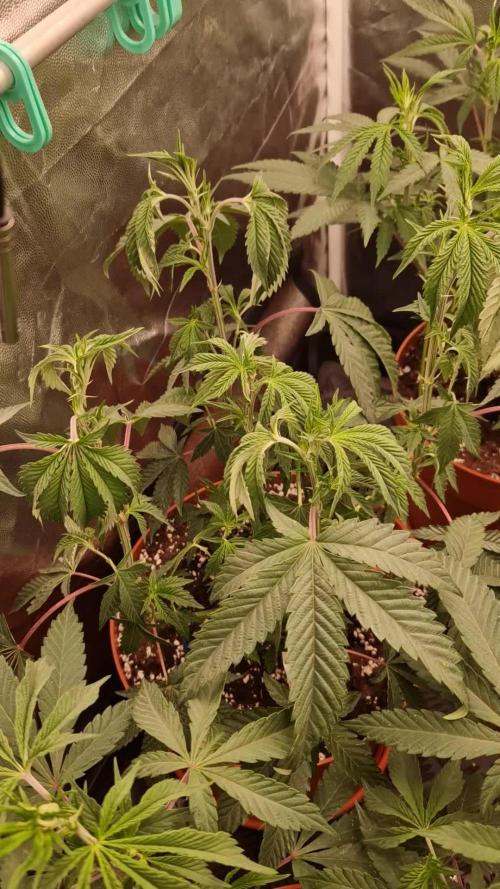
Die Black Orchard hat ein paar Fächerblätter abbekommen, damit die Triebe unten herum wieder richtig Licht bekommen. Sie hat evtl zu spät Wasser bekommen und lässt deswegen die Blätter ein wenig hängen.

Processing
Likes
10
Share


@Greenfingers666
Follow
Purple shot this is definitely the extended version to her sister next to her little and large.
Trying to get a better picture of the size of her she's about 6foot
Here's a little video of the biggest bitch in town.

Likes
11
Share


@Lahuertade_Bototo
Follow
🌱🌱🌱Continuamos este cultivo, con esta hermosa cepa de FastBuds, Girl Scout Cookies Auto, de lleno en el periodo de Floración .🌱🌱🌱
👨🍳👨🌾🏻 Nutrición y Bitácora 👨🌾🏻👨🍳
-Día 43. Sigue aumentando el engorde de las flores y el aroma es cada vez mas intenso 👌.
-Día 44. Se riega con 3 litros de una solución nutritiva NPK de Plagron Alga Bloom (6 ml) Plagron Sugar Royal (1.5 ml) y Plagron Green Sensation (1.5 ml).
-Día 45. Los aromas se intensifican, ya seco el sustrato.
-Día 46. Se riega con 3 litros de una solución nutritiva NPK de Plagron Alga Bloom (6 ml) Plagron Sugar Royal (1.5 ml) y Plagron Green Sensation (1.5 ml).
-Día 47. Sigue todo excelente 🙌.
-Día 48. Ya seco el sustrato.
-Día 49. Se riega con 3 litros de una solución nutritiva NPK de Plagron Alga Bloom (6 ml) Plagron Sugar Royal (1.5 ml) y Plagron Green Sensation (1.5 ml).
🚀Equipamiento🚀
Indoor de 60x60x159 cm y una iluminación BlackCob F320, se activa solo 1 modulo (160w) a 45 cm del canopy por el resto del cultivo. Intractor de 135mm, extractor de 135mm, filtro de carbón, ventilador "oscilofan", ventilador "clip fan", este ultimo ventilador se ajusta en la parte baja de la carpa para mejorar la circulación de aire bajo el canopy, 2 termohigrometros y una malla SCROG de kanovi a 15 cm de la maceta.
Acompáñenme para ver los resultados de este hermoso desafío, un saludo cultivadores 🔥🔥🔥

Likes
166
Share


@iMeus
Follow
Hello my friends! I have some good news and bad news this week,
[Bad News]First I'll mention that all, yes all of my Purple Urkle's had to go 😰 I was on the phone with a good friend of mine while admiring my garden of green and I spy with my little eyes 😶 a pollen pod containing nanas. So as hard as it was to cut em down, I knew they had to go. I’m honestly relieved to have those time bombs removed from my tent, that’s all I needed was seeded product. I won’t let this discourage me, in fact I’m empowered knowing that I averted this potential crisis :) I’ll still keep me eye out just in case, you never know.
[Good News] The other remaining strains, White Widow, Super Silver Haze, CBD Blueberry, & Mazar are doing well. Since I feed them light nutes last time I’m debating if I should feed them a 2nd time, or just use some good ol ph’d tap? They look so good I don’t want to over feed em, then again I want the girls to have plenty of nutrients to avoid potential deficiencies. The CBD was the first to flower, though it’s kind of been flowering on and off for a while. If these results happen with the other CBD seeds I’d probably avoid purchasing this product again, I’m not happy with the mutations that are going on with this plant (this is technically bad news). Back to the point I see signs of flowering in all the girls now! This is where it gets exciting, so pumped for this phase, I’ve waited 78+ days for this!
I think that’s enough rambling, I’ll get right into the Individual Progress Notes, enjoy :)
~ Individual Progress Notes ~
[CBD]
Height: 24.8”
Tops: 8
Notes: This one is about 1 - 2 weeks ahead of the others, which are just showing their “hairs” now. I’m on the fence, I’m not sure how this CBD is going to be as a finished product. I hope the other seeds I have don’t have the same mutations... I haven’t had any contact from GCS since their reply. I’ll still write them a report when this girl is harvested, that would probably be better in the long run so they have more information about these mutations I’m experiencing.
[Mazar]
Height: 22.3”
Tops: 16
Notes: I’ll just say she looked like a perfect orb when I removed the trellis netting to realign the family. A very even growth rate, with a consistent distance between nodes, beautiful. The genetics for Mazar here is amazing, now I can’t say this for sure but for now her growth and shape is fantastic and beyond my expectations.
[Super Silver Haze]
Height: 22.5”
Tops: 16
Notes: Talk about sudden growth! This beastie was one of my smallest girls and just like my friend here on GD called it, she shot up! She also has the biggest fan leaves (not the most fingers). Now that she has more room to spread out and breath I’m sure she’ll grow even more.
[White Widow]
Height: 23.3”
Tops: 16
Notes: Tanya here is growing so well, very happy. Her leaves still have that blue steel, green look. I love it! Other than the mazar she has the 2nd most bud sites. Soon, very soon we’ll see flowers starting to develop. I noticed some possible nute burn/deficiencies with a couple of her fans so I’ll use ph’d water next feeding to see if the condition stabilizes, I’ll know by then.
~ Final Thoughts ~
It’s been a long run so far my friends. I can’t say everything has gone as planned, but I avoided a huge blow to my product by noticing the pollen pods developing on the Purple Urkle females. This transition has gone well so far, no shock or hardcore deficiencies. Again, thank you all for your kind words and support!
Much love, Meus

Likes
12
Share


@Mattheous
Follow
15 août : jour 84 Flo+36 :
6 eme semaine de flo
J ai des feuille jaunes qui commence à se décolorer je pense à cause de la chaleur je compte investir un cool tube pour réduire ma température !
17 août : jour 86 Flo+38 : il fait moins chaud ses jours ci , j ai l’impression que ça va mieux .
Je ne comprend pourquoi je ne vois encore que dès filament blanc et encore aucun aspect d’un Bud de cannabis fini !
19 août : jour 88 Flo+40 : A force je vois plus d évolution à l œil nu , le terreau était pas totalement sec.. mais j ai arrosé dans le doute que dans 2h ça soit le cas ! Les feuille sont toujours tombante je trouve si vous avez des avis à me donner !

Likes
32
Share

@BudVision
Follow
Hello growers,
as I mentioned last week, La Bomba was left alone in the coop and she’s doing amazing. I’m just watering now and waiting for the right moment to harvest. The aroma is incredible, somewhere between a sweet profile and that loud gassy fuel, a truly unique combination. I gently spread her branches with a few strings so the light can reach the lower buds. The buds are hard and the whole plant looks beautiful.
Peace and happy growing ✌️


Likes
33
Share


@Tegridy_Green
Follow
All is going well so far in this grow. She seems to be avoiding the sohum and keeping her roots in the happy frog.
Wish I had added perlite to the sohum first to make watering easier. Using a spray bottle to moisten the soil first seems to help with watering.

Likes
12
Share


@weedelicious030
Follow
Es gab in dieser Woche keine Probleme und alles ist nach Plan verlaufen. Ich bin sehr zufrieden mit den Ergebnissen

Likes
3
Share


@Koku_green
Follow
Every thing is looking good healthy plants buds are getting in shape👌 I'm very happy with this strain i wasn't expecting this much flowers 💯🤞 thanks again Green house seeds.co

Likes
14
Share


@MG2009
Follow
12/30/2021
5 Biscotti Skunk, 5 Lemon OG, 4 Grape Skunk.
Starting veg at 18 hours for 4 or 5 weeks of veg and into flowering. Will reppot this week into 6" pots then into 3 gallon pots.
One maybe going to 20 gallon fabric pot, if I got an extra one but I'll see 🙏🏻
Potted up to 6" pots
1,Biscotti Skunk
1,Grape Skunk
1,Biscotti Skunk
Hoping to start a staggerd grow where I can trim only 3 plants a week.
Into pots I added 1 tsp per 6" pot of Coast of Maine stonington plant food 5-2-4 added to happy frogs .30-.30-.05 NPK they should fill out quickly in time for reppot in 2-3 weeks.

Likes
24
Share


@Smokwiri
Follow
Welcome to week 8 of my Sour Betty by Anesia Seeds diary
Plant looks great, i love the colours.
Flowers have started to grow, i like the way the buds are taking shape.
Added some pk
Likes
20
Share


@Boomdrawfyah
Follow
Dia 95 de vida , hay dos fotos que son del dia 91 de vida antes de amarrar las plantas, las demás fotos son actuales.
Hay una ola de calor esta haciendo mas de 35 grados celcius y hace mal tiempo de un momento a otro puede hacer alguna tormenta así que decidimos coger las plantas para ayudarlas a resistir en caso de temporal.
Siguen creciendo y estan monstruosas aunque las indicas ya van marcando pistilo yo creo que aún tardarán en florecer por el momento todo va genial esperemos que no nos arruine el cultivo ninguna tempesta.


Likes
8
Share

@Kevin97
Follow
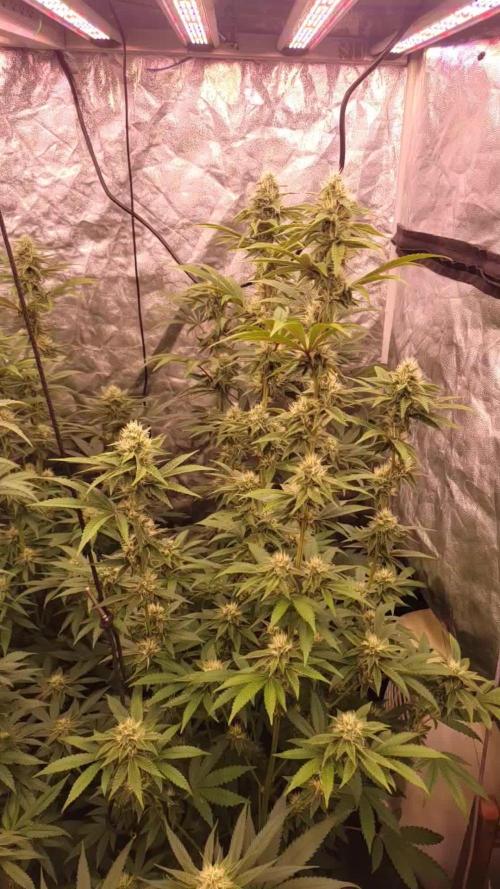
5iem semaine la korenji développe bien c’est trichom la eyeballz comence tout juste son gonflement

Likes
4
Share

@AestheticGenetix
Follow
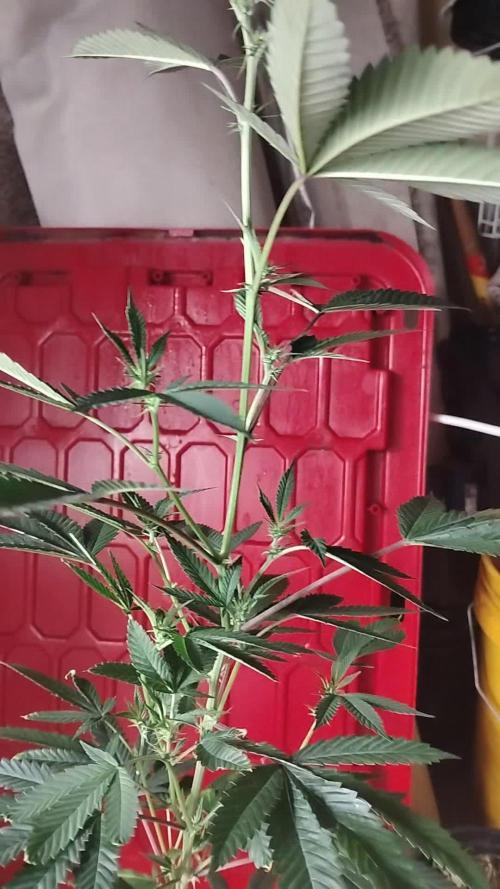
This is about day 10 but she really started stretching after day 7.
She has nice lateral stretching as well. She didn't have all of these side branches a week ago


Processing
Likes
33
Share


@cojastym
Follow
floweeer
start day 104
change fertilizer from nettle to chicken manure, from my free run chicken yard