


Processing
Likes
Comments
Share


@love_2_grow
Follow
D64.
A new week starts, and the stretch continues. Sigh.
The first girl stopped at 80 cm, while the second is over 130 cm and still stretching.
If she doesn't stop soon, I'll be in real trouble. Quite frustrating since it will affect both yield and quality.
I added a few sachets with predatory Cucumeris mites to the girls. There are no problems, and I haven't scouted any bugs, but since I had thrips in the tent in the previous grow, I want to be proactive in case some bugs survived.
I gave the second girl 2.5 liters of water @ pH 6.5, with bokashi and fermented fruit juice.
------------------------------
D67.
The second girl stretched even more to a point where one of the tops touched a light.
To combat this problem, I removed the first girl and put her in my small drying tent since my LSD-25 was just done drying. It's a wee bit tight, and I had to add some side-lighting to get enough photons to her, but it should work out. The yield will take a hit, but I suspect the second girl will more than make up for it.
I moved the second girl into the middle of the tent and thus could bend the tops outward, creating more space to the light. I also removed additional foliage in her lower canopy.
The second girl is massive, by far the largest auto I've grown, and she drinks a lot and requires daily watering.
Considering her size, I am concerned that she will run out of nutrients, so I need to devise a strategy for keeping her fed. Topdressing will be tricky as the pot is already quite full, but I will add as much as possible and then feed compost teas often.
------------------------------
D70.
We're at the end of the sixth week of flower, and the second girl is still stretching. She has slowed down, but one of the tops I already had bent hit the light, so I had to bend it even more.
I top-dressed the second girl today to give her a boost, considering her size. I used kelp powder, rock dust, neem meal, calcified seaweed, and worm castings.
She then got 2 liters of water @ pH 6.5, with fulvic and humic acid.
------------------------------

Likes
17
Share


@Sergio_721
Follow
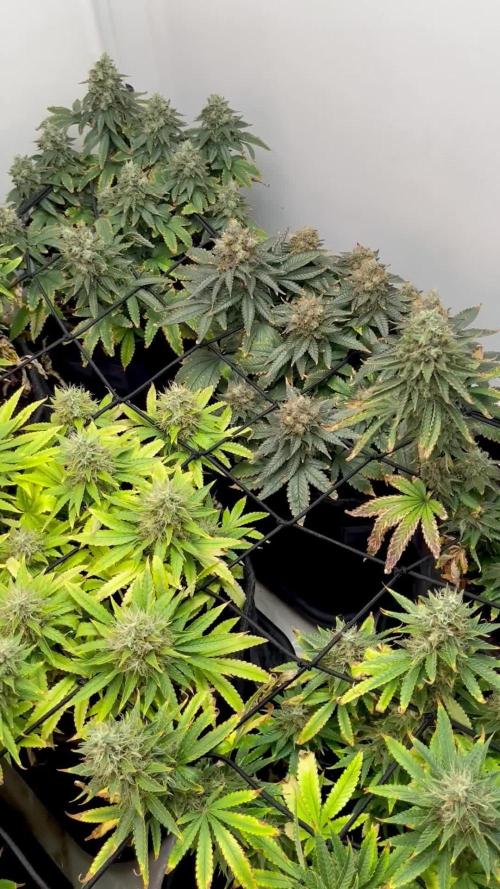
So far it seems to be fine even if the high humidity worries me even if the temperatures are still high then they have stopped growing and will finally focus on the flowers and slowly we recover these small deficiencies

Likes
4
Share


Likes
12
Share


@XperencdGmanXG
Follow
this auto seems to be chugging right along. Growing nicely. I am not going to do anything to it and we will see what happens. The other auto GC has already gone into flower kinda early. so will need to put another seed of this variety down.


Likes
36
Share


@MadeInGermany
Follow
Hey everyone 😃.
Day 14 since time change to 12/12.
During the week they started to form their buds, which is why I will add 2 g of GHSC Powder Feeding Bio Bloom per liter of substrate over the next few days 😃👍.
The next few days I will also make some free space so that the energy doesn't end up in mini buds :-).
I wish you all a lot of fun with the update and a great week 🍀👌
You can buy this Strain at :
https://sweetseeds.es/de/sweet-skunk-f1-fast-version/
Type:
Sweet Skunk F1 Fast Version
☝️🏼
Genetics:
Sweet Skunk Auto (SWS34)
X
Early Skunk
👍
Vega lamp:
2 x Todogrow Led
Quantum Board 100 W
💡
Bloom Lamp :
2 x Todogrow Led
Cxb 3590 COB 3500 K 205W
💡💡☝️🏼
Soil :
Canna Coco Professional +
☝️🏼
Fertilizer:
Green House Powder Feeding
☝️🏼🌱
Water:
Osmosis water mixed with normal water (24 hours stale that the chlorine evaporates) to 0.2 EC. Add Cal / Mag to 0.4 Ec Ph with Organic Ph - to 5.5 - 5.8 .

Likes
2
Share

@MrWeeedWorld
Follow
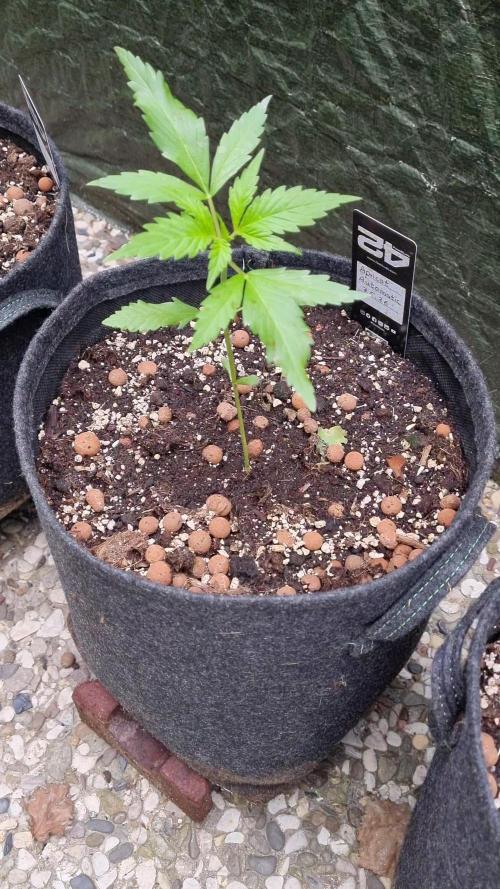
Die drei Apricot Automatic Damen entwickeln sich trotz ihres aktuell etwas gestreckten Wuchses sehr ordentlich. Das außergewöhnlich sonnige Wetter der letzten Tage hat für einen kräftigen Wachstumsschub gesorgt. Die Pflanzen zeigen ein gesundes Blattwerk mit einer frischen, hellgrünen Farbe und bilden bereits mehrere Nodien aus.
Durch die starke Streckung erkennt man deutlich, dass die Apricots förmlich nach dem Sonnenlicht gejagt haben. Gleichzeitig wirken die Stängel jedoch stabil und gesund, was auf ein gutes Wurzelwachstum und eine insgesamt vitale Entwicklung schließen lässt.
Besonders erfreulich ist die gleichmäßige Entwicklung aller drei Pflanzen. Trotz kleiner Unterschiede in Höhe und Struktur zeigen sie ein sehr ähnliches Wachstumsmuster. Die neuen Triebspitzen wachsen zügig nach und die ersten Seitentriebe beginnen sich auszubilden.
Mit den angekündigten sommerlichen Temperaturen und vielen Sonnenstunden stehen die Chancen hervorragend, dass die Apricot Automatic in den kommenden Wochen ordentlich an Volumen zulegt und eine kompakte, gut verzweigte Struktur entwickelt.
Jeden Sonntag gibt es neue Updates zu meinen aktuellen Grows auf GrowDiaries und Instagram @Mr.WeeedWorld. 🚀🌱
--------------------------------------------------------------------------------------------------------------------------------------------------------------------
The three Apricot Automatic ladies are developing very nicely despite their currently stretched structure. The exceptional sunny weather during the last days has triggered a strong growth spurt. The plants display healthy foliage with a fresh light-green color and are already producing several new nodes.
The noticeable stretching shows how aggressively the plants have been reaching for sunlight. At the same time, the stems remain healthy and sturdy, indicating strong root development and overall plant vigor.
It is especially encouraging to see how evenly all three plants are progressing. Despite slight differences in height and structure, they all show a very similar growth pattern. New growth is emerging quickly, and the first side branches are beginning to develop.
With the forecast predicting continued summer-like temperatures and plenty of sunshine, the Apricot Automatic plants are perfectly positioned to gain significant size and develop a strong branching structure over the coming weeks.
New updates about all my current grows are published every Sunday on GrowDiaries and Instagram @Mr.WeeedWorld. 🚀🌱
Likes
4
Share


@flakeyfood
Follow
Hey y'all! I'm back with an early update because my biggest two plants are flowering! Hindu Kush looks like she's gonna grow some really thick buds. I'm super excited to see it flower. The GSC pistils are some clear, some amber. It makes me really excited for how she's gonna look as she develops buds. I wanted to give a better tour of how the plants look so I took a video to share as well! I am super excited, and I'm starting to get impatient quite frankly! Lol! But really, I can't wait to watch my plants grow day in and day out. I need to find a way to control the humidity, as it is getting hotter in my home and when my tent is closed the humidity climbs up to 82% and some leaves that touch condensate on each other. Not good! I leave my tent open for hours at a time to tame the humidity but this is not a full time solution. if anyone has suggestions please let me know! I will be asking a question soon on it!
Likes
29
Share


@nowayReggie
Follow
Breeder Suggested Harvest Window opens tomorrow at day 65 and continues on for 15 days to Dec 15.
+Will start the flush process on the 5th of December
+ 1ST video on Growdiaries.
Planned on flushing on the 5th
Watered 2.5 gallons.
Life scheduled events and had to cut it short a few days and harvest day -NO MATTER WHAT - would have to be the 10th.
putting us at Day 75 of flower
Flushed with 17.5 gallons
Considering water was filtering through soil, it drained ABSOLUTELY clear by the last emtpying of the container I was using to catch
Buds are fattening up very nicely.
Smells of Lemon/Citrus/Sour
-----------------------------------------------------------------
nowayReggie

Likes
10
Share


@Fibro_Witch
Follow
Gave the photos a haircut today. Removed some fan leaves and lower branches that wouldn't amount to much. Gave the branches to my horse because he loves them! Tried enticing the ducks with fan leaves but they weren't having any of it. They prefer lettuce, not "The Devil's Lettuce"😂
I added in a little 5-1-1 fish fertilizer to my feeding regimen as well. Still picking off inchworms.
And as you can see I made it to the hardware store and put up this baby almost completely by myself. I only asked my husband to hold the center roof panel support while I screwed it in. Couldn't have been better timing since hurricane Dorian came through yesterday and we had plenty of rain. Of course it didn't fully protect them but the majority of the rain hit the roof. And then it got down to 49 F last night. It's really Fall now!
This girl is frosty and she ain't near done, those pistils are like a white walker! So looking forward to this finish, because it's gonna be better than last year for sure!


Likes
97
Share


@Hologram
Follow
Goodday my growbretheren and sistren..
Asyou can see, my lil'Candyshop has got alot of sugar already!
But her buds are not fattening up bc she is foxtailing a bit...
It was very hot this week with temp of alomst 40C without wind..
Temp is now a bit lower.. and letshope she can get some weight on her those last weex!
(next time gonna top her and do some LST.. 👍 i was a bit of a dummy by not doing that this time, being lazy i guess😳)
Happy growing for all✊
***KISS growtechnique: KeepItSimple,Stupid!

Likes
21
Share


@Jays_Not_Here_Man
Follow
A-Day 60, B&C Day 56
A is fattening up! She never did stretch, but then again I had her tied and splayed pretty far out. She has been thirsty, I have been feeding a dose close to 1000 ppm every other feed which has been every other day for her. During the lower feeds, ppm has been around 400. Her tricomes are mostly clear, with some cloudy starting to show. She still has a couple of weeks to go.
B- is going to be a producer! She has so many tips and they are all fattening and developing at about the same rate, she is going to be a beast! Did a defoliation on her, she is appreciating the extra light penetration 😎💨
C- Has stretched up and out! If she stacks as tight as the other two, she will probably be the one with the most weight. Her branches are the tallest and reaching up at least 4-6 inches past both her sisters. I tied her down lightly to allow light to get through, we’ll see how she goes.

Likes
6
Share


@Theia
Follow
Decided to chop her as there was some crazy foxtailing and I wanted her to be dry and have had a few days cure so I can try it on Christmas day. Well that's the plan anyway .😜
She weighed in at 630g wet but that's arbitrary as that's all the stems also. The buds are all dense and very fragrant. Thick trichomes that left the cutters thick in resin after the wet trim..
They are hanging now at 16c and 49%.
Back later to report on them..

Likes
9
Share


@oxieg3ngrows
Follow
Grape soda, tropical punch, and gasoline. These rock hard flowers were some of the prettiest to watch grow I've ever seen.

Likes
26
Share


@eldruida_lamota
Follow
Que pasa familia, hemos vuelto para actualizar las skunk que ya tenemos cosechadas.
Que gran genética, y muy típica entre fumadores de hierba, un crecimiento más indico pero floración lenta bastante lenta, en teoría se supone que es Sativa, 17% thc en la tas con un tamaño medio pequeño pero flores mi compactas y dulces, un cultivo ni fácil ni difícil, sin más, bastante neutral para los cambios climáticos algo sensible con el aspecto alimentación.
La recomendaría en verdad, sobre todo para aquellos amantes del dulce.
Nos vemos en próximos proyectos fumetillas

Likes
3
Share

@Olduffybastard88
Follow
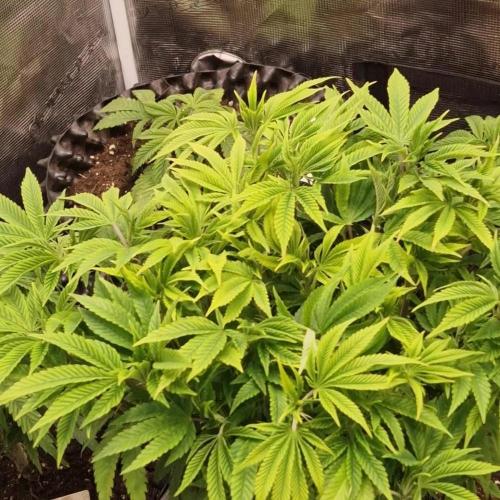
Stretch over now onto the fun stuff the flower my favourite part had these girls lst as last time I almost ran out of space
Likes
40
Share


@Oyziphar
Follow
👉Wedding Gelato #1 is incredible. She can handle the strong effect of the Genoneleven products. 😍 Therefore almost all photos are from Wedding Gelato #1
👉Wedding Gelato #3 seems to have been fertilized a bit too strong. The leaves curl and the color is dark green. However, the leaf tips don't turn brown.
This week's flush : only pure water from the water tank. 🙏
Buds have become rock hard with a lot of trichomes. 😍😍😍
Next week will be harvest time 😁😁😁

Likes
4
Share

@420DeepGrow
Follow
📆 Semana 7
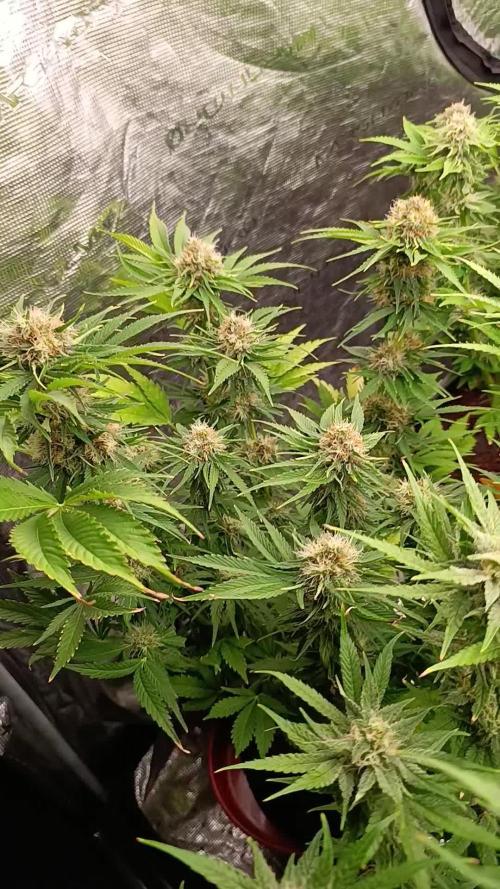
El engorde continúa avanzando y los cogollos siguen compactando y ganando densidad. Los cálices se apilan con más presión y las puntas empiezan a mostrar un volumen más sólido.
La resina aumenta claramente, cubriendo flores y hojas cercanas mientras los tricomas avanzan hacia estados más lechosos. La asimilación se mantiene estable y el aroma gana intensidad.
Semana donde densidad, resina y peso empiezan a marcar el ritmo final del cultivo.
Seguimos creciendo fuerte 💪!
Likes
21
Share


@Hempy_The_Kid
Follow
10/19/22 watered nutrient water ph 6.6 tds 400
10/22/22 mid-week watered with nutrients.
