


Processing
Likes
Comments
Share


@Tried_and_Tested
Follow
In this dairy I will be growing two, Big Kush photoperiod plants alongside 4 others (see other dairies) using the methods of Topping, Low Stress Training, ScrOG and slight defoliation under the screen. I am growing in a 4x4 area and will be using a 250W MH, 400W & 600W HPS over the grow period. The other 4 plants will be grown using the same technique and environment, I am just splitting the dairies into separate strains as recommended by GrowDairies.
The seeds were placed directly into solo cups that were pre-soaked with plan, pH'd water overnight beforehand. After three days all seedlings had emerged, and I placed them in the shadow of my other plants currently being grown for three more days. After this I transplanted them directly into the 11L pots that they will be in until harvest (see photos).
I will be growing the plants until the are roughly 6 weeks old or 1m tall, whichever comes first. I will be bending them and keeping the branches low to build an even canopy, so this time period could change. All of the seedlings are being grown in BioBizz all-mix soil, so I will not be using nutrients either for the first 1-2 weeks.
Any questions or recommendations, please let me know! Thanks :)

Likes
Comments
Share


@c1note
Follow
30.11 runter mit Pk13/14 auf 0.75ml von 1ml. Hoch mit Boost von 1ml auf 2ml /L. Sie ist mir ein bisschen zu grün geworden. Darum runter auf Ec. 2.2.
2.4 (Vortag)
28.11 Canna pk kommt morgen rein + HesiBoost statt CannaBoost (leider leer). Dli 38-42. VPD 1.20.
27.11 Start Woche 4 Blüte. 2L mit 2.25 Ec. Dli 38-42. VPD 1.22.

Likes
17
Share


@ZackDuko
Follow
Damos inicio a un nuevo Cultivo, esta vez serán Critical de Royal Queen Seeds, escogeremos las mejores 25 para dejar definitivamente en un espacio de 120x120 en macetas de 7 litros 👉

Likes
2
Share


@Mr_nugs_lover_David
Follow
Such a pleasure to grow her, she came from an auto m8 and she ended up being Photoperiod, apart from that I'm glad I've discovered her, because her buds have one of the most special and sweetest fragrance I've ever smelled in a cannabis flower, super sweet and tropical guys, such a cool strain, I definitely want to fill a lot of jars of this for my personal stash, everytime I smell her flowers makes me remember the Caribbean Islands.

Likes
16
Share


@AestheticGenetix
Follow
7/10/24
testing testing. can i post updates now?
beautiful buds. the leaves are changing into a blue color. it reminds me of some of the blue city diesel i got from a buddy back in the medical days.

Likes
2
Share


@MG2009
Follow
06/24/2019
Start of week #4, stretching i done and buds getting bigger!
I did reservoir change outside and took a little video so you see her shimmer!

Likes
45
Share


@masterofsmeagol
Follow
9/10 Went and shook the plants off. I don't think it rained. I think it's just dew. Plants with ailments seem to be progressing well and it looks like they'll outrun the pathogens. It may not be a banner year yield wise but the quality will be great it looks like. GMO is stacking up real nice. The ones in further flower are swelling more and more everyday. Earwigs MAY be back because I noticed a couple of plants where I left a tiny little branch on the bottom have been lollipopped on tje sherb pie and rather quickly too. I suppose it could be leaves dieing and rotting bit I doubt it. If they are here there aren't many and most plants are too far in flower for them to bother. They eat the lower newly developing shoots. Not big dense buds. Luckily. I noticed some pm on the gmo with pm. Looks like it's time for another treatment of k bicarb. I'll probably do that tonight. I'll keep this updated.
WENT BACK OVER AND DEFOLIATED A BUNCH OF STUFF. ITS TIME FOR ANOTHER APP OF K BICARB. I CHECKED THE SHERB PIE AND IT DOESNT NEED TO BE WATERED. IT WAS STILL VERY HEAVY. IM THINKING I MAY HAVE EARWIGS THAT ARE FEASTUNG ON LOWER BRANCHES THAT SHOULDVE BEEN PRUNED. I NOTICED SOME LARFY SHIT THAT KOOKS LIKE NEW SHOOTS WERE CHEWED. LUCKILY THEY DONT SEEM TO BOTHER DEVELOPED BUDS. ESPECIALLY ROCK HARD BUDS. I'LL DO SOME RESEARCH AND DO SOME FORM OF APPLICATION FOR THE PM SPOTS I SAW AND THE SEPTORIA I KNOW IS THERE. IM SUPER GRATEFUL THOUGH. THESE ARE VERY HARD TO GROW STRAINS AND I THINK ILL KNOCK IT OUT OF THE PARK. Also thinking of switching to cha ching shortly on the toasted toffy and the event horizon that's furthest along.
9/11 I Didn't water anything today because things still seemed heavy. I'm noticing the same thing that happened a few years back. Lower secondary or tertiary branches are getting stripped on a couple plants. They never touch the developed buds they want the new shoots. If IT IS ear wigs they are impossible to fight. I put poison down and d.e. around those plantscand we'll see. It could also be rot from dying leaves. I need to treatcsome of the plants with a longer flowering time with plant doctor. I'm going over today to spend a few hours working in the garden. I'll apply something I just don't know WHAT yet. One event horizon looks like it tried to reveg AGAIN which is super weird . I just see a lot of one and 3 finger leaves. It will probably turn out to be great. The other event horizon looks like its going to be incredible. The toasted toffy is getting close too. Temps only reached 62° yesterday. It took FOREVER to shake these plants off. Time to get the leaf blower out. I'm going to bring my trich scope when I go over today. I wanna look at tgat event horizon. Pistols are retracting on the top flowers. This may be a multiple stage harvest. I'll keep this updated.
UPDATE: WENT OVER AT FOUR AND WATERED. I MIGHTVE BEEN ABLE TO HOLD OFF UNTIL TOMORROW MORNING BUT I HAVE PLANS EARLY MORNING. I ALSO DEFOLIATED QUITE A BIT. BUDS ARE SWELLING CONSIDERABLY. THE SHERB PIE HAS TURNED COMPLETELY PURPLE. IT HASNT HAD ANY FLOWERS ON IT BUT NOW IT HAS FLOWERS BIGGER THAN A QUARTER! THESE PLANTS ARE VIGEROUSLY FLOWERING. I NEED TO CHECK THE TRICHS ON A COUPLE PLANTS AS THEY DONT HAVE MUCH TIME LEFT. AS I WAS DEFOLIATED I NOTICED THAT SOMWTHING HAD STRIPPED FRESH BUDSITES ON SOME LOWER BRANCHES. IN YEARS PAST THATS ALWAYS BEEN EAR WIGS WHICH ARE IMPISSIBLE TO DEAL WITH. THEY USUALLY DONT TOUCH THE BIG BUDS THOUGH. TJEY LIKE THE FRESY SHOOTS. ILL GO OUT AT NIGHT AND SEE IF THIS IS THE CASE. ITS ONLYVHAPPENING ON A COUPLE PLANTS BUT STILL. THE EVENT HORIZON IN THE MIDDLE IS GROWING DIFFERENT THAN ITS SISTER. YOU CAN TELL THE STRAIN IS THE SAME BUT THIS SEEMED TO REVEG (AGAIN) BECAUSE IM SEEING SMALL FULLY DEVELOPED BUDS THAT I DONT REALLY SEE CONNECTING. CRAZY TRICHS THOUGH. IT WILL BE INTERESTING TO SEE HOW IT COMES OUT. I TREATED THE GMO WITH WPM WITH A QTR GALLON OF K BICARBONATE FOLIAR SPRAY WITH A DROP OF DAWN FOR A SURFICANT.
9/12 Shook everything off and then used the leaf blower to try to better dry them. Weather is lookingvyo be good for the next couple weeks. Perfect finishing weather for my two that are furthest in flower. I may have to do a staged harvest. Some BOTTOM branches on e.h. are FAT and have trichs on trichs. I'll have to use my scope. I'm switching to cha ching next feed for the three furyhest in flower. Maybe four. The sherb pie had NO flowers last week but it's exploding with really compact buds. The whole plant turned purple. I need to be careful of botrytis with this weather. I've been pretty good about leaving and removing any dead or dying leaves. Even the plant in the ten is filling out nice. I have SOMETHING (behaving like earwigs) and eating "fresh" shoots. It's like lollipopping the new growth on a couple plants. I'll becstaying at the grow from now forward so I'll go out tonight and see what I found. The poison I put down seems to be gone. Anyway I'm very grateful for what I've got. I'm update as I go.
9/13 It's sprinkling a half hour trom my grow. I think it's supposed to be nice though. I found some botrytis on two plants. Two are so close to finishing that I need to closely watch them. I don't want botrytis. I applied k bicarb to the middle gmo as I saw a spot of pm. I spent a ton of time defoliating. This cold weather has brought the fade much faster. Trichs are looking good.
WENT THROUGH THE PLANTS AND DEFOLIATED A SHIT TON. APPARENTLY THIS EARLY FADE IS NORMAL THIS YEAR. AT LEAST IN ALL MY CANNABIS GROUPS. WENT THROUGH EVERYTJING! STILL HAVE THE MIDDLE EVENT HORIZON I WANT TOO TIE DOWN BUT I DID A LOT OF DEFOLIATION. THIS ALLOWED ME TO FIND A FEW PIECES OF BOTRYTIS. ON MY PLANTS THAT ARE ALMOST DONE. WE HAVE GOOD WEATHER FOR A LITTLE BIT BUT I MAY HAVE REACHED DIMINISHING RETURNS ON A COUPLE. THAT E.V. AND THE TOASTED TOFFY I DONT WANT GETTING WET. THEY ARE TOO DENSE. TRICHS ARE ALL MILKY AND THEYRE SWELLING. IM SLEEPING ON IT BUT IM ALMOST POSITIVE IM GOING TO DO A SELECTIVE HARVEST ON THOSE TWO. IM NOT LETTI G SHIT ROT AND AGTER LOOKING AT THESE UNDER A SCOPE I WOULDS TAKEN THEM YEARS AGO. GMO IS FROSTY AS HELL. EXTREMELY ARONATIC GARDEN. ILL KEEP THIS UPDATED.
Decided to hold off feeding and watering. Defoliated a shit ton throughout the day. Around five I noticed that my shittiest GMO with the yellow leaves had a couple dead interior branches. Upon closer inspection it looked like grey mold. A few tiny buds were destroyed but the branch needed to be removed. Jot any big loss but if it's in the shit that doesn't matter than it's around the shit that does. Found info on event horizon flowering time. Middle of September until middle of October. That could be why I'm seeing coke cans on the bottom branches of that phenome. I've got some decisions to make. I mixed up enough water to water in the morning. I'll mix up feed in the morning. Tje garden has gotten a lot of attention lately. I hope it pays off. I'm leaning on a multi staged harvest of the event horizon amd toasted toffy but we'll
9/14 Hurries morning. Mixed water for this morning last night. WATERED AND FED EVERYTHING (BUT TOASTED TOFFY AND EVENT HORIZON #2 DUE TO THEM BEING CHOPPED SOON.) Everything got a gallon of water and a qtr of food. I had to cut a couple small interior secondary branches on my shottiest GMO due to the appearance of grey mold. I also found some botrytis in both the event horizon and toasted toffy that I plan to take the tops of today. I scoped them and I'm planning to do a staged harvest. Trichs are milky with some amber. Everything is blowing up! I'm not sure what's happening but like it previous years there's a couple plants with leaves dieing near bud sites and an overall yellow appearance. Maybe it's late stage septoria. I cant isolate it due to local laws but if I have to I'll deal with it. Nothing else had anything like that. I hace noticed SOMETHING nocturnal that can eat a small branch and leave it bare. Also eat the small newly forming shoots at the bottom of plants. I shouldve taken off ALL the larfy stuff as it draws bugs but I did things a like different with each plant this year. I'm going to go through the plants again today and I'll update what I decide. Chances are the top half of those two plants are coming down. I'll do a video.
9/15 I'll have to add pics and videos tomorrow. Last night I did a final check of the trichs on event horizon #2 and toasted toffy. Everything looked great so I proceeded to do a "wet trim" outside (ill use the leaf blower to clean up) and cut the tops off the plant. I know this injures tje plant but it also makes them go crazy thinking they are dying and the buds and trichs swell. I had one plant last year I got two harvests off and a bunch of fresh frozen for concentrates. I looked this morning and I madecthe right decision. These plants are DONE. I've got another event horizon but it's not quite there yet. I'm going to leave it as long as I can. If the injured plants pick up pm or something (already had septoria) then the flower will be used for extracts or I'll do a Cervantes wash. I imagine concentrates though. One GMO isn't doing as good as the rest. Yesterday I had to cut three branches off due to grey mold on the stalk. If laws allowed it I'd isolate that plant. Luckily since I spend so much time going through the garden I'm able to find this kind of stuff. The GMO'S look wonderful (even the one with some yellow leaves that I cut the branches off) . K bicarb has kept pm at bay so far. This strain has TONS of trichs. It's like trich on trich on trich. I can't wait to try it. It smells amazing. Sherb pie is completely purple with rock hard buds that smell amazing. It's quality over quantity this year. The big one in the 50 (I think red runtz) is swelling more everyday. I'm going to switch to ch ching soon. The plant in the 10 had TOTALLY SUPRISED ME. I've never grown a plant lime this. It started out with dark purple in the middle now buds are swelling and calyxes are EVERYWHERE! This plant is growing extremely fast! You'll see what I mean when I put the pics and the videos up. I'm not going to do the event horizon harvest until I get both plants and all of both plants. It will be a while before I finish the toasted toffy one as well.
9/16 I'm glad I took those plants. Weather is good but plants were soaked thos morning. I need to go out at night and see what is eating new shoots. Flowers are looking great. I need to do another app of k bocarb sometime. I'm suprised the pm has pretty much stayed with that one plant. That two other GMO's flanking it are doing awesome! Purple, sticky stinky. It's got the whole package. The one in the 50 has some huge flowers that won't require much longer. The one invthe 10 has some time left. This is clearly a sativa dominant hybrid. The buds are swelling like crazy. It went from NO buds to having little purple calyxes to flowers that look like cat-tails! I can't wait to see what rhis year brings. Once I get things dry and manicured I'll give you guys a look at how the first stage of the first harvest went. I'm super happy. Spent a large part of this morning shaking plants by handcand removing any dead leaves or anything that could cause rot then I went over them with a leaf blower. I'll need to water tonight I imagine.
WATERED AROUND 3:00 PM. MY FAVORITE GMO STARTED DROPPING. WATERED EVERYTHING A GALLON EXCEPT I SPLIT ONE GALLON ON THE PLANTS THAT HAD BEEN CUT. IM EXTREMELY TIRED BUT I NEED TO GO OUT AT NIGHT AND SEE IF I CAN FIND EARWIGS CRAWLING UP THE STALKS. WEATHER STILL LOOKS GOOD. BUDS SWELLING PISTOLS RETRACTING AND MORE AND MORE LEAVES DYING. I CANT BELIEVE THE SIZE OF THAT SATIVA LEANING HYBRID IN THE TEN!

Likes
4
Share


@Geili_Seili_fireinfireout
Follow
Ende woche 4 in flow. Bin bis jetzt echt einfach nur begeistert von diesem cut. Hammer!
Extrem vital, wuchs wie man sich ihn wünscht und ihr parfüm das sie jetzt schon aufgelegt hat. Lässt dir instant einen grinser ins gesicht zaubern.👌😋
Sieht aus als ob sie richtig ein monster wird🙈🤣🤣
Freu mir😜🤣🤣
Die besten und saubersten uuuund plant aids free stecklinge. Gibts wie immer bei ROOTS-FARMS. best in austria and maybe europe.👌💚🌱 take a look at his insta🙃😉


Likes
40
Share


@Hempface86
Follow
Today is day 77 so we are starting week 12 .. all the plants are doing great 👍 Gummiebears is the real star of the show as she's double any other girls I have going right now.. she in 4 gallon pot and is around 44 to 45 inches tall and has so so many bud sites that are stacking fast.. she is 2 weeks behind in flower but you wouldn't know it .. Grease Gun and Froot by the foot are almost ready for the flush stage , today I fed them next to nothing.. Cream however is still getting full dose and she taking it well ...... Early on I cut the lowest 2 branches and cloned them and stuck them in a vase with nutrient water fore 10 days then stuck them in dirt and boy have they takin off .. they started to reveg and I look forward to seeing how crazy that gets ... pictures about illustrating what they once where vs now .. hope all is well.. God bless everyone 🙏 Happy growing ✌️


Likes
9
Share


@Bullbulator420
Follow
Day 40
They are into full flowering and I went at max with Advanced Nutrients;
4ml per lt.
With my t-Rex super soil i don’t need much ppm so I will give such amount of fertilizers only for this week.
Going back to 3ml per lt the next week.

Likes
3
Share

@blaze454
Follow
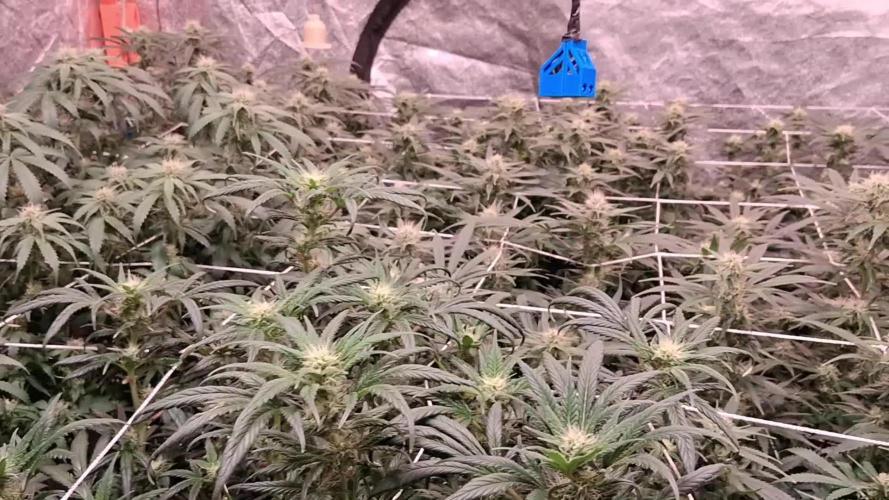
Flowering nicely, starting to stack a little already.
Did a 50% defoliation and removal today. going to remove some more popcorns and climate blockers tommorow.
There are allot of tops. I have to train myself on training plants better to dial in how many cola tops i want and get them at the same height.
Not a strong smell coming off but when you smeel the fingers , Ooohhh its so smooth ans sweet.
This is looking like its going to be a big year for the tent.
I am liking the Canna nutes.
Delay after delay on dripper setup i am now puttin three more valves in for flushing off flush water reservoir, just waiting for parts and assembly.
Home Assistant is fantastic at controlling entire setup!
Lets roll with it.
Likes
2
Share


@Elguacho420
Follow
Primera semana de crecimiento de estás critical, fue una semana sin complicaciones, humedad relativa en 40% y temperatura rondando 20-23 grados, tienen un color espectacular boludo, estoy deseando que llegue la época de florar. Volvemos por aquí las proximas semanas guachines . 🇦🇷🇪🇸 Muchos humos para todos 💨💨💨
Likes
12
Share


@Archieballs
Follow
All growing well leaves are starting to fatten. Mazar and Lime are each 6cm and Ultimate is 9.5 cm. Watering ph water at 200ml as needed.

Likes
Comments
Share

@AkatsukiVirtue
Follow
No huge changes.
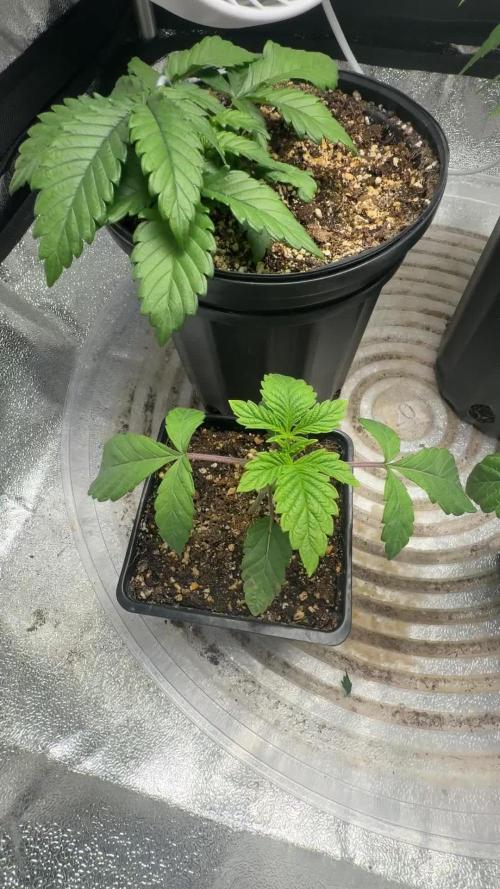
GPA Cookies are still growing albeit slowly due to the cold. I hope it starts picking up soon.
HUGE defoliation on the Chocolate Skunk clone. This girl is responding very well.
Money Maker is just doing its thing! I didn’t expect much from this plant, but that just means it has no pressure and can take its time!





Likes
2
Share


@MrGreen_theOG1978
Follow
I dropped my ppms tremendously because of how much nitrogen floraflex has in its bloom. Since dropping the ppm and putting my stronger lights on. Spider farmer sf4000 and my szhlux 8000 with UV and IR. The aglex k4000 are just not doing the job and I've noticed a increase in production since adding the bigger lights they are more happy. And my leaves aren't as dark. I've grown this plant a million times in soil and the leaves never get this dark so idk.
Appreciate you checking me out and sticking around. ✌️

Likes
19
Share


@TheCannaProphet
Follow
----------------------------------------------
~Sweet Seeds Sweet Zenzation (SWS84)~
----------------------------------------------
Zkittlez is one of the most famous and potent strains found on the west coast of the USA. Sweet Zenzation (SWS84) derives from a cross between an elite clone of Zkittlez combined with a specially selected Grape Ape clone, which is one of the strains used to develop the original Zkittlez.
The result is a predominantly Indica genetic hybrid. It produces a large amount of resin-soaked flowers. It is both relaxing and stress-relieving, yet it also stimulates the imagination and conversation, an effect that is normally associated with sativa strains.
The flowers have a high terpene content, an exquisite aroma and sweet taste, with hints of fruit-flavored candies, hardwood undertones, shades of lemon, cypress and subtle aromatic peppers.
Variety: Sweet Zenzation (SWS84)
Indica: 70%
Sativa: 30%
THC: 16-23%
CBD: 0.2%
Indoor Yield: 450-650 g/m²
Outdoor Yield: 400-700 g/plant
Effects: Creativity, Stimulating, Happiness, Relaxing
Taste: Spicy, Fruity, Citrus, Lemon, Candy, Cypress, Sweet
________________________________________________________________________________________________________________________________________________________________________________________________________________________________________________________________________________________________________________________________________________________________________________________________________________________________________________________
THE SETUP:
~Planted into Jiffy Peat Pellets that were hydrated with de-chlorinated water with SuperThrive added then ph'd to 6.0 @ 80℉
~Grown 100% organic in 10g fabric pots with Mother Earth 70/30 Coco/Perlite medium amended with 2tbs/g of Down To Earth 4-4-4 / 2 cups/g of Earthworm Castings / 1tbs/g of Dr. Earth Flower Girl 3-9-4, 1tbs/g of Dr. Earth Bat Guano, 3/4 cup of Down To Earth Azomite and 1 tsp/g Down To Earth Fish Bone Meal.
~24hr light cycle during Germination / 19/5 light cycle for Vegetation and 12/12 for Flower
~Straight water ph'd @ 6.2-6.8 when needed and weekly Compost Tea's.
__________________________________________________________________________________________________________________________________________________________________________________________________________________________________________________________________________________________________________________________________________________________________________________________________________________________________________________
Weekly Updates:
9/27- Week Seven of flower here we go! She's looking good to go with her flowers stacking and her trichome production continuing to coat her flowers!
Today she was given 1.5g of de-chlorinated water which was ph'd to 6.2 @ 72℉ which I gave her half through her drip pan (bottom chuggin), the remainder trough the medium. I also gave her pot a 1/4 turn.
9/29- Yesterday I didn't water her, only turned her pot and checked her over... Wow! She's really ramping up the trichomes making her flowers look like their sugar coated! 🤩
I watered her today with 1.5g of de-chlorinated water with 1 tsp/g of unsulfured molasses added which was then ph'd to 6.4 @ 72℉, The molasses will give the microbial colony some additional food as well as supplying micro-nutrients to the plant. I finished out the daily maintenance giving her a check over and turning her pot 1/4 turn to ensure she gets light to every inch of her.
10/1- Yesterday was a 'no water' day as her pot was still fairly heavy to lift. Today she was watered with her usual of 1.5g of de-chlorinated water which was ph'd to 6.2 @ 72℉.
Her flowering continues to impress me with her trichome production covering her flowers with 'frost' she's a sight for sore eye's! 😍
The end of next week will be the beginning of her wrapping up with the 'Finish Line' approaching by Week 9 or 10!
10/3- With Week Seven coming to a close we're going into the last 2-3 weeks for this lady and she's right on track, looking like a Rock Star! 🤩
I watered heavy yesterday and added 1 tsp/g of Unsulfured Molasses to the 1.5g of de-chlorinated water which was then ph'd to 6.6 @ 72℉.
Her pot had some weight to it when I checked today so I'll skip watering her until tomorrow. I finished up today by checking her over and giving her pot a turn.
~Thanks for stopping in! This epic run will be wrapping up in the coming weeks...Stay lifted and be Blessed! 😎🙏~

Likes
Comments
Share

@JNSGenetics
Follow
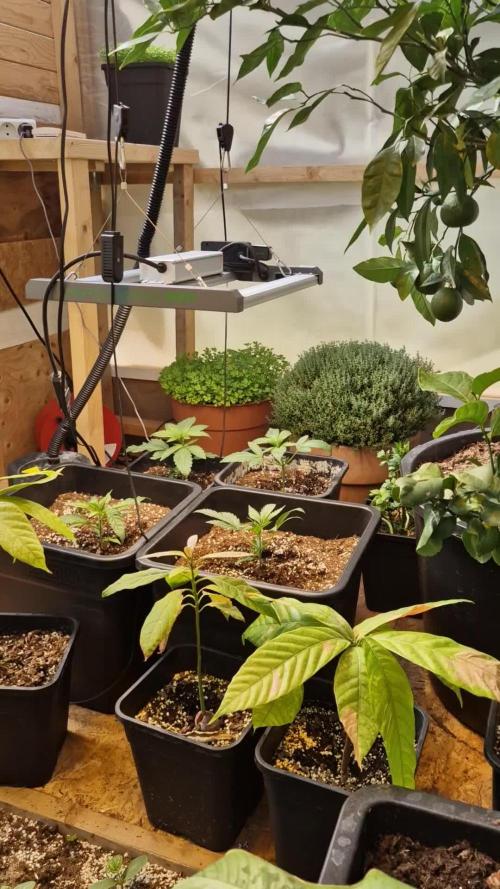
Great growth the last few days. Its around 30 degrees celcius mid day and I keep it at 60% relative humidity. Over 60% RH leads to water fog on the greenhouse walls. They seem to thrive well enough
