Likes
Comments
Share
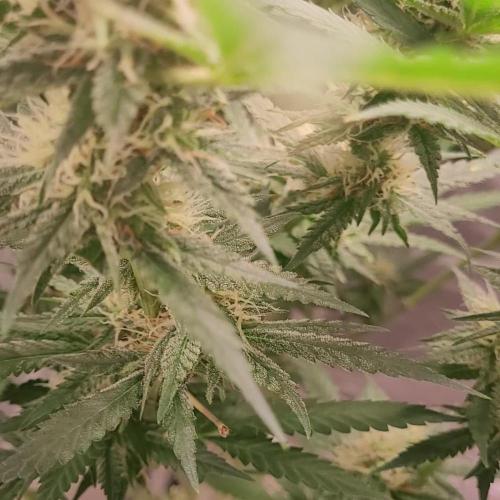
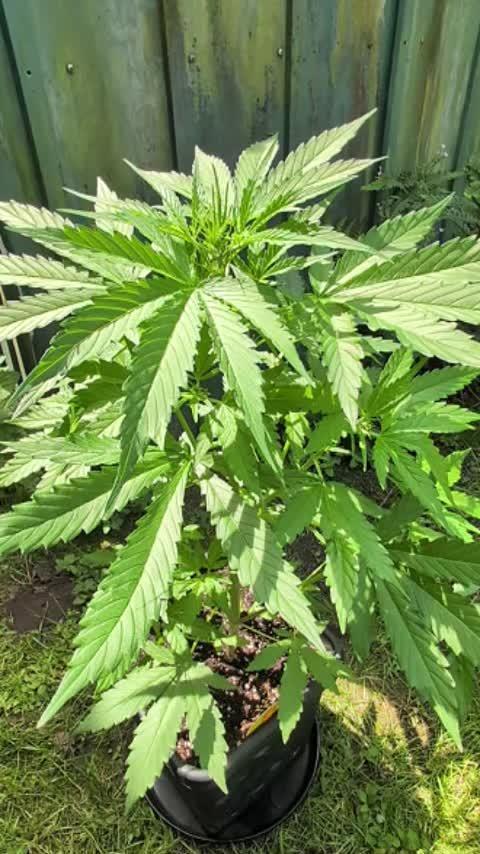
One more week with no more than just appreciating these babies growing. After one feed with just water this week I feed them with Biobizz nuts once more. Following the same chart as last week.
Likes
23
Share
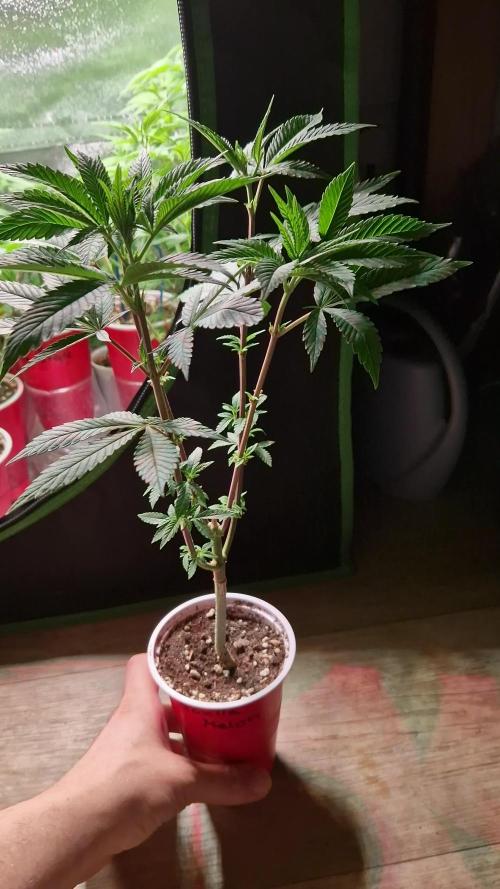
Básicamente lo mismo, aunque está semana pilló bastante más horas de luz(tuve que irme fuera de casa dos findes seguidos, en los cuales la dejé con la luz encendida full 24/7 en la caja) Como experiencia utilicé café reposado 48h para "alimentarla" e intentar bajar el Ph de la tierra (coco ph6+hummus ph7+vermiculita ph8= ph total 7) El otro experimento fue cubrir la tierra con coco para que el tallo eche raíces y aprovechar su espigamento! Las horas de luz solía dejarla 8h en bombilla mientras duermo, y el día la pongo en la ventana a que tome el fresco, pero apenas tiene luz directa, me da la sensación que crece más rapido cuando vuelvo del finde, estoy replanteandome tenerla más tiempo en la caja con luz, porque la veo aún pequeña, y quizá ponerle un ventilador de pc o algo🤔..veremos, aún tengo el papel de aluminio al lado de la caja y ni se lo he puesto, con eso os lo digo todo☝️🎃
Likes
13
Share
Hello Diary, Titan F1 is ready for harvest, on day 63. Milky Way F1 and Apollo F1 will wait another week in my estimation. So, 72 days since I put the seed in the ground. 68 days since Titan F1 sprouted. Really fast, and the result is incredible. Titan F1 is a really beautiful plant. The flowers are hard to the touch, really compact, and smell wonderful. The flowers are covered with trichomes and it looks like it is covered with ice crystals. Watering was more frequent this week due to the high temperatures, they needed a lot of water and so did the Titan F1. At the end of the week, the 63rd day to be exact, after taking photos, I cut branch by branch and put them in a cardboard box to dry. Considering that two plants still remained on the farm, I had to protect the flowers from the penetration of light. Here's what it looked like last week. 26/06/2023 - Day 58. Watering. Only two days later, the plants drank all the water, so I watered them with two liters for each individual plant. 29/06/2023 - Day 61. Watering. I repeated the procedure as I did three days earlier. 01/07/2023. - Day 63. Photographing plants. After I took the photos, I cut the Titan F1 branch by branch and put it in a cardboard box to dry. That's all I went through with the Titan, I wrote and documented as much as I could. If anyone has a question related to this strain, feel free to write in the inbox.
Likes
15
Share
So many things have changed. My partner left me and took the left plant. I did more defoliation and performed lollipoping. It's a pity I couldn't do it a week ago. Hope they will grow much, I’m really scared of receiving popcorn.
Likes
42
Share
Alot going on in my personal life so im kinda ghosting this page, sorry! Hope you still like the diary:) Update: the strech is getting real! Au#1 will recieve a little curing method for her dried look: ill let her dry out just a bit and then give her just water for once. Should solve the issue, besides that: bloom madness as always (my grow guru told me that blooming phase is always a hassle)
Likes
8
Share
end yield of smokeable: 73gs end yield boof: 41.5gs
Likes
12
Share
MIMOSA by ROYAL QUEEN SEEDS Week #19 Overall Week #2 Flower This week this lady looking good👍she's starting to make little buds she's nice and green dealing with the elements no issues!! Stay Growing!! ROYAL QUEEN SEEDS MIMOSA
Likes
150
Share
@Ferenc
Follow
Day 80, 22nd of October 2020: 3rd week of flowering! Happiness she needs a lot of boost hard to keep up. She loves fertilization too much..... I mean before always craving for nitrogen now qould need more potassium and phosphorus hard to keep up. I also detect deficiency based on the leaves getting lighter and brown spots but I do feed her as much as I can really. This week i have relised the first nice trichomes started "sitting" on the leaves as well and the pistils coming out nicely pre flowers forming. Let's go.
Likes
8
Share
@phobic94
Follow
This week I defoliated the plants a bit. The plants have burnt leaf spots so I am going to give them a few watering sessions without feeding them with a PH of 6 next week I plan to switch them to 12-12.
Likes
13
Share
left for couple days only to arrive home to an empty resi lol 😲 filled about 3gal before leaving but im learning how much these girls drink and i should of left them at least 5g in the tank...still they look unfased by it and are still streching a bit...just been adding Dr.Higas Em-1 and fish sh!t to resovior once every couple weeks
Likes
16
Share
Here’s my try at lemon pie from Fastbuds, of the 3 beans I got 1 displayed traits of ruderalis is her fan leaves and stretched to 4 ft tall. The bud structure is a little fluffy but smells great and is a good stone. I would cultivate it again and I would recommend a scrog and not to put them too close together.
Likes
32
Share
@Ferenc
Follow
Mini group cute 😍 I like art, bonsai cannabis :) Honestly I had some issues I had to change the soil no choice but all good now they started coming. Cute little bonsai girls. Fetrilization continues the same way on Monday, Wednesday and on Saturday with the mix above :)
Likes
40
Share
@xbrico
Follow
Day 50 - All still ticking along nicely. Tank topped up the other night...think I am starting to see the 1st signs of Stretch, 1 week in to 12/12 (well, for the 1st few days it was more 12.25/11.75 but its adjusted now. Now just tucking and weaving the canopy and attempting to keep things even(ish). Refreshed the CO2 Milk Jug and thats about it for today. Enjoy the time lapse of last week (!st week of 12/12).
Likes
13
Share
@GrowerGaz
Follow
The autopots are flying now , you can see the Cuppa T has gone from the biggest to the smallest plant. In 10 days. I have been defoliating daily as the plants are growing so fast now. Will flip on Monday hopefully there should be a new flowering light arriving soon, a slight upgrade. I have also been giving the plants a weekly foliar feed with some of the KNF nutrients I have , FAA (Fish Amino Acid) WCAP ( Water Soluable Calcium Phosphate ) and LAB ( Lacto Bacillus )
Likes
8
Share
Mulberry F3 Day 63 All is well with Miss Mulberry this morning. Today was a feed watering and she received two tsp each of bloom nutrients. Biggest change is I went ahead and up the lights to 75 percent power and am cranking out between 950-1000 PPFD and in the neighborhood of 65 DLI @ 18/6. We will keep an eye on her for any signs of light stress.
Likes
47
Share
What's in the soil? What's not in the soil would be an easier question to answer. 16-18 DLI @ the minute. +++ as she grows. Probably not recommended, but to get to where it needs to be, I need to start now. Vegetative @1400ppm 0.8–1.2 kPa 80–86°F (26.7–30°C) 65–75%, LST Day 10, Fim'd Day 11 CEC (Cation Exchange Capacity): This is a measure of a soil's ability to hold and exchange positively charged nutrients, like calcium, magnesium, and potassium. Soils with high CEC (more clay and organic matter) have more negative charges that attract and hold these essential nutrients, preventing them from leaching away. Biochar is highly efficient at increasing cation exchange capacity (CEC) compared to many other amendments. Biochar's high CEC potential stems from its negatively charged functional groups, and studies show it can increase CEC by over 90%. Amendments like compost also increase CEC but are often more prone to rapid biodegradation, which can make biochar's effect more long-lasting. biochar acts as a long-lasting Cation Exchange Capacity (CEC) enhancer because its porous, carbon-rich structure provides sites for nutrients to bind to, effectively improving nutrient retention in soil without relying on the short-term benefits of fresh organic matter like compost or manure. Biochar's stability means these benefits last much longer than those from traditional organic amendments, making it a sustainable way to improve soil fertility, water retention, and structure over time. Needs to be charged first, similar to Coco, or it will immobilize cations, but at a much higher ratio. a high cation exchange capacity (CEC) results in a high buffer protection, meaning the soil can better resist changes in pH and nutrient availability. This is because a high CEC soil has more negatively charged sites to hold onto essential positively charged nutrients, like calcium and magnesium, and to buffer against acid ions, such as hydrogen. EC (Electrical Conductivity): This measures the amount of soluble salts in the soil. High EC levels indicate a high concentration of dissolved salts and can be a sign of potential salinity issues that can harm plants. The stored cations associated with a medium's cation exchange capacity (CEC) do not directly contribute to a real-time electrical conductivity (EC) reading. A real-time EC measurement reflects only the concentration of free, dissolved salt ions in the water solution within the medium. 98% of a plants nutrients comes directly from the water solution. 2% come directly from soil particles. CEC is a mediums storage capacity for cations. These stored cations do not contribute to a mediums EC directly. Electrical Conductivity (EC) does not measure salt ions adsorbed (stored) onto a Cation Exchange Capacity (CEC) site, as EC measures the conductivity of ions in solution within a soil or water sample, not those held on soil particles. A medium releases stored cations to water by ion exchange, where a new, more desirable ion from the water solution temporarily displaces the stored cation from the medium's surface, a process also seen in plants absorbing nutrients via mass flow. For example, in water softeners, sodium ions are released from resin beads to bond with the medium's surface, displacing calcium and magnesium ions which then enter the water. This same principle applies when plants take up nutrients from the soil solution: the cations are released from the soil particles into the water in response to a concentration equilibrium, and then moved to the root surface via mass flow. An example of ion exchange within the context of Cation Exchange Capacity (CEC) is a soil particle with a negative charge attracting and holding positively charged nutrient ions, like potassium (K+) or calcium (Ca2+), and then exchanging them for other positive ions present in the soil solution. For instance, a negatively charged clay particle in soil can hold a K+ ion and later release it to a plant's roots when a different cation, such as calcium (Ca2+), is abundant and replaces the potassium. This process of holding and swapping positively charged ions is fundamental to soil fertility, as it provides plants with essential nutrients. Negative charges on soil particles: Soil particles, particularly clay and organic matter, have negatively charged surfaces due to their chemical structure. Attraction of cations: These negative charges attract and hold positively charged ions, or cations, such as: Potassium (K+) Calcium (Ca2+) Magnesium (Mg2+) Sodium (Na+) Ammonium (NH4+) Plant roots excrete hydrogen ions (H+) through the action of proton pumps embedded in the root cell membranes, which use ATP (energy) to actively transport H+ ions from inside the root cell into the surrounding soil. This process lowers the pH of the soil, which helps to make certain mineral nutrients, such as iron, more available for uptake by the plant. Mechanism of H+ Excretion Proton Pumps: Root cells contain specialized proteins called proton pumps (H+-ATPases) in their cell membranes. Active Transport: These proton pumps use energy from ATP to actively move H+ ions from the cytoplasm of the root cell into the soil, against their concentration gradient. Role in pH Regulation: This active excretion of H+ is a major way plants regulate their internal cytoplasmic pH. Nutrient Availability: The resulting decrease in soil pH makes certain essential mineral nutrients, like iron, more soluble and available for the root cells to absorb. Ion Exchange: The H+ ions also displace positively charged mineral cations from the soil particles, making them available for uptake. Iron Uptake: In response to iron deficiency stress, plants enhance H+ excretion and reductant release to lower the pH and convert Fe3+ to the more available form Fe2+. The altered pH can influence the activity and composition of beneficial microbes in the soil. The H+ gradient created by the proton pumps can also be used for other vital cell functions, such as ATP synthesis and the transport of other solutes. The hydrogen ions (H+) excreted during photosynthesis come from the splitting of water molecules. This splitting, called photolysis, occurs in Photosystem II to replace the electrons used in the light-dependent reactions. The released hydrogen ions are then pumped into the thylakoid lumen, creating a proton gradient that drives ATP synthesis. Plants release hydrogen ions (H+) from their roots into the soil, a process that occurs in conjunction with nutrient uptake and photosynthesis. These H+ ions compete with mineral cations for the negatively charged sites on soil particles, a phenomenon known as cation exchange. By displacing beneficial mineral cations, the excreted H+ ions make these nutrients available for the plant to absorb, which can also lower the soil pH and indirectly affect its Cation Exchange Capacity (CEC) by altering the pool of exchangeable cations in the soil solution. Plants use proton (H+) exudation, driven by the H+-ATPase enzyme, to release H+ ions into the soil, creating a more acidic rhizosphere, which enhances nutrient availability and influences nutrient cycling processes. This acidification mobilizes insoluble nutrients like iron (Fe) by breaking them down, while also facilitating the activity of beneficial microbes involved in the nutrient cycle. Therefore, H+ exudation is a critical plant strategy for nutrient acquisition and management, allowing plants to improve their access to essential elements from the soil. A lack of water splitting during photosynthesis can affect iron uptake because the resulting energy imbalance disrupts the plant's ability to produce ATP and NADPH, which are crucial for overall photosynthetic energy conversion and can trigger a deficiency in iron homeostasis pathways. While photosynthesis uses hydrogen ions produced from water splitting for the Calvin cycle, not to create a hydrogen gas deficiency, the overall process is sensitive to nutrient availability, and iron is essential for chloroplast function. In photosynthesis, water is split to provide electrons to replace those lost in Photosystem II, which is triggered by light absorption. These electrons then travel along a transport chain to generate ATP (energy currency) and NADPH (reducing power). Carbon Fixation: The generated ATP and NADPH are then used to convert carbon dioxide into carbohydrates in the Calvin cycle. Impaired water splitting (via water in or out) breaks the chain reaction of photosynthesis. This leads to an imbalance in ATP and NADPH levels, which disrupts the Calvin cycle and overall energy production in the plant. Plants require a sufficient supply of essential mineral elements like iron for photosynthesis. Iron is vital for chlorophyll formation and plays a crucial role in electron transport within the chloroplasts. The complex relationship between nutrient status and photosynthesis is evident when iron deficiency can be reverted by depleting other micronutrients like manganese. This highlights how nutrient homeostasis influences photosynthetic function. A lack of adequate energy and reducing power from photosynthesis, which is directly linked to water splitting, can trigger complex adaptive responses in the plant's iron uptake and distribution systems. Plants possess receptors called transceptors that can directly detect specific nutrient concentrations in the soil or within the plant's tissues. These receptors trigger signaling pathways, sometimes involving calcium influx or changes in protein complex activity, that then influence nutrient uptake by the roots. Plants use this information to make long-term adjustments, such as Increasing root biomass to explore more soil for nutrients. Modifying metabolic pathways to make better use of available resources. Adjusting the rate of nutrient transport into the roots. That's why I keep a high EC. Abundance resonates Abundance.
Likes
17
Share
Una cepa muy fácil de cultivar, y muy agradecida de los cuidados y alimentos dados... En sus últimas 3 semanas engordaron muy bien llegando a formar muy lindos apicales centrales.
Likes
2
Share
@51sGarden
Follow
Posting this as I’m on the last few days of the 3rd week from germination Great progress, a lot of roots for such a short period but not too much plant growth, will start watering daily instead of watering every 2-3 days Topped the girls today (Day 18 from germ) and starting to do mainline on all the Bubba kush.
Likes
11
Share
@Thomas86
Follow
Plants at the back look very green and overfed so I dropped the Ec a little, Had to defoliate again to try combat the high humidity, hoping it drops a bit, probably stunted the growth a little but hoping I didnt stress them too bad, My lights are max height so hoping they stop growing vertically, they got a little taller this week and some leaves are getting bleached.