


Likes
Comments
Share


@eldruida_lamota
Follow
Vamos familia, hoy se actualiza una semana más , 2 semana de floración cumplida, y no veáis qué ritmo están cogiendo estás Purple OG Kush de Dutchfem.
Están bien sanas su crecimiento es vigoroso y el desarrollo de las flores progresa adecuadamente.
No me puedo quejar de nada la verdad.
Agrobeta:
https://www.agrobeta.com/agrobetatiendaonline/36-abonos-canamo
Mars hydro:
Code discount: EL420
https://www.mars-hydro.com/
Las maximas de temperatura no superan los 26 grados y las mínimas no bajan 20, así que no me puedo quejar.
Los niveles de humedad también son los correctos van entre 50%/65% de humedad relativa.
Por supuesto el Ph lo estamos dejando alrededor de 6.
Hasta aquí es todo, buenos humos 💨💨💨

Likes
1
Share

@The710Garden
Follow
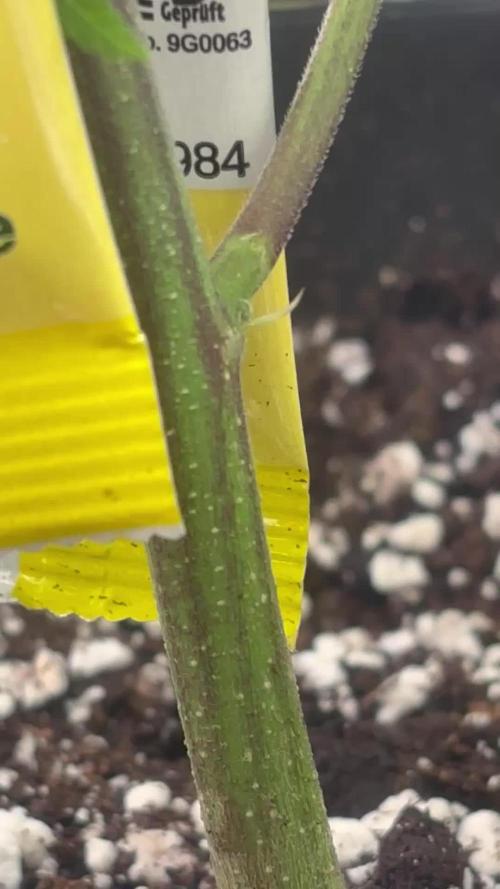
Get yourself some top Shelf clones from krummegurkenstecklinge mit dem Code „The710“ you can get 10% off your purchase
Likes
24
Share

@Condocannibus
Follow
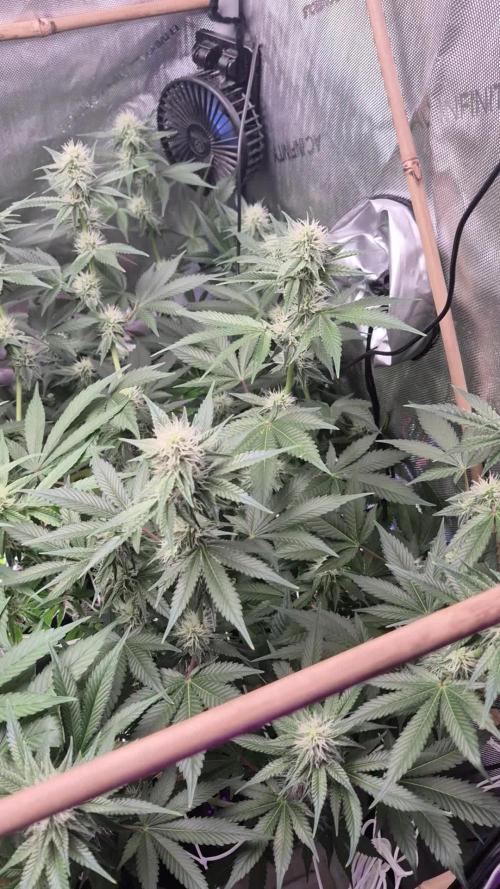
End of week 3 stretch is coming to the end.
Buds have formed nicely. Starting to frost and the smell is amazing. Open the tent and it nails you right in the nose.
No deficiencies to report. Smooth week.
Shes a thirsty one just like her sister 5 liters every morning and a lite pot 24 hours later.
Thanks everyone ☺️

Likes
4
Share



Likes
11
Share

@NidoR420
Follow
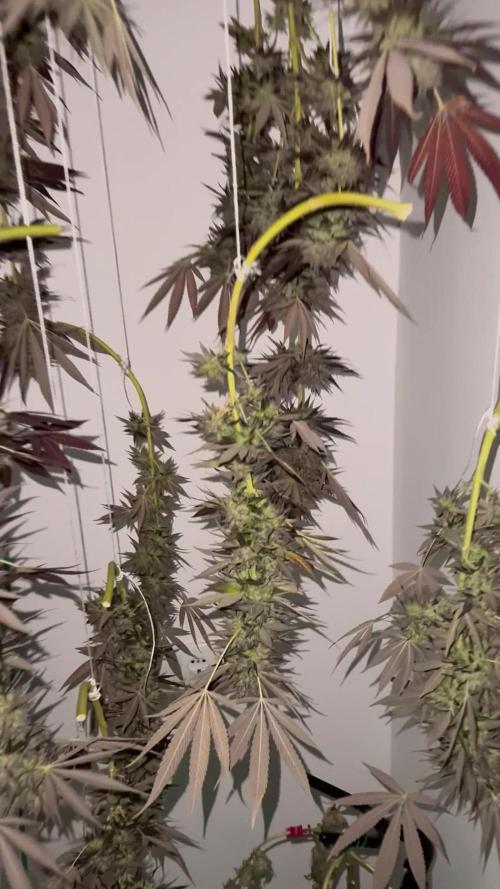
All 3 plants cut and just Ozz remaining to dry and trim. Terrible outcome for #4 as I had to throw more than half of the plant away due to bud rots. I’m still really confused about what happened: the day before harvest I noticed and removed 3 bud rots from the plant - so far so good. All remaining buds were fine, but when trimming I realised every single top was maroon-ish at the base and I could clearly see a start of mold when opening some of them. Although I could clearly confirm what it was with a 30x lens, the white spots were extremely scarce and small (less than 1x1mm each time). It doesn’t seem really coherent with how it should have spread. Nonetheless, I didn’t take risk and threw away any bud where I could identify white mold with the lens, and put aside the ones where I had a doubt in pop corns (the “7g maybe”, cf below) to track the evolution.
Likes
2
Share


@KeemBboomin
Follow
This Week On KeembBoomin
The smells are amazing walking into the room no the mention once I actually open the tent, a very sweet tropical aroma at first sniff should I say. In tent 1 on the right there are two Bubble Gums(from seedsupreme) are growing completely different at the bottom right she is very orange but not as frost, but the girl in the back right is not so orange but very frosty.
And then there is my favorite Amnesia Haze (Also from Seedsupreme) I always keep one of those girls growing never fails extremely frosty smells like gassy orange citrus and smokes just perfect for me and a nice yield girl for sure last time I got a little over a quarter pound just from one plant
Tent 2
Now these plants were me having a little fun as well as testing some strains the see if I will grow again. So I’m the front I have a Peanut ButterPie x Royal Kandy(Won it on 420) this was a grow again I just have to many seed so I grow them 4 at a time, BUT this is the orangest most frostiest MOST dense flower I have ever seen. To the back right I have a GMO Cookies I found the seed in a shake bag from the dispensary I’m not really a fan of the buds are frosty the the nugs are so tiny looks like I’m going to have nothing but popcorn but anyway, And last we have in the back left corner some random bag seed I took off my friend hands cause I could not stand to see it look the way it did I SHOULD HAVE LEFT IT she is so shitty the only thing I like about her is that all her buds look like a amazing shape and size BUT no frost just plant like what????
Likes
3
Share


@DRAZ_420
Follow
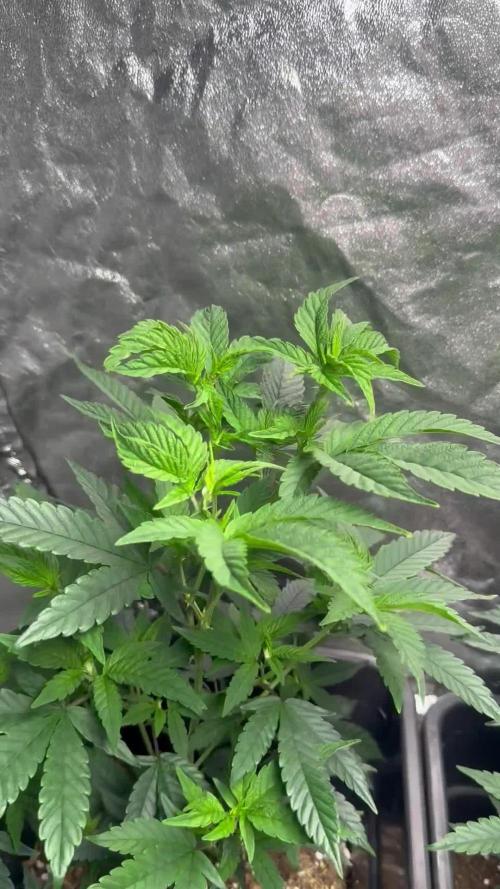
All of the branches have been tied down for LST she is reacting super well so far. The smell on it is definitely becoming apparent. Love how they are reacting ti the nutrients from green leaf as well very responsive. Everytime i prune leaves of more just grow immediately pretty amazing. Cant wait to smoke this plant :)


Processing
Likes
2
Share


@Pauwela
Follow
8/25 Sat Hurricane Lane downgraded to TS, able to bring girls out of the shed, took off bamboo trellis's, girls from 35"-39" tall, 35 days old,

Likes
12
Share


@BudMunchies
Follow
09/24: flowing away! They are looking good. Water hooked up today. Looking forward to seeing how they progress this week. Purple is coming in! 😀

Likes
24
Share


@ThatoneAKguy
Follow
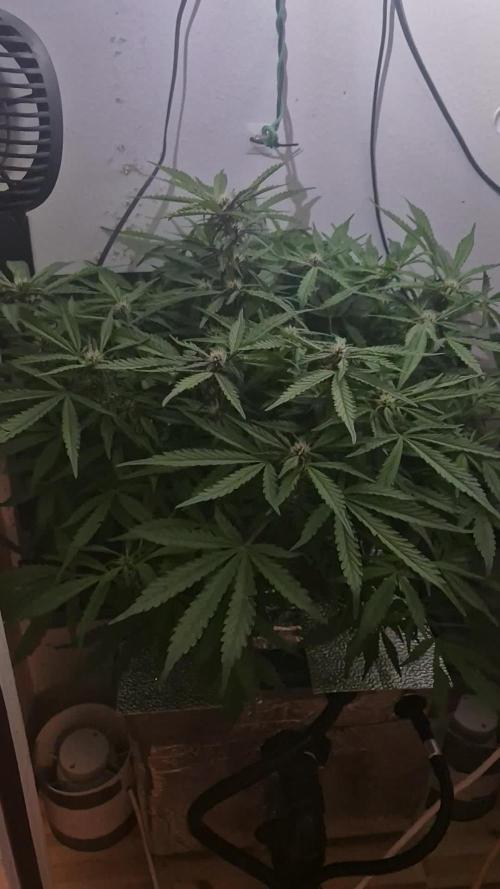
I started in with the maximum ppm of about 1500 on a fresh reservoir and a ph of 6.1. I also went full strength with beastie blooms 0-50-30 at 1 tablespoon for 6 gallons of water. The white hairs are turning orange now which is the sign of times to BULK UP! My diary seems to be a little off on this 45-55 day flower as today we mark day 37 of 12-12.

Likes
2
Share

Likes
6
Share


@LoganatorDude
Follow
Well finally by day 80 the heavy rain is over and we are looking at afternoon showers, but sunny hot and humid until then. Well, relatively humid. About to finally get in there and tying some branches and picking little sucker branches that I don’t want. Branches appear as suckers to me when they’re more than likely located lower on the plant or at the interior in a way where it would grow with less light or grow inside the plant and congest the airflow, again with less light.
I fed her a 2 Gallon Heavy Feeder mix. It will be watered in with tsp water that is 156 PPM @ pH of 8.5. Normally ALL waterings are done with an incredible amount of water from the garden hose that is from a well. I intend to feed with soil amendments and top dressings, however localized feeds or things like worm castings tea is coming up. I also foliar fed her one evening with phosphates, and the fulvex which is basically magnesium and fulvic acid with a yucca wetting agent. I want to help her to spread those roots!
I know it sounds like a lot of molasses. But I’ve never had issues with large doses in these situations outdoors. The plants and microbes go bonkers for the stuff!
Also that feed water went in strong but as it was watered in with the regular water, it diluted the tds quite a bit.
Literally the following day, I am noticing what looks like more than preflowers. Is she really starting to flower an entire month early?! Last week er so, we had those 4 days of really cold, dark, rainy weather, that came after some nasty hot and super dry weather. Multiple plants have begun to flower on me! I suppose there is no problem getting an early start with things. But not this!
I don’t want to go back and forth! She can be in vegetative stage and grow bigger and spread her roots. Grow and prepare for flowering stage. Then go into flowering stage and STAY in flowering, 100%. Not something crazy like: stop veg(preparing for flower) and just flower out with what was developed, then 2 weeks later realize it was too early and go back to Veg, only to jump right back into flower! I don’t want some kinda of chaotic misdirection of energy, for most likely some weird results. But we shall see.
All I can say is, if she is going to flower, then flower hard! Don’t turn back.

Likes
7
Share


@CreatureCreator
Follow
Twiggy and Zoey will be hurting this week. Trying a bit of drought stress to see how it will affect the terps. They look great going into it, so we'll see how it goes. Pots have dried out and are super light as of 5/21AM


Likes
6
Share


@Onlygrow99
Follow
Empezamos nuevo cultivo de semillas GBSTRAINS debo decir que no son las que pone dado que hasta Marzo no salen a la venta y no puedo publicarlas aun jejejej
Por otra parte todo lo demás 100% tal cual.
Se empezo a germinar el 09/02/24
Sustrato GBNUTRIENTS + Fertilizantes BOOM Nutrients + luminaria LED 780W RESINX GBLIGHTING
Técnica de cultivo sencilla con poda de bajos y en "strech" de flora una buena de poda da ramas bajas que no tienen luz + brotes bajeros sin luz.
Expresión natural de la planta con porra central + satélites en macetas de 1L con trasplante a 7L definitivo.
Serán 9 macetas definitivas de 7L para 120x120 con 780w LED
Vamos para alla.
**ACTUALIZADO**
26/02/24 Nuevas fotos con 17 días desde que se empezaron a germinar y, a partir de este próximo miércoles 28/02/24 empezamos a contar 1º semana de crecimiento.
Likes
422
Share


@Crashoverite
Follow
Hi all 😁
Welcome to my 🍌💜👊 week update.
Hope everyone keeping well and having a great week.
Thank you so much for your all support on this bananas journey 💜💚💜💚
What a amazing week. Very little to work around those beauties. The smell is so delicious already. They smells like sweet berries. Buds are loaded with trichomes, very sticky and hard as rocks especially on Athena. Trichomes are mainly clear and some parts milky. Absolutely love power of LST and how it worked on this strain. If you won't look under net it's almost impossible to see which cola belongs to main stem.
Week 11
Dec 25 - Dec 31
Dec 25-26
Joyful observation
Dec 27
Selective defoliation and
First watering for this week. Nutes adjusted, almost 8ltr between both. Runoffs PH on both at 6.2. I am finding this PH level for this strain as perfect. Girls are looking super healthy and drinking they mixture like crazy.
Dec 28-30
All is going smoothly. I can see more and more weight each day.
Dec 31
Secomd watering foe this week. 8 ltr beetwen both.
It's the last day of this week and also end of 2023!!
See you in the new year 🍾🥂🍀
Peace and love brothers and sisters ✌️💚
Links
https://2fast4buds.com/seeds/banana-purple-punch-auto
https://plagron.com
https://www.biobizz.com/
https://fishheadfarms.com/
Likes
42
Share


@iLoveGoodWeed
Follow
Week 9 - both gorilla ladies growing healthy and getting fat
9L Pot the bud is getting fat and frosty
12 Pot buds are now stretching and getting some frost
Likes
25
Share

@Meity
Follow
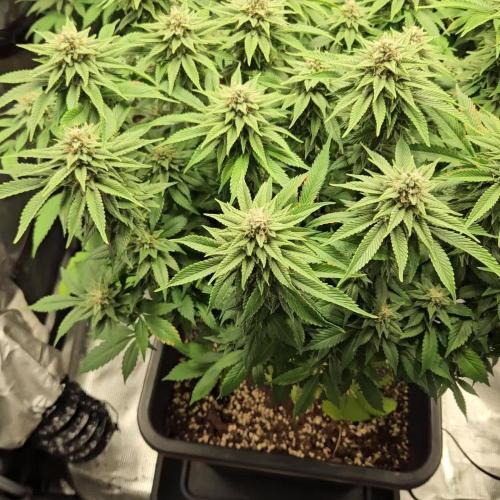
Blüte woche 7:
Es sieht soweit gut aus lediglich an ein paar Blättern habe ich braune Flecken entdeckt ich habe heute zur Sicherheit einmal s&r calmag gestreut.


