


Likes
Comments
Share


@drewnagy0510
Follow
I was very shocked on how fast it grewand how much it produced very great strain a must for you Indica lovers very strong I went to about 80% red hairs perfect smoke a lot of cannabinoids and a lot of leftover sugar leaves great for lovers of bubble hash


Likes
6
Share


@TherealNICOGREEN
Follow
Blir flyttet ud fra solen er oppe og indtil ved 21 tiden og ud igen ( indtil nattefrosten er over) jeg har VIRKELIG SET FREM TIL AT LAVE DISSE Dagbøger og VIDEOER OG EN MASSE ANDRE GODE FRØ FRA KANNABIA 🖤🧡🖤🧡💚☮️🖤💚🖤🧡🖤🧡.

Likes
16
Share

@420-Grow
Follow
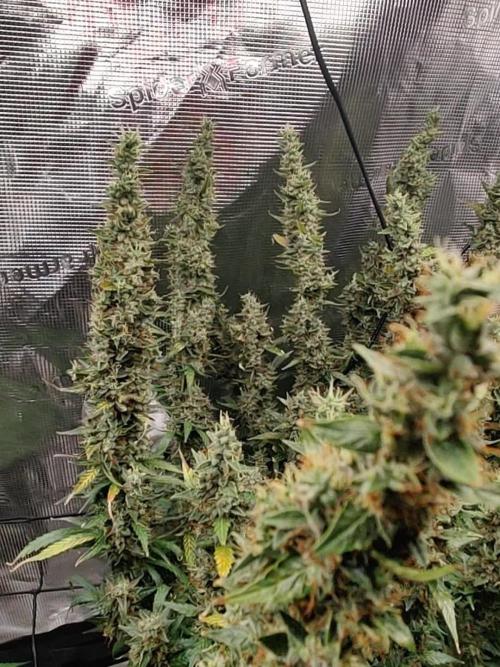
Hallo meine lieben 420grower.
Die Lady geht jetzt in den Endspurt und wird dann geerntet. Die Lady macht ein guten Eindruck bis auf paar Blätter aber ist ja bald fertig und Dan passt das. Mal gucken was rauskommt ich halte euch auf den laufenden euer 420-grow.
Likes
2
Share

@Lazuli
Follow
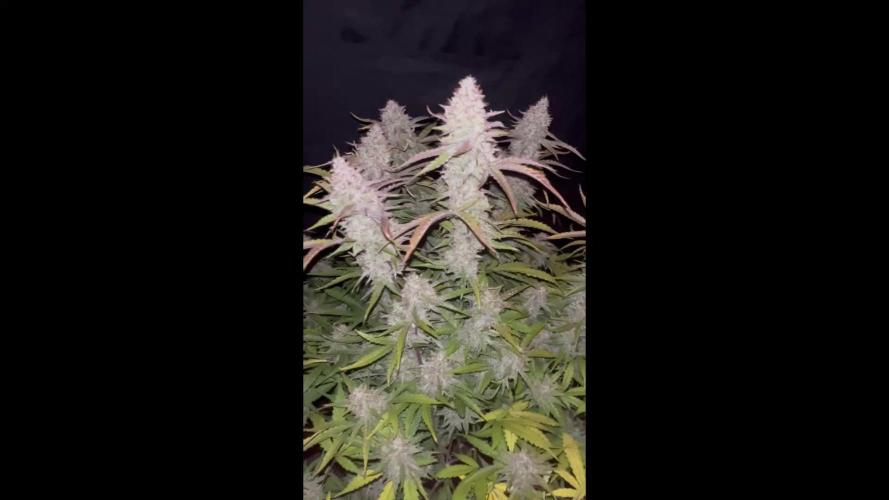
This has had to be the most easy strain to get dense buds and high yield at the same time.
This plant reached 1.3gr/watt

Likes
Comments
Share

@BigScarr
Follow
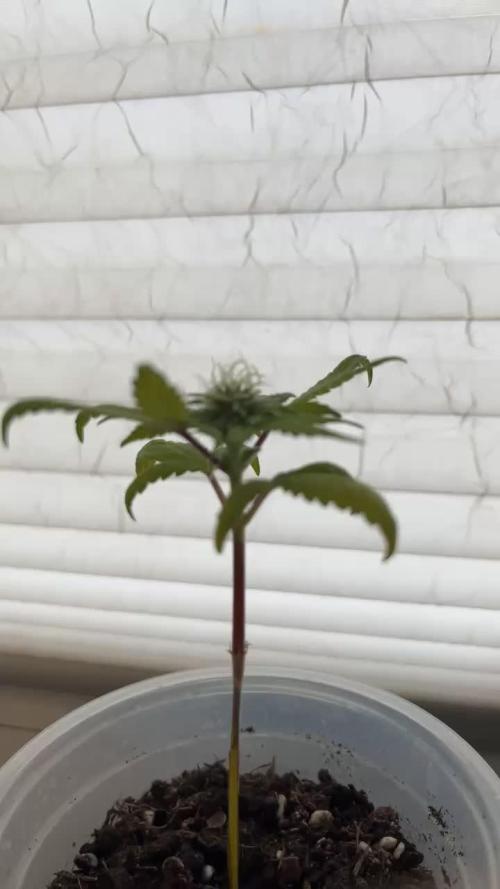
I just let her grow. Showed some love and care nothing special. As said im just trying out and curious how the plant will come out

Processing
Likes
7
Share


@CityFarmer
Follow
Hello everyone,
Been busy this week working around the house so not much I can say. Heres a little video of there growing...
See you guys next week

Likes
40
Share

@BUZIMAN
Follow
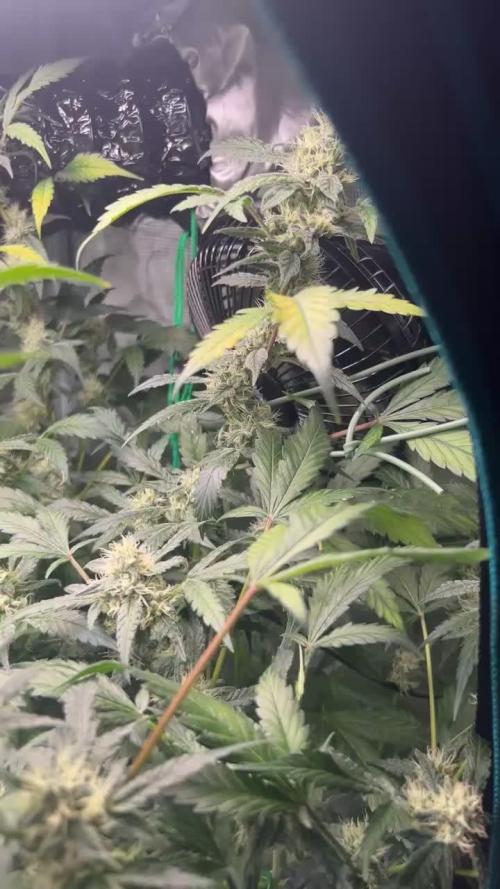
So far, everything is going great! The buds are starting to get really frosty and incredibly fragrant, and they’re drinking less and less. I’m really excited to see the final finish 😎☮️


Likes
39
Share


@Weird_Jimmy
Follow
👉The daily routine of twice daily fertigation has given me a small insight as to what Phil Conners may have gone thru. There has been promising changes however that re-assure me that the plant is indeed maturing and will finish soon. The top leaves are starting to fade, and a couple of amber trichomes have been spotted! So far the amber color is light, almost yellow, and should darken up a bit by harvest time. At the rate they seem to be getting cloudy/milky I could be harvesting in as little as 3 days, but that is just wishful thinking I'm sure. I'm hoping no more than 10 more days. But I will let the plant decide...as long as there are only a few clears and the rest cloudy then I will harvest.
👉I took one small cola tip bud from an upper level, secondary branch. It weighed 30g with leaves, 10g trimmed and when dried to 20% should be 2g. I did this to be able to inspect the buds with a little more stability when using the USB scope. Those pix are the first 6 on this page.
👉Nutrient mix is the same recipe: week 11 on the General hydroponics flora series drain to waste chart. I reduced the concentration to 1ms from 1.3. The saturation level for the pot is averaging around 1lt per fertigation. I give it 2.5l at lights on, and 2L 1-2hrs before lights off. For some reason this grow session there is a persistent/prolific algea growth on the outside of the pot (cloth pot). I have the same fan setup Ive been using all year. It may be that when I didnt spray the pot off for a couple week the algea got a firm hold on the pot. I use a pressure sprayer with a H2O2 solution (1gallon water with 60ml h202) to spray off the exterior of the pot every couple days. THis keeps it at bay somewhat. After harvest I will cut open the cloth pot to see if the algea extends inside the pot any and if has affected the roots.
👉 While trichome hunting is very kewl if good pictures are taken, its very frustrating to get a decent pic due to any slight shake causes the pic to blur. When doing daily eye loop inspections I dont turn off the grow lights or fans. But when trying to get pix I turn off all the fans and both grow lights. This helps a little when trying to take pix with the USB scope.I have the small scope mounted on a tripod and that eliminate my own movement, but just trying to focus proves to be tedious because any touch causes the image to shake wildly, which results in very slow progress as I search around the plant and try for decent pix. Today I got a tube extension set for my 35mm DSLR. It turned my regular 55mm lens into a macro lens. While its not the same as a regular macro lense, its way cheaper....35$ for the tube set as opposed to 300$ for an actual macro lens. THe high resolution allows me to get sharp images with a deeper feild of focus than the scope. I still need lots of practice and need to work on lighting. I included some cropped and un-cropped macro shots done with the camera. The other macro shots are the USB scope. You can see its still got plenty of clear, lots of cloudy, and an amber here or there. The areas that I have touched have strands of resin that look almost like spider silk. SOOOOOO frosty! Santa is going to really enjoy his milk and cookies when he visits my house.

Likes
11
Share



Likes
12
Share

@Bunterbiber
Follow
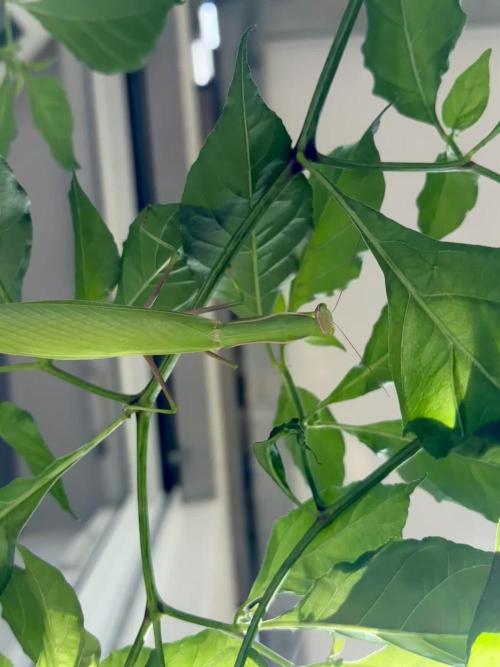
This week brought a little bit of action on the pest management front. I discovered some spider mites on the clover growing underneath the plant, so the clover got a much-needed haircut.
I immediately scanned the cannabis leaves with my microscope to check for trouble. Thankfully, I couldn’t find any live pests or the typical webbing on the plant itself, but knowing they were nearby, I wanted to play it safe. I sprayed both the clover and the cannabis leaves with a hydrogen peroxide solution, carefully avoiding the buds as much as possible. A day later, I followed up by treating the soil and the remaining clover with a neem oil solution.
Aside from that minor skirmish, the plant is still making a very strong, very good impression and looks super healthy overall. Now it's just a matter of keeping a close eye on her to see if those little critters try to make a comeback, but for now, everything is looking solid!

Likes
31
Share

@Hempface86
Follow
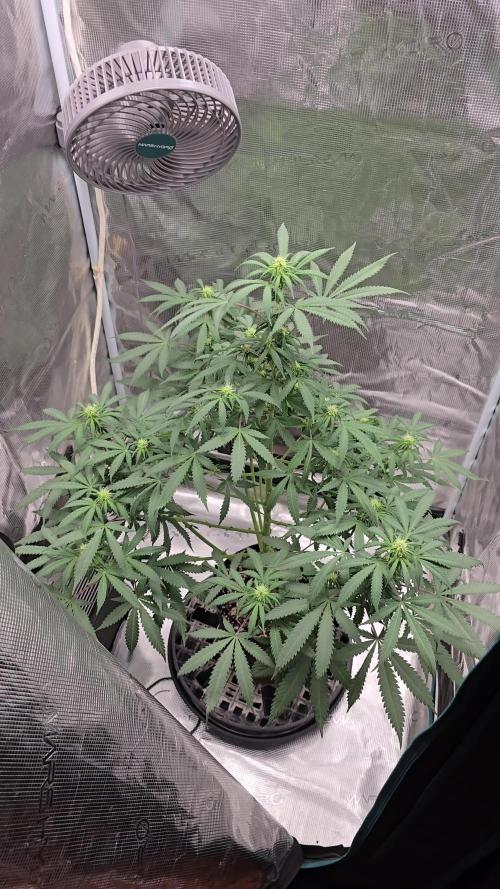
So like I said last week, this is definitely not an autoflower..10 weeks of veg in a one gallon container, it makes absolute, you know sense, and the second I flipped her, she flipped... So at this point i'm just hoping it's still purple haze... i will say she's been happy and she's growing right along, as you can tell she's crowning nicely, and she's stacking fairly quickly for what's supposed to be a heavier sativa leaning plant ... by the looks of her plant leaves, she looks like a right down the middle of the road hybrid.. As long as when she's all said and done, she looks and smokes good.You won't hear me complain... I really hope everyone is doing well. God bless and a happy growing ✌️
Likes
34
Share


@Bread_n_Buds
Follow
Our Rainbow Sherbet of course from Zamnesia like all my plants has been the territory of realization for an exceptional mainfolding.
After a topping that would seem very premature at the second internode (But that in autoflowering is also appropriate to delay flowering) I managed very well to make the lateral branches grow parallel to the ground. They form a T with the main stem that comes out of the ground a little. It seemed like it should be low, some joker even joked about it and instead it is becoming a nice little monster. It made the lateral branches start and all that then worked with a successful main lining on which I made the only mistake of leaving a little too much stuff at the bottom that I am cleaning up little by little as I understand that it will not see much light or will not produce satisfactory flowers.
The main stem that runs parallel to the ground is very beautiful to look at and is from the main lining manual.
The structure created with mainfoldindg, mainlining, topping and lst vari is very pleasant, the plant is at medium internodal distance and flowers quickly so it is a plant on which I would feel like recommending these techniques that it is true that they can slow down the harvests but they give a satisfaction to the sight and an unparalleled fun in making them.
We are still using soil, fertilizers and all the additives recommended by Plagron 100% organic. We are still in the early flowering program that maintains the same additives Power Roots, Sugar Royal, Pure Zym and adds the flowering stimulant Power Buds. Obviously the basic fertilizer is now Alga Bloom.
The Green Sensation hero of the late flowering will arrive and at the same time it will be time to remove power roots and a week later the enzymes. (The plant left to grow straight and straight ahead of time has been taking it for a while)
---- Decide on the right soil and calculate your fertilization schedule according to your soil on the official website.
-- www.plagron.com
Try a seed of this variety that drives us crazy..
---- https://www.zamnesia.io/en/11230-zamnesia-seeds-rainbow-sherbet-automatic.html
Zamnesia Description //A cross between Pink Guava, Sunset Sherbet and a hint of ruderalis, Rainbow Sherbet Auto offers a wide range of flavors, effects and more. This 70% indica-dominant strain reaches considerable THC levels (24%) and is suitable for both experienced growers and those taking their first steps in the world of cannabis cultivation.
All the best that mother nature has to offer is on ---- www.zamnesia.com
Likes
16
Share


@Samsemilla
Follow
Die fünfte Woche startet mit einer (Teil-)Entlaubung, das Blätterdach ist wieder sehr dicht gewachsen.
Die Blätter bekommen wieder ein satteres grün.
Irgendwann innerhalb der nächsten Wochen sollten sie ihr Geschlecht zu erkennen geben, noch sind sie etwas schüchtern.
Ich sehe die ersten Anzeichen, kann es aber noch nicht klar deuten - abwarten und Tee trinken.
Ich habe dem Wassertank meines Autopot Systems einen Luftstein hinzugefügt.
Wird das einen großen Effekt bringen? - keine Ahnung.
Kann es schaden? - ich denke nicht.
So langsam zeigen sich die ersten weiblichen Vorblüten, ich kann aber noch nicht bei allen 13 Pflanzen mit Sicherheit das Geschlecht bestimmen.


Likes
11
Share


@Napo89
Follow
Effettuato il lavaggio delle radici. Direi al massimo ancora 2 settimane per raccogliere. I fiori sono belli profumati, resinosi e compatti :)

Likes
20
Share


@Ultraviolet
Follow
Not particularly growing for speed or any dedicated reason this time round, just adding water and a abundande of positivity, gotta admit I do like the autoseed logo. Off we go again into the magical forest.
(Arthrospira platensis) cultivated in high-alkaline, mineral-rich water in Kailua-Kona, Hawaii. It is renowned for having a higher nutrient content, including more carotenoids and essential fats, compared to other spirulina brands. It is frequently cited as a "complete food" due to its dense concentration of proteins, vitamins, minerals, and pigments.
The nutritional profile of standard dried Spirulina platensis biomass. 3kg of spirulina powder has an approximate NPK ratio of 10-2-1 (or 10% Nitrogen, 2% Phosphorus, and 1% Potassium).
Here is the breakdown of the nutrient content for 3kg of powder:
Nitrogen (N): ~300g (10% of total mass)
Phosphorus (P): ~60g (roughly 2% of total mass)
Potassium (K): ~30g (roughly 1% of total mass)
3kg of spirulina powder is more than enough nitrogen for 4 cannabis plants in a 100-gallon pot—in fact, it is likely excessive and could cause severe nutrient burn or toxicity if not properly managed. Spirulina has a very high protein content (46% to 63% dry weight), which translates to a significant nitrogen source. It is often described as a 5-1-1 NPK fertilizer.
3kg (3000g) of powder in 100 gallons means 30g per gallon. General organic recommendations for potent amendments (like frass) are often around 1–3 tablespoons per gallon. 30g of powder is roughly 2-3 tablespoons, making this a very high-strength application rate if added all at once. Balance this with calcium/magnesium, and organic nutrient delivery in soil growing can lead to deficiencies in these nutrients.
Not all of that 100 gallon is used, so figuring out precise measurements was ballpark, but there is about 10kg of engineered biochar in that pot. Mostly in the top half. Ideally, I'd have 25kg in a full active 100-gallon, but......... don't mess with something that is not broken. Roots do not utilize the entire 100 gallons. This has been a couple of years of trial and error, mostly error. The amount of cations you can add in grams depends entirely on the specific cation exchange capacity (CEC) of your biochar and the type of cation being added. Biochar CEC values vary widely, typically ranging from 4 to over 300cmolc/kg. Multiple Biochars in use, ranging upwards of 100cmolc/km.
Different cations have different atomic weights
Potassium K+ 39.1g/mol.
Calcium Ca2+ 40.1g/mol.
Magnesium Mg2+ 24.3g/mol.
Nitrogen NH4+ 18.04g/mol.
You get more nitrogen bang for your buck. It all depends on the CEC of the biochar you use, but brrrrrrrrrr roughly I'm looking at 500-600 grams worth of elemental cation exchange capacity, give or take. That's just for the biochar alone. Elemental cation exchange capacity refers to the ability of materials—such as soil, minerals, and biochar to adsorb, hold, and release positively charged ions Ca2+, Mg2+, K+, Na+, Al3+, and Zn2+. This capacity is a critical measure of nutrient availability in soil and energy density in electrochemical systems.
Added calmag 2:1 to complement spirulina.
Calcium (Ca): Approximately 150g - 300g of elemental calcium.
Magnesium (Mg): Approximately 75g - 150g of elemental magnesium.
So long as pH stays in 6.3 to 6.7 ish, the plant will unlock hydrogen. Plants will be able to cycle CEC for their own needs. Hydrogen ion pumping (proton pumping) is a fundamental mechanism used by plant roots to facilitate the cycling of nutrients within a medium's Cation Exchange Capacity (CEC), directly increasing nutrient availability. A growing medium's Cation Exchange Capacity (CEC) does not contribute directly to Electrical Conductivity (EC). CEC represents potential nutrient storage, while EC represents active nutrients in the water/soil solution. A medium with a high CEC can hold many nutrients, but if there is no water present, the EC will be low.
98% of plant nutrient uptake comes directly from the soil solution.
2% of nutrient uptake is directly from soil particles.
Nutrients held on exchange sites (CEC) are not directly measured by EC until they are released into the soil solution through exchange with other ions (e.g., hydrogen ions from roots or fertilizer).
Plants source the H+ ions (protons) used in cation exchange primarily by exuding carbon sugars into the rhizosphere, then microorganisms perform root respiration, which reacts with soil water to form carbonic acid H2CO3 that dissociates into H+ and bicarbonate. Roots also actively pump out H+ ions directly to acidify the rhizosphere, plants trade hydrogen produced through metabolism for essential nutrients held by the soil.
In plant cells, the H+ (protons) used in proton pumping across the plasma membrane come primarily from the cytoplasm (cytosol). The protons are derived from internal cellular sources, including metabolic processes that release H+, and the regulation of intracellular pH homeostasis.
Distilled water is highly useful in managing the electrical conductivity (EC) of a growing medium by allowing for precise control over nutrient concentration and assisting in the mobilization of nutrients from the cation exchange capacity (CEC) into the active, plant-available nutrient solution.
Just add water & positive energy.
Potential hydrogen. pH. + - , potential charge balance for hydrogen.
So long as there is adequate oxygen in the soil and air and water moves at a decent interval, its practically impossible for the pH to skew in a soil that is taking in oxygen and releasing CO2 and nitrogen, I say practically, but meh, even with plenty of oxygen, the process of converting ammonium NH4+ to nitrate NO3- by bacteria releases hydrogen ions H+, which directly causes acidification (lowering pH). While water movement is necessary, consistent water moving through the soil can leach away basic cations Ca2+, Mg2+, K+, Na+, leaving behind acidic hydrogen and aluminum ions, causing pH to drop, especially in humid regions. High levels of CO2 in the soil (from intense respiration) dissolve in soil water to create carbonic acid, H2CO3, which lowers the pH. (barometric pumping removes that possibility) The pH in a cannabis cultivation environment, particularly in hydroponic or soilless setups, will often naturally drift towards acidic (lower pH) over time. Understand how to know when to lime the pH back up. Complex but critical. Once I understood this it helped ease the pain of understanding pH.
Base saturation directly reflects the percentage of CEC occupied by base cations. Generally, as base saturation increases, soil pH increases because fewer acidic cations, H+ and Al3,+ are present on the soil colloid surfaces.
At a pH of 7 or higher, the soil colloids are saturated with base cations, resulting in a base saturation of 90+%.
While many sources include Sodium Na+ as a base cation, some calculations focused specifically on plant nutrients (like in some nutrient management contexts) may focus solely on the "Big 3": Ca2+, Mg2+, and K+. However, in soil science and CEC (Cation Exchange Capacity) measurements, sodium is usually included in the definition of total base cations, making it the "Big 4" base cations.
At a pH around 5.5, soils often have a 45–55% base saturation, while a soil with a pH between 6.5 and 6.8 generally has an 80–90% base saturation.
Base saturation is considered a reliable, albeit complex, indicator of soil fertility and the degree of soil weathering, acting as a crucial metric in soil classification and management.
Once you take full control of the pH, so long as there is oxygen, and one keeps tabs on base saturation levels. Its near impossible for anything to go wrong. All you are essentially doing is adding water and waiting for any sign of deficiency. Not so much growing as eliminating the possibilities of things going sideways. Can't over or under water, can't skew pH, can't go anaerobic. Everything runs in optimal cycles, watering every 2 to 3 days or as required, depending on the rate of combined ET. A little warmer, a little drier, but never short on water. All the nutrients are already there in the medium, we still focus on the water, just not adding salts, but to mobilize nutrients held in the Cation Exchange Capacity (CEC) and move them into the active soil solution for plant uptake, the best supplements to add to water are fulvic acid, humic acid, or seaweed/kelp extract. Liquid solutions with high concentrations of essential trace elements. Distilled water has no alkalinity or minerals to help buffer or release nutrients. Adding these supplements turns the "empty" water into an active agent that forces nutrients off the CEC colloids into the solution for plant uptake.
When to water? When Electrical Conductivity of soil gets low. No water, no conductivity.

Processing
Likes
18
Share


@Barcelona_Farmers710
Follow
Esta la pasaremos junto las 2 Runtz x Strawnana y la tiger bomb al armário grande, cuando acabemos el seguimientos de Royal Queen Seeds! Entrenaremos el Scrog por primera vez.🤙🏻

Likes
2
Share

@eldruida_lamota
Follow
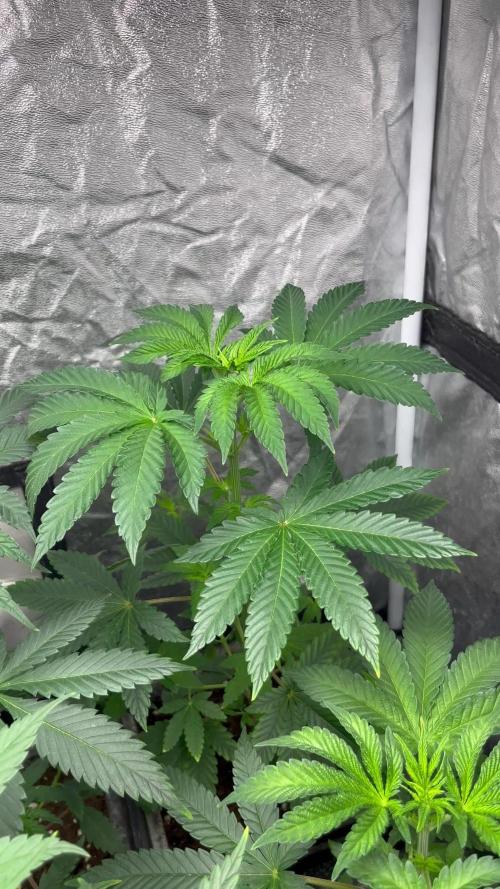
Que pasa familia, vamos con la quinta semana de vida de estas F.U.H. feminizadas de Seedstockers.
Vamos al lío, las plantas se trasplantaron a macetas de 7 litros.
El ph se controla en 6.5, la temperatura la tenemos entre 24/22 grados y la humedad ronda el 70%.
El ciclo de crecimiento puse 20h de luz, el foco está al 50% de potencia.
Me gustaría estar más encima este cultivo pero la salud me está impidiendo un poco este 100% con el proyecto. Con suerte la semana que viene andaré mejor.
- os dejo por aquí un CÓDIGO: Eldruida
Descuento para la tienda de MARS HYDRO.
https://www.mars-hydro.com
Hasta aquí todo, Buenos humos 💨💨💨

Likes
62
Share


@SimpleGrow
Follow
Hello again guys and welcome to day 89!
The girls are taking their time but finally the trichomes are turning milky. As you can see from the videos, they still aren’t quite there yet. I really want them to reach their maximum potential instead of rushing it. I think in maybe a week or so they should be ready!
Thanks for stoping by