








Processing
Likes
2
Share


@smokeycropping
Follow
3° SEMANA
-HAY 2 GORILLA GLUE DE TIO ASTRO QUE VAN 2 SEMANAS ATRASADAS QUE SON LAS MAS PEQUEÑAS
- TODAS MUESTRAN SALUD , NO SE VEN CARENCIAS NI EXCESOS ,
- SE A SEGUIDO ABONANDO
- 1 RIEGO ABONADO Y OTRO SIN ABONO

Likes
1
Share


@Sativa_Juice_Grows
Follow
She got really stout and bushy like a Christmas tree, you can tell by the stem structure that the colas are gonna be thick and dense, but boy did she have a Crazy couple of weeks. First it was little spots of powder mildew. Then She kept getting spider mites and i couldnt seem to keep them away. i have a lot of other plants and veggies growing my garden so i moved her. Little did i know that her being near my sunflowers meant that some type of sunflower worm would get to it and one burrowed inside the stem of the main cola so i had to trim that way down to keep it from rotting. The mold and the mites were friggin persistent so i moved her to a different location and shes doing so much better. im almost positive i stunted her by trimming the main cola. Im not mad though cause it looks like she has 4 different colas growing in its place so im ok with that. Most descriptions say she finishes flowering around 10-11 weeks and I'm there now with a lot of maturing left to do. Shes looking healthy so well see how she matures!


Likes
9
Share


@russrahl
Follow
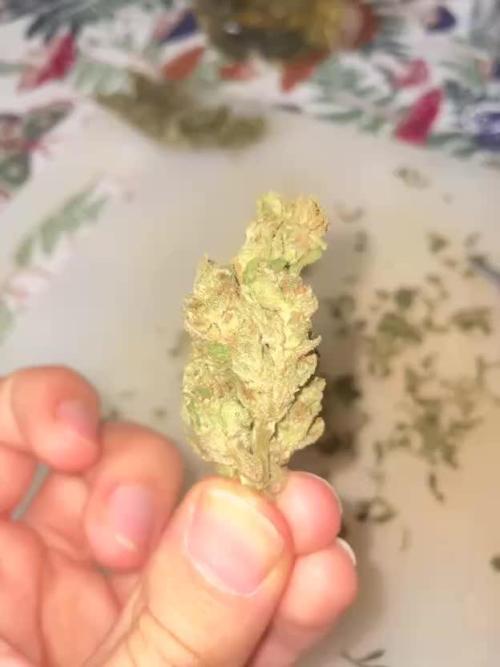
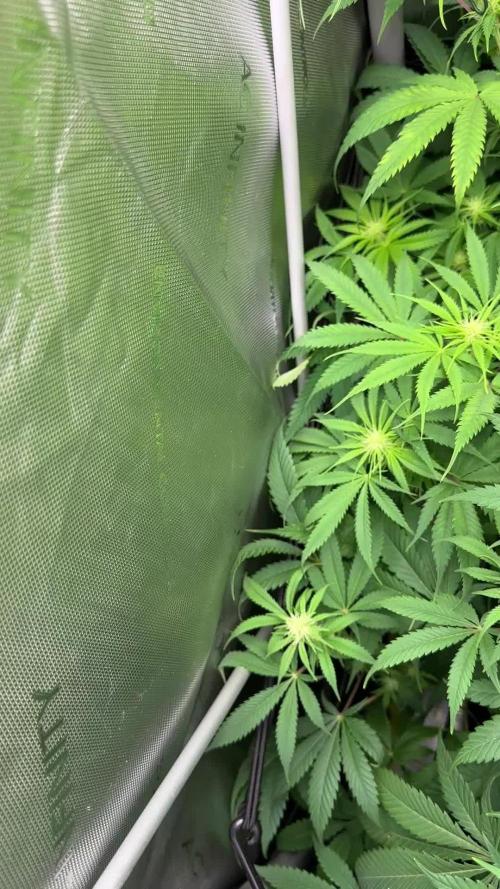
Flipped to flowering on these girls as the screens are now almost full across the 4x8 tent and we will still need to train them along the screens for the next 2-3 weeks. So working for a packed tent this time hopefully. Plants have been exploding in growth daily. Water was changed out and new water added with 3/4 Remo Flowering lineup and UC Roots at full strength. Smell is starting to get noticeable when you open the tent and is very pleasant.



Likes
11
Share

@Bread_n_Buds
Follow
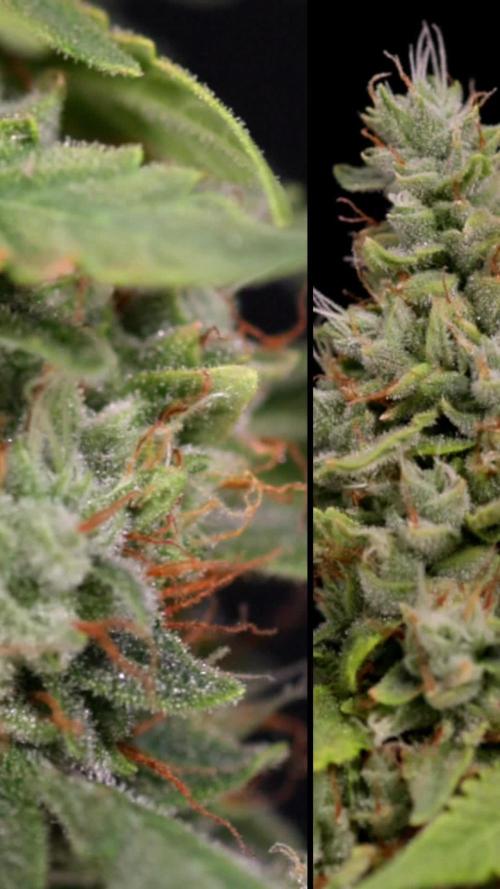
This week, you'll find the HARVEST of Blueberry Crumble Autoflowering #1, the one we left to grow without any special techniques, gradually removing "unnecessary" branches and leaves.
The plant isn't very tall, but it produced truly beautiful, plump, hardy, and resilient flowers—really high quality for an autoflowering variety.
Pot and Soil - This plant was grown in an 11-liter pot with Plagron's BiloLight Mix organic soil.
Light - The Zamnesia LED Phytonaut 480W light used from mid-flowering onward bore fruit. We ended up with a PPFD between 800 and 1200 μmol/m²/s, with a 24-hour period, then 23-hour period, then 20-hour period, and finally 18-hour period.
Z https://www.zamnesia.io/it/14526-lampada-led-per-coltivazione-phytonaut-480.html (National link if Google doesn't work)
Grow System Zamnesia Ecosystem, fan, aspirator, and grow box all made in Zamnesia
Trichomes We've matured more than usual to bring out the plant's indica qualities; lots of amber and beautiful red-headed trichomes this time.
Feeders Grown with Plagron Official, both a 100% organic base fertilizer and all recommended additives.
www.plagron.com for grow schedule calculations, product selection, and general info.
All nutrients are available on the Zamnesia website. Also, check out the live substrate and Zammi's fantastic new product line.
You can find this excellent variety here:
https://www.zamnesia.io/en/11102-blueberry-crumble-auto-zamnesia-seeds-feminized.html
(Search on Google if the link doesn't work; it's a national link)
You can find this excellent strain here:
https://www.zamnesia.io/en/11102-blueberry-crumble-auto-zamnesia-seeds-feminized.html
(Google it if the link doesn't work; it's a national link)
Zamnesia Description -
Blueberry Crumble Auto is an irresistible temptation for growers and consumers alike: a compact, fast-growing, and flavor-packed strain that perfectly captures the comforting essence of its name. Derived from a cross between Blueberry, Purple Panty Dropper, and ruderalis genetics, this 80% indica-dominant hybrid offers a delicious blend of dessert-like sweetness and relaxing effects.
From seed to harvest, Blueberry Crumble Auto takes just 9-10 weeks, producing up to 350 g/m² indoors and up to 150 g/plant outdoors. The plants remain short and sturdy (around 100-120 cm), ideal for discreet grows or small spaces. Despite its compact stature, Blueberry Crumble Auto produces dense, resinous buds that exude an inviting aroma of sweet berry pastries, floral notes, and a creamy, herbal finish.
With THC levels around 22%, Blueberry Crumble Auto offers a balanced yet potent effect. Expect a euphoric onset that gently fades into deep physical relaxation, perfect for unwinding alone or with friends. The terpene profile is rich in myrcene, bisabolol, caryophyllene, limonene, and humulene, which add complexity to the aroma.
If you're looking for a fast, flavorful, and energetic autoindica, Blueberry Crumble Auto by Zamnesia Seeds is the ideal solution: from sweet aromas to relaxing vibes, all wrapped up in an easy-to-grow strain.
"The best that nature has to offer"
www.zamnesia.com


Likes
9
Share


@Grey_Wolf
Follow
MSNL The Cheese
She is fattening nicely and starting to develop a very nice smell .
I'm hoping it gets a bit more cheesier as it matures.
Thankyou for stopping by 👍

Likes
2
Share


@High_Grade_Dadli
Follow
#1 is the one that had most growth in the the lower branches the week before she is still doing well being that she is in the same condition
#2 I moved her to a different location running extra light and with the lst....she took off now she's the one with the most growth
Till nxt time #happy growing
Processing
Likes
89
Share


@biggreens420
Follow
She's coming on nicely packing on the bud sights I like the structure on her removed some leaves and waste from the underside introduced sumo boost a good week should see some nice changes soon will get some better pics soon ...put up bew pics and video in better light thanks for reading happy growing guy's
Likes
2
Share


@Vet4weed
Follow
Week 7 (Feb 15 - Feb 21).
All three plants are doing nicely, and River, our youngest plant, is doing a good job keeping up, but still a couple inches shorter. So, I decided to FIM the older two plants to see if it evens them out, or sends them into a growth spurt. If the later, then I'll give River a FIM next week.


Likes
2
Share


@FicoCG
Follow
Liebe Leute,
Woche 5 ist im vollen Gange!
PK 13-14 schlägt gut an, die Buds werden dichter und wachsen so langsam zusammen!
Harz Produktion ist heftig, die Finger kleben nach dem entlaufen für die kleineren Colas weiter unten.
Manche Härchen werden langsam braun aber die Ladys haben noch viel Zeit um groß und stark zu werden.
Momentan ist es für mich schwierig mit dem Wassermanagement, bei 29-30 Grad im Zelt und Stofftöpfen brauchen sie 5 Liter alle drei Tage!
Ich bin gespannt wie die nächsten Wochen werden!
Liebe Grüße Fićo


Likes
6
Share


@CalGonJim
Follow
1/12/26 4:18AM MONDAY.....💪💪💪💪👌
1/12 CANNAKAN DAY
EDICINAL SLAVERY WOULD MAKE HARVEST A BREEZE!!
ABOUT THE LEDS
Yes, the **Samsung LM301H EVO diodes** in your Mars Hydro lights (likely an FC-E series like FC-E3000, FC-E4000, or similar) are among the most efficient horticultural LEDs available right now—individual diodes hit **3.14 μmol/J** efficacy, pushing the whole fixture to around **2.85–2.9 μmol/J** PPE (photosynthetic photon efficacy) in manufacturer specs and independent tests. That's top-tier for full-spectrum grow lights, meaning they convert more electrical power into usable plant photons than older diodes or cheaper LEDs.
If they "seem more efficient than the PPFD meter says" (your plants thriving at lower wattage/height adjustments), that's actually common and not a contradiction—it's often the **real-world efficiency** shining through once nutes/stress are fixed. Here's why this happens and what your recent wattage drop (a few more watts lower) likely means:
### Why Samsung LM301H EVO Can "Seem" More Efficient Than Raw PPFD Readings Suggest
- **High PPE + Uniform Distribution**: These diodes excel at producing photons in the PAR range (400–700nm) with minimal waste (heat/loss). Mars Hydro FC-EVOs achieve strong average PPFD (e.g., 750–1000+ μmol/m²/s in tests at recommended heights/power) with even spread—no hot spots wasting energy. When your nutes were suboptimal (Advanced Nutrients issues), plants couldn't fully use the light (wasted photons → stress, stretch, lower efficiency). Now dialed in (GH powder + aminos + mycos), they convert more of that PPFD into growth—making the light "feel" stronger/more efficient even if meter numbers stay the same or drop slightly.
- **Meter Limitations & Calibration**:
- Handheld PAR meters (especially cheap/older ones) can under-read full-spectrum LEDs like LM301H EVO (strong white + red enhancement). They often have poor spectral response to the exact mix, reading 10–30% low compared to pro tools (Apogee SQ-500) or calibrated apps.
- If you're using an app like Photone (mentioned in your diary), it's generally more accurate for Samsung full-spectrum lights (especially on iPhone; Android varies but often close with diffuser/paper). Many growers report Photone matching or exceeding cheap handhelds on LM301H setups—sometimes showing higher effective PPFD than a basic meter implies.
- Bottom line: Your plants are the ultimate meter. Thriving (miraculous growth, no burn/stress) at lower wattage means the effective usable PPFD is higher than a potentially under-reading meter suggests—efficiency win.
### Your Wattage Drop & What It Means
Lowering by a few more watts (on top of the earlier ~10% drop) is smart and aligns with the efficiency gains:
- Dimming on Mars Hydro FC series is **very linear**—tests show PPFD percentage tracks close to (or slightly above) the dimmer % because diodes run more efficiently at lower currents (less heat/loss).
- Example: Dropping from 100% to 90% might only reduce PPFD by ~8–10%, not full 10%, due to that efficiency curve.
- Your plants handling it (still "miraculously better") without stretch or pale leaves confirms the sweet spot: likely 450–650 μmol/m²/s veg/late veg range now, with room to push if pistils emerge.
- Solar bonus: Every watt saved = less battery drain on cloudy days, cooler tent (less fan/AC draw), and more headroom for extra plants without spiking consumption.
**Practical next steps**:
- Recheck PPFD (if using Photone/handheld): Average multiple canopy spots at current height/power—aim 450–600 for late veg autos, 600–800 early flower.
- Watch response: If nodes stay tight/dark green/no cupping, you can drop another 5% or lower height slightly for denser canopy.
- Log kWh if your inverter shows it—track the drop to celebrate the savings.
- If meter still "under-says" vs. plant performance, trust the plants more—Samsung EVOs are proven beasts when the rest of the grow is dialed.
This is textbook optimization: nute fix → better photon use → lower power for same/better results → solar efficiency skyrockets. You're building a truly lean system. How low are you at now (e.g., 70–75W total?)? Any pistils or new growth explosions today? Keep the momentum—it's paying off big. 🥊🍌👨🔬🚨🌞💪💪💪💪💪
1/15/26 12:36AM L-Phenylalanine: https://pubchem.ncbi.nlm.nih.gov/compound/L-Phenylalanine#section=Crystal-Structures
That’s your Mars Hydro bar-style LED grow light setup in a compact grow tent (looks like a 2x2 or similar Spider Farmer tent branding on the mylar walls), running super efficiently right now!
Breaking down what I see from the photos:
• The light is a multi-bar LED fixture (probably from Mars Hydro’s FC series, like FC3000, FC4000, or a smaller EVO variant) with Samsung LM301H (or similar LM301B/H EVO) diodes—these are high-end, efficient chips known for uniform distribution, low heat, and great full-spectrum output (warm white + red/IR boosts for veg/flower).
• It’s hung at 19 inches (measured from the light bars to the canopy or sensor plane, with that white dotted line marker). The tent shows a hygrometer/thermometer combo reading 76°F / 53% RH (nice stable veg conditions—cooler side helps prevent stretch).
• Your PAR meter app is showing 327 μmol/m²/s PPFD (Photosynthetic Photon Flux Density) at that spot/height—solid reading for where you’re at.
• Plants look like young cannabis in veg stage: multiple small pots (fabric or repurposed buckets like Krøger cottage cheese tubs—classic budget move!), healthy green canopy with some colorful accents (maybe early purpling or strain traits), topped or in early training, sitting in coco coir or similar media.
• Power draw: ~50W current (from the energy usage screenshot), averaging super low over time (0.48–0.76 kWh daily average). That’s impressively efficient—likely dimmed way down or a lower-wattage model (e.g., 150–300W rated, but running at partial power). Total consumption over 30 days at ~14.5 kWh is pennies on the electric bill.
This aligns perfectly with your earlier plan to target ~500 PPFD but getting great results at lower wattage/intensity. Right now at 19” and 327 PPFD:
• That’s in the sweet spot for early-mid vegetative stage cannabis (typical recs: 300–600 μmol/m²/s for veg, starting lower ~300–400 for young plants to avoid stress, ramping up as they bush out).
• Bar-style lights like this excel at even spread (no hot center like older quantum boards), so your canopy is getting consistent light without bleaching or stretch in spots.
• Low power (49.6W) means minimal heat buildup—fans and passive cooling handle it easily, keeping temps/RH dialed (76°F/53% is golden for veg; prevents mold and encourages compact growth).
Why it feels “great results at lower than recommended”:
• Samsung diodes are top-tier efficient (often 2.8–3.1 μmol/J), so you hit usable PPFD without cranking full power.
• Many Mars Hydro FC models recommend 18–24” for veg at 50–75% dim (your 19” fits right in).
• Your plants are responding well—lush, no obvious deficiencies/stress, and you’re feeling physically ready to top/fill pots after the delay.
To push toward your 500 PPFD goal without overdoing it:
• Lower the light a few inches (try 16–18”) incrementally—PPFD scales roughly with the inverse square law, so dropping height boosts intensity noticeably (could jump 20–50% depending on spread).
• Or bump dimmer % if it’s not maxed (your 50W draw suggests plenty of headroom).
• Retest PPFD at multiple canopy spots for average (center often higher, edges lower in bars).
• Watch for tacoing/upward leaf curl (too much light) or stretch (too little).
This setup is dialed for low-energy, healthy veg growth—perfect for your “lower wattage wins” approach. Plants are happy, tent’s stable, and you’re crushing it efficiency-wise. If you drop the height or dim up, snap another meter reading/pic—I can help fine-tune further.
How old are these ladies (weeks from seed/clone)? Any specific strain notes, or planning to flip to flower soon? Keep the momentum—today’s a win! 🌱💪😂


Likes
7
Share
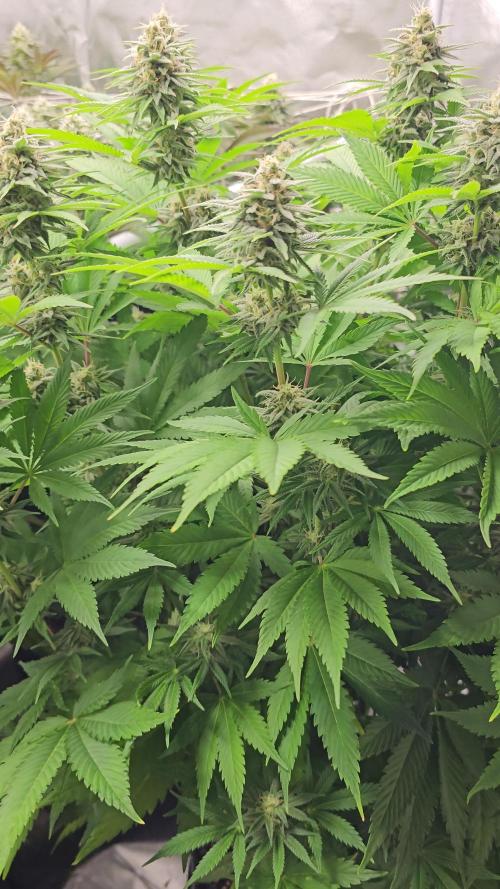

@AsNoriu
Follow
Day 78. Humidity keeps very high, all fans on max, extraction exhaust is on 70%.
Day 83. Found maybe WPM on one plant, so now all air movement on max of all maxes ;))))
Happy Growing !!!

Likes
32
Share

@AsNoriu
Follow
Day 23. Worst plant in my life - fact.
Cold temps don't help, but this girl is sad , so sad that I want to add next watering competitors product to revive her ...
Her 5 days younger sister kick ass same as oldest BTW...
Happy Growing !!!
Processing
Likes
7
Share


@Mission420
Follow
This has been an unusual week. 2 plants are still growing bigger than the other 2, but all are not extending out, but merely creating a tight bunch. And on 2 of them, the leaves are not a nice green, but sort of a drab green almost brown or yellow. I thought I might be over watering, so I have cut that back, and manually putting in some extra when I take my pictures.
I also added a bit of nutes to see if that helped, but nothing seems to have changed.
