





@jaydee702
Volgen
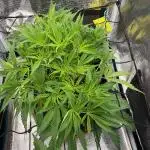
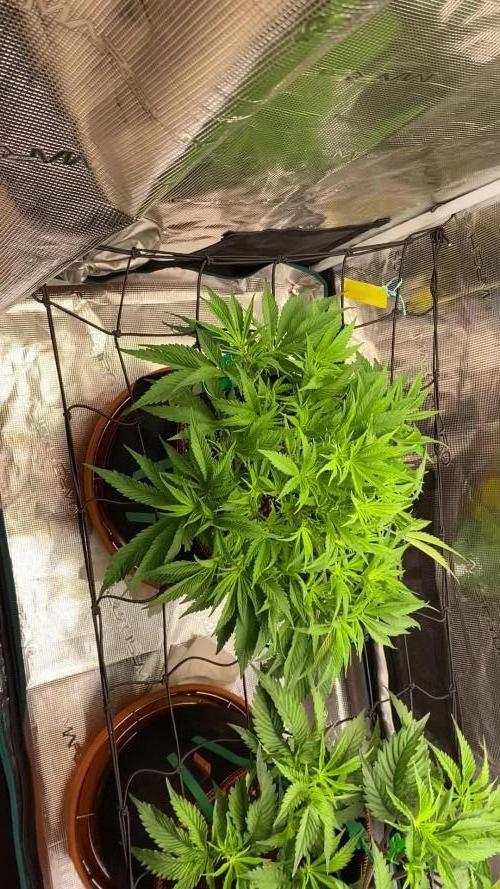
purple punch is looking great and smells even better There are
2 purple punch plants in this grow and they are defenately producing different types of flowers they both smell the same tho but look completely different. one leaning more to the sativa and the other lookes indica all the way. im going to run them in ice water during the flush weeks to see if either one shows some purple just another three weeks or so then it will be harvest time
i cant wait smoke some
of each type to compare sisters from one another
one is skinny and the other is big boned
and both smell kick ass. having a hard time staying in the 70s its gotten quite warm the last fiew days and has reached 84 had to open the tent door to get it down to 78
when the lights are on hopefully it wont get any warmer before harvest time . in 3 more weeks


@c1note
Volgen
06.11 Woche 6 Blüte Tag1
Umstellung auf 12/12 nach 24 Stunden Dunkelheit. Dli 28- 30.
2L mit Ec1.72 5.8 ph so wie immer. VPD 1.1


@Roberts
Volgen
Blue Dream Xtreme is growing. I think she wants more nutrition then the others. Is a little lighter in shade of green. I just switched to 12 12 light schedule. So first day of flowering. She is growing in a New Level Hydro bucket, under a Spider Farmer SE5000 light at 50 percent. Thank you New Level Hydro. Spider Farmer, and Amsterdam Marijuana Seeds. They been delivering quality seeds for 25 years and counting. 🌱🤜🤛🌱
Http://amsterdammarijuanaseeds.com
Thank you grow diaries community for the 👇likes👇, follows, comments, and subscriptions on my YouTube channel👇. ❄️🌱🍻 Happy Growing 🌱🌱🌱
https://youtube.com/channel/UCAhN7yRzWLpcaRHhMIQ7X4g
SE5000
https://amzn.to/3qFpAML
Spider Farmer Official Website Links:
US&Worldwide: https://www.spider-farmer.com
UK: https://spiderfarmer.co.uk
CA: https://spiderfarmer.ca
EU: https://spiderfarmer.eu
AU: https://spiderfarmer.com.au
Coupon Code: saveurcash
Www.newlevelhydro.com
Www.hygrozyme.com


@MG2009
Volgen
03/06/2022
#6 is (2 others 1 week behind) 43 days today hopefully go to 63-70 days.
Seed are looking good on #6 should be good amount to play with.


@JeyGanesha
Volgen
Un altra settimana è passata e tutto procede bene.per fortuna non ho più trovato nessun nanners 🙏✌️💪..belle piantine mie, continuate così che farete delle belle pannocchie....
30/8/24 gente ho combinato una bella cazzata.pur avendo esperienza, mannaggia a me,mi sono portato a casa dentro il box, il cazzo di ragnetto rosso... fanculo...
Ho già iniziato a ripulire tutto, box e piante con Neem...li sterminerò tutti 😂..



@HowtoBubatz
Volgen
The plant is doing well overall this week! 💪
To handle a few fungus gnats that started showing up, I introduced nematodes into the soil and placed some yellow sticky traps, seems to be keeping things under control so far.
She's growing quite tall now, definitely stretching up nicely, but not really filling out much in width. A true lemony skyscraper in the tent!😂💚


@Horseluisweed
Volgen
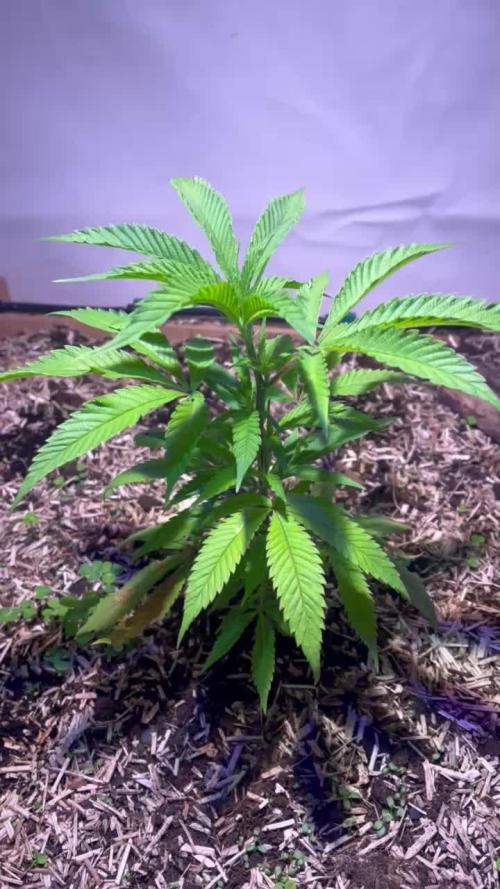
Bueno, le salió la radícula en las primeras 24h, pero quise esperar a que se desarrollara más antes de transpartarla al sustrato, tras pasar más de 48h me quedé sorprendido que siguiera (aparentemente) igual, la pase a la tierra(💦mojada en el centro con 100ml del agua que utilicé para germinarla), se me hizo eterno esperar a que sacara la cabeza, tremenda alegría al 4 día ❤️🙌🌱, al ver el sustrato relativamente seco volví a mojar💦(esta vez con la mitad, 50ml aprox.). Decidí comer hummus (como ella jijiji) y ponerle el plástico de invernadero con la idea de manter la humedad alta💦💦💦



@MyLittleGarden
Volgen
Vegetationswoche 4 - 02.05. - 08.05.26
Diese Woche lief endlich deutlich entspannter ab. Ich habe im Grunde nicht viel gemacht außer hier und da ein bisschen zu gießen und der Pflanze einfach Zeit zu geben. Und genau das scheint ihr gut getan zu haben.
Die Utopia Haze hat sich meiner Meinung nach jetzt endgültig an das Beet gewöhnt. Das Wachstum wird langsam stärker, die Blätter sehen wieder grüner und gesünder aus und insgesamt wirkt sie deutlich stabiler als noch vor ein bis zwei Wochen. Zwar hängen die Blätter teilweise noch leicht, aber im Vergleich zu vorher ist das schon ein riesiger Unterschied.
Man merkt jetzt richtig, dass sie anfängt anzukommen und langsam Fahrt aufzunehmen.
Als Nächstes geht’s jetzt langsam in die Vorbereitung fürs scroggen.


@Seldom_Seen
Volgen
Day 15: Nothing to report. Looks like it will need watering tomorrow night.
Day 16: Watered with light dose of nutrients (1ml CM, 1ml G), Han and Leia showed up today. Frightened the shit out of me. They’ll be sticking around to help.
Day 17: Added in some extra light.
Day 18: Moved the plant another few CM’s away from the light. Continued to make good growing progress today. Han stopped by and hung out for a while. No sign of Mr.Nelson and Leia. They sure do seem to be getting on well.
Day 20: Watered with nutrients again (1ml CM, 1ml G). It took nearly 3ltrs including run off.
Day 21: Three weeks old today. We’ll possibly start LST in the next few days.


@nonick123
Volgen
Día 37 (08/07) Ajustes de LST en todas las plantas! 🚀
Día 38 (09/07) Ajustes de LST en todas las plantas. Las ramas inferiores están creciendo como un cohete! 🚀😍
Riego con 250 ml H2O pH 6,5
Día 39 (10/07) Las plantas se muestran sedientas! Creo que el cepellón está lleno de raíces y piden el trasplante!
El crecimiento no se ha visto afectado de momento
Riego con 500 ml H20 pH 6,5
Día 40 (11/07) Paso a regar con 500 ml / día, ya que hace mucho calor (30 ºC) y efectivamente las plantas ya han copado la maceta de raíces
OnionOG y KS1: Las ramas de nodo inferior se han quedado enanas tras el entrenamiento, de modo que las elimino y aplico canela en polvo en los cortes
Riego con 500 ml H20 pH 6,5
Día 41 (12/07) Riego con 500 ml H20 pH 6,5
Clones! Mi experimento vuelve a demostrar que NO necesitas complejos productos de clonación ni sistemas para obtener clones!
Hace 15 días puse 2 clones con el tallo sumergido en miel durante 5 minutos en una maceta de 400 ml con PRO-MIX HP BACILLUS + MYCORRHIZAE
He mantenido la humedad alta con una cúpula de humedad casera hecha con una botella de agua PET de 5 litros cortada por la mitad y pulverizando a diario.
Han estado los 15 días en mi terraza con luz indirecta, y temperaturas que rondan los 30 - 32ºC durante las horas centrales del día
Hoy los he trasplantado a una maceta de 1 litro porque ya habían formado raíces y empezaban a formar nuevas hojas!
🐥🐥🚀🐥🐥
Día 42 (13/07) Riego con 500 ml H20 pH 6,5
Día 43 (14/07) Trasplante a maceta definitiva de 21 litros de ROOTPLUS Pot de GSKOREA GLOBAL!
Estas macetas son una maravilla!
Proceso de trasplante:
Se prepara con 17,85 Litros (85%) de sustrato PRO-MIX HP BACILLUS+MYCORRHIZAE + 1,05 Litros de Humus de Lombriz (5%) + 2,01 Litros de Insect Frass (10%) + 210 gramos de Earth Vibes Super Soil (10 g/L substrato)
Se llena la maceta de sustrato con las manos (limpias) y rompiendo los trozos más gruesos, para que el sustrato esté aireado y esponjoso, sin presionar
Se coloca una maceta vacía de 6,5L para que quede la forma perfecta de la maceta donde están actualmente
Se espolvorea la parte proporcional de la probeta de microorganismos sobre el agujero de trasplante
Se saca la planta de su maceta actual (bonitas raíces 😍) y se coloca en la maceta final
Se riega muy lentamente hasta percolación profunda con H2O EC 0,5 pH 6,5
Una vez asentada, complemento con un riego de 500 ml con 25 ml/L de Humus de Lombriz Liquido
Se coloca mulch (acolchado) de paja para evitar traspiración excesiva y cuidar a los microorganismos del suelo
A ver como reacciona al trasplante!
Aplicación foliar Kelp hidrolizado de Lurpe Solutions a 0.25 ml/l
Realizo ajustes de LST aprovechando el trasplante a la nueva maceta. De momento tienen una canopia muy bien formada!
💦Nutrients by Lurpe Solutions - www.lurpenaturalsolutions.com
🌱Substrate PRO-MIX HP BACILLUS + MYCORRHIZAE - www.pthorticulture.com/en/products/pro-mix-hp-biostimulant-plus-mycorrhizae


@Wicked_Stix
Volgen
Had a lot going on this week so the plants didnt get any care or maintenance at all other than just checking on the water level a couple times. They need some major defoliation which I wanted to do this week but procrastination is the vibes currently. Will probably get some done next week.... the plants are looking good and most of them are bushing out pretty nice. They dont seem to be stretching as much as they normally do by this time, but they are transitioning to flower. Will probably do a flush and water change soon since they haven't had one in over a month. I'm just anxious to see some frosty buds at this point.
shorts_status_processing


@itchy23
Volgen
So I'm doing a little experiment with the clones: took the 2 lowest viable branch pairs and put 1 of each pair into a Jiffy pellet and a rockwool cube. All preloaded with Roots Excelurator and SuperVit at 5.5pH and added some mycorrhizae to boot. Only had 2 days to prespray the branches with Clonex Mist and have been spraying the clones every other day with it. It's been a week with no roots showing yet but the clones have looked healthy throughout and never showed signs of wilting (which I remember happening for a short period the last time I cloned). I expect roots to show in the next day or 2 but who knows.
And now for our main story: LSSH1 is showing white bud tips! This is most likely due to the ridiculously close proximity to the light. Not sure what to make of it yet but I guess we'll see if it has any effect on quality 😏
The buds have expanded a very tiny amount and I expect much more this coming week but from my understanding this strain does not produce really dense nugs to begin with.
From the results so far I would say the plants have liked the switch to Canna nutes although I would recommend going with the light feeding schedule at least to start with.
PK1 still with very tiny buds but it's getting more light now. PK2 seems to be growing faster now on Canna nutes.
BTW: on the rare occasion I get my hands on some trichs, my fingers have an unmistakable lemon candy smell 😍


@Ton_Trichomen
Volgen
Early veg. Stage
Do si dos og by Original Sensible Seeds
day 23 lollipoped and stripped the ladys they slept for 36 hours to trigger the far red ... so my ladys are in flowering now still don't feed them with nutes its still enough in my soil .. starting with nutrients in about a week i think they only get some HyPro spray mix HyPro Generator and some HyPro Rootsstimulator
3 days in bloom, and 4 days after defoliation damn where do all these leaves come from 😂 but everything is going well, no defects or other problems to find that was it again
Soil:
Atami light mix & Plagron Grow Mix mixed!
Temp: 25,5 °C
Lights: 12/12
Humidity: 54%
Ph : 6.0
Water: 1l 23°C
CO²: No Mercy Tabs
Tds/Ppm: 400 ec 0.8
Nutes by Hy-Pro Fertilizers ml on 1 liter...
HyPro : Spraymix 5ml
HyPro : Terra vegi & bloom 00ml
HyPro : Rootstimulator 5ml
HyPro : Generator 00 ml
HyPro : Epic Bloom 00 ml
Light distance: 24 inch=61cm dimmed to 60%= 600par
1x MarsHydro TS 3000
Air Van: 800m³ Prima Klima
AKF : 800m³ can lite
4x 140mm controled Be Quiet pc vans
3 l water cooling airco Diamant...
3.3l humidifier
1.8l dehumidifier
Humidity control:
Inkbird IHC-200
Temp control cooler/heater:
Inkbird ITC-308
My grow room is variable in size
120cmx120cm² Custom Grow space for sog 150cmx150cm for scrog
S.O.G. Sea of Green
Thx to Original Sensible Seeds, HyPro Fertilizers, BTB Grow Supplies, Mars Hydro as our exclusive sponsor of our group The High Community


@SelfCultivationGrower
Volgen
After 14 days vacation my tent Went crazy. The Stretch is absolute shocking and so many new leaves in this short time. I really have to defo. And HST some Main-Colas or they will get burned


@PurpleWorship
Volgen
Day 58 : Performed what might be the last big LST session, to make the plant flat as much as possible. The last one, because I'll start flowering on next week 😁 So I believe that all next LST session will just be to keep everything a the same eight, but I will not force the plant to be flat anymore. I was also supposed to apply black soap for the last time today, and continue with water for one or two weeks. But i saw one thrip, so I may continue for one week, and apply only water later. But the plant isn't showing any signs of bugs bites, so they are under control I believe. I also got one bottle of biobizz leaf coat, that I'll apply later ;)
Damn.. I'm so excited to start the flowering :D She look verry great right now, I'm verry confident with this plant :) Taking care of it is a pleasure, even if it take me one hour to apply LST 😆
Day 60 : Watering and feeding plant, and applied black soap for thrips.
Day 61 : Did some Defoliation : Removed dying leaves not receiving light.
Day 62 : Spray water + Fishmix (1.6ml/L). This is going to feed the plant by the leaves, and also clean leaves from any thrips. Haven't seen any thrips since like 3 days... But you know how they are ;)


@paparazzi
Volgen
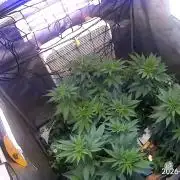
Good strain for beginners. I could keep her on flowering for two or three more weeks , but weight is not so important.



@Ultraviolet_
Volgen
Remember that, however you are played, or by whom, your soul is in your keeping alone. Even though those who presume to play you be kings or men of power, when you stand before God, you cannot say, 'But I was told by others to do thus,' or that virtue was not convenient at the time. This will not suffice. Remember that.
Day:18
84°F and 65% RH (VPD) for the vegetative stage. Approximately 1.15kPa(assuming leaf temperature is about 2°F cooler than the air), which falls right into the ideal vegetative sweet spot (0.8kPa to 1.2kPa). At 1.15kPa, plants can draw water and nutrients efficiently without risking stress or wilting. It keeps the leaf pores (stomata) open, allowing for ideal carbon dioxide intake and maximizing vegetative growth. VPD is determined by the leaf's temperature, not just the ambient air. Because leaves usually run 1° to 3°F cooler than room air under bright grow lights, my actual VPD will be slightly lower, closer to the 1.0kPa mark. As she transitions from vegetative growth to flowering, one can gradually lower the humidity (to around 45–60%) and drop temperatures slightly to prevent disease from settling inside dense buds when they appear.
Night:6
At 70°F and 60% relative humidity, Vapor Pressure Deficit (VPD) is 0.86 kPa. This is right on the cusp of whats optimal for the vegetative stage. During the nighttime, plants generally close their stomata and undergo cellular respiration rather than photosynthesis. Transpiration slows to a near stop, making VPD less critical at night than during the day. However, maintaining a nighttime VPD between 0.8 and 1.0 kPa is highly beneficial in that it ensures the air is dry enough to prevent powdery mildew or bud rot, but moist enough to keep the plant from undergoing unnecessary stress. This range keeps the environment comfortable for cellular processes and prevents large atmospheric swings. Keeping it all flowing.
(Not pushing them yet, these are photoperiods)
The optimal soil (root zone) temperature for cellular root respiration and nutrient uptake in cannabis is between 68F & 72F This narrow range balances biological energy production (cellular respiration) with the dissolved oxygen levels in the soil, maximizing plant growth and health. Warmer soils hold significantly less dissolved oxygen. When soil temperature exceeds 74F oxygen depletion occurs, inhibiting cellular respiration almost entirely, At 68-72F root cells generate optimal adenosine triphosphate (ATP) via respiration to power root-tip elongation and the active transport of water and nutrients.
Too Hot (Above 78F) Root respiration increases, demanding more oxygen, while the water's oxygen-carrying capacity drops. This creates a prime environment for anaerobic pathogens and Pythium (root rot).
Too Cold (Below 60F) Root metabolism and cellular respiration slow to a crawl. This severely impairs nutrient and water absorption, leading to yellowing, wilting, and phosphorus deficiencies.
A lot depends on whether it's automatic or photoperiod; with photoperiod, there is not as much of a need to push "hard" as the real countdown only begins once the flower is initiated. Automatics, on the other hand, the chronological "clock" begins ticking the moment the seed germinates. It is of critical importance that the seedling growth gets off to the races, understanding that early growth is like compound interest, which will pay off come harvest. This reality is why getting autoflowers "off to the races" early on yields such exponential benefits. The "compound interest" is directly related to the surface area of the leaves. Larger, faster-growing seedlings process more light and build bigger root networks early on, which translates into an explosion of vertical and lateral growth during their short vegetative window.
The margins for error are so thin with autoflowers; this early-stage momentum depends on several critical practices. Seedlings exposed to increased atmospheric CO2 levels early in life will develop at an increased rate. To effectively "extend" or optimize the capacity of Photosystem II (PSII) for increased photosynthetic efficiency. In standard oxygenic photosynthesis, Photosystem II (PSII) is naturally limited to the red-light spectrum, peaking at 680nm. Extending its light-harvesting capacity past 700nm into the far-red region requires bypassing the natural limits of standard chlorophyll a. Adding 730 nm (far-red) LEDs alongside standard red/blue lights has been shown to increase canopy photosynthesis by 20–30% in several crops by acting synergistically with shorter wavelengths. However, the limitation is that excessive, pure IR/Far-red light (without accompanying red light) can trigger the "shade avoidance response," causing plants to grow tall, weak, and spindly rather than robust. Utilizing infrared light (specifically the 700-750 nm far-red range) is a viable method to boost photosynthetic efficiency. It acts as a bridge to allow PSII to utilize a broader spectrum of light, breaking the traditional 700 nm barrier. UVR8-mediated signaling (often in conjunction with CRY proteins) triggers protective mechanisms that maintain the stability of the photosynthetic apparatus (including LHCII and reaction center proteins), thus ensuring that the efficiency of Photosystem II remains higher in UV-B-exposed plants compared to plants lacking this receptor. ΦPSII indictates the rate of electron transfer from water to plastoquinone, which drives the production of ATP and NADPH. There is a close link between ΦPSII and the true rate of CO2 fixation (Φ*co2).
ETR stands for Electron Transport Rate. It measures the speed at which electrons are moved through the thylakoid membranes in a plant's chloroplasts during the light-dependent reactions of photosynthesis. Infrared light (particularly Near-Infrared or NIR) improves cellular energy by interacting directly with the electron transport chain (ETC) in mitochondria. This process boosts adenosine triphosphate production, which acts as a metabolic coefficient multiplier by accelerating enzyme activity dramatically.
Extend then multiply.
Far-Red photons interact with plant photoreceptors to accelerate the plant’s biological "clock" or trigger a shade-avoidance response. Autoflowers don't use the plant's biological clock, although the IR will initiate a shade avoidance and make them stretchy. You can just add equal measures of 660nm-680nm to negate the shade avoidance effect. Replacing nights' "darkness" with a combination of IR+ and 660nm. Because autoflowers don't require a dark period to flower, many growers just blast them with light. 18/6 24/0. However, this ignores the plant's metabolic rhythms, where daytime photosynthesis (light reactions) must be perfectly balanced with nighttime carbon fixation and assimilation (Calvin cycle) to avoid bottlenecking plant development. Cellular respiration is a 24/7 process, but it can only function while the plant has the free oxidative capacity to do so. A 100% photosynthetically active leaf cannot perform cellular respiration. The viral trend of defoliation of every leaf that isn't "getting enough light" is of great detriment overall, putting 100% of the cellular respiratory "workload" and responsibility on the 0/4/6 hours of darkness in sub-optimal conditions for enzymatic activity. Photosynthesis captures nearly 100% of the initial energy as carbon, while cellular respiration is the process that unlocks 90% of that captured energy into usable ATP so the plant can use it. Respiration is considered roughly 30% to 40% efficient. It captures enough of the potential energy in glucose to synthesize around 30 to 38 ATP molecules per glucose molecule. The remaining 60% to 70% of the energy in the sugar is not captured in ATP; instead, it naturally escapes into the environment as heat, which helps regulate plant temperature. In plants, the primary enzymes of the Electron Transport Chain (ETC) and the ATP synthase complexes are typically adapted to function optimally in warmer temperatures (roughly 25°C to 35°C depending on the specific plant strain). As temperatures rise within this physiological range, molecular collisions increase, speeding up respiration and ATP production. The cannabis plant has a branched respiratory pathway. During heat or cold stress, plants activate Alternative Oxidase (AOX). AOX burns sugars to dissipate energy as heat rather than coupling it to ATP production. This pathway actually functions optimally at elevated temperatures to help protect the cell from the damaging build-up of Reactive Oxygen Species (ROS) during heat stress. Enzyme activity generally scales with heat; there is a strict biological limit. If canopy temperatures in a grow room exceed 40°C, the enzymes and their supporting lipid membranes lose stability. Not saying you need to go crazy, just optimize nights the same as we optimize days.
Phosphorus is the driving force behind early seedling development. It acts as the "energy hub" of the plant, directly driving cell division, robust root growth, and the creation of DNA. Without an adequate, easily accessible supply early on, the plant's overall growth potential and final yield can suffer permanently.
E=MC2 looks like a simple multiplication problem; it describes a fundamental physical truth: mass and energy are the same thing. The equation doesn't just calculate a value; it reveals that mass is effectively "congealed" energy. Energy is just numbers. Energy isn't a physical "substance" you can hold or touch. It is essentially an abstract, calculated number that we assign to a system to predict how it will change, interact, or move. A numerical label we attach to matter to track how it behaves. Because the universe runs on laws of symmetry (specifically, that the laws of physics don't change over time), a single global number must be conserved. We call that number "energy".
We don't grow; we facilitate energy conversion.
How well a seedling grows is essentially down to how much knowledge one can acquire to increase the level of conversion to occur. Applying knowledge effectively requires intuition, which comes from hands-on experience. A seasoned stoner learns to read subtle signs—like a slight change in leaf turgor (stiffness), subtle color shifts, or the specific texture of the soil—before a textbook diagnosis can be made. Ultimately, growing is the application of botanical science blended with active observation. Knowledge dictates your potential, but adaptability and attentiveness to the plant's immediate environment determine your results.
1.618 nature mathematically optimizes quantum energy transfer and light absorption efficiency within the photosynthetic machinery, as it naturally dictates energy scaling hierarchies and resonance dynamics. External vibration or electromagnetic wave that perfectly matches a plant's natural frequency directly influences plant growth. Low-frequency sound waves and targeted electromagnetic fields stimulate cellular processes and boost photosynthetic efficiency
Does it produce better yields?
How long is a piece of string? As long as you cut it. But isssss the juice worth the squeeze? The quantum framework of the IVM seems to think so. Good enough for the quantum firmware, good enough for the DNA software. Genetics are not dictated; they are expressed; the rate of that expression is dictated by the environment in which growth occurs.
Quantum Coherence in Photosynthesis occurs When a photon of sunlight strikes a leaf, the energy it carries must travel to a reaction center to be converted into chemical energy. This process operates at nearly 100% efficiency. If the energy moved in a traditional "bunching" or random hopping manner, a large portion of it would be lost as heat. Instead, plants utilize quantum superposition. The energy particle (exciton) doesn't just take one path; it exists in a wave state and explores multiple pathways simultaneously. It essentially "chooses" the most efficient route to the reaction center simultaneously. Research shows that molecular vibrations and the specific network arrangements of chlorophyll molecules (like the naturally evolved Chlorophyll A & B ratios) actively protect against energy overflow, optimizing light capture across different light intensities. Enzymes are the biological catalysts that speed up chemical reactions within a plant's cells, allowing them to grow, metabolize, and repair. Rather than relying solely on the classical kinetic energy of molecules colliding, plants use quantum tunneling. Subatomic particles like electrons and protons (hydrogen ions) can literally "teleport" through energy barriers that they normally wouldn’t have the energy to climb over. This makes vital metabolic reactions happen far faster than classical physics could ever explain.
Chloryphyll b has peak absorption at 460nm (Blue) and at 647nm(Red). If we take the blue peak wavelength 460nm and a UV-B, UVR8 peak absorption wavelength 285nm, Tryptophan-285 (W285) Sensing protein. 460/285=1.618 Φ If we take chlorypyhll b's Red absorption peak 647nm and a UV-A of 400nm, we get 647/400=1.618 Φ. "Structure of light". The cryptochrome photoreceptor (CRY) is a UV-A/blue light receptor that shares this dual sensitivity with several other biological structures and functions, including significant sequence similarity and a common evolutionary ancestor with DNA photolyase enzymes. These are light-activated enzymes that use blue/UV-A light to repair DNA damage caused by UV-B radiation in plants. Synergistic. But Shhh, it's a secret.
Effective quantum efficiency of photosystem II, often denoted as ΦPSII, represents the proportion of light absorbed by Photosystem II (ΦPSII) that is actually used in photosynthetic electron transport. It is a key indicator of how efficiently a plant is using light for photosynthesis, as opposed to losing it as heat or fluorescence. ΦPSII (effective quantum yield of photosystem II) functions primarily as a "multiplier" (a coefficient of efficiency) rather than an additive factor when estimating the overall photosynthetic electron transport rate (ETR). Multipliers are considered far more beneficial than additions because they generate exponential growth, leverage existing resources to their full potential, and create sustainable, self-multiplying capacity, rather than just incremental, linear increases. This fascinating observation is rooted in the intersection of subatomic geometry, fractal scaling, and quantum dynamics. In specific molecular arrangements—such as in conjugated polymer networks or biomolecular architectures—the Golden Ratio (PHI) naturally dictates energy scaling hierarchies and resonance dynamics. Mathematically tied to the fine-structure constant, which defines the strength of the electromagnetic interaction. The Golden Ratio can be mapped geometrically as the Golden Angle (137.5 degrees) in atomic structures, linking the charge of the electron to fundamental quantum constants like Planck's constant.
Electromagnetic.
The Golden Angle (137.5): This angle is derived from the Golden Ratio (1.618). It is the smaller of two angles created when a circle is divided such that the ratio of the arcs equals the Golden Ratio.


@Masshysteria
Volgen
Quick Summary: moved and transplanted around day 18 into 5 gal. airpots with fresh ocean forrest, flowering began around day 24, thought I maybe had some nutrient burn, more likely cause is phosphorous and/or cal/mag deficiencies, three plants in the home stretch, O has a bit longer
Day 50 Update: Watered and took some pictures last night. Not much new. Pretty sure they have massive deficiencies instead of any burn. I may chronically underwater/underfeed my plants. I'm still learning. This is my fourth grow ever so there's still lots to learn.
Day 51 Update: Meant to water today but didn't.
Day 52 Update: I spent a while with each plant and took some pictures/video when plant O was out of the tent. You can see some pretty clear brown spots on a fair bit of the shorter two plants. S is all kinds of ugly, but who knows, maybe still put out a decent weight. I fed twice in a row now and added some CaliMagic (forget the company name) this time. I read about how when there are stronger lights or MORE lights, the plants can burn through phosphorous rapidly, so maybe that's the issue I had. Either way, about day 40 seems like when the nutrients can be more steadily increased. The shorter two, V and P, have about 2ish weeks so that will likely be their last feeding. S too probably. O, on the other hand, has several weeks left but is looking otherwise really solid. Hopefully I got enough nutrients in early enough in that plant's flowering that it won't show any deficiencies. It's a monster too! 38 inches to the top of the spire. The other three are 25, 21, and 19 inches still so likely their final heights. I kept the tallest as the plant height for the diary because the top end is good to know for other indoor growers.
Day 53 Update: No news.
Day 54 Update: No news.
Day 55 Update: S, V, and P are the three shorter plants. They are all starting to take water a bit slower. They didn’t *need* water tonight, so I’ll give them another day. O, on the other hand, is a monster! Probably needed water yesterday. Filtered tap, about 2 gal for O tonight. Food next time for O also. Others are in the wind-down so we’ll see. Pics added from tonight.
Day 56 Update: Nothing to report.



@AestheticGenetix
Volgen
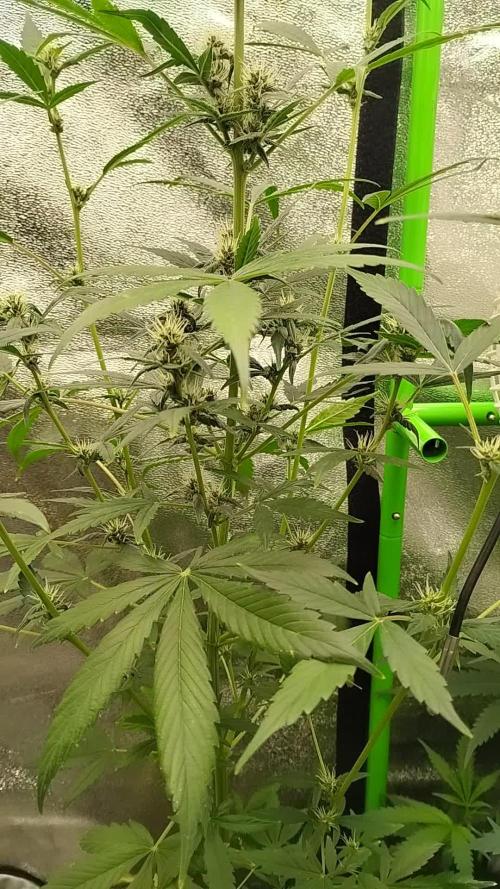
8/2/25 purple, tall and looks happy right now. A little slow on the bud production so far but that's okay.
