Likes
Comments
Share
After the 9th week of flower she came to get dried for 12 days then trimmed and placed in jars for the cure. Now here we are on day 55 of the cure. I must say this stuff is oh so sticky! It's absolutely covered in resin head to toe. When I smell the jar it smells extremely appealing. Taking after her parent Afghani her nose has a kushy gassy smell that makes you want to keep your nose right in that jar. After throwing some in my grinder I roll her up into a raw paper and light her up! On the inhale it's sweet like sugar then on the exhaul she's still sweet but with hints of gas. The effects are almost immediate. You can feel it in your face and eyes then slowly works down to the body to bring a heavy indica stone. This stuff is very strong and I usually use it for evening use. I can see this being highly medicinal for people suffering from insomnia and pain. Let me say one more thing. This stuff leaves a fantastic flavor on the palate after smoking. It is also oh so smooth after the long cure. Thank you Green House Seed CO for being the legends that changed the cannabis world 🙏
Likes
26
Share
@Targona
Follow
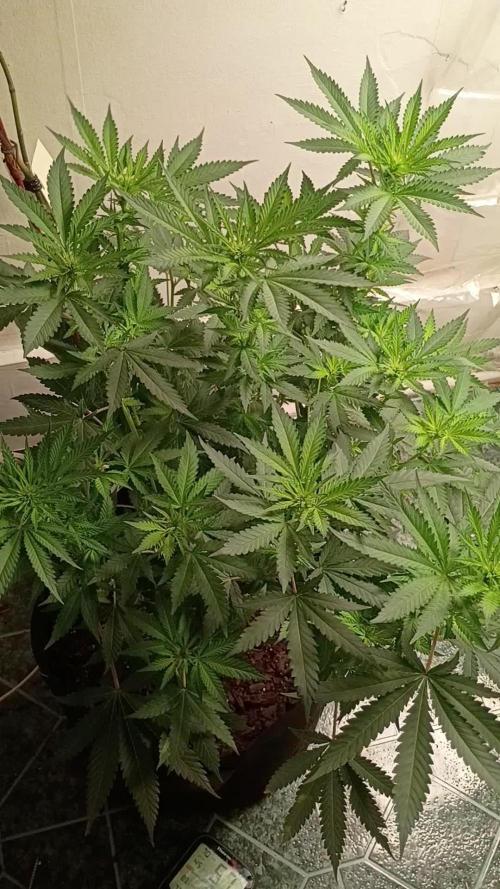
8/28/2022 - 21 days since my little girl sprouted from seedsđŸŒ± The third week of vegetation of my Bruce Lemon Diesel đŸ‹â›œđŸŒ» Nutrients: Jungle Indabox - I had to adjust the dosage, after the first dose of nutrients, the lower leaves of the plant lightened a bit, this was especially visible on her sister Orange Sherbet Auto, which burned the tips of the lower leaves - after this week I reduced the dose by half 🍃🍃 Hesi: Hesi Root Complex I give this root stimulator for root support, although Jungle Indabox also supports root growth, namely: Jungle Urban A - (N-P-K) - (2-1-6) Everything for healthy growth and formation of the root system Atami - ATA Calmag - I missed completely Advanced Nutrients - Bud Candy - I also adjusted the dosage by half 🍬🍬 Preflowering: Classic white hairs appeared on the stem this week, indicating the female gender đŸ‘©â€đŸŒŸđŸ‘§đŸŒ Light: Mars Hydro TS1000 - really great lamp with sufficient lighting and energy-friendly 💡💡 Training: Topping: I usually top in the third week of the plant's life, just like this time. However, now the girls are very advanced in growth, so they will have more main branches 🌮🌮 LST: Two days after topping, I anchored the lowest branches to the ground with metal clips, tied the higher branches with a string towards the edges of the flower pot, so that the light would shine on each of them 💡💡 Defoliation: In the next two days, I cut off all the large leaves that were shading the branches 🌞🌞 The girl is no longer a child, she is a strong young lady, full of branches and leaves. Its color has also changed, it is now deep green again. The stem is rough, so I assume a strong root system đŸŒČđŸŒŽđŸŒŸ Thanks for the likes and you can follow me on Twitter 🐩: @ Targona666 See you soon 😍
Likes
13
Share
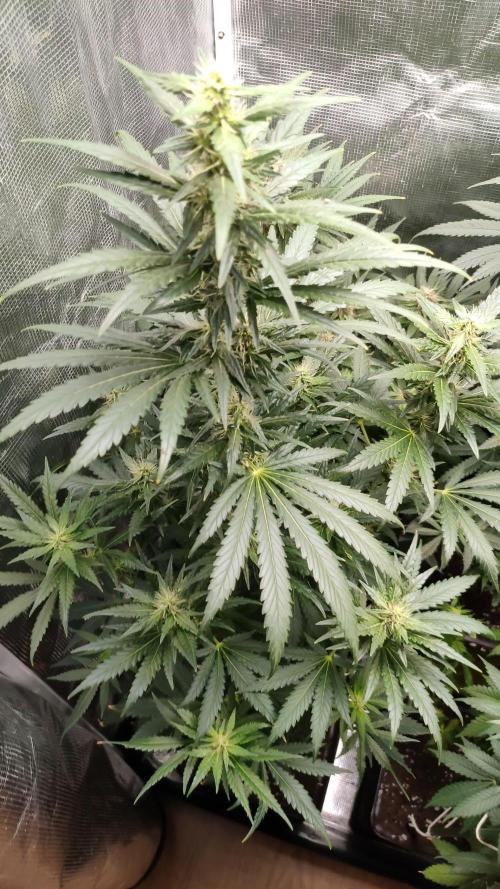
She is so huge. I had to top her after the photos because i can't raise my light anymore. Hopefully it will still help with the lower buds since she is still just starting flowering
Likes
3
Share
Good week, starting to get tons of bud sites. Did a clean up of all the lower branches and foliage to keep my focus on track. Top dressed some nitro bat to help with the small nitrogen deficiency.
Likes
175
Share
Day 43 Flower (Day 85) Today is the first day of week seven of flower, and this is supposed to be the last week of flower for this fast strain, but I doubt that either of the girls will be done this week. That being said, it's pretty much a waiting game at this point since we're on the home stretch. The right girl should be done soon-ish, but the left girl will probably take a few more weeks. I just got my second Corona vaccine shot a couple of days ago, and as soon as it is entirely up and running, I'm off on vacation. After 1.5 years of this pandemic crap, I'm SO ready to go traveling again. To prepare for my travels, I installed a drip irrigation system in the left girl's tent. It's a simple system with a 10-liter water bag, some hose, and a few drip emitters, but once dialed in, it should be enough to provide the left girl with water for around a week. The system was a piece of cake to install, and I wrapped the water bag with some white mylar to avoid the water getting heated and also to reflect the light better. It's a bit ghetto still, but I'll make it prettier once I see that the system works as intended. I installed the system now already to give me time to dial it in. I'm hoping that the right girl will be done before I travel, but if she isn't, then I'll hook her up to the automated drip irrigation system that I use for our tomatoes. Come hell or high water. I'm going on that vacation, dammit! Lastly, I gave the right girl 3 liters of pH 6.5 water. Day 44 Flower (Day 86) I think those extra photons from the new light are starting to work their magic in the left tent, and the left girl is slowly starting to fatten up. In the right tent, everything is just cruising along and I gave the right girl 3 liters of pH 6.6 water today. Day 45 Flower (Day 87) The drip irrigation system in the left tent is working out great so far. Only been a couple of days though but yeah, so far so good. The right girl is packing on some weight into her buds and some of the thinner branches are starting to fall over. I've ordered some plant yoyos for support but they won't arrive until next week so I'll make do until then. Lastly, I gave the right girl 3 liters of pH 6.3 water. Day 46 Flower (Day 88) Not much is happening on a day-by-day basis this late in flower. I hope those plant yoyos get here asap as the right girl is struggling to keep some of her branches up under the weight of the buds. I want to go in and tuck some fan leaves in her canopy to allow better light penetration. Still, I can only tuck a couple without starting to knock over branches as other branches precariously support them. (Note to self: use a second scrog next photo grow to give support after the stretch.) I gave the right girl 3 liters of pH 6.5 water, and that was all for today. Day 47 Flower (Day 89) Woooo! The yoyos arrived today even though they weren't due until next week. It was a breeze to put up; attach the yoyo at the roof of the tent with a zip tie, pull down the hook and attach it to the branch, done. I ended up using only three since the other branches are standing quite well once those three worst offenders are supported. A fourth branch could also use support, but the branch is way in the back, and I can't get to it without getting my arms and hands all covered in resin as just about everything in the tent is super sticky now. The buds on the right girl are very resinous and have a strong smell. I should bring out the microscope soon and start to check the trichomes to see where she's at. I also gave the right girl 3 liters of pH 6.6 water. The left girl is just hanging out in her tent, doing her thing, and slowly fattening up. The drip system is working great so far. After four days, the water bag is about half empty, so it looks promising that it will last a week. I've been monitoring the soil humidity, and it has slowly been dropping these four days, but the drop is so slow that it is next to negligible. Day 48 Flower (Day 90) Today, the left girl's soil humidity did a small drop, but it is still in a great range. I guess it is because as the water in the bag gets less, the water pressure is reduced, resulting in the water flowing more slowly out of the drip emitters. Not a huge deal, though, as it is now five days since the last time I hand-watered the left girl, so this irrigation system will work just fine when I go on vacation for a few days. I filled up another 3 liters of pH 6.1 water in the bag, and I'll keep an eye on it to see if the soil humidity increases. Speaking of watering, I treated myself today to a new, better pH pen. As a living soil grower, I don't use any nutes, so I thought I might as well make sure I have a quality pH pen to make sure the water is on point. My old Dr. Meter pen has served me just fine, but this bluelab pen is a lot faster, and it has a backlit display which makes it easier to use in low light situations. A friend of mine recently started growing, so I'll gift my old pen to him as well as my old tiny, drying tent, and the ViparSpectra P600 light as I don't need that now when I have a much more powerful light for the small tent. The right girl got 3 liters of pH 6.1 water as I haven't hooked up the automated drip irrigation system to her yet but will do that in the next few days as I suspect that she won't be finished either before vacation. Lastly, I started to brew some compost tea to give the girls one final boost of microbes and nutrients. I used a similar recipe as previously: worm castings, rock dust, biochar, lime, bentonite, neem meal, kelp meal, and molasses. I upped the castings and neem, though and I'll leave this tea brewing for 24 hours and feed it to the girls tomorrow. Day 49 Flower (Day 91) The last day of the seventh week of flower, and all is well in the tents. According to the breeder, this week is supposed to be the final week of flower, but none of my girls are near ready. I took out the microscope today and checked the trichomes on the right girl, and I would guess she has at least another week, if not two, to go as her trichomes are still clear. I might even end up running her longer as I'm looking for a decent amount of amber this harvest. This strain is supposed to be a heavy, almost narcotic Indica, and I'm aiming to make her as potent as possible. A "last-smoke-of-the-night" kind of smoke. Lately, there has been a noticeable cannabis smell in my lung room, and last night I tracked down the cause. It turned out that there was a leak between the carbon filter and the fan, so the fan blew out partly unfiltered air. Nothing that some duct tape couldn't fix, and this morning the smell was gone. The right girl is sticky af and has a strong smell. Initially, there's a strong citrus fragrance with hints of lime and grapefruit, but once those terps have started to evaporate, there's an underlying fragrance of pine. The left girl has even longer to go, and it wouldn't surprise me if she takes another month. We made some guacamole last night, but a couple of the avocados had gone bad, so I put them on my pots. My loss is my worms' gain. All I did today was to feed the compost tea I started yesterday to the girls. Each one got 3 liters of unfiltered tea at pH 6.7.
Likes
1
Share
Cut down 9/6 will hang for week or two will give me detail up dates late
Likes
6
Share
@YungSmoke
Follow
Weeeeek 9. What's cooking good looking. She looks like she'll finish up on schedule in about 3 weeks time. Currently 20% milky 5% amber trichs. Been feeding with extra dose of bloom to give the buds extra weight and happy with progress this week.
Likes
13
Share
Recette du tco pour 20 litres. (Grammes : gr) 50gr biochar 250gr zĂ©olite 3gr granulĂ© Micro-Organisme IT45 10gr pollen d’abeilles 10gr levure de biĂšre 3gr endomychorize 10gr consoude 20gr vers de farine 10gr cendre coque de ricin 12gr ortie microniser 15gr Kelp 10gr spiruline 10gr de cbd living soil 20ml de miel liquide 30ml de mĂ©lasse 20ml d’acide humiques et fluvic Mettre tous les ingrĂ©dients (sauf la mĂ©lasse ,l’acide h/f et le miel) dans un filtre 400micron, le placer dans un seau avec de l’eau (10litres). Rajoutez le miel et 10ml de mĂ©lasse Y mettre un micro bulleur alimenter sur une pompe Ă  air et faire oxygĂ©nĂ© le mĂ©lange pendant 24h. Rajout de 10ml de mĂ©lasse aprĂšs 12h le dĂ©but de la mise en route de la pompe. A la fin des 24h rajoutez le restant de mĂ©lasse et d’acide h/f, mettez y en plus 10litres d’eau au mĂ©lange. Reste plus qu’à arroser! j’y ai incorporĂ© 7litre de mĂ©lange La veille j’ai prĂ©parĂ© le pot Ă  l’arrosage avec 500ml d’eau et 2gr de Bacillus IT35 Amyloliquefaciens X5 Bacillus Amyloliquefaciens : rhyzosphĂšre, probiotiques. Aspersion et arrosage. Utilisable pour toutes cultures. La bactĂ©rie Bacillus Amyloliquefaciens se fixe dans la rhizosphĂšre en se nourrissant des exsudats racinaires. En contrepartie, elle stimule la croissance racinaire en sĂ©crĂ©tant des mĂ©tabolites de croissance et solubilise le phosphore en sĂ©crĂ©tant des phytases (enzymes). Effet probiotique consistant en l’utilisation de micro-organismes bĂ©nĂ©fiques pour la nutrition et la santĂ© des plantes. La spiruline, le plus riche et le plus complet des amendements organiques La Spiruline est une algue aquatique connue comme complĂ©ment alimentaire, la Spiruline est aussi un amendement organique et Ă©cologique trĂšs complet. D'une grande qualitĂ© nutritive, elle apporte Ă  vos plantes une quantitĂ© de nutriments, dont l'azote, phosphore, potassium, minĂ©raux, acides aminĂ©s, vitamines, chlorophylle et protĂ©ine. Le charbon vĂ©gĂ©tal actif est capable d’absorber jusqu’à cinq fois son poids propre en eau ainsi que les Ă©lĂ©ments nutritifs qui s’y trouvent. Il joue ainsi le rĂŽle de catalyseur et d'amplificateur pour les fertilisants traditionnels, qu'ils soient d'origine organique ou minĂ©rale. Ce pourquoi il est idĂ©al pour activer un sol et pour les thĂ©s de compost oxygĂ©nĂ©s. Le charbon vĂ©gĂ©tal amĂ©liore la diffusion et la disponibilitĂ© des Ă©lĂ©ments nutritifs dans le sol et offre des conditions propices au dĂ©veloppement des micro-organismes. Le Biochar peut ĂȘtre introduit dans une grande variĂ©tĂ© de sols. Il est particuliĂšrement efficace dans les sols pauvres, difficiles et acides. Pour faire agir rapidement et efficacement sa capacitĂ© d’amendement, le charbon vĂ©gĂ©tal est enrichi et biologiquement activĂ© avec des micro-organismes. Le Biochar se comporte ainsi comme un structurateur et un activateur dans le but de valoriser les sols. Composition : ‱ Charbon vĂ©gĂ©tal actif 31%‹‱ MatiĂšre organique 33%‹‱ MatiĂšre sĂšche 75%‹‱ C/N : 17‹‱ PH : 7,2‹‱ Azote (N) : 2,1 % dont 1,2 % azote organique‹‱ Phosphore (P205) : 0,74%‹‱ Potassium (K20) : 1,18%‹‱ Calcium (Ca) : 6,8%‹‱ MagnĂ©sium (MgO) : 0,65% Le pollen est l'ingrĂ©dient de base de la fabrication du miel par les abeilles. Riche en vitamines et minĂ©raux, il est qualifiĂ© « d'aliment parfait », y compris pour les plantes ! Les zĂ©olithes sont des roches cristallines, prĂ©sentant des capacitĂ©s d'adsorption particuliĂšrement importantes vis Ă  vis des polluants que l'on rencontre dans l'eau et dans certains liquides, ainsi que dans l'air et les gaz. Elles sont extrĂȘmement poreuses comme les charbons activĂ©s et elles peuvent ĂȘtre chargĂ©es Ă©lectriquement pour opĂ©rer comme des Ă©changeurs d'ions. La zĂ©olithe est un produit naturel qui respecte notre environnement. UtilisĂ© dans le milieu industriel depuis de longues annĂ©es dĂ©jĂ , ce minerai aux propriĂ©tĂ©s filtrantes particuliĂšres commence Ă  se vulgariser dans le domaine de la piscine privĂ©e, de l'aquariophilie, des bassins d'agrĂ©ment, de la rĂ©cupĂ©ration des eaux de pluie, ou encore de la culture des bonsaĂŻs et autres plantations diverses par exemple... 4 points techniques majeurs : - GrĂące Ă  leur propriĂ©tĂ© hydrophile, les zĂ©olithes peuvent adsorber l'eau jusqu'Ă  30% de leur poids total et sans aucune variation de volume : pas de gonflement en prĂ©sence d'eau ni de craquement en cas de dĂ©shydratation comme certaines argiles. Les zĂ©olithes sont d'ailleurs de puissants agents anti-mottant (anti-agglomĂ©rant). Cette propriĂ©tĂ© est trĂšs apprĂ©ciĂ©e dans le cas des terrains de golf et autres aires de jeux. - Les zĂ©olithes ne captent pas l'eau de façon irrĂ©versible, elles se comportent comme une rĂ©serve au voisinage des racines. Celles-ci peuvent capter l'eau en fonction de leur besoin. Les zĂ©olithes permettent ainsi de rĂ©duire les besoins d'arrosage jusqu'Ă  35 %. - Une zĂ©olithe se comporte comme une "Zone de Stockage" qui retient l'azote et les Ă©lĂ©ments minĂ©raux nutritifs au voisinage des racines et les relĂąche lentement en fonction des besoins de la plante. Cela se traduit par une croissance harmonieuse mais rapide du vĂ©gĂ©tal. - La capacitĂ© d'adsorption et l'Ă©norme rapport surface/volume des zĂ©olithes, vont permettre Ă  la fois la rĂ©tention de la solution du sol et une bonne oxygĂ©nation au voisinage du systĂšme racinaire. Les zĂ©olithes favorisent donc l'organisation biologique des sols en contribuant au dĂ©veloppement de la micropopulation. L'apport en nutriments (N, P, K) est rĂ©duit de 20 Ă  25 %. Ces derniers, adsorbĂ©s par la zĂ©olithe, sont beaucoup moins sensibles au lessivage et Ă  l'Ă©vaporation. Composition minĂ©ralogique : * Chabasite 70 % * Phillipsite 2 % * Feldspath 5 % * Augite 3 % * Illite - Mica 2% Analyse atomique: * Sio2 52 % * AL2o3 17 % * CaO 5,7 % * K2O 6,1 % * MgO 2 %, * Na2O 0,6 % * Fe2O3 3,6 % Amendement calcaire, dolomie et gypse avec prĂ©paration microbienne Ă  base de Bacillus Amyloliquefaciens IT45 et Saccharomyces cerevisiae LYCC6420 Formulation : micro granulĂ©s (1 – 1,6 mm) Ă  base de rhizobactĂ©ries favorisant la croissance des plantes qui se multiplient et colonisent rapidement la zone des racines, et de levures Saccharomyces cerevisiae souche LYCC ayant un effet probiotique. Les PGPR produisent des enzymes qui solubilisent le phosphore Ă  partir de complexes inorganiques et organiques dans le sol et stimulent la croissance des racines efficaces augmentant ainsi la zone d'interception des Ă©lĂ©ments nutritifs. Les levures LYCC permettent une occupation de la rhizosphĂšre par une flore bĂ©nĂ©fique. Composition :‹‱ MatiĂšre sĂšche : 96,8%‹‱ MatiĂšre organique : 91,5%‹‱ N total : 6,6% dont N soluble dans l'eau 0,17%‹‱ P total : 2%‹‱ K total : 1,7% Micro-granulĂ©s : ‹‱ Oxyde de calcium (CaO) total : 30%‹‱ Oxyde de magnesium (MgO) total : 7%‹‱ Anhydride sulfurique (SO3) : 13% La levure de biĂšre est une matiĂšre vivante qui permet un meilleur fermentation pour les thĂ©s de compost oxygĂ©nĂ©s notamment conseillĂ© pour accompagner les croissances ou apporter un gros coup de pousse pendant la floraisons. La levure stimule la vie des sols Ă©galement Ă  l'arrosage direct en apportant tout aussi bien que dans le TCO sa population l'espĂšce micro-bactĂ©rienne positive pour votre sols ainsi que des oligo-Ă©lĂ©ments et diverse vitamines. Composition : ‱ 2,8% (N) total dont 1% (Norg), ‱ 2,3% (P205) ‱ 1,6% (K20) ‱ 35% de MO ‱ C/N : 8. PH : 8,4. Sous forme de poudre mouillable. Il contient des spores du champignon mycorhizien Rhizophagus Irregularis MUCL57891 avec des levures inactivĂ©es spĂ©cifiques. 2000 spores/gramme d’endomycorhize Rhizophagus Irregularis MUCL57891 et Saccharomyces Cerevisiae LYC6420 inactivĂ©e. Se connecte efficacement au systĂšme racinaire et forme un vaste rĂ©seau souterrain de filaments, qui agissent comme des extensions pour atteindre les nutriments et l’eau au-delĂ  de la rhizosphĂšre Composition : ‱ Poudre contenant 2000 spores/g. d’endomycorhizes Rhizophagus irregularis La Consoude (Symphytum Officinale) est une plante prĂ©sentant de nombreuses propriĂ©tĂ©s. ParticuliĂšrement riche en Potassium (K) organique, la consoude est une alliĂ©e idĂ©ale pour les pĂ©riodes de floraison. La consoude a tout pour plaire : riche en vitamine B12, elle agira Ă©galement comme stimulateur racinaire, mais aussi comme biostimulant cellulaire, grĂące aux alcaloĂŻdes, aux allantoĂŻnes et jusqu'Ă  30% de protĂ©ine ! 100% dĂ©jection de vers de tĂ©nĂ©brions.‹TrĂšs riche en microorganismes, le guano de vers de farine est une matiĂšre directement compostĂ© par les vers. En effet, c'est bien la digestion de matiĂšres vĂ©gĂ©tales par des larves, insectes ou autres arthropodes qui valident le processus de compostage, que ce soit en zone de production de cultures d'insectes, pour le compost maison ou la dĂ©gradation de litiĂšre forestiĂšre. Les bactĂ©ries et autres champignons obtenus grĂące au systĂšme digestif de nos vers, permettent la dĂ©gradation accĂ©lĂ©rĂ©e des Ă©lĂ©ments nutritifs dans vos supersoils, et les symbioses permettant l'assimilation des Ă©lĂ©ments nutritifs. Cette bio-activation intense mettra dans vos sols, Ă  la disposition de vos plantes, un panel tellement variĂ© de nutriments frais qu'il nous est aujourd'hui technologiquement impossible de pouvoir tous les nommer et de les compter. Le guano de vers de farine fournit une grande polyvalence. TrĂšs Ă©quilibrĂ©, il s'utilise en entretien ou en apport ciblĂ© seul ou en complĂ©ment de d'autres amendements ou fertilisants organiques. Il agit comme un puissant activateur de sol et/ou de substrat. Cendre coque de ricin NPK 0,1-18,6-16,5. 0,1% (N-Azote), 18,6% (P205-Phosphore), 16,5% (K2O-Potasse), 11,7%(Ca0), 9,1 (Mg0) - Origine : Inde ACTION SOL ‱ rend rapidement accessible au sol Phosphore, Potasse, MagnĂ©sium et Calcium. ACTION PLANTE ‱ Apport aux stades agronomiques propices. ‱ Produit riche en Ă©lĂ©ments fertilisants : combinaison NPK 35%. ‱ RĂ©gularitĂ© de l’apport, milieu et fin de floraison. . Favorise la sĂ©nescence. Analyse chimique : ‱ NPK 0,1-18,6-16,5 ‱ N-Azote 0.1% ‱ P205-Phosphore 18,6% ‱ K2O-Potasse 16,5% ‱ CaO-Calcium 11,7% ‱ MgO-MagnĂ©sium 9,1% Ortie bio micronisĂ©e Stimule la vie du sol et la vĂ©gĂ©tation. Composition : ‱ 2,8% (N) total dont 1% (Norg), ‱ 2,3% (P205) ‱ 1,6% (K20) ‱ 35% de MO ‱ C/N : 8. PH : 8,4 KELP poudre‹ascophyllum nodosum‹- amendement sol Croissance et floraison - Meilleure germination - Meilleur dĂ©veloppement racinaire Meilleure assimilation - RĂ©sistance aux stress osmotiques - Augmente la production de chlorophylle = plantes plus vertes = lumiĂšre mieux captĂ©e - Lutte contre le stress osmotique - DĂ©veloppement des Micro-Organismes dans le sol – Riche en vitamines, fer, iode, oligo-Ă©lĂ©ments, hormones de croissance auxines et cytokinines - IdĂ©al en Ă©pandage et pour les thĂ©s de compost oxygĂ©nĂ©s. Important : notre Kelp est un goĂ©mon noir mais il n'est pas le varech bien moins fertile de la mĂȘme famille qui est l'algue qui pullule et pollue la Bretagne, notre algue pousse uniquement Ă  plus de 50 mĂštres de fond dans les grands courants froids au large de la NorvĂšge.
Likes
16
Share
This first week in flower was a bit more exciting than previous weeks. I decided to put in a scrog net to help spread and even out the canopy. So naturally, I 3D-printed one. (Yes, I can be that nerdy.) Besides, it was the quickest and easiest solution as I don't like the stretchy-net kind so need a frame. Much easier to download a file and press print :D Installing it was a breeze and I also cleared away most branches and leaves below the screen. The stuff that won't make it above the screen and will just result in a bunch of larf. I'm still seeing chlorosis (which I suspect has to do with her transitioning into flower and stretching), so I gave her a bit of Orgatrex and Bactrex. Next week, I'll start feeding her PK booster. –––––––––––––––––––––––––––––––––––––––––––––––––––––––––––––––– This grow is generously sponsored by Bio Tabs Bio Tabs is an organic growing system that uses slow-release tablets of beneficial microbes, mycorrhizal fungi, and nutrients to create living soil that feeds plants naturally throughout their growth cycle. It’s designed to simplify growing and promoting strong roots, healthy growth, and large yields. Use code GDBT420 for 15% off at the BIOTABS Webshop https://biotabs.nl/en/shop/ ––––––––––––––––––––––––––––––––––––––––––––––––––––––––––––––––
Likes
2
Share
@EtnoGrow
Follow
el segundo corte luego 15 dias o dos semanas, ya mas maduro punto mixto temprano, cogollos ambar y blancos nublados, predominantemente blancos . se ve con mejor pinta que el primer corte
Likes
50
Share
@GMSgrows
Follow
Another week in, and these Premium Cultivars Sleepy Joe is wide awake. Featuring rock hard beautifully scented flowers that are covered with sugar. Into the 7th week and the pistols should start to orange now. With this the calyxes will also start to swell. Exciting times ahead. Been a while since I had some indoor smoke.
Likes
Comments
Share
For germination I took the seeds and did the paper towel method and then once they developed tap roots I placed them into Root Plugs. Then I placed them directly into the AC Infinity Seed Starter for best results until they reach Seedling phase.
Likes
56
Share
@Aedaone
Follow
The temperatures, humidity, and watering volume(if measured) in grow conditions are all averaged for the week. The pH is soil pH. Any watering done by me is well water which is 7.6 pH and 50° F. Any listed nutrients are ml/gallon of soil. Day 1 we had lots of sunshine and a lite breeze. The soil began to dry out and I watered about 1.5 - 2 gallons per plant, from the water hose, that afternoon. Day 2 we had rain early morning and showers throughout the day. The girls look like their roots found the iron I added last week. Day 3 we had early morning rain, drizzle and showers in the afternoon. I added an additional 50ml of ferrous sulfate top dressed. I also spread just enough peat moss to cover the ferrous sulfate to prevent the rain from splashing it onto plants. Previously the rain splashed granules of ferrous sulfate onto the leaves, burning them. I used 50ml or 1.66ml/gallon of soil. as I've only got about 25 gallons of soil. I'm waiting to top off after this excessive rain is done. Day 4 we had more rain, drizzle, and mist intermittently throughout the . The good news is the ferrous sulfate has lowered soil pH to 6.2 👌. There's still a small excess of phosphorus, but the girls will grow into it. Day 5 we had more rain. It rained all morning for about 8 hours. The pots are soaking wet. Day 6 We missed the scattered showers but it's been 80-90% humidity all day. Even with the beautiful sunshine the soil isn't drying out. I'm looking at the nodes to see when I'll be topping. Day 7 we had lots of sunshine and temps over 80°F. These girls are loving it. I'm looking at the 4th node to top. I'll wait for more stem above the 4th node.There needs to be enough stem above the node that it won't split as the branches grow heavy from large buds. This week was a success. The girls more than doubled in height. They performed their job while battling excessive rain and winds. I'll be looking to top these girls and add soil to top off their pots next week. I'm hoping for less rain and more sunshine next week.
Likes
13
Share
This week the plants were not in shock when switching to a larger pot.😬 The red spider (tetranychus) is attacking my garden😠 Within 1 week, I applied compost (for rabbits). silica, aloe juice, alfalfa, moringa. Enzymes from seeds, corn kernels, green beans, and rice seeds.😈 I made a net for the tree in the hope it can go through holes (10cm-10cm). I prune the branches that I want them to spread evenly over the netđŸ‘œ Thank you for watching please leave advice at the bottom yođŸ‘ș
Likes
18
Share
@Diips
Follow
d.79. done alittle lst in order to get some of the colas away from the hot zone.. gotta be creative when it all grows too close to the light 😅. big lady she is and really smelly nice!. also
Likes
48
Share
July 6: peak growing season now and I expect she’ll be growing about an inch per day here for the next couple of weeks. Weather should be perfect and just have to dodge the thunderstorms. Started another lazy compost tea. Cheers to all growers. 👍 July 7: mild defoliation done over this last week to let light in to the growth tips. Water only as a light flush. July 8: definitely fast growth and looking very dark green but hopefully not too much N. Watered in evening with lazy compost tea. This lazy compost tea is just a 5 gallon (20 L pail) with couple handfuls of mature compost, some molasses, some humic acids and kelp, Dr Bronners peppermint soap as a surfactant (or wetting agent) and vinegar to get pH near 7. Then it’s all left in the shade for about 24-48 hours with the occasional stir. Alternately you could just use Recharge which is made from bacteria, molasses and humic acids. Super easy either way. July 10: added a couple handfuls of malted barley as a top dressing. This is a top organic growing tip from Clackamas Coot. Just get some from a local brew shop which should have a variety of malted grains. Cheap stuff is fine. I’ll add some Power Bloom next week but I figured the barley is good enough for now. Now 25 inches so she grew 6 inches in 4 days. Good times. Good times.
Likes
4
Share
@TruTerpz
Follow
chopped a bit earlier than i planned cus a vacation but looks good
 haven’t weighed it yet but will add updates soon as i can 🍀 happy growing