


Likes
Comments
Share


@JABS420
Follow
Curing 1 and half plants and froze the other 1 and a half for hash later. Can't wait to try!

Likes
12
Share


@PEAKYPLANTERS
Follow
I need to change this tent urgently!
! I'm going to move this beast into the big tent 😅😅😅😅😅😅😅😅😅😅😅😅😅🤑🤑🤑🤑🤑🤑🤑🤑🤑

Likes
77
Share


@SooSan
Follow
Le stretch est vraiment ridicule, je voulais que ça monte jusqu'en haut... Tant pis...
En tout cas la flo est lancée 😁
Dans l'ordre:
1) Afghan Peach x Blue Monkey
2) Gelato Cake
3) Fast Critical Poison
4) Tropical Fuel
5) Hindu Kush
6) (Blueberry x Black Domina) X (Kosher Kush x Mk-Ultra)
7) Blueberry
8) Herz OG
9) (Blueberry x Black Domina) X (Kosher Kush x Mk-Ultra)


Likes
22
Share


@Luv2Grow
Follow
Day 37 - Did a little defoliating, I’m really hoping it doesn’t stunt her too much. Guess time will tell!
Day 38 - Everything seems to be ok after defoliating a bit yesterday, just feeding and waiting on her to really start flowering!
Day 39 - No major changes with her, still growing like a weed.
Day 40 - Still looking good.
Day 41 - Just waiting on her to start
flowering. Pistils are popping but no budding yet.
Day 42 - Growing like a weed for sure! Really starting to stretch. Think she might be starting to flower finally. Hopefully, cause she’s gonna outgrow the tent if she keeps stretching!

Likes
21
Share


@greenthumbartisan
Follow
Day 44 - March 25, 2021
Started noticing a couple gnats in our house. It's been warm outside and they are starting to come out. Unfortunately saw some in the room as well and can only assume there are many more feeding on the ladies. Gave foliar spray using Bee Safe Organicide.
Gave all the girls a thorough haircut today and worked on trying to get canopy under control. Vegatation was very thick.
Doesn't look like deficency issue with F7 is spreading. Continuing to watch for any changes indicating the problem is still ongoing.
Gave foliar spray (1:00AM):
* Bee Safe Organicide
Watering:
03:00AM-3:10AM
~0.33 gallons per pot
11:00AM-11:10AM
~0.33 gallons per pot
7:00PM-7:10PM
~0.33 gallons per pot
Reservoir:
* tested 10:45PM
* 2.21 EC
* 5.9 PH
* 73.94F (with ambient temps being higher, res temp is higher as well)
* ~13-gallons remaining before topping off
* Added ~5-gallons (solution mixed 3/24) (11:00PM)
* 2.16 EC (after topping off)
* 5.9 pH (after topping off)
* 73.40F (after topping off)
* ~18-gallons remaining (after topping off)
Lights:
* Gavita LEDs On 20-hours (8:00AM - 4:00AM)
** 8:00AM Lights On (100%)
** 1:00AM-4:00AM (Reduced light intensity to 50% for foliar spray)
* Gavita LEDs Off 4-hours (4:00AM - 8:00AM)
* UV Bars Off 24-hours
Air control:
69F-82F (80F AVG) (Lights On)
66F (Lights Off)
50%-65% (56% AVG) humidity (Lights On)
60%-70% RH (Lights Off)
~1181PPM CO2 (Lights On)
~690PPM CO2 (Lights Off)
Day 45 - March 26, 2021
Didn't do much in the garden today. Tucked a couple branches under trellis netting and that's pretty much it. Hoping will have the trellis on each cage filled out by next weekend.
Nutrient deficiency with F7 seems to be resolved. New growth not showing any issues.
Found a dead gnat on a leaf. Bee Safe foliar spray seems to have done the trick. Continuing to keep close eye out for pests.
Mixed of nutrient solution (11:00PM):
** 50-gallons RO water (0.06 EC)
** 10ML h2o2 per gallon
** 5ML Botanicare Cal-mag+ per gallon (0.54 EC after Cal-Mag)
** 0.5ML Mills Nutrients Vitalize per gallon
** 10ML Mills Nutrients Basis A & B per gallon
** 4ML Mills Nutrients Start-R per gallon
** 1.25ML pHup per gallon (bring PH from ~5.1 to 5.8)
** ~2.02 EC
** 5.8/5.9 pH
Watering:
03:00AM-3:10AM
~0.33 gallons per pot
11:00AM-11:10AM
~0.33 gallons per pot
7:00PM-7:10PM
~0.33 gallons per pot
Reservoir:
* tested 11:30PM
* 2.16 EC
* 5.8/5.9 PH
* 73.94F (with ambient temps being higher, res temp is higher as well)
* ~10-gallons remaining
* Didn't top off today
Lights:
* Gavita LEDs On 20-hours (8:00AM - 4:00AM)
** 8:00AM Lights On (100%)
* Gavita LEDs Off 4-hours (4:00AM - 8:00AM)
* UV Bars On 8-hours (12:00PM - 8:00PM)
Air control:
69F-82F (81F AVG) (Lights On)
66F (Lights Off)
50%-65% (60% AVG) humidity (Lights On)
60%-70% RH (Lights Off)
~1268PPM CO2 (Lights On)
~620PPM CO2 (Lights Off)
Day 46 - March 27, 2021
Did some more pruning to remove thick foliage and open up nodes. Continuing to tuck branches through trellis. Expect will be ready to go into flower in apprxomately a week.
CO2 tank ran out and co2 levels dropped to 330PPM for the first couple of hours of lights on. Replaced tank at 10AM.
Watering:
03:00AM-3:10AM
~0.33 gallons per pot
11:00AM-11:10AM
~0.33 gallons per pot
7:00PM-7:10PM
~0.33 gallons per pot
Reservoir:
* topped off with ~18-gallons
* tested 9:30PM
* 2.06 EC
* 5.9 PH
* 73.94F (with ambient temps being higher, res temp is higher as well)
* ~20-gallons remaining
Lights:
* Gavita LEDs On 20-hours (8:00AM - 4:00AM)
** 8:00AM Lights On (100%)
* Gavita LEDs Off 4-hours (4:00AM - 8:00AM)
* UV Bars On 8-hours (12:00PM - 8:00PM)
Air control:
69F-82F (80F AVG) (Lights On)
66F (Lights Off)
55%-70% (64% AVG) humidity (Lights On)
60%-70% RH (Lights Off)
~1397PPM CO2 (Lights On)
~330PPM CO2 (Lights Off)
Day 47 - March 28, 2021
Didn't do much in the garden today. Deficiency issue on new growth is continuing to newest nodes on F7 and is starting to show in F6, F2, and F3 as well. Also noticed a few leaves with small tip of nutrient burn.
Flushed F2, F3, F6, and F7 until runoff EC was equal to input. F1,F4, F5, and F8 look good but will flush those tomorrow as well just in case.
Flushed with:
* RO Water (starting EC 0.05)
* 0.5ML Mills Nutrients Vitalize per gallon
* 5ML Cal-Mag+ per gallon
* pH 5.8
* EC 0.53
Watering:
03:00AM-3:10AM
~0.33 gallons per pot
11:00AM-11:10AM
~0.33 gallons per pot
7:00PM-7:10PM
~0.33 gallons per pot
Reservoir:
* tested 8:30PM
* 2.06 EC
* 5.9 PH
* 74.48F
* ~13-gallons remaining
Lights:
* Gavita LEDs On 20-hours (8:00AM - 4:00AM)
** 8:00AM Lights On (100%)
* Gavita LEDs Off 4-hours (4:00AM - 8:00AM)
* UV Bars On 8-hours (12:00PM - 8:00PM)
Air control:
69F-82F (79F AVG) (Lights On)
66F (Lights Off)
55%-70% (65% AVG) humidity (Lights On)
60%-70% RH (Lights Off)
~1312PPM CO2 (Lights On)
~1292PPM CO2 (Lights Off)
Day 48 - March 29, 2021
Flushed F1, F4, F5, and F8 until runoff EC was equal to input.
Gave Foliar Spray
Foliar Spray:
* 1 Gallon RO Water (EC 0.08)
* 10ML CalMag+ per Gallon
* 0.5ML Mills Nutrients Vitalize per gallon
* PH 6.0
* EC 1.19
Flush with:
* RO Water (starting EC 0.05)
* 0.5ML Mills Nutrients Vitalize per gallon
* 5ML Cal-Mag+ per gallon
* pH 5.8
* EC 0.54
Watering:
03:00AM-3:10AM
~0.33 gallons per pot
11:00AM-11:10AM
~0.33 gallons per pot
7:00PM-7:10PM
~0.33 gallons per pot
Reservoir:
* tested 8:30PM
* 2.06 EC
* 5.9 PH
* 73.40F
* Topped off to approximately 20-gallons
Lights:
* Gavita LEDs On 20-hours (8:00AM - 4:00AM)
** 8:00AM Lights On (100%)
* Gavita LEDs Off 4-hours (4:00AM - 8:00AM)
* UV Bars On 8-hours (12:00PM - 8:00PM)
Air control:
69F-82F (78F AVG) (Lights On)
66F (Lights Off)
55%-70% (67% AVG) humidity (Lights On)
60%-70% RH (Lights Off)
~1301PPM CO2 (Lights On)
~1117PPM CO2 (Lights Off) [Goofed up on setting timer for UV bars and were on during dark period causing CO2 to stay on.]
Day 49 - March 30, 2021
No work in the garden today.
Gave Foliar Spray
Foliar Spray:
* 1 Gallon RO Water (EC 0.08)
* 10ML CalMag+ per Gallon
* 0.5ML Mills Nutrients Vitalize per gallon
* PH 6.0
* EC 1.19
Watering:
03:00AM-3:10AM
~0.33 gallons per pot
11:00AM-11:10AM
~0.33 gallons per pot
7:00PM-7:10PM
~0.33 gallons per pot
Reservoir:
* tested 8:00PM
* 2.05 EC
* 5.9 PH
* 73.76F
* Topped off to approximately 20-gallons
Lights:
* Gavita LEDs On 20-hours (8:00AM - 4:00AM)
** 8:00AM Lights On (100%)
* Gavita LEDs Off 4-hours (4:00AM - 8:00AM)
* UV Bars On 8-hours (12:00PM - 8:00PM)
Air control:
69F-82F (76F AVG) (Lights On)
66F (Lights Off)
55%-70% (70% AVG) humidity (Lights On)
60%-75% RH (Lights Off)
~1288PPM CO2 (Lights On)
~793PPM CO2 (Lights Off)
Day 50 - March 31, 2021
Deficiency Issues:
Still having issues with what looks like Zinc deficiency. Also found 4 of 5 fan leaves with Calcium deficiency over the last couple of days. Runoff is PH 5.8 and EC is 0.78. EC in runoff has been very low. I'm pretty confident it's not a PH issue at this point. Seems plants are rapidily soaking up the nutrients in the water. I also found 8 or 9 fan leaves with slight nutrient burn a few days ago. Nutrient burn seems to have tapered off and haven't noticed any spreading. Going to try adding an additional watering to the schedule to see what happens. I'm hesitant to mix stronger nutrients due to nutrient burn I started to see earlier this week. At the same time, need to figure out the cause of the nutrient deficiencies. I'm currently using the Light Feeding Schedule from Mills Nutrients (says "light", but is still 2.06 EC including 0.54 EC for water + CalMag) Need to switch to flower soon but need to figure out deficiency issues before the switch.
Defoliation:
* Removed quite a bit of fan leaves suffocating nodes. Girls are 10lbs lighter.
Despite the nutrient issues, the girls have been filling out fast. Did a timelapse over the past couple days and can see significant growth in a short period.
Gave Foliar Spray
Foliar Spray:
* 1 Gallon RO Water (EC 0.08)
* 10ML CalMag+ per Gallon
* 0.5ML Mills Nutrients Vitalize per gallon
* PH 6.0
* EC 1.19
Watering:
03:00AM-3:10AM
~0.33 gallons per pot
11:00AM-11:10AM
~0.33 gallons per pot
8:00PM-8:10PM
~0.33 gallons per pot
Reservoir:
* tested 11:30PM
* 2.06 EC
* 5.9 PH
* 73.40F
* Topped off to approximately 20-gallons
Lights:
* Gavita LEDs On 18-hours (10:00AM - 4:00AM)
** 10:00AM Lights On (100%)
** 11:00AM Reduced intensity to 50% for foliar spray
** 12:00PM Increase intensity to 75%
** 1:00PM Increased intensity to 100%
* Gavita LEDs Off 6-hours (4:00AM - 10:00AM)
* UV Bars On 8-hours (12:00PM - 8:00PM)
Air control:
69F-82F (77F AVG) (Lights On)
66F (Lights Off)
55%-70% (67% AVG) humidity (Lights On)
60%-75% RH (Lights Off)
~1574PPM CO2 (Lights On)
~880PPM CO2 (Lights Off)

Likes
6
Share


@MadeInGermany
Follow
Hey guys .
My cutting heating broke 3-4 weeks ago, which was fixed immediately and everything went wonderfully.
Now, 3 days ago, the central heating broke down in the entire room, so that at night I only have temperatures of around 13 degrees :-( .
One or the other lady is slowly starting to see a phosphorus blockage, as this can no longer be absorbed at temperatures below 15 degrees, like many other nutrients :-( .
A friend looked at the heating yesterday and came to the conclusion that a real company had to do it, which is by no means possible for a stranger to enter my room.
I quickly ordered heating mats for all the boxes so that the ladies could at least get warm feet.
That's all I have this winter full can do .
Let's hope everything will be fine 🙏🏻.
As soon as the heating mats are attached in the coming days, I will post them in the pictures.
Now for the update.
Despite the severe cold, the ladies are still doing well and have made good progres .
The ladies only had to be watered once this week, each time with 1 l, because it absorbs the water very slowly because of the cold and I don't want to overwater it.
I took every single plant in the pot to take a close look at their roots.
These are snow white and look very healthy 🙏🏻.
It was also the last time neem oil sprayed so that the last trips are finally gone.
Otherwise everything was checked and a lot of planning was done, like I do with the heating mats.
Since a friend had the same problem in one winter and the heating mats got 10 degrees plus on the pots, I am very confident that it will at least bring something for the last cold month 😃
🙏🏻.
I'll start flowering tomorrow by switching to 12 / 12 h because the ladies mustn't get too high because the small flowering tent is only 160 cm high :-)
until then have fun and stay healthy 🙏🏻
👇🏼👇🏼👇🏼👇🏼👇🏼👇🏼👇🏼👇🏼👇🏼👇🏼👇🏼👇🏼
You can buy this Nutrients at :
https://greenbuzzliquids.com/en/shop/
With the discount code: Made_in_Germany you get a discount of 15% on all products from an order value of 100 euros.
👇🏼👇🏼👇🏼👇🏼👇🏼👇🏼👇🏼👇🏼👇🏼👇🏼👇🏼👇🏼
You can buy this strain at :
Clearwater Seeds
Water 💧 💧💧
Osmosis water mixed with normal water (24 hours stale that the chlorine evaporates) to 0.2 EC. Add Cal / Mag to 0.4 Ec Ph with Organic Ph - to 5.8 - 6.4
MadeInGermany

Likes
5
Share

@Pompeyblue
Follow
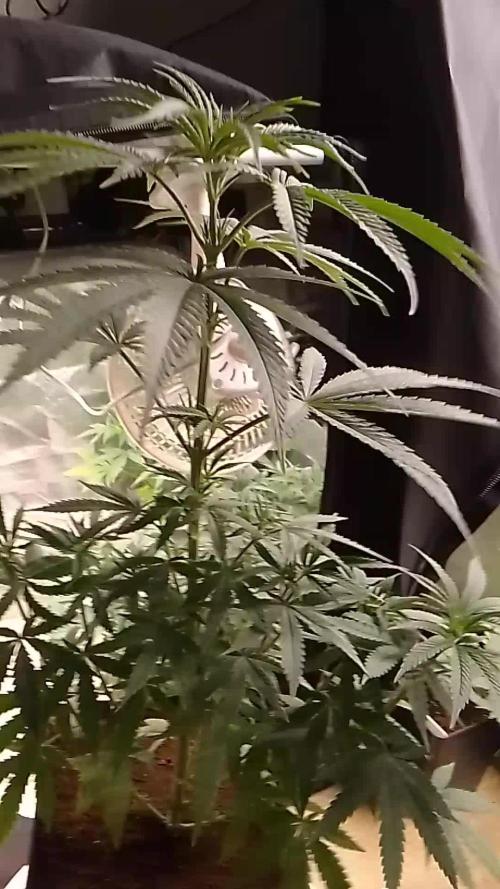
Going great just doing what they want no training done just defoliation some leaf



Likes
41
Share


@UnorthadoxDude
Follow
Week 2 begins. Everything seems normal so far.
Day 11: Have produced higher quality images and a video.
Day 13: Growth accelerating.
Weekly Summary: Enigma is right where she should be, as yet showing no significant dwarfism.
Likes
14
Share


@GoldenWeedGrower
Follow
D50/F06 - 20/05/23 - Nothing to report
D51/F07 - 21/05/23 - Added water and nutes EC=1.1 pH=5.7
D52/F08 - 22/05/23 - Nothing to report
D53/F09 - 23/05/23 - Added water. EC=1.1 pH=6.4
D54/F10 - 24/05/23 - Added water and nutes EC=1.0 pH=6.3
D55/F11 - 25/05/23 - Start the week out. I set up a system to feeding Nora during my stay out (I'll take some picture about...)
D56/F12 - 26/05/23 - I leave today, 1 week away

Likes
7
Share


@Reaper
Follow
This strain reminds me of purple kush but then this is the best phenotype, very dark purple buds ready in 70 days
Likes
34
Share


@PrairieFrostGrow
Follow
Week 6 Veg - January 16/21 to 22/21 *****
Week 7 will be their last week being able to take them out of the tent😟 SCROG netting going in on the weekend ahead. Not really a lot to report this week as the girls are doing well and I am just wanting their side branches to grow longer to help filling in the canopy anyway. Performed more LST this week and bending over the branches daily. Didn’t do any HST this week, will once the net is in and I have a better visual of how the branches need to bend.
They have come a long ways over the last 2 weeks when you look back at pictures. They have filled out with more side branching and other than battling a little purple striping on the main stems they seem pretty happy. Leaf colour is good and should be in good shape for the flip soon. Will go through all of week 8 before flipping so hopefully week 9 will be transition week and week 10 the start of flower.......have to get through next week first though😀👍
Switching over to tap water again. I have been struggling with calcium and magnesium deficiencies on all grows for the last year. I can’t seem to get the right amount added back to the RO water I use in all feedings. So running with straight water again now. Ppm coming out is 325 so I will work with that. Going to explore my own RO system in the house rather than bottled water, a system that adds back calcium, magnesium, and iron. It’s been flowing okay for the first week and will continue on for now. Using RO water I have been feeding full strength on the nutrients and have been working on backing them down a bit to compensate for the starting point of 325 now.
They have continued to be fed once a week roughly and supplemented with calmag and microbes.
Little more detail.......
Jan 16/21, Day 36 Veg
- 3L each of full line at full strength in RO water
- 1150ppm and 5.8pH given to the girls
- didn’t add any other nutes other than IPP line.
Jan 17/21, Day 37 Veg
- dry out day
- pulled down all the girls again tonight to train them outwards.
-
Jan 18/21, Day 38 Veg
- 3L for each girl today with tap water and CalMag @ 1ml, Microbes @ 2ml, Nature’s Candy @ 1.5ml
- 700ppm and 5.7pH is what that works out to.
- have to use a considerable amount of pH down to adjust the tap water, over 6ml in 16L
Jan 19/21, Day 39 Veg
- measured the girls today, GSCHB Is 12” tall. They were topped already😀
- dry out day for the girls.
-
Jan 20/21, Day 40 Veg
- 2.5L each with plain tap water
- 295ppm and 5.8pH.
- all the girls are looking big and bushy today.......they are ready for flip soon.
Jan 21/21, Day 41 Veg
- dry out day for the girls.
Jan 22/21, Day 42 Veg
- pulled all the girls down again......repeating the same LST each day manually rather than tying down for now.
- this should be water day but leaving for today as I am going to lolipop the lower branches and a heavier leaf stripping tomorrow.
- will feed tomorrow as they will benefit more.
Very solid week ETS......the girls are taking off and expect to see lots of leaves popping out over the next couple of weeks😀👍
Work on the side branching to come up higher closer to the tops next week.......continue tap water and give a feed with Epsom Salts new week


Likes
Comments
Share


Likes
39
Share


@G4NJAG4NG
Follow
Day 57 Day 15 flower - what can I say? No issues reported so far, did some more defoliation below the scrog and tidied up some of the flower sites, removed a few of the old fan leaves and checked on Zkittlez OG, she is frosty already and starting to look really sparkly and beautiful 💎😍
The others are also showing some frost and bud development is going well!! Exciting times ahead!
290319 day 59 flower day 17 - no issues apart from slight heat stress for the girl in the middle, will adjust the light tomorrow to ease the stress. Bud candy just arrived so I will add 1ml/l on next feed tomorrow morning! Overall the bud sites have came through in numbers and are looking very strong and healthy, OG Zkittlez auto has turned into diamonds of trichomes and the others are following suite 😍 more updates to come! Hopefully skittlez is finished in the next 3 weeks! Also added a rotating flow to get good air flow in the tent, there were some dead spots.
020419 day 63 flower day 21
Likes
2
Share


@mojo1985
Follow
wahnsinnig schnell in der blüte.... und auch wachstum richtig schnell... wollen wir mal sehen was da passiert... bis jetzt unfassbar gut... 🙏💪👍👍

Likes
72
Share


@Green_Mountains
Follow
The girls had a great week!! Starting to smell already... incredible!! I watered them 3 times with .75 cup and the last watering was 1 cup.
They have sprouted up amazingly!! The environment has been stable.. starting this next week I'll start to add a little bit of Fox Farms nutes.
Otherwise, just trying to keep the plants happy!!
Thanks for stopping by!!


Likes
1
Share

@Nocone_Purple
Follow
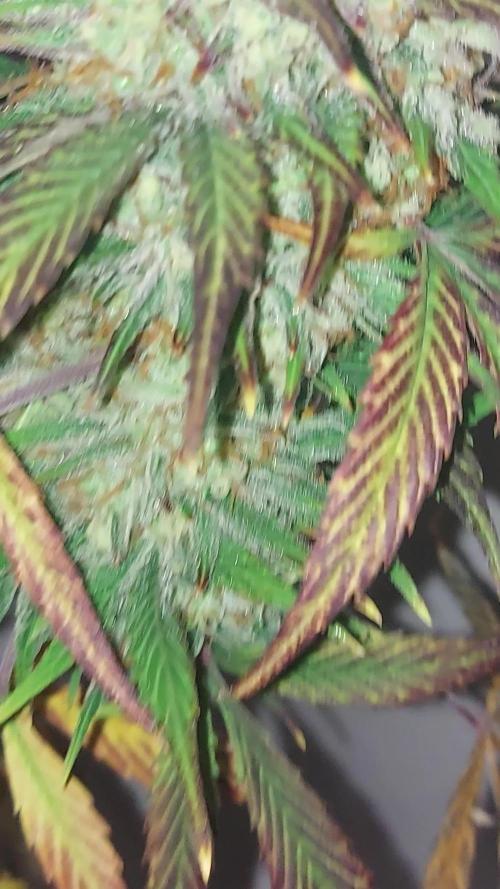
This week I followed the same feeding schedule as the previous week for the first half, and today I started the flush. Harvest is expected in the next 3–4 days. The plant is clearly reaching the end of its life cycle, and with the flush I want to support it through this final phase, as it has already reached its maximum potential in terms of yield.
The aroma is strong, fruity, and floral, with a scent that strongly resembles melon. The buds are rock-hard and extremely resinous. Very impressive genetics from Zamnesia. Visually, it's a rich green with purple and pink hues. I’m really looking forward to trying it.

Likes
15
Share


@902EastCoast
Follow
From the beginning to the end of their life, they were easy to grow. Nice structured plants and buds. Fast finishing at 49 days for these 2. Love this strain!

Likes
10
Share


@Canna96
Follow
Hey now, hope you all are having a great weekend. Good week for the Green Crack 2.0, not much to report but she is still growing and getting ready to be transplanted into her 3.4 gallon final home which will be an airpot. I am hoping to transplant her in 48 hours and then top her by the end of the week around day 20. I am planning to build a mainline out of her and then flip to flower around week 6 or 7 at the latest.
I am a huge Sativa fan so very excited to see how this lady turns out, as i have had some very pschyoactive green crack in the past. I hope everyone has a great rest of your weekend, thanks for stopping by, Stay Safe and Blaze On!!! 💪
Website: https://medicgrow.com/
https://growdiaries.com/grower/medicgrowled
