


Likes
Comments
Share


@GODSGIFT_2005
Follow
For LIQUIDS & NUTES ******GREEN BUZZ NUTRIENTS***** organic.
Also i’m using their LIVING SOIL CULTURE in powder form!
MARSHYDRO ⛺️ has large openings on the sides which is useful for mid section groom room work. 🤩
☀️ MARSHYDRO FC 3000 LED 300W
💨MARSHYDRO 6” in-line EXTRACTOR with speed-variation knob, comes complete with ducting and carbon filter.

Likes
13
Share


@420DeepGrow
Follow
Gracias al equipo de AnesiaSeeds y XpertNutrients sin ellos esto no sería posible.
💐🍁 Frozen Face Auto
Nueva variedad autofloreciente, tan refrescante como una mañana helada con un toque de cereza y lavanda. Esta variedad es una auténtica obra maestra de la cría, con un linaje dominante 70% Sativa que aporta una vibración edificante y energizante a tu cultivo. Perfecta para los que aprecian la belleza veloz de las semillas autofeminizadas y la mezcla única de dicha aromática.
Con un contenido de THC del 30%, Frozen Face Auto promete una experiencia tan estimulante como una zambullida en un lago fresco, dejándote fresco y vigorizado.
Ofrece rendimientos impresionantes de 550 g/m² en interior y hasta 300 g por planta en exterior. Con un ciclo de 70-75 días.
🚀🌻 Consigue aqui tus semillas:
🍣🍦🌴 Xpert Nutrients es una empresa especializada en la producción y comercialización de fertilizantes líquidos y tierras, que garantizan excelentes cosechas y un crecimiento activo para sus plantas durante todas las fases de cultivo.
Consigue aqui tus Nutrientes:
https://xpertnutrients.com/es/shop/
📆 Semana 3:
Ha sido una buena semana, ella ha dado un gran cambio, se llevó a su lugar definitivo 😎.
Se le ha aplicado un tratamiento fungicida con una infusión de cola de caballo y otro tratamiento insecticida con tierra de diatomeas, 1 cucharadita por litro de agua.
A partir de ahora se aplica riego por goteo, 1/3 de la dosis recomendada por el fabricante ya que al estar en exterior y en buena tierra tiene bastante comida.
Empiezan a tener un olor agradable 😎.

Likes
7
Share


@growerfromnc
Follow
Started showing hairs ........had to cut more fan leaves back for light penertration n staked down branches

Likes
20
Share


@eldruida_lamota
Follow
Como estamos , aquí seguimos de confinamiento pero entre buenos humos y hoy toca actualizar las farm cheese de genofarm,
A estas alturas e de decir que ya entramos en la recta final y estoy completamente satisfecho con esta variedad.
Crecimiento rápido floración mucho más rápida cogollos compactos y llenos de resina, eso que hablo de que quedan varias semanas entre lavados y demás pero muy bien.
Sigo controlando ph 6.2 humedad 50% y temperatura en 26.5 .
Y estos resultados gracias al ts600 de mars hydro.
Esta semana Añadi overdrive importante al final de una floración, para conseguir mejores resultados, nos vemos la semana que viene, buenos humos fumetillas.

Likes
7
Share


@Pistil_Whipped
Follow
Flipped it to 12 12 schedule. now I am seeing more pistil hair on the bud sites. Noticing stems are getting more rigid and wood like.

Likes
92
Share

@squalino
Follow
🌿 Journal de Culture : Mac 1 – "Spirit" (Plante #2) – Compte à Rebours Lancé
#Dryrocket
Date du jour : 29/06/2026
Âge de la plante : J+79 (Semaine 12)
Taille actuelle : 136 cm
Évolution :
L'Alien déploie ses tentacules 👽
C’est un grand jour dans le cycle de Spirit. La ligne d'arrivée est officiellement en vue, et la plante continue de muter pour devenir quelque chose d'absolument spectaculaire.
Nutrition & Fin de Cycle (Aujourd'hui)
Dernier repas : Aujourd’hui marque le tout dernier apport en Bio PK 5-8 de Biotabs. C'est le clap de fin pour les nutriments !
Objectif Récolte : Le compte à rebours est officiellement déclenché : elle sera coupée dans exactement 14 jours.
Le rinçage final : À partir de maintenant, c'est diète complète. Place à l'eau claire via l'Autopot pour lui permettre de puiser dans ses dernières réserves, de nettoyer ses tissus et d'exprimer son plein potentiel gustatif.
👽 Morphologie Terrestre... ou Extraterrestre ?
Des têtes hors normes :
Les fleurs sont devenues gigantesques et débordent d'une quantité impressionnante de trichomes scintillants. J'ai tellement hâte de la récolter pour voir à quoi elle ressemble vraiment une fois manucurée !
L'effet tentacules 🦑 :
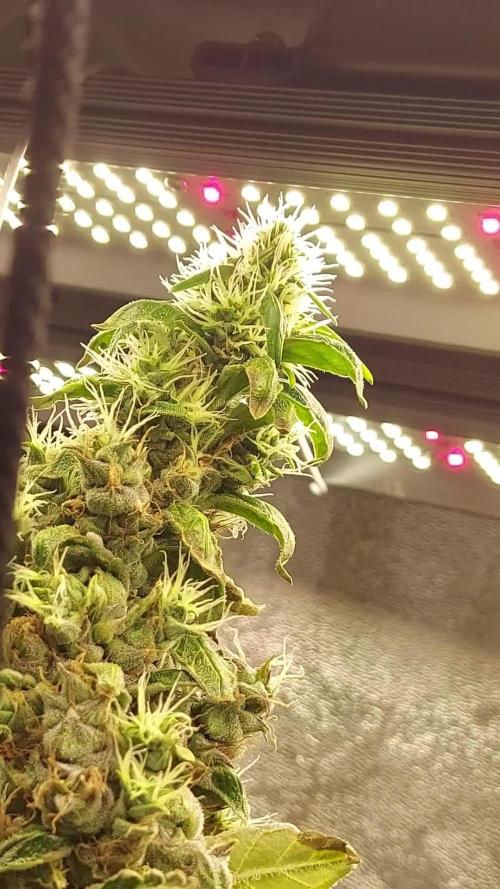
C'est la signature visuelle de cette fin de session. Sous l'effet combiné de la chaleur estivale et de la proximité de la lumière intense, Spirit ne fait plus de simples "queues de renard" (foxtails). Comme on peut le voir en gros plan .les calices s'empilent et s'étirent vers le panneau LED en formant de véritables tentacules de résine. C'est le look alien poussé à son paroxysme !
Sénescence amorcée :
Le feuillage commence doucement à se teinter de nuances d'automne .. C'est le signal parfait que la plante reçoit le message et se prépare pour la fin.
⚙️ Rappel Environnemental
Substrat : Géré automatiquement par le système Autopot qui va maintenant assurer la phase de rinçage à l'eau pure.
Climat : Malgré la chaleur qui pousse les sommités à s'étirer en tentacules, la ventilation et l'extraction tournent au maximum pour maintenir l'espace sain et éviter tout problème d'humidité stagnante au cœur de ces buds massifs.
🙏 Remerciements
Un immense merci à @mia_biotabs et à @Mrs_Larimar pour ce programme de nutrition qui aura nourri ce monstre jusqu'au bout. Et un grand clin d'œil à @Dryrocket : le déshydrateur aarive aujourd'hui normalement et sera prêt, le compte à rebours de 14 jours est lancé, et j'espère que mes stocks de silice tiendront le coup face au volume impressionnant qui s'annonce !
Dernière ligne droite pour l'Alien... Le rinçage commence !

Likes
71
Share


@Krisis
Follow
06/04/24. Going into week 5 flower.
Not much to say here this week.
Everything is pretty much same as last week.
Seems like things are slow going. I feel like the buds aren’t doing much really and should be bigger. These are a longer going strain than my other so maybe that makes a difference. Maybe I’m just impatient. Guess we’ll see.
Only thing aside from that I find concerning is #2 seems to have some pistils turning color. Seems way too early for that. I keep checking for hermie crap or pollen or something lol. If this was just its thing it seems like both plants would be doing it, but I guess you know what they say about assuming.
Thanks for lookin & have a good week.

Likes
17
Share


@Neo86
Follow
Quick little video tour today. I'll sort a proper detailed update a little later this evening ☺️
🌱✌️😉🤘🌱
Front row, left to right:
Phantom OG, Wedding Cake Auto, G13 x Blueberry Headband.
Back row, left to right:
Glookies, Ayahuasca Purple, Peyote Cookies.
The only girls receiving the Force nutrient are the Glookies and the Wedding Cake Auto but from now on, I'll only be feeding them plain water to cleanse them as much as possible before harvest. The rest of them still have a couple more weeks of feed before changing anything else 😎

Likes
Comments
Share



Likes
13
Share


@Dunk_Junk
Follow
So she 'only' grew 3cm this week.
That's not bad considering what she looked like a week ago!! 😭
She's pushed out a lot of new green growth this week. I hope she's also building a strong root system below ground. 💪

Likes
29
Share


@nonick123
Follow
Día 27 (20/05) Riego con 250 ml de Té de Compost
Auto Northern Dragon Fuel está creciendo exponencialmente!
Día 28 (21/05) Vuelven a tener sed! Las riego con 250 ml sólo H20 pH 6.2
Auto Northern Dragon Fuel se ha recuperado muy bien de la deficiencia de Mg
Día 29 (22/05) Riego con 750 ml H2O+ Regulator 0,15 ml/l + CaMg-Boost 0,25 ml/l + Startbooster 0,25 ml/l + TopBooster 0,2 ml/l- pH 6.2
Día 30 (23/05) Lemon Cherry Cookies Auto está sedienta de nuevo!
500 ml de sólo H2O con el pH 6.3
Día 31 (24/05) Lemon Cherry Cookies Auto está sedienta de nuevo!
Riego con 750 ml H2O + Regulator 0,15 ml/l + TopBooster 0,2 ml/l- pH 6.2
Día 32 (25/05) Las plantas no paran de crecer! 😍
Día 33 (26/05) Riego con 750 ml H2O + Regulator 0,15 ml/l + CaMg-Boost 0,25 ml/l + TopBooster 0,2 ml/l- pH 6.2
Lemon Cherry Cookies Auto tiene un olor increíble 😍😍😍
💦Nutrients by Aptus Holland - www.aptus-holland.com
🌱Substrate PRO-MIX HP BACILLUS + MYCORRHIZAE - www.pthorticulture.com/en/products/pro-mix-hp-biostimulant-plus-mycorrhizae
Likes
44
Share


@Ukfarmer420
Follow
Bannandaddy auto by ethos genetics it is a brilliant plant a bit small but 10/10 buds, smell like redbull lol


Likes
46
Share


@The_Bearded_Grower
Follow
welcome to 📅 Day 29 of the grow Day 1 of flower 7/5/2021 sorry for the late update I just found out my wife is pregnant with our first 👶.
the girls are doing great under the new grow feeding and coming along great. see you all on Thursday for my next update. Happy growing and keep your stick on the ice 🏒
Update: 📅 Day 4 of flower 7/9/2021 the girls are coming along very good and I have done the last of the pruning from here on out its just feeding
I would like to say a few words about Mars Hydro. the TS 1000 is a great light and I love the fact that the power supply is capable of being separated from the light and located outside of the tent to keep the heat down. I also like the fact that you can control the light intensity and daisy chain with another light witch is what I plan on doing.

Likes
55
Share


@Ultraviolet
Follow
What's in the soil? What's not in the soil would be an easier question to answer. 16-18 DLI @ the minute. +++ as she grows.
Probably not recommended, but to get to where it needs to be, I need to start now.
Vegetative @1400ppm 0.8–1.2 kPa 80–86°F (26.7–30°C) 65–75%, LST Day 10, Fim'd Day 11
CEC (Cation Exchange Capacity):
This is a measure of a soil's ability to hold and exchange positively charged nutrients, like calcium, magnesium, and potassium. Soils with high CEC (more clay and organic matter) have more negative charges that attract and hold these essential nutrients, preventing them from leaching away.
Biochar is highly efficient at increasing cation exchange capacity (CEC) compared to many other amendments. Biochar's high CEC potential stems from its negatively charged functional groups, and studies show it can increase CEC by over 90%. Amendments like compost also increase CEC but are often more prone to rapid biodegradation, which can make biochar's effect more long-lasting. biochar acts as a long-lasting Cation Exchange Capacity (CEC) enhancer because its porous, carbon-rich structure provides sites for nutrients to bind to, effectively improving nutrient retention in soil without relying on the short-term benefits of fresh organic matter like compost or manure. Biochar's stability means these benefits last much longer than those from traditional organic amendments, making it a sustainable way to improve soil fertility, water retention, and structure over time. Needs to be charged first, similar to Coco, or it will immobilize cations, but at a much higher ratio.
a high cation exchange capacity (CEC) results in a high buffer protection, meaning the soil can better resist changes in pH and nutrient availability. This is because a high CEC soil has more negatively charged sites to hold onto essential positively charged nutrients, like calcium and magnesium, and to buffer against acid ions, such as hydrogen.
EC (Electrical Conductivity):
This measures the amount of soluble salts in the soil. High EC levels indicate a high concentration of dissolved salts and can be a sign of potential salinity issues that can harm plants.
The stored cations associated with a medium's cation exchange capacity (CEC) do not directly contribute to a real-time electrical conductivity (EC) reading. A real-time EC measurement reflects only the concentration of free, dissolved salt ions in the water solution within the medium.
98% of a plants nutrients comes directly from the water solution.
2% come directly from soil particles.
CEC is a mediums storage capacity for cations. These stored cations do not contribute to a mediums EC directly.
Electrical Conductivity (EC) does not measure salt ions adsorbed (stored) onto a Cation Exchange Capacity (CEC) site, as EC measures the conductivity of ions in solution within a soil or water sample, not those held on soil particles.
A medium releases stored cations to water by ion exchange, where a new, more desirable ion from the water solution temporarily displaces the stored cation from the medium's surface, a process also seen in plants absorbing nutrients via mass flow. For example, in water softeners, sodium ions are released from resin beads to bond with the medium's surface, displacing calcium and magnesium ions which then enter the water. This same principle applies when plants take up nutrients from the soil solution: the cations are released from the soil particles into the water in response to a concentration equilibrium, and then moved to the root surface via mass flow.
An example of ion exchange within the context of Cation Exchange Capacity (CEC) is a soil particle with a negative charge attracting and holding positively charged nutrient ions, like potassium (K+) or calcium (Ca2+), and then exchanging them for other positive ions present in the soil solution. For instance, a negatively charged clay particle in soil can hold a K+ ion and later release it to a plant's roots when a different cation, such as calcium (Ca2+), is abundant and replaces the potassium. This process of holding and swapping positively charged ions is fundamental to soil fertility, as it provides plants with essential nutrients.
Negative charges on soil particles: Soil particles, particularly clay and organic matter, have negatively charged surfaces due to their chemical structure.
Attraction of cations: These negative charges attract and hold positively charged ions, or cations, such as:
Potassium (K+)
Calcium (Ca2+)
Magnesium (Mg2+)
Sodium (Na+)
Ammonium (NH4+)
Plant roots excrete hydrogen ions (H+) through the action of proton pumps embedded in the root cell membranes, which use ATP (energy) to actively transport H+ ions from inside the root cell into the surrounding soil. This process lowers the pH of the soil, which helps to make certain mineral nutrients, such as iron, more available for uptake by the plant.
Mechanism of H+ Excretion
Proton Pumps: Root cells contain specialized proteins called proton pumps (H+-ATPases) in their cell membranes.
Active Transport: These proton pumps use energy from ATP to actively move H+ ions from the cytoplasm of the root cell into the soil, against their concentration gradient.
Role in pH Regulation: This active excretion of H+ is a major way plants regulate their internal cytoplasmic pH.
Nutrient Availability: The resulting decrease in soil pH makes certain essential mineral nutrients, like iron, more soluble and available for the root cells to absorb.
Ion Exchange: The H+ ions also displace positively charged mineral cations from the soil particles, making them available for uptake.
Iron Uptake: In response to iron deficiency stress, plants enhance H+ excretion and reductant release to lower the pH and convert Fe3+ to the more available form Fe2+. The altered pH can influence the activity and composition of beneficial microbes in the soil. The H+ gradient created by the proton pumps can also be used for other vital cell functions, such as ATP synthesis and the transport of other solutes. The hydrogen ions (H+) excreted during photosynthesis come from the splitting of water molecules. This splitting, called photolysis, occurs in Photosystem II to replace the electrons used in the light-dependent reactions. The released hydrogen ions are then pumped into the thylakoid lumen, creating a proton gradient that drives ATP synthesis.
Plants release hydrogen ions (H+) from their roots into the soil, a process that occurs in conjunction with nutrient uptake and photosynthesis. These H+ ions compete with mineral cations for the negatively charged sites on soil particles, a phenomenon known as cation exchange. By displacing beneficial mineral cations, the excreted H+ ions make these nutrients available for the plant to absorb, which can also lower the soil pH and indirectly affect its Cation Exchange Capacity (CEC) by altering the pool of exchangeable cations in the soil solution.
Plants use proton (H+) exudation, driven by the H+-ATPase enzyme, to release H+ ions into the soil, creating a more acidic rhizosphere, which enhances nutrient availability and influences nutrient cycling processes. This acidification mobilizes insoluble nutrients like iron (Fe) by breaking them down, while also facilitating the activity of beneficial microbes involved in the nutrient cycle. Therefore, H+ exudation is a critical plant strategy for nutrient acquisition and management, allowing plants to improve their access to essential elements from the soil.
A lack of water splitting during photosynthesis can affect iron uptake because the resulting energy imbalance disrupts the plant's ability to produce ATP and NADPH, which are crucial for overall photosynthetic energy conversion and can trigger a deficiency in iron homeostasis pathways. While photosynthesis uses hydrogen ions produced from water splitting for the Calvin cycle, not to create a hydrogen gas deficiency, the overall process is sensitive to nutrient availability, and iron is essential for chloroplast function.
In photosynthesis, water is split to provide electrons to replace those lost in Photosystem II, which is triggered by light absorption. These electrons then travel along a transport chain to generate ATP (energy currency) and NADPH (reducing power). Carbon Fixation: The generated ATP and NADPH are then used to convert carbon dioxide into carbohydrates in the Calvin cycle. Impaired water splitting (via water in or out) breaks the chain reaction of photosynthesis. This leads to an imbalance in ATP and NADPH levels, which disrupts the Calvin cycle and overall energy production in the plant. Plants require a sufficient supply of essential mineral elements like iron for photosynthesis. Iron is vital for chlorophyll formation and plays a crucial role in electron transport within the chloroplasts. The complex relationship between nutrient status and photosynthesis is evident when iron deficiency can be reverted by depleting other micronutrients like manganese. This highlights how nutrient homeostasis influences photosynthetic function. A lack of adequate energy and reducing power from photosynthesis, which is directly linked to water splitting, can trigger complex adaptive responses in the plant's iron uptake and distribution systems.
Plants possess receptors called transceptors that can directly detect specific nutrient concentrations in the soil or within the plant's tissues. These receptors trigger signaling pathways, sometimes involving calcium influx or changes in protein complex activity, that then influence nutrient uptake by the roots. Plants use this information to make long-term adjustments, such as Increasing root biomass to explore more soil for nutrients. Modifying metabolic pathways to make better use of available resources. Adjusting the rate of nutrient transport into the roots. That's why I keep a high EC. Abundance resonates Abundance.
Likes
23
Share


@Mr_McNasty408
Follow
Day 36 (1/11/21)
Nutes:
Veg A: 3.83 g/gal
Veg B: 2.58 g/gal
PPM: 1050
Water temp: 59°F
pH: 5.7
Day 37 (1/12/21)
Nutes:
Veg A: 4.6 g/gal
Veg B: 3.1 g/gal
PPM: 1150
Water temp: 59°F
pH: 5.7
Day 38 (1/13/21)
Nutes:
Veg A: 4.6 g/gal
Veg B: 3.1 g/gal
PPM: 1150
Water temp: 60°F
pH: 5.7
Day 39 (1/14/21)
Nutes:
Veg A: 4.6 g/gal
Veg B: 3.1 g/gal
PPM: 1150
Water temp: 62°F
pH: 5.7
Day 40 (1/15/21)
Nutes:
Veg A: 4.6 g/gal
Veg B: 3.1 g/gal
PPM: 1150
Water temp: 62°F
pH: 5.7
Day 41 (1/16/21)
Started running a RO:Tap water mix as recommended by Cropsalt FAQ instead of ph adjuster. PPM comes out about 20ppm higher but that’s no problem.
Nutes mix:
RO:TAP = 15:1 or 120oz:8oz
Veg A: 4.6 g/gal
Veg B: 3.1 g/gal
PPM: 1350
Water temp: 62°F
pH: 5.8
Day 42 (1/17/21)
Starting flower tonight, 12 hours of darkness tonight and for the rest of the grow.
Nutes mix:
RO:TAP = 15:1 or 120oz:8oz
Veg A: 4.6 g/gal
Veg B: 3.1 g/gal
PPM: 1350
Water temp: 60°F
pH: 5.8
Likes
1
Share


@Tygrows420
Follow
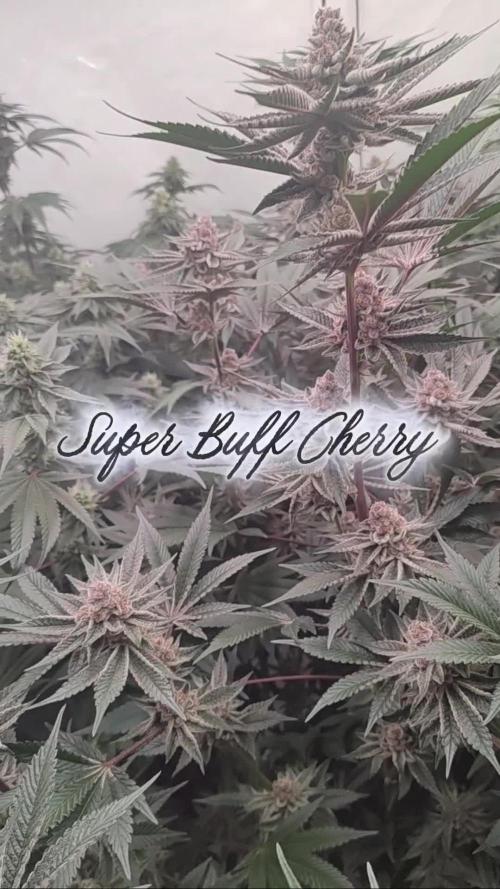
This plant is not going to get that big at all, but the buds will be nice sized.

Likes
12
Share


@BudMunchies
Follow
09/03: They are doing fine, I currently have them in the same tent as my other grow, and will be moving them to my 2x4 in the next couple of days.
Ill be running these with a new nutrient stack that i am not yet familiar with, and will follow the feeding chart, adjusting as needed.
One of these is still a little runt and has not grown much height at all. It will likely just stay in that small cup all the way through flower, assuming that i even let it finish at all. I had only planned to take one of them to flower anyway.
09/08: Today i decided to get in an early topping. I am going to transplant her to a final autopot in a couple of days and wanted to get this stress out of the way. She is looking a little irritated as is. She is in the 2x4 now and i am not able to maintain higher than 55% humidity in this tent using a cheap humidifier. Probably would be worth grabbing a better one for this tent. But she will be in flower in a couple of weeks and then the lower humidity will not be a problem, so i think ill just roll with it.


Likes
24
Share


@Kirsten
Follow
16.2.25:
I decided to check out the lower canopies of all plants to see if I need to get rid of any foliage.
I did get rid of a few small branches and leaves.
However, whilst I was doing this, I saw more garden pegs from my LST remaining.
There were about 6 or more in Pink Mist alone. Additionally, on Watermelon, there were some left in, too.
I'm so annoyed to see that because the plants are really stretching, and I could've potentially disrupted this by leaving the pegs in for all this time without realising it.
🤞 that I haven't compromised things too much. We'll see.
I watered today with 2ltrs of dechlorinated water PH'd to 6.3 containing the following nutrients;
♡ .8g Green Leaf Nutrients PK booster
♡ .5g Ecothrive Biosys
I ordered quite a few things for the garden. I got Greenleaf Nutrients Sea K(elp) and Mega Crop Parts A+B. To go with their PK Booster I got last month. I'm excited to try it all together. Next run, maybe just using these. We'll see how it goes.
18.2.25:
The plants are going crazy for water! Everything is getting used right up so fast!
Today, I decided to add some more Black Strap Molasses to add some carbs and other micronutrients. I'll add the jar with the label in the photos section above.
I watered a very small amount to each plant.
What I put in:
♡ Black strap molasses 150g
♡ 2g Sea K(elp) Greenleaf nutrients.
I dissolved everything in 4ltrs of dechlorinated water PH'd to 6.4.
19.2.25:
I received the majority of the garden purchases that I made. I'm still waiting for the Ecothrive Life Cycle. I wanted to top dress, but it's been delayed unfortunately.
I am using my Greenleaf nutrients products which I bought on Amazon. I got the Mega Crop 2 part system Part A and Part B. I have the Sea K(elp), and the bud explosion PK booster.
I really wanted to get some of their sweet candy asking read many positive reviews. Unfortunately, for me, this is unavailable to buy currently. So that's a little disappointing.
I needed to do a good watering so when my nutes were delivered today, I got excited 🤗
I watered 2ltrs of dechlorinated water per plant, PH'd to 6.4, containing the following nutrients:
♡ 1g Mega Crop Part A
♡ 1g Mega Crop Part B
♡ .5g Sea K(elp).
The plants drank this up within a few hours.
I'm going to try and hold off on watering in hopes that my Ecothrive Life Cycle will arrive so I can top dress and water it in then.
20.2.25:
My Ecothrive Life Cycle arrived yesterday, and the plants are ready for their top dress and a good watering in.
I have some Biobizz Light Mix, Canna Coco,and perlite. I'm going to use this as a base to mix my amendments in.
I'm going to fill my 5 gallon bucket with about 4.5 gallons of my top dress mix. I will distribute this across 6, 4-5 gallon pots. Then I will water in well with Greenleaf nutrients Mega Crop Parts A+B and Sea K(elp).
I've made a crude attempt to video mixing my top dress. Don't listen to the audio. lol, my YouTube didn't stop playing whilst I recorded this 😂
So anyway, I added the following amendments to the above base mix of 4.5 gallons;
♡ 3 TBSP Ecothrive Life Cycle
♡ 3 TBSP Vitalink Bat Guano
♡ 3 TBSP Ecothrive Charge
♡ 1 TBSP RHS Mycorrhizal Fungi granules
♡ 6 TBSP Ground Cinnamon.