




Likes
24
Share


@TerpTurtle
Follow
Strawberry Truffle - White Truffle x Red Pop & limited seed it came with Chem 91 x Red pop
Likes
29
Share


@JeyGanesha
Follow
Anche lei è l'ultima settimana di lavaggio radici.......oggi 29/09/2024 taglio questa Ayahuasca purple...ha un profumo fortissimo....
Oggi probabilmente inizierò a pulire tt le cime e poi.via un taglio netto 😂🤣😜👍💪

Likes
4
Share


@QixxGrows
Follow
Day36, 37, 38: Seems to be growing a set of leaves per day now. Super growth! Stretching to the top.
Day39: I had a hiccup with the camera. For some reason it stopped responding at 04:30 in the morning. I only realized it much later. I still don't really know why, but reseating the data ribbon fixed the issue.
Day40: After fixing the camera, I decided to take this view again. The Lady is starting to show some nice growth and this view will show it best. If you look carefully, you'll see that her branches are not green, but rather reddish. Definitely related to genetics :) Everything else is within limits. Plus, the leaves look super healthy.
Day41: Here you can see the stem colour better.

Likes
37
Share


@Hawkbo
Follow
Hey guys I am a day late on the update cuz I went away for the weekend to a buddy's bachelor party and ended up with a broken clavicle in two places and need surgery tomorrow. I dont know how I'm gunna keep things rollin here but I'll figure it out. Anyways I couldn't get the plants out of the tent tonight but when I have some help tmm I'll try and get some better individual pics. I fed them before I left Friday at 1110 ppm with the green buzz and got a little burn, which is a good thing because that kinda shows me that less is more with this line and may save you a few bucks over time. It's also nice that there isnt 11 different bottles to pour from so far I couldn't be more impressed with GBL. The planta were all pretty bone dry today but look better than ever. Pics were taken at day 29 this week, temps have been around 73°F and 58% RH. This tent is in a basement so even with the dehumidifier the rh is pretty high especially with the lights out but the plants seem to enjoy it and I have plenty of air circulating
This one might be a keeper if it fills out strong, shes a bit more structurally sound than the first pheno fatter leaves, thicker stalks but same stretch.
Edit: I fucked somethin up here in the video I put day 29 bloom, these were flipped on june 9th and got 36 hr dark period, I uploaded the video last monday so it was actually on day 22 flower not day 29 but it's a little late to edit the video so ignore that day and I'll make a new one tonight which is actually day 28


Processing
Likes
2
Share


@NewbieLearner
Follow
Plants took a few days to get stripped down. Missed the second week of flowering and stretching but oh well there is always next time. Very excited to see this canopy full of uniform buds its going to be a sight to behold haha.

Likes
2
Share

@eldruida_lamota
Follow
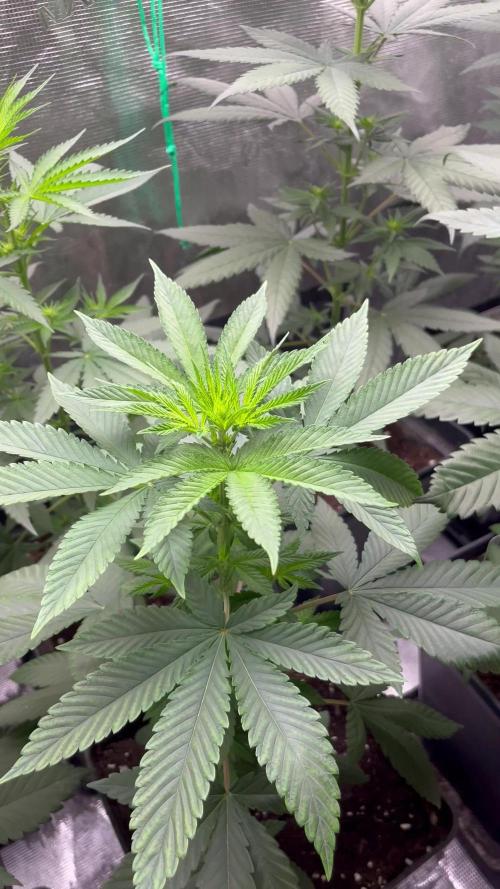
Vamos familia, actualizamos la primera semana de floración de estas Lemon Mandarin de FastBuds.
La temperatura que estuvo entre los 24-26 grados y humedad dentro de los rangos correctos.
Cambiamos esta semana el fotoperiodo a 12 horas luz, 12 oscuridad, estiraron bien y ensancharon bastante también, el color es verde sano.
Se nota que los nutrientes de la marca Agrobeta hacen sus funciones.
También realicé una poda de bajos que yo si las veo necesarias para explotar después la flor.
- os dejo por aquí un CÓDIGO: Eldruida
Descuento para la tienda de MARS HYDRO.
https://www.mars-hydro.com
Hasta aquí todo, Buenos humos 💨💨💨
Likes
45
Share


@masterofsmeagol
Follow
8/1 This wad the most fucked up morning ever. Didn't get much time with the girls. I was able to take a few pics when I got back amd a video this morning. Pillars are still around. I killed a couple but I probably should spray BT. I think we got rain last night. Bags are heavy. I defoliated a little bit more on the interior and found some small yellow leaves. Event horizon is still on point to flower first. I NEED to lst and add supports for flower bit I've got a lot of other things going on too. I'm going to TRY to spray BT tonight if weather permits and I should have the supports up this weekend. At least that's what I'm hoping.
8/2 Quickly watered as I had to fix a flat tire to get my wife to the doctor. Gave most a gallon but closer to 3/4 on one event horizon and the sherb pie. Half g for the 10 and I gave the 5 and the 50 a little water. I didn't give the 50 much. That holds water far longer. I'm glad I got it done. It was 90°+ and sunny all day. Earlier everything looked great. I think I'm gonna go check them and maybe add a few pictures.
WENT OVER AND FOUND THE EVENT HORIZON I GAVE A LUTTLE LESS WATER TO, IN THE BACK COMPLETELY DEOOPED OVER AND DRY. I QUICKLY WATERED A GALLON. I CHECKED THE OTHER PLANTS AND SAW A COUPLE THAT "MIGHT'VE STARTED DROOPING BUT WERE LIGHT SO I GAVE ALL THE GMO'S HALF A GALLON. I WATERED THE CONTAINER PLANTS AND THE ONE IN THE 50. BETTER SAFE THAN SORRY. THEY WERE SUPER LIGHT. SOME ARE SHOWING SOME HEAT STRESS BUT I DONT BLAME THEM WHEN ITS PUSHING 100° OUT. I HOPE THIS PLANT WILL PICK UP BUT ILL HAVE TO WAIT UNTIL MORNING TO SEE. I GOTTA GO EAT DINNER AND IT WAS IN ROUGH SHAPE. CANT BELIEVE THIS. ITS THE FURYHEST IN FLOWER TOO. INTERNET TOO SLOW TO UPLOAD
8/3 This morning it was "maineing" out. Basically like raining but more of an alternating mist. The event horizon that looked DEAD is completely recovered! I'm so stoked. I've had a really rough few days but at least I've still got my girls. After this little bit of rain I'll do the supports and a spray of BT for the pillars. I'm noticing more damage and I don't want them arpund when they can burrow into buds.
WENT BACK AT LIKE FIVE. THE 5 GAL WAS DROOPING AND THE 10 WAS DRY AF. OTHERS WERE ALSO LIGHT. I USED 5 GALLONS ON THE GARDEN AS SOME STILL "LOOKED GOOD" BUT WERE DUSTY AND DRY. I ONLY GAVE THE GMO IN THE 30 A HALF GALLON. DIDNT WATER THE ECENT HORIZON IN THE BACK AND THE GMO IN THE FRONT BY THE DOOR ASXTHE LOOKED GOOD AND STILL HAD SOME WEIGHT TO THEM. THIS WAS ANOTHER DAY IN THE 90s THAT WAS SUPPOSED TO HAVE RAINED. LUCKILY IVE GOT THAT INTUITION AND I CAN CHECK. CAMS HELP WITH THAT BUT ITS BEST TO CHECK A FEW TIMES A DAY IN WEATHER LIKE THIS. FAR TO HOT TO SPRAY ANYTHING.
8/4 Chose not to water as we were supposed to get an inch of rain, then a half in and now it says .1in. I'm going to go over and check on the garden and see what they look like. I took pictures but I'll have to wait to upload them.
WENT BACK OVER IN THE AFTERNOON AROUND 2ISH. GMO IN THE FRONT WAS DROOPY. WATERED THAT A GALLON AND IT WAS UP BY THE TIME I LEFT. THE GMO ON THE END (MY CANARY) WAS SUPER LIGHT SO SHE GOT A GALLON. THE EVENT HORIZON I DIDNT WATER YESTERDAY GOT ABOUT 3/4 OF A GALLON AND I WATERED THE ONE IN THE 10 1/2 GALLON. SHOWERS ARE IN THE FORECAST AND EVERYTHING ELSE LOOKED PRETTY GOOD AND WASNT DEAD LIGHT. AS OF 3 EVERYTHING IS GOOD. I IMAGINE ILL PROBABLY NEED TO WATER SOMETHING TOMORROW. IT SUCKS HAVING TO DO THIS SEPERATELY BUT SOMETIMES THATS HOW IT GOES. I DONT EXPECT THESE 90 TEMPS WILL CONTINUE. ALSO NOTICING SOME FADING AS THEY TURN TO FLOWER. DEF NEED NUTES. AND ONCE THE TEMPS GO DOWN I NEED TO SPRAY EITHER BT OR SPINOSID.
8/5 It Rained last night so I didn't need to water. Everything was nice and heavy. Beautiful day today. Hopfully I can do an app of bt tonight. Weather man needs to get things right. It says we got .005in last night but I heard it and it was way more than that. This is a tiny town.
WENT BACK OVER AND FED. EVERYTHING GOT 1.75 PINTS. THE 10 GOT HALF THAT. THE FIVE A LITTLE LESS. I DEFINATELY NEED TO SPRAY FOR PILLARS. I ALSO HAVE A BIT OF DEFOLIATING ON A COUPLE PLANTS THAT I NEED TO DO. USUALLY I'VE LOST TONS OF LEAVES BY NOW. I JUST NEED TO IMPROVE AIRFLOW. THE TRELLIS WILL HELP WITH THAT PLUS SUPPORT. I THINK I MAY BE ABLE TO SPRAY PISSIBLY TONIGHT (DEPENDING ON WEATHER) AND SUPPORTS AND DEFOLIATION THE NEXT FEW DAYS.


Likes
9
Share


@Cultivators_Dream
Follow
12/5 Gotta say I am loving how great she is growing all the new growth is coming in perfect.. I made some organic tea out od the Foxfarms Acid lovers dry fertilizer and gave her about 2 and a half cups.. Shes a little small by all accounts but you never know what might happen
Likes
2
Share


@dwotTV
Follow
Transplanted in the afternoon of 10/23 because they were rooting out of the pucks. Got some humidity dome cups coming tomorrow and another inline fan to handle intake to try to dial in things a bit more. Fugue State #2, in the black pot is still a bit shell shocked, hopefully it opens up soon.
Well both #2 and #3 damped off / shell shocked to death, so there's just one left, c'est la vie. #1 is trucking along well and ready for week 2.
Sprayed with Neem Oil on 10/24
Fed Light Fox Farms Blend on 10/25
Treated with NemAttack on 10/26

Likes
16
Share


@KanabizDWQc
Follow
wow ! bud all over tent ! really good smell like fruit loop lime ! but i think all its good for now ! new soup with cal mag ,pk13/14,cannazym,cannaboost and terpinator! she like so healty next time sativa will be in bigger tent !


Likes
15
Share


@OrganikTek
Follow
Hi Fellow Growers
They are going good. The heat its stressing them. the are not drinking so much water and yellowing a bit.... Not so Nitrogen Green but i thinkthey are doing fine. Maybe some Co2 whould help them. Give me some Ideias how can a use the heat and make it become beneficial
Chears BrotherHood


Likes
8
Share


@4F1M6
Follow
Clones are nice and rooted threw off some new growth. So its time to rock and roll into flower. Get this breeding underway. Been on 12/12 for couple days now and the male has soared. Definitely gunna be more than adequate height to dump pollen down on my ladies.
I treated with Dr zhymes as s preventative. I also got them on a balanced feed. Hopefully that will get the ladies engines booming. Until next update. Happy growing and stay lit fam.
Update ****
Holy ball sacs! The master kush is piling on the flowers in clusters. What a machine. Definitely bringing quality traits to the table.

Likes
6
Share


@captaincondor
Follow
no hermies or nanas so that's something to be happy about especially for me as I always seem to f***k things up in the flowering stage lol, looking forward to trying this strain shortly


Processing
Likes
26
Share


@GrowGuy97
Follow
All of the ladies are now starting to flower except the NHL I think it’s a little behind but all in all they are growing great!
Day 31 - Everything seems to be going great, fed the ladies yesterday havnt had any more issues yet (Thankfully) thanks for following & happy growing friends✌️🏼🌱
Day 33- A few of the ladies have some dead leaves not sure if it’s normal or if something is wrong.. they all seem pretty healthy other wise!

