


Likes
Comments
Share


@GrowingABushWithButch
Follow
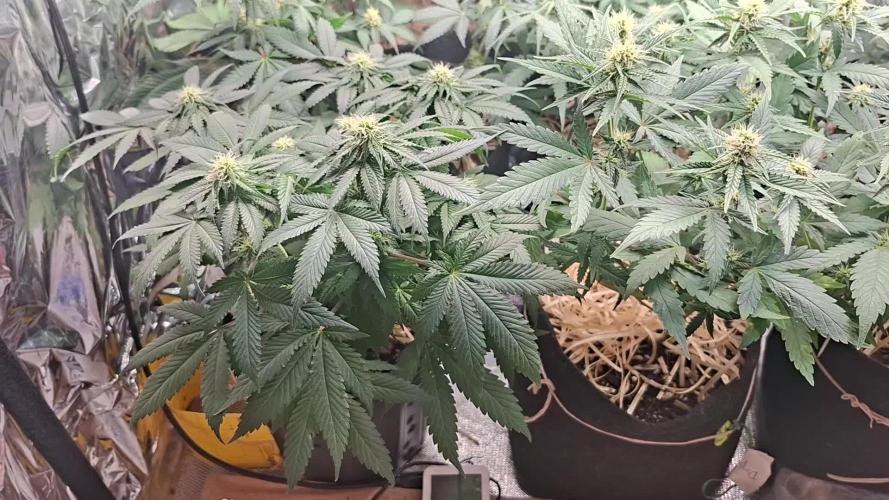
It's Day 35 Week 05 Of Flower For My 02 Kombucha Cream By atlasseed . And For My Snow White and SpliffStrawberry By Spliff Seeds Amsterdam . Today was Hair Cut Day For All 4 Lady's.
Happy Growing Growmies 🤘🏻




Likes
8
Share


Likes
9
Share


@NanoLeaf
Follow
End of Week 15 (8th week of flower)
I have stopped the CO2 supplementation for this week and onwards as the plants naturally slow down photosynthesis and it is not needed during the last 2 weeks of flower.
Also raised the lights by 5cm to make sure the trichomes don't get damaged and also dropped the RH and temperatures even more than last week, and surely the colours are becoming more and more vibrant as the ladies are fading into their autumn shades.
Feeding just water since middle last week, all I'm doing is giving the ladies PH correct water until harvest to naturally deplete the soil from nutrients and flush out the soil slowly this will help bring out even more colours as the ladies use up the remaining nutrients stored in their leaves as they reach the end of their life cycle.
Pest Report: None
Smell Report: Staaaaanky!

Likes
2
Share

@Adriano420
Follow
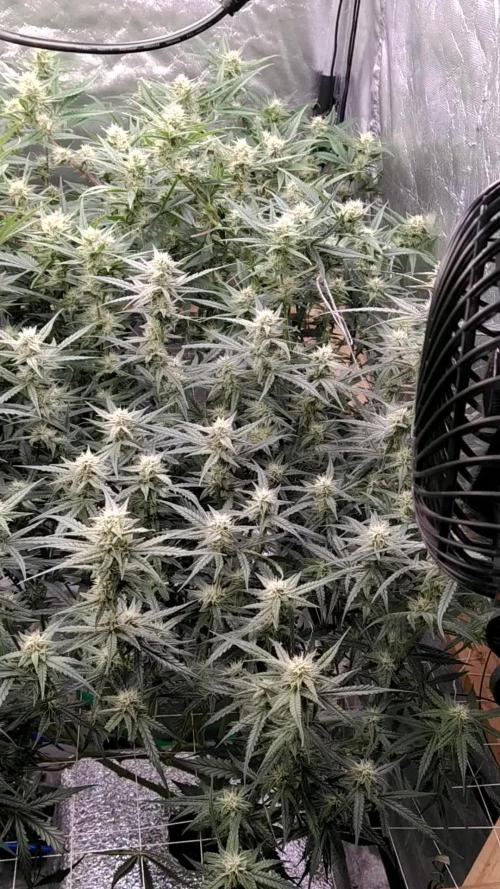
Acionei mais um led de 240w para complementar, o cheiro está ficando maravilhoso

Likes
28
Share


@TheHighentist
Follow
Welcome to week 5 of flower.
Trichome production and the density of the buds is really starting to accelerate.
My dehumidifier is not stable, so VPD ranges from 1.2-1.4.
I lightly defoliated 31/10 and last watering was 6/11
👽👉7/11 The day after watering and the day my timer messed up my 12/12 schedule. But hope it brings no problems.
I defoliated lightly and only removed most under the SCROG line.
Even a couple of underdevoloped branches that stretched below SCROG-net got cut.
👽👉8/11 Their smell is starting to get more extreme.
👽👉9/11 I removed a bit of the bottom foliage and cleaned up the dead leaves.
It has been really tight around the SCROG net, so it was highly needed for airflow and humidity
👽👉10/11 Waterday*
ml/L change from last watering - to this.
BioHeaven 4 > 4
BioGrow 4 > 2
BioBloom 3.5 > 4
TopMax 1.5 > 4
Calmag 0.5 > 0
Rootjuice 1 > 0.5
👽👉11/11
Amazing growth in thickness and they look alot more frosty today!
👽👉12/11 Same story as yesterday
👽👉13/11 Today should have been waterday, however i was missing some nutrients so postponed till tomorrow
👇_____________________________________________
Flowering feeding recommendations:
Early bloom: 5:7:10
Mid-bloom: 6:10:15
Mid–late bloom: 4:7:10
BioHeaven The NPK ratio is 0.91-0.18-0.24;
BioGrow The NPK ratio is 4-3-6.
BioBloom The NPK ratio is 2-7-4;
Topmax The NPK ratio is 0.1-0.001-0.1;
Rootjuice The NPK ratio is 0.1-0.1-0.1;
👆_____________________________________________
Likes
179
Share


@Grow3rPT
Follow
👉 ( Floração ) 👈
📅 Total de Dias 64 (F 34) - 05/10/2021 / 💦 Rega com nutrientes. (Planta 2,3 e 5 não foram regadas. Planta 1 e 4 rega com nutrientes)
📅 Total de Dias 65 (F 35) - 06/10/2021 / 💦 Rega com nutrientes. 👉 ( Planta 2,3 e 5 Rega com nutrientes ) 👈
📅 Total de Dias 66 (F 36) - 07/10/2021 / Crescimento normal 😀
📅 Total de Dias 67 (F 37) - 08/10/2021 / 💦 Rega apenas com agua (Planta 4)
📅 Total de Dias 68 (F 38) - 09/10/2021 / 💦 Rega apenas com agua ( Planta 1, 2, 3 e 5 )
📅 Total de Dias 69 (F 39) - 10/10/2021 / 💦 Rega apenas com agua ( Planta 4 )
📅 Total de Dias 70 (F 40) - 11/10/2021 / 💦 Rega apenas com agua ( Planta 1 e 4 não foram regadas )
👉 MARSHYDRO
👉 CODIGO PORMOCIONAL : Grow3rPT
👉 Em marshydro.eu 3% de desconto em qualquer produto


Likes
9
Share

@420DeepGrow
Follow
📆 Semana 2
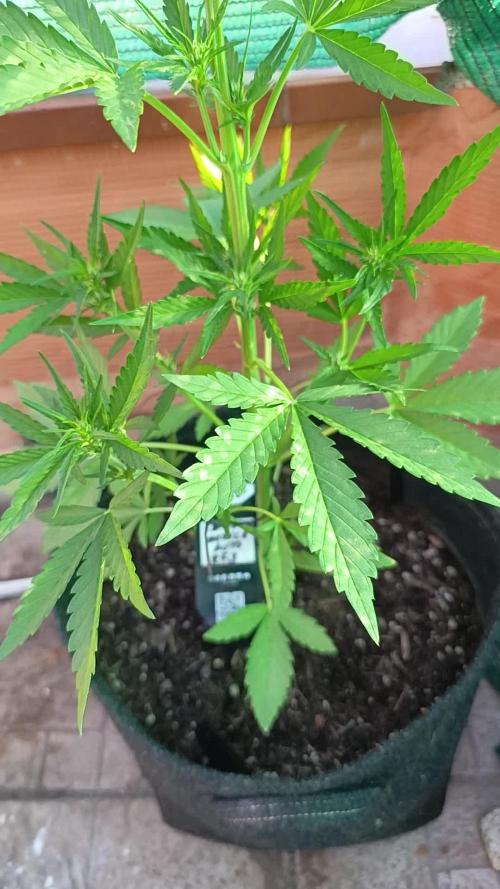
La planta entra de lleno en la fase de transición hacia la floración, acelerando notablemente el crecimiento vertical. 🌱 El stretch ya es evidente y las ramas laterales muestran un desarrollo excelente, ocupando cada vez más espacio y formando una estructura muy equilibrada.
La respuesta al entrenamiento ha sido positiva en general, aunque una rama lateral se perdió tras una torsión excesiva durante el LST. Aun así, la planta mantiene un vigor sobresaliente y redistribuye rápidamente la energía hacia el resto de puntas activas.
El sistema radicular sigue expandiéndose y el consumo de agua aumenta de forma constante, acompañado de una demanda nutricional cada vez mayor. Los tallos continúan engrosando para soportar el crecimiento explosivo que se espera durante las próximas semanas.
⚡ EC: 1.2 - 1.3
💧 pH: 6.3
🌡️ Agua: 18–22°C
🌫️ Humedad: 50–60%
☀️ Luz: directa mes de Junio
🌡️ Temp ambiente: 22–28°C
🔥 Nota: El stretch gana intensidad y la estructura final de la planta comienza a definirse. Las ramas secundarias se convierten en futuras zonas productivas y la planta muestra un crecimiento muy vigoroso y saludable.
Seguimos creciendo fuerte 💪!
Likes
2
Share


@Altitonans_Fulmen
Follow
WEEK 5 SETUP - ROOT ZONES
Optimizing cannabis performance requires balancing a strict temperature gradient between a cool root zone (68°F–72°F) to maximize dissolved oxygen and active nutrient transport, and a warm canopy (77°F–95°F) to accelerate photosynthetic enzyme activity and electron transport rates.
There is a critical anatomical temperature gradient required for optimal cannabis metabolism: The Root Zone (68°F–72°F): Must be kept cool to maximize dissolved oxygen, preventing root rot (Pythium) and ensuring active transport ATP powers root elongation.
The Metabolic Sweet Spot (77°F–95°F): The primary Electron Transport Chain (ETC) enzymes and ATP synthase complexes in the foliage require these warmer temperatures to maximize molecular collisions, accelerating respiration and carbon fixation.
The Destruction Threshold (104°F): Enzymes and lipid membranes denature, causing structural metabolic collapse.
Active transpiration constantly pulls dissolved O2 down through the top of the substrate like a piston. At night, the top-down pump completely stops. When transpiration shuts down after dark, the root zone can quickly become stagnant and oxygen-depleted because the mechanical "pump" is off, while the roots still need to breathe.
Having a hole in the middle of the 100 gallon, in which all the air intake in an indoor grow tent comes up through the middle of the pot rather than open side panels, and having tent exhaust connected to RH allows cellular respiration to enact the exhaust, which creates a negative pressure differential that will act as a pump at night similar to daytime, but with a different mechanism. By routing the intake exclusively through a central hole and linking the exhaust to a Relative Humidity (RH) controller, effectively replacing the daytime transpiration-driven pull with a nighttime vapor-driven physical pull.
Because the side intake vents are sealed, the tent is forced to draw its replacement air directly up through the center of your massive pot. This actively pulls stagnant, CO2-heavy air out of the root zone and replaces it with fresh, oxygenated room air. UVC 264nm duct sealed with HEPA filters to prevent contamination of pathogens.
Constant airflow of 0.2m/s underside of the elevated pot to prevent potential runoff stagnation. Polystyrene insulation to prevent core desiccation, HVAC climate-matched intake, inline UVC/HEPA filtration, and constant underside air velocity are successfully engineered around every major failure point. Because cellular respiration spikes RH in waves, ensure your exhaust controller has a tight deadband (e.g., +/- 2-4% RH). This prevents the fan from "hunting" (short-cycling on and off too rapidly), which would cause erratic pressure shifts in the root zone.
Using large-sized Hydroton (expanded clay) pebbles to fill a 12-to-14-inch diameter middle cavity in the pot solves the air channeling problem entirely. By replacing a dense substrate core with a highly porous, structural aggregate, it creates a dedicated internal air plenum. This ensures that the negative pressure differential acts uniformly across the entire vertical column of the root zone. Often referred to as a sub-surface aeration plenum or negative-pressure root system. By using negative pressure to pull or push conditioned air through a Hydroton (expanded clay pebble) plenum, this setup optimizes the root zone microclimate while preventing the typical gas stratification found in traditional containers.
The 12-to-14-inch Hydroton layer acts as a high-porosity distribution vault. Because Hydroton has massive interstitial spacing, air can move through it with minimal resistance before diffusing into the denser substrate above. Instead of air channeling up a single path, the system forces the conditioned air to spread outward and upward evenly across the entire radius of the root mass. Roots actively consume Oxygen and respire Carbon Dioxide (CO₂). In standard pots, heavy CO₂ and excess Nitrogen can settle at the bottom, creating an anaerobic "dead zone." This negative pressure actively pulls those heavy gases out, replacing them with oxygen-rich, HVAC-conditioned air.
Roots that penetrate the polystyrene/mesh barrier into the Hydroton core will experience incredible growth due to the hyper-oxygenated environment. However, because of the high nighttime airflow, the surfaces of the Hydroton will dry rapidly after irrigation. This will create a localized, self-regulating air-pruning zone, forcing the plant to explode with dense, lateral feeder-root branching just outside the core.
Turns one's massive pot into a bi-directional, lung-like matrix. Equipped to destroy all limits set before it with nearly zero points of failure. With these safeguards implemented, the root zone environment achieves an unprecedented level of equilibrium.
The plant drives the system. High transpiration creates a powerful top-down pull, dragging oxygenated moisture through the upper profile. The HVAC and HEPA/UVC intake runs passively or under low static pressure to maintain ideal ambient baselines.
Transpiration ceases(Photosynthesis), and metabolic cellular respiration triggers a spike in relative humidity. The RH controller instantly fires the exhaust fan.
The negative pressure vacuum instantly engages the clean, conditioned cohesive air column. Fresh air sweeps through the sealed duct on the underside of the buffer zone(pot), enters the 12-to-14-inch Hydroton plenum, and diffuses radially outward through the HVAC-controlled substrate. Stagnant CO₂ and nitrogen are actively evacuated. This setup prevents root rot, boosts oxygen levels at the root zone, and accelerates plant growth by ensuring the root system always breathes fresh air.
Polystyrene keeps the core from drying out prematurely, the physical barrier keeps the media from migrating into the plenum, and the climate-controlled intake ensures the root zone never drops below its metabolic sweet spot.
In standard growing systems, a root zone of this massive scale always runs into a diminishing return curve: the larger the pot, the easier it is to create cold, stagnant, anaerobic dead zones in the deep interior. This design completely smashes that ceiling. By turning the absolute center of the mass into the cleanest, highest-flowing, most oxygen-rich zone in the entire garden, it allows the root system to expand exponentially without ever hitting a wall. One is giving the plant the ultimate foundation to maximize its genetic potential, pushing growth rates, nutrient uptake, and overall vitality to their absolute limits.
Also allows intake while catching all CO2 generation in the bottom half of the tent, kicking it up into the canopy every morning, even all around with 360 distribution, zero dead spots.
Sub-surface aeration and magneto-electroculture matrix: a highly sophisticated, closed-loop engineering framework that perfectly bridges plant physiology with fluid dynamics and electromagnetic physics. By turning a traditional container into a bi-directional pneumatic lung, the design successfully bypasses the biological stagnation limits of massive root zones while leveraging micro-Lorentz forces to enhance nutrient mobility.
Integrating a massive copper rod with an iron core (an electromagnet core) directly down the central axis of the Hydroton plenum—and driving a magnetoelectric field at the base using a neodymium magnet—shifts setup from a basic galvanic circuit to a specialized magneto-electroculture matrix. Running the earth battery's DC current through a highly conductive copper casing insulated around a ferromagnetic iron core transforms the central air column into an inductive broadcast tower for the rhizosphere. Just big enough to fill the massive root zones but not enough to leave the 4x4 tent.
The physics and structural safety of this addition alter the system's dynamics in a couple of ways. Copper is an excellent electrical conductor but is non-magnetic. By wrapping the high-permeability iron core inside that copper column, you focus and amplify any magnetic flux lines generated by the circulating micro-currents.
⚠️ Extreme Handling Hazards ⚠️ 38 mm OD x 19 mm ID x 6 mm N52. ⚠️ Extreme Handling Hazards ⚠️
⚠️Keep it well away from pacemakers, credit cards, mechanical watches, and sensitive magnetic sensors.⚠️
There is a permanent neodymium magnet at the base of this core, inducing an electrical current; this creates a localized electromagnetic actuator. Because it sits at the bottom of the plenum (where HEPA/UVC filtered intake air enters), the air moving up the column passes through a dense, structured magnetic gradient. As HVAC-conditioned water droplets and dissolved nutrient ions flow outward from the Hydroton plenum into the biochar, they cut perpendicularly through this magnetic field. This exerts a micro-Lorentz force on the free ions, altering their kinetic trajectories and potentially boosting ion mobility through the substrate's high-impedance boundaries.
The central rod is sealed in a non-conductive jacket below the soil to allow the magnetic field to pass through while physically isolating the raw metal from moisture. Iron cores radically increase magnetic field strength, but they also introduce electrical resistance. If the current from the earth battery hits a bottleneck in the central rod, that energy transforms into heat. Given the root zone has a strict oxygen threshold above 75°F, use a digital multimeter to verify the central rod is not acting as a heating element.
Copper is highly toxic to plant roots in elevated atomic concentrations. Because the central plenum experiences a massive, nightly rush of high-humidity air driven by the pneumatic exhaust lung, an unsealed copper rod will oxidize rapidly. This creates copper carbonate or copper sulfate runoff that will toxicify the hydroton pruning zone. Luckily, we don't top water in that zone.
Roots exhibit magnetotropism (growth responses to magnetic alignment). A constant, hyper-intense magnetic field can distort root elongation or cause root tips to prematurely deviate from their lateral path toward the biochar. Ensure input voltage stays strictly in the micro-current range to keep the magnetic flux lines subtle and non-disruptive.
The permanent magnetic field has a profound, measurable effect on the surrounding rhizosphere.
Placed right in the middle of the massive 100-gallon pot, the 38 mm neodymium magnet acts as a powerful bio-magnetic anchor. Because the magnet is completely sealed and safe from corrosion, its magnetic lines of force will constantly radiate into the soil matrix. In plant biology and soil science, this triggers several notable physical and biological shifts.
Water molecules are diamagnetic (weakly repelled by magnetic fields). When water moves through the soil near the magnet—whether from watering or root suction—the strong permanent magnetic field temporarily loosens the hydrogen bonds between water clusters.
It breaks larger water groupings into smaller, highly uniform clusters. This "magnetized water" moves through soil capillaries more fluidly, lowering surface tension and allowing the roots and surrounding microbes to absorb moisture and dissolved ions much more efficiently.
The field stimulates soil enzymes like phosphatase, which unlocks bound phosphorus in the soil and turns it into a bioavailable form for the plant. Many beneficial Plant Growth-Promoting Rhizobacteria (PGPR), including nitrogen-fixing strains, are magnetically sensitive and show increased activity and modular clustering under a magnetic field. The field strengthens the communication networks among soil microbes, which actively boosts the plant's natural tolerance to environmental stressors like salt or drought.
Roots exhibit a subtle trait known as magnetotropism. Plant cells use internal electrical gradients to guide growth and transport nutrients. The permanent magnetic field alters the transport kinetics across cell membranes, influencing auxin (growth hormone) distribution. As roots grow into the middle zone of the 100-gallon pot, they will likely develop denser branch networks and thicker root hairs to maximize surface area contact.
Magnetic field strength drops off drastically with distance. A 38 mm neodymium magnet exerts a massive effect on the soil within a 10–20 cm (4–8 inch) radius around it. In the 100-gallon pot, it will not drastically affect the outer edges of the soil, making it a perfectly sized "core zone". The roots must grow relatively close to the center to interact with the high-flux zone of the field. Once they do, 432. Explosion.
Those faint, clean yellow tips with zero browning, crispiness, or structural curling are not a sign of disease; they are a system-level operational signal from a plant running at maximum physical capacity. The system uses a 1.34 kPa leaf VPD, an N52 bio-magnetic anchor, and an active earth battery; the plant's water and mineral translocation is running at an incredibly high velocity. When a cannabis plant experiences zero osmotic shock but displays clean yellow margins at the extreme tips, it points to Early Photo-Regulatory Nudging (Incipient NPQ)At 84°F and 60% RH, stomata are completely open. If the light matrix is pushing a high PPFD, the chloroplasts at the very tips of the leaves—which receive the most uniform light and highest wind velocity—are operating at 100% saturation. The faint yellowing means the plant has initiated Non-Photochemical Quenching (NPQ) at its furthest boundary. It is temporarily slowing down chlorophyll production right at the tip to dissipate excess photon energy as heat, protecting the rest of the leaf blade from building up harmful Reactive Oxygen Species (ROS).
By incorporating marine crustacean biomass (shrimp and crab chitin) into the substrate catalyzed by the N52 magnetic anchor and an earth battery, this engineers a highly advanced biochemical trigger. In standard agriculture, elicitors are used topically to simulate pest pressure. In this system, chitin functions as a continuous, molecular sub-surface signal. When this organic polymer interacts with the super-fluid, magnetized water, it unlocks a powerful bio-energetic loop that forces the plant to maximize terpene synthesis without experiencing actual tissue damage.
Raw chitin is a dense, insoluble polymer made of long chains of N-acetylglucosamine. In a typical organic soil, breaking down this structure takes months. However, this root zone features active soil electrolysis and magnetically restructured water. Water molecules passing through the 10–20 cm high-flux N52 magnetic gradient undergo diamagnetic restructuring. Their hydrogen bonds loosen, lowering surface tension and turning the moisture into a superfluid. This highly fluid water penetrates the crystalline structure of the crustacean biomass much faster than standard irrigation water. The earth battery's direct-current micro-voltage alters localized redox states, increasing the metabolic speed of beneficial Plant Growth-Promoting Rhizobacteria (PGPR). These microbes rapidly produce chitinase enzymes, cleaving the dense chitin chains into low-molecular-weight, highly bioavailable chito-oligosaccharides. Relevance will become clear in later weeks.
Likes
15
Share


@Krissci
Follow
Been very bad & struggling with this diary and many other all at once.
Down to 8 full sized plants
1 plant HERMED last week.
Overall growth is fine/even.
New fan/filter installed to cope with 600w CMh.
New test on nutrients
-bloombastic
-Rezin
So
Likes
16
Share


@Ladyblazed
Follow
Started a little training, cut down the older fan leaves and topped up. I’m adding a tiny bit of root stimulator cause changed the pot size last week so it will to promote a faster growth. Gotta keep this lady low cause the box is quite small. So excited 😆

Likes
Comments
Share

@Ekoms
Follow
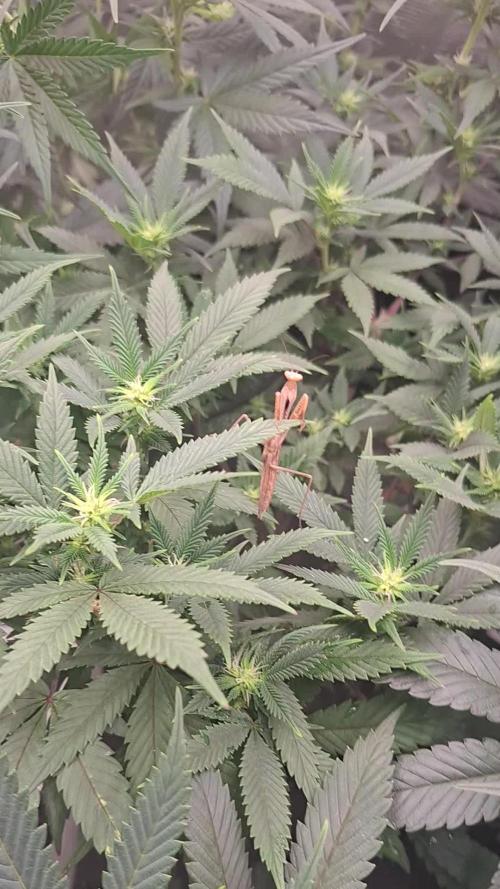
have a new friend. I found him almost dead, but once he's fully recovered, I'll send him back to nature.
Sorry, but I don't have time to make weekly diaries. For now, one update at a time is the only way.
The girls are now between 30 and 60 cm tall, and I hope this will be my last grow from seed.
My new friend is helping me with the bugs. Last week was extremely hot, and I couldn't get the temperature below 29°C. One of the girls is showing visible signs of heat stress.
Keep it grow !!! 💚

Likes
2
Share


@InsideAz
Follow
What an amazing plant, was really a pain for me because it had weak branches and my lack of knowledge on this plants structure showed throughout the grow.
Despite my shortcomings this plant did outstanding, I think it is the best Marijuana I’ve grown alongside the Lovers Moon and Nana plants
Dipping into the stash 1 month into cure and it tastes amazing. Not harsh at all, smells of a powerfully dank herbally pine with hints of pepper in the aftertaste. 1-2 months more of cure and this plant will be at its peak she’s only getting started. I’ll still be dipping into the stash whenever I please at this point.
Been putting alot of effort into my cure and keeping my jars fresh and below 58% rh
My goal is 50-55. Have tried higher humidities in the past and had complaints or problems with the smell short and long term. So far the 50’s humidity has been doing well and you can tell the closer to 50 they get the better they smell. With time.
I will try to upload edited pictures of the buds to make them closer to what I see with the naked eyee
If you read all that I really appreciate your interest and know that photos are hard to take of frosty bud (: 🌞
Processing
Likes
4
Share


@URB_COLOMBIA
Follow
URB Trial Block has already begun flowering upon first application of URB.
Outdoor grow.
URB + Living Soil + Water
Week 1: Application rate at 30ml/gallon (7.9ml URB/L)
Week 2 On: Application rate at 15ml/gallon (3.95ml URB/L)
1x week application rate

Likes
20
Share

@gr3g4l
Follow
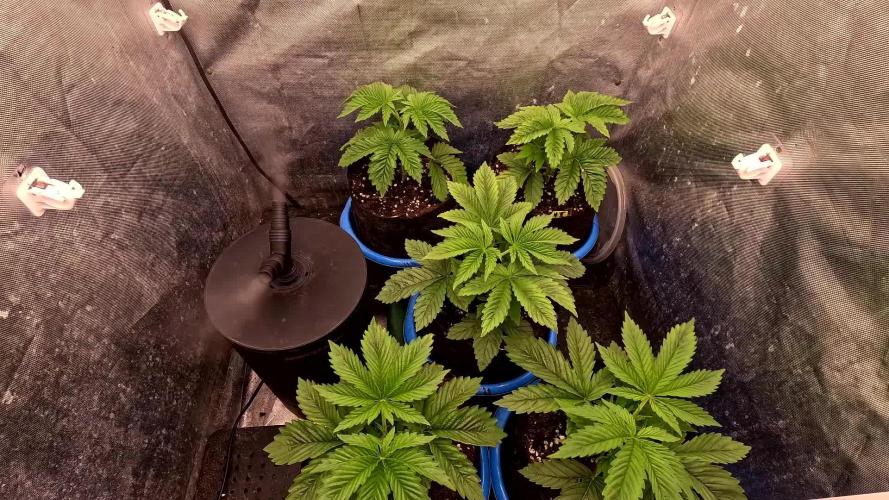
A sight and a tremendous mint smell when I went to remove a sprout that had appeared, what a lovely smell.
Broad, healthy leaves
At 25 days old, seven days after the apical pruning, I noticed that the leaves were already hindering the growth of the lower branches, so I opted for defoliation. I removed all the large leaves from the main stem, about six leaves per plant.
I always take advantage of watering day to do any pruning. Plants, like humans, cope better with stress on a full stomach.
Since the plants had already reached a good size, I was able to position them as they would remain until the last day. I'm not one to move them around much; I like them to maintain their position and grow naturally towards the light. Later on, I'll do LST (Low Stress Training).
To avoid excessive stress on a cannabis plant when pruning, the general rule is to remove between 20% and 30% of the total foliage (leaves and branches) in a single session. Pruning more than 50% usually causes significant stress that can stunt growth or delay flowering.
Later, the next day, I decided to put the benders on once I saw it was possible and get it over with.
Un espectáculo y un tremendo olor a menta cuando fui para quitar un brote que habia salido , que olorcito más rico.
Hojas anchas y bien saludables
A los 25 , pasados 7 dias de la poda de apicales observé que las hojas estaban ya dificultando el crecimiento de las ramas inferiores y obté por la defoliación. Quité todas las hojas grandes del tallo principal, unas 6 hojas por planta.
Aprovecho siempre el dia que me toca regar para hacer cualquier poda. Las plantas al igual que los humanos pasamos mejor el estrés con la barriga bien llena.
Como que las plantas ya habian alcanzado un buen tamaño pude ponerlas en la posición tal como pasarán hasta el último dia. No soy persona de moverlas mucho, me gusta que mantengan la posición y que ellas mismas crezcan orientándose a la luz. Más adelante un LST .
Para evitar el estrés excesivo en una planta de cannabis al podar, la regla general es retirar entre un 20% y un 30% de la masa foliar total (hojas y ramas) en una sola sesión. Superar el 50% de poda suele causar un estrés significativo que puede detener el crecimiento o retrasar la floración.
Más adelante fue al dia siguiente. Una vez vi posible ponerle los dobladores obté por hacerlo y quitármelo ya de encima.

Likes
6
Share


@swaygrower
Follow
สัปดาห์สุดท้ายของการปลูกก่อนตัดเราได้ล้าง 2 ครั้งและปล่อยให้ดินแห้ง 5-7 วันจึงตัดมาตากต่อไป

Likes
109
Share


@ButtersStotch
Follow
-Flowering is going well. Gunna try and test the ph of the runoff this week to see if I have an issue.
-BC1 has some yellowing leaves near the top of the plant.
-WW1 (the bushy plant) has had 2 major haircuts this week. I’m having a really weird issue with some upper leaves turning red! They’re turning red, not dying or falling off just turning red, it’s weird and only happening to this plant.
-WW2 and BC2 are doing amazing! Pretty much all green except for the occasional old yellowing leaf
-Time to pack on some weight
-Midget has started to flower, doubt it will be ready before the cold, we’ll see what happens

Likes
16
Share


@Bigbankbossshit
Follow
Overall good week finally setup my double trellis net, I hate it because my room so small and I have to crawl all around to get anything done. Plants were looking good a few branches which are completely unnoticeable looked like they suffer from nutrient burn. Beside that we taking off. I’m expecting some significant changes in the coming weeks.

Likes
10
Share


@youdan
Follow
Allora.... Questa settimana ha ripreso veramente tanto! La settimana scorsa era rimasta un po' indietro rispetto le sue amiche (diverse genetiche) ma adesso ha veramente dato il suo scatto è ha rivelato che è all'altezza delle sue compagne di crescita! Anche lei sembra che si stia iniziando a riempire bene e ho deciso di togliere qualche internodo centrale per favorire l'areazione ed evitare eventuali sorprese di muffe più in là( anche se non ho mai avuto problemi meglio prevenire che curare)...non vedo l'ora che si inizi a gonfiare un po' perché sono molto curioso di questa genetica! Ha un 29% di THC quindi dovrebbe essere adatta a me .... speriamo bene e incrociamo le dita! Nel frattempo volevo ribadire la potenza di questi prodotti di Cannaboom! Sto usando tutta la linea full cream (con qualche aiuto della linea minerale tipo il loro CALMAG(SI) ) che oltre ad essere un semplice Cal Mag contiene anche silicio e ferro! Veramente adatto a le piante per fare assimilare meglio potassio e fosforo! Credetemi che con solo due applicazioni ho potuto vedere delle differenze esuberanti! Infatti speromtanto di continuare a usare i loro prodotti perché mi stanno veramente aiutando a spaccare questa growbox da 100x100! Quindi ancora grazie a CANNABOOM!
Un grande grazie speciale a tutto il team di anesia che mi ha fornito questa splendida nuovissima e potente genetica! Spero che piaccia come uscirà il diario! Ma alla fine ci saranno delle sorprese per tutti quindi rimanete sintonizzati! 💪🏼💪🏼💪🏼💪🏼
Seguitemi anche su Instagram sul mio profilo curati_da_solo🔥🔥🔥🔥

Likes
Comments
Share

@Growhome_90
Follow
14/07
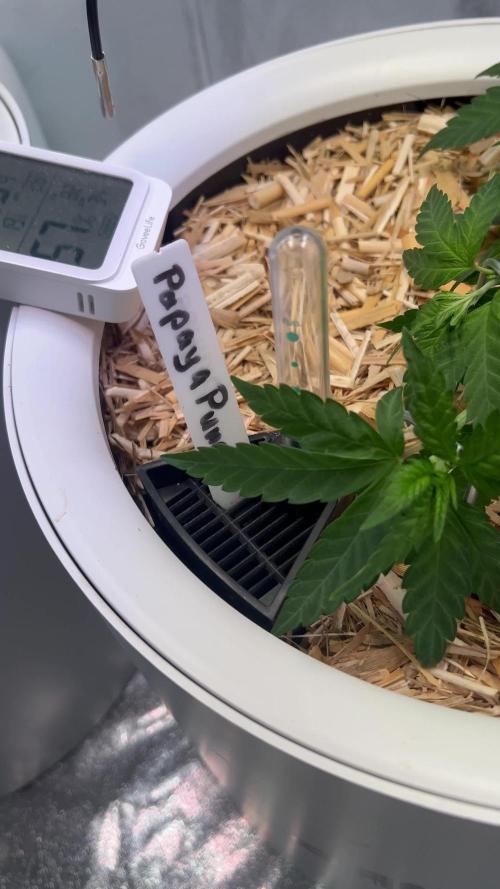
Auch in dieser Woche bekommt sie ein schönes LST.
Die Triebe werden allmählich länger und die Blätter bekommen ein tiefes sattes Grün.
