Likes
Comments
Share
@Growshh
Follow
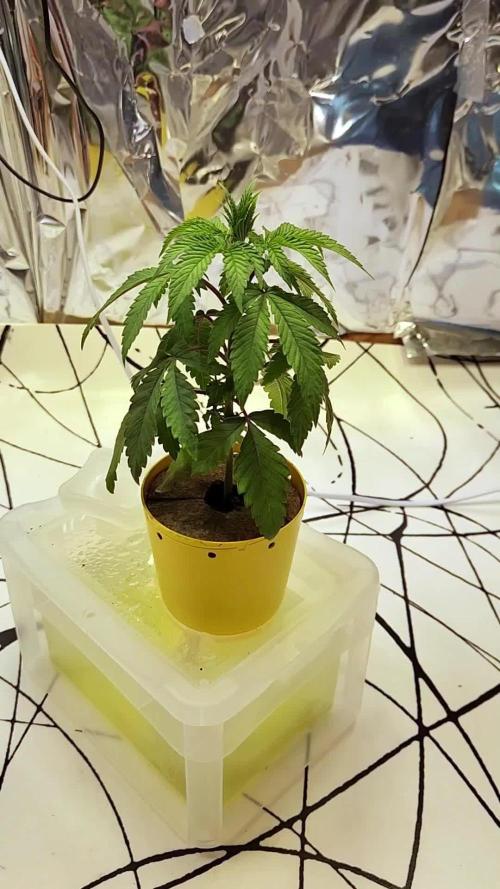
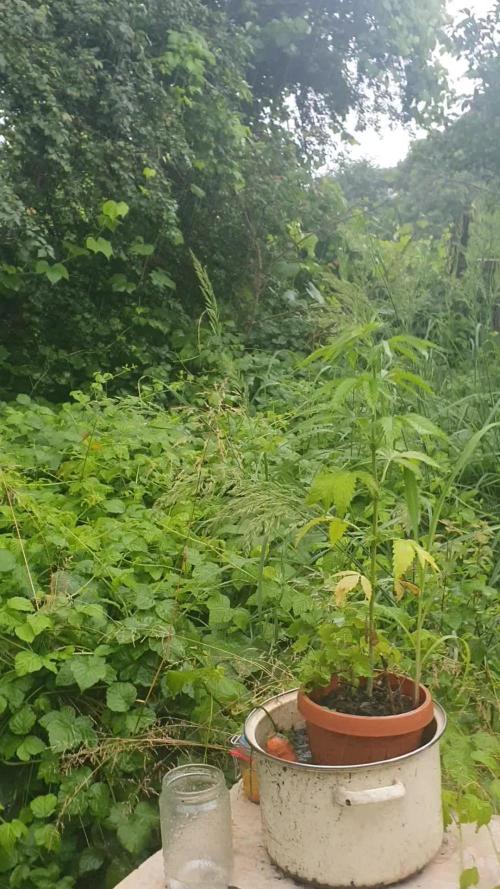
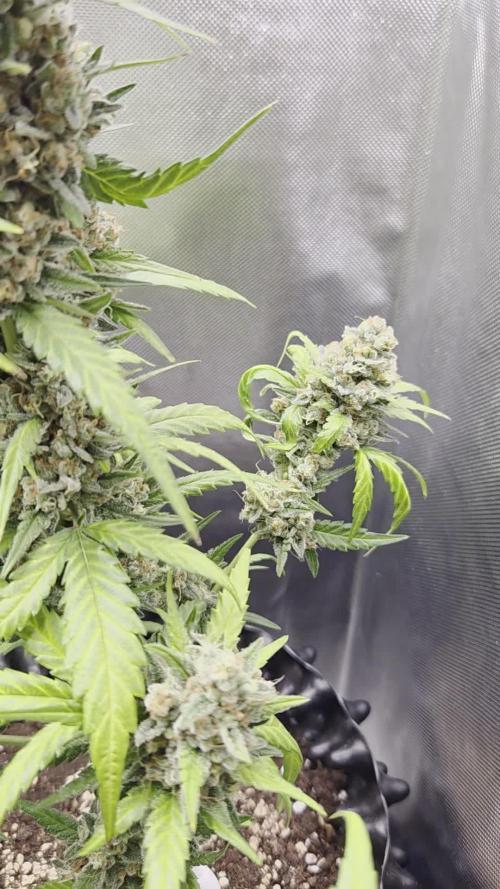
Went into 48 hours or darkness on day 66, then chop...14-21 day 60/60 dry ahead. Will report on harvest and smokes in a few weeks. Another great scrog under the belt!
Likes
2
Share
@51sGarden
Follow
Posting this as I’m on the last few days of the 3rd week from germination Great progress, a lot of roots for such a short period but not too much plant growth, will start watering daily instead of watering every 2-3 days Topped the girls today (Day 18 from germ) and starting to do mainline on all the Bubba kush.
Likes
8
Share
@PoppaJoe
Follow
So I posted a update on the previous week of how the Big Bang wasn’t looking so good…Well She really continued to show signs of distress as time went on, the plant wasn’t drinking anymore, was yellowing and dropping leaves. I repotted it yesterday because when stuck my finger in😉 I got a pretty bad Oder from her, the roots didn’t look too bad but I’m no gardener (yet) I rinse them down and placed her in some fresh soil with a little extra earthworm castings mixed in. I was thinking about chopping her and just using it for a tea or something but I can’t bring myself to do it, especially since I know there isn’t any any pest or infection(because it hasn’t effected the crystal candy which it is in every close proximity to)🤷‍♂️🏾 I’m rambling now but if anyone has any suggestions I’m all ears…Well eyes, and open to criticism. My Crystal Candy Though😮‍💨😍
Likes
76
Share
🌸 Week 8 Flower – The Trichome Symphony Begins 🌸 Eternity Grow Cup This week… it’s all about the frost. ❄️ We are diving deep into the universe of trichomes, those magical crystal-like structures that define potency, aroma, and visual beauty. Each pheno this week is presented with its own dedicated video — so everyone can witness the uniqueness and evolution of these genetics firsthand. The photos? Focused close and true on the trichomes and their stalks, the very essence of the plant’s protective and expressive language. 💎 What Are Trichomes? Trichomes are tiny resin glands that cover the surface of cannabis flowers and sugar leaves. They’re responsible for producing and storing cannabinoids (like THC and CBD), terpenes, and flavonoids — the compounds that create the plant’s effects, scents, and flavors. They act as the plant’s natural defense — from UV rays, pests, and environmental stress — and in return, they gift us with beauty, medicine, and art. Why So Many Trichomes Here? This room has turned into a crystal forest thanks to a harmonious mix of tech, care, and nature: 🔹 Spectrum Tunings: Using the TrolMaster system, we’ve dialed in a spectrum rich in reds, far-reds, and UV at precise times to stimulate trichome production. The plants are responding in full. 🔹 Lighting: The under-canopy power of the ICL 300s, combined with the canopy-level intensity of the Model 1s, is creating full-spectrum saturation from top to bottom. Buds are stacked, frosty, and glowing from every angle. 🔹 Nutrition Synergy: The tag-team of Aptus Holland and Plagron has been flawless. The clean base, balanced micro and macro elements, and biostimulants have driven these girls into full expression mode. You can see the nutrition working in every crystal. 🌿 Where Are We Now? We’re likely one week to ten days from harvest, but of course we’ll follow the plants’ signals. They’re still swelling and building — it’s the final stretch, and they’re sprinting. Nerdy Note: Trichomes can be bulbous, capitate-sessile, or capitate-stalked — and in this run, the capitate-stalked ones are standing tall and loaded. Expect a full cannabinoid and terpene profile when it’s time for analysis.( bro talk not lab hihihihi) 🌟 Let’s take a moment to recognize that we’re witnessing the peak of this cycle. This is living art, frozen in time by a camera lens but alive in scent and energy. This Week’s Feeding Program To support this explosive trichome production in Week 8 Flower, we’re feeding with precision and purpose. Every drop counts now, and here’s the clean, efficient mix we’re running: • Aptus Holland – Regulator: 0.15 ml/L • Aptus Holland – System Clean: 0.25 ml/L • Aptus Holland – RO Water Condition: 0.8 ml/L • Aptus Holland – All-In-One Liquid: 1.25 ml/L • Plagron – Green Sensation: 1 ml/L • pH set at 6.2 💧 We’re keeping it clean, clear, and consistent. No extra PK boosters or unnecessary additives. Just smart nutrition, tuned spectrum, and stable conditions to let the plants express themselves naturally. The synergy between Aptus Holland’s Clean Program and Plagron’s Green Sensation is clearly showing in every frosty bud. This week, we’ve fine-tuned the spectrum to push the plants into full resin-production mode. I’ve reduced the white light intensity to 40% while keeping the reds and UVs running at 100%. This shift focuses energy on the wavelengths that directly stimulate secondary metabolite production—especially trichomes. Red light enhances flower development and density, while UV exposure encourages plants to produce protective compounds, like cannabinoids and terpenes, as a natural defense. This balance between lower photosynthetic pressure and high-spectrum stimulation is helping the girls finish strong, frosty, and full of character. 🙏 Massive thanks to all sponsors, followers, friends, and growers in the community. To the ones competing, to the ones just watching — THANK YOU. This is almost the end of the road, and every diary, every plant, every effort deserves respect. 💬 Don’t forget to follow the full 4K experience on YouTube, and for behind-the-scenes action and updates, join us on Instagram. With Grower’s Love, DD 🌱 Genetics - Runtz https://www.zamnesia.com/6000-zamnesia-seeds-runtz-feminized.html Nutrients - Plagron https://plagron.com/en/hobby - Aptus Holland https://aptus-holland.com/ Controls - Trol Master https://www.trolmaster.eu/ LED - https://www.futureofgrow.com/en LED - https://www.thinkgrowled.com Soil - https://www.promixgardening.com/en Germination - Cannakan https://cannakan.com/?srsltid=AfmBOopXr-inLXajXu3QFgKXCXXos4F1oEvScjMKIB5MR5dk8-GJ-F49 DOGDOCTOR 15% off Smoking Papers - https://ziggioriginal.com/ Terpene saver - https://grovebags.com/ As always thank you all for stopping by, for the love and for it all , this journey of mine wold just not be the same without you guys, the love and support is very much appreciloved and i fell honored with you all in my life With true love comes happiness Always believe in your self and always do things expecting nothing and with an open heart , be a giver and the universe will give back to you in ways you could not even imagine so As always, this is shared for educational purposes, aiming to spread understanding and appreciation for this plant. The journey with nature is one of discovery, creativity, and respect. Let’s celebrate it responsibly and continue to learn and grow together! Growers Love To you All 💚 #EternityGrowCup #RuntzHunt #GrowersLove #CannabisCommunity #AptusHolland #ProMixSoil #TrolMaster #Zamnesia #Plagron #ZiggiPapers #Grovebags
Likes
29
Share
@Smokwiri
Follow
Almost finished, flushing 10% discount on Zamnesia seeds with code GROWITGD
Likes
2
Share
@Ramses_II
Follow
It was a quick and wonderful week. There are some unwanted flying insects. I hope someone can help me because my circumstances are very difficult. I hope companies will provide support, even if it's just a little.
Likes
13
Share
She’s finally finished I’m so happy to have her. She smells like red starburst and zkittlez. She taste like she smells. I’m very happy how she turned out. Beautifully. Super sweet and right up my alley. Fastbuds hits it out of the park once again!
Likes
5
Share
This plant was planted a week after the other six plants in the tent and she stretched very good during the first week of flower, in veg I saw she was gonna get big fast, she grows super fast and ended up the same size if not bigger than her sisters, very recomended strain, amazing powerful smell, very strong cerebral happy high, I enjoy a lot sativas, diesel it's not my favorite flavor but it's definitely awesome for everyone specially you diesel fans! Congratulations to Gea Seeds providing amazing quality strains to the growers!
Likes
1
Share
14.10.24 VD# 29 Moin ✌️ da sind wir wieder 🙂 Neue Woche neues Glück 🍀 die Mendocino Skunk macht sich prächtig. Habe gestern alle Ihre Triebe getoppt somit kommen noch mehr Triebe die später die dicken Buds halten. Heute gab es wieder lecker Futter von Hesi somit hat sie die nächsten 4 Tage erst mal was. Dann gibt es wieder eine Ladung Ph angeglichenes Wasser somit beugen wir gerade in diesen Stadium eine über Düngung vor. Danke für den Stop und bleibt alle geschmeidig & Stay High Das nächste Update kommt wie gehabt nächste Woche zur selben Zeit. Mögen all eure Ladys Gesund und prächtig wachsen und euch mit schmackhaften Stuff versorgen ✌️ ■■■■■■■■■■■■■■■■■■■■■■■■■ 14.10.24 VD# 29 Moin ✌️ here we are again 🙂 New week, new luck 🍀 The Mendocino Skunk is doing great. I topped all her shoots yesterday so there will be even more shoots to hold the thick buds later. Today there was delicious food from Hesi again so she'll have something for the next 4 days. Then there will be another load of pH-adjusted water so that we can prevent over-fertilization at this stage. Thanks for the stop and everyone stay smooth & stay high The next update will come as usual next week at the same time. May all your ladies grow healthy and splendid and provide you with tasty stuff ✌️
Likes
9
Share
@Lvnsource
Follow
This weeks feed log 👇 D: 78 - 9.5L - Si,[6ml],Vega[8ml],Flores [10ml],INPUT; [1.426 EC],[6.1 pH],Ca/Mg[5g & 3g]- RUNOFF; 3.3L pH [6.3] ,[2.458 EC] —————————————————————————— EC is starting to come down, will be continuing the lower EC feeds until I’ve reached my target 🎯 The canopy is slightly uneven / messy. I’ll be dealing with it once there’s more space inside the grow area. Some purple is showing up on some fan leaves , pH of the medium is dialed in, so might be root zone related + environmental; judging by (temp difference btw day/night), nothing too serious 👍 ! Feed Log from 27.03 ; D: 82 - 10L - Si,[3.8ml],Vega[4ml],Flores [18ml],INPUT; [1.326 EC],[6.0 pH],Ca/Mg[4.8g & 1.5g]- RUNOFF; 3.8L pH [6.3] ,[2.262 EC]
Likes
2
Share
Day 40. 8 day of flowering. My plant is flowering. There is a wonderful smell of marijuana. I have a filter to control the smell. The plant is growing great. Flowering stage! Day 42. It is growing up. Almost reached the light. I need to cut it or bend the tops down. I will decide later.
Processing
Likes
36
Share
@Dwillsun1
Follow
Finally back and healthy Another week or so the trellis
Likes
Comments
Share
Likes
52
Share
Lacewings seemed to have mostly killed themselves by flying into hot light fixtures. I may have left the UV on which was smart of me :) Done very little to combat if anything but make a sea of carcasses, on the bright side its good nutrition for the soil. Made a concoction of ethanol 70%, equal parts water, and cayenne pepper with a couple of squirts of dish soap. Took around an hour of good scrubbing the entire canopy. Worked a lot more effectively and way cheaper. Scorched earth right now, but it seems to have wiped them out almost entirely very pleased. Attempted a "Fudge I Missed" for the topping. So just time to wait and see how it goes. Question? If I attached a plant to two separate pots but it was connected by rootzone, one has a pH of 7.5 ish the other has 4.5. Would the Intelligence of the plant able to dictate each pot separately to uptake the nutrients best suited to pH or would it still try to draw nitrogen from a pot with a pH where nitrogen struggles to uptake? Food for stoner thought experiments! Another was on my mind. What happens when a plant gets too much light? Well, it burns and curls up leaves. That's the heat radiation, let's remove excess heat, now what? I've always read it's just bad, or not good, but when I look for an explanation on a deeper level it's just bad and you shouldn't do it. So I did. How much can a cannabis plant absorb, 40 moles in a day, ok I'll give it 60 moles. 80 nothing bad ever happened. The answer, finally. Oh great........more questions........ Reactive oxygen species (ROS) are molecules capable of independent existence, containing at least one oxygen atom and one or more unpaired electrons. "Sunlight is the essential source of energy for most photosynthetic organisms, yet sunlight in excess of the organism’s photosynthetic capacity can generate reactive oxygen species (ROS) that lead to cellular damage. To avoid damage, plants respond to high light (HL) by activating photophysical pathways that safely convert excess energy to heat, which is known as nonphotochemical quenching (NPQ) (Rochaix, 2014). While NPQ allows for healthy growth, it also limits the overall photosynthetic efficiency under many conditions. If NPQ were optimized for biomass, yields would improve dramatically, potentially by up to 30% (Kromdijk et al., 2016; Zhu et al., 2010). However, critical information to guide optimization is still lacking, including the molecular origin of NPQ and the mechanism of regulation." What I found most interesting was research pointing out that pH is linked to this defense mechanism. The organism can better facilitate "quenching" when oversaturated with light in a low pH. Now I Know during photosynthesis plants naturally produce exudates (chemicals that are secreted through their roots). Do they have the ability to alter pH themselves using these excretions? Or is that done by the beneficial bacteria? If I can prevent reactive oxygen species from causing damage by "too much light". The extra water needed to keep this level of burn cooled though, I must learn to crawl before I can run. Reactive oxygen species (ROS) are key signaling molecules that enable cells to rapidly respond to different stimuli. In plants, ROS plays a crucial role in abiotic and biotic stress sensing, integration of different environmental signals, and activation of stress-response networks, thus contributing to the establishment of defense mechanisms and plant resilience. Recent advances in the study of ROS signaling in plants include the identification of ROS receptors and key regulatory hubs that connect ROS signaling with other important stress-response signal transduction pathways and hormones, as well as new roles for ROS in organelle-to-organelle and cell-to-cell signaling. Our understanding of how ROS are regulated in cells by balancing production, scavenging, and transport has also increased. In this Review, we discuss these promising developments and how they might be used to increase plant resilience to environmental stress. Temperature stress is one of the major abiotic stresses that adversely affect agricultural productivity worldwide. Temperatures beyond a plant's physiological optimum can trigger significant physiological and biochemical perturbations, reducing plant growth and tolerance to stress. Improving a plant's tolerance to these temperature fluctuations requires a deep understanding of its responses to environmental change. To adapt to temperature fluctuations, plants tailor their acclimatory signal transduction events, specifically, cellular redox state, that are governed by plant hormones, reactive oxygen species (ROS) regulatory systems, and other molecular components. The role of ROS in plants as important signaling molecules during stress acclimation has recently been established. Here, hormone-triggered ROS produced by NADPH oxidases, feedback regulation, and integrated signaling events during temperature stress activate stress-response pathways and induce acclimation or defense mechanisms. At the other extreme, excess ROS accumulation, following temperature-induced oxidative stress, can have negative consequences on plant growth and stress acclimation. The excessive ROS is regulated by the ROS scavenging system, which subsequently promotes plant tolerance. All these signaling events, including crosstalk between hormones and ROS, modify the plant's transcriptomic, metabolomic, and biochemical states and promote plant acclimation, tolerance, and survival. Here, we provide a comprehensive review of the ROS, hormones, and their joint role in shaping a plant's responses to high and low temperatures, and we conclude by outlining hormone/ROS-regulated plant-responsive strategies for developing stress-tolerant crops to combat temperature changes. Onward upward for now. Next! Adenosine triphosphate (ATP) is an energy-carrying molecule known as "the energy currency of life" or "the fuel of life," because it's the universal energy source for all living cells.1 Every living organism consists of cells that rely on ATP for their energy needs. ATP is made by converting the food we eat into energy. It's an essential building block for all life forms. Without ATP, cells wouldn't have the fuel or power to perform functions necessary to stay alive, and they would eventually die. All forms of life rely on ATP to do the things they must do to survive.2 ATP is made of a nitrogen base (adenine) and a sugar molecule (ribose), which create adenosine, plus three phosphate molecules. If adenosine only has one phosphate molecule, it’s called adenosine monophosphate (AMP). If it has two phosphates, it’s called adenosine diphosphate (ADP). Although adenosine is a fundamental part of ATP, when it comes to providing energy to a cell and fueling cellular processes, the phosphate molecules are what really matter. The most energy-loaded composition for adenosine is ATP, which has three phosphates.3 ATP was first discovered in the 1920s. In 1929, Karl Lohmann—a German chemist studying muscle contractions—isolated what we now call adenosine triphosphate in a laboratory. At the time, Lohmann called ATP by a different name. It wasn't until a decade later, in 1939, that Nobel Prize–-winner Fritz Lipmann established that ATP is the universal carrier of energy in all living cells and coined the term "energy-rich phosphate bonds."45 Lipmann focused on phosphate bonds as the key to ATP being the universal energy source for all living cells, because adenosine triphosphate releases energy when one of its three phosphate bonds breaks off to form ADP. ATP is a high-energy molecule with three phosphate bonds; ADP is low-energy with only two phosphate bonds. The Twos and Threes of ATP and ADP Adenosine triphosphate (ATP) becomes adenosine diphosphate (ADP) when one of its three phosphate molecules breaks free and releases energy (“tri” means “three,” while “di” means “two”). Conversely, ADP becomes ATP when a phosphate molecule is added. As part of an ongoing energy cycle, ADP is constantly recycled back into ATP.3 Much like a rechargeable battery with a fluctuating state of charge, ATP represents a fully charged battery, and ADP represents a "low-power mode." Every time a fully charged ATP molecule loses a phosphate bond, it becomes ADP; energy is released via the process of ATP becoming ADP. On the flip side, when a phosphate bond is added, ADP becomes ATP. When ADP becomes ATP, what was previously a low-charged energy adenosine molecule (ADP) becomes fully charged ATP. This energy-creation and energy-depletion cycle happens time and time again, much like your smartphone battery can be recharged countless times during its lifespan. The human body uses molecules held in the fats, proteins, and carbohydrates we eat or drink as sources of energy to make ATP. This happens through a process called hydrolysis . After food is digested, it's synthesized into glucose, which is a form of sugar. Glucose is the main source of fuel that our cells' mitochondria use to convert caloric energy from food into ATP, which is an energy form that can be used by cells. ATP is made via a process called cellular respiration that occurs in the mitochondria of a cell. Mitochondria are tiny subunits within a cell that specialize in extracting energy from the foods we eat and converting it into ATP. Mitochondria can convert glucose into ATP via two different types of cellular respiration: Aerobic (with oxygen) Anaerobic (without oxygen) Aerobic cellular respiration transforms glucose into ATP in a three-step process, as follows: Step 1: Glycolysis Step 2: The Krebs cycle (also called the citric acid cycle) Step 3: Electron transport chain During glycolysis, glucose (i.e., sugar) from food sources is broken down into pyruvate molecules. This is followed by the Krebs cycle, which is an aerobic process that uses oxygen to finish breaking down sugar and harnesses energy into electron carriers that fuel the synthesis of ATP. Lastly, the electron transport chain (ETC) pumps positively charged protons that drive ATP production throughout the mitochondria’s inner membrane.2 ATP can also be produced without oxygen (i.e., anaerobic), which is something plants, algae, and some bacteria do by converting the energy held in sunlight into energy that can be used by a cell via photosynthesis. Anaerobic exercise means that your body is working out "without oxygen." Anaerobic glycolysis occurs in human cells when there isn't enough oxygen available during an anaerobic workout. If no oxygen is present during cellular respiration, pyruvate can't enter the Krebs cycle and is oxidized into lactic acid. In the absence of oxygen, lactic acid fermentation makes ATP anaerobically. The burning sensation you feel in your muscles when you're huffing and puffing during anaerobic high-intensity interval training (HIIT) that maxes out your aerobic capacity or during a strenuous weight-lifting workout is lactic acid, which is used to make ATP via anaerobic glycolysis. During aerobic exercise, mitochondria have enough oxygen to make ATP aerobically. However, when you're out of breath and your cells don’t have enough oxygen to perform cellular respiration aerobically, the process can still happen anaerobically, but it creates a temporary burning sensation in your skeletal muscles. Why ATP Is So Important? ATP is essential for life and makes it possible for us to do the things we do. Without ATP, cells wouldn't be able to use the energy held in food to fuel cellular processes, and an organism couldn't stay alive. As a real-world example, when a car runs out of gas and is parked on the side of the road, the only thing that will make the car drivable again is putting some gasoline back in the tank. For all living cells, ATP is like the gas in a car's fuel tank. Without ATP, cells wouldn't have a source of usable energy, and the organism would die. Eating a well-balanced diet and staying hydrated should give your body all the resources it needs to produce plenty of ATP. Although some athletes may slightly improve their performance by taking supplements or ergonomic aids designed to increase ATP production, it's debatable that oral adenosine triphosphate supplementation actually increases energy. An average cell in the human body uses about 10 million ATP molecules per second and can recycle all of its ATP in less than a minute. Over 24 hours, the human body turns over its weight in ATP. You can last weeks without food. You can last days without water. You can last minutes without oxygen. You can last 16 seconds at most without ATP. Food amounts to one-third of ATP production within the human body.
Likes
6
Share
@Mismatas
Follow
PRIMERA SEMANA DE FLORACIÓN, VAMOS PASANDO LAS RAMAS ENTRE LA MALLA, Y AÑADIMOS EL BUD IGNITOR A NUESTRO RIEGO
Likes
38
Share
The tallest pheno is ready and being flushed for a couple of days now, rhe others are close but still consuming nutrients at a strong rate , I think they will take at least 1 more week. They smell very much like gelato as a group but are all very different from one another .
Likes
5
Share
@Ryno1990
Follow
Tropicana cookies autoflower from fast buds soaking for 24-48 hrs on 517 After soaking for 48 hrs i placed the seed in a damp paper towel with some great white for 2 days till the tap root got good size an then planted seed into coco an then she popped up 2 days later on 5/23 an is growing good so far under the medic grow fold 6 Comming up ending week 1 of seedling stage she is growing great an looking great Starting week 2 of seedling stage this auto has been doing pretty good so far she's starting to grow noticeable.more every day
Likes
9
Share
She’s still a little burned. But growing very slow. Not much sun... cold, wet and windy Weather 👎🏻 Close to - 1 this morning... Think i gonna chop her Down before the rainy weather or the cold one kills her... But the buds are still so tiny Need a least 1 month😕 Any inputs guys?
Likes
8
Share
The cookies strain from fastbuds are sooo amazing. This pheno looks again so yummi, love it.