


Likes
Comments
Share


@adam_pawloski87
Follow
Such an amazing flower, really great especially a phenomenal hash producer yall will be super satisfied with this one!! She’s a shorty but Make sure you top 4 to 6 times or even more to have all them gooey bud producing heads , Dirtyblonde is absolutely an amazing plant!!



Likes
3
Share

@Krautis_IndoorFarm
Follow
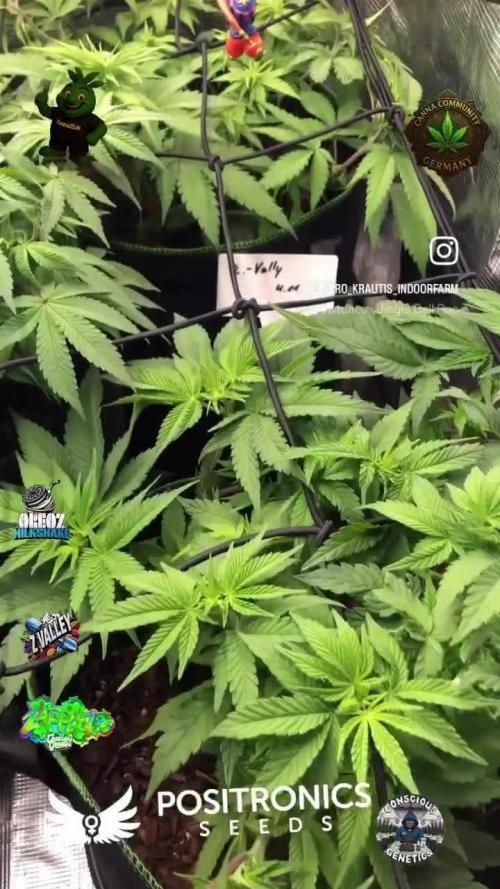
Tag 44 (Tag 4)Die Blüte ist erwacht! 🌸✨
Willkommen in der ersten Blütewoche!
Letzten Freitag, am 19. Dezember, fiel der Startschuss. Wir haben das Licht auf 12/12 umgestellt. Heute, am Montag, schreiben wir Blütetag 4, und man merkt sofort, dass die Mädels den Rhythmuswechsel verstanden haben! Um den Übergang perfekt zu unterstützen, gibt es heute eine ganz besondere Belohnung für das Ökosystem.
🌟 Das Update zum Wochenstart.
🚀 Der Stretch beginnt.Die Z-Vallys, OreoZ Milkshakes und die Zapplez 2.0 fangen an, sich Richtung Licht zu strecken. Die Struktur, die wir durch das LST vorbereitet haben, zahlt sich jetzt aus die Fläche ist perfekt gefüllt!
☕ Komposttee ,Heute haben wir frischen Komposttee angesetzt! Damit boosten wir das Bodenleben im Living Soil massiv auf. Die Mikroorganismen arbeiten auf Hochtouren, um die Nährstoffe für die kommende Blütenbildung optimal aufzuschließen.
🌿 Vitalitätscheck. Die Pflanzen strotzen vor Kraft. Das satte Grün zeigt uns, dass sie bereit für die Höchstleistungen der nächsten Wochen sind.
🔥 Vom Wachstum zum Flow.
Die nächsten Tage werden spannend, wenn sich die ersten Anzeichen der Vorblüte zeigen. Wir begleiten den Stretch engmaschig und sorgen dafür, dass das Bodenleben aktiv bleibt. Der Fokus liegt jetzt voll auf der Entwicklung der Blütenansätze!
🌱 Die Crew & 🤝 Das Ökosystem
Genetik:
• Z-Vally (2x) & OreoZ Milkshake (2x) | @positronicsseedsgermany @positronicsseed
• Zapplez 2.0 (1x) | @conscious__genetics @conscious_genetics2.0
Support:
• Substrat: @panova25.de / @living_roots_pro ( Living Soil in Bestform!)
@cannacommunity.deutschland420 @cannacommunity.deutschland / @cannacommunity.germany
#Living Soil #Blütetag4 #FlowerPower #Komposttee #1212Umstellung Zapplez20 OreoZMilkshake ZValley OrganicGrowing CannabisCommunity GrowUpdate Bodenleben


Likes
16
Share

@Cyrusdavirus
Follow
High y'all 👋
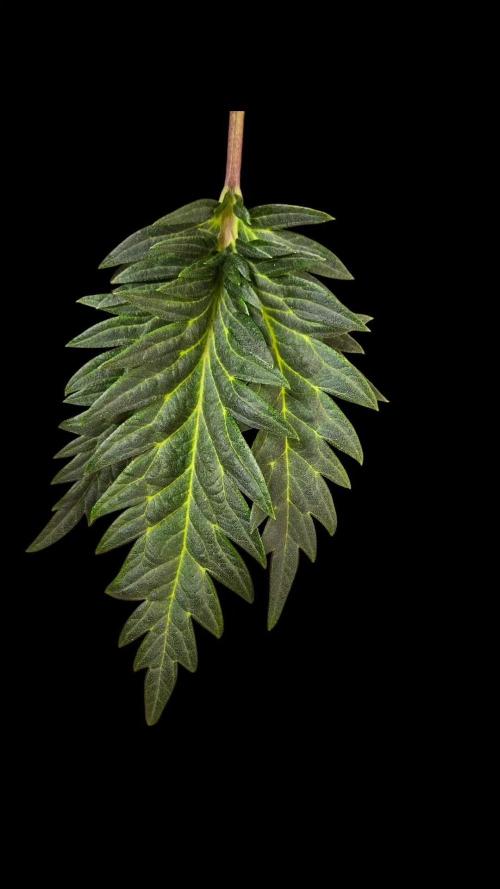
The girls are ready for flower but I'd like to see a couple more inches in height. I gave them all a good top dressing of flower food to get the dirt ready for the switch to flower next week 😁
They are already stacking up nicely and they are not in stretch yet.
I cranked up the horse power on the lights today at 30" they are getting about 50 or so DLI which will drop when I switch to 12s and as they stretch they will get closer to the lights increasing the DLI again
I'm excited for Hedgehog season 😛
See y'all next week... Cyrus


Likes
5
Share

@GroloCup
Follow
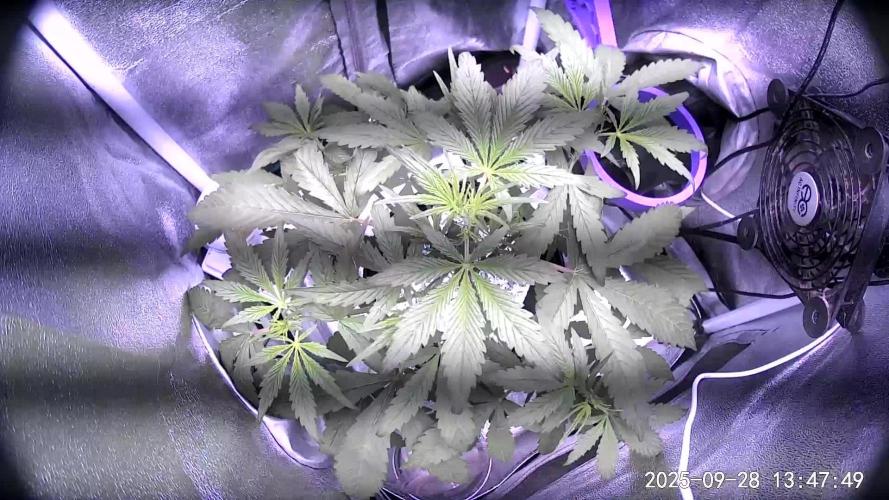
Shes in the fast lane and got the hammer down now. Look at the growth over 2 days once I hit that sweet spot with the nutrients. Geoff has definitely checked off some boxes with this girl, the vigor and structure are on point, she's definitely oozing some strong skunky terpene early on as well.
Likes
11
Share


@RhodiesGrow
Follow
Do-Si-Dos is looking great! Very strong and should have some good growth this week. Stating to take off now.
Day 7: Still slightly yellow, might be hungry or slightly over-watered. Will feed nutes in the next few days and see. Temp: 75º RH 75% PPFD: 300 VPD: .41 kPa
Day 8: Just misting no water or nutes yet. Looking good. Temp: 75º RH 75% PPFD: 300 VPD: .41 kPa
Day 9: Fed 2ml Cal-Mag, 2 ml FloraMicro, 1ml FlorGro, 1ml FloraBloom PH 6.2. Temp: 75º RH 70% PPFD: 400 VPD: .72 kPa
Day 10: Responging well to nutes. Looking much darker green today, must have been hungry for nutes. Temp: 70º RH 75% PPFD: 400 VPD: .72 kPa
Day 11: Growing and looking darker green today. New leaf growth. Temp: 77º RH 55% PPFD: 500 VPD: .67 kPa
Day 12: New growth. Temp: 73º RH 62% PPFD: 500 VPD: .67 kPa
Day 13: New leaf growth. Temp: 75º RH 60% PPFD: 500 VPD: .62 kPa
Day 14: New leaf growth. Fed 4ml FloraMicro, 6ml FloraGro, 3ml FloraBloom and 2ml CalMag. Temp: 78º RH 61% PPFD: 500 VPD: .76 kPa
Likes
1
Share

@Catawbiense
Follow
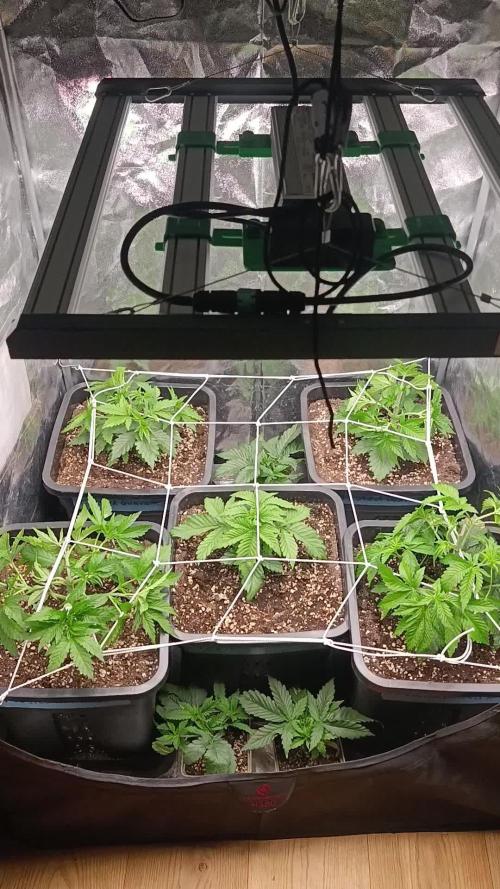
**Vegetationswoche 4 (Kurzfassung)**
Die 4. Vegationswoche hat heute begonnen.Stabile vegetative Phase mit aktiver Meristemregeneration nach dem Toppen. Hohe Blatt-Turgidität, gesunde Internodienlänge und gleichmäßige Chlorophyllbildung. Beginnendes LST im SCROG-Netz zur Reduktion der apikalen Dominanz und Förderung lateraler Sprossentwicklung. Keine sichtbaren Stressreaktionen, optimale Voraussetzungen für flächenfüllendes Wachstum.

Likes
18
Share


@biggreens420
Follow
hey guys here with the new release from fastbuds thanks to those guys for the testers . Will be starting as usual in coco ecothrive to be precise pictured above with a pinch of mykos mixed in. To germinate I always make a hole with my little finger to the first knuckle drop the seed in and cover , water very slowly around the edge of the pot until you get runoff like the video shown . Then i put them on a plastic or paper plate onto the heatmat (not directly on it as it dries the media too quick) in a dark place and the longest iv had to wait is 4 days after that as soon as they break the coco I put them under a small 12w led/cfl light (pictured above) 6500k at around 15 cm as this helps build a good root sytem ready for transplant will be on no nutes this week will start on plant start and katana roots next week at this point i have no fan running just the light will add a fan to sturdy her next week. will only get one maybe 2 very small waterings this week depending on how quick the media dries thanks for reading happy growing guys

Likes
Comments
Share


@BenDidKnEe
Follow
The clones are doing ok. I might have the humidity to high because they haven’t had water this week, the soil is still moist from the transplant. Once the roots hit the bottoms of the pots they should spread out causing the foliage to explode. In week 8 I’ll come back and edit and tell myself I told me so. Happy growing folks

Processing
Likes
58
Share


@Mr_Motalovah
Follow
Hello Growers and Tokers! 👋 👩🌾 🧑🌾.🔥💨
Great second week of flower.
She’s getting a nice flower stretch.
Info and photos were taken 12 days into flower.
Beginning of the week was 50cm and is now at 62cm tall.
That's 12cm in one week!! 👏👏👏
Feeding 1,5L each, every other day. Will be increasing as they ask for more.
How do they ask for more?
When feeding if the soil is drier than normal I give a 150-200ml increment of water.
I do that until they stop feeding so much then i just maintain that amount.
I start reducing if it takes longer to dry.
That works good for me. The old finger in the dirt trick. 👍
Nothing like knowing exactly what your ladies need first hand.
She’s looking good and healthy.
Nice lime green color going..
Plenty of new growth every where.
Smell is starting to be a little noticeable but nothing stinky yet.
There’s a few main colas that are standing out and stacking nicely.
Haven’t done any work on her since the 12/12 defoliation.
When 21 days passes I’ll give her a nice defoliation and taking away unwanted under growth.
Very happy with how she turned out.
She struggled at first but now she’s looking gorgeous. 😍😍
Stay tuned to see her progress.
If you like what you see, check out the other strains in the tent.
Take care and stay safe! 😃

Likes
6
Share


@lookingforTerps
Follow
Dear gardening enthusiasts,
As we enter the final month of this delightful journey with your Rainbow Mints, the garden is adorned with the culmination of colors and fragrances. The classic minty greens and invigorating citrus notes continue to weave their enchantment. In this closing chapter, appreciate the resilience and beauty of these plants, known for their easy care and healthful qualities.
Celebrate the last leg of this journey as your Rainbow Mints grace your garden with a final flourish!
Likes
16
Share


@CzAlmighty
Follow
Hello growers,💚
beautiful strong plant .No problematic flower.🍰🍰🍰
naprosto úžasná vůně květů 💨💨💚
Likes
6
Share


@TommyBVRSA75
Follow
En fin...como todo lo que empieza, también se termina y casi estamos recogiendo el fruto de todo el amor, la dedicación y cariño inmenso que le ponemos a la más bella planta del universo.
Tengo amigos a quien les digo que he tenido veces que en lo más hondo de mi alma, mi primera y última voluntad sería no cortar mis grows.
Casi como si fuera en mi íntimo, lo que más deseaba, seria tenerlas preciosas para siempre y ver sus colores, sus aromas...quién no le gusta llegar a casa y la primera cosa es caminar hacia la habitación donde está el armario de grow...ver como los LED se proyectan en los colores verdes...si en mi temporada de verano tenía los colores naranjas de la Russian Auto de FastBuds...ahora con las temperaturas más bajas de finales de otoño, la Strawberry Cheesecake de Barney's...ay, que trabajos me ha dado esta señorita, eh!! Como me dejó llevar por sus colores morados y estos cogollos con la explosión de naranjas y rosados y ámbar (que no necesitamos tan solo admirarlas con el Photoshop en las páginas de los catálogos de los bancos...si!!! Que las fotos que sacó en casa no llevan filtros y los cogollos salen aún más preciosos que en las fotos de los amigos de Barney's).
Hace poco "luchaba" con ella, poniéndole ScroG, trelizas, pin plásticos para hacerle Low Stress intentando controlar una "señorita" para la cual tenía pensado no más que un metro de alto y que cuando me seguía subiendo al casi metro y medio en floración sin detener su crecimiento...a esta "señorita" por la primera vez en mi vida, tuve que hacerle un supercropping encima de otro supercropping haciéndole un callo del grosor de un puño en su cola por que de otra manera no hubiera tenido techo de armario donde me cupiera el estirón de sus ramas.
Me anunciaban en Barney's que su genética habría de salir una Indica en su aspecto arbustivo, pero no...la naturaleza no se equivoca en sus caprichos y en su "sopa" genética, sus ramas de Sativa se impusieron...hay que aceptar con tranquilidad lo que se nos viene encima y como no...pese a que en su final las hojas largas nos dijeron "Indica presente"...hemos tenido una Sativa...en todo, su tiempo de hacerse y desarrollarse en 13 semanas y la forma como con la red de ScroG se pudo conseguir que las luces llegaran donde no habrían de tener llegado.
La pequeñita Strawberry que el 12 de septiembre despuntaba del jiffy, tímida y delicada...hoy es una "señora" y su paso por el mundo subirá en rollos de humo dulce y por el medio de sonrisas y por que no, "cabezones" por qué su "Indica" también hablará en su híbrida expresión, se recordará como una verdadera belleza...y si...por qué si miráis a las fotos, es también y mucho una belleza.
Dejando la poesía de la vida aparte, esta semana ha sido semana que empezó con el flush el Domingo...agua corriente para que se lavara lo que le hemos dado en estas 13 semanas.
Como no le hemos dado demasiado, donde le habríamos de dar lo justo, con el flush, muy rápido pudimos ver que el agua marrón se sustituía por água Clara, dando la señal que la hemos limpiado como se merecía...y seguro que tendremos humos suaves y aromáticos y no esa cosa que a veces nos toca cuando compramos alguna hierba a un amiguete que sea más apresurado y que a veces con la saña del negocio (y siempre el cabrón del dinero y los que hacen negocio de esto y que con esa "filosofía" tanto se les dá un flush bien echo, un secado como mandan las reglas o el curado de primera, para que el humo sea un "culto" y si unos pocos les dá la gana...para mi, esa cosa de ganarme la vida con esto, nones lo mío...y lo mío si es que cuando me fumo unos con los amigos, todos disfrutemos y que la gente me diga "anda!!! que esta es de las mejores que he fumado en la vida" y eso sí, es ganarme la vida...ganarme el gusto de perfeccionarme a cada grow, a cada variable nueva que introduzco en mis cosechas, a cada experimento que me trae conocimiento y buen hacer, a cada cepa que logró sacarle el mejor rendimiento no solo en gramos, pero mucho en sabor y en aroma.
Joder...que esto de la "plantita mágica" es de las cosas más bellas y que más te recompensan en la vida y como os digo...mi "zen" en esto del "grow" no está en el humo y en lo "colocado" que me pueda dejar...lo que me deja, en verdad, "colocado" me quedo por lo que me relaja esto de la botánica y del amor, cariño y dedicación diaria al "grow".
Sobre la "enana" ...la Critical Jack Herer... pues pese a una genética muy incompleta (y por que como ya os he dicho, que trifolios "ruderalis" incluso en la floración, lo que deja entender que Delicious Seeds mucho tendrá que trabajar en estabilizar esta cepa) camina también para su final...una cosecha mucho más pequeña en cantidad, pero por su olor y resina en sus cogollos más modestos y menos exuberantes en los colores, promete al menos, una hierba que "pongo mis fichas a juego sin limites" en la calidad que tendrá. Haré el flush el viernes y será un flush más específico, pues no pretendo darle un corrido de água alocado y si usaré el producto Canna Flush, pues también hay que aprovechar el sustrato que es de calidad superior y si el corrido de un montón de agua tiende a lavar los fungos y bactérias benéficas del suelo, con el Canna Flush se logra limpiar el exceso de nutrientes sin con ello hacer que el agua se lleve también lo bueno que hemos integrado en el sustrato a lo largo del "grow".
Otra de las cosas que siempre contribuye a que tengamos un sustrato que después del flush nos sirva cara al futuro, es no solo el uso de las micorrizas que para mí son obligatorias, bien como el uso de "enhacers" enzimáticos que en mucho tienen la tremenda misión de convertir excesos de N-P-K en metabolitos de azúcares y coloides que las plantas absorben, sin que con ello, el humo quede agresivo en su paso por la garganta.
Así...en los próximos diez días, tendremos terminada la temporada de otoño.
Haremos el pesado de la cantidad, haremos los registos en la bitácora sobre lo que ha ido bien y menos bien y empezaremos a programar para mediados/finales de enero, el comienzo de la temporada Primavera 2023.
Ya tenemos la "comida" de la próxima temporada y tendremos orgánico con calidad...tendremos más dos TLED 26 w, estos de 6500K para Crecimiento y tendremos ya la configuración LED completa que he diseñado en mi mente, que será el LED central de 192W, y sobre cada esquina del armario de "grow" alternados TLEDs de 26W, unos de Crecimiento y otros de Floración...
Y "colorín, colorado, este grow se ha terminado..."
Hasta la vista con fé y sabiduría y confianza infinita en el Dios Jah, sembrando la semilla de la concordia y paz entre Hombres y dándonos la gracia de la más hermosa planta del mundo...
Fuí...ONE LOVE


Likes
41
Share


@Bread_n_Buds
Follow
We enter the magical moment and do it with a surprise, we will be for a lot of time in collaboration with Marshydro and thanks to this we have a brand new light setup and truly top tent.
The two Dark Phoenix are coming to the end. The first plant the most regular with a topping to 16 pounds has raised and inflated well and regularly all 16 and practically they are more or less at the same level at the time they are going to do the final sprint they scare. Beautiful peaks see them mature will be a joy.
The second plant had a problem with the leaves I think a deficiency or excess of something, I am doing a pH 6 flush to make the nuts absorb and give an enahcer bang before the end. There are both and looks like the top.
Immediately after the Flush the last wintered with Enahncer is scheduled and then only Flush.
LIGHT >> MARSHYDRO SP3000 AT 100% OF POWER, we already like it so much because it covers the intact length of the tent.
Tent >> Marshydro 120x60x180
CHECK IG >> https://www.instagram.com/marshydro_aliexpress2/
Buy >> marshydroled.aliexpress.com
GD >> https://growdiaries.com/grow-lights/mars-hydro

Likes
17
Share


@SkunkyDog
Follow
Hallo zusammen 🤙.
Sie wächst sehr schön und macht keine Probleme.
Rabattcode für den BIOTABS-Webshop https://biotabs.nl/en/shop/ GDBT420, damit erhalten Sie 15 Prozent
Likes
44
Share


@SooSan
Follow
12/12 + 130 jours
Vu qu’il y a 16 plantes mais que sur growdiaries on ne peut mettre que 8 variétés j'ai divisé en 2 diaries pour le bas de la tente
1️⃣
🏠 90x60x90
☀️ FC-E 4800 => puissance a 60%
🍁
Black Bomb / Philosopher Seed
Amnesia Lemon / PEV Seeds
Amnesia Lemon /PEV Seeds
Blueberry / PEV Seeds
Blueberry / 00 Seeds = 17g
Wappa / Paradise Seed = 11g
Dark Phoenix / Green House Seed
Quick Sherbet / Exotic Seeds = 14,5
Mango Cream / Exotic Seeds
Banana Frosting / Sensi Seed = 11g
Hindu Kush / Sensi Seed 10,5g
Mix 1 / Sweet Seed = 26,5g
Mix 2 / Sweet Seed = 15g
Mix 3 / Sweet Seed = 22,5g
Mix 4 / Sweet Seed =
📎 https://growdiaries.com/diaries/122084-grow-journal-by-soosan
📎https://growdiaries.com/diaries/124052-grow-journal-by-soosan
2️⃣
🏠 30x60x50
☀️TS1000 => 100w = 54g
🍁
Quick Sherbet - Exotic Seed = 12g
Quick Sherbet - Exotic Seed = 12g
Quick Sherbet - Exotic Seed = 17,5g
Quick Sherbet - Exotic Seed = 12,5g
📎 https://growdiaries.com/diaries/122080-grow-journal-by-soosan


Likes
26
Share


@Ukfarmer420
Follow
Hi guys
So wer on week 9 of flower and I have just started ripen by general hydroponics GHE, never use this before but herd good things about it, I just want it to get a early fade as I don't want the trichomes degrading.
Pheno 1 is starting to fade natraul and is well on its way, buds are dense sticky and are falling over due to weight.
Pheno 2 has started its fade and buds are just as dense there just bigger and the same with pheno 3 its just lacking the fade to be harvested for my liking.
Humidity and temps are good and all is going well.
I will update in few days once the ripner takes affect 😁
Happy growing guys 👌💪💚
Hi guys just and update....Next Wednesday is chop day! FINALLY chop days come around 🙈🤣🤣🤣 i really can't wait now, buds flopping over here n there, swelling, stinking, stickiness everywhere lol.
Thanks for all your comments and likes 💚💚💚 i cant wait to impress you with my next run and diary, I got something special for you guys, a limited edition, only 500 packs released 😊. Message for more info on my next run. Full nutrient line up, genetics and light and equipment to be confirmed.
Day 59 of flip and day 5 of ripner.
Hi guys the ladys are doing really well as you can see and starting to show me there true colours 💜💚💜💚.
This is not a sponsored grow in anyway, I paid for everything for this set up. I am giving you a personal review as a customer who got these things to use.
I highly recommend everything I used and as a first time photo seed grower and scrogger I have done brilliant and if it wasn't for good quality products I think I would of struggled lol so shout out to @marshydro @acinfinity @biobizz and @simplysouvenirs @ghe
Your products produce good quality and nice environments for growing top quality meds 👌👍


Processing
Likes
2
Share


@Race91
Follow
Just keeping the LST and high frequency fertigation going like they talk about on cocoforcannabis.com. If you grow with coco you should check it out because there is much to learn even when you know some shit...for real tho. I have some cool mutations on one of my plants. One middle branch has 4 leafs coming out of 1 node which has 4 “blooms” coming out of where the leafs are sprouting. Also I have a branch that looks topped but it wasn’t so it’s a perfect Y with nodes at the branch and on top and another Y on the same plant on a main where it’s really thick but has two stems sprouting out of one which is right at the top of that branch. Anyway shits going really good with these bubblegum autos. I’m freaking impressed that you get 5 weeks of Veg out of them and that’s on all 3 plants. I thought I was seeing a stretch last week start and I was right for sure. Iv gained at least 3” in 7 days and my bigger ones probably more then 3 but I like to average. My shorty plant AKA Shorty WOP WOP 😂 is very different in structure from the other two which are themselves different but more similar. It’s actually a small,large, larger pheno situation which never happens for me. Idk the odds or total number of possible phenotypes but I got 1 of each of the good ones. Safe to say I’m happy and the pictures show why. Thanks for checking peeps.

Likes
8
Share


@CanabisLoverHobbyGrower
Follow
All looking good,.. healthy, not much smell yet but roll on next week 👌