


Likes
Comments
Share


@adam_pawloski87
Follow
Such an amazing flower, really great especially a phenomenal hash producer yall will be super satisfied with this one!! She’s a shorty but Make sure you top 4 to 6 times or even more to have all them gooey bud producing heads , Dirtyblonde is absolutely an amazing plant!!

Processing
Likes
3
Share


@Kushizlez
Follow
Day 42-49 (June 11th - June 18th)
(Day 43) I need to work on my early veg times. Things are just too slow in the seedling stage. Next round I will use a coco/Destiny blend for the better aeration and lower EC. Even with my indoor plants. I notice plants started in coco root way faster. Not just with weed either. All plants seem to like it better. Coco is far superior to peat imo.
(Day 44) I’m pruning off the lower branches on my rooted blackberry clone. It’s cool to see it’s weird reveged structure. Lots of the fan leaves have trichomes on them.
(Day 45) Something really weird is happening to Grapefruit #3. The leaves are browning and starting to gnarl. It could be an insect of some sort as it’s the only plant looking like that.
(Day 47) It just hailed super badly and the leaves on some of the plants are pretty damaged. In my neighboring town the hail caused multimillions in damage so we got lucky here.
I’m going to spray some method 1 pps prevention spray today to help keep pests at bay. I will try to do it in overcast or shade. I’m seeing what looks like thrip damage but there is no way they can survive the cold nights here. Dog shit in my yard is attracting flies which then land on plants spreading god knows what.
(Day 48) Autos are still really stunted. I wasn’t able to find out how big they will get so I will just wait and see. I would guess they’re in their flowering stretch because their growth is unusually fast right now. I will probably just end up with 6-10 inch ornamental plants for autos. Definitely should have started them around mid summer in coco then transplanted. Time is of the essence with autos it seems.
(Day 49) Photoperiod plants are looking really happy but growth is stunted from the cold and lack of light. I was hoping for bigger plants by now. A lot of growth can happen in 2 weeks so we’ll see. I’m definitely not transplanting on the 21st but the sooner I do it the better. The bbb clones are struggling hard to root but I can see new growth on them starting to push out.
My clones are taking a really long time to establish. Every plant here, I don’t care how stunted, must be flipped by July 15th.


Likes
Comments
Share

@elsolo1
Follow
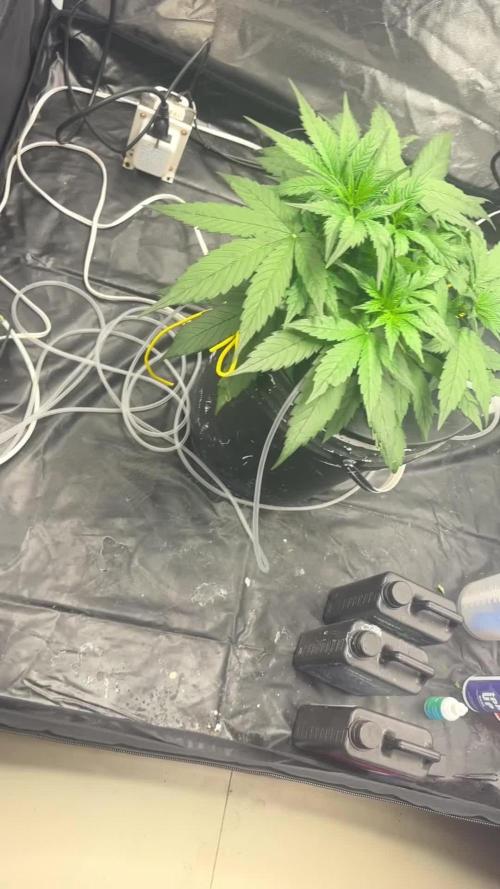
Week four, did some light LST in order to get the canopy flat, very nice grow, shes loving all the nutrients. 4 channel air pump all to herself lol.
Likes
17
Share


@ILoVeThiSpLaNt
Follow
Ultimi giorni per una pianta mentre altre due sono a seccare. Qua foto e video delle prime tre piante tolte. A settimana prossima 😊


Likes
23
Share


@GrowGuy97
Follow
Moved the whole veg tent into the flower tent😍 Done the final flush on the 2 plants in the front of the tent, should have them cut down in the next 3 days to make some more room for the rest of the ladies! Everything seems to be going good so far! Fingers crossed for harvest & cure!🤞🏼✌️🏼🌱
Likes
133
Share


@PapaNugs
Follow
All is good in the tent. The girl is growing and getting used to the new pot and tent. The humidity is higher in this smaller one and she likes that. Now even has some roommates for a week before she's left alone.
Lights at 40% power.
Here are the lights details:
Medic Grow Mini Sun-2 150W LED
Model: MN150-022
Spectrum mode: V1
Efficacy: 2.8 umol/J
Thanks for stopping by!
You can find the light on Grow Diaries:
https://growdiaries.com/grow-lights/medic-grow/mini-sun-2-150-watts
You can find the light on Medic Grow's website:
https://medicgrow.com/

Processing
Likes
14
Share


Likes
3
Share

@tony_kiffton
Follow
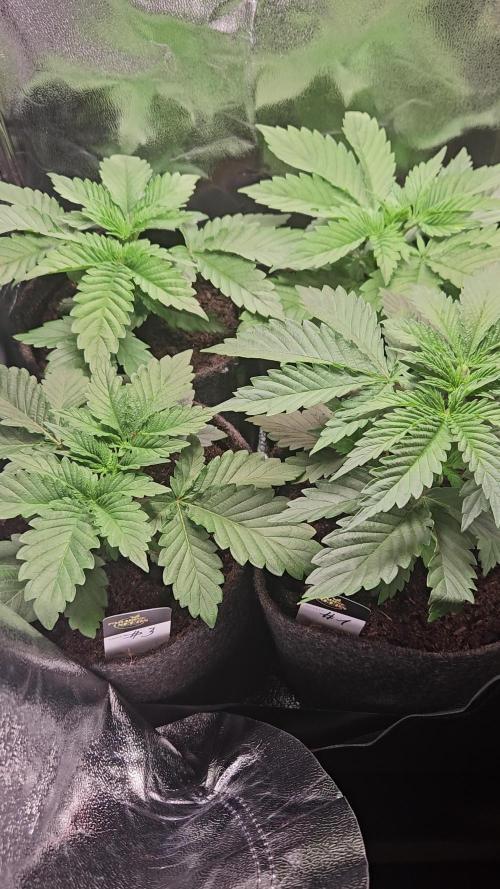
Es wurde in einen 3 Liter Transplanter Stofftopf von Gronest umgetopft - Natürlich in die gute Rosenerde von Floragard -
Die Wurzeln sind schön weiß und super vital -
Gleichzeitig wurde die Lampe auf 12/12 umgestellt. 😎
Likes
16
Share


@GabbaGandalf
Follow
I started to scrog The Church (left side of the closet). I topped the plants after the fourth node. Of the 4 Churches, I didn't properly top two of them. These two are looking like they are developing the main cola as well as the two side colas equally, so it seems there are three of them.
Serious 6 is growing slowly. Two of the plants are staying small and scrawny. I'm wondering if that is the phenotype or if I messed up.
And to top it all of, there was an accident with the Autopots :-(( This is the second time it happened in my AP system: The float gauges in one of the trays got stuck and the water kept flowing. The tray overflowed and the water ran all over my wooden floor. This also happened at night and I only discovered it the next morning. Luckily, the float became unstock at one point of time and the waterflow stopped. If it hadn't, 30 Liters of water in my tank would have caused serious issues.
I was going to start the 12/12 flowering cycle next week, but looking at the Serious 6s I will postpone it by at least another week. That way the Church can scrog longer and I assume won't fill up the net as quickly as Serious 6 anyway, since it more bushy compared to the Serious 6 sativas.

Likes
58
Share


@1plant_closetgrow
Follow
- 2.5mL water this week. Decided to add 1/4 veg nutes. Thinking if going 1/2 dose next watering.
- Scratch LST, will see how she naturally grows out. Will still defoliate
- Gives off a slight smell at times
- Growing and green 🌱

Likes
9
Share


@Atom_x_Andromeda
Follow
Growing strong cut 13clones today and transplanted the two biguns loving how they are turning out


Likes
13
Share


@Fatnastyz
Follow
9-9
Watered around 750 ml with recharge.
Goin good, little short atm.
Removed the serrated leaves.
9-12
Big water get the soil goin!. Around 2-2.5 liters
Just leaf tucking!
9-14
Just more leaf tucking! She is short and stout!
This is a m/f so I've been watching for sex, no signs yet! Last day of the week!
Likes
62
Share


@masterofsmeagol
Follow
9/12 Sprayed 1 tbsp K Bicarb with 1/4tsp dawn. Only had time to use a half gallon. I've used more but with all the defoliation this seemed to work and I was in a hurry. I can't ask those watching my plants to do actual labor when I'm not home. I wouldn't want anyone working on my plants but me anyway. I defoliated dead stuff. Still have this rusty looking leaves dieing on my ice cream cake. I need to finish a little defoliating. Broke out my 100x scope and checked a few buds. Things are exploding. Another nice sunny day today. Beastie bloom had no negative effects. I'll use it again and I'll probably use cha ching as well. Went back down to defoliate a little more. I'm getting excited. Still a lot of work left but it's nice to see the progression. Had to cut out a small nug last night that looked like it might start to rot. It was probably fine but I wasn't taking chances. It's so dank and crystally. One of my mystery seeds in the 5 gallon will be done soon. Milky trichs and hard as a rock. Im hoping they will beef up a bit. Little to no amber but things are progressing so fast. I mean nights are in the 40°'s.
9/13 No need to water as it had rained so much the bags need to dry out. Sunny day today. Plants are doing great. Buds increase in bulk on the daily. Took a few pictures and defoliated what needed it. A dog was added to the grow for security. It hasn't gotten used to me yet but it's extremely loud and annoying. Nothing will get past it though. I tried to last night. I shut down the motion sensors informed the other growers (except the person who's shift it was to watch) and I couldn't make it down there on foot let alone a vehicle. Hope the dog liked me but it's certainly useful. It APPEARS we will be having some good weather so I'm excited. I think my plants will be able to finish properly. At least I hope. Either way if I have to harvest early do to the weather so he it but I'll cross that bridge when it comes. Plan to do a preventative BT spray this week.
9/14 FED TODAY. LOWERED GROW BIG TO HALF TBSP. AND AGAIN used 1/4 TBSP Beastie Bloom. Buds are swelling with the sunshine that we've had. I defoliated what needed it and found more dead foliage. It's so weird this damage. I'm pretty sure it's earwigs but the only bother new shoots so that's a good thing. Things are getting close and looking good. I need to do another app of BT. I heard a storm may be coming I'll need to check the weather.
9/15 After a few good days of weather we are in for some rain. Supposably a big storm but it looks like I won't get the worst of it. No water obviously. Something (probably earwigs or jpn beetles) eating or lollipopping lower things. They seem to leave flowers alone. It's just low shoots. Everything is flowering incredibly. I checked trichs on one of my mystery seeds and it looks done. I'm considering taking it. It's in my garage for 24 hrs of darkness and to avoid rain until I make my decision. I also took the two lowest branches off on DJ Short blueberry to taste test and see where I'm at. I probably shouldn't but o do this every year. It will be good to try the mystery bud before I harvest it all. It's just a little guy but the buds are rock hard and with the weather and pm and stuff I'm not sure what I'm going to do yet. UPDATE: APPARENTLY WE HAVE SEVERE THUNDERSTORMS WARNINGS WITH GOLF BALL SIZED HAIL. I can move the other little ones in the garage but everything else is firmly rooted and have taken a beating already. I pray things will be ok.
9/16 No damage from the ridiculous storm last night. I need to spray ASAP. I have a fungal infection with just a few weeks to go. Looks like PM but I know some is a different fungal issue. I'll probably use the k bicarb or citric acid. So far no bud damage or damage up top. The things the earwigs ate were low like the lollipoped lower limbs. It's getting so close. I've been checking trichs and they look great but the buds have some filling out to do.
9/17 DID K BICARBONATE TREATMENT THIS AM. I didn't even look to see if I needed to water. Fuck. buds were soaking wet though so it must've rained. I have to go back down anyway to add a couple strings and do a little more defoliating. Did a treatment with k bicarb this morning.. 1 tbsp with dawn in a half gallon sprayer. I also need to address this earwig problem. They are ravaging some secondary lower branches and Im sure they are spreading disease. I only have a few weeks left and I want the best quality I can possibly get. I plan to put gorilla tape on the outside of the grow bag (double width) and petroleum jelly on the stems. That way they can't climb the bag. If they are in the soil of the bag hopefully the jelly will stop them. I'll also try beer as I've heard that works. I really don't want to resort to borax. Oh and I may have had a visitor last night. I'll have to check the cams. Nothing on the ones I checked but I have some game cams at different angles I haven't checked yet. It was probably just a nocturnal animal. Great to know that the dog announces though. This was at like 12:30 and I was out quick. I only have a few more weeks. I hope the cannabis gods are with me.
9/18 Whatever is eating my plants (earwigs I assume) are progressing from lower secondary or tertiary branches and new shoots to small buds. Looking at trichs some plants look ready. One seedling and the blueberries. I'd like the blueberries to go longer but I'd risk losing them. Fungal and mold issues aren't the greatest either. I was hoping for a big swell but if the weather stays raining and foggy like this it might be better to harvest a little early. I got a second opinion this morning and I'm leaning on taking the seedling and at least the one blueberry with the worst damage that dropped most of its leaves. I'll see how the bottom branch smokes this afternoon and make my decision then. Didn't feed for fear of lockout or if decide to cut. UPDATE: After the second consult with a different local grower I decided to harvest the blueberry that was furthest along and dropping it's leaves. It was done. Luckily it had been flushed with all this sheet rain we've gotten. It rains hard as I speak. Last year I think I had two strings the length of the huge garage and that lasted me all year. This one plant took an entire string to itself. If the weather cooperates this will be a good day. I also flushed the mystery seed I was going to take hoping it might fill out but trichs are very Amber and the bud is DENSE. Not risking mold or insect damage or theft. This took hours to harvest this ONE Blueberry plant. I had to harvest limbs. This was when I could see damage best. I also am curing the buds from the lower branch I took earlier and the other bud that is done. I plan on testing it out tomorrow. I could smoke now but Im already burnt and tired and want to try this with a clear head. I can't believe how long this took. One Big and one little down 10 more to go. Phone died so I couldn't take any pictures.


Likes
4
Share

@Hundreds
Follow
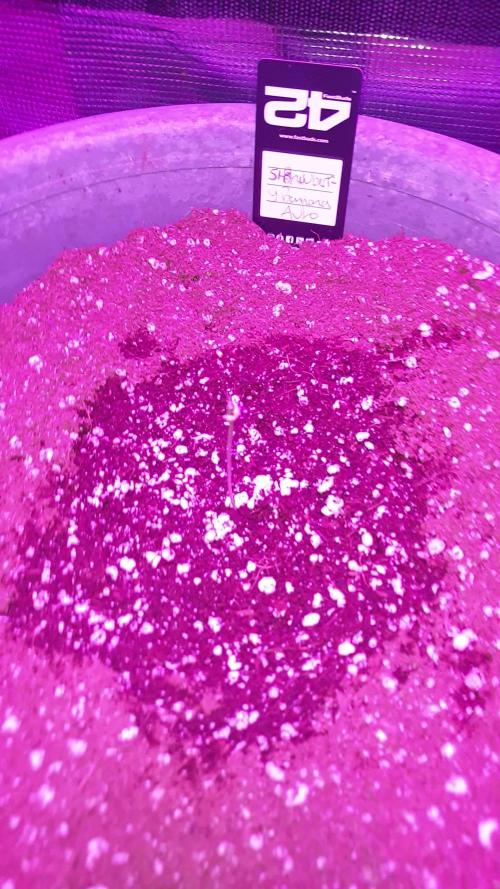
Photo/Video taken exactly a week from germination making solid length and progress for a week.
Likes
28
Share


@MadeInGermany
Follow
Info:
Unfortunately, I had to find out that my account is used for fake pages in social media.
I am only active here on growdiaries.
I am not on facebook instagram twitter etc All accounts except this one are fake.
Have fun with the update.
Flowering day 26
since time change
to 12/12.
Hey everyone 😃.
Another great week goes by.
Last week, instead of 2 g of GHSC Powder Feeding, I only gave 1.5 g p l of substrate so that I can give you another 1 g per l of substrate next week so that it lasts until the end :-).
It is developing very well and the buds are starting to grow :-).
The week was poured 3 times with 1.1 l each time. once of them GHSC Enhancer was added :-).
The bottom shoots have now also been removed :-).
As always, the humidifier was refilled every day and the lady was checked for her health.
I hope you enjoy the update.
Stay healthy and let it grow 😊🍀.
You can buy this Strain at :
https://www.royalqueenseeds.de/feminisierte-hanfsamen/115-amnesia-haze.html
Type:
Amnesia Haze
☝️🏼
Genetics:
Original Amnesia Haze
👍
Vega lamp:
2 x Todogrow Led
Quantum Board 100 W
💡
Bloom Lamp :
2 x Todogrow Led
Cxb 3590 COB 3500 K 205W
💡💡☝️🏼
Soil :
Canna Coco Professional +
☝️🏼
Fertilizer:
Green House Powder Feeding
☝️🏼🌱
Water:
Osmosis water mixed with normal water (24 hours stale that the chlorine evaporates) to 0.2 EC. Add Cal / Mag to 0.4 Ec Ph with Organic Ph - to 5.5 - 5.8 .

Likes
22
Share


@Vincent11
Follow
Hello everyone
Fat Banana is doing amazing the hot weather here has given her a extra boost this week.
She is filing those buds nicely.
Trichomes are everywhere and in big numbers to.
And I have given her the first dose off PK13/14 nutrition. I will give her this for the next 2/3 weeks when feeding.
Not much more to say then
Happy Growing all
Likes
2
Share


@RawCare
Follow
Removed some fan leafs and the buds starting to explode. This lush young plant stands proud with vibrant green leaves, a testament to its great genetics. The plant is thriving under optimal nutrient uptake, its buds already beginning to form and swell with promise of a bountiful harvest of top-quality buds. This young lady is growing with a blissful ease and a resilient growth. Ample space to improve on my next run 🙏
Likes
7
Share


@Pjm70
Follow
Very beginning of week 10. She is gearing up for flower. She is stretching, but I keep pulling everything down. She has been 36 inches for a month. She is about 41 wide.
8/13 Her pot was on the dry side. Gave her 2 gallons of water. I'd say 10 percent run off. I use the ph strips. I bring water home from my job. Their water is the perfect PH according to the strips. I test her run off today. Looks like a low 6.
8/14 2 gallons of water with 8 tablespoons of fox farm Big Bloom and 1 teaspoon of recharge. I do like the foxfarm products. Some Big Bloom can make a sick plant healthy. Have to check, think she is ready to be fed.
8/16 per 2 gallons 4 ml Grow Big, 4 ml Tiger Bloom 1/2 teaspoon Open Sesame
8/18 4 Tablespoons Foxfarm Bigbloom and 1/2 teaspoon recharge. Per Gallon
1 day I will get a ph meter. First year spent enough. The plants look very healthy. Unless the strips are completely worthless, she looks to be in her happy place. She was fed very well the past week. I might do 1 more water then feed.
She is forming her sites. 8/13. Makes it easy to space the sites out. Also to know what to remove. Have to force myself to cut off what's not making it. Think flower.
Likes
20
Share


@eldruida_lamota
Follow
Que pasa familia, última semana de floración de esta farm cheese de genofarm, y que decir, es increíble vaya aroma y vaya flores repletas de tricomas.
Lleva su limpieza de raíces ,después se controló ph temperatura y humedad todo el cultivo, de principio a fin.
Variedad de 10 para trabajar en indoor, ideal para SOG .
