


Likes
Comments
Share




Likes
53
Share


@DogDoctorOfficial
Follow
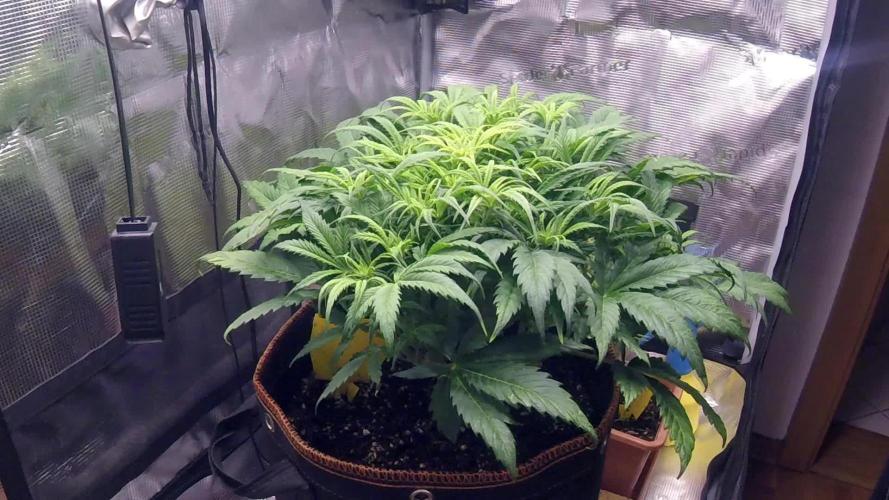
Hey there, fellow plant enthusiasts! Welcome back to another exciting update on my P.C.R. journey. We're now into the second week of veg, and let me tell you, things are really starting to take off!
These little beauties are soaking up the Aptus Holland veg mix like it's their own personal feast. The growth is phenomenal, and I couldn't be happier with how they're thriving. It's like they've hit their stride, and there's no stopping them now!
Let's talk numbers for a moment. My TDS is sitting comfortably at 420, ensuring the plants are getting just the right concentration of nutrients for optimal growth. The solution temperature is a cozy 21 degrees, creating the perfect environment for nutrient uptake. And of course, the pH is a stable 5.9, maintaining that sweet spot for nutrient absorption.
Feeding these plants is an absolute joy, especially with the Aptus Holland veg mix. It's like giving them a gourmet meal tailored to their exact needs. I can see the difference it's making in their lush, green foliage and sturdy stems.
Every day, I'm amazed by the progress these plants are making. It's like watching a masterpiece unfold before my eyes—a true testament to the power of nature and the wonders of cultivation.
A huge shoutout to Art Genetix for providing these phenomenal P.C.R. genetics that continue to impress me with their vigor and resilience. Your dedication to crafting exceptional strains is truly commendable!
I also want to express my gratitude to Grow Diaries for being a platform where I can document and share my journey with fellow growers. Your community support and feedback have been invaluable in shaping my cultivation practices.
And to the entire community of plant enthusiasts out there—whether you're a seasoned grower or just starting out—thank you for your ongoing support, inspiration, and camaraderie.
Stay tuned for more updates as we continue this green journey together. And as always, a heartfelt thank you to Aptus Holland for providing the nutrients that make it all possible. Here's to another week of growth, discovery, and endless possibilities!
Genetics - P.C.R. @Art_Genetix_Team
Nutricion @aptusholland
LED Power @Lumatek and @viparspectra
As always thank you all for stopping by , for the love and for it all, i fell blessed to have you all with me for one more love journey Thank you Thank you Thank you , you guys are great and have been amazing , thank you for everything !
#aptus #aptusplanttech #aptusgang #aptusfamily #aptustrueplantscience #inbalancewithnature #trueplantscience #dogdoctorofficial #growerslove
With true love comes happiness , Always believe in your self and always do things expecting nothing and with an open heart , be a giver and the universe will give back to you in ways you could not even imagine so !
Growers love to you all

Likes
23
Share


@NorthernMonkeyzInc
Follow
Ive had to veg a little longer than i like but the girls are doing great so it is wot it is


Likes
15
Share


@Chubbs
Follow
These ladies have grown amazing this past week. I took of a few of the bigger fan leafs of but other then that just feed this week. The flower sites are starting to form. Definitely starting to smell stronger.
All in all Happy Growing.
Likes
4
Share

@Borberad
Follow
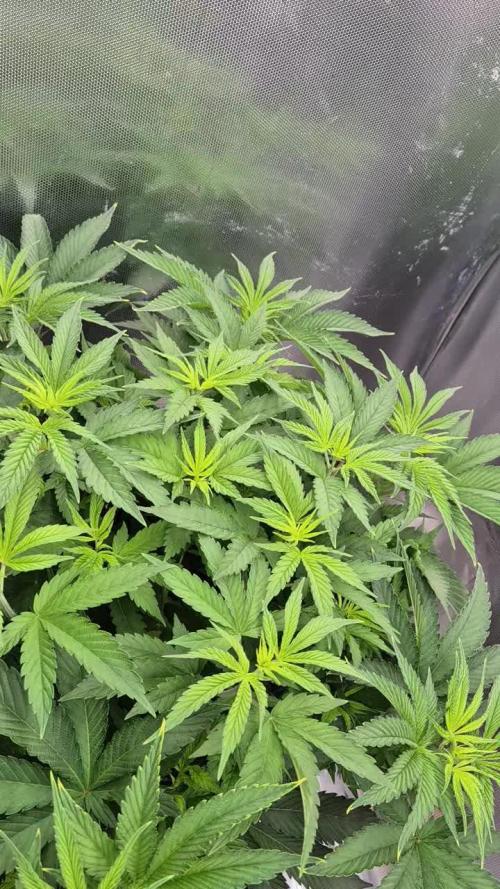
Umstellung an Tag 44. Nach einer 20h Nacht wird in die Blütephase gewechselt.
Likes
47
Share


@Ultraviolet
Follow
The cannabis strain Grape Guava can be a purple strain, depending on its specific phenotype and genetic makeup. While not all phenotypes of Grape Guava are purple, some variations, such as the Zatix Grape Guava, are noted for their striking purple appearance due to the genetic expression of anthocyanin pigments.
https://www.youtube.com/watch?v=cKdVmdoKJ5k
In a garden of green, Grape Guava gleams,
With its fruity aroma, enchanting dreams.
Clusters of grapes, guava's sweetness ignite,
A strain so divine, in purple and white.
Euphoria whispers, a lush fruity haze,
Grape Guava's embrace, a tranquil daze.
Off and away.@1400ppm. The increased CO2 allows plants to thrive at higher temperatures, which in turn necessitates higher humidity to maintain the ideal VPD for healthy growth and transpiration. 80F -5F = 75F LST with 70% RH = 0.72 kPa. Higher temperatures and humidity promote rapid growth, nutrient uptake, and photosynthesis while maintaining a lower stress level. Temperature influences the rate of enzymatic reactions involved in aerobic respiration. Enzymes, such as those involved in glycolysis, the Krebs cycle, and the electron transport chain, work most efficiently at an optimal temperature range. In low temperatures, enzymatic activity will slow down, thus reducing the rate of aerobic respiration. In high temperatures, enzymes can become denatured, thus impairing their function and stopping the process of aerobic respiration. Glucose is the primary fuel for aerobic respiration. The rate of aerobic respiration increases with the availability of glucose, as it is the starting point for glycolysis. If glucose levels are low, cells may rely on alternative energy sources such as fatty acids or amino acids , but these processes may yield less ATP or be less efficient. To determine this effect, carbon dioxide volume was measured (as carbon dioxide is an output of aerobic respiration)
18/6 with the 6 being IR. The near infrared (IR-a) borders around 700nm up to 1400nm @ photon par flux density of 1.8 instead of darkness, keeping temps overnight a neat 77F-80F.
Think of my tent as a lung. What goes in must come out. When the rate of air going out exceeds the amount of air coming in, it creates a negative pressure. Tent concaves (bends in). If set up correctly, your RH will begin to drop slowly to the desired level you set, and the extraction turns off when it reaches desired% RH. The plant, as it performs cellular respiration, will always be releasing more water into the air, so the RH% of the tent overnight will always increase, so long as oxidative phosphorylation is occurring. As soon as the RH% creeps back up to 55%, the extraction turns back on, over and over. This creates a strong pressure differential which will work wonders on your grow. Replicating high and low-pressure fronts in nature. Critical for oxygen diffusion at the critical time of peak cellular respiratory function..
Moisture will not transfer from a saturated atmosphere to another if that air is already at or above its saturation point, meaning the air can't hold any more water vapor. Once I understood that water is produced as a by product during cellular respiration, specifically at the very end of the electron transport chain (ETC) where electrons are finally transferred to molecular oxygen, the higher the RH of the air, the more resistance there is for more moisture to be added to that environment, and effects the ease with which it does so. But none of that water comes from the pot; it's pulled from the air. If you run high daytime RH, your medium/pot is 100% reliant on transpirational root pull to move water. ZERO evaporation happens across the atmosphere if the tent air has high RH%, the medium cannot release its water through evaporation. Once a canopy develops, light no longer slowly wicks and evaporates from the topsoil. The Soil-Plant-Atmosphere Continuum (SPAC) describes the continuous pathway and process of water movement, driven by a gradient in water potential, from the soil, through the plant's roots, stem, and leaves, and finally evaporating into the atmosphere through transpiration. There is evaporation, there is transpiration, and then there is evapotranspiration; Evapotranspiration (ET) is the combined total of two processes: evaporation (water lost directly from soil and surface water into the atmosphere) and transpiration (water released from plants to the atmosphere through their leaves). Evapotranspiration represents the total amount of water that moves from the medium into the air. There is no such thing as a medium with too much water, only a medium that retains too much for too long.
The water must always flow efficiently from one atmosphere(Medium) to another(Air) in a timely manner. Moisture is a critical factor for bacterial growth and decay. Dictating how long it's allowed to sit in any one location for any given period is a key preferred control. To ensure a net reduction in a bacterial population, the rate of removal (ET) must exceed the rate of bacterial growth (decay rate), which is often modeled as a growth rate for the specific bacterium under the given conditions. By optimizing daytime VPD, we also optimize conditions for bacterial growth to explode exponentially above 77°F.. If water is allowed to sit in a medium without an escape within a timeframe, nothing good will happen. IF High RH is maintained overnight as well as during the day, placing 100% of water movement at the behest of daytime transpiration, roots can only pull where they can reach, and if soil is compressed above a certain point, moisture will become trapped in a medium with no way of moving day or night. This will begin the countdown for decay to take hold. When water stagnates in a medium, it loses oxygen, creating anaerobic conditions that foster the growth of harmful microorganisms like bacteria and fungi, which can produce toxins and disease vectors.
Thigmomorphogenesis, the process by which plants respond to mechanical stimuli like touch by altering their growth and development, results in significant morphological changes to improve survival against mechanical perturbations. This complex response involves sensing touch and initiating physiological and genetic responses, leading to changes in form and structure over days or weeks. The process is triggered by physical forces such as wind, rain, or touch. Plants adapt to these stimuli by changing their shape and structure, which may include slower growth, thickened stems, or altered leaf development. Plants possess sophisticated mechanisms to detect even subtle mechanical stimuli and initiate responses. A variety of molecules, including calcium ions, jasmonates, ethylene, and nitric oxide, are involved in signaling these mechanical inputs. Touch can induce the expression of genes that encode proteins for calcium sensing, cell wall modification, and defense mechanisms. A plant exposed to constant wind may become shorter and sturdier. A plant that is touched frequently might grow more slowly to conserve energy and develop thicker cell walls. These changes increase a plant's resilience and ability to survive in harsh environments.
Let's get Thiggy with it.

Likes
12
Share


@Studabaker
Follow
Nice and frosty
Smells like grapes
Don’t think it’s going to get purple

Likes
15
Share


@DeadHeadChef420
Follow
Awesome harvest and very happy with the outcome. Starting another journal next week. Will be even more detailed and I won't miss any weeks. I uploaded some video of my drying room.

Likes
7
Share


@im_ok
Follow
weather is too hot here , girls is not happy and not going well but they are resist 😁 we will see what hapəned to end ...🙄 6 weeks done 🙏

Likes
7
Share


@Isle_of_dank
Follow
All plants have bounce back nicely one week until start flush sum pistil hairs still thick white about 30%orange
70%white hairs will check up next week 22th July
Likes
3
Share


@Lesjardiniers420
Follow
This is week 2 of veg , all of them are looking good , only 3 of them looking a bit deformed.
Likes
4
Share

@Samsationalseeds
Follow
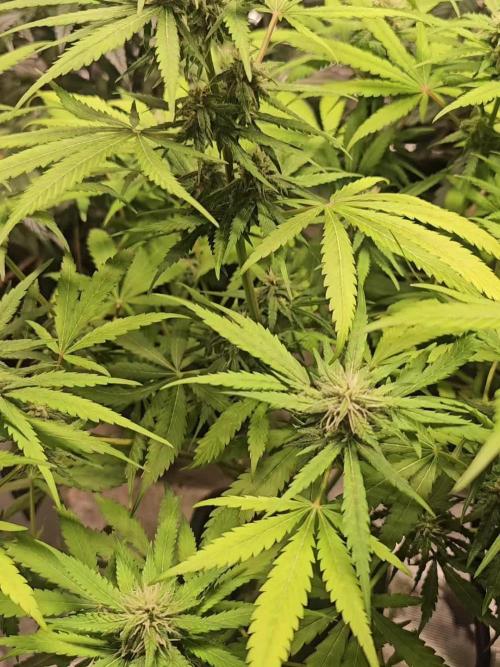
Last week's vidoe. For some reason, it's taking like minutes to upload thirty second videos.
I will try my best to show the updated videos on a lot of these plants.Now i'm impressed with a lot of my autos growing in this naturally derived nutrient.Solution
Likes
21
Share


@GRow_M8s
Follow
- Drying for 3 days, the 2 airports-plants chopped and dried in the dehumidifier and the other 2 hanged upside down as they were.
- Humidity -> 40-50% and temps -> 21-24C°.

Likes
17
Share


@MasterKush714
Follow
THE BIG UPDATE GANG!!!!!!! ✨✨✨😎👌🌱🥦🌳
So starting the 5th week of veg, the girls are looking really really great, im already moving alot of
the smaller babies out of there which i was growing to help out mama dukes for her garden, gotta
help where we can, so anyways now i have more room, im going to be going to DC for 6 or 7 days
but i have the scheduling set, will be minimal updates as im away but ill try to keep posting and yea
hope all is well with everyone, again as always any and all advice is always greatly appreciated, FYI:
i did start some LST on the plants but i decided to wait a bit longer and use garden wire instead of
steel wire, again all advice is appreciated thanks guys!!!!!!!!!!

Likes
28
Share


@Trickybis82
Follow
Lovely to smoke. With a great weight given the set back with nute lock. Which Is the downfall to this run. Because this happened In last 3weeks which certainly resulted in small buds. However I am totally pleased with final weight and smoke from.this girl. Xx

Likes
5
Share

@Chucky324
Follow
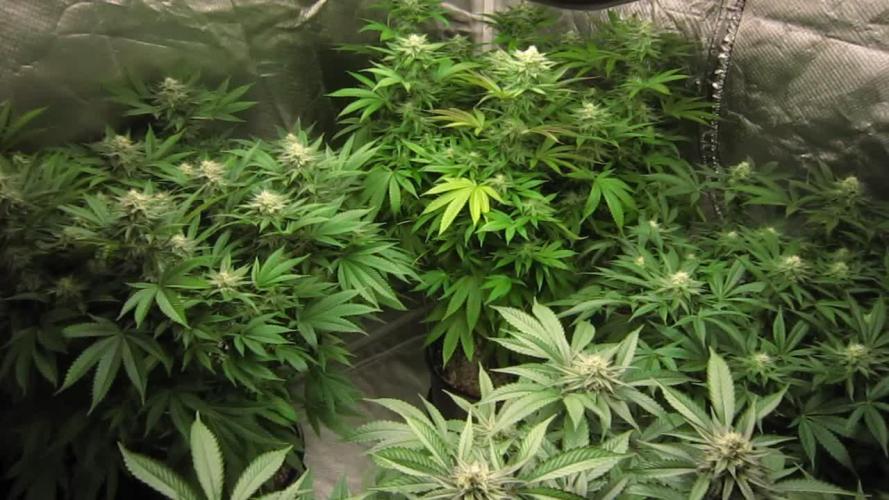
Hello. This is the end of week 5 and the beginning of week 6 of flowering.
It's going good in here. About 5 more weeks to go before harvest. And I flush for the last 2 week.
Starting to get some good resin flow going now, that's slippery to the touch.
Got some nice smells going on now with these girls. Sweet Citrusy Goodness.
They are getting a couple of watering's a week now. They are looking good.
Well we've come to the end of Weirdo #13. Hope it didn't offend anyone... it's only art!!!
I'll find something else to fill that spot for next week.
OK. Have Fun...
Chuck.


Likes
5
Share


@Ninjabuds
Follow
It's been a great week for the seedlings! They've really taken off and are looking strong. I'm planning to transplant them into larger pots in the next few days, so next week's photos should show some impressive growth. I'm so excited to see how they thrive in their new homes! I've been giving them distilled water from the start, and I'm still doing that, but I just started adding 10 milliliters of Fox Farm Big Bloom and 1 milliliter of Fox Farm Grow Big. All of the seedlings are doing really well, and there's not really any visible difference between all the ten strains. I started all ten packs of each strain and kept all the best seedlings, so that's why they're all doing so well.
