


Processing
Likes
Comments
Share


@Mr_sheep
Follow
As we enter week 6 (day 35) got all except the sogka showing flower. Don't think it's too far behind tho... Added a drop of pk as some showing they are needing the extra phosphorus... Also dropped down to 18/6 to try promote a bit of stretch on the secondary colas
On other notes lst has gone generally extremely well and will definitely need to look at more defoliation as we progress
After a damn good feed day 35 defoliated on day 36 (see pics)


Likes
8
Share


@Staffedition
Follow
Привет друзья мои!
Моё растение во всю цветёт и пахнет!
Этот малыш явно хочет жить и не сдаётся!)
Вот я понимаю стремление.
Кустик маленький но мне нравится.
Всем мира и добра и хорошей генетики!

Likes
Comments
Share

@ellioschka
Follow
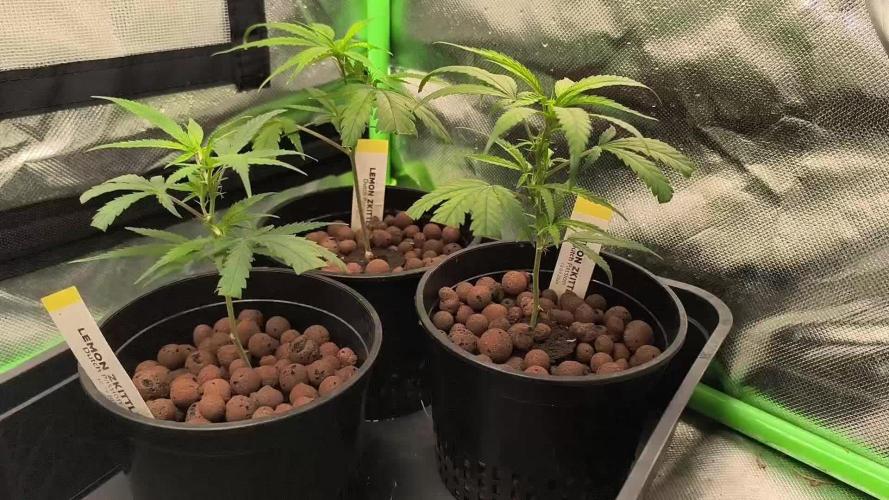
Stecklinge kamen innerhalb eines Tages per Overnight Express von MannyT. Richtig schöne Pflanzen, kerngesund und tolle weiße Wurzeln! 👌
Frisch angekommen durften sie sich kurz ein bisschen am Fensterbrett in der Sonne ausruhen und wurden dann ins Aufzuchtzelt gestellt. 30W Licht für 2 Tage zum Abfangen des Transportstress, danach dann 100W vom Spinnenbauer. 😊
Danach wurde in 1L Gitternetztöpfe gefüllt mit EuroPebbles umgetopft. Der Blähton wurde vorher mit ausreichend Alpine Nutrients 3-Part Düngelösung gespült und geprimed. (3-Part Düngeschema für Hydroponik, Woche 1-2 Roots. pH 5,7 mit Schwefelsäure eingestellt)
Um das Durchwurzeln der Pebbles zu gewährleisten, wurde darauf geachtet, dass die Pebbles immer wieder etwas rücktrocknen, bevor erneut gegossen wurde. Zwei mal am Tag zusätzlich Blattapplikation des gleichen Gießwassers via Sprühflasche.
Bei den Lemon Zkittle war an allen Stecklingen eine kleine Vorblüte zu sehen was für das Alter der Genetik spricht. 😇
Code für 15% Rabatt auf top Stecklinge und genialen Dünger:
AlpineNutrients15 (auf mannyt.at)
MEHR-ERTRAG-15 (auf alpinenutrients.com) 💪😎

Likes
7
Share

@Dagnele
Follow
Flowering Update – Late Flower
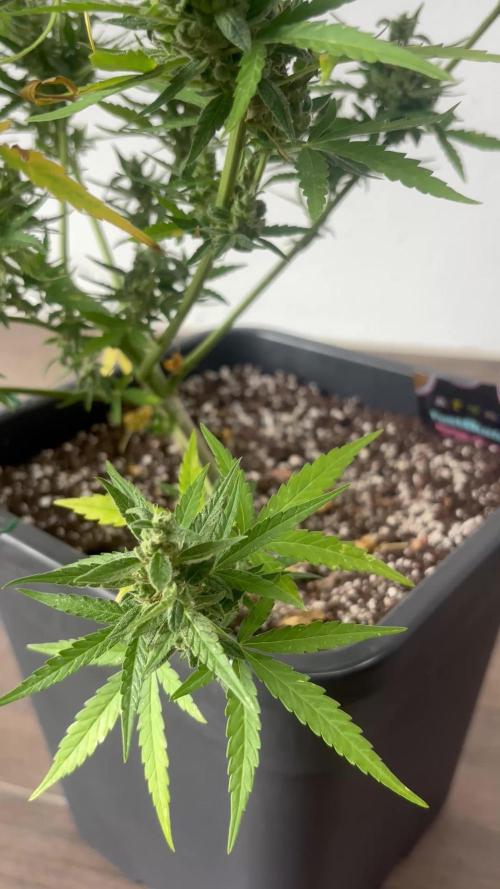
This week the plants continued to bulk up, and the buds are noticeably denser than before. The trichomes are becoming increasingly cloudy, showing that harvest is getting close.
The weather has improved compared to the previous heat wave. Daytime temperatures are around 33°C, while nighttime temperatures have dropped to about 20°C. The larger day/night temperature swing has finally triggered some purple coloration on the Banana Purple plants, which was a pleasant surprise after weeks of waiting.
Overall, I’m very happy with how both the naturally grown plants and the LST-trained plants turned out.
One interesting observation is the difference between the Sour Jealousy plants:
* The natural plant developed fewer but much larger and thicker colas.
* The LST plant produced more flowering sites, but the individual buds are noticeably slimmer.
This suggests that, at least in my setup with autoflowers and relatively small pots, LST increased the number of buds but didn’t necessarily improve the overall size of each cola.
The Banana Purple plants are clearly the most advanced. Most pistils have turned orange/brown, and the trichomes are mostly cloudy. They appear to be about one week away from harvest.
The Sour Jealousy plants are slightly behind and will likely need another 1–2 weeks to fully mature.
After gradually reducing the flowering nutrients, I decided to stop feeding ATA Terra Max completely on the Banana Purple plants and continue with plain water until harvest. The Sour Jealousy plants will receive one or two light feedings before switching to water only.
I also changed my watering routine. Instead of watering daily, I now water only when the pots feel light, allowing the root zone to dry slightly between irrigations. This should improve root oxygenation and avoid unnecessary stress.
Overall, despite the extreme heat earlier in flowering and even a hailstorm that damaged several fan leaves, the flowers remained intact and continued developing well. I’m very satisfied with the progress and excited to compare the final yield and quality between the naturally grown plants and the LST-trained ones for both Banana Purple and Sour Jealousy.


Likes
4
Share


@SaFiyaFarms
Follow
Week 9, 3 gal transfer into 7 gal....Healthy no pesticides problems or Nutrient deficiencies at all before the flip to

Likes
9
Share


@Canadian
Follow
Looks like the plant is reaching its final weeks and has been doing great in my garden and is looking fantastic from now on pH water and calmag. looks Like it is within 1% of Amber so still a few days to go normally I will cut out all the fan leaf and a few Sugar Leaf then take down the entire plant and hanging upside down but because the place where I dry is the same tent but this time around I'm probably going to need to create a dry box cut them down into more manageable size because the other girls in my tent well take more than a few weeks I also can see how much of a difference does it make between hang them upside down and drying them like this thank you for reading I will continue to update have a happy grow

Likes
53
Share


@Roberts
Follow
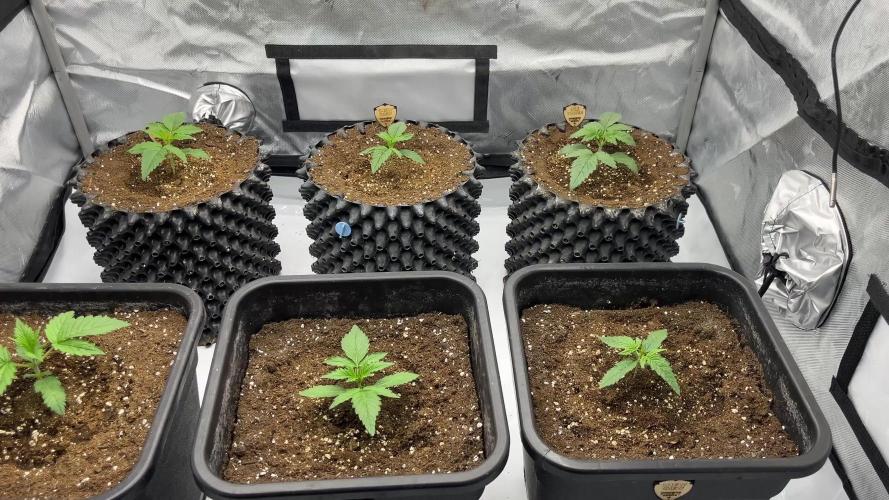
Merlin Mintz is looking good. She is finishing up bulking. She will go to ph water in a few days for a flush. The next update will likely be the harvest. Everything has gone well. The colas have a nice color, and smell. Thank you Aeque Genetics, Spider Farmer, and Athena. 🤜🏻🤛🏻🌱🌱🌱
Thank you grow diaries community for the 👇likes👇, follows, comments, and subscriptions on my YouTube channel👇. ❄️🌱🍻
Happy Growing 🌱🌱🌱
https://youtube.com/channel/UCAhN7yRzWLpcaRHhMIQ7X4g

Likes
19
Share


@Comfrey
Follow
Plant is 21 cm high because of low stress training. The length of the stem is 34 cm.
Day 43
☁️🌧️☁️🌧️⛈️ 14 - 17 degrees, humidity is about 72 %
I prepared some simple comfrey manure for the next weeks of flowering. It‘s rich in silica and tannins and essential minerals. Mostly all fruit vegetables and flowers like it, so Tropicana will have it as a tee or head fertilization, as well as in her water mixed 1:20 and 1:5. Same procedure like with tomatoes or peppers. No watering in the next days. The soil is soaked with rainwater.
The growth is a bit slow in the last cold and rainy days but the flowers look nice.😊
Day 44
☁️☁️🌥️☁️🌥️ 14-20 degrees and humidity is around 64 %
Day 45
⛅️☁️🌧️☁️🌧️ 13-21 degrees and humidity is around 69 %
The flowers started to stack. The soil is too moist but I can‘t change here a lot. Don’t need too water in the neuerer Future and aafe water for late summer. Think when I can drink my next relax tee - take same leafs. Now Tropicana needs all of them for transpiration. Heavy pots. Too wet springtime. 🌧️☔️
Day 46
☁️🌥️⛅️🌤️ 13-19 degrees, humidity is falling. Windy. The flowers are stacking up. 🐞🐞 did their job and left. With them the mites disappeared (hide). But I found some eggs under the leafs off all three of my cannabis plants. So I will have an eye on this… balcony problem! Wait some more days and bring a couple of 🐞 again. Found some magnifying glass and it suits with my camera lens.
Day 47
🌤️☀️🌤️ 11-22 degrees, humidity 89 % and getting even higher this night. Took out two leafs.
Day 48
🌤️🌤️🌤️ 17-23 degrees, humidity 89-43%, falling!
Tropicana got a liquid breakfast this morning made out of two liter rainwater with 20% ready comfrey manure which is rich in silica and tannins and essential minerals. Be careful with liquid manure as you should have experience in giving high doses. Never more then 20% of the watering on moist soil and never give it pure and after the water. It will burn the roots. This is very fresh, only one week old and not too concentrated. Next week I will give maybe 10%. So, we just enjoy a sunny morning with a healthy breakfast and coffee! 😊
Day 49
⛅️☁️🌥️ 10-20 degrees and humidity is 91%. Tropicana got thirsty. She drinks more, 0-5-0,75 liters rainwater. I will never use black pots again, too warm soil on the sunny side and the water evaporates faster. I‘m quit lucky with my new hobby and with my beautiful Tropicana. Time for a relax tee. Took some leafs off plant no. two and three.
Likes
7
Share


@hooolian
Follow
12/11/2021 - held in a glass of filtered water for 24 hours and then used the paper towel method for 48 hours. Seeds planted today in 6 litre pots to germinate before being moved to 15 litre pots on week 3 of veg. high humidity this week - 70% - and 100ml of filtered water every other day.
16/11/21 - all 9 have broken the soil and are stretching slightly to the light
20/11/21 root juice


Processing
Likes
8
Share


@ThatoneAKguy
Follow
Off to the races. I couldn’t get them to start taking up nutrients low and behold a temp change of 4 degrees from 73 to 77 switched it up and now they are doing their thing. I topped one, fimmed on and left the last one alone but they will all receive low stress training about 10 days from now and I will then try to get them to about 30” before flipping the switch.

Likes
3
Share


@DieMysticBlomtuin
Follow
Glass of water until taproot is out looking for water. Transplanted to paper cups with drainage holes. Covered with clear plastic cup or glass for humidity. Feeding light organic root stimulants.


Likes
1
Share

@Mexicanasseeds
Follow
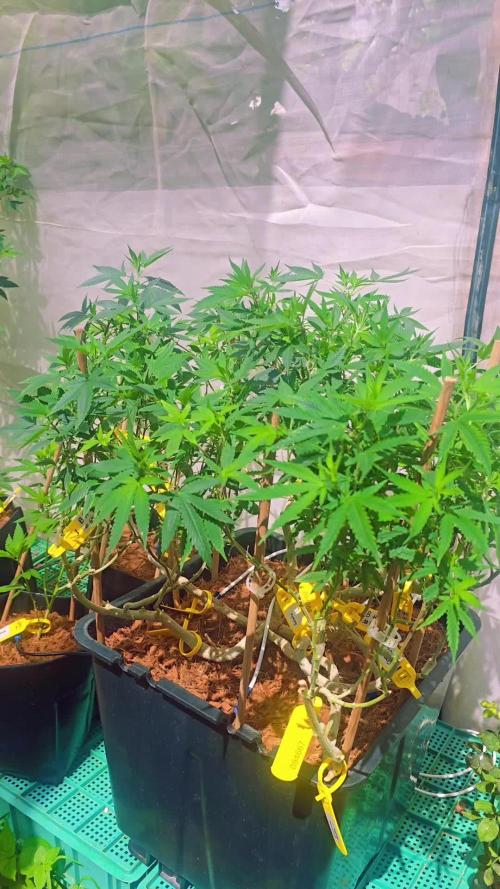
Actualización: Día 1 de Floración (Fotoperíodo 12/12)
Proyecto: Conservación Genética y Evaluación Fenotípica en Planta Madre Multi-injertada
1. Infraestructura y Manejo Ambiental
Ubicación e Instalaciones: Floración en invernadero de exterior.
Protección
Fitosanitaria: Malla anti-trips de alta densidad para exclusión biológica y prevención de vectores de virus.
Manejo de Radiación: Malla sombra tipo Raschel al 30% para la gestión de la radiación fotosintéticamente activa (PAR), reduciendo la radiación infrarroja y mitigando el estrés térmico en la canopia.
2. Física del Sustrato y Zona Radicular
Composición del Sustrato: Mezcla inerte de coco en proporción 50/50:
50% Chips de coco: Aporte de macroporosidad, aireación y prevención de compactación.
50% Fibra de coco (granulometría media): Retención hídrica uniforme y óptima Capacidad de Intercambio Catiónico (CIC).
Portainjerto
Base: Jarilla Sinaloa (Landrace regional), aprovechando su alto vigor de exploración radicular para maximizar la absorción metabólica en la estructura del sustrato.
3 . Parámetros de Fertirriego e Hidroponía
Sistema de Aplicación: Riego por goteo con 8 micropulsos al día automatizado de alta precisión.
Nutrición: Solución hidropónica de formulación interna, ajustada a los requerimientos morfogenéticos del inicio de floración (stretch).
Rango de pH: 5.8 – 6.0 (punto dulce para la biodisponibilidad de fósforo, calcio, magnesio y micronutrientes quelados).
Temperatura del Agua / Solución: 24 °C constante para garantizar niveles óptimos de oxígeno disuelto (DO) y evitar choque térmico en la rizosfera.
Fracción de Lixiviación (Drenaje): 20% de drenaje por evento de riego, asegurando el lavado continuo de ventas excedentes en el bulbo húmedo y permitiendo el monitoreo exacto de la EC de salida.
4. Estado de la Canopia e Injertos (9) Variedades): Conservación de Germoplasma Élite (9 Clones)
Banana OG, Cookies, Gelato, Black Domina, White Kush, GSC, Skywalker OG, Critical Kush, Cheese & Kush.
5 . Consolidación Vascular y Transición
Consolidación al 100% de los tejidos xilemáticos y floemáticos en las uniones de injerto.
Estabilización hídrica completa bajo la presión de flujo del sistema de goteo, garantizando el suministro uniforme de la solución nutritiva a cada uno de los brazos durante la elongación inicial
Likes
2
Share
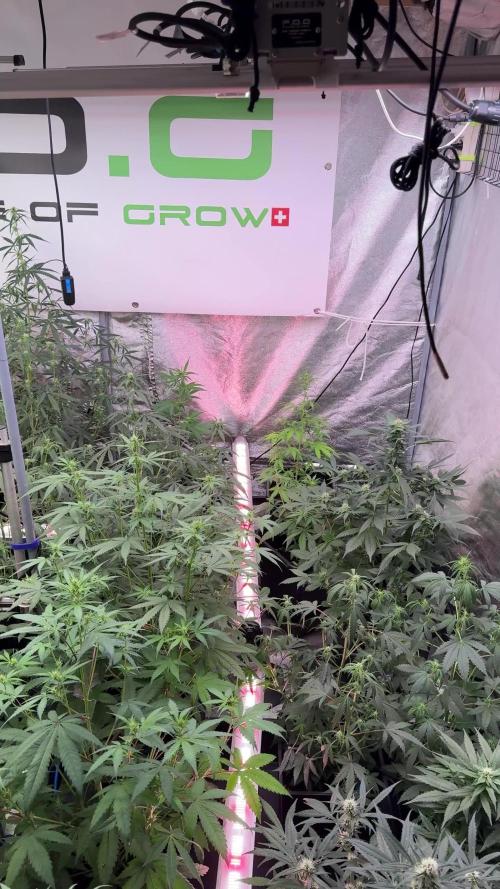

@DogDoctorOfficial
Follow
💜 Purple Haze by Zamnesia – Pheno A
Week 7 | A Lush Beauty Finding Her Rhythm
Welcome back to another chapter of the 8×8 Adventure!
Week after week, this room continues proving why phenotype hunting is one of the most fascinating parts of growing from seed.
Every plant shares the exact same environment.
The same lighting.
The same nutrients.
The same irrigation.
The same care.
Yet every diary tells a completely different story.
Purple Haze Pheno A continues writing hers with elegance.
She isn't the tallest plant in the room.
She isn't the smallest either.
Instead, she's quietly becoming one of the healthiest and most balanced ladies in the tent, and every time I unzip the door she's one of the first plants my eyes are drawn toward.
🌱 One Room. One Method. Twelve Different Personalities
If this is your first visit to the diary, welcome!
This entire project is built around the 12/12 From Seed growing technique.
Rather than giving plants a long vegetative period before flowering, every seed was placed directly under a 12/12 light schedule from the very beginning.
It's a technique that naturally keeps plants more compact while allowing them to reveal their genetic personality surprisingly early.
Every phenotype in this room receives exactly the same opportunity.
• The same Plagron nutrition
• The same lighting from the Future of Grow Black Series LED
• The same environmental control through TrolMaster
• The same AutoPot irrigation
• The same soil
• The same temperatures
• The same humidity
There are no favourites.
No special treatment.
No individual feeding.
The only thing that changes...
...is genetics.
Purple Haze Pheno A is beginning to show exactly what hers have in store.
🌿 A Plant You Can't Help But Admire
Some plants impress you with explosive growth.
Others with incredible colours.
Purple Haze Pheno A immediately catches my attention for another reason.
She's simply beautiful.
Her foliage is exactly what every grower hopes to see.
Large fan leaves.
Deep, healthy green.
Excellent turgor.
Strong petioles.
Every leaf looks like it's working exactly as nature intended.
Healthy leaves are far more than decoration.
They're the plant's solar panels, capturing light energy and converting it into the carbohydrates that fuel root growth, flower development and eventually resin production.
When foliage looks this healthy, it's usually a reflection of everything happening beneath the surface.
Healthy roots.
Balanced nutrition.
Stable environmental conditions.
She truly looks comfortable in her home.
🌸 Flowers Are Beginning to Tell the Story
Week 7 is where flowering really starts becoming exciting.
Every branch now carries clusters of bright white pistils emerging from small groups of swollen calyxes.
Those little white hairs are the pistils—the female reproductive organs of the flower.
In nature, their purpose is to catch airborne pollen.
Inside a grow tent they simply become one of the best visual indicators that flowering is progressing exactly as it should.
The calyxes surrounding those pistils are equally important.
Each one is the tiny building block that eventually forms the finished buds we harvest.
Right now they're still small.
But over the coming weeks they'll begin stacking together, swelling and filling with resin until individual flowers merge into the long, beautiful colas Purple Haze genetics are famous for producing.
Judging by how evenly the flowering sites are developing, she's laying an excellent foundation for the weeks ahead.
🍃 Letting the Plant Do the Work
One thing I've continued to avoid is unnecessary defoliation.
Throughout the early flowering period I've relied mostly on careful leaf tucking, allowing light to reach developing bud sites without removing perfectly healthy fan leaves.
Every healthy leaf is producing energy.
Removing them simply because they're large isn't always the best solution.
Sometimes the best training is simply understanding when not to intervene.
Purple Haze has responded beautifully to that approach.
Her canopy remains open.
Airflow is excellent.
The branches have plenty of space.
Nature has done most of the hard work for me.
💡 Lumiflora Under-Canopy Lighting
One exciting addition to this grow is the use of Lumiflora under-canopy lighting.
Traditional grow lights do an incredible job illuminating the tops of the plants, but lower flowering sites naturally receive much less usable light as the canopy becomes denser.
Under-canopy lighting helps change that.
By gently illuminating the lower sections of the plant, these fixtures help those secondary flowers receive additional energy without forcing aggressive defoliation.
They're not a magic solution.
They won't suddenly transform small buds into giant colas overnight.
What they do offer is another opportunity for lower flowering sites to remain productive while helping create a more evenly developed plant from top to bottom.
I'm genuinely excited to watch how they influence the remainder of this project.
💧 Feeding This Week
As flowering progresses, nutrition continues supporting the increasing demand for flower production.
This week's feeding schedule includes:
• Terra Bloom – 2 ml/L
• Power Buds – 1 ml/L
• Green Sensation – 1 ml/L
• Sugar Royal – 1 ml/L
• Pure Zym – 1 ml/L
• Careful pH adjustment using pH Plus and Lemon Kick
Everything remains balanced and consistent across the entire room, allowing each phenotype to express itself naturally.
🌡️ A Stable Environment Builds Strong Plants
Consistency continues to be one of the biggest successes of this project.
Current environmental conditions remain remarkably stable:
• Flower Week 7
• Height: 120 cm
• Day temperature: 29°C
• Night temperature: 25°C
• Relative humidity: 60%
• pH: 5.8
• EC: 1.95 mS/cm
• Solution temperature: 22°C
• Root zone temperature: 21°C
• CO₂: 639 ppm
When plants don't need to constantly adapt to environmental swings, they can dedicate their energy to what matters most—building flowers.
📷 This Week's Gallery
This week's photographs showcase exactly why I'm enjoying this phenotype so much.
The close-up shots reveal healthy clusters of fresh white pistils emerging from every flowering site, while the wider images highlight her beautifully balanced architecture and outstanding foliage.
One of my favourite details is the colour.
The rich green leaves frame the developing flowers perfectly, giving the entire plant an incredibly healthy appearance.
She isn't trying to steal the spotlight.
She's simply growing with confidence.
And sometimes that's even more impressive.
🔮 Looking Ahead
Over the next week I expect the stretch to begin slowing noticeably.
More energy should shift toward flower production as the calyxes continue stacking and the buds gradually start gaining volume.
I'm also very curious to observe the ongoing influence of the Lumiflora under-canopy lighting as the canopy becomes denser.
What I don't expect is explosive overnight change.
Purple Haze doesn't feel like that kind of plant.
She seems determined to improve steadily, week after week, building quality before quantity.
If she continues along this path, I have a feeling she'll become one of the most rewarding plants to harvest—not because she grows the fastest, but because she grows with remarkable consistency.
💚 Thank You
Thank you so much for following another chapter of this 8×8 Adventure.
Every week reinforces why documenting each individual phenotype has become one of the most rewarding parts of this journey.
Watching twelve unique plants express themselves under identical conditions continues to teach me something new every single week.
A huge thank you to:
💚 GrowDiaries for providing a platform where growers from around the world can learn, share knowledge, and inspire one another.
🌱 Zamnesia for providing the outstanding Purple Haze genetics that make this phenotype hunt possible.
💜 Plagron for supplying the nutrition supporting every stage of this grow.
💡 Future of Grow LED for delivering the light driving this entire project.
🌿 TrolMaster for helping maintain a stable environment where every phenotype can perform at its best.
✨ Lumiflora for bringing an exciting new dimension to this grow with their under-canopy lighting, and giving these lower flowering sites every opportunity to shine.
And finally...
Thank you to everyone following these diaries, leaving comments, asking questions, and sharing this journey with me.
Every week Purple Haze Pheno A becomes a little more impressive.
Not because she's trying to stand out...
But because she's quietly showing what healthy, well-balanced genetics are capable of.
Growers Love! 💜🌿

Likes
14
Share


@Kakui
Follow
11 Noviembre: Primer riego con 2.5EC y 5.9pH, runoff de 2.9EC y 6.2pH, en una semana más ya deberían estar recibiendo 3.0EC y seguir con esa concentración por todo el cultivo. Alturas están entre 15cm y 20cm.
13 Noviembre: Riego 2.5EC y 5.9pH, runoff de 3.3EC y 6.2pH. Hoy se removieron los primeros nodos de cada planta y se les hizo poda apical.
14 Noviembre: Riego 2.5EC y 5.9pH, runoff de 3.3EC y 6.2pH en la mañana. En la tarde se realizó transplante a maceteros definitivos de 5 litros con 4 litros de sustrato aprox. el cual fue pre cargado hasta la capacidad de campo, con 3.0EC y 5.8pH, desde este punto se debe esperar un par de días hasta que el dryback(secado) del sustrato sea de un 35-40%, lo cual vendría siendo el primer P3 del cultivo, una vez se alcance ese porcentaje de secado, se comenzará con los primeros riegos de precisión llamados P1.

Likes
2
Share


@Ninjabuds
Follow
Bubble og man these ladies loved being topped they were not growing the fastest before topping but after getting topped they have really been stretching out they very much have a scrog potential the branchs bend easily and have good distance between nodes to work with
The day has come and it's time to flip these ladies to flower. I was planning on letting them go untill Friday and let the smaller ones grow just a bit more but they will be fine. I have the eternity cup contest in mind and I'm thinking timing so I need to get these lady done and out my tent lol. This past week I turned the light up alot getting them ready to flower they have grown a bunch inhavendone lst maybe 5 it 6 times on the branchs and they arw nit bendy anymore that will help durring flower.

Likes
10
Share


@OS_Farmz
Follow
This week the blooming process started. All clones streched qute high already. Bented them under the scrog. The main-linig S.A.D. seems to look good as well.

