


Likes
Comments
Share


Likes
15
Share


@Roberts
Follow
Grape Octane is doing good. She is finishing up. I changed her to just water yesterday. She is on her flush, and fade time now. Next update will be the harvest. Thank you again Medic Grow, and ILGM. 🤜🏻🤛🏻🌱❄️
Thank you grow diaries community for the 👇likes👇, follows, comments, and subscriptions on my YouTube channel👇.
❄️🌱🍻 Happy Growing 🌱🌱🌱
https://youtube.com/channel/UCAhN7yRzWLpcaRHhMIQ7X4g.

Likes
12
Share


@eldruida_lamota
Follow
Que pasa familia, volvemos el viernes con las power plant xL del banco Zambezaseeds, la verdad que estoy sorprendido con el Aroma que desprenden estos ejemplares, es muy dulce y fuerte.
Han crecido bastante a diferencia del resto, sacaron brazos largos y llenos de flores.
Conseguimos bajar la humedad y eso se agradece por la etapa que afrontamos de floración. Estás tú ultimas semana sin añadiremos PK en polvo.
Hemos tutorado las power plant xL debido a la altura y el peso de la flor en si, ahorramos problemas futuros estás semanas y las centramos al engorde.

Likes
6
Share


@Ruind_greenery
Follow
She’s doing really well! We did see some damage to a few fan leaves that I thought could be caterpillars…but a thorough inspection turned up nothing. Will continue to monitor closely… but zero caterpillars so far *knock on wood* while the plant next to her has had a lot. This week we continue with build a flower, and kelp it real in her water. Doubt we’ll see much vertical growth as she’s bulking up the buds.


Likes
45
Share


@Ultraviolet
Follow
My homework.
Rubisco regeneration is intrinsically linked to nitrogen supply because Rubisco is a major sink for nitrogen in plants, typically accounting for 15% to over 25% of total leaf nitrogen. The regeneration phase itself consumes nitrogen through the synthesis of the Rubisco enzyme and associated proteins (like Rubisco activase), and overall nitrogen status heavily influences the efficiency of RuBP regeneration.Structural Component: Nitrogen is an essential building block for all proteins, and the sheer abundance of the Rubisco protein makes it the single largest storage of nitrogen in the leaf.
Synthesis and Activity: Adequate nitrogen supply is crucial for the synthesis and maintenance of sufficient Rubisco enzyme and Rubisco activase (Rca), the regulatory protein responsible for maintaining Rubisco's active state. Nitrogen deficiency leads to a decrease in the content and activity of both Rubisco and Rca, which in turn limits the maximum carboxylation rate, Vmax, and the rate of RuBP regeneration Jmax, thus reducing overall photosynthetic capacity.
Nitrogen Storage and Remobilization: Rubisco can act as a temporary nitrogen storage protein, which is degraded to remobilize nitrogen to other growing parts of the plant, especially under conditions of nitrogen deficiency or senescence.
Nitrogen Use Efficiency (NUE): The allocation of nitrogen to Rubisco is a key determinant of a plant's photosynthetic nitrogen use efficiency (PNUE). In high-nitrogen conditions, plants may accumulate a surplus of Rubisco, which may not be fully activated, leading to a lower PNUE. Optimizing the amount and activity of Rubisco relative to nitrogen availability is a target for improving crop NUE.
Photorespiration and Nitrogen Metabolism: Nitrogen metabolism is also linked to the photorespiration pathway (which competes with carboxylation at the Rubisco active site), particularly in the reassimilation of ammonia released during the process.
To increase RuBisCO regeneration, which refers to the process of forming the CO2 acceptor molecule Ribulose-1,5-bisphosphate (RuBP) during photosynthesis, the primary methods involve optimizing the levels and activity of Rubisco activase (Rca) and enhancing the performance of other Calvin-Benson-Bassham (CBB) cycle enzymes.
Biochemical and Environmental Approaches:
Optimize Rubisco Activase (Rca) activity: Rca is a crucial chaperone protein that removes inhibitory sugar phosphates, such as CA1P (2-carboxy-D-arabinitol 1-phosphate), from the Rubisco active site, thus maintaining its catalytic competence.
•Ensure optimal light conditions: Rca is light-activated via the chloroplast's redox status. Adequate light intensity ensures Rca can effectively maintain Rubisco in its active, carbamylated state.
•Maintain optimal temperature: Rca is highly temperature-sensitive and can become unstable at moderately high temperatures (e.g., above 35°C/95F° in many C3 plants), which decreases its ability to activate Rubisco. Maintaining temperatures within the optimal range for a specific plant species is important.
•Optimize Mg2+ concentration: Mg2+ is a key cofactor for both Rubisco carbamylation and Rca activity. In the light, Mg2+ concentration in the chloroplast stroma increases, promoting activation.
•Manage ATP/ADP ratio: Rca activity depends on ATP hydrolysis and is inhibited by ADP. Conditions that maintain a high ATP/ADP ratio in the chloroplast stroma favor Rca activity.
Enhance Calvin-Benson-Bassham (CBB) cycle enzyme activity: The overall rate of RuBP regeneration can be limited by other enzymes in the cycle.
•Increase SBPase activity: Sedoheptulose-1,7-bisphosphatase (SBPase) is a key regulatory enzyme in the regeneration pathway, and increasing its activity can enhance RuBP regeneration and overall photosynthesis.
•Optimize other enzymes: Overexpression of other CBB cycle enzymes such as fructose-1,6-bisphosphate aldolase (FBA) and triose phosphate isomerase (TPI) can also help to balance the metabolic flux and improve RuBP regeneration capacity.
Magnesium ions, Mg2+, are specifically required for Rubisco activation because the cation plays a critical structural and chemical role in forming the active site: A specific lysine residue in the active site must be carbamylated by a CO2 molecule to activate the enzyme. The resulting negatively charged carbamyl group then facilitates the binding of the positively charged Mg2+ion. While other divalent metal ions like Mn2+ can bind to Rubisco, they alter the enzyme's substrate specificity and lead to dramatically lower activity or a higher rate of the non-productive oxygenation reaction compared to Mg2+, making them biologically unfavorable in the context of efficient carbon fixation. The concentration of Mg2+ in the chloroplast stroma naturally increases in the light due to ion potential balancing during ATP synthesis, providing a physiological mechanism to ensure the enzyme is activated when photosynthesis is possible. At the center of the porphyrin ring, nestled within its nitrogen atoms, is a Magnesium ion (Mg2+). This magnesium ion is crucial for the function of chlorophyll, and without it, the pigment cannot effectively capture and transfer light energy.
Mg acts as a cofactor: Mg2+ binds to Rubisco after an activator CO2 molecule, forming a catalytically competent complex (Enzyme-CO2-Mg2+). High light + CO2) increases demand: Under high light (60 DLI is a very high intensity, potentially saturating) and high CO2, the plant's capacity for photosynthesis is high, and thus the demand for activated Rubisco and the necessary Mg2+ cofactor increases. Mg deficiency becomes limiting: If Mg2+ is deficient under these conditions, the higher levels of Rubisco and Rubisco activase produced cannot be fully activated, leading to lower photosynthetic rates and potential photo-oxidative damage.
Optimal range: Studies show that adequate Mg2+ application can enhance Rubisco activation and stabilize net photosynthetic rates under stress conditions, but the required concentration is specific to the experimental setup.
Monitoring is key: The most effective approach in a controlled environment is to monitor the plant's physiological responses e.g., leaf Mg2+ concentration, photosynthetic rate, Rubisco activation state, and adjust the nutrient solution/fertilizer to maintain adequate levels, rather than supplementing a fixed "extra" amount.
In practice, this means ensuring that Mg2+ is not a limiting factor in the plant's standard nutrient solution when pushing the limits with high light and CO2.
Applying Mg2+ through foliar spray is beneficial to Rubisco regeneration, particularly in alleviating the negative effects of magnesium (Mg) deficiency and high-temperature stress (HTS). While Mg can be leached from soil, within the plant it is considered a mobile nutrient, particularly in the phloem. Foliar-applied Mg is quickly absorbed by the leaves and can be translocate to other plant parts, including new growth and sink organs.
Foliar application of: NATURES VERY OWN MgSO4 @ 15.0g L-1 in a spray bottle.
Foliar sprays are often recommended as a rapid rescue measure for existing deficiencies or as a supplement during critical growth stages, when demand for Mg is high. Application in the early morning or late evening can improve absorption and prevent leaf burn.
The starting point [of creativity] is curiosity: pondering why the default exists in the first place. We’re driven to question defaults when we experience vuja de, the opposite of déjà vu. Déjà vu occurs when we encounter something new, but it feels as if we’ve seen it before. Vuja de is the reverse—we face something familiar, but we see it with a fresh perspective that enables us to gain new insights into old problems.
Likes
5
Share

@I_roll_my_own_420
Follow
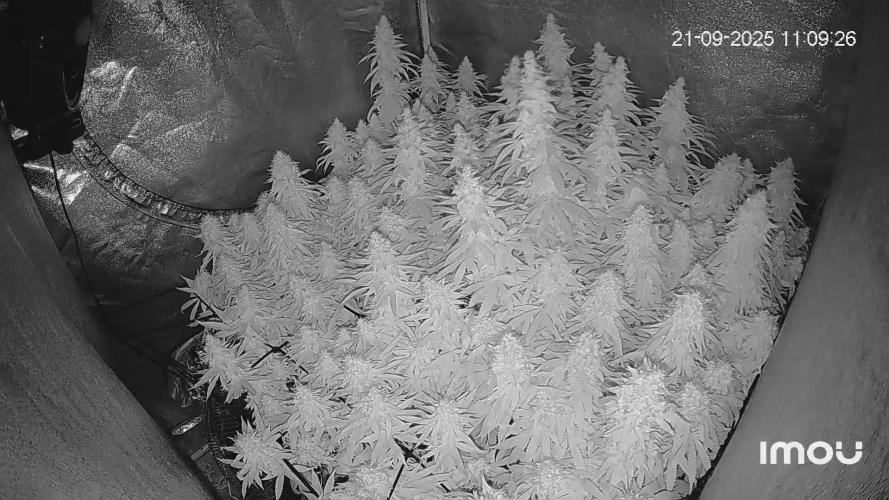
Last week of nutrients. Next week just pure water and after that, harvest


Likes
13
Share

@DimJesus
Follow
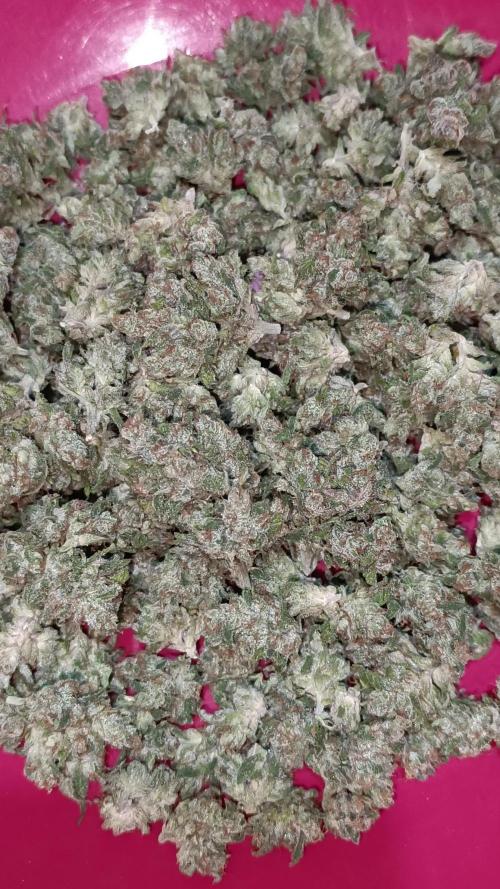
Última semana com cheiro muito forte e foxtailing, fiz bastante flush e o resultado tá incrível!





Likes
8
Share


@Elpicor
Follow
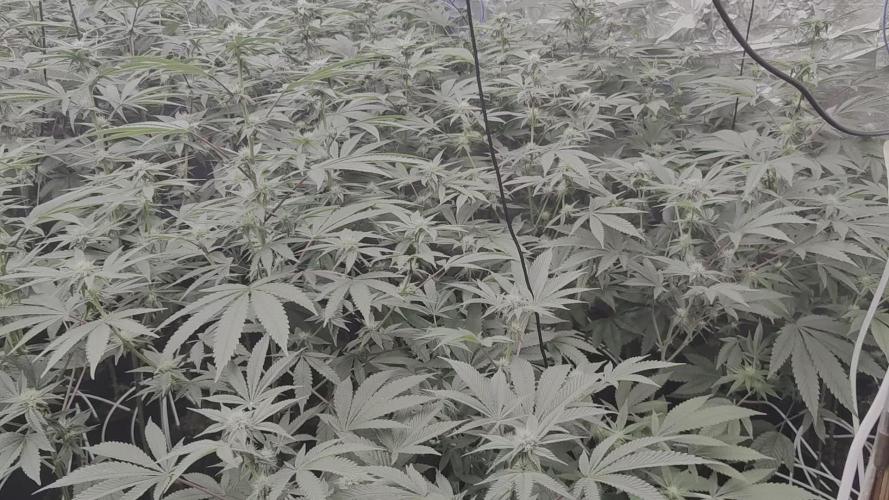
To get higher temperatures I placed the growbox near the radiator, dimmer still at 25%, boiled tap water also this week, this guaranteed me an ideal pp for the beginning, from now on I will use mountain water which will allow me to use less fertilizer.


Likes
7
Share


@Meksi2790
Follow
first week in flower will defoliate week after all plants look real good lolipopped and cleaned
Likes
Comments
Share


@BeginnerSG
Follow
Have been leaving the seedling alone... I set up a baby monitor in the grow tent so I can look at the temperature and humidity from my phone app without opening the tent all the time

Likes
45
Share


@Dingle
Follow
Hopefully close to lights out just a light watering when dry this week while they finish up.
The trichome development has been slower than I thought but I am checking daily and they still look to me like they are in the stage of turning cloudy with less and less clear ones showing along with a small amount of amber ones starting to appear more and more.
Some of the girls are developing a little slower than the others which is to be expected and they are fading in colour so it looks like they are consuming the last remaining nutrients from their reserves at different stages.
Lights out possibly tomorrow or the the day after all going well.
Hopefully the next update is the harvest. 🙌
Peace.

Likes
5
Share

@Abendkraut
Follow
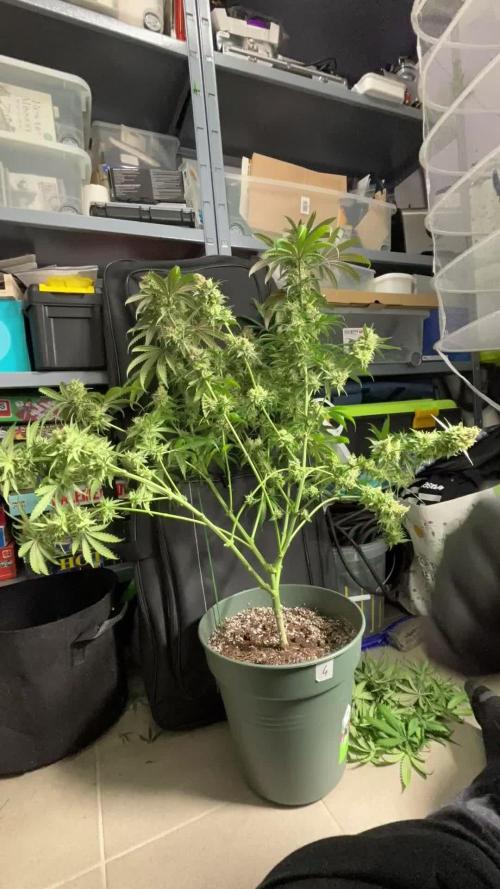
I harvested today and took the time to remove most large and non frosted leaves. I didn't realise how much weight the scrog was holding. once the net removed all 4 plants were unable to hold the weight. That's a good thing....I think.
I decided to go with another flo-week entry rather than using the harvest option on growdiary. I believe it asks too many information that I don't have at this point.
Processing
Likes
4
Share


@Cannibalgardens
Follow
This strain is one of my favourite to grow I'm addicted to the flavour and how fast she grows.. The team at @fastbuds have been very generous towards me and I'm happy to be growing out there strains ... She is healthy and will be growing a lot by next week cheers
Likes
8
Share

@BlaKX
Follow
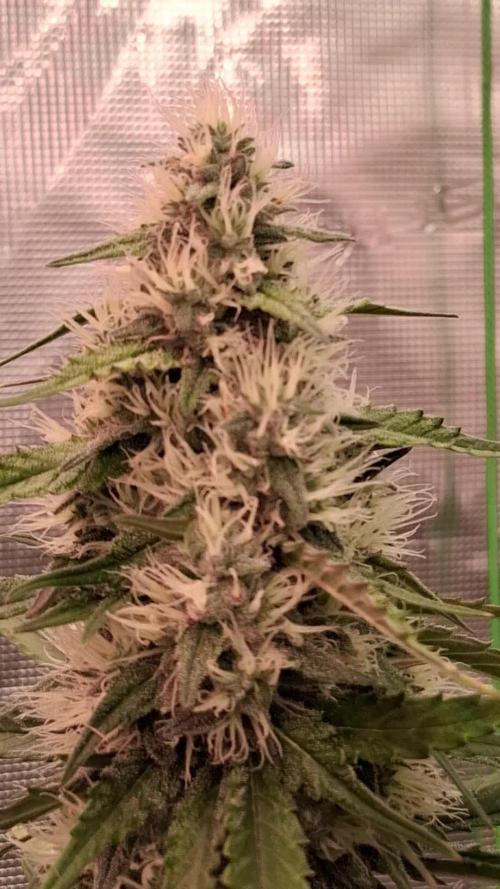
Woche 7 vorbei und die Guava Runtz Auto 🍈 hat zwar lange Blüten mit eindeutiger Sativa Dominanz !
Sie wird sicher 10 Wochen brauchen bis sie zur Ernte bereit ist!
Alles in allem keine Pollensäcke entdeckt!


