Likes
Comments
Share
@Naujas
Follow
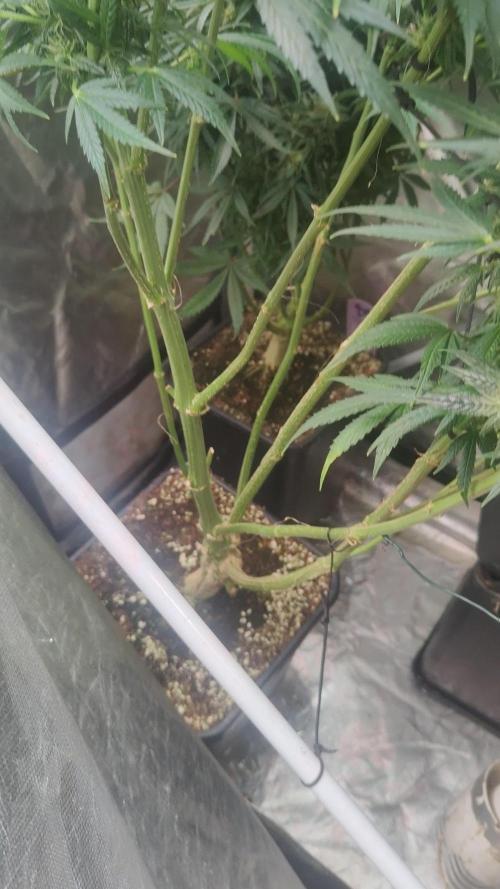
this is my 6th week video, because for some reason the video didn't load :(
Likes
8
Share
Que pasa familia, vamos con la cuarta semana de floración de estas Gorilla Girl F1 fast version de Sweetseeds. Vamos al lío, las plantas se trasplantaron a macetas de 7 litros. El ph se controla en 6.5, la temperatura la tenemos entre 24/21 grados y la humedad ronda el 50%. El ciclo de crecimiento puse 12h de luz, el foco está al 70% de potencia. Tengo visitantes, trips que combatiremos con control biológico. Me gustaría estar más encima este cultivo pero la salud me está impidiendo un poco este 100% con el proyecto. Con suerte la semana que viene andaré mejor. - os dejo por aquí un CÓDIGO: Eldruida Descuento para la tienda de MARS HYDRO. https://www.mars-hydro.com Hasta aquí todo, Buenos humos 💨💨💨
Likes
12
Share
Seguimos otra semana más de avance de este rincón de amnesias! Todo se ve en orden alguna que otra saturada de abono otras perfectas y otras un poco estresadas,por qué las mantuve cerca del foco pensando que al ser pequeños y de 100 w necesitarían estar más cerca pero de todo eso equivocado.. en el siguiente ya sabemos. Estamos ya con 58 días de floración y estimo que estaré con ella hasta el día 78. Está vez la dejaré madurar al punto de conseguir el mejor sabor posible y un efecto relajante nada paranoico. Seguimos metiendo abonos esta semana pero vamos a combinar un riego libre de solo agua y azúcares.
Likes
20
Share
😫Been a tuff week as my ph pen failed so had signs of defiantly But that’s now corrected so hope it didn’t set them all back too much
Likes
36
Share
Que dire mise à part que se strain est tous simplement magnifique ? Il porte bien son nom, il commence à être bien Frosty! Et la couleur violet commence à apparaître de plus en plus! Les bud sont beau et dégagent une belle odeur fruité, le plant a une sacré couverture résineuse, je pense qu’elle pourrais être parfaite pour faire des extraction! Cette semaine je lui ai donné un thé de compost oxygéné, on va voir comment elle va réagir. Recette du tco pour 20 litres. (Grammes : gr) 50gr biochar 250gr zéolite 3gr granulé Micro-Organisme IT45 10gr pollen d’abeilles 10gr levure de bière 3gr endomychorize 10gr consoude 20gr vers de farine 10gr cendre coque de ricin 12gr ortie microniser 15gr Kelp 10gr spiruline 10gr de cbd living soil 20ml de miel liquide 30ml de mélasse 20ml d’acide humiques et fluvic Mettre tous les ingrédients (sauf la mélasse ,l’acide h/f et le miel) dans un filtre 400micron, le placer dans un seau avec de l’eau (10litres). Rajoutez le miel et 10ml de mélasse Y mettre un micro bulleur alimenter sur une pompe à air et faire oxygéné le mélange pendant 24h. Rajout de 10ml de mélasse après 12h le début de la mise en route de la pompe. A la fin des 24h rajoutez le restant de mélasse et d’acide h/f, mettez y en plus 10litres d’eau au mélange. Reste plus qu’à arroser! Pour la Frosty j’y ai incorporé 7litre de mélange La veille j’ai préparé le pot à l’arrosage avec 500ml d’eau et 2gr de Bacillus IT35 Amyloliquefaciens X5 Bacillus Amyloliquefaciens : rhyzosphère, probiotiques. Aspersion et arrosage. Utilisable pour toutes cultures. La bactérie Bacillus Amyloliquefaciens se fixe dans la rhizosphère en se nourrissant des exsudats racinaires. En contrepartie, elle stimule la croissance racinaire en sécrétant des métabolites de croissance et solubilise le phosphore en sécrétant des phytases (enzymes). Effet probiotique consistant en l’utilisation de micro-organismes bénéfiques pour la nutrition et la santé des plantes. La spiruline, le plus riche et le plus complet des amendements organiques La Spiruline est une algue aquatique connue comme complément alimentaire, la Spiruline est aussi un amendement organique et écologique très complet. D'une grande qualité nutritive, elle apporte à vos plantes une quantité de nutriments, dont l'azote, phosphore, potassium, minéraux, acides aminés, vitamines, chlorophylle et protéine. Le charbon végétal actif est capable d’absorber jusqu’à cinq fois son poids propre en eau ainsi que les éléments nutritifs qui s’y trouvent. Il joue ainsi le rôle de catalyseur et d'amplificateur pour les fertilisants traditionnels, qu'ils soient d'origine organique ou minérale. Ce pourquoi il est idéal pour activer un sol et pour les thés de compost oxygénés. Le charbon végétal améliore la diffusion et la disponibilité des éléments nutritifs dans le sol et offre des conditions propices au développement des micro-organismes. Le Biochar peut être introduit dans une grande variété de sols. Il est particulièrement efficace dans les sols pauvres, difficiles et acides. Pour faire agir rapidement et efficacement sa capacité d’amendement, le charbon végétal est enrichi et biologiquement activé avec des micro-organismes. Le Biochar se comporte ainsi comme un structurateur et un activateur dans le but de valoriser les sols. Composition : • Charbon végétal actif 31%
• Matière organique 33%
• Matière sèche 75%
• C/N : 17
• PH : 7,2
• Azote (N) : 2,1 % dont 1,2 % azote organique
• Phosphore (P205) : 0,74%
• Potassium (K20) : 1,18%
• Calcium (Ca) : 6,8%
• Magnésium (MgO) : 0,65% Le pollen est l'ingrédient de base de la fabrication du miel par les abeilles. Riche en vitamines et minéraux, il est qualifié « d'aliment parfait », y compris pour les plantes ! Les zéolithes sont des roches cristallines, présentant des capacités d'adsorption particulièrement importantes vis à vis des polluants que l'on rencontre dans l'eau et dans certains liquides, ainsi que dans l'air et les gaz. Elles sont extrêmement poreuses comme les charbons activés et elles peuvent être chargées électriquement pour opérer comme des échangeurs d'ions. La zéolithe est un produit naturel qui respecte notre environnement. Utilisé dans le milieu industriel depuis de longues années déjà, ce minerai aux propriétés filtrantes particulières commence à se vulgariser dans le domaine de la piscine privée, de l'aquariophilie, des bassins d'agrément, de la récupération des eaux de pluie, ou encore de la culture des bonsaïs et autres plantations diverses par exemple... 4 points techniques majeurs : - Grâce à leur propriété hydrophile, les zéolithes peuvent adsorber l'eau jusqu'à 30% de leur poids total et sans aucune variation de volume : pas de gonflement en présence d'eau ni de craquement en cas de déshydratation comme certaines argiles. Les zéolithes sont d'ailleurs de puissants agents anti-mottant (anti-agglomérant). Cette propriété est très appréciée dans le cas des terrains de golf et autres aires de jeux. - Les zéolithes ne captent pas l'eau de façon irréversible, elles se comportent comme une réserve au voisinage des racines. Celles-ci peuvent capter l'eau en fonction de leur besoin. Les zéolithes permettent ainsi de réduire les besoins d'arrosage jusqu'à 35 %. - Une zéolithe se comporte comme une "Zone de Stockage" qui retient l'azote et les éléments minéraux nutritifs au voisinage des racines et les relâche lentement en fonction des besoins de la plante. Cela se traduit par une croissance harmonieuse mais rapide du végétal. - La capacité d'adsorption et l'énorme rapport surface/volume des zéolithes, vont permettre à la fois la rétention de la solution du sol et une bonne oxygénation au voisinage du système racinaire. Les zéolithes favorisent donc l'organisation biologique des sols en contribuant au développement de la micropopulation. L'apport en nutriments (N, P, K) est réduit de 20 à 25 %. Ces derniers, adsorbés par la zéolithe, sont beaucoup moins sensibles au lessivage et à l'évaporation. Composition minéralogique : * Chabasite 70 % * Phillipsite 2 % * Feldspath 5 % * Augite 3 % * Illite - Mica 2% Analyse atomique: * Sio2 52 % * AL2o3 17 % * CaO 5,7 % * K2O 6,1 % * MgO 2 %, * Na2O 0,6 % * Fe2O3 3,6 % Amendement calcaire, dolomie et gypse avec préparation microbienne à base de Bacillus Amyloliquefaciens IT45 et Saccharomyces cerevisiae LYCC6420 Formulation : micro granulés (1 – 1,6 mm) à base de rhizobactéries favorisant la croissance des plantes qui se multiplient et colonisent rapidement la zone des racines, et de levures Saccharomyces cerevisiae souche LYCC ayant un effet probiotique. Les PGPR produisent des enzymes qui solubilisent le phosphore à partir de complexes inorganiques et organiques dans le sol et stimulent la croissance des racines efficaces augmentant ainsi la zone d'interception des éléments nutritifs. Les levures LYCC permettent une occupation de la rhizosphère par une flore bénéfique. Composition :
• Matière sèche : 96,8%
• Matière organique : 91,5%
• N total : 6,6% dont N soluble dans l'eau 0,17%
• P total : 2%
• K total : 1,7% Micro-granulés : 
• Oxyde de calcium (CaO) total : 30%
• Oxyde de magnesium (MgO) total : 7%
• Anhydride sulfurique (SO3) : 13% La levure de bière est une matière vivante qui permet un meilleur fermentation pour les thés de compost oxygénés notamment conseillé pour accompagner les croissances ou apporter un gros coup de pousse pendant la floraisons.  La levure stimule la vie des sols également à l'arrosage direct en apportant tout aussi bien que dans le TCO sa population l'espèce micro-bactérienne positive pour votre sols ainsi que des oligo-éléments et diverse vitamines.   Composition : • 2,8% (N) total dont 1% (Norg), • 2,3% (P205) • 1,6% (K20) • 35% de MO • C/N : 8. PH : 8,4. Sous forme de poudre mouillable. Il contient des spores du champignon mycorhizien Rhizophagus Irregularis MUCL57891 avec des levures inactivées spécifiques. 2000 spores/gramme d’endomycorhize Rhizophagus Irregularis MUCL57891 et Saccharomyces Cerevisiae LYC6420 inactivée. Se connecte efficacement au système racinaire et forme un vaste réseau souterrain de filaments, qui agissent comme des extensions pour atteindre les nutriments et l’eau au-delà de la rhizosphère Composition : • Poudre contenant 2000 spores/g. d’endomycorhizes Rhizophagus irregularis  La Consoude (Symphytum Officinale) est une plante présentant de nombreuses propriétés. Particulièrement riche en Potassium (K) organique, la consoude est une alliée idéale pour les périodes de floraison. La consoude a tout pour plaire : riche en vitamine B12, elle agira également comme stimulateur racinaire, mais aussi comme biostimulant cellulaire, grâce aux alcaloïdes, aux allantoïnes et jusqu'à 30% de protéine ! 100% déjection de vers de ténébrions.
Très riche en microorganismes, le guano de vers de farine est une matière directement composté par les vers. En effet, c'est bien la digestion de matières végétales par des larves, insectes ou autres arthropodes qui valident le processus de compostage, que ce soit en zone de production de cultures d'insectes, pour le compost maison ou la dégradation de litière forestière. Les bactéries et autres champignons obtenus grâce au système digestif de nos vers, permettent la dégradation accélérée des éléments nutritifs dans vos supersoils, et les symbioses permettant l'assimilation des éléments nutritifs. Cette bio-activation intense mettra dans vos sols, à la disposition de vos plantes, un panel tellement varié de nutriments frais qu'il nous est aujourd'hui technologiquement impossible de pouvoir tous les nommer et de les compter.  Le guano de vers de farine fournit une grande polyvalence. Très équilibré, il s'utilise en entretien ou en apport ciblé seul ou en complément de d'autres amendements ou fertilisants organiques. Il agit comme un puissant activateur de sol et/ou de substrat. Cendre coque de ricin NPK 0,1-18,6-16,5. 0,1% (N-Azote), 18,6% (P205-Phosphore), 16,5% (K2O-Potasse), 11,7%(Ca0), 9,1 (Mg0) - Origine : Inde ACTION SOL • rend rapidement accessible au sol Phosphore, Potasse, Magnésium et Calcium. ACTION PLANTE • Apport aux stades agronomiques propices. • Produit riche en éléments fertilisants : combinaison NPK 35%. • Régularité de l’apport, milieu et fin de floraison. . Favorise la sénescence. Analyse chimique : • NPK 0,1-18,6-16,5 • N-Azote 0.1% • P205-Phosphore 18,6% • K2O-Potasse 16,5% • CaO-Calcium 11,7% • MgO-Magnésium 9,1% Ortie bio micronisée Stimule la vie du sol et la végétation. Composition : • 2,8% (N) total dont 1% (Norg), • 2,3% (P205) • 1,6% (K20) • 35% de MO • C/N : 8. PH : 8,4 KELP poudre
ascophyllum nodosum
- amendement sol Croissance et floraison - Meilleure germination - Meilleur développement racinaire Meilleure assimilation - Résistance aux stress osmotiques - Augmente la production de chlorophylle = plantes plus vertes = lumière mieux captée - Lutte contre le stress osmotique - Développement des Micro-Organismes dans le sol – Riche en vitamines, fer, iode, oligo-éléments, hormones de croissance auxines et cytokinines - Idéal en épandage et pour les thés de compost oxygénés. Important : notre Kelp est un goémon noir mais il n'est pas le varech bien moins fertile de la même famille qui est l'algue qui pullule et pollue la Bretagne, notre algue pousse uniquement à plus de 50 mètres de fond dans les grands courants froids au large de la Norvège.
Likes
60
Share
@Clutch
Follow
Hello again. Welcome to Week 6 or 7 😊 Buds are riping and starting to give a good smell. Minor problems with some caterpillars but the plant didn't take lot of damage, I guess I was lucky too spot it soon enough. Temperatures are far from ideal but she looks like she can handle it. It's kinda like 22° Celsius in a normal room. Barely sunlight and for fresh air she stands at an open door. No idea about the air humidity but It rains a lot outside😂 no chances on mold this way. With al the things I did wrong I'm pretty sure this is a very resistant strain. Some yellowing fan leaves but totally normal in this stage. It is what it is, I will be happy if I have something good to smoke from her. 2L water with 7ml Alga Bloom and 2ml Green Sensation was given. The soil was pretty dry and only a little bit of water went out on the bottom. Thinking this will be one of the last waterings with nutrients. Wanna be sure too flush soon enough since my Orange Bud last year only had one week of flushing. Any thoughts on that subject? Give me some advice. Happy growing friends 😉
Likes
10
Share
@Mr_Ewell
Follow
9 weeks from sprout. Week 3 in flower. Everything's going smooth.. i think. Had degrees up mid 90s for a couple days and plugged in the ac. My bedroom is cold as fuck now which has my closet ranging from 77 at night to 81 during the day. I really don't want any colder than that. They are starting to smell jus a little more these past three days. At first i didn't smell them unless i touched em for the most part. Ppms staying between 2000 and 2300... Playing the damn waiting game. I got some free time tomorrow. Maybe ill take some of them close up glam-style shots of some buds starting to form.
Likes
19
Share
🌌 Cosmic Noodles — Week 7 (12/12 from seed) Reading the plant, not the panic First of all — welcome to everyone new joining the diary. Quick recap below so nobody has to dig through old reports to understand how we got here. This is a 12/12 from seed run, which means there is no clean, universal “flower week.” Each plant decided on her own when to flip, stretch, and settle. That context matters for everything you’re about to read. ⸻ 🌱 Quick recap — Seed to Week 7 • Germinated and flipped 12/12 from day one • Early structure built with air training + metal clamps • Focus from the start was: • Structure over speed • Roots over tops • Stability over chasing charts • Plants developed strong internodes, upright posture, and open architecture • No rushing, no forcing — just guidance By Week 6–7, structure was locked in. Which brings us to now. ⸻ 🌡️ Room conditions (current) • 🌡️ Day temp: ~28 °C • 💧 RH: ~65% • ⚡ EC: ~2.4 • pH: ~6.5 • 📏 Height: ~40–80 cm • 💡 LED lighting On paper, some growers panic at 28 °C in flower. But here’s the difference between growing by numbers and growing by understanding. ⸻ 🍃 LED, leaf temperature & VPD (the part most people skip) Under LED, room temperature ≠ leaf temperature. LEDs don’t radiate infrared heat like HPS. That means: • A wall sensor can read 28 °C • While leaf surface temperature is often 2–4 °C cooler And plants don’t feel the room — they feel their leaves. That’s where leaf VPD comes in. If: • Room temp = 28 °C • Leaf temp ≈ 24–26 °C • RH = 65% 👉 Leaf VPD lands right in the comfort zone for early–mid flower. And the plants confirm it: • Deep, relaxed green • No tacoing, no stress-praying • Strong internodes • Uniform uptake across phenotypes That’s real data. We’re not ignoring numbers — we’re letting plant behavior be the final authority. Stability beats “fixing” something that isn’t broken. ⸻ ✂️ Defoliation — why it was heavier this time Let’s be clear: This was not aesthetic defoliation. This was functional defoliation. Context matters: • 🏠 8×8 room • 🌱 ~27 plants • 🌬️ Airflow, humidity pockets, and light distribution scale very differently Sometimes a single plant wouldn’t ask for defoliation — but the room does. Why we defoliated: • Improve airflow through a dense canopy • Reduce micro-humidity pockets • Let photons travel into the canopy, not just hit the top • Reset apical dominance • Refocus energy toward flowering sites Yes — I went harder than initially planned. But: • Genetics are strong • Roots are dialed • Feed is stable • Plants are healthy Healthy plants recover fast. Stressed plants don’t. These girls are clearly the first category. ⸻ 🌿 Plant-specific notes (this update) 🌀 Cosmic Noodles — air-trained plant • Fully defoliated • All metal clamps removed • Structure is now self-supporting • Training phase is complete • She doesn’t need guidance anymore — just space This was a key moment: We built what we needed. Now we step back. 🌿 Sister plant • Also defoliated, fairly deep • Naturally bushy, jungle-style growth • Needed opening to avoid future congestion • Likely will need another light defoliation later — purely structural Same treatment, same feed, same environment — just different expression. ⸻ ⚖️ Nutrition note — slight Cal/Mag signal We did notice very mild Cal/Mag-related signs on some leaves. Nothing alarming, nothing spreading. Important context: • We’re running Terra line, not Coco • Terra Bloom doesn’t supply as much Ca/Mg as Coco A+B • LED + fast metabolism = higher demand We’re adjusting calmly and watching how the plant responds, not reacting emotionally. This week is about observing recovery post-defoliation. ⸻ 🔮 What to expect (and not expect) Expect: • Short recovery window • Faster vertical focus on flowering sites • Improved airflow and light efficiency • Clean structure heading into bulk phase Don’t expect: • A “stall” — these plants are too healthy • A hard flush — we reduce EC gradually, we don’t starve • Identical timelines across plants (12/12 from seed = individuality) ⸻ Final words This diary is not about perfection. It’s about learning, observing, and adjusting with intention. Thank you to: • Everyone following quietly • Everyone asking questions • OGs, newcomers, lovers, skeptics — all of you • GrowDiaries for being the platform that allows open sharing • Sponsors and supporters behind the scenes • And the plants — always the real teachers This week we focused on structure, airflow, and understanding, not fear. Cosmic Noodles has a lot coming. And this was a necessary chapter. More soon 🌌🌱 📡 Please stay tuned they can try and take us down but we never quit https://www.youtube.com/@DOGDOGTHEDOCTOR NEW 🙏 Thank you for your patience and continued support. FOR DISCOUNT CODES AND MORE JUST FOLLOW THE LINK https://website.beacons.ai/dogdoctorofficial 📲 Don’t forget to Subscribe and follow me on Instagram and YouTube @DogDoctorOfficial for exclusive content, real-time updates, and behind-the-scenes magic. We’ve got so much more coming, including transplanting and all the amazing techniques that go along with it. You won’t want to miss it. GrowDiaries Journal: https://growdiaries.com/grower/dogdoctorofficial Instagram: https://www.instagram.com/dogdoctorofficial/ YouTube: https://www.youtube.com/@dogdoctorofficial Deleted by Youtube Vimeo : https://vimeo.com/dogdoctorofficial Under construction stay tuned ⸻ Explore the Gear that Powers My Grow If you’re curious about the tech I’m using, check out these links: 🔆 Lighting & Environmental Control • Future of Grow — Advanced LED lighting technology https://www.futureofgrow.com/ DISCOUNT CODE: DOG20 • Lumiflora — Under-canopy LED lighting https://lumiflorade.com/ • TrollMaster — Environmental controllers and automation gear (past collaboration) ⸻ Genetics • Zamnesia Seeds — Genetics used in this project https://www.zamnesia.com/ ⸻ 🌱 Soil, Substrates, Boosters & Root Support • Plagron — Substrates, bio mixes, and supportive products https://plagron.com/en/ ⸻ 🎒 Storage, Curing & Preservation • Grove Bags — Curing and storage solutions https://grovebags.com/ ⸻ 📸 Photography Equipment & Tools (Not sponsors, but part of my creative toolkit) • Sony A6700 • Sony full-frame macro lens + few more • Stacking photography workflow - learning • iPhone (for behind-the-scenes shots) We’ve got much more coming as we move through the grow cycles. Trust me, you won’t want to miss the next steps, let’s push the boundaries of indoor horticulture together! As always, this is shared for educational purposes, aiming to spread understanding and appreciation for this plant. Let’s celebrate it responsibly and continue to learn and grow together. With true love comes happiness. Always believe in yourself, and always do things expecting nothing and with an open heart. Be a giver, and the universe will give back in ways you could never imagine. 💚 Growers love to all 💚 📸 P.S. – The Eye Behind the Lens All photos in this diary (for now — except for the ones showing the camera, which I took with an iPhone) are taken with a Sony A6700 paired with a Sony full-frame macro lens and a few more. Photography is part of the story — it’s how we share the fine textures, the glow, and the quiet details that words can’t always capture. I’ve also started experimenting with photo stacking — a technique where multiple images, each taken at a slightly different focus point, are layered together to create one perfectly sharp image from front to back. It’s not digital enhancement or AI; it’s pure photography — a way to reveal the plant’s beauty in microscopic depth, from trichome to petal. You’ll even see a few shots of "ghost me" capturing the shots — camera, lens, setup — because every grow deserves not just to be cultivated, but documented like art. FOR DISCOUNT CODES AND MORE JUST FOLLOW THE LINK https://website.beacons.ai/dogdoctorofficial NEW DISCORD - Official Server Invite Link : https://discord.gg/ksjAkA5T74
Likes
Comments
Share
Just water some more everything is still going smoothly Doing a little topping and cleaning up the plants
Likes
28
Share
@BudVision
Follow
Hello growers, I harvested because she had completely consumed everything in her pot, so there was nothing left to wait for. The aroma is sweet and spicy, hard to describe but very pleasant. The bud is dense and beautifully colored. Peace and happy growing! ✌️
Likes
244
Share
And the time for Le Madame Freak Le Chick to come down as arrived!!! This was a wild ride , super emotional and repleted with amazing views, i totally advise everyone to try and grow this wild card , she is a treat and a blessing in our lives As always thank you all for stopping by , for the love and for it all, i fell blessed to have you all with me for one more love journey, and a different one form the rest i did so far <3 <3 <3 Thank you Thank you Thank you , you guys are great and have been amazing , thank you for everything <3<3<3 #aptus #aptusplanttech #aptusgang #aptusfamily #aptustrueplantscience #inbalancewithnature #trueplantscience #dogdoctorofficial #growerslove
 With true love comes happiness , Always believe in your self and always do things expecting nothing and with an open heart , be a giver and the universe will give back to you in ways you could not even imagine so <3 <3 <3 <3 <3 <3 Growers love to you all <3 <3 <3 Here are the words from this peace of art from nature creator Shapeshifter's @ HI-ELEVATION GENETICS <3 <3 <3 "FREQUENTLY ASKED QUESTIONS Q. How did you create/breed Freakshow? A. Methodical selection, line breeding, and culling is the short answer. Read our About page for more details. Q. Is it an indoor or outdoor type? A. Everything I've ever worked has been outdoors, including of course Freakshow. It has been our experience that outdoor (or sun grown, as it's recently being referred to) cultivars seem to perform extremely well under artificial conditions. This is true of seed starts or clones made from seed starts. The opposite is not always true; indoor clones often give an outdoor grower headaches because they don't always make the transition smoothly. This is due to light spectrum, temperature, and/or photoperiod changes. Yes, Freakshow will do exceedingly well indoors, and will thrive and mature just fine in a wide variety of natural environments as well, so it's definitely both and I think might even prove to be more resilient to those sorts of transitions. Q. What are the potency and terpenoid levels? A. Average 18-20% THCa, THC; negligible CBD, CBN with terps variable, averaging 2.5-3.5, primarily limonene and pinene, but this is variable, there was a lot of diversity in terp combinations and compositions in all the prior generations, it's just something that was left "as is" for now. The different parallel lines that we are developing can be directed in a few different pathways flavorwise. Q. Why are the seeds white? A. Why is the sky blue? No, the mature seeds are shrouded by a rice paper thin membrane which has coloring and mottling on it, but it's so fragile that it disintegrates in the process of shucking. Stripped of the outer layer the seeds are very pale, nearly white. It came as no surprise that this plant would have abnormal seeds. Q. Is it a GMO? A. Wow...? Well, it's seriously "modified" and the modifications are definitely genetic, and it is an organism. (Genuinely Modified Organically!) Uh, no. No radiation, no recombinant DNA, no gene splicing or editing, no TALEN or CRISPR! These biotechnologies don't belong in the food and medicine plant industries. Sadly, in the near future it will become commonplace and widespread in cannabis and other medicinal plants as it is already is with food crops and ornamentals. I'll avoid discussion on this topic for now, but we hope some people enjoy consuming Frankenbud! Q. What's the floral period length? A. 8-9 wks, finishes early Oct. at most latitudes and elevations. Q. Is it a big producer? A. Freakshow will produce nice, fat, dense colas (see gallery) with remarkable trichome coverage, and you can expect yields according to your veg. time, root space, and general knowledge and expertise as a gardener. The same set of variables apply to expected outcomes regarding cannabinoid levels and terpene profiles. Q.What is the lineage? A. (Bigbud x Skunk#1) x (Big Sur Holy Weed x Banana Kush). NLD("Sativa") dominant, but the afghanica influence is apparent. I'm pretty sure that Freakshow contains some Trainwreck and some Maui Wowie based on some research I did on the origins of the Pineapple Express. Interestingly Big Sur Holyweed, OG Kush, Banana, Trainwreck, and Maui Wowie are all of unclear origins. We have to remember that these are all just names and that they don't really mean much. The exact heritage of any cultivar today is impossible to determine accurately. Also, considering the amount of continuous shameless hybridization that has occurred in the last 40 yrs., any modern kind could easily contain over 40 kinds. In the case of Freakshow, it's much more limited because the ancestry is largely older "Sativas" that didn't go through as much outcrossing. In the 70s in Santa Cruz, Haze was a favorite among surfers for the pure energy and I still have (greatly improved) stock of it around, simply because even when I made hybrids with it I always kept the original in pure form for obvious reasons. Q. What is the psychoactive effect like? A. Like the flavors, many people have commented that the "buzz" is somewhat different than other mainstream types out there. It's not entirely out of the scope of imagination that given that this strain has new alleles in so many other respects, that it could also contain new, unique cannabinoids, as well as new and unique terpenoids, some of which may not even be among the standard 16 or so that the average lab is testing for. Aside from the up, cerebral, energetic boost, some report a mild time/space warp effect. Creativity and idea induction should be mentioned, for sure. Freakshow has the pure energy effect and greatly alters perception to the positive side, so definitely destroys depression. Appetite suppression is a side effect, but the enjoyment of food is enhanced. I personally will attest to all of the above. We all have different receptor profiles, so these are just generalizations. Couch unlock. Q. Is it pest and mildew resistant? A. Indeed it is. On many occasions in the last few years, it has been observed that when pest and mildew issues were affecting other plants adjacent to in the vicinity of Freakshow plants, for unknown reasons the freaks remained entirely unaffected. This includes 0botritis, PM, various mites and insects, soil fungus, etc. We haven't heard any complaints along those lines so far, so if anyone has any problems, especially with a rigorous IPM regimen in place, we would like to hear about it. And if anyone can attest to the extreme level of resistance it seems to have we'd love to hear about that as well. Q. Does it contain web-leaf genetics? A. I thought I better clarify this because there are a few people thinking that because of an article "Growing Marijuana that Doesn't look like Marijuana" that mentions that I had worked web-leaf types years ago and had eventually turned that into Freakshow. This is incorrect and I'm needing to get ahold of the writer to have him change it. When I read the piece and saw the mistake I figured it didn't matter that much, that the actual method of breeding could just remain a "trade secret". Recently, I noticed online that a posting, "Freakshow only exists because of duckfoot" by Curious Cannabis Connoisseur, where he explains how I developed Freakshow using Duckfoot. Let me explain, about 20 yrs. ago a friend gave me a jar of seeds labeled "BC Bigbud" and I sprouted flats of hundreds to look for oddities and had found one web-leaf pheno which we named Webster. It was a female so I bred it to a normal leaf male and began selecting and stabilizing a line of Webster. About 5 or 6 generations later I had nailed it to 100% webs and had also stabilized it for a deep purple color and a nice "gingerbread" terp profile. I was busy working other lines at that point so I put Webster in the library. Also, I was having a hell of a time getting a pheno of it that flowered to my satisfaction. (it seemed to finish with a limited number of calyxes). I knew I would have to outcross it to something with a big tasty bud and restabilize it for web-leaf, and I no longer had the original BC Bigbud. I still have the Webster seeds, and trust me the thought has crossed my mind to make the cross with Freakshow, but why? Why mess around crossing things just to create something even weirder? I have heard that the "Duckfoot" also doesn't bud up well so maybe there's a correlation there. Anyway, people can do what they want to and I will too, but crossing Freakshow with some low-THC crap like ABC is in my opinion idiotic. I worked extremely hard stabilizing and perfecting a beautiful new subspecies and I believe it should be kept pure. I won't go on a rant here about the rampant crossing and the lack of line-breeding in the cannabis world in the last several decades, or where this will eventually lead us, but I will say that it's not in a good direction. Bottom line....Freakshow has no web-leaf genes, it was made using top-grade tropical narrow-leaf drug (NLD) cultivars. Q.Why is Freakshow patented? A. Although I and most others (including all the folks at HSC) believe in and subscribe to the concept of "open sourcing" because sharing in cannabis genetics was always the cultural norm, it was decided that Freakshow should be protected (1) because it is a novel and unique, not a preexisting strain (or even subspecies), (2) To keep the greedy corporate big boys from exploiting it, (3) To maintain control of the genetic refinement of it in all future generations. We really can't wait to share it with the entire collective world of cannabis enthusiasts and invite experimental breeding for personal use and curiosity." source https://freakshowcannabis.com
Likes
12
Share
Week went smooth had to do some more defoliation doing one more next week and cleaning up all the bottoms and any fan leaves in middle that face inward to help light and air flow through em I been pushing these ppms I’m trying to get my ec uo to like a 6 rn it’s at like a 4 but it’s a work in progress
Likes
41
Share
The end is near! She now has mostly cloudy trichomes, checking every other day for the amber count to go up. I do think it will be maybe a week until harvest, but again I’ll let her trichomes decide when she’s ready. Her leaves are definitely in the fade stages. I decided to let her dry out for 3 nearly 4 days, as you can see in the pics. She’s has gone very droopy, but I’m confident her watering will perk her up, she is on just ph’d water now, and will be until she is ready to harvest. Checking the buds, no issues she smells amazing, it’s almost candy like it’s so pungent. Lovely sweet strawberries and ripe banana scent. I’m hoping she finishes well, after having such a good grow. Hope you all have a marvellous grow week 💚🌱🤘🏼
Likes
1
Share
@Ned_Grows
Follow
The plant structure is short and stocky with a good spread, strong stems with good bud support and dence vegetive growth with selective defoliation needed. The genetics are fairly stable with only 2 pheno's so far, one is pungent skunky smell the other is sweet and fruity smell with a more dence plant structure. The growth is rapid with a fast consistant veg and flower time, Germination time was day 1-3, Vegetation time week 1-4, Pre-flower time week 4-5 , Flower week 5-8, Harvest time week 9.
Likes
3
Share
17.09.25 BT#19 Servus ✌️ zusammen Einen Wunderschönen guten Abend 😁 die Mental Rainbow legt eine Performance an den Tag. Die Stigmen werden immer mehr die Lady ist in der Blütephase angekommen . Der Hesi Blüh Complex steigt um 1ml pro L der Hesi TNT Complex geht runter um 1ml/L Dann gab es heute noch Hesi Boost 2ml/L. Der PPFD wert liegt Aktuell bei 600 der PH wert im Medium wie Gießwasser 6,5. Wünsche allen ne gute Nacht bis nächste Woche zur selben Zeit. Stay High and chill 🙂 Mögen all eure Ladys Gesund und prächtig wachsen und euch mit schmackhaften Stuff versorgen 🤟 ■■■■■■■■■■■■■■■■■■■■■■■■■■■■■■■ 17.09.25 BT#19 Hello ✌️ together A wonderful good evening 😁 the Mental Rainbow is putting on a performance. The stigmas are getting more and more and the lady has reached the flowering phase. The Hesi Bloom Complex increases by 1ml per L, the Hesi TNT Complex goes down by 1ml/L Then today there was Hesi Boost 2ml/L. The PPFD value is currently at 600 and the PH value in the medium and irrigation water is 6.5. Wish everyone a good night until next week at the same time. Stay high and chill 🙂 May all your ladies grow healthy and splendid and provide you with tasty stuff 🤟
Processing
Likes
142
Share
Hi everyone :-) This week the buds developed super ;-) All are beautiful 😍. Super genetics 👍. Blue Cheese pheno 1 is slowly coming to an end :-) This week I will start to use up the remaining nutrients and harvest in 10-14 days ;-) Everyone else needs something else :-) have fun with the videos, stay healthy 🙏🏻 and let it grow 🌱
Likes
105
Share
@Hipichic
Follow
My experience overall can be best described as an interesting enlightening process. Since it was my first time growing it was definitely a learning experience. From the height being as tall as it was to the high winds in the area making it difficult to keep them from toppling when the buds were reaching full maturity. Thinking it would have benefited from more topping than just the once. The terps that this strain has are exquisite!! I am going to miss walking by them towering over me and just breathing in their berry cream aroma, taking in the sweetness like I had just had some dessert. Really enjoyed this strain and hope to grow it again sometime. Thanks for checking out my first grow 🌼💚✌️
Likes
7
Share
@wascanna
Follow
👹 Oni Seed Co. 🍭 Dub Trop BX1 // Dubble Trop x Tropicanna Cookie F1 🍓 Straw-Picanna // Strawberry Bananna x Tropicanna Cookies 🌿 Tropicanna Kush // SFV OG x Triangle Kush 🔥 Sunburn // TKT (Triangle Kush x Tangie) x Tropicanna Cookies 🍁 BLOOM WEEK 6 📅 Day 1 - Each drinking different amounts now 📅 Day 2 - Top dress SW-Bloom 📅 Day 3 📅 Day 4 📅 Day 5 📅 Day 6 📅 Day 7
Likes
24
Share
29 May 2021 I started the flowering stage yesterday, 5/28/21, and plan on defoliating and topping my Blue Ox baby today. I wanted to get any and all stressful alterations done before we got too far into flower to limit potential damage it can’t spring back from. The light is on a timer now, so from here on will be 12/12 schedule. I’m also adjusting the nutrients to flower, and starting this week at the “Transition to Flower” levels. I’m also starting to give a whole gallon of water for the first time as well. H2O was chilled to 41 degrees F, and contained: CALiMAGic 5ml, FloraMicro 7.5ml, FloraGro 7.5ml, and FloraBloom 7.5ml. The initial pH was 6.7, and didn’t require adjustment. The TDS going in was 807 ppm. Runoff pH was 6.2, and TDS runoff was 2103 ppm. The tent temp was 75 degrees F, and humidity was 50%. I practically stripped her naked today, and after finally getting a look at her branches will most likely do some LST in the coming days. I also took some cuttings to clear up space to control the grow better. I may try to clone them, but I haven’t decided yet. 31 May 2021 My Blue Ox is looking great! She adjusted to me practically taking all of her large leaves off without any issues. She looks so much better than she did before. I’m still using the “Transition to Flower” level nutrients with a gallon of chilled water (47.1 degrees F). I fed: CALiMAGic 5ml, FloraMicro 7.5ml, FloraGro 7.5ml, and FloraBloom 7.5ml. The initial pH was good at 6.8, and TDS going in was 924 ppm. The pH runoff was 6.2, and TDS runoff was 2400 ppm. Tent temp was 79 degrees F, and humidity was 44%.