Likes
Comments
Share
@4chuk
Follow
When I began the contest I had only grown Magic Melon once before (last winter), it grew in an 18 litre pot, became around 4 feet tall, and completely filled a 3'x3' tent. A friend of mine successfully grew a seed I gave them this summer in a container about 4 litres and the plant was considerably smaller. The fact that it can be successfully grown in less than 250mL is astonishing, I have buds from the one grown last winter that are bigger than the can I grew this one in. Harvested 91 days from sprout.

Likes
7
Share
@Nikkov
Follow
well, another week goes by and it's growing not like I expected hehehe but that's ok, living and learning, and for now I'll just wait for this cycle to end to start a new one and post it here and I'll tell you right away that I ordered a kit advanced nutrients starter and will test it on the new cycle. =D
Likes
47
Share
This plant is amazing!!! Growing so big, starting to see some real flowers on her now. Sorry didn't get any close up pics. Will next week. Has a lot of heat stress last week, had to give a really good trim at the bottom, to give good air flow!!! Happy with growth so far šŸ˜€šŸ˜€šŸ˜€šŸ˜€ Got some more photos, went to see her today. What a monster!!!
Likes
18
Share
Week 14 from seed, and these Lemon Cherry Gelato girls really turned into something special. Not monsters in height, but absolutely massive in presence, density, structure, and expression. The kind of plants that surprise you when you finally grab the branches in your hands and realize how much weight and resin they actually built under a 12/12-from-seed run. And honestly, I think the ā€œauto behaving like autos under 12/12 from seedā€ part deserves attention because it shaped the entire personality of this run: * compact structure * fast transition * heavy flower focus * manageable canopy * surprisingly thick stems and trunks * dense golf-ball-to-cola stacking By the end, the room almost looks autumnal. Deep yellows, oranges, fading greens, and swollen frosty flowers everywhere. That late-flower fade came in fast, but beautifully — and this is important to explain clearly because newer growers often panic when they see this. This wasn’t a deficiency disaster. This was the plant reaching the end of its natural cycle. As flowering progresses, especially late flower, the plant starts mobilizing stored nutrients from the leaves into the flowers. Nitrogen gets depleted first, chlorophyll breaks down, greens disappear, and the underlying pigments begin showing: * yellows * golds * oranges * reds/purples depending on genetics And because feeding had already been reduced heavily while the plants kept drinking aggressively, the fade accelerated naturally. The girls were essentially finishing themselves. You can actually SEE the energy redistribution in the photos: * leaves fading while buds stay swollen * pistils maturing * resin production peaking * calyxes stacking harder * stems thickening under weight And speaking of weight… those broken branches tell the story by themselves. No need to exaggerate anything there. When branches literally split under flower mass, especially in a relatively compact plant, you know the density became real. That stem split photo is beautiful because it captures the moment where biology and gravity start negotiating with each other. The trunk shots are wild too. Putting the Clipper lighter next to the base was honestly a perfect scale reference. You can immediately understand: ā€œOkay… these girls drank for a reason.ā€ And that’s another cool lesson hidden in this run: sometimes you only fully understand the watering behavior after harvest. Once the skeleton is exposed, the entire hydraulic system suddenly makes sense. Now onto harvest and drying. You made the right call not drying the entire plant whole in this case. These girls were dense. Breaking them into branches gives: * safer airflow * more even drying * lower mold risk * easier environmental control Especially with chunky late-flower flowers like these. The drying target sounds excellent too: * roughly 18–20°C * around 60% RH after the initial moisture release * gentle airflow, never directly blasting flowers And lowering humidity slightly during the first 24–48h to help the surface moisture escape before stabilizing is a very sensible move with dense material like this. Now the charas section is honestly one of the most beautiful parts of the update because it connects modern indoor cultivation to something ancient and human. Just handling fresh branches gave enough live resin to coat the fingers — technically charas, because it comes from fresh living plant material. That’s different from classic ā€œfinger hashā€ made during dry trimming. The distinction is subtle but important: * Charas = resin collected from fresh/live cannabis * Finger hash = resin collected while handling dried/cured material And charas has deep cultural and spiritual roots, especially in India and Nepal. For centuries, people in regions like the Parvati Valley and Himalayan foothills have hand-rubbed living cannabis plants to collect resin. Traditional makers — including sadhus and local hash makers — slowly work the flowers between the palms until thick dark resin accumulates on the skin, later rolled into temple balls or cream charas. Malana Cream became one of the most famous examples of this style: * handmade * live plant resin * mountain-grown cannabis * deeply tied to local culture and geography And yes, Lord Shiva is strongly connected to cannabis traditions in Hindu culture. Chillums, charas, bhang preparations, and ritual use all became intertwined historically with spirituality, celebration, meditation, and ascetic traditions. The bhang lassi mention is also a nice touch because many people outside India don’t realize cannabis has existed there culturally for centuries in forms beyond smoking alone. It adds depth to the update without glorifying anything artificially — more like acknowledging the historical relationship humans have had with this plant. Photography-wise, this report also feels like a visual progression of the entire grow: * studio shots * dark cinematic harvest scenes * fading leaves * macro structure * resin-covered fingers * exposed skeletons * hanging branches * trunk closeups It feels like documentation, not just ā€œbud pics.ā€ And the skeleton photos genuinely deserve their own moment because growers understand this feeling: after removing the leaves and flowers, you finally see the architecture that carried the entire run. Pure timber everywhere. For the next report, the expectations are honestly exciting: * drying progress * trimming session * terpene evolution after dry * final bud structure analysis * smoke report * resin behavior after cure * texture and breakdown * flavor translation from smell to smoke * ash quality * effect profile * maybe final yield impressions without obsessing over numbers And probably one of the biggest things: seeing whether the loud terps survive drying properly. Because right now, these girls ARE LOUD. And finally, yeah — thank everyone. The genetics. The nutrients. The LEDs. The environment. The gear. The platform. The old followers. The silent followers. The new people arriving now. The skeptics. The supporters. The people learning quietly in the background. A grow diary becomes more than a plant journal after enough weeks. It turns into a shared timeline people follow together. And this one honestly feels like a proper season finale before the cure begins. šŸ“” DELETED @ 1K Please stay tuned.we never quit https://www.youtube.com/@TheDogDoctorOfficial NEW šŸ™ Thank you for your patience and continued support. FOR DISCOUNT CODES AND MORE JUST FOLLOW THE LINK https://website.beacons.ai/dogdoctorofficial šŸ“² Don’t forget to Subscribe and follow me on Instagram and YouTube @DogDoctorOfficial for exclusive content, real-time updates, and behind-the-scenes magic. We’ve got so much more coming, including transplanting and all the amazing techniques that go along with it. You won’t want to miss it. GrowDiaries Journal: https://growdiaries.com/grower/dogdoctorofficial Instagram: https://www.instagram.com/dogdoctorofficial/ YouTube: https://www.youtube.com/@dogdoctorofficial Deleted by Youtube - https://www.youtube.com/@TheDogDoctorOfficial NEW Vimeo : https://vimeo.com/dogdoctorofficial Under construction stay tuned āø» Explore the Gear that Powers My Grow If you’re curious about the tech I’m using, check out these links: šŸ”† Lighting & Environmental Control • Future of Grow — Advanced LED lighting technology https://www.futureofgrow.com/ DISCOUNT CODE: DOG20 • Lumiflora — Under-canopy LED lighting https://lumiflorade.com/ • TrollMaster — Environmental controllers and automation gear (past collaboration) āø» Genetics • Zamnesia Seeds — Genetics used in this project https://www.zamnesia.com/ āø» 🌱 Soil, Substrates, Boosters & Root Support • Plagron — Substrates, bio mixes, and supportive products https://plagron.com/en/ āø» šŸŽ’ Storage, Curing & Preservation • Grove Bags — Curing and storage solutions https://grovebags.com/ āø» šŸ“ø Photography Equipment & Tools (Not sponsors, but part of my creative toolkit) • Sony A6700 • Sony full-frame macro lens + few more • Stacking photography workflow - learning • iPhone (for behind-the-scenes shots) We’ve got much more coming as we move through the grow cycles. Trust me, you won’t want to miss the next steps, let’s push the boundaries of indoor horticulture together! As always, this is shared for educational purposes, aiming to spread understanding and appreciation for this plant. Let’s celebrate it responsibly and continue to learn and grow together. With true love comes happiness. Always believe in yourself, and always do things expecting nothing and with an open heart. Be a giver, and the universe will give back in ways you could never imagine. šŸ’š Growers love to all šŸ’š šŸ“ø P.S. – The Eye Behind the Lens All photos in this diary (for now — except for the ones showing the camera, which I took with an iPhone) are taken with a Sony A6700 paired with a Sony full-frame macro lens and a few more. Photography is part of the story — it’s how we share the fine textures, the glow, and the quiet details that words can’t always capture. I’ve also started experimenting with photo stacking — a technique where multiple images, each taken at a slightly different focus point, are layered together to create one perfectly sharp image from front to back. It’s not digital enhancement or AI; it’s pure photography — a way to reveal the plant’s beauty in microscopic depth, from trichome to petal. You’ll even see a few shots of "ghost me" capturing the shots — camera, lens, setup — because every grow deserves not just to be cultivated, but documented like art. FOR DISCOUNT CODES AND MORE JUST FOLLOW THE LINK https://website.beacons.ai/dogdoctorofficial NEW DISCORD - Official Server Invite Link : https://discord.gg/ksjAkA5T74
Likes
16
Share
@valiotoro
Follow
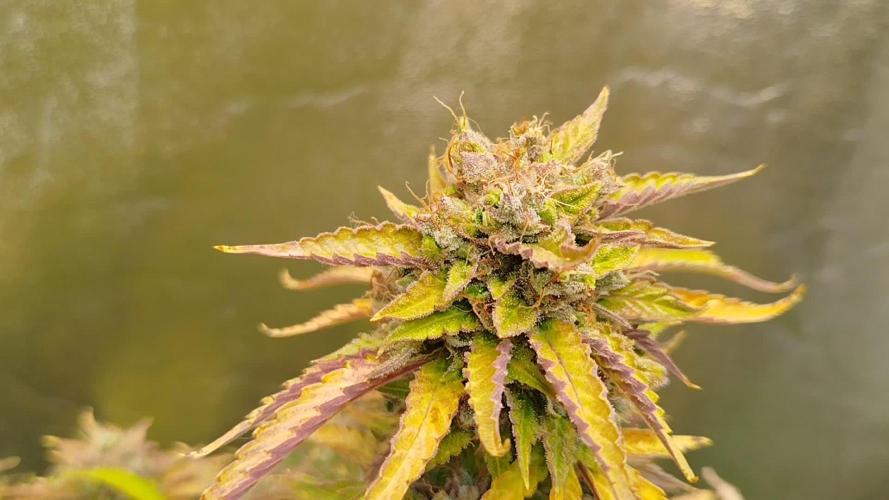
Hello everyone šŸ˜Ž Time for harvest my Tropicana Cookies auto from Fast buds after 10 weeks she looks beautiful with some purple color and amazing smell The buds are fat & frosty Have a nice day
Likes
10
Share
Day 16-27/12/21 doing very well!! Day 20-31/12/21 all looking good just waiting for space in my other tent so I can move half of them!!!!
Likes
13
Share
@Mackinnon
Follow
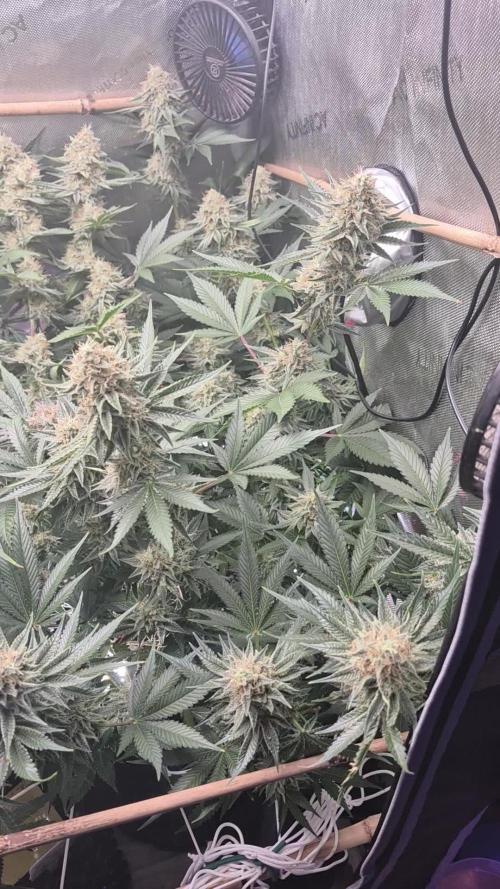
UPDATE : Day 27- these auto flowers have grown in very full .next grow will limit to 4 instead of 6 depending on final outcome but right now it’s looking very tight in there Separate Pics In week 3 are as follows 3|6 2|5<- Location chart 1|4
Likes
105
Share
Hello friends, I planted this plant as an experiment as you can see but today in day 17 from seed i decided to share this growth here coz it surprised me with the so far growth. Sorry for lacking photos from week 1 but i didnt take pictures.. she is under the sun whole day and 4 hours 250w HPS... and as you can see some leaves curled in coz she is too young for 250W hps 25 cm from her.. So far I foliar fed her and regularly watered, dilluted 2ml/L of B-52, 2 ml/L fitobacillus (essential bacterias and enzymes) and foliar sprayed her. With every watering so far i put 2ml/l fitobacillus and 2ml/ B-52 and mycorhizae in the very first and second watering. As you can see her main stem is already fatter than average for that time of growth and the root mass is so dense and thick, also many many hairs ready to absorb some nutes so tmrw will be her first nutes dosage, day 18 that will be from seed. I am hoping only that the pot size will not restrict her growth, as the roots already reached the bottom and started to curl back in.. but their colour is bright white and i have no worries bout rot or similar, at least so far so good :D Stay tuned brothers and sisters, all my grows are for you in order to learn ultra fast all the interesting and mind intriguing stuff by following only one grower. @James drop an eye here, you did a good job with genetics on this one.. Kisses to all from white and Team Wolfpack šŸ˜ŽāœŒļø UPDATE same day LOL I decided to transplant her to a 3 gallon fabric pot coz those roots got me so surprised and i prepared a good nutes mix for them.. you can see the health potion in the video that contains myco and nutes UPDATE 10.10.2107. Today i applied some more lst to maximally expose side branches to the sun. You will see some interesting pics and vids explaining my low stress training technique. I blv this plant's main goal in life to be LST'd. Dont be afraid, side branches will be thankfull and your harvest will be thankfull.. You can se some lst with side branches and how i tucked the leaves and made sure they stay there using the green wire and forming that shape on the pic. Today i also noticed a white hair showing up, still not sure if it is starting to flower in her DAY 19 from seed, or is it just "stress defending mechanism". Seems to me i will find out soon :)
Likes
6
Share
Vanilla Latte from Huboldt Seed Company seems to be very stron strain! others still going very well...
Likes
8
Share
@p4purr1
Follow
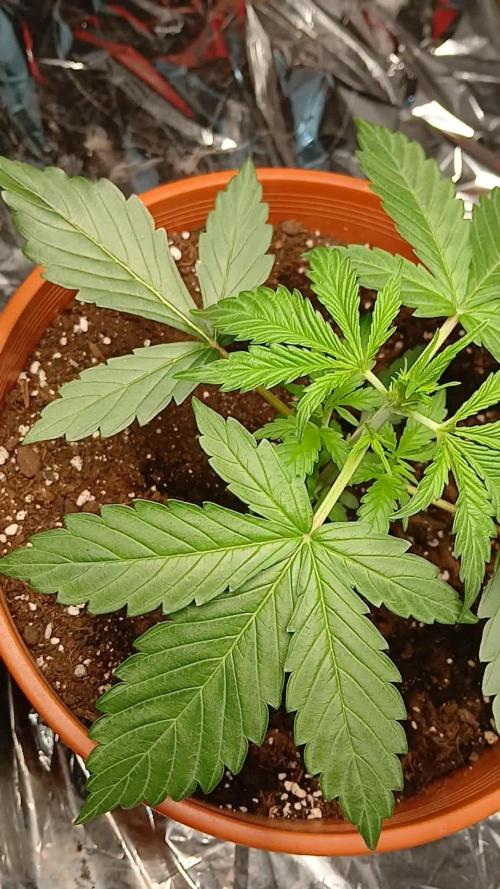
Last week I could notice the plant has a calmag deficiency, you can see the leaves with pale borders. However, it looks heatlhy after all, with big leaves and gaining height. I'm planning to use LST next week, when maybe she's recovered from the calmag deficiency. Let me know your thoughts!
Likes
7
Share
Likes
21
Share
Well this plant and strain has changed my mind about Sativa strains #boom she smells amazing and her buds solid !!!
Likes
28
Share
@m0use
Follow
SPONSORED DIARY===SPONSORED DIARY===SPONSORED DIARY Seeds finally popped up and out of the medium, giving them 24hr lighting till week 3 then will reduce it down to 18/6. Added in a few pics this week of the tent and light. nothing much else to report. SPONSORED DIARY===SPONSORED DIARY===SPONSORED DIARY Big shout out to @SpiderFarmer for supplying the 2x2x5 Grow tent and The SF1000 100w LED light. I will be uploading all relevant photos of the products in the next week when they arrive, maybe do a little unboxing video. Who knows. A 2nd big shout out to Dr.Seeds for supplying the 3x5pac of seeds I will only be featuring two of the three strains in two separate diaries. You the users will get to decide what ones I grow. I have setup a Grow Question on each diary to vote for your strain of choice for that diary. https://growdiaries.com/grow-questions/47600-drseeds-1-vote-what-i-grow "Diary #1" https://growdiaries.com/grow-questions/47600-drseeds-1-vote-what-i-grow "Diary #2" Cast your vote for each diary. Thought I would add in the relevant links if you wanted to read up on any of the products that will be officially featured in this grow. https://www.spider-farmer.com/ https://growdiaries.com/grow-lights/spider-farmer (+) https://www.spider-farmer.com/products/sf-1000-led-grow-light/ https://growdiaries.com/grow-tents/spider-farmer (+) https://www.spider-farmer.com/products/sf-2-x2-indoor-grow-tent-hydroponic-home-plant-reflective-aluminum-oxford-cloth/ https://drseeds.net/ https://growdiaries.com/seedbank/dr-seeds (+) https://drseeds.net/product/cherry-pie-autoflowering-cannabis-seeds/ (+) [No relevant GD affiliated link] https://drseeds.net/product/granddaddy-purple-autoflowering-cannabis-seeds/ (+) https://growdiaries.com/seedbank/dr-seeds/granddaddy-purple [Photoperiod not Autoflowering] https://drseeds.net/product/60-day-wonder-autoflowering-cannabis-seeds/ (+) https://growdiaries.com/seedbank/dr-seeds/60-day-wonder-autoflowering
Likes
55
Share
2nd net is up. Early bud formations are promising. holding up to the extremes pretty well, some leaves taking minor damage, but overall, she is holding up, gave her 1 night at 50F see how she would react, stressful. Not advised as it messes with her metabolism, but I want to see if it triggers any anthocyanin response. Love to see her purp up but no signs yet. Remember, For every molecule of glucose produced during photosynthesis, a plant needs to split six molecules of water. This process provides the hydrogen needed for synthesizing glucose and other organic compounds, while oxygen is released as a byproduct. Homework. If Rubisco activity is impaired and it cannot properly function or regenerate its substrate, the plant's leaves are likely to turn a pale green or lime green, a condition known as chlorosis. Essentially, Rubisco activity is highly regulated and susceptible to various environmental and metabolic factors that can cause it to become inhibited, leading to an apparent failure in RuBP regeneration due to a lack of consumption. Rubisco regeneration is intrinsically linked to nitrogen supply because Rubisco is a major sink for nitrogen in plants, typically accounting for 15% to over 25% of total leaf nitrogen. The regeneration phase itself consumes nitrogen through the synthesis of the Rubisco enzyme and associated proteins (like Rubisco activase), and overall nitrogen status heavily influences the efficiency of RuBP regeneration. RuBisCO is a very large enzyme that constitutes a significant proportion (up to 50%) of leaf soluble protein and requires large investments in nitrogen. Insufficient nitrogen supply limits the plant's ability to produce adequate amounts of RuBisCO, thereby limiting the overall capacity for photosynthesis and carbon fixation. Maintaining the optimal, slightly alkaline pH is crucial for the proper function and regeneration of Rubisco. Deviations in either direction (too high or too low) disrupt the enzyme's structure, activation state, and interaction with its substrates, leading to decreased activity and impaired RuBP regeneration. (Lime/yellowing) Structural Component: Nitrogen is an essential building block for all proteins, and the sheer abundance of the Rubisco protein makes it the single largest storage of nitrogen in the leaf. Synthesis and Activity: Adequate nitrogen supply is crucial for the synthesis and maintenance of sufficient Rubisco enzyme and Rubisco activase (Rca), the regulatory protein responsible for maintaining Rubisco's active state. Nitrogen deficiency leads to a decrease in the content and activity of both Rubisco and Rca, which in turn limits the maximum carboxylation rate, Vmax, and the rate of RuBP regeneration Jmax, thus reducing overall photosynthetic capacity. Nitrogen Storage and Remobilization: Rubisco can act as a temporary nitrogen storage protein, which is degraded to remobilize nitrogen to other growing parts of the plant, especially under conditions of nitrogen deficiency or senescence. Nitrogen Use Efficiency (NUE): The allocation of nitrogen to Rubisco is a key determinant of a plant's photosynthetic nitrogen use efficiency (PNUE). In high-nitrogen conditions, plants may accumulate a surplus of Rubisco, which may not be fully activated, leading to a lower PNUE. Optimizing the amount and activity of Rubisco relative to nitrogen availability is a target for improving crop NUE. Photorespiration and Nitrogen Metabolism: Nitrogen metabolism is also linked to the photorespiration pathway (which competes with carboxylation at the Rubisco active site), particularly in the reassimilation of ammonia released during the process. To increase RuBisCO regeneration, which refers to the process of forming the CO2 acceptor molecule Ribulose-1,5-bisphosphate (RuBP) during photosynthesis, the primary methods involve optimizing the levels and activity of Rubisco activase (Rca) and enhancing the performance of other Calvin-Benson-Bassham (CBB) cycle enzymes. Biochemical and Environmental Approaches: Optimize Rubisco Activase (Rca) activity: Rca is a crucial chaperone protein that removes inhibitory sugar phosphates, such as CA1P (2-carboxy-D-arabinitol 1-phosphate), from the Rubisco active site, thus maintaining its catalytic competence. •Ensure optimal light conditions: Rca is light-activated via the chloroplast's redox status. Adequate light intensity ensures Rca can effectively maintain Rubisco in its active, carbamylated state. •Maintain optimal temperature: Rca is highly temperature-sensitive and can become unstable at moderately high temperatures (e.g., above 35°C/95F° in many C3 plants), which decreases its ability to activate Rubisco. Maintaining temperatures within the optimal range for a specific plant species is important. •Optimize Mg2+ concentration: Mg2+ is a key cofactor for both Rubisco carbamylation and Rca activity. In the light, Mg2+ concentration in the chloroplast stroma increases, promoting activation. •Manage ATP/ADP ratio: Rca activity depends on ATP hydrolysis and is inhibited by ADP. Conditions that maintain a high ATP/ADP ratio in the chloroplast stroma favor Rca activity. Enhance Calvin-Benson-Bassham (CBB) cycle enzyme activity: The overall rate of RuBP regeneration can be limited by other enzymes in the cycle. •Increase SBPase activity: Sedoheptulose-1,7-bisphosphatase (SBPase) is a key regulatory enzyme in the regeneration pathway, and increasing its activity can enhance RuBP regeneration and overall photosynthesis. •Optimize other enzymes: Overexpression of other CBB cycle enzymes such as fructose-1,6-bisphosphate aldolase (FBA) and triose phosphate isomerase (TPI) can also help to balance the metabolic flux and improve RuBP regeneration capacity. Magnesium ions, Mg2+, are specifically required for Rubisco activation because the cation plays a critical structural and chemical role in forming the active site: A specific lysine residue in the active site must be carbamylated by a CO2 molecule to activate the enzyme. The resulting negatively charged carbamyl group then facilitates the binding of the positively charged Mg2+ion. While other divalent metal ions like Mn2+ can bind to Rubisco, they alter the enzyme's substrate specificity and lead to dramatically lower activity or a higher rate of the non-productive oxygenation reaction compared to Mg2+, making them biologically unfavorable in the context of efficient carbon fixation. The concentration of Mg2+ in the chloroplast stroma naturally increases in the light due to ion potential balancing during ATP synthesis, providing a physiological mechanism to ensure the enzyme is activated when photosynthesis is possible. At the center of the porphyrin ring, nestled within its nitrogen atoms, is a Magnesium ion (Mg2+). This magnesium ion is crucial for the function of chlorophyll, and without it, the pigment cannot effectively capture and transfer light energy. Mg acts as a cofactor: Mg2+ binds to Rubisco after an activator CO2 molecule, forming a catalytically competent complex (Enzyme-CO2-Mg2+). High light + CO2) increases demand: Under high light (60 DLI is a very high intensity, potentially saturating) and high CO2, the plant's capacity for photosynthesis is high, and thus the demand for activated Rubisco and the necessary Mg2+ cofactor increases. Mg deficiency becomes limiting: If Mg2+ is deficient under these conditions, the higher levels of Rubisco and Rubisco activase produced cannot be fully activated, leading to lower photosynthetic rates and potential photo-oxidative damage. Optimal range: Studies show that adequate Mg2+ application can enhance Rubisco activation and stabilize net photosynthetic rates under stress conditions, but the required concentration is specific to the experimental setup. Monitoring is key: The most effective approach in a controlled environment is to monitor the plant's physiological responses e.g., leaf Mg2+ concentration, photosynthetic rate, Rubisco activation state, and adjust the nutrient solution/fertilizer to maintain adequate levels, rather than supplementing a fixed "extra" amount. In practice, this means ensuring that Mg2+ is not a limiting factor in the plant's standard nutrient solution when pushing the limits with high light and CO2. Applying Mg2+ through foliar spray is beneficial to Rubisco regeneration, particularly in alleviating the negative effects of magnesium (Mg) deficiency and high-temperature stress (HTS). While Mg can be leached from soil, within the plant it is considered a mobile nutrient, particularly in the phloem. Foliar-applied Mg is quickly absorbed by the leaves and can be translocate to other plant parts, including new growth and sink organs. Foliar application of: NATURES VERY OWN MgSO4 @ 15.0g L-1 in a spray bottle. For those high-intensity workouts when 1 meal a day is just not enough! Foliar sprays are often recommended as a rapid rescue measure for existing deficiencies or as a supplement during critical growth stages, when demand for Mg is high. Application in the early morning or late evening can improve absorption and prevent leaf burn. The plant was getting a little limey yellow in the centre. Shortly thereafter, she was back in business, green mostly regenerated. The starting point [of creativity] is curiosity: pondering why the default exists in the first place. We’re driven to question defaults when we experience vuja de, the opposite of dĆ©jĆ  vu. DĆ©jĆ  vu occurs when we encounter something new, but it feels as if we’ve seen it before. Vuja de is the reverse—we face something familiar, but we see it with a fresh perspective that enables us to gain new insights into old problems. Confidence is evidence... nothing more. You are confident because you have driven 10,000 times, you are confident because you have spoken 10,000 times. People think confidence is a feeling, but it's not. If you want more confidence, then you need to create evidence, take more shots, collect more data, build more experiences, take more risks; fail, confidence doesn't come first; it is the reward you get for doing the work. no one else wants to do.
Likes
36
Share
Can't wait to blazeeee FeedingšŸ’Ŗ 10/17 Water30L+Cleanse80ml+calmag@190ppm Ph6.3 Ebb 10.42/11.32/12.26/13 Clone 11.35/12.21/13.05/14 Average runoff ec1.5 Keeper 300ml per pot 10/18 Water26L+Flawless90ml+calmag@300ppm Ph6.3 Ebb 11.38/12.24/13.17 Average runoff ec1.2 ph6.5 Clone 12.38/13.56/15.20/16.10 Average runoff ec1.5 ppm750 10/19 Water26L+Cleanse80ml+calmag@200ppm Ph6.3 Ebb 11.12/11.48/12.24 Average runoff ec1.4 Clone 11.50/12.12/12.37/13.37/14.40 Average runoff ec1.3 ph6.6 10/20 Water30L+Cleanse30ml+Calmag@190ppm Ph6.4 Ebb11.42/12.22/13.20/14 Clone 12.40/13.20/14.20/14.45/15.15 Average runoff 1.2ec ph6.4-6.7 10/22 last light day 10/23 2 Pm Cut and hang Plan 21day at 23temp 55rh
Likes
14
Share
Week 3 of flower went smooth. The Kush got defoliated to expose bud sites to more light. Still feeding off the slow release top dressing of 444 and 284. She's drinking more water more frequently. She's also been moved to a Spider Farmer 5x5 tent and sitting under the Spider Farmer SF7000 cranked to a full 700w.
Likes
2
Share
Likes
1
Share
No more nutrients cause she is locked flushing for the last couple weeks with ph water