


Likes
Comments
Share


@OrganicPower
Follow
Week 7 is finished, end is near. This one seems to be finishing up with only a week or two left. Some fade has started and this GG#4 is really colourful! A few nanners have popped up, must be genetics but not to sure what I did to cause them to come out, more than likely to much light. I dimmed the light regardless as the leaves on the tallest cola in the tent were showing signs of stress. So yeah, nanners, probably light stress. Fungus gnats are bugging me for sure, but the plants seem fine. Need to get them under control after this run. Lights are at 20” dimmed to around 65%, hopefully for a measurement of about 650 ppfd. They were at 75%, but plants were showing signs of stress so I dimmed them. Just watering using tap water, not ph’d, through drip on a timer. I drink my water straight from the tap, ph is around 7, and less than 15ppm, good for me, good for my plants. Water is aerated in a 30 gallon reservoir. Hand water once a week with Gaia Green Soluble Seaweed Extract 0-0-17. Light still breaking through canopy in spots. Lots of leaves, but not much bud sites below. No need to remove big leaves yet. Thanks for the view, happy growing!

Likes
30
Share


@baddawgLLL
Follow
hello growers
Is a Hot week,no cloudyday this week ,Plants are still growing wildly,Increased nutrient levels,The plants have good feedback and girls are very good at eating,The smell is also enhanced, and more pistils appear
It is indeed the shape of a Christmas tree,looks pretty


Likes
190
Share


@Herbalize
Follow
Hello folks
Havest Day 64 of flowering ( Life cycle 99 days )
Drying with 62% RH--18/21°C since 10 Days
Now everything is in jar and in a week or more, I would add my little boveda pack 62% for a good storage
Overall everything went well !
The Moby Dick 1 give me 115g of dry buds
The Moby Dick 2 give me 97g
A very good weight with 400w, really impressive,and look at these colas😵💪
The taste is good but not my favourite, i dont like the haze aftertaste
I think ,1 month curing will improve that 👌
Thanks to all who comment / like either to encourage or give advice
GD community are The Best 🙏😻
see you soon guys 😘
Peace Love and Weed00

Likes
32
Share


@GreenHouseLab
Follow
Needed some support her leaves are heavier than the main stem can support. She was popped a week behind the others but keeping up nicely.
Transplanted into a 3 gallon with all nutrients mentioned above.
Cheers!

Likes
2
Share


@EtnoGrow
Follow
everything is going very well, the girls have developed, we have found a hermaphrodite, what a surprise my colleague got when he found one with eggs, what a scare! I saw a video of a Mexican whose technique consists of breaking the male balls and letting the flower clean and do it every day as soon as new shoots come out, there comes a time when they no longer grow and only the female hairs follow, I will see that That's how it goes, if I can, when I visit the indoor, a photo of the hermaphrodite will be taken, only one of the girls, I don't know if she got stressed or what happened, the others continue to flower normally, big beautiful females, I'm amazed, how many showed my first crop, I see it great what do you think friends
Likes
37
Share


@DaddyPrime2
Follow
5/27 curious to see where this week ends up at
5/29 the one plant indoors is packing on weight. The one I put outside to finish (possibly stupid) seems to be maturing faster but bulking slower. She's seemed healthy this whole time. Not even a burnt leaf tip
5/31 attempting to take pictures in different lighting to get a better idea for yall viewers
Likes
10
Share


@Dendegrow
Follow
Harvest Report – Blue Sunset Sherbert
The weed turned out absolutely phenomenal!
The colors were stunning – incredibly dark, almost black, with deep purple hues that really popped.
It was harvested at Day 80, with about 20% amber trichomes – just the right timing for a balanced effect.
Check out the pictures – they speak for themselves!
Stay tuned for the smoke report!
---
Erntebericht – Blue Sunset Sherbert
Das Weed ist einfach phänomenal geworden!
Die Farben waren atemberaubend – richtig dunkel, fast schwarz, mit tiefvioletten Tönen, die richtig hervorgekommen sind.
Geerntet wurde bei Tag 80, mit etwa 20% bernsteinfarbenen Trichomen – genau der richtige Zeitpunkt für einen ausgewogenen Effekt.
Schaut euch die Fotos an – sie sprechen für sich!
Bleibt dran für den Smoke Report!
Likes
73
Share


@Roberts
Follow
Cookies and cream is growing great she is shootings tons of pistils right now. She should form some nice colas at her current rate. It has been a pretty solid grow so far under the Medic Grow Mini Sun-2. Everything is looking great. She is due on a solution change pretty soon as well. Thank you Medic Grow, and MSNL Seeds. 🤜🏻🤛🏻🌱🌱🌱
Thank you grow diaries community for the 👇likes👇, follows, comments, and subscriptions on my YouTube channel👇. ❄️🌱🍻
Happy Growing 🌱🌱🌱
https://youtube.com/channel/UCAhN7yRzWLpcaRHhMIQ7X4g

Likes
Comments
Share


@cookingwithninja
Follow
30% indica, bagseed, amazing smell, berry, fruit punch. So sticky, beautifully cured. Was smoking immediately 2 days into jars.
Likes
3
Share


@CaptonianMoneymaker
Follow
Had little issue with under feeding but up all doses by 10ml per 2 litres
Likes
19
Share

@Kirsten
Follow
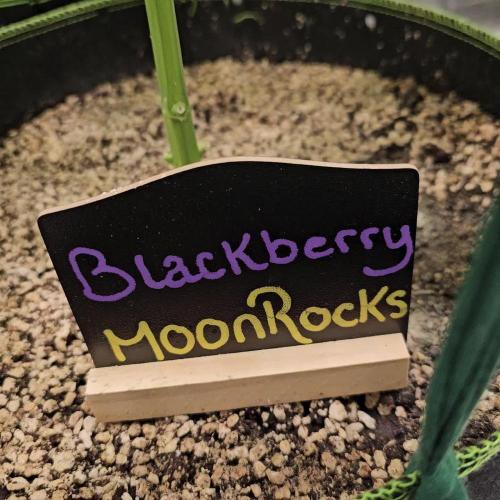
Blackberry Moon Rocks has become very tall and she is starting to flower now. And also stretching quite a lot.
I had previously topped the plant, and one top had grown larger than the other. So, with that one, I decided to use a fabric tie and tie it to the pot, to hopefully try and even things out a little.
There aren't really many branches on this plant.So hopefully that will mean that the colas grow bigger. Heres hoping, anyway!
I have gone through the tent this week, and I have removed a lot of the lower branches on the plants, as they're not going to grow into big colas or anything.
So it's better not to waste the plant's energy, developing those to hopefully redirect it into the larger flowers.
28.7.25:
I watered with 3ltrs of dechlorinated water PH'd to 6.3 with;
💜 2.5ml Ecothrive Trace
💜 1 TSP Ecothrive Biosys
PH: 6.3
PPM: 352
2.8.25:
I watered with 2ltrs of dechlorinated water PH'd to 6.6, containing the following nutrients;
💜 2ml Ecothrive Trace
PH: 6.6
PPM: 425
3.8.25:
Today I top dressed as follows:
🧡 1 Cup Worm Castings
💚 1.25 TBSP Ecothrive Bloom
💚 1.5 TSP Ecothrive Life Cycle
I watered the top dress in with with 2ltrs of dechlorinated water PH'd to 6.4, containing the following nutrients;
💜 1ml Ecothrive Trace
PH: 6.4
PPM: 363
That's all I did this week 😊 Thanks for stopping by and checking out my diary. Good to see you in the comments! 😊💚✌️🌱😁

Likes
21
Share


It all started out even under the scrog when something came up I tucked it under but for some reason I have a little uneven canopy I'm not complaining it's the first time I've ever tried it I just wish I could figure out why I have that uneven now on the side that's growing a lot I have reflective material on that side and I'm thinking maybe that's the only thing it could be I see a little nuke burn at the tips of the leaves but he's okay I went with pure RO water this time she should be flushed pretty good now

Likes
8
Share

@SyntheticSmokie
Follow
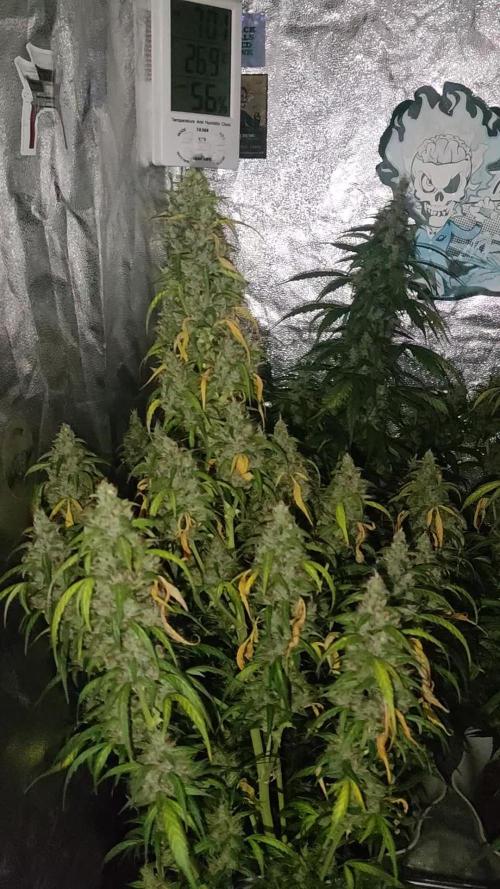
Some trich are truning amber I think I should harvest next week
2x2 homegrow 👽

Processing
Likes
5
Share


@Qaggy
Follow
Lst went well. She is the smallest girl out of the bunch but excited to she how she holds up.
Gave her a top feeding of ecothrive charge for the intense training in the next few weeks.
She bounced back from lst the next day and I topped her for the first time on the 5th node.
It was a bit daunting as this is my first time topping. Looking forward to the next few weeks with all the girls. Seeing them grow into thick lush women.
I am considering scrogging all these girls. It will be my first time doing this so any advice would be really appreciated.
Also I will be super cropping them as I have never done that either. You can’t really do many things with autos, apart from watch them and lst.
Photos are way more forgiving and I think I will be doing this type of growing from now on.
On another note, I will be taking cuttings a week before flipping to 12/12. If anyone has good advice in that department, then I would be very grateful if you can give me any advice.
Happy growing xxx
Likes
38
Share


@PrairieFrostGrow
Follow
******** Week 9 - Feb 3 to 9/20 (Days 57 - 63 from seed popping out)
She has continued to swell this week and stacking her buds. The hairs are turning this week. Kind of a boring week in a way because she has been such an awesome girl to grow!! Have not spent anytime looking at Trich colour this week.....too early anyway.
What I have reflected on is that this girl has been very impressive to grow even though I have thrown curve balls at her. A little more attention to the LST ensuring a more even canopy and lighten the feedings, this girl can impress!😍 I wouldn’t get let her go in a tent as she will likely be kissing the light at some point😃 XL strain anyways.💪 On bigger branches I would clip off another node lower than I did to give a little more energy to fill in the tops. Not sure this girls top colas will fill in as much as one would like but........take your time girl😀
Much debate this week over how long she will run in order to determine her last feed.🤪 She had her last feed three times😃 but it was finally Saturday Feb 8, Day 62 as the last day of feed. Plan it to just flush with water and Rezin & Liquid Weight to the end.....or early 70’s anyway.
Changed the light schedule again this week. Moved her to 19.5 hours of light because she is still not falling to sleep at lights out.
Given she has been very green and tips were burnt a fair bit, will likely use Flawless Finish to flush the medium.
Little more detail:
Feb 3/20 - Day 57
- Water feed today. Runoff in tray was 6.3pH from yesterday.
- 3L plain water. 30ppm and 5.8pH going in.
- One minute she looks to be swelling and then others you think she is stalling.....”watched pot” idea.
Feb 4/20 - Day 58
- Full feed today. Pot still had some weight.
- 3L off full feed with 1125ppm and 6.05pH
- Runoff water in tray before feed: 1900ppm and 6.5pH
- Runoff water in tray after feed: 1800ppm and 6.3pH
- Heavy leaf strip today. She is sticky :)
Feb 5/20 - Day 59
- nothing today.
- noticing more red hairs today....starting to finish more.....lower is still nice and white.....harvest in stages????
- Light cycle changed to 19.5hrs on and 4.5hrs off.
Feb 6/20 - Day 60
- Verify medium today....close to flush
- 3L feed of Sensyzime and Rezin @ 2ml/L and Liquid Weight @ 1.5ml/L. = 100ppm and 5.8pH
- Runoff was 1450ppm and 6.4pH.
- Followed the feed with 2L of 5.2pH water with Sensyzime & Liquid Weight.....bring down pH.
- runoff after that was 1100ppm and 6.3pH.....better :)
Feb 7/20 - Day 61
- Nothing today, still heavy.
Feb 8/20 - Day 62 - ********Last Feed********
- Giving a bit of a flush with Sensyzime, Rezin, and Liquid weight @ 2ml.
- 6L feed with 100ppm and 5.25pH going in.
- Runoff - 350ppm and 6.3pH.
- Evening giver her last full strength feed as listed for the week.
- Going in was 5.2pH as she was not coming down much with high 5pH feeds.
- Medium got a good soak and good runoff amount
- That will be it. Hope she goes 10 to 14 more days....
Feb 9/20 - Day 63
- Dry out day
- raised the light a bit.....will use lower pH water in flush......not much else other than let her dry out at this stage.......
- her top colas are pushing out more new growth.
- the tops are getting wider and forming a point more.
Hope we can drag out harvest day until Feb 22 or 23rd.......🤞😁.....Thanks for the read and hope you have a smooth week!

Likes
3
Share

@Muckman
Follow
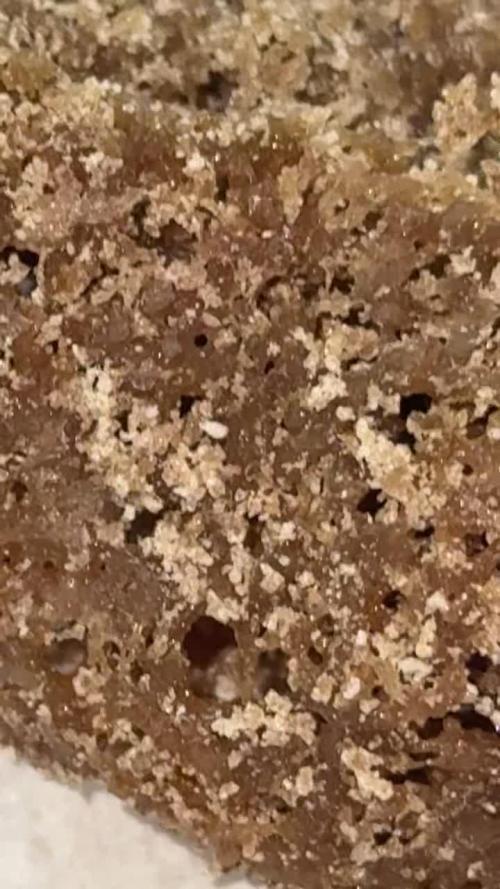
This grow is looking phenomenal. Can’t wait to wash for rosin! Freezing as of now update: test run of bubble this shit is fucing crazy gas. So pungent and full of flavor. Tried some wet Melt in the Puffco it hits like crazy. Great effects and gas flavor. Will be pressing asap update did a 2nd wash tonight of all the trim from plant 3. I’d say 600 wet grams. Yielded great and awesome color.
update: pressed 10 gram puck of rosin to test run. See results above. She’s a squirter! Update: I’m officially done wash all of this plant. Good fuckin riddance in the best way. Ugh I’m just pooped hands are killin me. Over 3 batches the yeild is insane: the coloring in the first hash batch has such an orange/ yellow tint compared to the pale merky other 2 batches. Anywho ids say 35 grams total in hash. We will have to see the total numbers but to say I yielded 10 grams with the smaller batch I’d say on par. Fuck I can prolly make some thumbprints with the 2 different hues make it fancy. Great time for it being cold!
Update: I am done officially washing this strain. 4 batches I’m going to estimate 50 grams of fresh frozen dried hash out.


Likes
18
Share


@Wahalan
Follow
Ça prend forme, et ca prend des couleurs, rien à signaler à pars que je m'attendais à pire vu les problème en croissance, cette semaine on a progressivement baisser les engrais et la température.
Mon chat tiens a vous présenter ses excuses pour les 2 poils sur la calypso sunrocks, c'est entièrement de ça faute 🙈🙀😻🤣


