


Likes
Comments
Share


@mquintero7
Follow
Missed 7th week. She looks very well, big and strong, in the process of creating big buds, lots of hope for this one.

Likes
27
Share


@OldDabKing
Follow
Plant is showing signs of possible nitrogen and phosphorus deficiency with brown curling leaves and purple tipped leaves, but not too worried about it seeing as there's only about a few weeks left of growth. Removing smaller fan leaves to uncover bud sites. Heavy smells of pine and berries 😁

Likes
11
Share


@Fibro_Witch
Follow
This girl is still doing her veg thing but I'm sure she'll be flowering by next weekend. She's looking good and filling out like the other girls. It'll be interesting to see how much she stretches. She has a very lovely smell right now, lots of floral notes.

Likes
16
Share


@DeepSouthDank
Follow
All plants are down! I am stoked with how the grow went and this strain has performed well. Terps are out of this world - candy - jelly babies, sour worms, Fanta grape and bubblegum stinking up the room.
Some pheno's are more forsty then others but it seems we have found a couple keepers to re-test.
Next post will be nug shots, weight once all dry.
We will also do full cannabinoid testing to determine the potency of some of the phenos which we think are worth testing. Look out for that! It will be the final entry on this log :)
Happy growing fam

Likes
11
Share


@Drgreenthumb627
Follow
Its really perking up in flower, and the blueberry smells are ready coming out!

Likes
7
Share


@Kushizlez
Follow
Day 84-91 (Day 3F-10F)
(Day 6F) I’m giving a final foliar spray of Velokelp tonight before I start to see buds develop.
Forgot to water today as I didn’t have any RO and bbb#1 was slumped and droopy. I decided to just water everything with tap water. I’ve been doing quite a bit of research on using city tap water with organics and it shouldn’t disturb the microbiology very much at all. And it will actually help smokability and ash color because of the extra CaCO3 in it. The higher 7.8 pH will also lockout heavy metals like aluminum as well.
(Day 7F) Plants look just fine and the pH fluctuation didn’t make any difference at all. I’m going to discontinue the use of RO water for the rest of my run and all subsequent runs.
(Day 8F) I’m defoliating small amounts of leaves and sucker branches but this thing is out of control. Every 12-18 hours I see noticeable growth. I want to do a heavy strip around day 21. Starting to see budlets and pistil clumps form! These plants don’t seem like huge stretchers but I’m still anticipating quite a jump in the next few weeks.
(Day 10F) Everything is looking just perfect. I’m surprised how fast these 10 gallon pots are drying out now. They go from soaked to light and airy within a few days. Hopefully I can make it the next 2 weeks without seeing any N or Mg deficiencies.
Processing
Likes
26
Share


@eldruida_lamota
Follow
De nuevo, actualizamos la séptima semana de floración y es que estas skunk están preciosas, es una Indica muy conocida y típica entre nosotros los cultivadores, muy sencilla de cultivar.
El ph, la humedad y la temperatura son correctos, zambezaseeds está haciendo muy buen trabajo con sus variedades gente, os lo aseguro que ya son varios los cultivos con ellos. Hasta la semana que viene.

Likes
6
Share

@PurpleBeen
Follow
/Semaine 6 flowering /
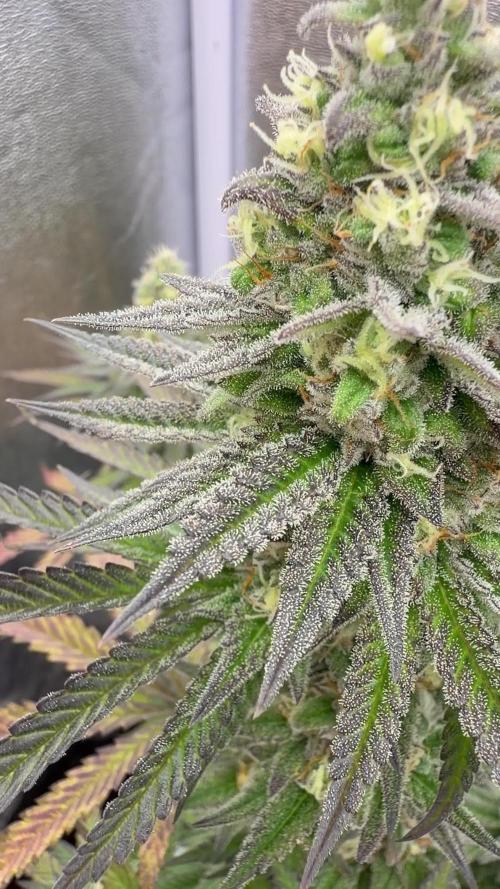
Look really good and smell too, i would start rinsing when trichomes 75 % white to 1,5-2 week only water !⚠️little burning in critical so i will reduce and maybe start it first
Temperature little hot 28,5 in peak so i set to 75% dimer

Likes
8
Share


@xXTazfamilyXx
Follow
Just perfect harvest thanks to Platinium for their great fertilizer and to barney's farm for this strain that I recommend a just incredible taste🤤🤤🙏

Likes
24
Share


@OGOZHigh
Follow
Update : 09.06
Da das Wetter hier im Norden nicht so mit spielt, machen sie langsam Fortschritte.
Wir machen das beste Draus ✌️
Likes
5
Share

@KannaGrowing
Follow
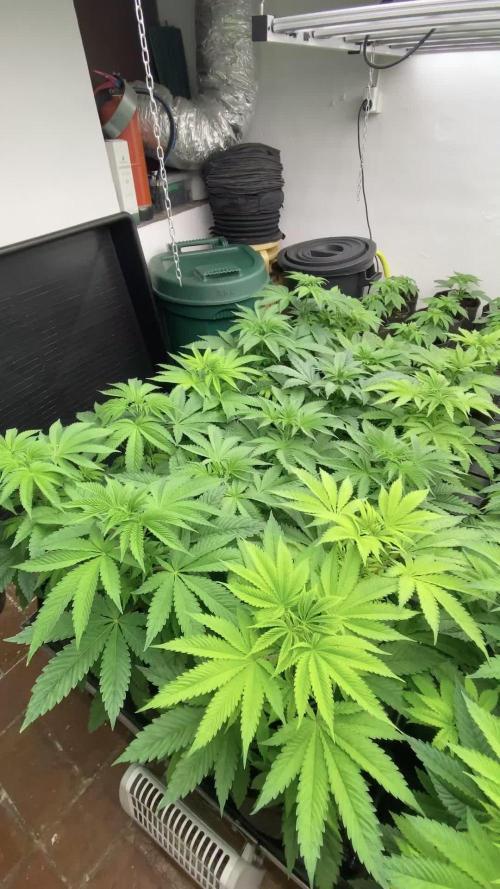
Ha llegado el momento de pasar a la fase floración.
Ajustamos nuestras luminarias LazerLite Pro 720w a 12 horas y subimos la potencia al 50%.
Seguimos con riegos alternos de fertilizante y agua.

Likes
11
Share


@growerflowerweed
Follow
bueno hemos iniciado el dia de hoy con un transplante final de cada de estas niñas las he transplantado a un sustrato propio hecho por mi con los suficientes minerales y propiedades para qeu este cultivo sea una locura , solamente estoy con pulverixador

Likes
22
Share


@BlackHatGenetics
Follow
395g from 2 autoflowers and boy is it the FUNK. My house smells like the strongest OG kush imaginable from p2 and p1 is already starting to get extremely citrus smelling in its jars. Great job mephisto.

Likes
30
Share


@Canadian
Follow
I use all 3 General hydroponic nutrients and they are two different pot sizes the Moby Dick is in 30 liter and the blue amnesia is in 18 liters has a very strong odor and blue amnesia is maturing at a faster rate then the Moby Dick.
a scrog net is being used in order to give support to the upcoming buds.
I am also actually on week 4 I just made a mistake calculating the week.
this is my first grow ever.
also I'm not sure if using the scroll net it's a good idea for support rather than tying those branches up .
I am watering every two days feeding nutes every single time at 900 to 1000 PPM ph at 6.2 the plans have not show any signs of stress but I am worried if it is too much nutrients the plant seems to grow very fast after every watering and seems to be loving it.
the blue Amnesia XXL Auto it's growing in soil with 30% Coco and the Moby Dick XXL auto it's growing in hydroponic soil.
the seeds were germinated on jiffy's and 100% germination rate plus the genetics seems to me very resilient to heat and everything else including lots of nutrients.
the moby Dick XXL auto are the two in the front closest to the camera the two farthest to the back of the tent are the two blue amnesiaXXL auto.
today day 31 i did some pruning actually lots of pruning hopefully don't cause stress to the plants or even worse cause them not to bud that nicely regardless the scrog net seems to be working just fine helping them access more light and making it easy for cutting leaves that are no longer needed.
32 yesterday after watering and sleeping today they have show no signs of stress in fact they starting to stretch in the buds that we're not getting sufficient light have start to grow also yesterday from the 16 liters I prepare instead of 3 ml of grow formula I add 6 1/2 to compensate for stress and the need of healing and having new grow stretch. also temperature has dropped dramatically outside making my house cold down from 24 degrees C to 19° at night internal temperature is remaining the same from 30 to 26 C.
Day 33 I have been raising the scrog net every day and the light everyday this plant is growing very fast I also notice that where the fan is hitting all the time that plant is bigger I have been moving the fan to other sections of the grow tent to see if any reaction happens and it looks like it makes the plant grow faster . I will not be moving the Scrog net any higher Rather I will introduce another one once they require more support .
Day34 notice some of the top leaves are showing a curving down like over-watering without actually over water I think they're showing signs of too much nitrogen .for the next water session I will hold back on nitrogen until I see signs of a fully recovering meaning leafs pointing up.
thank you for reading have a happy grow.

Likes
14
Share


@Mr_Dior21
Follow
Man this week has been taking forever, my theory is it will only get slower relative to harvest just because my excitement.
I top dressed with about 2 inches of worm castings with an eyeballed mix of 2tbps of bone meal (3-14-0, bloom fert.), 1.5-2tbps of Gaia green all purp.(4-4-4, I don’t have an actual potassium fert. Like leingbenite So I use this), 3tbps of dr earth kelp meal (1-.05-2 has many different vitamins, amino acids, carbohydrates) and 2tbps of mykos (for microbiology inoculation and nutrient uptake/upkeep).
So I every time I water I have this old 2gallon water tin that I usually fill up about a quarter to half way full. Using this amount of water and the 5 gallon bucket of my soil mix makes my watering schedule once every 3 days (on average). I do use bottle nutrients but it’s mainly for the supplementing. For feeding I use 2-3ml to half a gallon for all bottle nutrients, I have never gone over, and I have never had deficiency’s that can hinder plant development.
Deficiency's: PSA: Now if anyone happens to read and actually look at my plants please do look closely and maybe let me know if you see something that I have missed since I’m still very new. I noticed my plant was having a cal mag issue so that’s why I top dressed with worm castings, I also top dressed with about 3tbps of azomite (I feel using azomite it may help with all those unnoticeable deficiency’s that a new grower might miss). I’ve been noticing on some of the leaves the very tips are showing discoloring, since the color is still so vibrant mostly I can rule out nitrogen, phosphorus, Iron, manganese, and sulphuric. It’s still very early stage so I did an extremely light foliage feeding (in the dark to prevent UV damage) of 2ml of big bud, big bloom, and tiger bloom, mixed into half a liter of water, I then emptied the spray bottle and sprayed with tap water just to make sure there’s no nute burning. Today I fed the plant through water amendments with 3ml of big bud, 3ml of bud candy, 3ml of big bloom, and 2ml of tiger bloom;(my theory is hopefully the nutrient deficiency’s will go away)
My soil mix is pretty basic. 40% coco, 10% perlite, 10% well composted chicken manure, 20% black gold compost, 20% worm castings. I’m not going to put the fertilizer amendment percentage to be honest I eye ball it but there’s a rough general measurements that I do.

Likes
38
Share


@LittleBigTrees
Follow
I've increased the feed and light now.
I will repot soon .
I've pulled the browned leaves from the lower stem and the new growth is slowly turning green .
They'll burst into stretch mode once I repot them next week .
Hope everyone's grow is going well and the sun is shining on you 🌞

Processing
Likes
6
Share


@Ferenc
Follow
12/12, Fertilization goes on the same days with the nutrients above and water intake approx 300 ml per plant per day. Ventilation on at the same time also. They are crazily stretching:)


Processing
Likes
1
Share


@Teddy01500
Follow
Bonjour à tous, ces derniers jours ce sont bien passé pour mes petit bébés elles grandissent doucement mais sûrement.C’est la première fois que je travail avec cette gamme de produits (je vous est mis des photos des produits 😉) pour l’instant j’en suis satisfait après, il faut voir le résultat final ce qui est moins facile 😂. Mes petit bébés commence leurs 5ème semaine (je me suis trompé d’une semaine 😕 désolé 😉) trop pressé!!! 😂 de mettre de nouvelles photos 😜. Je vous dis à là semaine prochaine vivement 😉 bonne journée à tous. Je vous remercie 😉.

Likes
3
Share

@Organic473
Follow
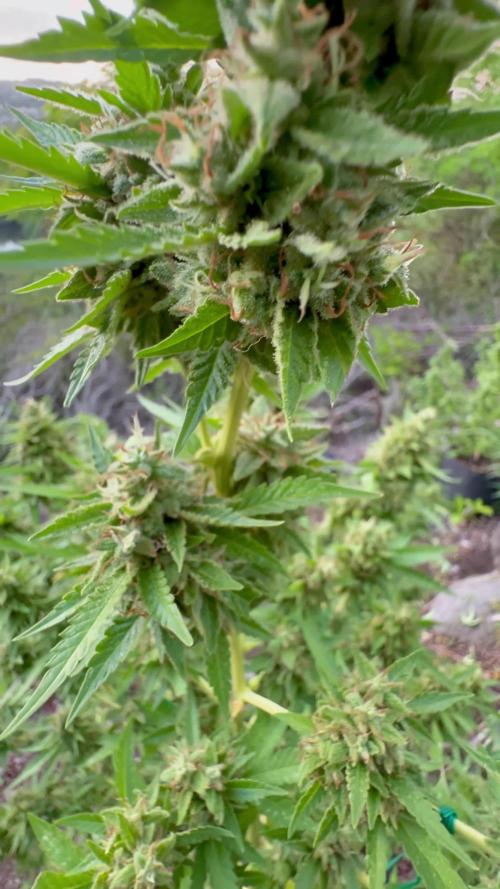
You can tell she is stacking up. I’m hoping she pulls through the heavy rainfall and high humidity as she nears ripening and harvest stage.


Processing
Likes
4
Share


@Cannibalgardens
Follow
Well this week hasn't brought many surprises she so doing good and responding to her environment ...The overall health is good and the plants have been putting on weight these last few weeks ... Can't wait to see where this girl goes and how big the buds will get here's to hoping for the best with this lady .
