





@MrGrow
Volgen
10.11.2022
130 giorni dal seme al raccolto
70 giorni tondi di fioritura
1590 grammi il peso a umido delle 2 piante, sicuramente un buon risultato in un box con all'interno altre 8 piante.
La struttura della pianta si presenta con rami allungati tipicamente sativa, facilmente addestrabili sia con Scrog, sia con LST. Ho dovuto puntellare con aste reggi rami le infiorescenze che nelle ultime settimane piegavano i rami verso il basso.
il profumo che emanano questi fiori è qualcosa di straordinario, vanno dal dolce e agrumano, mandarino limone e caramello, si intercettano note floreali di lavanda ed erbe aromatiche.
Sicuramente aggiornerò il profumo e sopratutto il sapore ad asciugatura ultimata


@Warhead
Volgen
Chopped down the large colas and threw the bottom buds in the freezer to be made into bubble hash this weekend. I will update more after drying.
Update: 💨Puffed a couple joints and MY MY that is a tasty treat! Notes of 🍍pineapple and 🌺lavender. The high is very heady and spacey feeling yet pretty mellow compared to other sativas I enjoy. Insatiable munchies as well. You’ll be grazing all day long. Fantastic personal strain for recreational use outdoors.


@DEZZA247
Volgen
Big growth this week. Still in a heat wave. Had to move the driver for the lights outside of the tent to help with the heat.also moved tent to a cooler location. As i dont have the room in my house to grow so my choices are the garage or my 10x10 shed. I chose the shed because of the trees that shade it during the day. The zkittlez seems to handle it no problem but my others aren't .


@Weedbadk
Volgen
Me sorprende como van engordando súper rápido y la formación de resina es sorprendente. Están demostrando unos tonos muy hermosos ,se puede apreciar que van a ser cogollos grandes y compactos .


@Dendegrow
Volgen
Week 4 of the flowering phase has arrived, and last week flew by 🌬️🌱. The ladies are thriving, and the buds are now clearly visible! ✨ The flowers are starting to turn darker, which is an exciting sign 🍒.
The first trichomes are already forming, hinting at a very potent strain 💎🔥. While the cherry aroma hasn’t come through yet, removing some leaves revealed an intense, waxy scent – very intriguing! 🌿👃
I’ll keep you updated with daily posts. Drop a like and stay tuned to see how the ladies develop 🌺📸. See you next week!
Woche 4 der Blütephase ist da, und die letzte Woche ist wirklich wie im Flug vergangen 🌬️🌱. Die Ladies haben sich prächtig entwickelt, und jetzt kann man die Buds schon richtig gut erkennen! ✨ Die Blüten beginnen langsam, sich dunkel zu verfärben – ein vielversprechendes Zeichen 🍒.
Auch die ersten Trichome sind schon sichtbar, was definitiv auf einen sehr potenten Strain hindeutet 💎🔥. Das Kirscharoma ist zwar noch nicht zu erkennen, aber beim Entfernen der Blätter wurde ein intensiver, wachsähnlicher Duft wahrgenommen – super spannend! 🌿👃
Ich halte euch weiterhin mit täglichen Updates auf dem Laufenden. Lasst ein Like da und bleibt dran, um zu sehen, wie sich die Mädels entwickeln 🌺📸. Bis nächste Woche!



@Ultraviolet
Volgen
Thank you. Gave her a cocktail to help with stress. Added 1st net for lateral support, not so much now, but for later. Blue light is absorbed by photoreceptor proteins called phototropins, which trigger a hormonal response that causes cells on the shaded side to elongate, making the plant bend toward the light. Try and fill this side a little. She is quite big already, just needs to find her stride again after the undue torture.
5 apex stems with 20-30 mini cola, let them develop a little, with the apical dominance shattered, all those 20-30 will all compete with each other as soon as that stretch is initiated. Key to a good stretch is making sure the plant is cycling efficiently, with large ATP conversions occurring lights out.
For now, I'm keeping light intensity high. A plant will slow its vertical growth in very high light intensities, leading to a more compact form with thicker stems and leaves. This response is a protective mechanism against light stress, which can damage the photosynthetic apparatus and lead to symptoms like leaf scorching, yellowing, and brittleness. Instead of growing taller, the plant invests its energy into creating a more robust, stress-tolerant structure.
Providing plants with necessary antioxidants helps protect the photosynthetic apparatus by scavenging reactive oxygen species (ROS) that cause damage from excess light.
UV light exposure can impact the xanthophyll cycle by either enhancing its photoprotective role or causing damage, depending on the intensity and type of UV radiation. UV exposure can trigger the synthesis of more xanthophyll cycle pigments to increase the plant's capacity to dissipate excess energy, but it can also cause direct damage, particularly to Photosystem II, and may lead to a decrease in the de-epoxidation state (DEPS ratio) which indicates a reduced capacity to dissipate excess energy.
Plants can respond to UV stress by increasing the synthesis of xanthophyll cycle pigments, such as violaxanthin and zeaxanthin, to improve their photoprotective capacity. UV-induced changes in xanthophyll cycle pigments can be linked to a plant's overall tolerance to high radiation stress. The xanthophyll cycle helps protect against photoinhibition, which is especially important when the plant is exposed to high levels of both UV and visible light. High doses of UV radiation can directly damage photosynthetic components, including the proteins, lipids, and pigments in the thylakoid membranes. Exposure to UV radiation can have a mixed effect on the de-epoxidation state (DEPS ratio) of the xanthophyll cycle pigments. In some cases, UV can inhibit the conversion of violaxanthin to zeaxanthin, resulting in a lower DEPS ratio and a reduced capacity for energy dissipation. However, the total pool of xanthophyll cycle pigments may increase, and this enhanced pool size could provide a greater potential for photoprotection despite a lower DEPS ratio.
The xanthophyll cycle works alongside other mechanisms, such as the accumulation of flavonoids (UV screens), to protect the plant from UV-induced damage.
Blue light repairs 100% UV-induced damage in plants through a process called photoreactivation, which uses a light-dependent enzyme called photolyase. This enzyme uses energy from blue and UV-A light to directly reverse the damaging pyrimidine dimers in the DNA caused by UV-B radiation, a key mechanism for maintaining the plant's genetic integrity.
After carbon, light, water, temperature, and nutrients, the limiting factor of a plant's growth is often its own internal factors or the amount of a key ingredient. Chlorophyll concentration is one such factor, as the amount of this pigment limits how much light can be captured for photosynthesis. Other factors include chloroplast number, respiration rate, and the concentration of carbon dioxide in the atmosphere, as plants are often in a CO2-deficient condition.
60x60x18=64800seconds x 700 = 45,360,000moles. 45DLI
Exposure to 165 µW/cm² of ultraviolet-B (UV-B) light for 3600 seconds = 1 hour, a extremely high, acute dose triggering stress responses and protective mechanisms.
.
The plant's photoreceptor protein, UVR8, senses the UV-B radiation. This triggers a signaling cascade that activates specific genes to protect the plant from damage. In response to the UV-B signal, the plant ramps up the biosynthesis of protective compounds like flavonoids, phenolic acids, and anthocyanins. These compounds absorb UV radiation and accumulate in the epidermal layers of leaves to shield inner photosynthetic tissues. The plant may increase leaf thickness or deposit more cuticular wax, creating a physical barrier to the radiation. The plant will produce more enzymatic and non-enzymatic antioxidants to neutralize the reactive oxygen species (ROS) produced by the UV-B radiation. The plant activates enzymes, including photolyases, to repair DNA damage caused by the UV-B. These repair mechanisms are critical for preventing permanent genetic mutations.
While protective measures are activated, a high dose delivered over a short period can cause stress that overwhelms the plant's defenses.
Photosynthesis is highly sensitive to UV-B. A high dose can inactivate Photosystem II (PSII), damage thylakoid membranes within the chloroplasts, and reduce chlorophyll content, which lowers the plant's overall photosynthetic capacity. Despite repair mechanisms, high UV-B doses can inflict persistent damage on the plant's DNA. The overproduction of reactive oxygen species can cause oxidative stress, leading to the oxidation of lipids and proteins and disrupting cellular function.


@Pozzy67
Volgen
Starting to get close to the finish line now! Light is at 100% and they are stacking really nice! Can’t wait to see the final product! I’m really like the Cronk Grow nutrients. After trying Fast Bud Genetics for the first time, they are the only auto flower I will grow moving forward.


@Drgreenthumb627
Volgen
day 26 flower and she has no visible signs of stress, smells very sweet and slightly fruity


@Ninjabuds
Volgen
Bubble og man these ladies loved being topped they were not growing the fastest before topping but after getting topped they have really been stretching out they very much have a scrog potential the branchs bend easily and have good distance between nodes to work with
The day has come and it's time to flip these ladies to flower. I was planning on letting them go untill Friday and let the smaller ones grow just a bit more but they will be fine. I have the eternity cup contest in mind and I'm thinking timing so I need to get these lady done and out my tent lol. This past week I turned the light up alot getting them ready to flower they have grown a bunch inhavendone lst maybe 5 it 6 times on the branchs and they arw nit bendy anymore that will help durring flower.


@HIAZ_urbanbudfarmer
Volgen
Plant at the front #3 has had slowed growth but buds are filling out pretty well now, pretty sure she is a Orange sherbet. Back 2 are on week 3 day 17!!! & Are going Awesome, buds stacking up & down every branch! Going to get some really good Cola's of them! They are loving the 730watts!’ of light, back left plant looks like a Tropicana Cookies, going to do some defoliation on her & tie branches down a bit to open up middle of plant to allow more light & air to lower bud sites.


@GrowCaCola
Volgen
The GSCs finally hit their flowering stretch and turned from little ninja stars to nice little bushes. I think my low Humidity may have stunted growth a bit - dry winters in so cal. Overall they are doing super nice, and should start stacking and stinking here any day now. I moved them under the big light in the big tent and all the plants are reaching for it like mad. This Mars 2 1600 is a beast of a light.

@MrWeeedWorld
Volgen
Woche 14 – Aus drei werden eins 🍑🌿🌿🌿
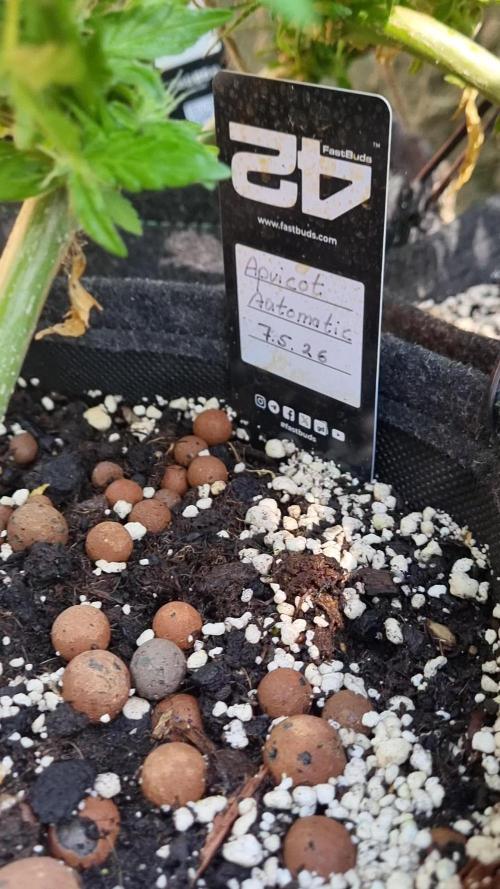
Diese Woche zeigt mir die Apricot endgültig, warum dieses Outdoor-Projekt für mich etwas Besonderes geworden ist.
Was einmal als drei einzelne Apricot Autos begonnen hat, sieht inzwischen aus wie eine einzige große Pflanze. Durch das Training und die Verteilung der Triebe haben sich die drei Pflanzen zu einem gemeinsamen Blütendach entwickelt. Überall ragen Tops aus der Struktur heraus – und inzwischen geht es nicht mehr darum, neue Fläche aufzubauen.
Jetzt geht es um Blütenmasse.
Und genau da hat sich seit dem letzten Update einiges getan.
Die einzelnen Buds beginnen sichtbar anzuschwellen und die Blütenstände werden zunehmend kompakter. Besonders schön finde ich, dass sich die Entwicklung nicht nur auf die obersten Colas beschränkt. Auch weiter unten sitzen zahlreiche gut entwickelte Blüten, wodurch die gesamte Pflanze inzwischen regelrecht mit Budsites übersät ist.
❄️ Der Frost kommt
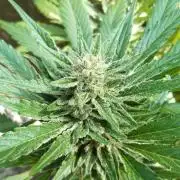
Die Nahaufnahmen zeigen momentan wohl am besten, wohin die Reise geht.
Die Trichomproduktion nimmt richtig Fahrt auf. Nicht nur die Blüten selbst, sondern auch die umliegenden Sugar Leaves sind inzwischen mit einer deutlich sichtbaren Harzschicht bedeckt. In der direkten Sonne funkeln manche Tops fast, als hätte jemand feinen Zucker darüber gestreut.
Gleichzeitig beginnen einige Blüten, erste dunklere und leicht violett-rötliche Farbtöne zu entwickeln. Zwischen dem kräftigen Grün und der hellen Harzschicht entstehen dadurch immer mehr kleine Farbkontraste.
Und genau auf diese Phase habe ich gewartet. 😍
🌿 Drei Pflanzen – drei Charaktere
Obwohl die drei Apricots gemeinsam wie eine einzige Pflanze wirken, zeigen sich bei genauerem Hinsehen durchaus Unterschiede.
Einige Triebe bauen etwas länglichere, stärker gestapelte Blüten auf, während andere Tops kompakter und gedrungener erscheinen. Auch bei der Farbentwicklung und Harzmenge zeigen sich erste kleine Unterschiede.
Gerade das macht dieses Projekt für mich so spannend:
Drei Samen derselben Genetik – gemeinsam trainiert, unter denselben Bedingungen – und trotzdem darf jede Pflanze ihren eigenen Charakter zeigen.
☀️ Outdoor bedeutet echte Natur
Kein perfekt kontrollierter Indoor-Raum. Keine konstanten Bedingungen.
Sonne, Wolken, Wind, Temperaturschwankungen und alles, was ein echter Sommer mit sich bringt.
Und trotzdem stehen die drei Apricots hier mit einer erstaunlich vitalen Struktur. Die Blätter arbeiten weiterhin kräftig, die Äste tragen inzwischen eine ordentliche Menge Blüten und die Pflanzen konzentrieren ihre Energie sichtbar immer stärker auf die Budproduktion.
Genau das liebe ich an Outdoor-Grows:
Man kontrolliert nicht alles.
Man arbeitet mit der Natur.
🍑 Jetzt beginnt meine Lieblingsphase
Von hier an wird jeder Tag interessanter.
Die Grundstruktur der Blüten steht. Jetzt dürfen die Kelche weiter anschwellen, die Buds dichter werden, die Harzschicht dicker werden und die Farben langsam ihren Weg durch die Pflanze finden.
Wenn die Apricots in diesem Tempo weitermachen, könnten die letzten Wochen optisch noch einmal richtig spektakulär werden.
Drei Pflanzen.
Ein gemeinsames Blütendach.
Unzählige Budsites.
Und langsam verwandelt sich das ganze Ding in eine frostige Apricot-Wand. 🍑❄️
To be continued… 💚
--------------------------------------------------------------------------------------------------------------------------------------------------------------------
WEEK 14 – THREE BECOME ONE 🍑🌿🌿🌿
This week the Apricots are finally showing me why this outdoor project has become something very special.
What started as three individual Apricot Autos now almost looks like one single massive plant. Through training and spreading the branches, all three plants have grown together into one shared flowering canopy.
Tops are appearing everywhere – and at this point the mission is no longer about creating more structure.
Now it's all about building flowers.
And there has been a noticeable change since the previous update.
The individual buds are starting to swell and the flower clusters are becoming increasingly substantial. What I particularly like is that this development isn't limited to the highest colas. There are well-developed flowers deeper throughout the structure as well, making the whole canopy look increasingly packed with bud sites.
❄️ The frost is coming
The close-ups probably tell the story better than anything else this week.
Trichome production is really starting to accelerate. It's no longer restricted to the flowers themselves – the surrounding sugar leaves are becoming visibly coated as well.
Under direct sunlight some of these tops already sparkle like they've been dusted with sugar.
At the same time, several flowers are beginning to show subtle darker, reddish and purple tones, creating beautiful little contrasts between the green foliage and the increasingly bright resin coverage.
This is exactly the stage I've been waiting for. 😍
🌿 Three plants – three personalities
Although the three Apricots now appear to be one giant plant from a distance, looking closer reveals subtle differences between them.
Some branches are developing slightly longer, stacked flowers, while others are producing more compact-looking tops. Small differences are also starting to appear in coloration and resin production.
And that's one of my favorite parts of this project:
Three seeds from the same genetics, trained together and grown under the same conditions – yet each plant is still allowed to show its own personality.
☀️ This is real outdoor growing
There is no perfectly controlled indoor environment here.
Sunshine, clouds, wind, temperature swings and everything else a real summer decides to throw at them.
Yet these three Apricots continue to maintain an impressive structure. The foliage is still working hard, the branches are now carrying a serious number of flowers and the plants are visibly directing more and more of their energy toward bud production.
That's exactly what I love about outdoor growing.
You don't control everything.
You work together with nature.
🍑 My favorite part is beginning
From this point forward, every day becomes more interesting.
The foundation of the flowers is established. Now it's time for the calyxes to swell, the buds to become denser, the resin layer to get heavier and the colors to slowly work their way through the flowers.
If these Apricots continue developing at this pace, the final part of this journey could become something really beautiful.
Three plants.
One shared canopy.
Bud sites everywhere.
And slowly the whole thing is turning into a frosty wall of Apricot. 🍑❄️
To be continued… 💚


@BarrieGrower
Volgen
Buds are looking good and building good. I am amazedthinking Ihave another five weeks of flower. Looking forward to this.
Backed off the nutrients a bit. I think I will taper off even more and let the plant use up what is left.
Did a bit of defoilation, plants look better. The buds are stinky, as much care I took, my arms still endedup smelling like buds. I kept smelling the buds on my arms for hours. Gotta love it.
Freed up some room in the flower room and rearranged the plants. Adjusted the height so the canopy is even. Now all the ASD are now under the lights. Happy days.
Thanks for looking.


@Hashy
Volgen
Week 1
Light cycle=22/2
Light Power=86w 36%
Extractor controller settings
High temp= 24c
Low temp= c
Temp step=0c
High Rh= 70%
Low Rh= %
Rh step=0%
Speed max=5
Speed min=1
Smart controller settings (during lights on).
Lights on=22/2 (02.00am)
Radiator on= below 19c
Radiator off= above 20c
Humidifier on= below 64%
Humidifier off= above 67%
Dehumidifier on= not in use.
Dehumidifier off= not in use.
Smart controller settings (during lights off).
Lights off=22/2 (00.00am)
Radiator on= below 16c
Radiator off= above 18c
Humidifier on= not in use.
Humidifier off= not in use.
Dehumidifier on= not in use.
Dehumidifier off= not in use.
VPD aim=0.4-0.8
DLI aim=15-18
EC aim=0.4
PH aim=6.2
Thursday 28/12/23
#2 (Day 1)
📋 Looks fine.
Friday 29/12/23
#2 (Day 2)
📋 she looks ok
Saturday 30/12/23
#2 (Day 3)
📋 Wet the soil.
Was H=7cm D=77cm DLI=17.5
Now H=7cm D=70cm DLI=17.8
10.00pm
Switch to 20/4
Light power was=86w=36%
Light power still=86w=36%
Lowered light by 7cm.
Extractor controller settings
High temp= 24c
Low temp= c
Temp step=0c
High Rh= 68%
Low Rh= %
Rh step=0%
Speed max=5
Speed min=1
Smart controller settings (during lights on).
Lights on=20/4 (04.00am)
Radiator on= below 19c
Radiator off= above 20c
Humidifier on= below 62%
Humidifier off= above 65%
Dehumidifier on= not in use.
Dehumidifier off= not in use.
Smart controller settings (during lights off).
Lights off=20/4 (00.00am)
Radiator on= below 16c
Radiator off= above 18c
Humidifier on= not in use.
Humidifier off= not in use.
Dehumidifier on= not in use.
Dehumidifier off= not in use.
Sunday 31/12/23 (New year's eve)
#2 (Day 4)
📋 Happy New Year.
Monday 1/1/24 (New year's day)
#2 (Day 5)
📋
💧💧💧💧💧💧💧💧💧💧💧💧💧💧💧💧
Method= manual
Neutralise=0.1ml/L
Roots=5ml/L
Feed=nutes
Volume=200ml
Easy Ph down=0 drops/L
Ec=0.27PH=6.1/6.2
Time=9.00pm
Runoff.
Total runoff=60ml
Ec=2.2 PH=5.7
💧💧💧💧💧💧💧💧💧💧💧💧💧💧💧💧
Tuesday 2/1/24
#2 (Day 6)
📋Humidifier didn't come on autopilot.
Wednesday 3/1/24
#2 (Day 7)
📋 H=8cm D=69cm DLI=17.0
She has done fine this week and is exactly where I'd expect her to be. Rooting is good and I could possibly transplant her at the same time as the others next week.
Back soon.
Take it easy.


@Canadian
Volgen
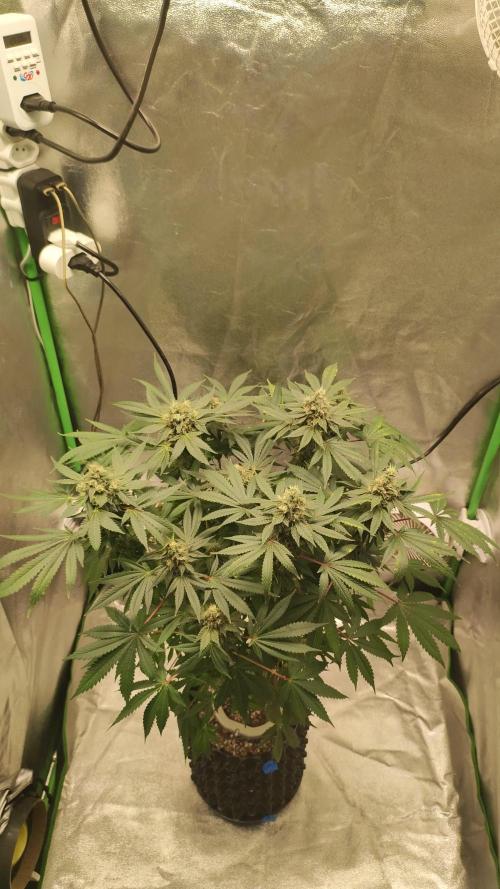
Day 71 from seed the plant seems to be coming along nicely and flowering stretch has come to a end . I cut some of the lower branches that were carrying some flower because there was no way they were going to develop on time with the higher branches because of lack of light penetration at that lower level and since nothing well happened to those lower branches she can start concentrating her effort and energy on to the higher buds.
Interesting note with this girl has been that she has stretch constantly up to this point therefore not putting a lot of effort on building up those flowers that makes me hope that when she starts putting Wight in those flowers they are going to be beautiful.
Thank you for reading I will continue to update have a happy grow.



@Bncgrower
Volgen
So here we are, another week has passed and the end of this cycle is getting closer... this week I will reduce the EC to 2.0 and next week I will reduce the EC until the substrate runoff is around 0.0 - 1.0 💪💪💪


@DeepWaterGrower
Volgen
[DAY 57] - 27/07/2022
- Lamp 40 cm from the center of the canopy and 100% dimmer (150 watt);
- TEMP. 29°-30° - RH 70%;
- In the next few days I will raise the EC from 1.2/1.3 up to 1.5/1.7 and increase the bloom dose, at the moment I am still giving the pre-flo dose;
- I'm trying to promote the growth of the left side and for this reason I moved the lamp far to the left in order to get more light in those still low points (for two days, then it will come back to the center of the box);
- This also allows me to bring the lamp closer to the highest right branch, as it only gets side light. For this reason, despite the proximity there should be no burning problems, I will keep the situation under control;
[DAY 58] - 28/07/2022
- Lamp 40 cm from the center of the canopy and 100% dimmer (150 watt);
- TEMP. 29°-30° - RH 70%;
- EC 1.5 - PH 6;
- Today I added 1.5 liter to the DWC with this composition: Water EC 0; Silicate and CalMag up to 0.4; A+B up to 1.4; Bloombastic up to 1.7; 0.2 ml/l Hydro booster; 2 ml/l H2O2
[DAY 59] - 29/07/2022
- Lamp 44 cm from the center of the canopy (22 cm from the top) and 100% dimmer (150 watt); - moved the lamp 10 cm away more to promote stretch (tip by my friend @SwissKush);
- TEMP. 29°-30° - RH 70%;
- EC 1.5 - PH 6;
- A lot of resin on the leaves, nice smell;
- Took a video for a growquestion.
[DAY 60] - 30/07/2022
- Lamp 43 cm from the center of the canopy (20 cm from the top) and 100% dimmer (150 watt); - tomorrow I raise lamp 5 cm more;
- TEMP. 29°-30° - RH 70%;
- EC 1.7 - PH 6;
- Removed 3 damaged leaves, with the beginning of next week I will make a big cut under the net, there are too many leaves and flowering sites that do not take light and it is useless to keep them;
- She's drinking about 2.5 liter of solution/day
[DAY 61] - 31/07/2022
- Lamp 46 cm from the center of the canopy (23 cm from the top) and 100% dimmer (150 watt);
- TEMP. 29°-30° - RH 60%;
- EC 2 - PH 5.9;
- Removed some damaged leaves and a few leaves that were stealing too much light to the lower flowering sites, about fifteen leaves removed. 10 hours to recover from it.
Still a lot to cut down there in the coming days when buds begin to form;
- The EC went up by about 0.3 in 24 hours, this is due to the Bloombastic, the plant does not want it for now;
- From tomorrow I will proceed to a small flush by adding 2 liters of water a day with EC 0 to prepare the DWC for the new feed for the new week (which will start on day 64).
[DAY 62] - 1/8/2022
- Lamp 46 cm from the center of the canopy (22 cm from the top) and 100% dimmer (150 watt);
- TEMP. 30°/31° - RH 40-50%;
- EC 1.8 - PH 5.8; added 2 liter of demineralized water EC 0 - PHed
[DAY 63] - 2/8/2022
- Lamp 46 cm from the center of the canopy (22 cm from the top) and 100% dimmer (144 watt);
- I DON'T KNOW WHY BUT SMART PLUG SAYS: 144 WATT AT 100% DIMMER. I don't like it!
- TEMP. 30°/31° - RH 40-50%;
- EC 1.6 - PH 6; added 2 liter of demineralized water EC 0 - PHed. Tomorrow I'll replace the whole bucket with new feed EC 1.7 PH 6;
- I believe the plant is no longer growing, and I also notice that the buds are slowly swelling. Tomorrow I tie back the main colas and then in the next days I will remove everything that does not get light, I hope it reacts well 🙏

@jeffreymiller
Volgen
I enjoyed the Plant so much and I definitely not forget it.
Was the last winter grow


@MiraGrow
Volgen
The girls have been growing at a very fast pace. I was out of town from Friday afternoon to Sunday evening.
When I came back and opened the tent I was blown away by the progress.
Today I am going to go and buy some (22/06/2020) garden wire and start Low Stress Training, I'm a bit nervous but it seems like
the best thing to do for the girls. Its exciting times...
They are growing at a very fast pace but at the same time it feels like time is not moving along fast enough :)
LST started... hopefully its done correctly :)
