


Likes
Comments
Share


@Hippity
Follow
Refilled the Botaniums today, 7 days after the previous fill, as I saw they were completely empty. One of the plants is starting to show a tiny bit of weird coloring on some leaves and the texture of the leaves is also a bit strange. The other plant looks completely healthy.

Likes
7
Share


@P_Silas
Follow
Season 2 is officially underway and so excited for this grow. Growing 4 plants, but space is a lil limited. Growing in an 80x80cm so using small pots. 2x 8l and then 1x 5l and 1x 4.7l (if you wanna be exact lol).
This time I decided to experiment a bit.
I'm testing 2 different soils, both in 8l pots, both Purple Punch Auto by Fastbuds, both in airpots. Their names are Lily and Robin.
Also testing fabric bags against airpots. Both in same soil, both in 5l pots, both Wild Dwarf Auto by Bulk Seed Bank (that was the plan but now it's 1 WD and another Purple Punch). Their names are Jess and Cece.
For this one, Lily, had the seed in water for about 24 hours then in paper towel. Then, into gorilla mix.

Likes
7
Share


@OutdoorRebelGenetics
Follow
Had to highjack this old diary sick hope this all goes well done this 3 times now lol with a degree of success lol well I would like to thank greenhouse seed co and Andy for the chance of growing these new genetics and there very own feeding line more pics due ignore next 5 weeks until I'm there lol

Likes
2
Share

@Terpnado
Follow
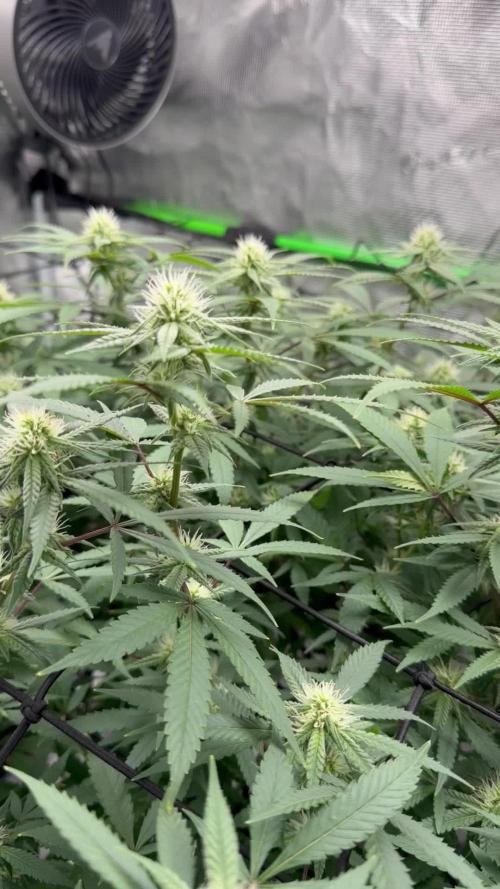
Wishing I would have defoliated more before adding the second net. Next run I will add the second net earlier.
The 3 gallon is drying out super fast. With the high humidity I’m experiencing right now I’m having to run the dehumidifier right next to the tent to make a impact. I predict I will need to water twice a day as she gets closer to harvesting
Makes me consider repotting her sister clone into a 5 gallon for the next flip maybe even 7.

Likes
6
Share

@bkickstand
Follow
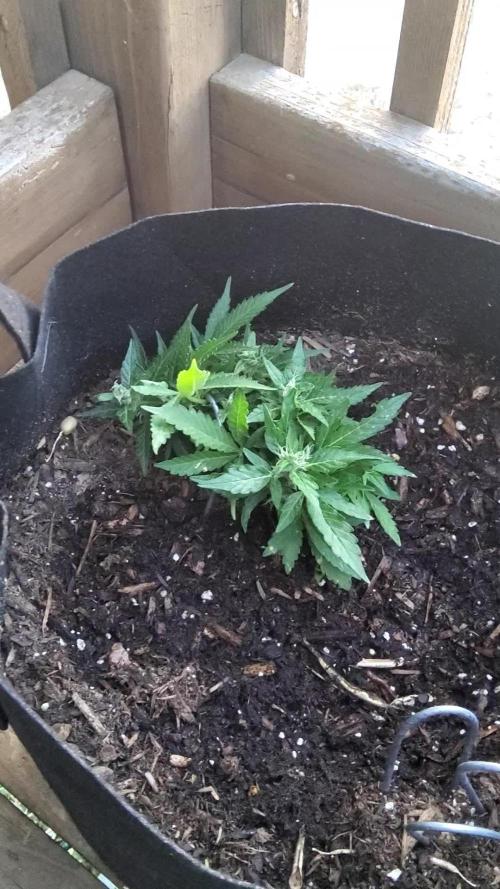
Week 11 Journal Update: Northern Lights 1 & Strawberry Nugget x Pink Panama 2
* Overview & Stature: Week 11 brings an update on the new batch of autoflowers—Northern Lights 1 (NL1) and Strawberry Nugget x Pink Panama 2 (PPX2). Both plants are exhibiting an exceptionally small, miniature, and compact stature, sitting tightly packed low in their fabric pots. When scaled next to a standard lighter, their micro-sized build becomes fully apparent.
* Flowering Progress: Despite their tiny frame, both specimens are actively pushing through their flowering phase. Bud development is dense and tightly clustered around the miniature structures, with early trichome coverage and pistils forming nicely on the compact colas.
* Feeding & Water Management: The nutrient and watering regimen remains steady, with both plants receiving regular doses of Cal-Mag. Irrigation water is being treated with pH down, successfully bringing the overall pH level down to a balanced target of approximately 6.2.
* Harvest Expectations: Given their unique micro-stature, the final yield is shaping up to be extremely modest—at most, maybe a single satisfying puff will be harvested off PPX2 once they cross the finish line.

Likes
27
Share


@Ganjagrandaddy
Follow
Hi Growmies
Here we are at the expected finish time and the most mature of these ladies ( #1) is still only starting to cloud up her trichromes. Lots of clear ones still waiting to start ripening though and next to no Amber trichs yet. Looking at the burnt orange pistils and her overall appearance , without checking her trichromes, I would have harvested her too early. Well worth the investment to hit their sweet spots.
The other two ladies are filling put nicely too with plenty of mains within the canopy. Their lowers could have done with more light from a good defol but I wanted to are how much difference it would make.
The #1 has been on just water the past few days but no signs of her cannibalising herself yet. The other two are finishing up their second tomladt feed and I plan 1 more before I flush them for their ripening. I think that the 3 weeks for flowers to appear after the flip may have added the extra time to their finish. Until next time , be well.

Likes
19
Share


@Troy_Farms
Follow
Coming to the end of the week she is looking really great. The the 4 lines are filling in really great. side branching on all of them. She got up to 10" which is great. Pistil production is not really picking up yet. She looks very promising.

Likes
7
Share


@StickyFingah420
Follow
Día 73 desde su nacimiento y ya se ha dejado de abonar hace un par de días para obtener resultados más limpios de residuos.
El progreso está a la vista, flores muy densas que estaban doblando todas las ramas de esta planta por lo que tuve que agarrarla para ayudarlas a soportar el peso.
El nivel de tricomas es impresionante y desprende una fragancia dulce bastante agradables por toda la casa.
BUENOS HUMOS! 👽
Likes
3
Share


@medique
Follow
PK boost was added for this week as lower fans were starting to show serious PK deficiency. Defoliated about 25% of each plant, basically the lower fans/growth that was not getting light. Added some CFLs in a tent dark spot

Likes
51
Share

@Hologram
Follow
mogge :)
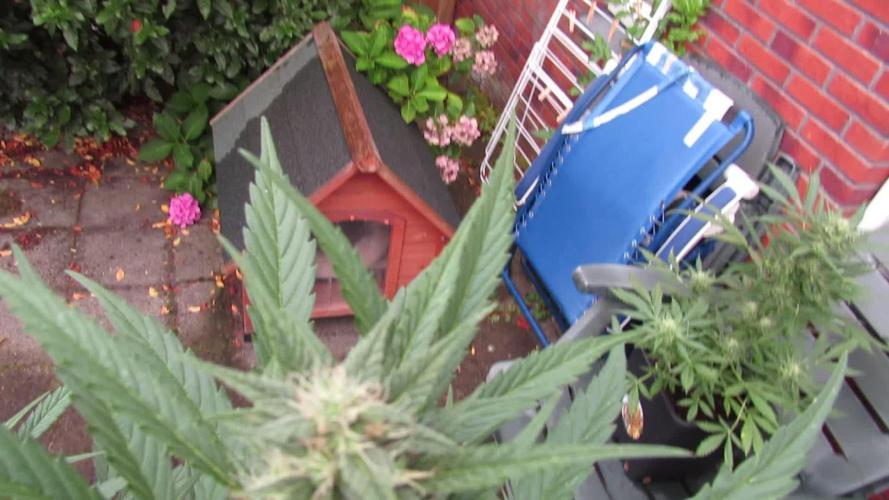
zoals ik zei in de video,het zou kunnen dat ik de Rapier en de black opium door elkaar heb gehaald ..
want ik heb nog vage herinneringen dat ik het niet zo goed meer wist...(natuurlijk 😉)
maar zeker weten doen we het nooit dus ach..
ze bloeit iig lekker👊
@)@}@}}@)]}-}}--}}}
Happy growing 4 all✊
PS:Ik heb toch de namen van de dagboeken omgewisseld.. het is duidelijk dat dit Rapier is.. en niet black Opium.. #justsaying
PS: i changed the names of the diaries..its very clearthat this is Rapier and not blackopium!
PPS: i changed them back!! 😁👊
**KISS! growingtechnique: keepItSimple, Stupid!
**how 2make thcoil: https://growdiaries.com/diaries/179107-grow-journal-by-hologram

Likes
133
Share


@PapaNugs
Follow
Great week inside this tent. The girl got her topping and then recovered over the week. There were already some good side branching and now they are being trained even more. Flipping to flower now.
Lights at 40% power.
Here are the lights details:
Medic Grow Mini Sun-2 150W LED
Model: MN150-022
Spectrum mode: V1
Efficacy: 2.8 umol/J
Thanks for stopping by!
You can find the light on Grow Diaries:
https://growdiaries.com/grow-lights/medic-grow/mini-sun-2-150-watts
You can find the light on Medic Grow's website:
https://medicgrow.com/

Likes
5
Share


Likes
5
Share


@TherealNICOGREEN
Follow
Er blevet plantet over i 17 liter potter i stedet en 12 liters! Hun er allerede begyndt at vise tegn på rigtig gå i blomst 🌸. Det er først gang jeg prøver pulver gødning OG JEG ER SÅ POSITIV OVERBEVIST OM DET ER DET JEG VIM FORSÆTTE FREM AF ( undtagen det der ikke fåes i pulver ( endnu) 😇glæd jer til flere dagbøger og nye spændende planter og NYE SKUNK STRAINS OG NY GØDNING ÆGTE GRO JORD MED TILHØRENDE PULVER GØDNING! Det bliver fantastisk spændende😇🤩🤩🤩🧐🤩🤩😜😝😎🤪😇💚🖤💛💚🖤💛💚
Likes
37
Share


@masterofsmeagol
Follow
Week begins 8/12 LAST FEED 2 gallons 8/12 AFTER A RAINING NIGHT.
8/13 I've found what appears to be septoria on a couple plants. Looks like the weather will be OK tonight so I can apply organocide or something similar before dark. I've seen random pillar damage so this will be a two-for. I also should move the middle plant back and utilize my space more. Ph seems on point around 7.3. Higher in some places of the soil. I've noticed what looks like root issues on my blueberry. Winds were horrible yesterday and this plant doesnt hace a vertical trellis for support. Stem was pretty wobbly for a while but the plant seems to be growing fine. Either that or a jpn beetle munched the top of a bud. That's probably what happened. It was in the low 50's this morning. That's a 40 degree temperature swing in just a few days. This grow season has been the most challenging I've faced. Of course it had to happen when personal, family, and health concerns rear their head. Oh well. I can only do my best.
8/14 Went over at 5am to apply organocide to treat WPM or septoria as well as insecticide for pillars. I got there and one of my healthiest plants had been turning a little lime green now it was drooped over just like the larger GDP. This one is a 9lb kush though and they were doing good. Now it looks like it's dead over night. Maybe it's that liquid kool bloom. The soil seemed dry so I watered the plants. It MIGHT have picked ok a little. I'll have to check tonight. If not something is going on at night or in the rootzone and I really don't know what the fuck is going on. I will post updates and check later tonight. Damn. This has been a real challenging year.
8/15 That plant might be overwatered or not be draining correctly. At least I was able to get underneath it and the ground was dry. It was also hard packed dirt so elevating the bag may help. I'm going to wait a few days and see if things improve. This really sucks. I'm getting that defeated feeling. I need to get out of it though as I'm starting to see flower begin. The blueberry is probably the farthest along. I need to remember to take pictures of the newly developing flowers. Granted I've had numerous medical and other issues that have taken me off my game but losing two plants in one year is pretty shitty. I was able to fix things with COVID last year or the year before so I hope I can at least save this 9lb kush plant. If I lose this plant too it will be a substantial amount of cannabis lost. I need to rearrange my cage as well to make use of the extra space. Maybe I could've overwatered that plant that had been in the rain for a long time. I need to get my water routine down pat instead of doing the "lift the pot" method I have been doing. I went to several different commercial growers and got a bunch of crazy answers. Only time will tell. Last night I finished the organocide application on all the other plants except for the two babies and the drooped 9lb kush. Don't want to stress it further. I'll see how it goes.
8/16 Despite the soil drying out the newest disaster (my 9lb kush) is much worse with chlorosis killing leaves. Stalks and branches seem good. Soil smells musty and a little wetter than the rest. It was roofed to the ground slightly. NO water underneath. I stuck my hand in the bag from a bunch of angles. It's like the same thing that happened with the other one. I added to my surveillance. I also smell bleech and I hace an idea this might not be my doing at all. I can't be detailed but I'll find out one way or another. UPDATE. Went back over after the dentist and plants were dry as a fucking bone and droopy. I mixed up five gallons of phed water and watered everything. Even the 9lb kush that is pretty much dead. The soil was dry though. Everyone is saying overwater but I really doubt that. We had some massive rainstorms bur still. I need to review a game cam I have because unfortunately my cams went on the frits for a couple days (and the dogs went wild during that time around midnight) couple nights in a row. I fucking smell bleech. I'm a good dude and don't really have any enemies but we'll see what the game cam pulls up.
8/17 Of course we are getting a shit ton of rain. I watered yestetday because everything was dry as a bone
I watched yesterday as my blueberry was almost horizontal due to the wind. I added several supports to every branch and a few more up the main stalk. That may be what has been happening. The wind blowing so hard it separates the stalk from the roots. My problems started after I took my windbreaker tarp down. I put it back up for this storm. Or maybe it's just root rot. I dont fucking know. I cut all the dead stuff off the 9lb kush thats pretty mucb dead. Its holding on though. I probably shouldnt have watered that but it seemed bone dry. Maybe further down was wet. I dont know. Extra cams are up. I didn't smell that chemical bleachy smell today so it's probably in my head. I have better peace of mind with the night cams up though.and the dogs though. I've had a visitor this year but he left very quickly.
8/18 We got a shit ton of rain last night. No damage though. I spent what time I had in the garden working on the 9lb kush that looked like it was dieing. I'm not giving up on this one so easy. It seems to want to hold on. Despite the severely overwatered medium (due to this storm) I cam see new growth that looks healthy. The branches also seem stronger. I'm cautiously optimistic. The other one straight up died. So I might be able to salvage this. I'll go over later today and check on it. I debated putting it inside for the storm bur I figured I'd let the rain leech out anything in the medium in case it's locked out or something. At least I've got a couple real healthy ones this year. That NYCSA is amazing. That's a strain I'll probably grow again. Resilient as all all. Vigorous and doesn't seem impacted by things like WPM or other fungal ok infections or diseases like some other strains. I got a great recommendation from my buddy to use pots all the same size. It makes things easier watering. I just used what I had this year. I had bigger pots so I wanted to fill them. That tarp being up I think greatly helped with the wind. It's down now so things cam dry out. Still raining bit not yard and no wind. I think that may have played a large role in killing the 7ft GDP. Wind ripping the stalk away from the roots. Or it could've been a million other things. I'll never know. I do know that I have a better mindset, a great set of resources and I'm learning something new every year. If I can br8ng this plant back to life I'm going to be very proud of myself.....and her. Oh and I'm going to buy new tiger bloom. I'll start beasty bloom (hesitant as it has caused lockout in the past) as it goes better with my other nutes than the liquid kool bloom. Plus I started getting portables around tge time I used the liquid kool bloom. That being said, after two weeks I can see buds where there weren't before so I don't know. Next year I'm using seeds and I'm doing things different. I'm STRONGLY considering rapacaps idea about adding a removable roof for flower. The more I think about it tge better it sounds. That and putting wheels on pallets (buddy suggestion) and I could attach my supports directly to the pallet. I've got a lot of work to do that's for sure. Plants look healthy but I needvto him them again with organocide to fight any fungal stuff or pillars that might be hiding.



Likes
1
Share


@JoExotic
Follow
Week 4 - these smell insane had a few issues with pest they seem to be all gone not sure what’s going on with my back plant same one I had issues with germinating now it seems stunted I will update next week good luck everyone !
Likes
23
Share


@Jackweed77
Follow
Le ragazze dopo 24 ore che sono state messe nel fazzoletto umido sono germinate senza problemi....💪
Likes
15
Share

@MrWeeedWorld
Follow
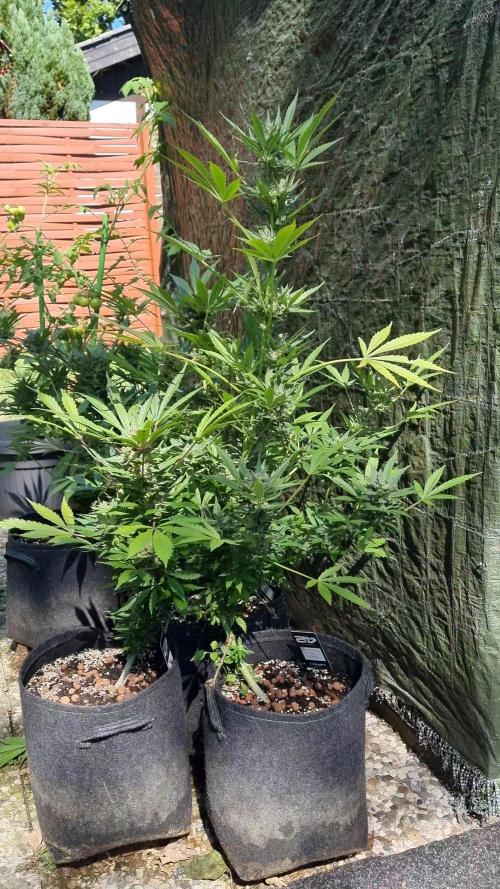
🌿 Woche 13 – Outdoor Update ☀️💜❄️
Was für eine Entwicklung! Woche 13 zeigt inzwischen sehr deutlich, wohin die Reise geht. Nach dem starken Wachstum der vergangenen Wochen liegt der Fokus nun immer mehr auf der Blütenentwicklung und Harzproduktion.
Die Pflanzen haben eine schöne offene Struktur entwickelt und nutzen das natürliche Sonnenlicht hervorragend. Besonders der hohe Haupttrieb streckt sich weiterhin deutlich nach oben und trägt über seine gesamte Länge zahlreiche Blütenansätze. Im unteren und mittleren Bereich ist die Struktur wesentlich kompakter – dort sitzen inzwischen viele einzelne Budsites, die zunehmend an Volumen gewinnen.
💜 Die Farben kommen!
Mein persönliches Highlight dieser Woche sind definitiv die unterschiedlichen Blütenfarben. Einige Buds bleiben kräftig grün und werden zunehmend von einer richtig schönen Schicht aus Trichomen überzogen, während andere bereits deutlich violette bis dunkel-purpurfarbene Töne entwickeln.
Gerade in der direkten Sonne sieht das genial aus: tiefes Purple zwischen sattgrünen Sugar Leaves und darüber dieser feine, fast weiß wirkende Harzbesatz. ❄️💜
Auch die Pistillen beginnen sich bei einigen Blüten bereits stärker zu verfärben. Gleichzeitig sind noch genügend frische Blütenbereiche vorhanden – die Pflanzen sind also eindeutig noch mitten in ihrer Entwicklung.
❄️ Frost-Level steigt
Auf den Makroaufnahmen lässt sich mittlerweile sehr schön erkennen, wie stark die Harzproduktion geworden ist. Nicht nur die Blüten selbst, sondern auch die umliegenden kleinen Blätter sind mit Trichomen übersät.
Die Buds wirken außerdem zunehmend kompakter. Besonders einige der kleineren violetten Blütenstände entwickeln eine interessante, gedrungene Struktur, während andere deutlich heller und etwas voluminöser wachsen.
Genau diese Unterschiede machen das Projekt inzwischen richtig spannend.
☀️ Outdoor bedeutet echte Natur
Woche 13 zeigt aber auch wunderbar, was ich an einem Outdoor-Grow mag: Hier läuft nicht alles unter perfekten Laborbedingungen. Sonne, Temperatur, Wind und Wetter bestimmen den Rhythmus.
Einige ältere Fächerblätter beginnen mittlerweile sichtbar heller zu werden. Gleichzeitig arbeitet der überwiegende Teil der Pflanze weiter kräftig und die Blütenentwicklung schreitet sichtbar voran.
Nach all den Wochen des Trainings und Aufbaus beginnt jetzt langsam die Phase, in der sich die ganze Arbeit auszahlt. 🌿
📸 Fazit Woche 13
Diese Woche ist für mich vor allem eine Woche der Farben und des Frosts.
💜 erste kräftige Purple-Töne
❄️ deutlich zunehmende Trichomproduktion
🌸 Buds gewinnen sichtbar an Struktur und Volumen
☀️ starke natürliche Sonnenentwicklung
🌿 zahlreiche aktive Blütenstände über die gesamte Pflanze verteilt
Noch ist das Ziel nicht erreicht – und genau das macht es gerade so spannend. Wenn die Buds in den kommenden Wochen weiter so zulegen, dürfte aus den aktuell noch einzelnen Blütenständen noch einiges werden.
Woche 13 beendet – und jetzt beginnt langsam der richtig fotogene Teil dieses Outdoor-Abenteuers. 😁💜🌿
--------------------------------------------------------------------------------------------------------------------------------------------------------------------
🌿 Week 13 – Outdoor Update ☀️💜❄️
What a development! Week 13 really shows where this journey is heading. After the strong growth of the previous weeks, the focus is now shifting more and more toward flower development and resin production.
The plants have developed a beautifully open structure, allowing them to make excellent use of the natural sunlight. The tall main branch continues to reach upward and carries numerous flowering sites along its entire length. The middle and lower sections are much more compact, with lots of individual bud sites that are now visibly gaining volume.
💜 The Colors Are Coming!
One of my absolute highlights this week is the difference in coloration between the flowers.
Some buds remain vibrant green and are becoming increasingly covered in a beautiful layer of sparkling trichomes, while others are already developing impressive purple and deep violet tones.
Under direct sunlight, the contrast looks incredible: dark purple flowers surrounded by healthy green sugar leaves and covered with a frosty layer of resin. 💜❄️
Some pistils are also beginning to change color, while other parts of the flowers are still producing fresh growth. This tells me that the plants are clearly still busy developing.
❄️ Frost Level Rising
The close-up shots really show how much the resin production has increased.
Trichomes are spreading across the flowers and onto the surrounding sugar leaves, giving some buds an almost frosted appearance in the sunlight.
The flowers are also becoming noticeably more structured and compact. Some of the smaller purple buds are developing a dense, chunky appearance, while other flowers remain lighter green and are building a slightly larger structure.
These differences between the flowers are becoming one of the most interesting parts of this grow.
☀️ This Is Outdoor Growing
Week 13 also perfectly represents what I love about growing outdoors.
There is no perfectly controlled laboratory environment here. Sunlight, temperatures, wind and weather all influence how the plants develop, and every week brings something slightly different.
Some of the older fan leaves are beginning to lighten naturally, while the majority of the plants continue working hard and pushing their flowers forward.
After all the weeks of training, shaping and watching these plants develop, we are finally reaching the stage where all that work starts becoming visible in the flowers. 🌿
📸 Week 13 Conclusion
For me, this week is all about colors and frost:
💜 Beautiful purple coloration appearing
❄️ Increasing trichome and resin production
🌸 Buds visibly gaining structure and volume
☀️ Strong development under natural sunlight
🌿 Numerous active flowering sites throughout the plants
We are definitely not at the finish line yet – and that's exactly what makes this stage so exciting.
If these flowers continue developing at the same pace over the coming weeks, there is still plenty of potential for them to gain considerably more size and density.
Week 13 complete – and now we're entering the really photogenic part of this outdoor adventure. 😁🌿💜❄️


Likes
52
Share


@Ultraviolet
Follow
Lacewings seemed to have mostly killed themselves by flying into hot light fixtures. I may have left the UV on which was smart of me :) Done very little to combat if anything but make a sea of carcasses, on the bright side its good nutrition for the soil.
Made a concoction of ethanol 70%, equal parts water, and cayenne pepper with a couple of squirts of dish soap.
Took around an hour of good scrubbing the entire canopy.
Worked a lot more effectively and way cheaper.
Scorched earth right now, but it seems to have wiped them out almost entirely very pleased.
Attempted a "Fudge I Missed" for the topping. So just time to wait and see how it goes.
Question?
If I attached a plant to two separate pots but it was connected by rootzone, one has a pH of 7.5 ish the other has 4.5. Would the Intelligence of the plant able to dictate each pot separately to uptake the nutrients best suited to pH or would it still try to draw nitrogen from a pot with a pH where nitrogen struggles to uptake?
Food for stoner thought experiments!
Another was on my mind.
What happens when a plant gets too much light?
Well, it burns and curls up leaves.
That's the heat radiation, let's remove excess heat, now what?
I've always read it's just bad, or not good, but when I look for an explanation on a deeper level it's just bad and you shouldn't do it.
So I did.
How much can a cannabis plant absorb, 40 moles in a day, ok I'll give it 60 moles. 80 nothing bad ever happened.
The answer, finally. Oh great........more questions........
Reactive oxygen species (ROS) are molecules capable of independent existence, containing at least one oxygen atom and one or more unpaired electrons.
"Sunlight is the essential source of energy for most photosynthetic organisms, yet sunlight in excess of the organism’s photosynthetic capacity can generate reactive oxygen species (ROS) that lead to cellular damage. To avoid damage, plants respond to high light (HL) by activating photophysical pathways that safely convert excess energy to heat, which is known as nonphotochemical quenching (NPQ) (Rochaix, 2014). While NPQ allows for healthy growth, it also limits the overall photosynthetic efficiency under many conditions. If NPQ were optimized for biomass, yields would improve dramatically, potentially by up to 30% (Kromdijk et al., 2016; Zhu et al., 2010). However, critical information to guide optimization is still lacking, including the molecular origin of NPQ and the mechanism of regulation."
What I found most interesting was research pointing out that pH is linked to this defense mechanism. The organism can better facilitate "quenching" when oversaturated with light in a low pH. Now I Know during photosynthesis plants naturally produce exudates (chemicals that are secreted through their roots). Do they have the ability to alter pH themselves using these excretions? Or is that done by the beneficial bacteria?
If I can prevent reactive oxygen species from causing damage by "too much light".
The extra water needed to keep this level of burn cooled though, I must learn to crawl before I can run.
Reactive oxygen species (ROS) are key signaling molecules that enable cells to rapidly respond to different stimuli. In plants, ROS plays a crucial role in abiotic and biotic stress sensing, integration of different environmental signals, and activation of stress-response networks, thus contributing to the establishment of defense mechanisms and plant resilience. Recent advances in the study of ROS signaling in plants include the identification of ROS receptors and key regulatory hubs that connect ROS signaling with other important stress-response signal transduction pathways and hormones, as well as new roles for ROS in organelle-to-organelle and cell-to-cell signaling. Our understanding of how ROS are regulated in cells by balancing production, scavenging, and transport has also increased. In this Review, we discuss these promising developments and how they might be used to increase plant resilience to environmental stress.
Temperature stress is one of the major abiotic stresses that adversely affect agricultural productivity worldwide. Temperatures beyond a plant's physiological optimum can trigger significant physiological and biochemical perturbations, reducing plant growth and tolerance to stress. Improving a plant's tolerance to these temperature fluctuations requires a deep understanding of its responses to environmental change. To adapt to temperature fluctuations, plants tailor their acclimatory signal transduction events, specifically, cellular redox state, that are governed by plant hormones, reactive oxygen species (ROS) regulatory systems, and other molecular components. The role of ROS in plants as important signaling molecules during stress acclimation has recently been established. Here, hormone-triggered ROS produced by NADPH oxidases, feedback regulation, and integrated signaling events during temperature stress activate stress-response pathways and induce acclimation or defense mechanisms. At the other extreme, excess ROS accumulation, following temperature-induced oxidative stress, can have negative consequences on plant growth and stress acclimation. The excessive ROS is regulated by the ROS scavenging system, which subsequently promotes plant tolerance. All these signaling events, including crosstalk between hormones and ROS, modify the plant's transcriptomic, metabolomic, and biochemical states and promote plant acclimation, tolerance, and survival. Here, we provide a comprehensive review of the ROS, hormones, and their joint role in shaping a plant's responses to high and low temperatures, and we conclude by outlining hormone/ROS-regulated plant-responsive strategies for developing stress-tolerant crops to combat temperature changes.
Onward upward for now.
Next!
Adenosine triphosphate
(ATP) is an energy-carrying molecule known as "the energy currency of life" or "the fuel of life," because it's the universal energy source for all living cells.1
Every living organism consists of cells that rely on ATP for their energy needs. ATP is made by converting the food we eat into energy. It's an essential building block for all life forms. Without ATP, cells wouldn't have the fuel or power to perform functions necessary to stay alive, and they would eventually die. All forms of life rely on ATP to do the things they must do to survive.2
ATP is made of a nitrogen base (adenine) and a sugar molecule (ribose), which create adenosine, plus three phosphate molecules. If adenosine only has one phosphate molecule, it’s called adenosine monophosphate (AMP). If it has two phosphates, it’s called adenosine diphosphate (ADP).
Although adenosine is a fundamental part of ATP, when it comes to providing energy to a cell and fueling cellular processes, the phosphate molecules are what really matter. The most energy-loaded composition for adenosine is ATP, which has three phosphates.3
ATP was first discovered in the 1920s. In 1929, Karl Lohmann—a German chemist studying muscle contractions—isolated what we now call adenosine triphosphate in a laboratory. At the time, Lohmann called ATP by a different name. It wasn't until a decade later, in 1939, that Nobel Prize–-winner Fritz Lipmann established that ATP is the universal carrier of energy in all living cells and coined the term "energy-rich phosphate bonds."45
Lipmann focused on phosphate bonds as the key to ATP being the universal energy source for all living cells, because adenosine triphosphate releases energy when one of its three phosphate bonds breaks off to form ADP. ATP is a high-energy molecule with three phosphate bonds; ADP is low-energy with only two phosphate bonds.
The Twos and Threes of ATP and ADP
Adenosine triphosphate (ATP) becomes adenosine diphosphate (ADP) when one of its three phosphate molecules breaks free and releases energy (“tri” means “three,” while “di” means “two”). Conversely, ADP becomes ATP when a phosphate molecule is added. As part of an ongoing energy cycle, ADP is constantly recycled back into ATP.3
Much like a rechargeable battery with a fluctuating state of charge, ATP represents a fully charged battery, and ADP represents a "low-power mode." Every time a fully charged ATP molecule loses a phosphate bond, it becomes ADP; energy is released via the process of ATP becoming ADP.
On the flip side, when a phosphate bond is added, ADP becomes ATP. When ADP becomes ATP, what was previously a low-charged energy adenosine molecule (ADP) becomes fully charged ATP. This energy-creation and energy-depletion cycle happens time and time again, much like your smartphone battery can be recharged countless times during its lifespan.
The human body uses molecules held in the fats, proteins, and carbohydrates we eat or drink as sources of energy to make ATP. This happens through a process called hydrolysis
.
After food is digested, it's synthesized into glucose, which is a form of sugar. Glucose is the main source of fuel that our cells' mitochondria
use to convert caloric energy from food into ATP, which is an energy form that can be used by cells.
ATP is made via a process called cellular respiration that occurs in the mitochondria of a cell. Mitochondria are tiny subunits within a cell that specialize in extracting energy from the foods we eat and converting it into ATP.
Mitochondria can convert glucose into ATP via two different types of cellular respiration:
Aerobic (with oxygen)
Anaerobic (without oxygen)
Aerobic cellular respiration transforms glucose into ATP in a three-step process, as follows:
Step 1: Glycolysis
Step 2: The Krebs cycle (also called the citric acid cycle)
Step 3: Electron transport chain
During glycolysis, glucose (i.e., sugar) from food sources is broken down into pyruvate
molecules. This is followed by the Krebs cycle, which is an aerobic process that uses oxygen to finish breaking down sugar and harnesses energy into electron carriers that fuel the synthesis of ATP. Lastly, the electron transport chain (ETC) pumps positively charged protons that drive ATP production throughout the mitochondria’s inner membrane.2
ATP can also be produced without oxygen (i.e., anaerobic), which is something plants, algae, and some bacteria do by converting the energy held in sunlight into energy that can be used by a cell via photosynthesis.
Anaerobic exercise means that your body is working out "without oxygen." Anaerobic glycolysis occurs in human cells when there isn't enough oxygen available during an anaerobic workout. If no oxygen is present during cellular respiration, pyruvate can't enter the Krebs cycle and is oxidized into lactic acid. In the absence of oxygen, lactic acid fermentation makes ATP anaerobically.
The burning sensation you feel in your muscles when you're huffing and puffing during anaerobic high-intensity interval training (HIIT) that maxes out your aerobic capacity or during a strenuous weight-lifting workout is lactic acid, which is used to make ATP via anaerobic glycolysis.
During aerobic exercise, mitochondria have enough oxygen to make ATP aerobically. However, when you're out of breath and your cells don’t have enough oxygen to perform cellular respiration aerobically, the process can still happen anaerobically, but it creates a temporary burning sensation in your skeletal muscles.
Why ATP Is So Important?
ATP is essential for life and makes it possible for us to do the things we do. Without ATP, cells wouldn't be able to use the energy held in food to fuel cellular processes, and an organism couldn't stay alive.
As a real-world example, when a car runs out of gas and is parked on the side of the road, the only thing that will make the car drivable again is putting some gasoline back in the tank. For all living cells, ATP is like the gas in a car's fuel tank. Without ATP, cells wouldn't have a source of usable energy, and the organism would die.
Eating a well-balanced diet and staying hydrated should give your body all the resources it needs to produce plenty of ATP. Although some athletes may slightly improve their performance by taking supplements or ergonomic aids designed to increase ATP production, it's debatable that oral adenosine triphosphate supplementation actually increases energy.
An average cell in the human body uses about 10 million ATP molecules per second and can recycle all of its ATP in less than a minute. Over 24 hours, the human body turns over its weight in ATP.
You can last weeks without food.
You can last days without water.
You can last minutes without oxygen.
You can last 16 seconds at most without ATP.
Food amounts to one-third of ATP production within the human body.
