


Likes
Comments
Share


@Not_a_tutorial1990
Follow
Had major struggles with humidity due to cold front, but got it in somewhat better ranges.
My planet of the grapes started wilted/ drooping mid week [other strains were fine]. Did some research and it turned out they needed more water.[ I normally water every other day, feed every second feed and I top dressed before flipping].I fed them, got the humidity back in acceptable ranges. I also gave them some tea [molasses, banana peels, Gaia green bloom,all purpose and worm castings]
They seem to be happier.
Very eager to defoliate at end of this week been taking few leaves here and there but nothing crazy. Decided to build a suspended 2ply scrog net seems to be working great.
Thanks for viewing, appreciate any advice or comments.
Happy growing everyone 🌴


Likes
5
Share


@WickedWeedQueen440
Follow
Growing for the Growers Gauntlet in discord. Come check it out! There's a bunch of amazing growers throwing down right now for the title of Champion Homegrower! This gelat og is doing amazing. This is the first week of flower and she's already got a lot of amazing bud sites.

Likes
8
Share


@cnkice
Follow
Finally finished building my DWC tank this week. So far everything is working great.
Per the week 1 grow question suggestion I have added a water transfer pump to top off the 27-gallon reservoir.
2 seeds died during germination, will add another 2.
Likes
19
Share


@Little_E
Follow
Day- 57
Man. These girls are really getting big! Did more LST yesterday and watered 2 days ago. Did half the recommended nutes again. Playing it safe. Been pretty smooth sailing so far!
Day- 58
Did a lot of defoliation. Hopefully it allows for some more growth!
Day- 60
Watered today. Still sticking to half the recommended amount of nutes. Been watering about once every 6 days. Still using blackstrap molasses on every watering.
Day- 62
It's a jungle!

Likes
15
Share


@Siriuz
Follow
Very good very fast and very smelly
Some lemony smell I can pick
But also very sweet so we are really down to try this one from sweet seeds
I think I could have waited two more weeks.
But then again I ran out of soil and had to recycle this one to get red poison auto going on this big pot all set with mega super mix soil and nutes
The red poison was amazingly F1
Growing on roots super heavy rooting
And yes we finally got her on this pot
So yeah that's why we took gelato out
And also because it got 9 weeks flowering so it's actually set
If maybe one more week or two could have change the high potency or effect we will discover on our next grow stay tuned and always check on my Instagram
@cannagrowersiriuz
For real time activity and blazin
Also talking sht and what not
Come along leave your comments
Blaze it and just let us know what the f is
Up my dudes
Keep growing and thanks again sweet seeds and grow diaries for everything always you rock and the community as well is dope
UPDATED MAY 8TH 2021
FINALLY GOT MY DRY BUDS
TOTAL WAS 30G
FOUND OUT MY GROW LIGHT IS NOT FULL SPECTRUM SO I AM TRYING TO UPGRADE SINCE I ALREADY KNOW IM GETTING TOP QUALITY BUDS WITH MY TECHNIQUES BUT NOT QUANTITY DUE TO LIGHT ISSUES OF COURSE PHLIZON IS NOT FULL SPECTRUM AND FOR A INDOOR GROW YOU NEED THAT MUCH FOR YIELD
ANYWAYS TASTE IS BOMB
CURING ONE JAR FOR A MONTH TO EXPOSED FLAVOR AND HIGHNESS
AS IT IS RIGHT NOW YOU GET A VERY GOOD HIGH AND ONE G CAN GET YOU TWO TO THREE JOHNSONS WHICH IS AWESOME
ON THE OTHER HAND IS ORGANIC
AND IM FLATTERES WITH MYSELF FOR THIS ACHIEVEMENT BUT I DO NOT FORGET AND I THANK TO ALL COMMUNITY AND JAYPP FROM SWEET SEEDS WHO HAS HELPED ME OUT SO FAR IN GETTING STRAINS AND TIPS
I APPRECIATE KINDLY ALL GROWERS IN THE COMMUNITY WHO ADDED ME OR FOLLOWED ME AT THE INSTAGRAM CANNAGROWERSIRIUZ ALSO THANKS TO ALL THE FORUM GROUPS AND WHAT NOT
JUST ONE WORD
THANKFUL FOR THIS DREAM COME TRUE
I WILL KEEP GROWING KEEP SHARING
KEEP LEARNING AND TEACHING
GOOD VIBES JAH BLESS WEED
BLESSINGS TO YOU ALL
SWEET GELATO IS BOMB
TO ME SCORE IS 9/10

Likes
24
Share


@Grnhead
Follow
The smell is really starting to come in. Bought 2 sets of 80 mm internal fans to increase the airflow through the plant and in the box. Many of the lower leaves are curling down and I think it was a mixture of the high morning humidity and the lack of air flow. Now there are 5 internal fans and a large external fan, and it should be more than enough air flow. Growth is starting to slow finally, the height is perfect right now but I have a feeling it’s going to keep getting taller. I keep tying her down as best as I can.

Likes
9
Share


@Naujas
Follow
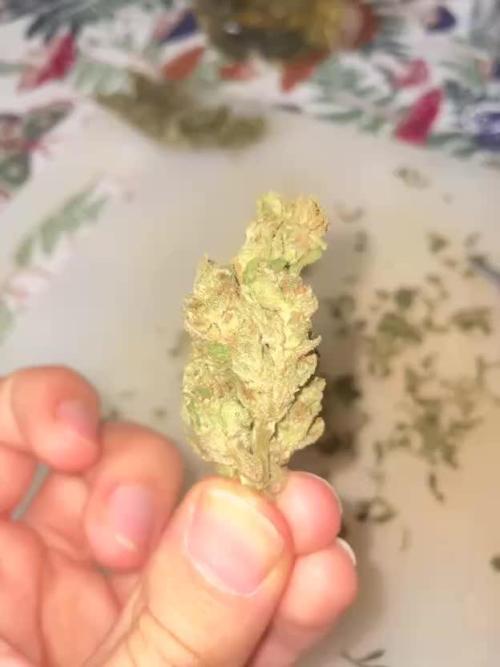
a lot of rain and little sun does not allow the girl to enjoy flowering, but it will stop soon :).



Likes
4
Share


Likes
65
Share


@Dendegrow
Follow
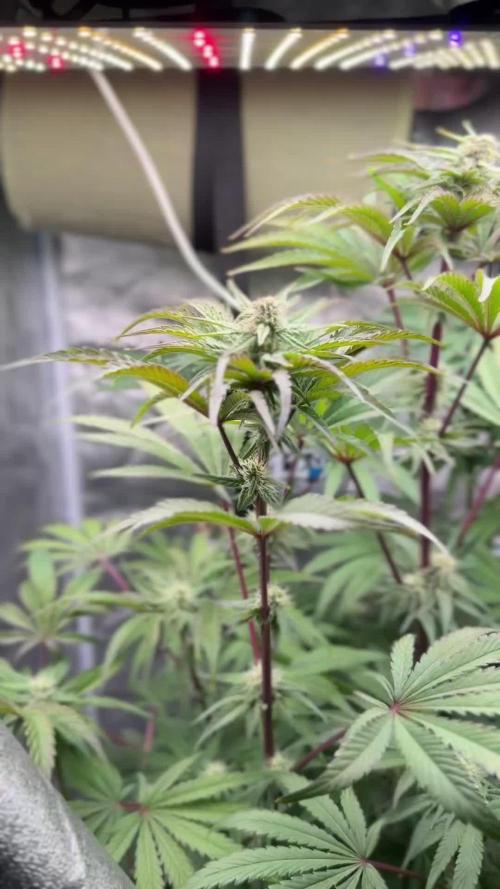
Die Woche ist wie im Flug vergangen – und leider habe ich es verpasst, Fotos zu machen 📸. Aber keine Sorge! Ab jetzt gibt’s täglich ein Update, damit man den Fortschritt der Blütephase in voller Pracht verfolgen kann 🌱💥. Ich bin gespannt, wie sich die Ladys entwickeln, und freue mich darauf, euch alles zu zeigen! 🚀
The week just flew by – I missed my chance to take photos 📸. But don’t worry! From now on, I’ll be posting daily updates so you can watch the flowering progress in all its glory 🌱💥. Excited to see how the ladies grow and can’t wait to share it all with you! 🚀

Likes
32
Share


@Compassionate_Gardener
Follow
This cycle was all along a great pleasure. The plants developed MUCH BETTER THAN EXPECTED, the result under the Q6W-Gen. 2 LED lamps from SANlight is FANTASTIC. I have NEVER harvested more from plants of the same strain under HPS and the quality of the bud (trichomes, taste aroma) is MUCH BETTER when grown under LED, my decision is definitely made, I will continue to solemnly grow with LED-lights in the future. I harvested 2250 gram of Shiva Skunk and 3009 gram of Serious Kush, that a total amount of 5259 gram. In relation to the 3000 Watts (incl. dimmed part!) power of the LED-lights thats an AMAZING 1,753 gram per Watt.



Likes
18
Share


@cannasaxx
Follow
Ja, es sieht super aus und sie gehen heute in die Blüte 🎄
Kann nur noch besser werden 😁💚
Bleibt dran 🌈🍉FastBuds420
Likes
216
Share


@CRiSPrGrow
Follow
Week 1 : Auto Colorado Cookies Biotabs
sprouted quick bursting out of their shell, stayed in the propagator 4 days then straight and erly into the forever home prepared according to the @biotabsf69 method in 5 gal pots, all soil plus 23% perlite just eyeballed it dont know why i'm saying it was that precise lol. mixed in the startrex , added the mykos 3 in the pot and two in the cavity for the root plus, watered with orgatrex and bactrex then used boom boom spray to keep the humidity at around 70 for a day maybe a bit more. got some good pictures of the seedlings in but watered again with plain water 2L on day 3, now the medium is wet and wil likely remain so until late next week . just plain water until week 5 folks dont hold your breath. Just going to be using my special spray, co2 and kelp extract once a week some micro nutres in the spray of my own creation. Enjoy !
VPD .05 - 1.0 finally got it basically right after 3 days

Likes
26
Share


@FrostyCloudzz
Follow
Finaler Grow-Report – Lemon Cherry Gelato
Mein erster legaler Grow mit Lemon Cherry Gelato von Barney’s Farm ist fast abgeschlossen – das Curing läuft noch, aber es ist Zeit für ein Fazit zum Anbau!
Setup & Bedingungen:
Ich habe in einer Spider Farmer 90x90x180 cm Growbox unter der Spider Farmer SF-G3000 (300W LED) angebaut. Als Medium kam BioBizz Light-Mix zum Einsatz, gedüngt wurde mineralisch mit Advanced Nutrients (Grow, Bloom, Micro). Um das volle Potenzial der Pflanzen auszuschöpfen, setzte ich auf Low-Stress-Training (LST) und ein ScrOG-Netz zur optimalen Lichtverteilung.
Keimung & Wachstum:
Die Keimung verlief problemlos – 4 von 5 Samen sind innerhalb von zwei Tagen aufgegangen. Während der Vegetationsphase entwickelten sich die Pflanzen kräftig und reagierten gut auf das Training. Die ScrOG-Methode half, ein gleichmäßiges Wachstum und eine bessere Lichtnutzung zu erzielen.
Blüte & Ernte:
Nach etwa 6 Wochen Vegetation leitete ich die Blütephase ein. Die Pflanzen zeigten eine starke Harzproduktion und eine beeindruckende Farbgebung mit einer Mischung aus dunklen Grüntönen, lila Highlights und frostigen Trichomen. Das Aroma war von Anfang an fruchtig und zitronig, mit phänotypischen Unterschieden in der Intensität.
Die Ernte fiel mit 300-350 g trockenen Blüten sehr zufriedenstellend aus – für meinen ersten legalen Grow ein starkes Ergebnis.
Curing (still in run ):
Aktuell lagern die Blüten in 24 Mason Jars (16oz) und einem 2L-CVault, um das Aroma weiter zu entwickeln. Derzeit dominiert eine zitronige Note, während die erhofften Kirsch-Terpene langsam stärker hervortreten. Mein Ziel ist es, die Haze-Noten möglichst gering zu halten und das volle fruchtige Profil herauszuarbeiten – der Prozess ist also noch nicht abgeschlossen.
Fazit:
Ich bin sehr zufrieden mit dem Grow – die Kombination aus hochwertiger Genetik, gutem Training und präziser Nährstoffversorgung hat sich definitiv ausgezahlt. Die Buds sind harzig, aromatisch und vielversprechend, und ich bin gespannt, wie sich das Curing weiterentwickelt.
Der nächste Schritt ist, das perfekte Terpenprofil zu treffen – und das Curing geduldig zu optimieren.


Likes
7
Share

@JuiceboxTerps
Follow
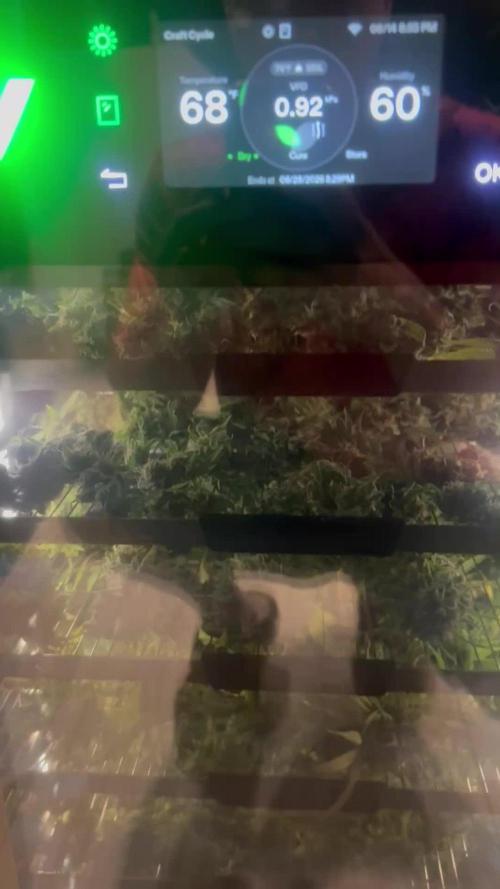
What an easy grow! Might just stick to the organics from now on. Grew with ease just needed better watering practices and would’ve been a perfect grow.
First time trying the vcure and honestly not bad! A few tweaks and tricks I’ve learned and she’s bulletproof.
Happy growing!

Likes
4
Share

@Black_Widow
Follow
Привет садоводы !
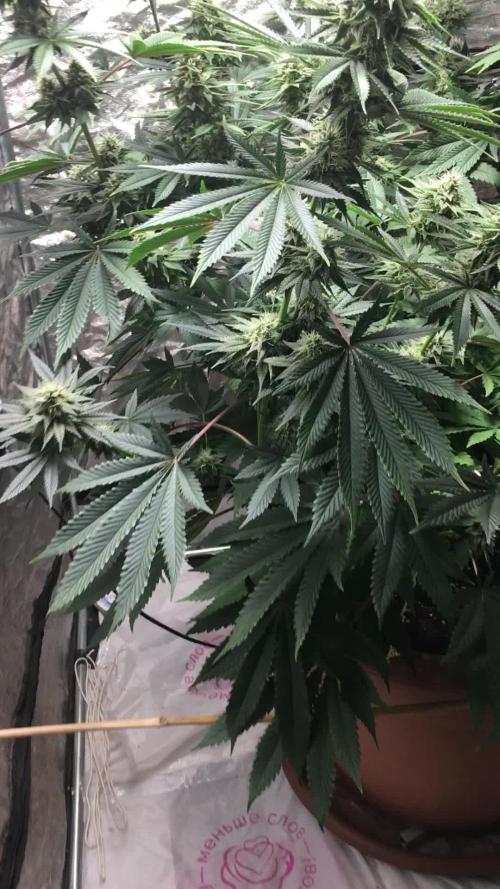
пару дней был в отъезде и за эти дни соцветия стали тяжелыми , некоторые ветки завалились на бок
придется делать им сцепку из проволоки
это только пятая неделя
сегодня я полил растение обычной водой и наверное в следующий раз переведу ее на RIPEN
А в общем отличный цветок растет
Сегодня я полил ее Ripen