


Likes
Comments
Share


@TheCannaProphet
Follow
~Entry for the 'Best Rarest & Smallest Pot by Seedsman' contest~
Starring 🤩....
~ Seedsman Zkittlez Auto ~
Zkittlez (Grape x Grape Apple) Auto x Auto Fruit (Auto Fruit Cheese x Auto Blueberry)
Zkittlez Auto is one of the very sweetest-tasting auto strains available anywhere. It is a sativa-dominant (60%) strain that was bred from Zkittlez (Grape x Grape Apple) Auto crossed with a male Fruit Kush Auto, the latter a remarkable fruity strain bred from Fruit Cheese Auto and Blueberry Auto. Growers can expect to harvest some good yields of high-THC buds.
Zkittlez Auto remains a fairly short plant, rarely exceeding 120 cm. in height wherever it is grown. This is a vigorous plant which is able to metabolize a high level of nutrients and she's a thirsty girl too! If growing indoors close to neighbors it is strongly advised to ensure good and effective carbon air-filtration in order to neutralize powerful odors. This strain's life-cycle is approximately 90 days from seed to harvest.
The leaves on this plant are big and wide serving to convert every lumen available into Zkittlez goodness. Indoor growers should obtain between 400 - 500 gr/m2 while plants cultivated outdoors will produce slightly more at 500 - 600 gr/m2. Lateral branching is very good and it is recommended to use supports/ties to prevent snapping and keep buds close to the light source.
This strain's scent is sweet and fruity with candy and berry notes. Its high-THC has been measured at between 21 - 24% with less than 1% CBD. The effect is well-balanced, cerebral and euphoric, and is very good for social situations as well as for relaxing in front of the TV either alone or with company. It also has the added effect of helping to relieve chronic pain, helping with nausea, insomnia and depression as well as stimulating the appetite.**
**Credit to Seedsman.com
________________________________________________________________________________________________________________________________________________________________________________________________________________________________________________________________________________________________________________________________________________________________________________________________________________________________________________________
~ The Setup ~
~ Grown in a 2qt plastic popcorn pot filled with Mother Earth Grow 70/30 Coco/Perlite with Xtreme Gardening Mykos added.
~ Seed was germinated directly in the medium without any 'pre-soak'
~ Feeding will be by Dutch Pro Nutrients
~ 24hr light cycle while germinating
~ 20/4 light cycle after first leaves appear.
~ 4x8 Gorilla Tent
~ HLG 650R w/ 30w Supplemental UVA Bar controlled by a Trolmaster Hydro X controller set for a 15min Sunrise/Sunset simulation. (also a HLG Blackbird for additional side lighting if necessary)
~ Supplemental co2 controlled by an AutoPilot APC 8200 co2 controller
~ AC Infinity Cloudline T6 with Controller 67 using a Terrabloom 6x24" carbon filter
~ De-Humidifier and Humidifier when needed.
~ 14k BTU IdealAir portable A/C unit plumbed into tent for temperature control.
~ BlueLab testing instruments
~ Two Hurricane 18" oscillating fans
~ Two 6" Clip-on fans
~ Two 10" floor mounted fans
________________________________________________________________________________________________________________________________________________________________________________________________________________________________________________________________________________________________________________________________________________________________________________________________________________________________________________________
Weekly Update:
12/13- Week Three of flower is here and the Seedsman Zkittlez Auto is looking like a champ! Her color and vigor are excellent, thanks to the Dutch Pro nutrients, and she is in full flowering mode now!
Today I fed/watered with 0.25g of well water with a base ppm of 100 to which I added the following Dutch Pro nutrients: Bloom 'A' & 'B' @ 10ml/g each, Multi Total @ 7.6 ml/g, Silica Von Liebig’s Special @ 1.2 ml/g along with Earth Juice's Oily Can @ 5 ml/g to end up with a total 1050ppm(500 scale) nutrient solution. After adding the nutrients and checking the EC (2.1 EC), I ph'd the solution to 6.4 @ 72℉ then watered until I had runoff. After she finished draining, which took around 5-10min, I turned her pot 1/4 turn.
12/15- Yesterday I just watered the Zkittlez Auto with 0.5g of well water with a base ppm of 100 which I ph'd to 6.3 @ 72℉ and turned her pot.
Today I fed/watered with 0.25g of well water with a base ppm of 100 to which I added the following Dutch Pro nutrients: Bloom 'A' & 'B' @ 10ml/g each, Multi Total @ 7.6 ml/g, Silica Von Liebig’s Special @ 1.2 ml/g along with Earth Juice's Oily Can @ 5 ml/g to end up with a total 1050ppm(500 scale) nutrient solution. After adding the nutrients and checking the EC (2.1 EC), I ph'd the solution to 6.4 @ 72℉ then watered until I had runoff. After she finished draining, which took around 5-10min, I turned her pot 1/4 turn.
12/17- I shipped watering/feeding yesterday, waiting until today to give the Auto Zkittlez 0.25g of well water with a base ppm of 100 to which I added the following Dutch Pro nutrients: Bloom 'A' & 'B' @ 10ml/g each, Multi Total @ 7.6 ml/g, Silica Von Liebig’s Special @ 1.2 ml/g along with Earth Juice's Oily Can @ 5 ml/g to end up with a total 1050ppm(500 scale) nutrient solution. After adding the nutrients and checking the EC (2.1 EC), I ph'd the solution to 6.4 @ 72℉ then watered until I had runoff. After she finished draining, which took around 5-10min, I turned her pot 1/4 turn.
She's looking phenomenal with great color, no doubt thanks to the Dutch Pro nutrients she's receiving, and is stacking her flowers nicely!
12/19- My little lady continues to stack her flowers and is just picture perfect! 🤩
Today my girl was given 0.25g of well water with a base ppm of 100 to which I added the following Dutch Pro nutrients: Bloom 'A' & 'B' @ 10ml/g each, Multi Total @ 7.6 ml/g, Silica Von Liebig’s Special @ 1.2 ml/g along with Earth Juice's Oily Can @ 5 ml/g to end up with a total 1050ppm(500 scale) nutrient solution. After adding the nutrients and checking the EC (2.1 EC), I ph'd the solution to 6.4 @ 72℉ then watered until I had runoff. After she finished draining, which took around 5-10min, I turned her pot 1/4 turn.
Well there's Three weeks of flower behind us and we've got another 2-3 weeks to go until she's finished... I can't wait to see how she tuns out, how about you? See you next week fam! 😎🤙
~ Thank you from the bottom of my heart for following my grows and for all the ❤️and support you give! 💚What you grow - Grow what you💚

Likes
141
Share


@Tropicannibis_Todd
Follow
💩Holy Crap Growmies We Are Back💩
Well growmies we are at 28 days in and everything is going great 👌
👉 Shes a short chunky little plant 👈 We got some very pretty colors😍 👌 She's got some odd colors kinda like tiger leafing,😉
Lights being readjusted and chart updated .........👍rain water to be used entire growth👈
👉I used NutriNPK for nutrients for my grows and welcome anyone to give them a try .👈
👉 www.nutrinpk.com 👈
NutriNPK Cal MAG 14-0-14
NutriNPK Grow 28-14-14
NutriNPK Bloom 8-20-30
NutriNPK Bloom Booster 0-52-34
I GOT MULTIPLE DIARIES ON THE GO 😱 please check them out 😎
👉THANKS FOR TAKING THE TIME TO GO OVER MY DIARIES 👈

Likes
2
Share

@JuiceboxTerps
Follow
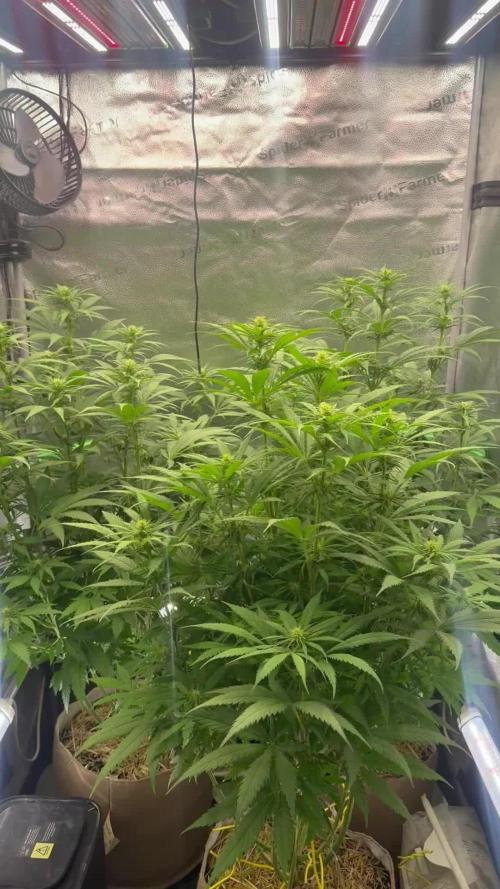
The stretch is finally over haha
Some good stacking going on so I switched over the blue supplemental light to red and turned on the under canopy lights - (40w full spectrum spider farmer). Worked ok in other grows
Tomorrow is day 21 so the girls will get a great clean up
Vpd - 1.25
Ppfd- 800-880

Likes
35
Share


@Bread_n_Buds
Follow
This young lady does not end up amazing me. Although she is perhaps the last born or almost she is the highest, the healthiest and perhaps the most beautiful of the Grow. Mark this strain The boys of Zamnesia do not joke at all and the Blueberry that seems to have to pass like a classic almost muted, breaking. I don't know if the Grow is enough. Top.

Likes
26
Share


@Ilovekush17
Follow
Week 6. Im watering every 2 days. Fish shit and mammoth p every 3rd water. Rest just ph'd water. Alot of tricombs on the Purple Punch. Getting fat and juicy. Probably gonna ha4vest the Purple Punches in a week. GMOs finally coming along starting to fatten up and become a bit crystally. They still got 4 weeks or so left.
Likes
6
Share


@PoshGrow
Follow
Welcome to Auto Alaskan Purple Grow by PoshGrow!
🍀 Week #2 2020 July 30th - August 6th
General Info:
When planted: 2020 July 23th.
Week: 2
Days: 7 - 14
Last Update Day: 2020 August 6th.
Plants: 5 Alaskan Purple Auto.
Equipment:
Tent: MarsHydro 1mx1mx2m or 39"x39"x72".
Light: HLG 260w V2 Rspec QB Kit.
Exhaust: 4" 322 CFM fan + Viper Carbon Filter.
Intake: 4" 100 CFM Inline Fan.
Oscillating Fan:
Lower: 4" Ram Fan.
Upper: 16" Oscillating Ram Fan.
Humidifier: Taotronics TT-AH001.
Dehumidifier: Pavlit MD750.
Soil: NPK soil 40% Compost, 50% Peat Moss, 10% Agroperlite.
Pot: 7 gallon Fabric Pot x 5pcs.
Nutriens: Fox Farm Trio.
PH Correcton: Chemoform pH-Minus Granulat.
PH Pen: Cheap Chinese one, I callibrate it every time I use it.
Comment:
Likes
13
Share

@Bncgrower
Follow
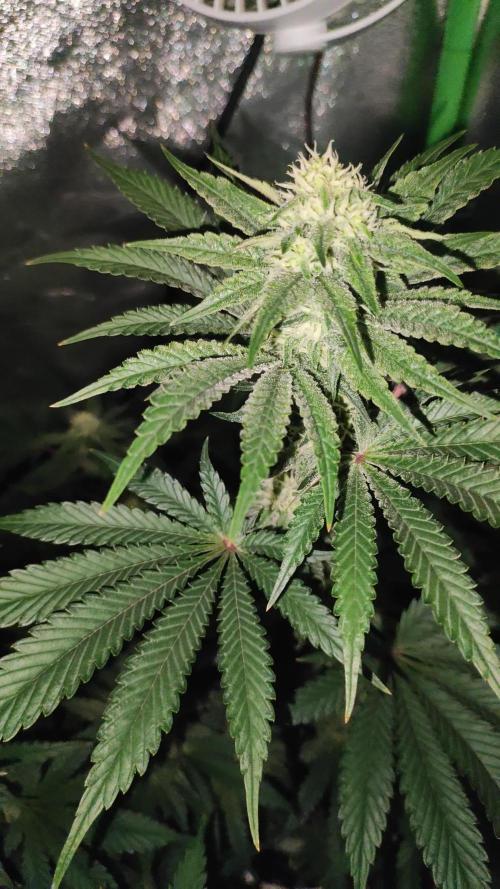
Week completed, these girls are developing great, the flowers already smell wonderful and are very resinous... Looking forward to the next few weeks.
Stay well! 💪🙏
Likes
32
Share

@Tropicannibis_Todd
Follow
👉Alrighty Then👈
👉Purple Punch F1👈
Had some real nice growth this week , had to do a little leaf management👈 The Strech Is On.....
Low Stress Training to pull the lower branches out ....
We also did a topping of this one , as she was getting pretty tall 😳
Everything is looking good 👍sidenote , I am using my well water which is hard so I am having slight issues 😅
So ive up'd the nutrients to accommodate the moving to Flower .....
Soil by Promix
Nutrients by Cronks
Lights by MarsHydro.ca FC4800 X UR45 X Adlite Deep Red And Blue
Tent 4x4x6.5 & Equipment by MarsHydro.ca
High reflectivity inner mylar
Thick Oxford fabric
Smooth heavy duty zipper
Sturdy metal frame
Zipper blackout cloth
Good anti light leakage performance
The 6in Inline kicks ass moves alot of air
●Blue Light Effect:
Blue light shortens internodes, resulting in shorter, stronger plants, ideal for supporting fruit development later. During vegetative growth, blue light promotes lateral branch development effectively.
Well this should be fun 🙃
Thanks to all my growmies out there for stopping by its much appreciated 👈
👉Happy Growing👈


Likes
5
Share


@Drtomb
Follow
Plants looking very green and perky. Responding to the Hydro Bio very nicely. Hoping for excellent things and beautiful white roots at the end when i harvest.

Likes
6
Share


@weedelicious
Follow
Day 88
Hey growmies,
It's been four days since the last short. Today, the Pink Gelato finally started drinking water again. Looks like the cinnamon and light watering actually helped. The other plants are doing okay, but the heat’s getting to them too. I think harvest time is coming up soon – just gotta find the right moment to start drying. All three plants got two liters with Cal-Mag today. Fingers crossed they all pull through!
Day 91
I’ve stopped watering the plants since I’ll be cutting them soon. It’s just way too hot right now, and I’m not liking how the leaves are changing color — it looks weird and I’ve got no idea why. I’m also a bit worried about mold.
Harvest
Harvest day today!
Had to cut my cannabis plants a bit early because of the heat – it’s been brutal lately. Still, the Tropical Marker and Purple Kush turned out great!
Unfortunately, the Pink Gelato got pretty scorched... too much sun.
Hopefully better conditions next time!
Hey everyone 💚
I just want to say a huge THANK YOU from the bottom of my heart!
To all the new followers – welcome to the crew! And to everyone who's been supporting me, leaving comments, likes, and good vibes – you mean the world to me.
Your support truly keeps me going and inspires me every single day.
Thank you for being here. I’m excited for everything that’s still ahead – and I’m so glad we’re on this journey together! 🌱✨
Thanks for watching, Please like and subscribe! stay tuned! Peace

Likes
17
Share


@4chuk
Follow
Oct.16 - Week 2 begins.
I need to stop editing my diaries high.
Oct. 18 - Looks like a slight calcium deficiency on the oldest leaves, I'll watch the newer leaves for spots before I increase CaMg though.
Oct. 20 - I have been watering with 20ml twice a day, growth rate seems to have increased, but still developing spots so I will increase CaMg today.
Oct. 22 - It's growing pretty well considering how sick it seems. Time lapse uploaded.

Likes
2
Share


@GarciasGarden
Follow
From the very beginning she was strong and sturdy kept up great with growth and when it came to flower she just blossomed I think I might have cut her a little early but still the smell and bag appeal is top notch ! I give it 4 stars because I think the bag appeal could have been better but other then that this is a great strain!

Likes
8
Share


@Froggman
Follow
I lost a ton of leaves on the NL after a cal mag deficiency that I wasn’t able to correct. But it’s still budding. The ICE is thickening up slowly but surely.
Likes
24
Share


@TKush
Follow
Started to flush the Pineapple Express today. Trichomes are cloudly, harvest in one or two weeks.
Likes
18
Share


@valiotoro
Follow
Hello everyone 😎
Week 6 of flower for the Amnesia Zkittlez🍭
Only 1 plant left then finito✔️
Very nice smell super sweet🤤
The buds are super sticky🔥


Likes
14
Share


@AGrade_Labs
Follow
These ladies are doing their thang! One week since sprout. Had to move them to cups to support the stem as they were flopping. Placed a fan for circulation to try and get some strength in them. First feed at the end of week one. Went with half dose of the 1EC measurement as per Pro Line chart.
Processing
Likes
8
Share


@BigBaby420
Follow
Left them alone this week except for a watering. First strong one I gave them. Found a mushroom in my soil a couple days later. Think I might have disturbed him because he died on me.


Likes
35
Share


@Greengirl420
Follow
🤗🤗🤩🤩😍😍🔥🔥💪🏼💪🏼🤪🤪
This girl is pretty! 😍 And smells sooo good!! Today is day 77! She’s been getting straight water for over a week and she’s almost ready to harvest! 🤩 She didn’t get very big but she seems thick! (And would be a perfect!! Wedding bouquet! 😘🙃)
On Sunday I pulled the center of the plant open some and it was pretty green in there so trying to give that part some more time!
Other then that, we are super excited to see how she taste! 😋🤩😍
Check me out and show some love on Instagram @greengirl420mipotfarm and our other grows @mi.pot.farm here on grow diaries & Instagram 🤗 🔥 🌲
puff puff passs 💨 💨