





Likes
5
Share

@HanzzCZ
Follow
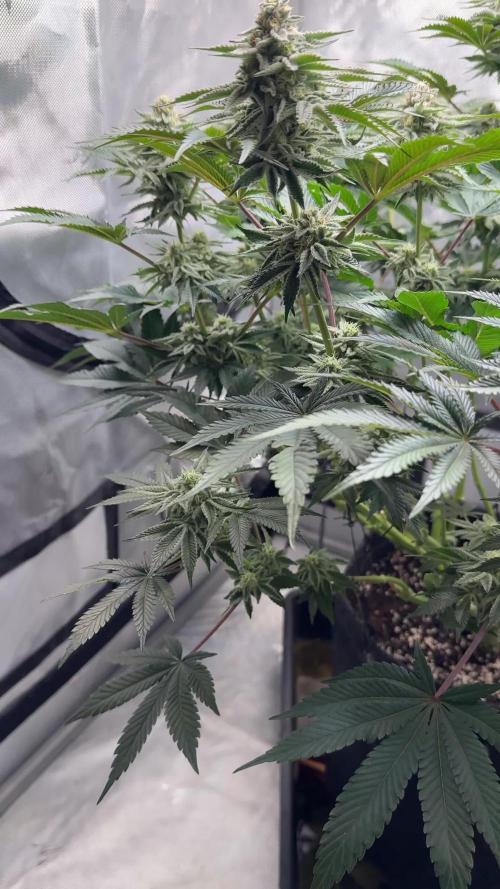
What’s uppp! Week thirteenth (five in bloom) is behind us.✌️🌼
This week, she packed on even more frost. ❄️🍓
I tried increasing the base AN nutrients to 2.5 ml/l, but that seemed to be a bit too much for her and she started showing slight burnt leaf tips. 😅
I adjusted the feeding schedule back to the dosage listed above for the following waterings.
Watering volume was reduced to 6L, but frequency was increased to every other day.
Overall, she seems very happy, and so is the grower! 👌🌱
Good luck every one! ✌️
Any tips or advice are always welcome 😂🔥
CZ
____________________________________________________________________________________________________________________________________________________
Servus, třináctý týden, pátý týden v květu, máme za sebou. ✌️🌼
Tento týden zase o něco víc obalila cukrem. ❄️🍓
Zkusil jsem zvýšit základ AN na 2,5ml/l, na holku už to bylo asi hrana a chytla trochu špičky listu do černa. 😅 Další zálivky jsem upravil dávkování, které je uvedeno výše.
Zálivka snížena na 6l, ale zvýšená četnost na obden.
Myslím, že holka je oukland, panícček je spokojeny! 👌
Ať se daří! ✌️kdyby měl někdo nějaký typy/rady uvítám váš komentář. 😂🔥

Likes
28
Share


@TheHighentist
Follow
1st of December harvest
10 Days dry time
31 days in curing phase (as im writing this)
Dry time was 9-10 days (Depending on the size of the buds)
Humidity 51% RH
Temperature 15C
https://www.youtube.com/watch?v=JBNeJTwUOFY&ab_channel=MedicinalGenomics
(Found a lot of good science to back up a dry and cure method)
Curing is still an ongoing process and the bud gets better with time.
But as in now, 31 days later in cure, the buds taste fantastic, smell amazing and the smoke feels smooth.
I am still amazed how the ladies bounced back after a chaotic 2-3 first week of veg. Big thanks to everyone who have been supporting, a very good learning experience.
THC 22%


Likes
3
Share

@CaveGanja
Follow
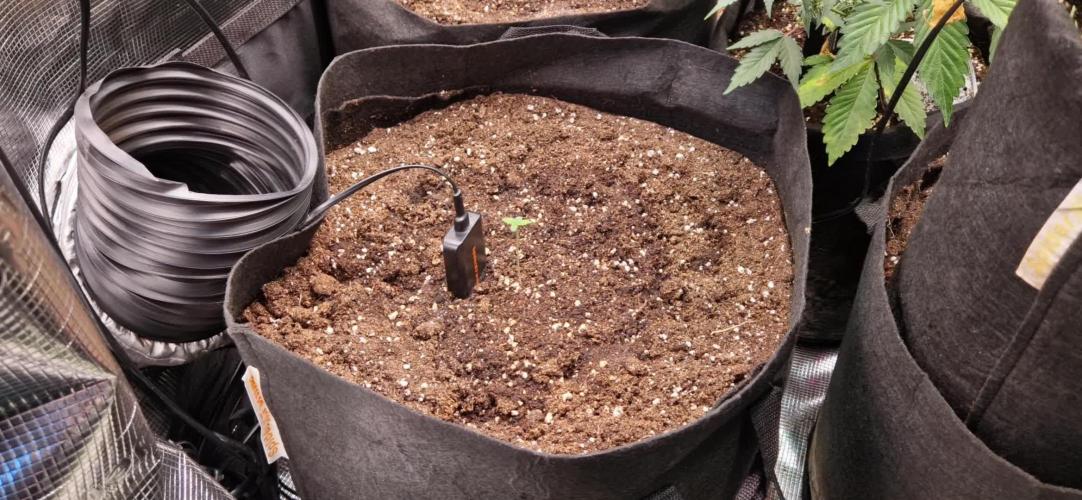
She is doing realy well didnt changed the feeding scheme buds getting daily bigger.
im realy impressed how she recovert from the wrong light cycle.
I have 3 fans running to deal with the high temps.
Still i have one more but i use it for my self if i reach 35C in the tend i have to suffer for the plants.

Likes
72
Share


@BodyByVio
Follow
This week I finally completed the RDWC system. Everything is working how it suppose to. The chiller is set to 66 degrees Fahrenheit. Also I start adding 1000ppm CO2. Lighting intensity ( Fluence Spydr 2i) is set to 75%.

Likes
13
Share


@Pemidaisy
Follow
20 July - Foliar only today as soil is still wet
21 July - full water and foliar
22 July foliar with amino boost solution
Preparing compost tea to be applied tomorrow after 24-36hours
Compost tea recipe:
5 gallon dechlorinated water
1/4 cup worm castings
1/4 cup forest soil
1/4 fungal dominant compost
1 oz kelp meal
3 tablespoons rock dust
Teaspoon humic and fulvic acid each
1.5 tablespoons unsulfered molasses
23 July - fed tea today
24 July foliar only
25 July - small water with foliar
26 July - foliar with amino boost 0.5ml per litre

Likes
82
Share


@UnorthadoxDude
Follow
Hello growmies! Welcome to week five of An Epsilon Adventure! Massive thanks to both Shogun and Royal Queen Seeds for sponsoring this grow!
The girls are all at different early flowering stages, but they are only days apart from each other.
I have a bit of a quandary now though, as I am no longer following the nutrient schedule as these plants are too fast for it. So I am unsure whether to start PK warrior or not yet.
I have also realised I have probably underfed them in the last week or so, which to be honest isn't a big deal for me right now as they are already waaaaaaaaaaay bigger than expected.
Let's talk about that a moment. This strain has an average height of 50-70cm. I wonder if those numbers were for soil grows? It seems for coco you will get even bigger plants. Case in point these six girls measured at 3pm 24/7 day 30 as follows:
Plant 1: 111cm
Plant 2: 99cm
Plant 3: 90cm
Plant 4: 89cm
Plant 5: 85cm
Plant 6: 84cm
Plant 3 appears to have stopped stretching and is the most advanced into flower.
Plant 4 is right behind it and has slowed down but not yet stopped stretching.
Plant 2 is next in terms of flowering development her stretch is slowing.
Plant 5 is still stretching rapidly and is coming to the end of preflower. No concern really at 85cm she has some room yet.
Plant 6 is still stretching rapidly and is still in preflower. Slightly concerned despite her 84cm stature as she has been the most beefy looking plant all along, so I am expecting her to grow a good bit more.
Plant 1 is still stretching rapidly and is still in preflower. Extremely very concerned about this one. The light is about as high as it can go. 111cm!! I have scoured the internet and the tallest Epsilon F1 I have found was 95cm. It's great that she is so happy this plant, but if she gets much taller I'm going to have to super crop her main cola.
Whatever happens I am starting to dream of smashing my yield target out of the park, these girls are all impressive. Hard to believe they are just 30 days old.
Daily Updates:
###
Week 5 Day 2 15:00 24/7
Photographed.
###
Week 5 Day 2 23:30 24/7
fertigated 1.6l and updated nutrient schedule for the week
###
Week 5 Day 3 20:00 25/7
took a short video
###
Week 5 Day 4 05:00 26/7
photographed
###
Week 5 Day 4 18:00 26/7
Measured (brace yourself).
Plant 1: 126cm
Plant 2: 107cm
Plant 3: 93cm
Plant 4: 94cm
Plant 5: 97cm
Plant 6: 96cm
Plants 3 and 4 have stopped stretching now and are fully into flower. At 93cm and 94cm respectively, by the end of flower these girls may hit 1m but they wont go much more than that.
Plant 2 looks to have just about stopped as well. It might go another 10cm overall.
Plant 5 is still stretching but I think not much more.
Plant 6 is still stretching and I am still expecting quite a bit of growth from her.
Then there is plant 1. 126cm and still stretching. It has now grown beyond the height of the light. I hope it can somehow finish itself before it hits the top of the tent. I mean the secondary colas are over 1m already. It is a great shame this giant plant doesn't have more horizontal space to itself, either way it is absolutely shocking to see. I really do not want to super crop her, but am out of options.
This grow, incidentally, constitutes the first and last time that I let any indoor cannabis plant go untrained. With basically 4 x 4 x 4 of usable space, training my plants is not really optional - and now you can all see why. This "50-70cm" strain has rapidly outgrown my space. RQS it may be time to revisit the height claims on this strain. Just saying.
###
Week 5 Day 6 01:00 28/7
Rearranged the tent and photographed.
I have been regularly rotating the plants and periodically moving them around.
My problem is now plant one has already hit the top of the tent and there is no easy way to give it anymore space... still not sure what I am supposed to do but it's fine for now... tried to capture the problem with the photos.
As well as plant 1, plant 6 looks like it's going to keep going for a good bit yet, and plant 2 is still putting a bit of height on.
I took plenty of photos today to try and capture the essence of the jungle. It is quite unbelievable what these plants have done. I just cannot stop looking at them, they are magnificent. I have not fed for 4 days, will probably feed later I am just trying to slow them down a bit by not feeding them. It doesn't seem to be working.
###
Week 5 Day 6 23:00 28/7
Defoliated heavily all plants. Fertigated 2l each. Removed some more lower side growth off the smallest plant (plant 3) to make space.
Might leave it a few days before I photograph again.
Plants 2, 3, and 4 are all well into flowering now, plant 5 is not far behind them, but plants 1 and 6 are still in preflower. :(
What is really remarkable right now is the difference in colour between the plants further into flower vs the plants still in preflower. The plants in flowering have much darker leaves.
---
Thanks for reading growmies! 👊
==========
Tent: 120cm x 120cm x 180cm
Light: 600w HID Elite Dual Spectrum HPS + Angel Wing Reflector
Air: 5" duct fan system with carbon filter ~300 m3/hour + RAM 9" floor fan + 4" intake fan
Pots: Air Pruner Fabric Pots 30l - UGro XL Coco + horticultural grade perlite (~20%)
Seeds supplied by Royal Queen Seeds https://www.royalqueenseeds.com
Nutrients supplied by Shogun Fertilisers https://www.shogunfertilisers.com/en
==========


Likes
2
Share


@BemaGwaai
Follow
No real change - plants growing.....I've been taking measurements and recording them in a database. I'm able to compare them against Amnesia Haze

Likes
8
Share


@Mo_Powers
Follow
summer is slowly coming to germany. this beautiful plant is growing tall and bushy. at the beginning of the week she showed her sex. harvest is planned for the end of october or mid november. so there is still plenty of time for it to grow. it is vigorous and healthy.😋✊
Likes
27
Share


@adam_pawloski87
Follow
This week went really great! Plants are looking super healthy today at day 22 from seed!! Today they got a dose of just pure water phd at 6.5 ! Temperature an humidity has been staying pretty stable everyday, staying around 70-75 degrees and 58-61 % humidity!! Can’t wait to see what these girls do this week ! Hope you all enjoy , an had a great safe weekend! Peace love an positive vibes to y’all Cheers 😶🌫️💨💨💨If there’s any questions, please ask me 🙏🏻



Likes
15
Share


@SamDo
Follow
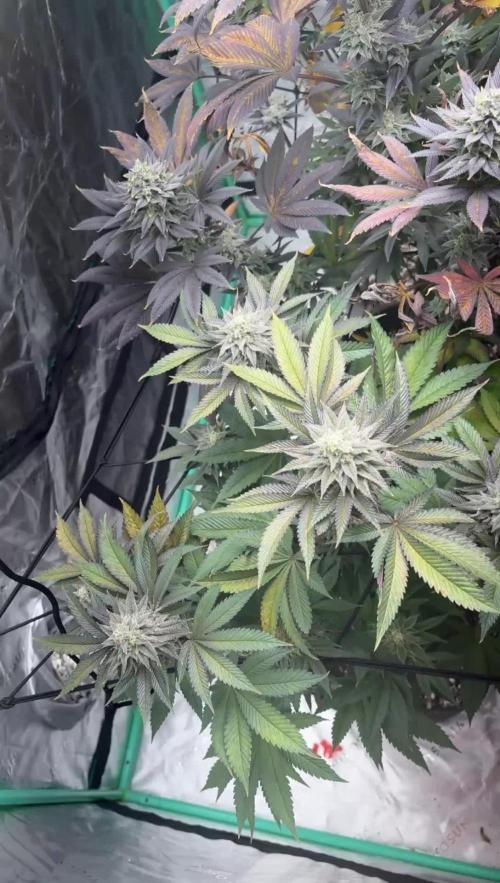
Hello,,, semaine 11, floraison 7.
Nous sommes à la fin, ja vais les laisser aujourd’hui dans le noir pendant 24/48h. Et ensuite procéder à la récolte et au séchage lent pendant environ 15 jours.
Je suis assez satisfait de ce cycle de culture même si il y a encore pas mal de choses que je peux améliorer pour la suite. Comme l’utilisation du toppping, du scrog et du LST pour essayer d’améliorer le rendement et la qualité.
Je suis aussi très très satisfait de ma lampe, la slim 600H de chez OpticLED. La lampe semble vraiment donner de très bon résultats. J’ai hâte de refaire une cycle avec.
Voilà, je referais un update avec de nouvelles photos et vidéos cette semaine dans 48h avant la mise au séchage.
Happy grow...😎

Likes
8
Share


@FluffyTheTestPig
Follow
The F.S is the densest plant I have ever grown leafs are bigger than hands. HASNT pre flowered yet. Site is slow so i stop typing

Likes
7
Share


@vicisdope
Follow
Ms Mia Wallace went to town and blew the f up. Lots of leaf growth but no sign of bud spots- I know it’s early days tho.
Watered with half serving of bloom nutes. Not the ideal nute mix I think, but served me well last grow.
Also, as I turned up the light to max power, I noticed heat stress so i turned it down and successfully installed the worlds most eco friendly trellis - one minute- hockey net - next minute - weed trellis. It’s called upcycling boys and girls.
I know it’s shit, I’m gonna reinstall it one more 1/4 ass so it’s a full half-ass scrog.
Point is, the canopy is flat, pushed that puppy down so there’s more distance. Light back to 100%.
Humidity was a little higher under the canopy, even with the dehumidifier, so I put my inline fan back in (was just a booster in-line fan before) and the temp and humidity is dropping.
Saw a little bug. Hit the top & bottom canopy layer with light neem oil spray then incecticidle soap.
I saw a small critter so I put Diatomaceous Earth on a upside down Tupperware lid. Don’t know if that works. Last time I did a top coat of the stuff on top of the soil - something happened and bad nute burn. Anyone know anything about this?
Finally, also tied down a bunch of branches to let the light hit the lower areas.
Tune in next time, where I’ll show you how to make a trellis from a pair of spandex Leggings , Peanut butter and a single streamer from the handlebars of a kids bicycle.
Keep your buds green, and your grow room clean.

Likes
28
Share

@Natrona
Follow
Divine Seeds 2025 Auto Contest
👉Sponsored Grow👈
AK-47XL Auto
W6F2
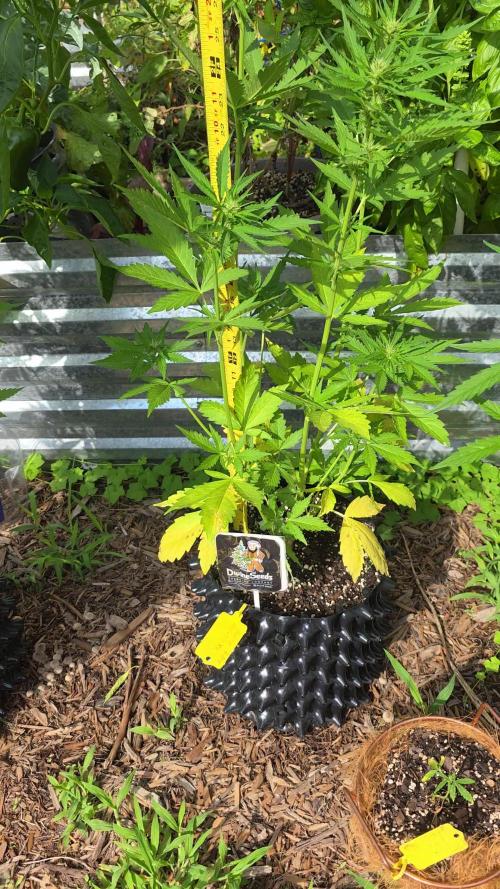
The weather was rainy with thunderstorms early in the week becoming hot, humid and overcast. I fertilized with I49 grow 1 tbsp/gal & 2 tbsp I49 Flower. I added this as a preventive measure since I’m seeing issues with nitrogen usage in the lower leaves even though she is in super soil. AK47 must be a heavy feeder. With the extreme heat and rain, my AK-47xl. She grew a foot and is now 31 inches tall. She demonstrates resistance to fungal diseases and bug damage.
In the background noise on the video is Cicadas. When they hatch, they crawl onto a tree or plant and molt. The adult has wings. This is the empty body casing. This year there are some but not a lot as in many years of their 17-year cycle.
As always, thank you all for stopping by, for the likes and most of all growers’ love and support.
Stay green, growers love 💚🌿
💫Natrona💫


Likes
127
Share


@OrganicGreenGoddess
Follow
This week was great my girls are growing well and becoming very beautiful young ladies 😂. Starting to flower and I can’t wait for them to Become mature women 😂 I’ve definitely got a girl crush, I’d kiss a girl and I’d like it if I could kiss my plants 🌱! ❤️❤️❤️
Likes
4
Share

@Mrdub
Follow
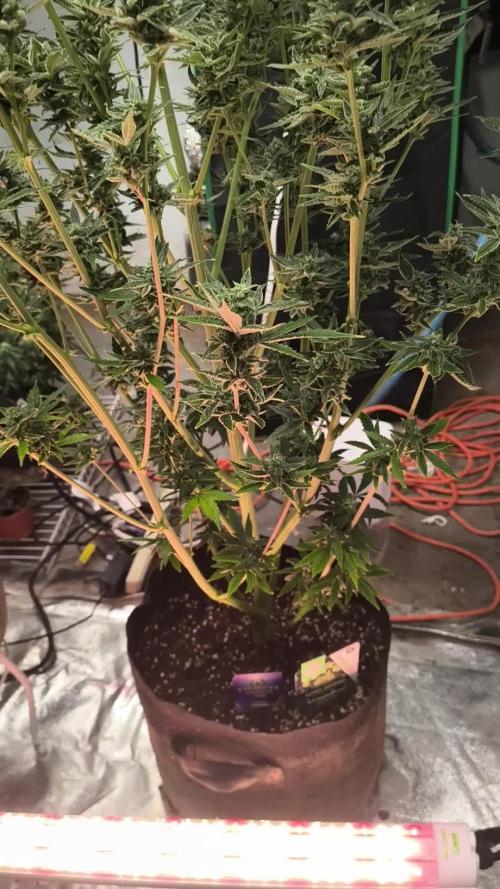
This girl is straight rocking and flexin hard colas really starting to fatten up trichome coverage getting thicker got some purple tips she's not as foliage heavy barely have to defoliate under canopy lights rocking even the lower colas getting fat and frosty has a sweet soapy smell with a little citrus on the back end plagron got these colas lookin gourgous hopefully another couple weeks till harvest trichomes still pretty clear adding the extra little bit of cal mag has helped haven't had any spots yet maybe a few burnt tips running lights at 100 percent 2 day 24 then 8 hrs off 6.2 pH gonna start tapering the nutes off then start a straight carboflush next week but till then imma keep pushing her as hard as she can go and she seems to handle it like a champ she drinks a gallon of water every other day has a nice thick stalk and branches nice thick knuckles so here's to another week of growing
