







Likes
2
Share


@Romobo16
Follow
I finally received the new 1000w Spider farmer new light, the AC infinity extractor and the humidifier, I’m loving them and also the plants.
I moved the light to 18 inches same intensity 50%, they are grown very fast, I’m really excited.
I also did water changes to all of them and I’m now using 4 ML of hydrogen instead of 3 ML.
I ordered Root drip of FF but looks like they are in back ordered, will see when it arrives.


Likes
22
Share


@HighRangeFarmacy
Follow
Slowly tapered the nutes mainly just watering with 1/8 tsp per gal. of open sesame. Since I'm new I'm compiling everything I've read and making an educated guess at how I am supposed to flush these girls for 2 weeks. But simultaneously never just feeding plain water... What do you guys think? How close are we. Need tips

Likes
49
Share


@masterofsmeagol
Follow
7/11 Got half in of rain last night. Glad I didn't water. Ph of rain water is very acidic. Added supports to the blueberry cheese in the 50. I just used string and went diagonal and attached to the cage. Wrote a ton but it disappeared. Anyway looking at previous diaries I was wrong about senescence. It wad the life cycle of those earwigs that did that to my plants (see other diaries). This soil mix is amazing. These plants gave only gotten like two small feeds of big bloom. I showed my commercial buddy and I'll keep it between us what was said but it made me feel really good. I'm considering either expanding the cage in one direction with some lumber I already have or moving a couple outside tge cage. That way I have more room. He said he's seen plants structurally similar reach huge heights (14f) so I'm just trying to avoid future problems. I at least need to get the trellis on. I hope poor that's food enough. Did a real nice video this morning but nothing wanted to upload and it just uploaded the same one twice. I'll try again and hopfully it will go up. If not I'll put it up tomorrow.
7/12 Dad has surgery this morning. I did a quick video and took some pictures. I need to do some rearranging with the plants and cut a pallet to fit in the back. Then I can put a vertical trellis up. Haven't decided if I'll add on to the cage, remove a couple plants or just rearrange things but I'm leaning towards the later. They will need water again and I'm wondering if I should start nutrients but everything looks so good. By this time on past diaries I'd be losing all my leaves bu now. MI think it wad part ear wigs and part to many nutes. This soil mix is taking these plants through veg. I'll probably do a feeding soon but it will be organic and it will he small like a big bloom or ancient amber. Im leaning towards not using growbig this year as my plants seem to be doing great without it. We'll see. I'll keep this updated.
UPDATE: Went back over and gave plants a full watering. Some were slightly drooping. I was going to add nutes but decided against it as I didn't see any deficiency. So far NO Earwigs! I comed through the plants and I did find a jpn beetle which I happily killed. I mixed up 8 gallons of water and gave it to the 11 plants so it wasn't quite a gallon a plant. I need to rearrange the plants so I have room to move around. I also need to cut another pallet and use the spaces I'm not. Trellis needs to go up.
7/13 I think I've got the watering amount down. Now just to find how often which will depend on weather. I've watered very little this year. They loved that gallon. I was going to use big bloom and kelp me/you but looking at my garden I decided not too. My buddy asked what i was addingvthings for and to wait fir what i added to do what I wanted it to do. I see no nutrient deficiencies so why add anything? I think this soil mixture will get me all tgexway through veg. I dont plan on using much in fliwer either. Definitely good genetics. I really need to cut that palley and move the 1 10gallon to the far back coener. It will open thibgs up so much better. The garden looked so beautiful this morning. Getting very aromatic. I started untangling trellis netting but had to leave. I'll update what I do. Happy growing folks
UPDATE: Went back over as I had a slight intuition that I needed to check the garden. I found and killed at least 7 jpn beetles. That's what's been making holes. They tried to escape and bounced off a tarp but I got it. I went through the interiors and found two pillars. If these beetles are gonna be around I'm ordering a net. I'm also close to positive I'm going to extend my cage in the back a few feet. Things are getting unmanageable in here. My buddy said I'll be having problems soon if I don't do something. I'll document what I decide to do.
7/14 Found ONE jpn beetle in the garden this morning. I can manage those well enough. The birds help too. I check my garden multiple times a day so I manually remove many pests. However I've noticed some thrip damage on a leaf and a leafhopper damage on "A" leaf so there are "some" pests around but not enough to spray shit. A couple wasps were doing there job while I was there. Supposed to get thunder storms after three and tonight. Supposed to get over a half inch of rain tonight. I lifted the bags and decided to hold off and let mother nature take care of it as the bags weren't totally dry. Only problem I really have is space. I AM moving that 10gallon (that's the same size as some 20's) in the back. There's 27in not being used and a few feet the other way. My buddy cautioned me that I'm going to have problems since my plants are so crowded. I agree with him. I spoke with me father and we have most materials to extend my cage four feet in the back. I think that's my plan. I'll extend the structure before the stretch then I can put up the supports. We'll see how this goes.
UPDATE: Went back over to check the girls as I had a feeling I ought to. When I got there I saw that a couple of the blueberry cheese were pretty light (liftng the smart pot) but the others seemed to be fine. ONE 10th planet was light like that and the purple punch in the 10 gallon was as well. Each plant thar needed it got at least a half gallon of water. I'm waiting to see if we get the thunderstorms and the half inch of rain. I watered the MASSIVE blueberry cheese in the 50 but I only gave it 1 pitcher which is like 1/4 gallon or so. Don't know why I even gave it that. Looked fine but the soil WAS pretty dry. Next year I'm giving myself way more room. I was running trying to chase these jpn beetles. This time I have the dawn and water and a measuring cup to knock them in. This ain't my first rodeo. I did notice some bright yellow streaks on a leaf edge and I'm hoping it's not septoria. I doubt it but I have an anxiety disorder and I worry. I hope I can get the cage extended sooner rather than later. It's getting hard to move in there and more importantly I can't take any more plant pathogen problems. I'm considering starting a plant doctor regimen just to be safe.
7/15 Got a bunch of rain last night. No jpn beetles in the garden and not really much damage. I did notice this (I think it's leaf hoppers) that leave those dots close together on a leaf so it appears I've got a variety of pests. I'm considering how to approach this. I mean the damage is very minimal but I don't want it to get out of hand. Another thing I need to look out for is leaf septoria or any other fungal pathogens. I believe that has been part of my problems in the past. I think that's what caused my earlier grows to drop all their leaves so quick. I think I'm being overly cautious but its very crowded in there. With my father just getting out of surgery the girls will need to wait a little bit before before I can extend the cage. I could still cut the pallet and move the 1 10gallon and that would give more room. I rearranged a LITTLE BIT so they have a little more room but I've really got to get this cage extended.
UPDATE: IT Rained so hard I had to pull the car over. We hydroplanned the whole way home. After working ob my house I went to see what the damage would be like. NOT A SINGLE BREAK THAT I COULD SEE. I took a video but since the wifi here sucks I'll have to upload it tomorrow. Walking around in the cage even if I cant get it extended I think I'll be OK. It obviously will open me up to lots more issues but at the very least I can reorganize before I build on. The 10 gal purple punch would fit perfectly in the back and I have a pallet I can cut to fit it in place. Putting that one back and pulling the others forward will be much better than what I've got going on now. I'm also thinking about running an extension cord and putting fans under the canopy or at an angle to keep the wind moving. Just thinking outloud. However after that storm the girls looked as happy as I've ever seen them. All happy praying to the sun, thankful for the much needed rain. Mother nature does a pretty good job with out me messing with it. I've noticed a couple interior lowest leaves turn yellow and die like a nitrogen deficiency but everything else is fine. Also noticed a leaf that looked like a p deficiency but again, it was the VERY bottom leaf on ONE plant. Again the rest of everything looks fantastic. I'll keep an eye out for anymore nutrient deficiencies and if anyone that reads this sees some please let me know. I should've taken stills since they looked so good but I got it on video.
7/16 It POURED last night and throughout the day. TORRENTIAL rain. The branch breaking sheet rain that us outdoor growers learned to fear. My plants aren't trellised currently. I know what I need to do now. I have a pallet to put in the back corner and I'm moving the purple punch in the 10 there. And pulling others forward where there's more room. Then when I extend it (it's gotta be done this week) everything g will be in their proper place and I can just throw on a vertical trellis. I also noticed more (leafhopper) damage on a leaf. Different leaf of the same plant so I'm considering spraying something. I have a number of products but I was trying not to use them. Luckily I have these diaries so I can look back and see certain plants reactions to certain nutes or fungacide/insecticide/nutes and the doses used. I haven't been using much but if my plants will remain cramped I'm going to start the plant doctor. I'm seeing more pillar damage too but BT is super narrow so I'm thinking when I fo spray for pests I might use cap jack and be done with it. Then I can apply the BT in flower if it's necessary. I took a video but I have to wait until tomorrow to upload. I took a quick snapshot though.
7/17 Despite the torrential rain I don't have any breaks. I'm noticing more pest damage though. Another leaf on the same plant had those closely shaped round circles. I forget what pest it is but it's there. Caterpillars are there I'm sure so I may do a preclcentative spray. Just unsure what I'm going to use. I lost a COUPLE very bottom interior leaves that look like they just got used up. After this rain I think think the plants might benefit from a feeding. Probably next water after they dry out. I REALLY need that cage extended. I expressed that today and it should be done this week. I'm looking for pallets today. I have the little one that I can put in the back which will allow me to move the 10 gallon and move the other forward. That will help some but I need more room. I'll update as I go.
UPDATE: GOT A SMALL PALLET AND IT FIT PERFECT IN THE BACK ROW. I MOVED THE PURPLE PUNCH IN THE 10 GALLON ONTO IT. I SHIFTED A BUNCHVIF THINGS AROUND. I ROTATED ON BLUEBERRY CHEESE 180 DEGREES SO IT WOULD FIR BETTER. CROP ROTATION IS GOOD ANYWAY. I TOOK VIDEOS AND YOU CAN NOW SEE THE ROWS MUCH BETTER. 2 WITH 3 and 1 WITH 4. IT'S SIGNIFICANTLY BETTER THAN IT WAS. I CAN GET AROUND ALL SIDES OF EVERY PLANT NOW. GRANTED THE LARGE 50 IN THE BACK IS GOING TO HAVE SOME TROUBLE BUT ILL JUST STAKE IT TO THE CAGE. IT WILL GROW TOWARDS THE SUN ANYWAY. IM SUPRISED I DIDN'T LOSE A BUNCH OF LEAVES AFTER THIS RAIN. MOVING THINGS AROUND AND LOOKING ON THE INTERIOR OF PLANTS I FOUND A COUPLE LEAVES THAT HAD BEEN USED UP. I REMOVED A COUPKE LEAVES THAT HAD DONE THEIR JOB. I'LL UPDATE AS I GO ALONG.

Processing
Likes
3
Share


@CityFarmer
Follow
Hello everyone,
Well its getting kinda packed in the greenhouse so all i have for you guys is a little video,
See you guys next week... 🤘🤘🤙🤙


Likes
25
Share


@Kakui
Follow
Comenzando un nuevo cultivo de 12 semillas Jamaican Dream de Eva Seeds.
Sustrato 50% turba, 50% vermiculita con un pH de 4.0, por lo cual tuve que agregar dolomita para subir el pH del suelo a 5.5.
1.-Germinando directo en sustrato.
2.-al indoor para aprovechar la temperatura que genera el led, los días están algo helados y debo mantener la temperatura sobre los 20 grados Celsius, aproveche de espolvorear algo de great white sobre el sustrato y agregar más agua.
3.-aun nada, ansiedad x1000 😰, espero que al menos germinen 9 de las 12.
4.- Día 1, Por fin germinaron!!!!, 12 de 12, la ultima está asomando, ya les saque el plastico y les di el primer riego de agua 6.0pH con voodoo juice, tarantula y piranha, 1ml por litro de cada uno. Feliz!! 😁
5.- Día 2, ya están mostrando las primeras hojas de un solo dedo, 2~4cm de altura.
Ahora a esperar que salgan las primeras hojas verdaderas para empezar a contar como primera semana de vegetación.


Likes
50
Share


@Annakonda
Follow
Rinçage. Je coupe déjà la mimosa et la cereal milk aujourd'hui. Le reste à suivre.


Likes
17
Share

@Bncgrower
Follow
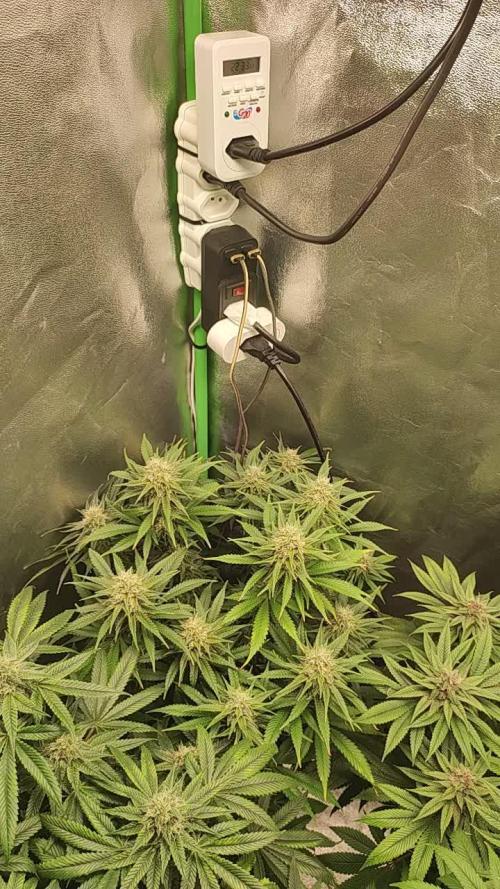
This girl is really doing very well, I loved the development and more by the color of the trichomes I would say that it would already be a great time for harvest, but it doesn't seem ready to me.. I will follow the schedule this is the last week with the hand well loaded with nutrients.. and in the next weeks I will slow down the pace and in the other I will do the wash.. I had never grown with mineral before, I had no idea how much salt accumulates, even using the cleanse a few times a week.. it is surreal so the wash in the last week has to be very well done.. It will be an excellent result, I am sure.
Thank you for taking a little of your time to pass on my humble diary. 🙏✌️👊🌿🌿🌿
Likes
31
Share


@Joni2017
Follow
Day 61, the branches begin to bend by the weight of the flowers🙌💪😋 temperature 26ºC ☀️ humidity 65% 💧a day of irrigation with nutrients💦💦other day without nutrients💦 binaural sounds🎼😄👍
Likes
18
Share


@valiotoro
Follow
I want this monster to turn purple so im gonna drop the night temp to 13• degrees for one week!
Likes
18
Share


@Spiritual_Herb
Follow
This new week started better as with some flushes I brought the runoff back to 6.5/7, the plant seems to be growing well


Likes
19
Share


@DrBud420
Follow
21.06.
Cherry Poppers 1# Day 56#
Cherry Poppers 2# Day 53#
With a little delay because I'm a lazy stoned person, and in addition the responsibilities regarding the plants are already starting to grow, and I also have a lot of work around the garden and then I don't always arrive in time to release the update.
The plants are progressing well, but now they are already hungry, so the next watering is for food.
Two days ago they were topped for the third time, I also topped the two highest side branches.
Yesterday was the end of their eighth week, the pictures are also from yesterday.
Last night I sprayed them with SMC for prevention, but none of those pests can harm the plant outside as well as inside..first of all, the plants are much bigger, and therefore have much more leaf mass, and secondly, it is nature, there are many of them in nature, the only thing that can destroy them all are caterpillars during flowering and mold when the humidity is too high or when there are frequent rains, everything else does not worry me at all.
Tomorrow I will move them somewhere where there is a lot less grass because now they have already filled this space and they can't expand any further, so in order for them not to get too long and to go wider I have to move them where the grass and other plants won't bother them.
Stay High and Keep Growing!!!
Likes
5
Share


@WooderIce
Follow
flush week! plants looking beautiful. Ill continue to flush for another 4-5 days, harvest mid next week. buds are so heavy, had to do some major tie ups to keep them upright for these last few days.

Likes
6
Share


@Weedzoks
Follow
Holà 😃
Cette semaine la Big Bang qui accompagnait les deux Royal Domina a été retiré de la tente, ces deux dernières ont donc tout l’espace pour elles et ont eu le droit à un palissage pour homogénéiser la canopée.
Les nuances violettes s’intensifient chaque jour un petit peu plus, particulièrement sur le « phéno #2 », très agréable a regardé 🤩
L’odeur quand à elle est très crémeuse et fruitée.
Les dosages d’engrais commencent à être réduit pour bientôt commencé le rinçage au Power clean de Bio Technology, qui a fait ses preuves sur la OG BubbleGum Auto que vous pouvez retrouver sur mon profil ;)
À noter aussi que le panneau Mars Hydro 300W est très efficace, j’en suis ravie
Je vous souhaite à tous une agréable semaine et bon grow ! 👍


Likes
2
Share

@LveR
Follow
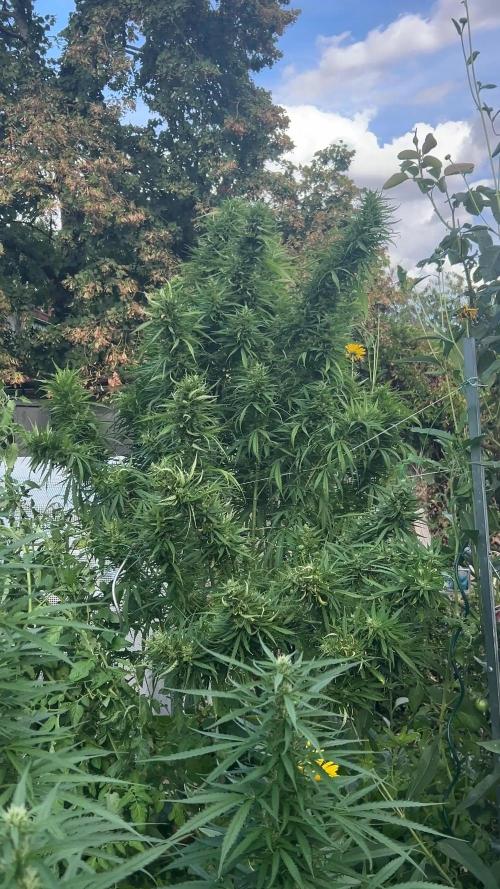
First time that she saw the rain - And second wind storm, disheveled but undamaged - I had to add few big sticks - A net or a cage would have been perfect, but too ugly :)
My own haze, inbred since roughly 20 years is a poly-hybrid landraces cross :
[(Colombian Gold 1972 x Mexican (Oaxaca)) x (Thai Lemon x Gambian)] (I replaced the Indian with an African - Original haze is Colombian x Mexican x Thaï x Indian), which I crossed over the years with a male Double Jamaican (Blue Mountain x Lambsbread), a male Nevil's Haze, and a PCK male (who add a deep purple bud color to a third to a fourth of the pheno)