


Likes
Comments
Share


@Nune2021
Follow
happy Halloween 🎃 🎃🎃zusammen !! Die Pflanze macht sich gut aber ist nicht mehr viel in der hohe gewachsen und fängt schon an zu blühen sieht ganz lustig aus die topf combo !! die Pflanze ist vielleicht 25 cm groß also ein Zwerg

Processing
Likes
39
Share


@Weird_Jimmy
Follow
👉The plant was 11" tall. it probably would have been 12 or more if not FIM'd. It almost doubled in its overall size and total vegetation. The FIM has all the secondary branches poking out from under the large fan leaves. I do a little tucking to help them soak up the rays. I may not have FIM'd low enough or something because the leaves that were the outside of the growth node I snipped have gotten big. They just look like they have no tips. I think I ended up with the desired FIM goal of 4 new growth tips that will be cola's.
👉I will assist the branches get maximum access to light by rotating the pot frequently, I will also either support or direct them with bamboo steaks that I will attach to the metal spikes that are attached to the hoop ground the base of the pot. Its just the top of a tomato cage turned upside down with the top hoop around the base of the pot. It fits it snugly and doesn't slip. This allows me to attach the support steaks to the outside of the pot instead of inside in the media. I didn't like having the plant inside a cage or with sticks in the way when its small. It allows me easy access to the plant, and an easy way to add the support when the plant needs it as it get bigger.
👉I switched to week 4 nutrients this week and will probably be a week behind the timeline of the nutrient chart from GH because the plant had a slow start. The pH is always targeted to 5.9, the EC for a batch is 1.54. I have learned enough in the short time Im growing to understand what each nutrient week batch can do for the plant and am fairly confident I can judge the plants growing stage to match it. The 4th week is called transition and I believe thats accurate for my plant. it hasn't declared as of today, but I am anticipating that this coming week some time.
👉The runoff has been very consistent and I only added the low EC rinse of 1.5 liter one time. I always immediately follow a low ec feeding with a regular batch of nutrient. The last two days the run-off volume has started to lessen and the EC staying only 20EC above the inflow. Ive been averaging .75l for total run-off volume following a 1.5l fertigation. Tonight's run-off was .5l and 1.74EC. The lower run-off is due to the plant having more roots and being able to drink more of the moisture. when the run-off drops below 20% of the inflow volume I will increase the total volume in 1/4l increments.

Likes
30
Share


@XperencdGmanXG
Follow
Pretty resistant to wpm but still susceptible. I'd like to breed in more resistance but that may lower cbd content. So we will see what she taste like and go from there and

Likes
327
Share


@FoTwenny
Follow
••••••••••••••••••••••••••
Sept. 28 - Oct. 4
••••••••••••••••••••••••••
CULTIVARS:
••••••••••••••••••••••••••••••••••••••••••••••••••••••••••••••
WEDDING CAKE: STARTED = 8/10 • BLOOM = 10/1
RED HOT COOKIES: STARTED = 8/10 • BLOOM = 10/1
CHOCOLATE MINT OG: STARTED = 8/10 • BLOOM = 10/1
WILDBERRY: STARTED = 8/10 • BLOOM = 10/1
CINDERELLA 99: STARTED = 8/10 • BLOOM = 10/1
PEYOTE WIFI: STARTED = 8/10 • BLOOM = 10/1
SUGAR TITS: STARTED = 8/10 • BLOOM = 10/1
MONSTER ZKITTLEZ: STARTED = 8/10
BLUEBERRY: STARTED = 8/10 • BLOOM = 10/1
BLUE DREAM: STARTED = 8/10 • BLOOM = 10/1
HELL'S ANGEL OG X PLATINUM KUSH MINTS: STARTED = 8/10 • BLOOM = 10/1
COTTON CANDY CANE: STARTED = 9/5 • BLOOM = 10/1
•••• EXTENDED VEGETATIVE PERIOD ••••
MELON GUM: STARTED = 8/10
GREEN GELATO: STARTED = 8/10
FRENCH COOKIES: STARTED = 8/10
SOUR LEMONAID: STARTED = 8/10
LSD: STARTED = 8/10
GORILLA x COOKIES: STARTED = 8/23
••••••••••••••••••••••••••••••••••••••••••••••••••••••••••••••
WEEKLY SUMMARY:
••••••••••••••••••••••••••••••••••••••••••••••••••••••••••••••
🙋♀️Fo' Twenny here!🙋♀️
Back with another update on the viewer selected multi strain SOG. If you're just joining us, we have these photo-dependant ladies vegging in our 48"x 24" VIVOSUN tent. I have been doing a lot of heavy defoliation and pruning the past week. I also made a few upgrades in the bloom tent and moved a few of the cultivars into bloom under 12/12. Also, I realized my BlueLab Conductivity Meter has the option to switch to EC. Since EC is the most accurate way to measure the nutrient concentration in a solution, I will now be measuring and reporting EC readings rather than PPM.
I am honestly super stoked about every single plant in this run. That said, I think I am probably most impressed by the 🍭🎅🏻 COTTON CANDY CANE lady from Emerald Triangle Seeds. She is incredibly vigorous. She was started nearly a month after all the others (except the 🦍🍪 GORILLA x COOKIES) and has already caught up to some of the taller plants in the run. Special thanks to those guys for sending the freebies for me to try out! Definitely want to try more from this breeder! She is almost a month behind the other plants and is almost as tall as the tallest cultivars started on 8/10. All in all, everything looks great.
Any advice, suggestions, or constructive criticisms are always welcome.
Now, for the weekly break down!
••••••••••••••••••••••••••••••••••••••••••••••••••••••••••••••
THIS WEEK'S BREAK DOWN
••••••••••••••••••••••••••••••••••••••••••••••••••••••••••••••
9/30 - Day 52 for Majority of the Garden
- 🍭🎅🏻 COTTON CANDY CANE: Day 26
- 🦍🍪 GORILLA x COOKIES: Day 39
°°°°°°°°°°°°°°°°°°°°°°°°°°°°°°°°°°°°°°°°°°°°°
🎥 FILMING DAY! 🎥
••••••••••••••••••••••••••••••••••••••••••••••••••••••••••••••
10/1 - Day 53/Day1 of Bloom for Majority of the Garden
- 🍭🎅🏻 COTTON CANDY CANE: Day 27/Day of Bloom
- 🦍🍪 GORILLA x COOKIES: Day 40
°°°°°°°°°°°°°°°°°°°°°°°°°°°°°°°°°°°°°°°°°°°°°
📸 PHOTOSHOOT! 📸
🎥 FILMING DAY! 🎥
👩💻 UPGRAYED! 👩💻
- Added a BOTANICARE 48" x 48" low-tide flood tray on top of six 4" tall cinder-blocks with a low-profile motorcycle oil-pan for the water to drain into beneath the flood tray.
- I transplanted eleven cultivars into black 12" tall Active Aqua brand 12" x 12" square pots and inserted 3' fiberglass garden stakes into the center of the rootball near the main stem of each plant. Each stake goes to the bottom of the 12" pot. All transplants have nice solid root balls due to being slightly rootbound. I knew I'd likely run short on premixed soil, so I decided to transplant the largest plants first. Of course, I ran out of soil after 11 plants were transplanted. It seems like I used a lot more soil than usual with this method and in tgese pots.
- I mixed a new batch of soil using the same recipe. I will give the five smallest gorls a few more days to grow taller. That will give this batch of soil a little time to innoculate.
- I moved the 11 transplants into the 96" x 48"bloom tent under 12/12 lighting schedule.
🚿FEED DAY!🚿
She received approximately 1 gallon of solution. I mixed 12 gallons of solution for all the plants I have in flower. 1 gallon of that was then measured and fed to this cultivar.
👩🔬NUTRIENT SOLUTION👩🔬
⬇️Mixing Rundown⬇️
The solution starts with 12 gal tap H2O through two kdf filters mixed in a 36 gallon reservoir. The solution is applied via wand sprayer powered by a submersible pump attached to a garden hose. Nutrients and additives are added to the reservoir in the order listed below and thoroughly mixed uding a plastic stir spoon. The reservoir is oxygenated by four 4 inch air stones.
Start pH: 7.8
Start EC 1.0
TEMP: 74°F
4 ml/gal - Blue Planet Gold Shield Silica Supplement
.5 tsp/gal - Fox Farm Gringo Rasta Cal-Mag
3 tsp/gal - Fox Farm Big Bloom
1.5 tsp/gal - Fox Farm Grow BIG
.5 tsp/gal - Fox Farm Boomerang
.25 tsp/gal - Fox Farm Wholly Mackerel
.25 tsp/gal - Fox Farm Kelp Me Kelp You
.0625 tsp/gal - Fox Farm Open Sesame
pH: 6.3
EC: 2.8
Our target pH is in the range of 6.0- 6.6 prior to adding any microbial innocclants. pH already in range, no adjustments needed.
1 tsp/gal - Grower's Choice Recharge
.6 ml/gal - Mammoth P.
.5 tsp/gal - Fox Farm Kangaroots
1 tsp/gal - Azos
pH: 6.4
EC: 3
••••••••••••••••••••••••••••••••••••••••••••••••••••••••••••••
SUPPLIES & EQUIPMENT
CURRENTLY IN USE:
••••••••••••••••••••••••••••••••••••••••••••••••••••••••••••••
• A/C: Whynter ARC-14S 14,000 BTU Dual Hose Portable Air Conditioner
• TENT: VIVOSUN 48"x24"x60" Mylar Hydroponic Grow Tent with Observation Window & Floor Tray
• POTS: Black 8"tall Active Aqua brand 6" x 6" one gallon square pots/Black 12" tall Active Aqua brand12" x 12" 3.4 gallon square pots
• VEG/AUTOFLOWER INTAKE FAN: None (PASSIVE)
• VEG/AUTOFLOWER EXHAUST FAN : VIVOSUN 6 Inch 390 CFM Inline Duct Fan with Variable Speed Controller
• BLOOM INTAKE FAN: VIVOSUN 6 Inch 390 CFM Inline Duct Fan with Variable Speed Controller
VEG/AUTOFLOWER EXHAUST FAN : VIVOSUN 6 Inch 390 CFM Inline Duct Fan with Variable Speed Controller
• BLOOM EXHAUST FAN: AC Infinity CLOUDLINE T8, Quiet 8” Inline Duct Fan with Temperature Humidity Controller - Ventilation Exhaust Fan
• AIR MOVEMENT: 6-Inch Lasko FBA 2004W 2-Speed Clip Fan
• Bluelab PENPH pH Pen Fully Waterproof Pocket Tester
• Bluelab PENCON Conductivity Pen Fully Waterproof Pocket Tester
• Kolder Multi-Purpose Liquid and Dry Measuring Cup, 16-Ounce
• Fox Farm Measuring Spoons
• WATER TREATMENT: Tap H2O run through two AQUACREST Garden Hose Water Filters to remove chlorine and chloramine.
– COMING SOON: Hydro-Logic 31023 1000-GPD Evolution RO1000 High Flow RO System, White (HL31023).
• WATER APPLICATION: I use 2 different watering systems. The pump sprayer is typically used in early veg, between feeds, or for lighter feeds. Most feeds are usually run through the pump and reservoir because it's faster and easier when dealing with larger volume feeds.
– 2 GALLON LAWN & GARDEN PUMP PRESURE SPRAYER. * I removed the spray head due to clogs and it's just faster.
– Superior Pump 91250 Utility Pump, 1/4 HP in a heavy duty 27 gallon Tote attatched to a 10 foot garden hose to an Orbit Underground 56246 Green Thumb 9-Pattern Telescoping Wand.
– Aeration of the reservoir is accomplished using a General Hydroponics HGC728040 Dual Diaphragm Air Pump 320 GPH 4 Outlet attached with standard aquarium air hose to four 4-Inch Air Stone Disc Bubble Diffusers.
• VEG/AUTOFLOWER LIGHTING: 320w MosterBoard V4-PLUS powered by a MEANWELL 320H-48AB DRIVER. There are three V4-PLUS boards prewired and mounted on a 935x195x10mm black heatsink. Dimmer, UV Switch, and IR Switch included. Each board contains two hundred fifty two 3000k lm301h diodes + twelve Osram 660nm diodes plus 4 separately switchable LG UV 395nm diodes and 4 separately switchable Osram IR 730nm diodes.
• BLOOM LIGHTING: Two custom mounted lighting units: Each mount has one 480w MEANWELL 480H-48B driver and one 240w MEANWELL 240H-48AB powering 6 KingBright Quantum Boards. Each board contains two hundred fifty two 3500k lm301h diodes + twelve CREE XP-E2 660nm diodes plus four separately switchable CREE XP-E2 730nm diodes and four LG UV 395nm diodes. Hanging between the two mounts are two additional quantum boards with two hundred fifty two 3000k lm301h diodes + twelve 660nm diodes plus four constant power 730nm IR diodes and four 395nm UV diodes. That's a total of 1680 watts of quantum board power in our 96" x 48" bloom tent.
⚠️ ALL DRIVERS MOUNTED REMOTELY IN AN AIR COOLED BOX INSTALLED BETWEEN THE FILTER AND EXHAUST FAN ⚠️
• SLMOTO Universal Oil Drain Pan, 2 Gallon (8 Liter) Capacity ABS Low Profile Oil Drain Pan w/Spout Fit for Motorcycles
• Modified Botanicare Low Tide LT Black Tray - 4' x 4' - Modification: Cutaway at corners and used flex-seal tape to create a new edge that will be soft to fit between tent supports. She is supported by 6 Standard Cored Concrete Blocks (Common: 4-in x 8-in x 16-in; Actual: 3.625-in x 7.625-in x 15.625-in). ⚠️THIS TRAY WILL NOT FIT BETWEEN SUPPORTS IN A 48" x 48" or 48" x 96" TENT WITHOUT MAKING MODIFICATIONS TO THE TRAY!⚠️
• Blue Sticky Pads
• Yellow Sticky Pads
••••••••••••••••••••••••••••••••••••••••••••••••••••••••••••••
SOIL MIX DETAILS:
••••••••••••••••••••••••••••••••••••••••••••••••••••••••••••••
All components were mixed into a 50 gallon tote that is kept in a warm environment to help innocculate to promote a vast and diverse microbial life in the rhizosphere. Once mixed, add 32-64oz water once every 7-14 days as needed. The goal is to keep the soil moisten without oversaturating.
2 Part - Royal Gold Tupur
INGREDIENTS: Coco fiber, aged forest materials, perlite, and basalt
1 Part - Fox Farms Ocean Forest
INGREDIENTS: Aged forest products, sphagnum peat moss, earthworm castings, bat guano, fish emulsion, and crab meal.
1 Part - Roots Organics
INGREDIENTS: Perlite, Coco Fiber, Peat Moss, Composted Forest Material, Pumice, Worm Castings, Bat Guano, Soybean Meal, Alfalfa Meal, Fishbone Meal, Kelp Meal, and Greensand. Also contains beneficial mycorrhizal fungi: Funneliformis mosseae, Rhizophagus intraradices, Septoglomus desertícola
.5 Part - Wiggle Worm Soil Builder Pure Earthworm Castings
.5 Part - Ancient Forest Humus
.5 Part - Coarse Grade Perlite
Inocculated by mixing 1 cup of Extreme Gardening Mycos
Watered with pH 6.5 h2O
1 Tsp/gal Real Grower's Recharge
1 tsp/gal Hi-Brix Molasses
2 tsp/gal Fox Farms Kangaroots
••••••••••••••••••••••••••••••••••••••••••••••••••••••••••••••
••••••••••••••••••••••••••••••••••••••••••••••••••••••••••••••
Want to see more cultivars I have growing❓
Please, be sure to check out my other diaries & give me a follow! 👍👍
🙏Thank you for stopping by my garden!🙏
Peace, ☮️✌️
Love, 💚🤟
& Frosty Nugs! ❄️🌲
Happy farmin' my friends! ☺️🌱
- Fo' Twenny 👩🌾🏻


Likes
22
Share


@NanoLeaf
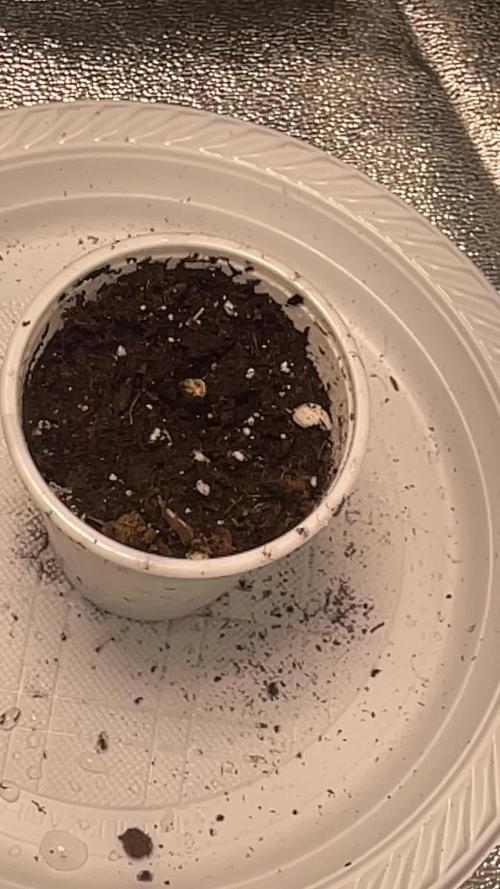
Follow
End of Week 15 (8th week of flower)
I have stopped the CO2 supplementation for this week and onwards as the plants naturally slow down photosynthesis and it is not needed during the last 2 weeks of flower.
Also raised the lights by 5cm to make sure the trichomes don't get damaged and also dropped the RH and temperatures even more than last week, and surely the colours are becoming more and more vibrant as the ladies are fading into their autumn shades.
Feeding just water since middle last week, all I'm doing is giving the ladies PH correct water until harvest to naturally deplete the soil from nutrients and flush out the soil slowly this will help bring out even more colours as the ladies use up the remaining nutrients stored in their leaves as they reach the end of their life cycle.
Pest Report: None
Smell Report: Staaaaanky!



Likes
5
Share


@RastaRick
Follow
Starting to see some real good growth. Everyone is looking real gree. I think next week calls for a session of LST. Still only using water with BioTabs. Not issues. Tenet is pretty hot at 27C and dry at 27%rh... Ruff but it's what I got

Likes
15
Share


@IsseyBukkake
Follow
We've made it to week 3! (10/12/20)
I'm very happy with how the girls are going, they have definitely put in a HUGE amount of work over the past 7 days.
Plants 3 & 8 are very similar(extremely fat leaves & extra bushy)
Plants 1 & 5 are similar (smaller phenos reacting to nutes slightly differently)
& Plants 2, 4, 6 & 7 seem to be a cross between the previously mentioned phenos(not too small and not too big/bushy & reacting to nutes fine)
Feel free to compare Week 1, 2 & 3 to see the differences.
Nutes are staying the same this week, although I will be spacing feedings out a little bit further(18 hours-ish), as well as feeding straight PH'd water once a fortnight.
I am contemplating hooking my simple drip-to-waste irrigation system up, although the girls are pretty close to the medium still and the halos sit 5-10cm above the medium, meaning fan leaves would be drooping onto the wet halos, so I'll give it another week and see how they're doing :)
Update 11/12/20 - day 22
The girls have beefed up quite a bit over the last 24 hours, I'm really looking forward to seeing a stretch soon :)
No feeding today & will water plain ph'd water tomorrow.
Update 12/12/20 - day 23
Gave the girls straight ph'd water today with little run off.
Veg growth is really starting to boom now, looking forward to seeing where this grow goes!
I'm gladly accepting any tips or tricks, as I'm still only a beginner to indoors.
Update 13/12/20 - day 24
Girls are looking great today, not much to report.
They didn't get a feed or watering today as the medium was still wet after a pure watering yesterday.
Update 14/12/20 - day 25
There's been a big increase in growth over the past 24 hours.
All the girls besides the 2 smaller phenos look 100% happy, the smaller ones have looked a little weird since day 1(Weird as in colour of the fan leaves look deficient of something, but I'm not sure what.
The girls will be getting a full feeding today.
There's still no signs of sex but they are feminised seeds.
Update 15/12/20 - day 26
Girls are looking happy today.
Temps are back to normal after a heat wave in my city(its only going to get hotter from here on out).
No feeding/watering today, pots are heavy/wet enough.
Started using iphone for photos now, my only lens for my DSLR is useless for most grow related photos.
I will upgrade my lens before next grow.
I received my new silenced fan today! I couldnt be any happier :)
It is a silenced Sigilventus SE-A150J, which I have set-up with a brand new Can-lite carbon filter.
I went from a rocket loud eBay fan to a completely silent inline EC fan :D
I hope the girls like the silence!
Update 16/12/20 - day 27
The girls are continuing to boom! and I'm over the moon about it :D
I gave them a full feeding today.
I have seen white pistils coming out of calyx's on most of the girls, so i'm hoping they start to flower soon.
I'm having weird issues with my humidity, it seems to be fine at 40-50% for 70% of the day, but the remaing 30% of the day it goes up to 60-65%.
Temps stay the same in the 5x5 tent, I have ducted air-con in the house which is on most of the day.
Thanks for viewing! :)

Likes
45
Share


@masterofsmeagol
Follow
8/14 Everything looked beautiful this morning. Seems like I've got the watering schedule down better. I do have one gmo that looks hungry so I need to increase nutes. At least on that plant. Toasted toffy has little spits that could be water marks, pests or septoria. I don't think it's septoria. In the pastvi lost far more leaves when I had septoria. I've been crazy busy. I'm surprised things are going this well. I need to put up the final supports so I can add to them once I've got big heavy buds. I was really stoked to see everything doing so well. The plant in the 50gallon is the furthest in flower. I'm so grateful to have the ability to grow high quality cannabis for myself amd my wife. There's nothing quite like it. That hash I made turned out great. I think I'll press it today. Supports will be done this week. Saw a few aphids on the plant I cut down. Earwigs aren't here this summer or there would be NO aphids. Plus when I cleaned out the insides this morning I found some dead leaves WAY in the middle by the stalk. They would've eaten that shit if they were here. Birds and other predators seem to be keeping pillars at bay. I'm not seeing the damage and when I do sfind one it's absolutely tiny like a newborn. I'll think about whether I need to spray BT.
8/15 That fucking cancel button always fucks everything out. I was done no I need to start over. Didn't water last night. Found pm on my gmo in the 30. Interior of the plant. Should've defoliated better and earlier. Oh well. I'll treat with k bicarb or plant doctor. I'll have to think about it. Other plants are looking good. Well they all are. I just hate pm. I can't isolate it due to local laws so it is what it is. Nothing I haven't dealt with before. Watered today. The middle gmo in the 30 got 1.5 gallons. The other plants each got a gallon. Including the one in the 10gal and 50 gal. Its supposed to rain but only like .1. I also chose to feed today. All plants got a gallon. I DID NOT WATER THE EVENT HORIZON IN THE MIDDLE AND THE SHERB PIE AS THEY WERE PRAYING AND HEAVY. I need to get these supports up. I'll update as I go.
Oh and one thing I remembered is that, I didn't properly sanitize the trellis nets I installed on the plant that has pm (non visible today but still). I harvested the plant that used that bet last year was harvested in two stages. The bottom I let go way later and ended up with a little pm on the stuff I left for hash material and it got some pm. I wonder if that's whete this came from.
8/16 Death in the family this morning. I couldn't decide if I should use organocide plant doctor or not. It's a systemic It's been discontinued and reformulated. It's a systemic fungicide. Instead I mixed two tsp potassium bicarbonate with a little dawn in a half gallon mister. I used gloves and defoliated everything that had pm on it. I checked the plants next to it and luckily it hasn't spread yet....but it will. I feel safer using the k bicarb. I'll do more research and try to find the best way to tackle this. I don't want to get rid of the plant and due to local ordinance I can't isolate it. If I can keep it to this one plantvthat would be fine. I'd just use it for extracts. So glad I didn't use all that netting and put up tjosr supports. I'll need to disinfect them if I decide to use them. We'll see. Plants are coming right along flowering.
WENT BACK OVER AND DEFOLIATED A BUNCH OF fan leaves and interior stuff to promote airflow. Still saw pm on that plant u had treated earlier with k bicarb. I can't isolate due to laws and I'm not willing to discard this massive monster cropped plant. So I'm going to treat it. I started by removing everything infected and improving airflow on that plant and all the others. I didn't make it to one event horizon. I plan to treat the infected plant with Organocide Plant Doctor since its what I have on hand and I've had good luck. It's a systemic. After I treat the one plant and see that it didn't hurt the plant I'll use a preventative dosage on the other plants. I've battled wpm several times. This is something I'm very familiar with. What sucks is it's totally my fault it happened due to grower error. This has set back me puttingvup my supports as well. Plants look good woth a haircut. Also the toasted toffy had some leaves removed with spots that looked like septoria. I think nutes havecreally kicked things in gear. Now there are little buds on plants.
8/17 BAGS still seemed heavy so I didn't water. It's been MUCH cooler. It's 63 at 9am. It would normally be 80 by now so maybe they aren't using as much water. I watered the the toasted toffy I missed last round but the Sherb Pie still had weight to it. I also watered the GMO on the far side and the one in the 30 as the seemed a little lighter. I looked in and I couldn't find a SPOT of powder mildew on the plant! I know it will come back but on this 100% rh day there isn't a spot I can find! I'm going to go check on them later today. Do some more defoliation and treat the plants with Plant Doctor to try to mitigate the spread of the P.M. Very suprised the k bicarb worked like that.
WENT BACK OVER AROUND 11. I WATERED THE TWO THAT DIDNT GET WATERED LAST TIME. THE EVENT HORIZON AND THE SHERB PIE. IT WAS COLD AND OVERCAST. TEMPS HAVE BEEN MUCH COOLER. SOON AS I WATERED THE SUN CAME OHT AND THE TEMP WENT UP. I WENT THROUGH THE PLANTS I MISSED AND SEFOLIATED LEAVES AND INTERIOR BRANCHES TO INCREASE AIRFLOW. SURPRISED TO STILL SEE NO PM WITH 100% HUMIDITY. I WENT THROUGH EVERY PLANT. ILL NEED TO GO TJROUGH AGAIN BUT TJIS IS MUCH BETTER. THE TOASTED TOFFY THAT MAY HAVE SEPTORIA I WILL TREAT TONOGHT WITH PLANT DOCTOR. I REMOVED ANYTHING LOOKING INFECTED. I LSTed THE BIGGEST BRANCHES WITH CLIPS TO THE BAG AMD TWINE. SO AIRFLOW IS MUCH BETTER. I THEN REMOVED A BU CH OF THE MIDDLE. I COULD TAKE MORE BUT ON OUTDOOR HARVESTS THAT LITTLE STUFF GOES IN EXTRACTS. I PUT A FEW HOURS IN TODAY. IM GOING BACK AND ILL TEST THE PLANT DOCTOR ON THE TOASTED TOFFY. BUT IF THE K BICARB WORKS THIS GOOD ILL JUST KEEP USING THAT.
8/18 It started sprinkling when I left this morning. I did more defoliation on a few different plants. Including the healthiest GMO. It seems like things should be further in flower but it is what it is. I'm not doing clones again. Only reason I did is because I lost my 72 seedlings and depleted my seed supply. I hate treating pm. Lost Coast Plant Therapy I'd really whete its at when it comes to treating pm. I might just order that. My commercial buddy told me that he wouldn't use the plant doctor and not to "spray shot all over my plants". He's probably right. I see something small and try to overcurrent. I dont see any more septoria looking leaves on the toasted toffy since I lsted it and removed damaged leaves. I was going to use the fungicide plant doctor on that and then use it ad a preventative. He's probably right. I've put a lot of work in defoliation and such. It WILL spread but it hasn't yet. I removed what I saw. I was going to hit it again with k bicarb but it said it should be weekly treatments.i hope I'm doing things right. I shouldn't be this worried about pm but I've got am anxiety disorder. I'll fully sterilize (AGAIN) my posts and trellis netting before I instal it. I'll probably go check on them later. It's hard to avoid pm with 100% humidity and 30° temp swings. I've got a few lights so maybe this winter I'll do indoor. I'll try to keep this updated. LOOKING BACK AT PRIOR DIARIES I GUESS IM RIGHT WHERE I SHOULD BE FLOWERING WISE. I JUST HAD A COUPLE REALLY EARLY PHENOS A COUPLE TIMES.
8/19 Defoliated some more stuff amd tried to improve airflow. Humidity is high and it was sprinkling earlier. I think we'll have showers. Not seeing much pm. MAYBE a little in the middle of that middle gmo but it could just be residue. I'll treat it again with potassium bicarbonate soon. If that doesn't work I'll switch up treatments. I've got citric acid amd some other stuff too. I almost ordered lost coast last night but decided I'd wait to try it out. The toasted toffy has SOME spots that look like septoria. It's the second furthest in flower and very indica leaning. It seems to be flowering vigorously so I don't want to fuck with it too much. I could use plant doctor on it and see what happens but I'm going to monitor for a few days after defoliating.
WENT BACK OVER AROUND 4 AND SHOOK OFFCTHE PLANTS. HADNT RAINED MUCH. BAGS ARE STILL HEAVY. THE TEN WAS LIGHT AND THE EVENT HORIZON BESIDE IT SEEMED A LITTLE LGHT AS WELL. I THINK IT MIGHT BE ME COMPARING THEM TO OTHER PLANTS THAT ARE SATURATED. SEEING HOW THEY BOTH LOOKED THE BEST IVE EVER SEEN THEM I HELD OFF WATERING. ITS ALSO SPRINKL9NG AMD GOING TO RAIN TONIGHT. ILL REASSESS IN THE MORNING. PLANNED ON USING PLANT DOCTOR ON TOASTED TOFFY BUT DECIDED AGAINST IT PARTIALLY DUE TO THE RAIN. PARTIALLY BECAUSE I PUSSED OUT. I WANTED TO FEED. IVE NOTICED SOME FADE AND PLANTS PUSHING AND TRYING TO GET OVER THE FENXE INTO FLOWER. THE TOASTED TOFFY AND THE UNKNOWN IN THE 50 ATE THE FURTHEST ALONG AND DEVELOPING ROCK HARD BUDS. GMO HAS A MASSIVE STRETCH. THINGS CHANGE DAILY. I WANTED TO GET A GOOD DOSE OF NUTES IN SO AFTER THIS LITTLE BIT OF RAIN WHEN WE GET THAT NICE SUNSHINE MY PLANTS WILL TAKE OFF!! THEY'VE BEEN PROGRESSING FAST DESPITE THE SHITTY WEATHER.
8/20 It's still sprinkling. It SAYS WE got zero rain yesterday but that's just not true. Today is supposed to be light showers with like .02 in 9f rain. I mixed up some water to check the plants. I figured a few would he light. The event horizon on the back SEEMED a little light. So did the one invthe ten. I realized it was just comparing it to the bags that were saturated. Still I ended up giving the event horizon in the back a half gallon and split the other half with the one in the 10 that dries out super fast. It's crazy. The weather just abruptly changed one day and I go from watering twice a day to hardly at all! Everything but the sherb pie and the seedling in the 10gal are vigorously flowering. Upping the nutes was a smart move. The seemed to like it. I'm gonna check later and as soon as I can I'll hit that toasted toffy with plant doctor. That's tied for furthest along in flower. I've done a bunch of research and I think this is the right move. I'll keep this updated. After this small patch of shitty weather we are goingvto get some sun amd these girls will EXPLODE!
WENT BACK OVER A FEW TIMES. LAST AT SIX. I DID SOME DEFOLIATION AND PRUNING OF PLANT INTERIORS. ITS ABOUT TIME TO TREAT THE TOASTED TOFFY AGAIN WITH PLANT DOCTOR. I CAN SEE SOME SEPTORIA SPOTS. I TREATED THE EVENT HORIZON THIS MORNING. IT GOT A FEW HOURS BEFORE A LITTPE RAIN WND THEN SUNNY AND 80. I USED BETWEEN A QUARTER AND HALF GALLON ON THE INE PLANT. I MAY NOT HAVE USED ENOUGH OF THE MIXED UP SOLUTION ONVTHE TOASTED TOFFY. IT HAD BEEN WORKING AWESOME AND NOW THAT ITS TIME TO REAPPLY I NOTICE A FEW LEAVES THAT LOOK INFECTED. OVER THE NEXT WEEK ILL BE MONITORING THE RESPONS FROM THE PLANT DOCTOR. I'M CONSIDERING APPLYING PLANT DOCTOR TO THE REST OF THE GARDEN. I THIBJ THE K BICARB HAS BEEN DOING GOOD KEEPING THE PM DOWN ON THE MIDDLE GMO. I HATE THAT I HAVE TO FIGHT DISEASES. IM NOT DOING CLONES AGAIN. AND IM GOING TO BE MUCH CLEANER. THE SHERB PIE LOOKS A LITTLE OVERWATERED AND HAS SOME YELLOW LEAVES BUT MANY HAVE TURNED PURPLE AND OTHER FALL COLORS. THE PLANTS ARE AGGRESSIVELY FLOWERING AND TEMPS ARE CHANGING. STILL IN EARLY FLOWER. IVE GOT A GOOD FEELING. IVE DEALT WITH MUCH WORSE AND CAME OUT GOOD.


Likes
3
Share


@danielsegovia
Follow
28.05.20 Crecimiento normal.
Riego en suelo con agua y riego foliar con fertilizantes bien suave.
DÍA 11: Las transplanté a macetas de 15 litros pero con sólo 9 litros de tierra.
También agrandé el espacio de cultivo y puse un les de 1000w

Likes
73
Share


@LazLow
Follow
The whole experience so far, to me, has been interesting. But I suppose now we’ve arrived at the point where things get really interesting. Did one more round of heavy defoliation this week to really get all the bud sites exposed to light. Not a significant amount of stretching with this strain.
Likes
17
Share


@TreeFarmerCharlie
Follow
Day 42 of flower (day 93 since germination). No major changes over the last week. The growth has slowed down, and the buds are fattening up. Each plant was was fed 700mL compost tea, today, that was brewed for 24 hours.
Likes
459
Share


@Ju_Bps
Follow
Hello my friends 👨🌾👩🌾,
This week was good, I just found several little spot, but don't seen bugs or something.. So we'll see.
The #3 continues to grow and look on the good way 👍
I've continued to vaporise 2 times per day with water + rhiso this start week,
After
150 ml Water + Rhizo + Cannazym
150 ml Water + Terra Vega + Rhiso
PH@6
Lamp is 100%
Thanks community for follow, likes, comments, always a pleasure 👩🌾👨🌾❤️🌲
Mars Hydro - TS 1000
https://www.mars-hydro.com/ts-1000-led-grow-light
Mars Hydro - FC3000
https://www.mars-hydro.com/fc-3000-samsung-lm301b-led-grow-light
Mars Hydro - SP3000
https://www.mars-hydro.com/sp-3000-samsung-lm301b-greenhouse-led-grow-light
The High Chameleon - Vannila T
https://www.thehighchameleon.com/shop/vanilla-t-5

Likes
10
Share

@PavementPunk
Follow
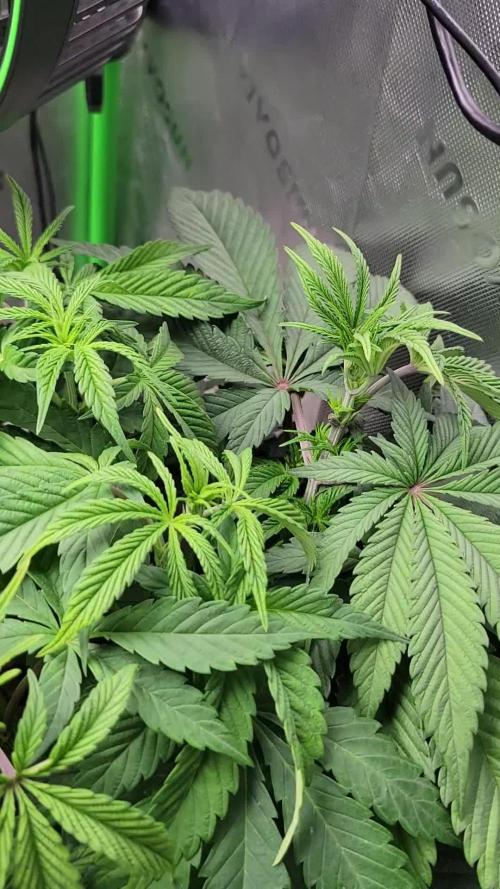
I guess the main takeaway from this week is to always have runoff when feeding with nutes and 12 inches should probably be the closest the light gets to the canopy on max power 75% strength bloom boost is probably too concentrated a dose. I fed her about 5 days ago then plain water then a molasses water. Probably getting a bit more molasses tonight then plain water til harvest which could be as soon as Monday the 22nd but will probably be a bit later. Happy growing friends 😶🌫️

Processing
Likes
21
Share


@420cfm
Follow
Entering week three of flowering. Budlets forming everywhere. About 40 tops. Need another round of defoliation to get more light into the canopy. Nutrients ate running around 800-900 PPM.
Not as strong smelling as I would've thought by now. Will see how they are by the end of the week.


Likes
3
Share

@Oyziphar
Follow
🌞
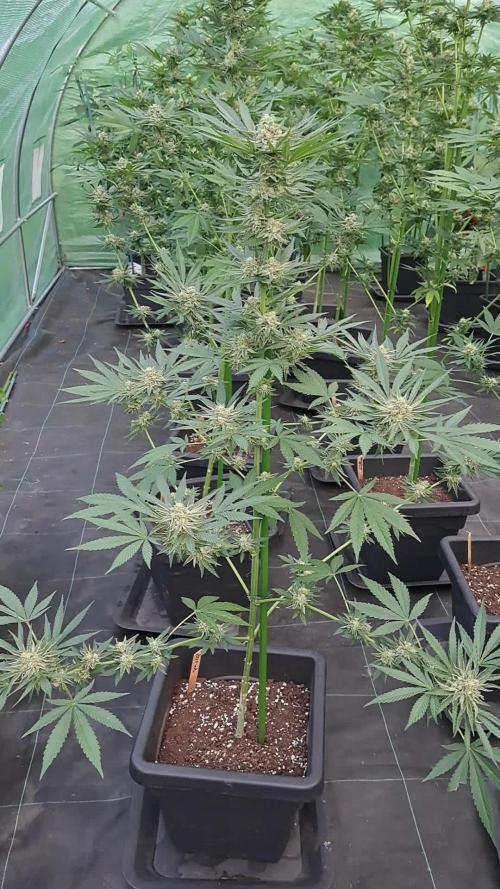
The week started with moderate (25°C) summer temperatures 🌡️🌡️🌡️ But the day before yesterday and yesterday we had hot (+25°C) temperatures again 🌶️🌶️🌶️
Sixth week of Light Deprivation
👉👉👉👉Every morning at 9:00 am I move the plants to the greenhouse.
👉👉👉👉Every evening at 9:00 pm I move the plants (together with some other strains) inside the growroom (which I don't use in the summer)
➡️ The buds are filling up, more and more trichomes, and every day they start to smell stronger 👃👃👃
👉Once this week I boost the plants with gift of water enriched with OPF 7:2:3 ; Fulvic 25 ; Yuccah ; Biovin liquid ; Earthworm compost extract
⭐Big Thanks to Luc from Plant Health Solutions / Bioplantenvoeding dot nl ⭐
Plant #1 ; height : 120 cm
Plant #2 ; height : 99 cm
Likes
8
Share


Likes
4
Share


@Pokan187
Follow
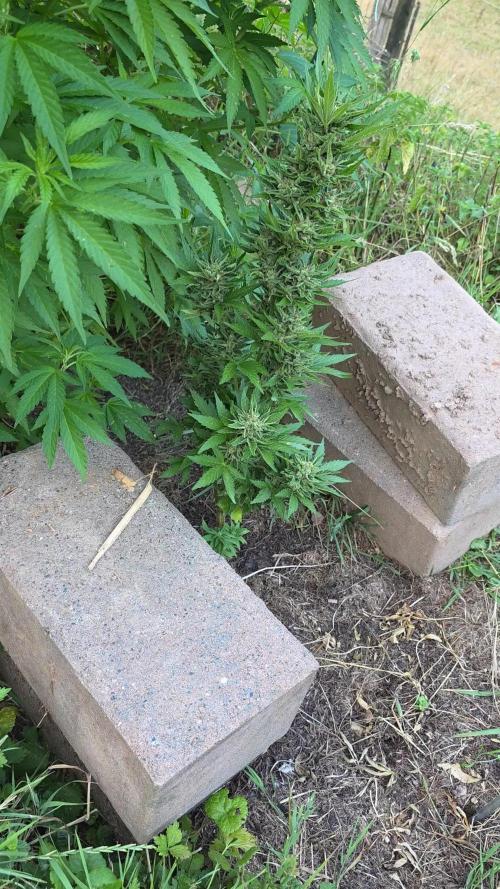
Have some deficiencies or ph imbalance still troubleshooting.
The pH was off but now everything is back on track. I have some amber on the watermelon, the northern light is milky from top to bottom but no amber yet
The smell is pretty strong
I do not feed the plants at all besides watering them with water from fish tanks.
Made some live soil and added horse manure, homemade bone meal from fish bones, compost from vegetable scraps and black soldier fly frass.
I do not use chemicals on any of my grows.
Likes
6
Share


@MissSolasolita
Follow
End of week 6 flower
Looking delicious
Flushing for the next week or two
depending how quick she yellows up
Though she looks ready
