


Likes
Comments
Share


@4chuk
Follow
Oct.16 - Week 2 begins.
I need to stop editing my diaries high.
Oct. 18 - Looks like a slight calcium deficiency on the oldest leaves, I'll watch the newer leaves for spots before I increase CaMg though.
Oct. 20 - I have been watering with 20ml twice a day, growth rate seems to have increased, but still developing spots so I will increase CaMg today.
Oct. 22 - It's growing pretty well considering how sick it seems. Time lapse uploaded.

Likes
5
Share

@MmaJunkie420
Follow
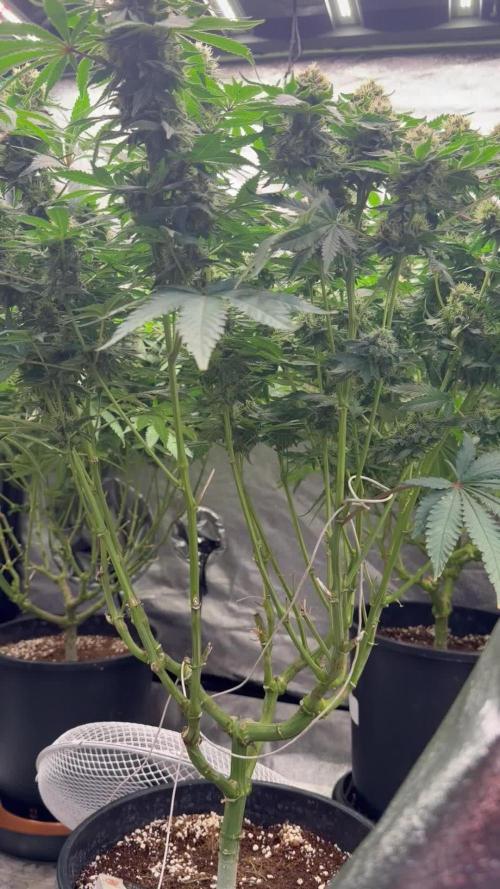
Day 43 flower wildly different flowering times between these strains papaya frosting is peak & she has started her flush will look to chop around day 50 one of the fastest strains I’ve came across whereas the zkittlez and frozen biscotti will take an extra week or 2 on top of this so continuing with feed schedule on these for at least another 7-10 days. Zkittlez is getting that heavy the colas are just laying on floor had 1 snap, tied the heaviest ones up best I could Had a nug off the papaya snap off whilst watering and dry on tent floor so had a sample and honestly with a proper dry and cure this plant is gonna be top tier! Had a ph raise in run off so just trying to keep that under control these final weeks.




Likes
9
Share


@Mimi420
Follow
Day 28 flower
Girls are looking solid — buds are stacking nicely and the trichome frost is already showing up on the bigger colas. I’m loving the dark tones coming through, especially on the Kush Crasher (those purple/bronze leaves are sexy). A few plants are showing light N deficiency on some older fan leaves (yellowing lower leaves), so I’ll tweak the feed mix to stop that drift — nothing drastic, just feeding smarter and keeping an eye on cal/mag. Overall the canopy is dense, colas are filling out and the stretch is well and truly done.
Quick photo notes from yesterday’s shots:
Wedding Cake (back-left) — fat, resinous tops, nice white pistils and good bud density.
Kush Crasher (back-center) — gorgeous dark colouration, big chunky nodes, looking like it’ll finish purple if temps stay cool at night.
AK-47 (back-right) — chunky central cola forming, a touch sensitive to humidity so I’m watching airflow.
Double Krush (front-left) — frosty and sugary, good structure and lots of side bud action.
Wappa (front-center) — slightly paler, showing that light N pull, but buds are stacking nice and airy.
Detroit Runtz (front-right) — tight little colas, smelling sweet, filling out well.
Box still smells absolutely insane when I open it — that classic flower-room punch is back and I forgot how addictive it is after a break. Main concern is night RH spikes (still working on that), and the odd yellow fan leaf — both solvable. Tomorrow I’ll do one last light clean (trim the real shady bits), double-check feed strength and let the girls fatten up.
Feeling good — plants are responding and the tent is starting to look like it’s doing work. Green vibes. ✌️🌿


Likes
28
Share


@Mr_und_Ms_Lue_Roots
Follow
Hallo an alle Gartenfreunde,
dieses mal gibt es reichlich zu erzählen.
Zuerst einmal, dieses Tagebuch sollte so ganz und gar nicht verlaufen. Wir Bitten betreffend dahingehend einmal um Verzeihung bzw. Nachsicht!
Aus der Not heraus entstand eine Erde, die mit jeder Woche unbrauchbarer wurde. Sie war so arg am arbeiten, dass sie gestern morgen Samstag d. 17.05.25 einen Boden mS- Wert von sagenhaften 2,96 aufwies.
Ähm ja... wie und warum Sie noch stehen, dass ist eine Frage die wir uns nicht so schnell beantworten können ^^😇
Letzte Woche um diese Zeit lag der Wert bei 1,9 mS was auch krass zu hoch war.
Den Wert hatten wir genommen weil wir wieder eine Woche am Jonglieren waren. Alle 2 Tage sind die Sonnensegel bis zum Mittag kaum hochgekommen. Es war so als würde man gegen Windmühlen arbeiten.
Zu dem kam ja noch wie zu erwarten ein Nährstoffblock was wieder rum ein Mangel an Mikro- Nährstoffe hervorgerufen hat. Da in dem Bereich vieles miteinander verbunden ist um überhaupt verwertet zu können, ist es schwer das einzige Element aus zu machen was wohl mehr Nährstoffe und oder gar weniger benötigt. Insgesamt macht das auch spaß, den sogenannten Fehler ausfindig zu machen aber auf einen solchem Zeitraum ist es nur mehr als Kraftraubend. z.B Schlaf, was ist das? ^^ Hahaha
Zunächst haben wir uns auch nochmal die Werte des Leitungswassers über ein Onlineportal des ansässigen Stadtwerks angeschaut. Wir haben hier einen sehr geringen Anteil an Calcium aber einen sehr hohen Anteil an Magnesium. Im Ausgang schon schlecht weil man beides in einem verabreicht (Calmag)
Betreffend dessen wurde klar, hier muss eine Lösung her, sonst stünde dem bevorstehendem (Log out) nichts mehr im Wege.
Ergo: Einzige Möglichkeit, zurück zur alten Schule, neue Erde (sehr neutral) und alle 3 Damen wurden gestern Abend zum dritten umgetopft. Statt 15 L haben sie jetzt 20 l.
Es war der reine Wahnsinn... Wir waren sprachlos, die Wurzeln sind komplett nur in der zuletzt nachgegebenen Erde eingewachsen. Sprich so ca. 10- 15 cm tief.
Die Umgebung und das neue Zelt, einfach ohne Worte... Dennoch war das aller wichtigste, dass Sie alle diesen Stress überleben und uns am Ende doch Bitte mit wenigstens einem zufriedenstellenden Ergebnis belohnen werden.
Das Autopot- System hat soweit gut funktioniert, nur nicht mit dieser bescheidenen Erde.
Nun schlussendlich hoffen wir, dass sich jetzt schnell erholen und richtig reinhauen werden, da die Secret Source eine etwas andere Figur macht. Aber war ja im vorstand identische Vorgehensweise. Nur das wir bei ihr schneller reagiert haben.
Allgemein sind die ersten Eindrücke bis hierhin positiv. AAAAAber es ist wie es ist, es kann noch alles möglich sein. Dem muss man sich bewusst sein.
Unser ,,Jahfri,, der auf die Pflanzen aufpasst, birgt viel Kraft die mit euren tollen zusprechenden Kommentaren sich rein nur positiv auswirken können.
Vielen Dank dafür und an diejenigen die bei uns vorbeischauen, kommentieren und ggf. Folgen.
Wir wünschen in Diesem Sinne noch einen angenehmen Sonntag und eine Erfolgreiche neue tolle Woche!
VG 😎
Likes
17
Share


@Ton_Trichomen
Follow
Bruce Banner#3
See of green project
Featured grow by and exclusive for
Original Sensible Seeds, BTB Grow Supplies &
Mars Hydro
Day 56 07.00
today they bloom exactly 20 days 40-45 to go, defoliated yesterday and give water alone, ph regulated with a little nitrogen, that's it for today ... see you tomorrow
Day 57 07.00
good morning my loves, oh it starts so deliciously a touch of earthberries and no that's not imagination, also they get pretty sticky now oh i can not wait to harvest and test, never pulled up such a simple plant as Bruce Banner 3
Day 59 09.00
All perfect today 😂😉🙃
Day 60 8.22
Only feed them today all seems good to me my ladys growing and growing no trouble at all with this strain 😀😉🤣
Day 61 08.00
at the moment the ladys are in full production today they are fed again and further i just leave them alone ... see you guys tomorrow
Day 62 08.00
good Morning , I didn't water them yesterday, here and there they are getting wider and fatter, otherwise they are more than good temp now on 23.9 at night to 18 ° C ph today 6.1 ppm 960
Lights: 12/12
Humidity: 53%
Ph : 5.9
Water: 35l 23°C
CO²: No Mercy Tabs
Ppm: 950
Plagron: Terra bloom 157ml
Plagron: Green Sensation 35ml
Plagron: Sugar Royal 25ml
Plagron: Pure Zym 00 ml
Plagron: Power Roots 00 ml
Light distance: 35-40cm
1x MarsHydro eco 120 220w
1x MarsHydro TS 3000
Air Van: 800m³ Prima Klima
AKF : 800m³ prima klima
3 l water cooling airco Diamant...
3.3l humidifier
1.8l dehumidifier
Humidity control: Inkbird IHC-200
Temp control cooler - heater: Inkbird ITC-308
1.5x1.5m² Custom Grow Room
All seeds comes out #originalsensibleseeds
so they have 100% of 100%
Bruce Banner the 3. hits the ground and i really hope he gets angry as fuck and shows me the green big guy sleeping inside him ...
S.O.G.
☠️☠️☠️🌶️🌶️☠️☠️☠️
Thx to Linda Seeds, BTB Grow Supplies, Mars Hydro as our exclusive sponsor of our group The High Community & Zamnesia for supporting this grow.
Zamnesia unconsciously because they sent me my seeds 2 times but I'm very grateful for that...

Likes
97
Share


@Zurban_Poison
Follow
The week before the harvest.
I usually harvest all leaves a week, sometimes 2 weeks before harvest.
the buds look amazing! and perfectly completed!

Likes
179
Share


@Grow3rPT
Follow
👉 ( Floração ) 👈
📅 Total de Dias 64 (F 34) - 05/10/2021 / 💦 Rega com nutrientes. (Planta 2,3 e 5 não foram regadas. Planta 1 e 4 rega com nutrientes)
📅 Total de Dias 65 (F 35) - 06/10/2021 / 💦 Rega com nutrientes. 👉 ( Planta 2,3 e 5 Rega com nutrientes ) 👈
📅 Total de Dias 66 (F 36) - 07/10/2021 / Crescimento normal 😀
📅 Total de Dias 67 (F 37) - 08/10/2021 / 💦 Rega apenas com agua (Planta 4)
📅 Total de Dias 68 (F 38) - 09/10/2021 / 💦 Rega apenas com agua ( Planta 1, 2, 3 e 5 )
📅 Total de Dias 69 (F 39) - 10/10/2021 / 💦 Rega apenas com agua ( Planta 4 )
📅 Total de Dias 70 (F 40) - 11/10/2021 / 💦 Rega apenas com agua ( Planta 1 e 4 não foram regadas )
👉 MARSHYDRO
👉 CODIGO PORMOCIONAL : Grow3rPT
👉 Em marshydro.eu 3% de desconto em qualquer produto

Likes
19
Share


@theplantdaddy
Follow
Temps at 78-84 f, humidity inside dome around 68-76 depending on temps. Direct planting into coco jiffy plugs, charged with a light seaweed extract. Took 2 days exactly for seed to pop out of plugs. Another day to remove its shell, will start counting as day 1 from here on out. Check out my other diaries for the other strains. 1 gelat.og auto (seedsman) and 2 extreme impact auto (heavyweight seeds)

Likes
3
Share

@Jardin33ro
Follow
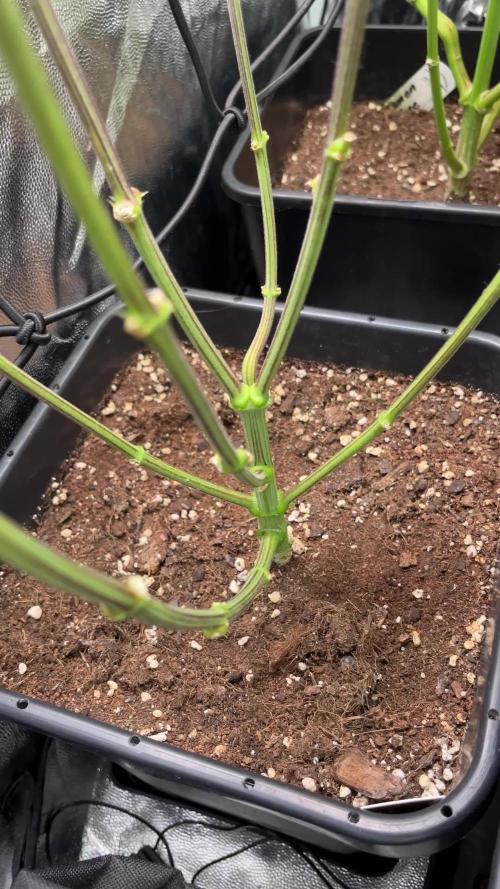
Me encanta esta genetica, y son levemente distintas estos fenotipos. Una tiene mas marcado su color violeta y tiene pistilos mucho mas largos. La otra es mas verde y no tiene tantos pistilos. En cuanto a resina las dos estas muy bien y ya estan quedando blanquecinas justo en el punto que me gusta. De catalogo
Likes
6
Share


Likes
70
Share


@Insaniac_0
Follow
All feeds with nutes use either a whole ratio or combination of "Veg Mix" and "Bloom Mix"concentrates DILUTED in water until a total ppm of add in is reached using a (Total Dissolved Solids)TDS Meter measured in PPM (parts per million). The "Veg Mix" concentrate will eventually be added in smaller ratios and "Bloom Mix" concentrate what will eventually replace the "Veg Mix" concentrate entirely with the ppm and ratios listed when I feed. Veg mix recipe is on week 3. Bloom Mix recipe is on week 5.
Day 49
VPD is okay now - temps at 75F RH also now at 65% with ILVent at 50% = VPD of 1.04 -
ppfd also same as yesterday mostly 480 to 490 around the ring with 510 and 520 in the center
Took ph readings as well - 3 readings 6.43, 6.48, and 6.37 to avg 6.426
Which is good because she's starting to show signs of stress after the topping and defoliation from a couple days ago. The leaves are starting to curl at the tips and the bronze color stripping is happening again - however this time seems to be a slower progression so Im hoping that having the correct ph this time will help while she's re-routing her resources. I 'did notice also that the growth tips seem to be growing at a slower rate than before - I think she's at her limit in colas and the roots are having to find more space to spread, may even be too big for the 5 gallon pot. I have no plans to change her out just yet, but will monitor.
Soil is drier today - so I will be watering tomorrow with de-chlorinated water at 6.4ph
Day 50
VPD was good at 74/64 with the tent open while I feed that I left it open for a bit and took time in feeding and cleaning - after all that still good at 74F/61%RH/50%ILV
ppfd was checked after water and setting back - same as yesterday as most of the newest growth is still coming from the new colas - most seem to be adjusting 1 at a time in each split but both are showing growth now on all cuts.
Started feed by making new ph buffer solutions, calibrating/testing both meters. The have about a .15 variance between the two.
Checked weight and made 1.5 gallons of feed. started at 228ppm added 450ppm veg and 150ppm bloom for a total of 833ppm feed/epsom salt - splashed h2o2 and ph'd to about 6.4- I fed via watering can and spray and fed the whole amount slowly since I was feeding until bottom drip and she took it all before starting to bottom drip. Afterwords I let her drain (about a quart came out) and checked ppm from runoff at 2500 (telling me she's okay but isnt eating as much as before her topping yet) ph is a mystery - I show 3 readings from top level of 6.62, 6.57, and 6.57 for an avg 6.586 but 2 separate readings from 2 meters (4 readings total) on the bottom runoff showed 5.3 and 5.6 then confirmed later. I expected a variance since the wood ash probably stuck to the top side of the soil - but I didnt expect that much of a difference. I will monitor but honestly dont know what I should do, if anything other than watch.
made a video of the fan movements and runoff drip
Day 51
What I am calling "stress burn" is progressing as expected. I am monitoring the ph from the top as I did before, but again, not much I can do other than over water, so I'll just watch for now and compare rate of spread until she fixes her resource pathways. It seemed to take about a week to clear up after the ash treatment last time, so I am on day 3 of 7 for now with no treatment. Looking for a spurt of new growth to show and then I'll know she's better.
Adjusted the lights to accommodate a week 6 level of 500 to 600 ppfd - that means I can raise the lights to the top of the tent and increase power. So now set at 3 tick up and 37 inches from the soil or 26" from the plant top. Now her ppfd reads about 540 on both of the center colas and 500 to 510 on the surrounding ring.
Adjusting lights meant I had to adjust the fans up to medium power and re-directed them to blow at the edges of the pot; made a video.
VPD is steady, but still warmer than typical (only by a couple degrees nothing too much) 76F/61%RH/50%ILV for 1.15 kpa on room VPD
Day 52
VPD is higher now that I have the lights to the top of my tent and the fans on the lights blowing down at the pot. I moved the IL Vent to the top sucking out with the motor and vent outside the tent now.
I also opened two lower air holes with my heater set for fan on the opposite side of the tent than the vent. Currently, I am at a max of 1.2 room VPD and ranging down to 1.0 so I'll take it until it does something else. 74F/65% RH/75%ILV - I will monitor to ensure it's stable.
ppfd is same as yesterday as there's little growth still.
Spots are still progressing on the oldest leaves at the same rate as before - however the newest leaves are not showing signs yet, so I will continue to monitor.
Day 53
ppfd was a little changed today, showing that there's growth coming back now. lowest on outer ring was 500 with most at 520 and 530 highest, center colas were tested at 540 and 560ppfd. VPD was stable as I watched it most of the day since I made changes yesterday. Temps were 74 to 76 and RH was 61% to 68%. ILV was set to 33% with the bottom heater on fan to draw in air.
lockout continues on the oldest fan leaves at the last top nodes. New growth is already marked in a couple of spots. I have about 6 gallons of tap water burning off chlorine now and will use about 2 gallons to flush at 8ph. I plan to dunk this weekend with feed so this will allow time to dry out and hopefully reset the ph and lower my ppm readings at the lower part of the pot before then.
Day 54
Took Control pics measured VPD and ppfd
Lights are at the top of the tent and second tick from highest power level. Lights to soil is 37 inches and lights to plant is 12 inches shorter so 25 inches leaves to light. currently ranging 530 to 550 around the ring and 575/580 ppfd at center (after feed and replaced).
Moving the lights (day 51) made the tent hotter so I changed my ILVent to suck out at the top and fresh air in at the bottom - I have been fighting to keep temps under 78 managed to hit 74 to 75 with the heater being set just to fan for the bottom air vents- I did also raise humidity to a setting of 65% a day before moving the lights, so Im hitting 61 to 68% between power cycles on the humidifier. Overall Tent VPD is 1.0 to 1.2 as max.
Took controls for feed. Weight 16lbs 11oz. tested and calibrated 2 meters and took 4 ph readings of 6.55, 6.77, 6.53, 6.85 to avg 6.675. from top of soil (last runoff measured 5.6 and 5.3 on two meters)
prepared 2 gallons of feed at 500 ppm over tap. (burned chlorine off overnight) starting ppm was 217 - added 75/25 veg/bloom ratio. ph balanced to 7.8 and 7.63 on separate meters (rinsed and retested to be sure got 7.79 and 7.63 again)
I used 4 knitting needles in the soil about 3 inches from the plant center. Poured feed water over the needles until it pooled slightly on top of the soil, I then pulled the needle out a little to allow the water to drain into the holes better. I did this in 8 different spots. As soon as she started dripping water from the bottom I poured a little on the leaves and then moved the plant to another drip pan to finish pouring the rest over the top of the soil without dripping any over the sides. Took videos of the drip and waited 10 min before putting her on another clean drip pan and back in the tent.
Runoff from second drip pan was measured twice at 5.8ph and 2410 ppm - and first pan 5.85 and 2670ppm (expected higher ppm since I moved perlite on the bottom with the needles)
Defoliated the oldest leaves before lights out.
Day 55
She mostly looks like she appreciated the clippings and ph balance from yesterday - slower progression of the lockout issue and largest new growth since topping day.
So speaking of new growth, I plan to use LST in the next few days to set these colas in what will hopefully be their last bind around the ring.
VPD is steady at 75F to 77F and RH is between 63 and 68%. My ILV have been set to 33% and the lower fan blowing rather than heat.
top soil ph was measured with 3 readings, on a tested and calibrated meter. 6.47, 6.7, 7.12 to avg 6.763 (kinda wild in those readings so I double checked them all twice and got the same in each hole)
Likes
50
Share


@Rwein93
Follow
Ciao ragazzi e bentornati qui con me e le sorelle Limonose 🍋
Tutte 3 hanno smesso di crescere, la numero uno ha una struttura incredibile,💪 mi sono pentito di non aver fatto Lst su tutte le sorelle.🤦♂️
La numero 2 è alta e ben strutturata ma ha una sola cola bella grassa.
Mentre la numero 3 sembra più avanti delle altre con quasi tutti i peli arancioni e i buds di media grandezza.
Le cole principali delle altre invece misurano circa 3/4 cm, ma sono ancora parecchio indietro👍
Il colore è standard! Niente di particolare bei buds verde chiaro e pistilli bianchi ma sembrano molto gelide🤙
L odore delle sorelle sembra diverso tra di loro. La numero 1 ha note accentuate di diesel e nocciola, la numero 2 ha un profumo aspro tipo mapo e la numero 3 ricorda un dolce cremoso al limone 😋
Eh niente ragazzi! Aspettiamo che loro ingrassino per bene!👊
Grazie a tutti per aver guardato e restate sintonizzati per nuovi aggiornamenti.🙏
Buona settimana e felice crescita 🌱 🌱 🌱

Likes
17
Share


@eldruida_lamota
Follow
Que hay familia,actualizo la primera semana de crecimiento de estas Runtz F1 automáticas de Zamnesia.
Vemos que las 5 están en perfectas condiciones, tienen un buen color y salieron sin ningún problema aparente.
Empiezo por supuesto abonando una pequeña cantidad de la gama Agrobeta.
La temperatura está un pelín alta 26 grados y la humedad anda entorno al 55%. Riego cada 48 horas y suelo pulverizar con agua para aumentar un poco la humedad ambiental.
Hasta aquí es todo estas próximas semanas veremos cómo van avanzando.
Agrobeta:
https://www.agrobeta.com/agrobetatiendaonline/36-abonos-canamo
Mars hydro:
Code discount: EL420
https://www.mars-hydro.com/
Os comento que tengo un descuento y para que compréis en la web de Zamnesia de un 20%, el código es ZAMMIGD2023
The discount 20% and the code is ZAMMIGD2023
https://www.zamnesia.com/
Hasta aquí es todo, buenos humos 💨💨💨.

Likes
25
Share


@TheeLemon
Follow
Seen some huge growth in bud size this week! Ordering some new nutrients for the last few weeks. This is gonna be my best one yet, I'm sure of that!
Likes
166
Share


@iMeus
Follow
As I said in the review this was a tough challenge. I'm hopeful that my second attempt at this strain will be successful. Growers Choice Seeds sent me a few more to give it another go. Alex from their customer service department was very helpful and asked to be kept updated on the progress of the CBD. I'm not sure if GCS will ever see this but here's a big thanks <3
Thank you guys (GD) for all the love and support! It was so awesome seeing the get well messages when I was well enough to sit down and check my computer. Seriously, I didn't expect all of that. I am better, still have a few open wound areas but the healing is happening! :)
Much love you guys!
Meus <3

Likes
4
Share


@Ohio_Autoflowers
Follow
This plant man. Had to remove the 2nd and 4th node branches because they just weren’t doing anything. Stems were bright purple and the buds were tiny. Decided it was best to just chop them off. Buds are plumping up nicely. She is actually at day 72 right now. Think she’s got 7-10 days left, we’ll see.

Likes
18
Share


@Sti_Cazz
Follow
Allright guys & gals, In my Quest to mastering the art of growing my own bud I've reached the classic, overfeeding point but i've decided to just dile it down a gear and keep at it...I'm amazed with the Northern Lights blooming, it looks way readier then the Diesel Haze, eventhough it was planted 2 full weeks after. the budsare smaller still, but fostier and just looking riper....I have noticed the bigger leaves getting some nasty nuteburn (or at least I guess thats what it is) . I will definately go super easy on the nutes next grow.
....Trust the process....
Update... The NL is suffering quite a bit...
Update... Giving just water the next times to see if they recover... Pistils becoming brown now and smell slowly getting stronger...
