


Likes
Comments
Share


@JaysBuds
Follow
Day 60 from flip for these girls and they're SO sticky and gooey it's kindof ridiculous. The camera just isn't doing it justice, and they're in bed now so no flash photos. The sweetness has really started to develop, and less vomit smell is most welcome - gassy strawberry apparently takes a while to get right, even with a fast strain.

Likes
55
Share


@Ultraviolet
Follow
What's in the soil? What's not in the soil would be an easier question to answer. 16-18 DLI @ the minute. +++ as she grows.
Probably not recommended, but to get to where it needs to be, I need to start now.
Vegetative @1400ppm 0.8–1.2 kPa 80–86°F (26.7–30°C) 65–75%, LST Day 10, Fim'd Day 11
CEC (Cation Exchange Capacity):
This is a measure of a soil's ability to hold and exchange positively charged nutrients, like calcium, magnesium, and potassium. Soils with high CEC (more clay and organic matter) have more negative charges that attract and hold these essential nutrients, preventing them from leaching away.
Biochar is highly efficient at increasing cation exchange capacity (CEC) compared to many other amendments. Biochar's high CEC potential stems from its negatively charged functional groups, and studies show it can increase CEC by over 90%. Amendments like compost also increase CEC but are often more prone to rapid biodegradation, which can make biochar's effect more long-lasting. biochar acts as a long-lasting Cation Exchange Capacity (CEC) enhancer because its porous, carbon-rich structure provides sites for nutrients to bind to, effectively improving nutrient retention in soil without relying on the short-term benefits of fresh organic matter like compost or manure. Biochar's stability means these benefits last much longer than those from traditional organic amendments, making it a sustainable way to improve soil fertility, water retention, and structure over time. Needs to be charged first, similar to Coco, or it will immobilize cations, but at a much higher ratio.
a high cation exchange capacity (CEC) results in a high buffer protection, meaning the soil can better resist changes in pH and nutrient availability. This is because a high CEC soil has more negatively charged sites to hold onto essential positively charged nutrients, like calcium and magnesium, and to buffer against acid ions, such as hydrogen.
EC (Electrical Conductivity):
This measures the amount of soluble salts in the soil. High EC levels indicate a high concentration of dissolved salts and can be a sign of potential salinity issues that can harm plants.
The stored cations associated with a medium's cation exchange capacity (CEC) do not directly contribute to a real-time electrical conductivity (EC) reading. A real-time EC measurement reflects only the concentration of free, dissolved salt ions in the water solution within the medium.
98% of a plants nutrients comes directly from the water solution.
2% come directly from soil particles.
CEC is a mediums storage capacity for cations. These stored cations do not contribute to a mediums EC directly.
Electrical Conductivity (EC) does not measure salt ions adsorbed (stored) onto a Cation Exchange Capacity (CEC) site, as EC measures the conductivity of ions in solution within a soil or water sample, not those held on soil particles.
A medium releases stored cations to water by ion exchange, where a new, more desirable ion from the water solution temporarily displaces the stored cation from the medium's surface, a process also seen in plants absorbing nutrients via mass flow. For example, in water softeners, sodium ions are released from resin beads to bond with the medium's surface, displacing calcium and magnesium ions which then enter the water. This same principle applies when plants take up nutrients from the soil solution: the cations are released from the soil particles into the water in response to a concentration equilibrium, and then moved to the root surface via mass flow.
An example of ion exchange within the context of Cation Exchange Capacity (CEC) is a soil particle with a negative charge attracting and holding positively charged nutrient ions, like potassium (K+) or calcium (Ca2+), and then exchanging them for other positive ions present in the soil solution. For instance, a negatively charged clay particle in soil can hold a K+ ion and later release it to a plant's roots when a different cation, such as calcium (Ca2+), is abundant and replaces the potassium. This process of holding and swapping positively charged ions is fundamental to soil fertility, as it provides plants with essential nutrients.
Negative charges on soil particles: Soil particles, particularly clay and organic matter, have negatively charged surfaces due to their chemical structure.
Attraction of cations: These negative charges attract and hold positively charged ions, or cations, such as:
Potassium (K+)
Calcium (Ca2+)
Magnesium (Mg2+)
Sodium (Na+)
Ammonium (NH4+)
Plant roots excrete hydrogen ions (H+) through the action of proton pumps embedded in the root cell membranes, which use ATP (energy) to actively transport H+ ions from inside the root cell into the surrounding soil. This process lowers the pH of the soil, which helps to make certain mineral nutrients, such as iron, more available for uptake by the plant.
Mechanism of H+ Excretion
Proton Pumps: Root cells contain specialized proteins called proton pumps (H+-ATPases) in their cell membranes.
Active Transport: These proton pumps use energy from ATP to actively move H+ ions from the cytoplasm of the root cell into the soil, against their concentration gradient.
Role in pH Regulation: This active excretion of H+ is a major way plants regulate their internal cytoplasmic pH.
Nutrient Availability: The resulting decrease in soil pH makes certain essential mineral nutrients, like iron, more soluble and available for the root cells to absorb.
Ion Exchange: The H+ ions also displace positively charged mineral cations from the soil particles, making them available for uptake.
Iron Uptake: In response to iron deficiency stress, plants enhance H+ excretion and reductant release to lower the pH and convert Fe3+ to the more available form Fe2+. The altered pH can influence the activity and composition of beneficial microbes in the soil. The H+ gradient created by the proton pumps can also be used for other vital cell functions, such as ATP synthesis and the transport of other solutes. The hydrogen ions (H+) excreted during photosynthesis come from the splitting of water molecules. This splitting, called photolysis, occurs in Photosystem II to replace the electrons used in the light-dependent reactions. The released hydrogen ions are then pumped into the thylakoid lumen, creating a proton gradient that drives ATP synthesis.
Plants release hydrogen ions (H+) from their roots into the soil, a process that occurs in conjunction with nutrient uptake and photosynthesis. These H+ ions compete with mineral cations for the negatively charged sites on soil particles, a phenomenon known as cation exchange. By displacing beneficial mineral cations, the excreted H+ ions make these nutrients available for the plant to absorb, which can also lower the soil pH and indirectly affect its Cation Exchange Capacity (CEC) by altering the pool of exchangeable cations in the soil solution.
Plants use proton (H+) exudation, driven by the H+-ATPase enzyme, to release H+ ions into the soil, creating a more acidic rhizosphere, which enhances nutrient availability and influences nutrient cycling processes. This acidification mobilizes insoluble nutrients like iron (Fe) by breaking them down, while also facilitating the activity of beneficial microbes involved in the nutrient cycle. Therefore, H+ exudation is a critical plant strategy for nutrient acquisition and management, allowing plants to improve their access to essential elements from the soil.
A lack of water splitting during photosynthesis can affect iron uptake because the resulting energy imbalance disrupts the plant's ability to produce ATP and NADPH, which are crucial for overall photosynthetic energy conversion and can trigger a deficiency in iron homeostasis pathways. While photosynthesis uses hydrogen ions produced from water splitting for the Calvin cycle, not to create a hydrogen gas deficiency, the overall process is sensitive to nutrient availability, and iron is essential for chloroplast function.
In photosynthesis, water is split to provide electrons to replace those lost in Photosystem II, which is triggered by light absorption. These electrons then travel along a transport chain to generate ATP (energy currency) and NADPH (reducing power). Carbon Fixation: The generated ATP and NADPH are then used to convert carbon dioxide into carbohydrates in the Calvin cycle. Impaired water splitting (via water in or out) breaks the chain reaction of photosynthesis. This leads to an imbalance in ATP and NADPH levels, which disrupts the Calvin cycle and overall energy production in the plant. Plants require a sufficient supply of essential mineral elements like iron for photosynthesis. Iron is vital for chlorophyll formation and plays a crucial role in electron transport within the chloroplasts. The complex relationship between nutrient status and photosynthesis is evident when iron deficiency can be reverted by depleting other micronutrients like manganese. This highlights how nutrient homeostasis influences photosynthetic function. A lack of adequate energy and reducing power from photosynthesis, which is directly linked to water splitting, can trigger complex adaptive responses in the plant's iron uptake and distribution systems.
Plants possess receptors called transceptors that can directly detect specific nutrient concentrations in the soil or within the plant's tissues. These receptors trigger signaling pathways, sometimes involving calcium influx or changes in protein complex activity, that then influence nutrient uptake by the roots. Plants use this information to make long-term adjustments, such as Increasing root biomass to explore more soil for nutrients. Modifying metabolic pathways to make better use of available resources. Adjusting the rate of nutrient transport into the roots. That's why I keep a high EC. Abundance resonates Abundance.



Likes
14
Share

@all_about_420
Follow
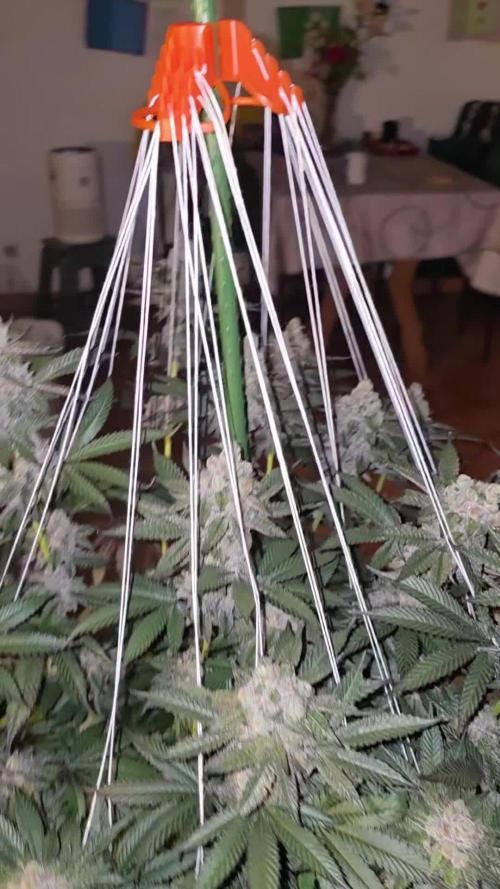
Der Tag der Ernte ist offiziell gekommen, und die Blue Lobster von Cipher Genetics präsentiert sich zum krönenden Abschluss in ihrer absoluten Pracht. Die harzdurchtränkten, kompakten Blütencluster verabschieden sich mit einem atemberaubenden Farbspiel aus tiefen Blautönen und dunklem Violett, das unter der dichten, weißen Kristallschicht regelrecht leuchtet.
Neben der optischen Dominanz ist es vor allem das Terpenprofil, das den Raum komplett einnimmt: Beim finalen Schnitt verströmt die Pflanze den weltbekannten, unverwechselbaren Blue-Lobster-Geruch. Ein intensiv süßes, fast schon künstliches Blaubeeraroma vermischt sich hier perfekt mit einer schweren, gasartigen Diesel-Note. Durch die Genetik der Kreuzung schlägt zudem die Blueberry-Banana-Linie voll durch, was dem Ganzen eine cremige, reife Bananennote und einen dezenten Unterton von spritziger Traube verleiht. Diese extrem klebrige und geruchsintensive Kombination macht sofort klar, warum diese Genetik einen solchen Hype genießt. Die Struktur ist steinhart, die Qualität makellos – ein absolut erfolgreicher Cut, der nun perfekt vorbereitet in die Trocknung geht.

Likes
38
Share


@LittleBigTrees
Follow
I've been pulling fan leaves this week .
1. To slow the top down .
2. To encourage side branch growth.
3. So they can remain in very small pots in a small space until I have space to let them grow properly.
Likes
30
Share


@BudXs
Follow
Oh it was a special week. Day 21 of flower marks the Silver Back Guerilla defoliation day!!!!
I left one be. For him. To prove me wrong. BUT!!! That one had some dead leaves at the bottom that needed removal, not the defoliated plants!!
Time will tell as to if what Im doing is right. I stick to my guns that this works for my room. Even though I read differently, removal of foliage has lowered my rh. Could very well be outside environment, however.
By day 21F the room was a bush again. In my opinion, it needed the heavy defo to breathe. As for light penetration, I am extremely happy with the amount of heads receiving direct light. Im a pig in shit
Thanks for looking, I dont want to hear your opinion on defo or schawazze, unless youre SBG

Likes
9
Share


@GOSHIN_GROWS
Follow
Took some clones 1 week before flipping to flower but forgot to take pictures. The video of the clones are from oct 1st.
The Turnt smelled like chocolate cover strawberries but now are smelling of garlic and pepper with a bit of undertone of strawyberries.
The Diesel smelled like lemon pinesol but now smells of citrus mixed with gas.
The Banana Clipz smells of berries mixed with skunk.
Paradiso smells of citrus mixed with fruit.
Lung Buster smelled lightly sweet at first but now smells like berries mixed with a undertone of garlic,funk, and gas .
Spilt Paint smells of berries mixed with diesel and funk.


Likes
72
Share


@Wastent91
Follow
Ehi ragazzi tutto bene? A me si benone! Davvero non ho parole per dire quello che sta accadendo alla mia Apricot! Sta esplodendo e invadendo in ogni direzione la mia grow! Sta così bene che sembra un serpente che succhi spazio vitale alle altre ragazze! Mai visto fino ad ora diventare così enorme una auto della Fastbuds in questo modo selvaggio! I miei complimemti 2fadtbuds siete riusciti a stupire per l ennesima volta! La ragazza sta benone, in bel verde del colore e intensità corretti, però ho paura che così alta per la vicinanza con la luce, che le foglie possa o bruciare e andare sul giallo, per ora tutto ok, vedremo in futuro se fare qualche aggiustamento, questi risultati sono soprattutto merito della luce della Mars hydro e della nuova tenda che mi ha dato spazio e altezza nuovi che mi permettono piante enormi! Poi io amo farle crescere più liberamente possibile e di non addestrare troppo, quindi per me è perfetto! Vi lascio i link equipaggiamento Mars Hydro qua sotto! Buon 420 a tutti! 😺😼😽😻💖🧑🌾🌱🌿🌲💨
https://marshydro.eu/products/mars-hydro-100x100x180cm-grow-tent/
https://marshydro.eu/products/4-inch-inline-duct-fan-and-carbon-filter-combo-with-thermostat-controller/


Processing
Likes
4
Share


@donovanliam
Follow
This plant is out in the country the wind out there is helping the stock thicken. Growing good just the plants not close by so it doesnt get looked at daily or not even every 2
Likes
14
Share


@Chuckwaggon420
Follow
These 3 girls have just completly taken over the flowering tent just massive! Keeps changing the light i raise it and they back at it again next couple days! Think they slowing a little possibly as u can see some bud clusters starting to form. That also tells me she is ready for a hair cut to get that light in there more!
They have a great strong kush smell when u do a stem rub but I don't smell anything at tent opening yet. They been getting heavy canna dose of nutrients for the steeach will see if they need another week of that dose if they chase the light again or if going to flower development now.
Food every 2 days around 3 L till runoff at ph of 5.6-5.7. I like how the canna nutrients when ur in correct ph range it foams so u know ur getting close. I have really came to like the stuff. Great results compared to past soil grows. Nutrients being more ready for the plants like force feeding is way faster for growth.
Like I mentioned will do hair cut over next week possibly start to see some more bud development over the next week also. Love yall.
Likes
41
Share

@valiotoro
Follow
The nose is like a green gummy bear come to life LOL
Sweet, tangy, and fruity, with that unmistakable candy-like aroma. Very intense, with layers of sugary green apple, a hint of citrus, and a subtle herbal undertone that adds depth.


Likes
18
Share


@Greenfox89
Follow
Hello people week # 8 at the start. I fertilize 3 more times this week with a liter of water (6.5ph). Hope this week she finally develops the colas a bit.
I had a little mildew problem last week, but defoliation resolved the issue. It fits perfectly into the season from the look hope dan to get good gifts.
Therefore I will start my flush in week 9. I'm curious what will happen in the next few weeks.
Thank you for your time.
A fox does what a fuschs has to do.
🦊🦊💚💛❤️

Likes
7
Share


@Andres
Follow
she in her second week ... of flowering ... she has a weak smell yet ... but her buds begin to take shape outdoor ... we will see what she offers us in the future ... the substrate is made by me ... and its feeding began the 1 week of flowering with earthworm humus .. red guano and fishbowl water ...
Likes
97
Share


@OrganicNature420
Follow
JungleBoys
Gelato33 x ZkittlezCake (clone)
THC: 30+%
Terp: 45%
Nutrients • GreenBuzzNutrients
(DISCOUNT CODE • (GD42025) %25 off
I use the whole product range and this stuff is a game changer. I've not had one bad grow with this company and it hasn't let me down once. Terps and taste are through the roof. No need for run off in coco only during flush week (i use a 0ppm distilled water) Hands down the best nutrients on the market
GREEN BUZZ OUR NOW GIVING YOU GUYS A SUPER DISCOUNT OF %25 WHEN USING THE NEW CODE ABOVE. JUMP ON BOARD THE GREEN BUZZ TRAIN AND GIVE YOUR PLANTS WHAT THEY DESERVE 💚🌱
LIGHT/TENT • Mars Hydro FC-E6500 5x5 tent
This clone is massive. Hoping to hit 200gs in dense smelly nugs. Buds are rock solid. If you haven't already please give GreenBuzzNutrients a follow and have a serious think about switching. This stuff is just on another level and Organic. Not salts or silicon to ruin the taste and super easy to use 🌱💚
Bubble hash review : most probably 3oz of trim and all the sugar leaves. Easily oz if not 1half. It smells amazing and will be a great smoke 👍🏻 dry weight in a couple of days


Likes
Comments
Share


@AutomataClub
Follow
La alegria que se palpita es mucha! Siempre soñe con tener cogollos oscuros y esta es la primera vez! Es notable la diferencia entre la planta fertilizada con namaste y la de feeding, aunque con este solo utilize el Grow y el Booster. Esta ultima tiene un aroma mas plano, sutil, pero gana en volumen. En cambio con la que utilize namaste destaca mas la precencia de ese aroma como a frutos del bosque, dulce y terroso.
A comienzos de pre flora aparecieron unos gusanos verdes que se multiplican muy rápido. La mayoria la elimine a mano, pero lo ideal es utilizar jabon potasico + Aceite de neem para eliminarlos inmediatamente.

Likes
1
Share


@CxHxAxNxT
Follow
10/27 end of week 2. hopefully smaller one doesnt wobble off the bricks.


