


Likes
Comments
Share


@SlowpokeFuegobud
Follow
🌈 🍨 😍😋🌞 🌈 🍨 😍😋🌞 🌈 🍨 😍😋🌞 🌈 🍨 😍😋🌞 🌈 🍨 😍😋🌞
I have no words, just that the smell is so sweet, like an ice-cream shop, and walnut. 🤤
Test bud was so good right after drying! 😬
Trichomes are cloudy, I will chop this week. So happy! 😍😌 I have been gifted by the universe once again. 🙏
I had to support all the branches now.
🍨
DAY 96
I harvested my beautiful Caramelo girl. 😍 ✨
Just took off the bigger leaves, and a few sugar leaves, my room is quite warm so no complete trim.
The buds look so amazing, they are rock hard, glittery and have those bright orange pistils alongside the dark purple colors. Sigh. 😊
Drying in cardboard boxes now, I usually hang two branches in a box, with air holes. And I have one box with a net chucked inside, for the smaller parts. No popcorn with the Caramelo. 😋 Took me half an hour to trim her.
After 5 days, I will put the nuggets in a jar to check the remaining humidity. I will leave the jar closed for 12h and then check. If the humidity has risen above 70%, the nugs will be put in a salad bowl to dry over night. If it's below 70% I will leave them in the jar and open it once in a while.. trying to keep humidity above 60% and below 70% for 2 weeks. 😎
Thank you so much for your company, friends!! It's so much better to grow in a community! 💚
Lighting a vape on you!! 😘
💚 🤤 💚 🤤 💚 🤤 💚 🤤 💚 🤤 💚 🤤
Have a great week!! 😘
__________________________________________________
SET UP
240W Fullspectrum LED 660nm 730nm 3500K dimmable
custom exhaust fan 270/320 m³/h
3x Garden High Pro fans 5W
tap water EC 0,25 - adding Calmag to EC 0,4-0,6 - adding pH minus Bloom (AHH) to pH 6,5

Likes
8
Share


Likes
49
Share


@masterofsmeagol
Follow
6/23 Due To The Two 8 Day weeks this week will only consist of five days to get me back on track. SEE LAST WEEK FOR DETAILS. I DID ANOTHER EIGHT DAY WEEK. I'LL DO THIS WEEK AS SIX DAYS. THAT WAY IM BACK ON SCHEDULE. WATERED 6/22. WENT BACK AT NIGHTCAND WATERED ANOTHER GALLON WITH 1/3 TSP Armor Si. I mixed the solution with kelp you kelp me but I dumped it out. I've mixed silica with other nutes before but I had read something earlier about bioavailability issues and I didn't want to risk it. My plants are the healthiest I've ever grown. I'm considering transplanting the large 10th planet that I'm light depping. I also need to develop my ipm and my nute schedule. Still gonna have to keep an eye onvthe water situation. Luckily I have a buddy in my corner that's co tinualkt Bern a great help.
WENT BACK OVER AROUND NOON. BEAUTIFUL OUTSIDE AND THE PLANTS WERE LOVING THIS SUN. I DEFOLIATED SOME BURNED LEAVES AND MIXED A SOLUTION IF KELP ME KELP YOU THAT I PLAN TO FEED TO THE GARDEN TODAY. IM HAPPY WITH HOW THINGS ARE GOING. WE HAVE SOME RAIN AND THINDERSTORMS COMING. I NEED TO GET MY IPM UP AND RUNNING AND THE NUTES ONLINE. I ALSO NEED TO DECIDE IF IM GOING TO TRANSPLANT THE LIGHT DEP 10th PLANET. Went back over to put the girls to bed at six and if was still 90 degrees. The water from yesterday had dissipated. The tops were dust dry. I mixed two gallons of kelp you kelp me and fed it to the garden. Afterwards I pointed qbd found a couple plants that were more open to the wind were a little lighter. I know tomorrow will be very hot. Maybe quarter inch of rain. However after that it will rain (showers) off and on for days. I wanted to make sure the girls had what the needed to make it through tjis heat wave until they get that rain. I had another gallon mixed up and I'm thinking I should've given it to them. Oh well. I'd rather underwater than overwater any day. I did notice a burnt top on the plant furthest from the tarp that the sun JUST BARELY TOUCHES when the rest are in shade. I'll just raise the tarp a little. These are tiny problems. Can't upload video until tomorrow.
6/24 Good thing u gave the plants that water. I know it wasn't much but we didn't get any rain. Suppised to get a qtr in today and another qtr in tomorrow. Then rain a couple more days. It's working our really good for my watering schedule lol. Yesterday the girls got there first dose of a bottled nute. They got two gallons of kelp me kelp you (1/3 tsp per gallon) and another gallon of just phed water. I was going to do another gallon but held off due to the threat of syring rain. Didn't get it bur it looks like the plants loved the kelp. It had reached 90 yesterday. They look better today. It's 70 at 9 today. I LST the 10th planet in the 3 gallon. It's getting huge. I should start a separate diary for those three light dep plants. Its cool as hell watching this. One of the purple punches is flowering pretty good. I probably should start another diary for them. I'll be starting to feed my plants soon. Wondering if I should pinch plants again. TUCKED THE LITTLE GIRLS IN AT SIX AND SHOT A VIDEO AND TOOK SOME PUCTURES. PLANTS LOOKED PHENOMINAL! GOT HOME AND AROUND SEVEN IT JUST STARTED RORREBTIAL DOWNPOURS! THE TYPE OF RAIN THAT BREAKS STEMS. I SHOULDVE PUT MY OTHET TARP UP BUT I DIDNT. I WISH I HAD. IM A LITTLE NERVOUS. I KNOW THESE GIRLS ARE STRONG THOUGH! TOMORROW. ILL ROLL THE RARP UP AND SECURE THE BOTTOM FOR FAST ACCESS. IM ALSO GOING TO KOOK INTO FINDING A TOP FOR MY CAGE I CAN USE IN INCLIMENT WEATHER.
6/25 That little qtr in of rain we were supposed to get turned into torrential downpours and high winds. Luckily no REAL damage. If you watch the video you'll see what I mean. I'm going to havecto be cognizant moving forward. Noticed a few chunks from leaves butvplants are still healthy. I'm surprised how well these girls withstood this storm. They are certainly resilient. The 2 purple punch 1 10th planet that I'm light depping are flowering nicely now. They missed all the commotion from the storm as they were inside. It's smelling good. I'm happy.
6/26 It's what a friend would say is "maineing") out. That mistcthe plants love. I'm surprised the plants are doing as good as they have been considering the wind. Will be adding nutes soon. Need to add extra supports too. Light dep
6/27 Brief periods or torrential downpours. Light depped 3 gallon 0lants are under an overhanfcwhete the hatsxrain can't hurt them but they still get sun. They are really starting to flower now! I'm going to begin feeding with a base nute and a flower nute I think. I'm thinking about giving the light dep some open sesame or something similar. I need to set up a nute program soon but the plants ALL look so healthy! And it's been raining! I've only watered like once or twice since they've been in the big pots. I've seen zero pests aside from a chunk missing from a grasshopper. Usually by now I'd have battled half a dozen things and be battling another half dozen. However I was posing from clones. These are seeds and boy don't I see the difference!


Likes
26
Share


@Melloganja
Follow
First week of the boom season, a lot pistils are showing up, smells good and strongest. The next week I will add a little more nutrients of advanced nutrients. Big bud, bud candy, and the last week I will add a Overdrive.

Likes
20
Share


@NONSENSE
Follow
Hello everyone!
Congratulations to our beautiful community, Wishing you a very Merry Christmas!!!
Good luck in the coming 2021!
This week is the last stage of the VEG.
After December 31st, I will change the growth to light 12/12.
I still use the Easy Combo and boost I got from RQS team. The plants looks great and healthy.
I added extra fertilizer from GNE : Flora Micro 2ml for each L of water.
The PH level I try to keep is between 6.4-6.0- lower, then higher, then lower again.
I bend down the branches every night.
every third day I do defoliation.
A pleasant, noticeable smell is already felt.
I hope that I achieve the harvest after 2 month and wish everyone the best of luck


Likes
14
Share


@Macc420
Follow
So weiter geht's :D
Alles klar sie sind geschlüpft
Sogar der 5 Jahre alte Zamnesia seed hats geschafft
Nun in Plagron Seeding and Cutting soil
Bei der hinten links passiert nichts - bisschen wurzel is da und der Anfang vom Stiel aber sonst nix mehr ... Hab jezz noch schnell eine Sweet ZZ in Papier Tücher gepackt damit es wieder 6 sind.

Likes
5
Share


Likes
5
Share

@Marijuanaut
Follow
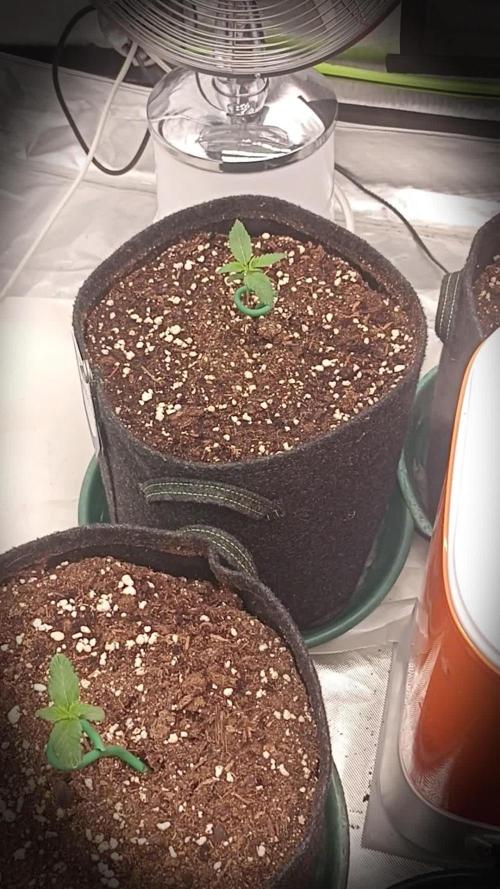
The stressful events from the previous week not only affected me but also my lovely ladies. 😔
Leggy seedlings that I´m now trying to compensate with extra care and detail to settings in my setup in order to mitigate the damage/stress! 😉
But the gals seem to fighting for a chance. ✊


Likes
1
Share

@BlunthumbMD
Follow
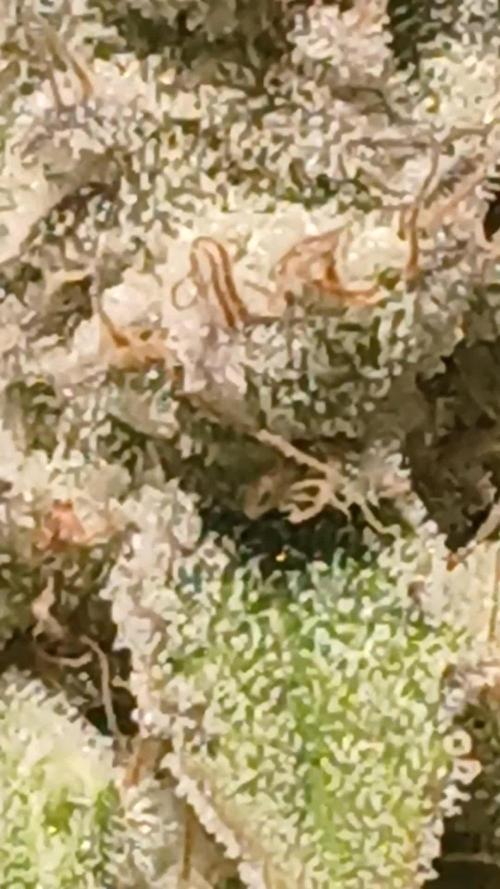
Puppy Love has been a gassy, citrus, bottle rocket plant. Main cola dominated, topping would be better in future grows. She smells like that smashed orange in a gas station parking lot. Being that i have grown SYC I can see and smell many similarities. Very stout, uniform, and that something unusual in the smells like SYC. She went dark for 48 hours on day 79, chopped Day 81. Hung whole, should dry fast. 3 weeks for weights and smoke reports fellow herbal enthusiasts!


Likes
27
Share


@Stealthman
Follow
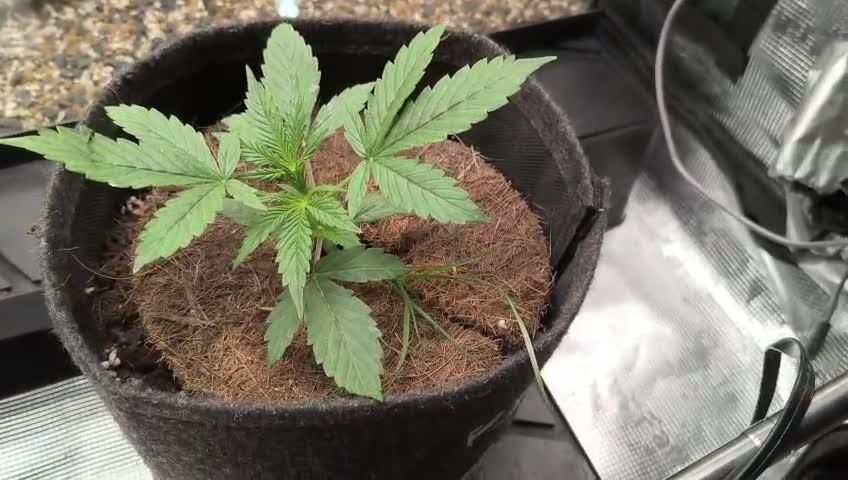
The plant of course is much more smaller with the restricted root zone causing a bonsai effect. However, she performed really well under the circumstances with a relatively large yield all things considered. I usually smoke high CBD but was very impressed with this high. Let's see how it goes after spending more time under the influence.
Review...
Growing in the solo cup sized container proved to be much more challenging than a regular grow. The plant soon became stressed dealing with the tiny root zone making everything hyper sensitive. The first issue was showing as tip burn even though the ppm was kept in the 650-850 range. Then the leaves showed a general yellowing overall specially showing at the bottom fan leaves. At this point I was changing the nutrient solution every 2-3 days trying different nutrient brands and concentrations seemingly without much success. It was a nerve wracking period which ultimately lead me back to General Hydroponics with amendments. I did learn that the plant can weather the storm even with less than perfect vegetative leaves while she focuses all her energies into calyx production. It’s was upsetting to see less than stellar health but eventually all the leaves drop and the flowers power on seemingly without issue.
The cascading diamond structure developed as a result of a couple broken branches that occurred during the training process in an effort broaden the plant profile with wider lateral spacing. Although initially upset when the fractured branches that withered after being bandaged up and . After removal of said branches it was exciting to see the new possibilities. The cascade formation called for additional side lighting to maintain uniform bud size all the way down the front lower end of the plant. I was looking to create a stadium like effect.
The experience of operating the visual hydroponic unit called for a number of practical adjustments along the way. Although initially, very excited with the system concept as an integrated design with nutrient solution supply and gravity drain through the pump, with the air supply inside the pipe with the air bubbler acting as the drain/root filter... in hindsight, obviously, it would not work as the root mass became denser and denser. The first issue, as the path of least resistance, the air was forced back down the nutrient supply pipe. This prevented the pump from priming itself and subsequently no nutrient solution delivery was even possible. As a result, the original air stone was left in place to prevent the roots from entering the nutrient tank and a new bubbler stone simply added to the tank itself.
Although the original idea was for the air to be continuously pumping directly through the roots, the flood and drain would actually be just as good when drawing the fresh air in and out with each pump/drain of nutrient solution. The ON cycle was initially set to 10 seconds which eventually became 30 seconds as the roots mass grew denser. This proved to be too unreliable as the fill level was no longer consistent which required constant monitoring to be sure that there was no flooding over and above the container lid. It which case, a simple feeder tube to the top of the root zone was the best option. The ON cycle was set to 5 seconds with a 15 minute OFF interval. Overall the biggest concern was the timer itself, which had several bad reviews for malfunctions with growers losing their plants. However, I have no choice as this was one of the few timers that was capable of cycling down to the second but it all workout fine in that regard… no problem.
Was it a perfect grow?... no, definitely not. However, as a relative beginner, it was definitely a great learning experience. Mostly, I need to work on the nutrient blend and concentration. For more control, a backup tank with float valve delivery to maintain the water level for this particular system would be a good idea as well.
Likes
6
Share

@D33jW
Follow
BOX: 80x80 - lamp 250W
🌞 Temp: 27°C
💦 RH: 60%
💥 PPFD: 800+ µmol
🌬️ VPD: 1.3 1.4
⚡ EC: 1.1 - 1.3
It’s been a good week:
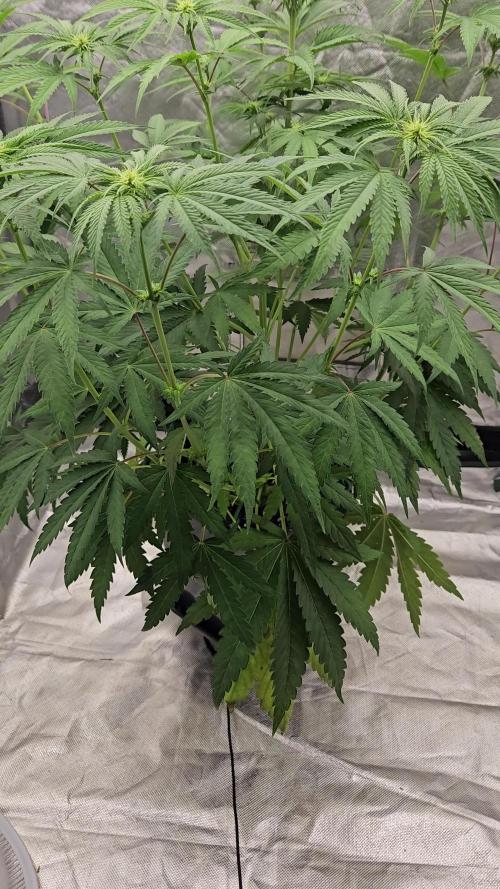
-Plants moved into the bigger 80x80 box.
-Keeping stable climate conditions, which clearly shows in their growth.
-Watering split into two portions per 24h – they drink more evenly without stress.
-Adjusted LST to keep the canopy flat and ready for the upcoming stretch.
Plants are healthy and moving forward nicely 🚀
Processing
Likes
5
Share


@Bombtofu
Follow
I need to get my l.s.t. done. Plan to this weekend. Have been alternating waterings between regular water and water with 2.5ml of fox farm grow big. Have watered all times with 200ml of water and the solution water mix. Been keeping the humidity at about 45% temp around 68. Can tell a huge difference in sizes of the plants and their container sizes. Will be going with at least 3gal pots next grow. Still using a 25w light as well. Will be upgrading that asap. Thanks for the view. And as always, stay safe.

Likes
Comments
Share


@drop_some_weed
Follow
First upload on my grow diary about this little auto. I’ve started this experience twenty day after first seeds popped of another regular in the same box, now i know that’s wrong but... now 🤣 so other error was trasplant late and other not correct situations that i will explane in next updates about early life of it, this is the result at 7/9 weeks of life , a little frosty girl

Likes
34
Share


@PrairieFrostGrow
Follow
*****Week 14 growth – March 13 to 19, 2021 – Week 6 flower ******
Feeding has ended this week and we are in flush mode now. The girls have just started to slow down their drinking and pistols are changing colour, buds are swelling, they are getting ready to finish. Added the UV and IR light bars in this week. Started the week with just one bar and then both in place by end of week. Each bar has 10 x 730nm, 10 x 395nm, 6 x 660nm pulling 30 watts each. Trichome enhancers!!
Working with the new light this run I have certainly pushed them with more light intensity than they should have received, broke 1100 PAR for a bit. This has also started to cause some foxtails to begin rather than staying compact and swelling the buds. Know for next time……always changes to make 😊
Little more detail…..
Mar 13/21, Day 36
- Feed day with full line of Innovating Plant Products but at ¾ strength.
- Keeping up the feeding but thinking about nitrogen levels and working on reducing.
- feeding with grow – 0.5, micro – 1.5, bloom – 2.5, ult B – 0.5, carbs – 0.75, B Storm – 2, S Storm – 3, Terp – 3, Jet Fuel – 1.5, Rezin 1
- 1300ppm and 6.2pH
- MM1 – 4L and MM2 – 3L
- Added in the first UV bar today
Mar 14/21, Day 37
- Seeing lots of swelling these days from the girls.
- Microbe feeding today…….possibly last round of microbes.
- Plain tap water with Recharge @ ½ tsp/gal and Natures Candy @ 1.5ml
- 400ppm and 6.1pH
- 3L all around today…..very little run off.
Mar 15/21, Day 38
- Another feed day today. Last week of feed so pushing them a little more. No Grow added! Last couple of feeds with CalMag as well, seeing some magnesium issues so giving last dose.
- feeding with micro – 1.5, bloom – 2.5, ult B – 0.5, carbs – 1, B Storm – 2.5, S Storm – 3, Terp – 3, Jet Fuel – 1.5, MagNifiCal – 1.5ml
- 1175ppm and 6.0pH
- MM1 – 4L and MM2 – 3L
-
Mar 16/21, Day 39
- Just giving the basic building blocks at this stage. Most of the supplements not added this feeding.
- feeding with Grow – 0.5, micro – 1.5, bloom – 2, carbs – 1, Rezin – 1.5ml, MagNifiCal – 0.5ml
- 875ppm and 6.0pH
- MM1 – 4L and MM2 – 2.5L
Mar 17/21, Day 40
- Last Feed Day……calling it at day 40 this run!!!!!
- 4L of feed water left from yesterday so added in 12L of RO water to keep the ppm down.
- Left over plus Rezin @ 2ml, Overdrive @ 2ml (its hard to let go of your routines…I have been using Overdrive for so long……it feels wrong to not be using it this run….snuck in a couple ml😊)
- 485ppm and 6.0pH
- MM1 – 4L and MM2 – 2.5L
- Light power pushed back up to 525 watts……..keeping the intensity up to hit the lower bud sites….will see what happens to the uppers.
Mar 18/21, Day 41
- Starting flush but not hitting the pots with 12 gallons of water each type of flush! Will just drop the ppm down to nothing and use RO water……planning on having close to 3 weeks to flush….second guessing that I really have that long though so may actually end up adding a flushing agent to the girls…..decide in the next 4 days so can leave plain water time if I do.
- Watering with Enzymes @ 2ml…….clean up the roots and help them get more of the ppm out of the media.
- 100ppm and 5.9pH……..missed the pH but not adding both up and down, ran with this.
- Light power pulled back down 480 watts
Mar 19/21, Day 42
- Dry out day today. Will be letting the pots get dryer now before adding more moisture.
- Leaving them for today though. Give flushing agent in next 2 days if going to.
- Work down the light intensity more in next couple of days as well.
- UV lights going now for 3 hours per day on both fixtures at the middle of the light schedule.

Likes
31
Share


@MrJones
Follow
MrJones VIPARSPECTRA XS1000 LED
📜 SUMMARY - I have been given the opportunity to run the next generation of LED lights by VIPERSPECTAR, the XS1000! I set up a Stealth Cabnient and moved 3 Cream Manderain Auto XL.s under these lights, the cabinet set up is automated with WIFI light controllers, and INKBIRD Temperature and Humidity Controllers, I am very excited about this opportunity!
Specs and Discount Codes Listed Below.
🔹🔹🔹🔹🔹🔹WEEKLY GOALS 🔹🔹🔹🔹🔹🔹
🌞Environment - 80F and 55%Humidity - using Humidfyer as needed.
💧 Feeding - Feeding with FOOP Canna Organic Nutrient Line
🍃Training / Super Cropped - and put 2 plants into a training hoop.
🕷️ IPM - Will be using Green Cleaner" 1 OZ per Gallon, and CannControl from Mammoth alternating between product each month for Integrated Pest Management.
💡 Vegetation & Flower (new) Viparspectra XS-1000 Release on March 15th.
🔹🔹🔹🔹🔹🔹🔹🔹🔹🔹🔹🔹🔹🔹🔹
📜 Week 8 and the buds are starting to get larger, thining I may have to clean up a few more fan leaves. great combination of Lights, Nutrients, Environment, and Strain.
🔹🔹🔹🔹🔹🔹🔹🔹🔹🔹🔹🔹🔹🔹🔹
▶️Monday 04.12.21 / Fed about 30 ounces today - looking great!
▶️Tuesday 04.13.21 / Fed about 30 ounces today - looking great!
▶️Wednesday 04.14.21/ laying off the feeding tonight, had to readjust one of the plants this afternoon, added some support to it.
▶️Thursday 04.15.21 / These ladies are doing well, the height is right up to the lights, but still looking pretty good. Drop the feed down to 20 ounces per day.
▶️Friday 04.16.21 / Fed about 20 ounces today - looking great!
▶️Saturday 04.17.21 / Fed about 20 ounces today - looking great!
▶️Sunday 04.18.21 / Fed about 20 ounces today - looking great!
🔹🔹🔹🔹🔹🔹🔹🔹🔹🔹🔹🔹🔹🔹🔹
VIPARSPECTRA XS1000 LED
🔹🔹🔹🔹🔹🔹🔹🔹🔹🔹🔹🔹🔹🔹🔹
Amazon US:
XS1000 10% off: in10MrJones http://yx-8.cn/0y-6
XS1500 5% off: in15MrJones http://yx-8.cn/0yA
XS2000 5% off: in20MrJones http://yx-8.cn/0y2Y
XS4000 5% off: in40MrJones http://yx-8.cn/0y5k
Amazon Canada
XS1000 10% off it10MrJones https://amzn.to/38udUVe
XS1500 5% off: it15MrJones https://amzn.to/3esVUyr
XS2000 5% off: it20MrJones https://amzn.to/3l5zAfg
XS4000 5% off: it40MrJones https://amzn.to/3l7k5Uj

Likes
21
Share


@BB_UK
Follow
I’m not too happy with the rate of growth but I knew I would be as I didn’t put dynomyco in (purposely) I’ve been feeding every 2 weeks (top feed) with Phyco myco (started last feed) and am seeing some beneficial changes! But will see in time just how much! I was 1” ahead last time and 10” ahead the time before that! So will be running the organic fertiliser next time with dynomyco and just feeding water and seeing the outcome of that! Autos are my testing ground now! As I know exactly what to do with photos! 😉
Likes
19
Share


@GrownwithLED
Follow
My favorite method to germinate seeds is the 'SERIOUS' method promoted by Serious Seeds. I have almost always a 100% success rate with. Check out the video above for the process. If you hang up the seeds inside a wet paper towel inside a plastic bag, the roots will grow out STRAIGHT instead of being curled when they lay on a plate. Make sure the tip of the seed (=pointy end) is facing downwards inside the bag, so they can open up and grow straight down towards the floor. This makes its easier to transplant the germinated seeds into soil. When you plant the seed make sure the top of the seedshell still peaks out of the soil..this make an easier start for your seedling. They will grow right out of the soil the next day.
