


Likes
Comments
Share


Likes
Comments
Share


@Steviegrows
Follow
This week the new growth of the plants transitioned from looking relatively healthy to droopy and yellowed. I wasn't sure what the issue was at first and thought it might be light stress. After more research, I determined that I had what looked very much like a zinc deficiency, which is almost always a symptom of over-watering, which is the most common mistake for new growers, i.e. "Me". I had assumed that adding a good amount of perlite to my soil and using smart pots would prevent me from running in to any drainage issues but I guess not. I was up to 1.5 liters per plant when I realized that it was too much.
I also realized I was misreading my syringe which I use to mix nutrients, and that i had been giving only 1/10 of the liquid nutrients that I thought. I'm super embarrassed about the mistake but I'm going for full transparency here, so there it is. Course correction takes places after day 31.

Likes
15
Share


@vibealive
Follow
Just started this one off... Not much to say so far.
This is a coco grow. I started off with an amended Coco using Gaia Green 4-4-4 and power bloom 2-8-4.

Likes
52
Share


@SAC87
Follow
Week 5 Day 1: The smells are starting, they’re starting to chunk up from a week ago. The chem is definitely larger than the rest, but the Durban is doing its regular thing and making hard nugs. I haven’t done anything except tuck and defo large shading fans. Just on cruise control. I fed with the above amounts 2 days ago which is that same as suggested for week 5. I’ll be adding the overdrive in week 6 and see what that does.
The Shishkaberry is a little lack luster in size but we’ll see she goes and the Dutch is stacked up pretty nicely with some crowding between the nets.
All in all getting more pistils, size and trichs every day so nothing to complain about.
Happy Growing 🌱
Update: W5 D4- So I opened up one of the ovules from each plant and there are tiny seeds inside, does anybody else have that or does that mean I have seeds again. Also, starting to have a bit of a leaf tip burn but not sure what the reason is yet.


Likes
11
Share


@Lahuertade_Bototo
Follow
🌱🌱🌱Continuamos este cultivo, con esta hermosa cepa de FastBuds, Girl Scout Cookies Auto, de lleno en el periodo de Floración .🌱🌱🌱
👨🍳👨🌾🏻 Nutrición y Bitácora 👨🌾🏻👨🍳
-Día 43. Sigue aumentando el engorde de las flores y el aroma es cada vez mas intenso 👌.
-Día 44. Se riega con 3 litros de una solución nutritiva NPK de Plagron Alga Bloom (6 ml) Plagron Sugar Royal (1.5 ml) y Plagron Green Sensation (1.5 ml).
-Día 45. Los aromas se intensifican, ya seco el sustrato.
-Día 46. Se riega con 3 litros de una solución nutritiva NPK de Plagron Alga Bloom (6 ml) Plagron Sugar Royal (1.5 ml) y Plagron Green Sensation (1.5 ml).
-Día 47. Sigue todo excelente 🙌.
-Día 48. Ya seco el sustrato.
-Día 49. Se riega con 3 litros de una solución nutritiva NPK de Plagron Alga Bloom (6 ml) Plagron Sugar Royal (1.5 ml) y Plagron Green Sensation (1.5 ml).
🚀Equipamiento🚀
Indoor de 60x60x159 cm y una iluminación BlackCob F320, se activa solo 1 modulo (160w) a 45 cm del canopy por el resto del cultivo. Intractor de 135mm, extractor de 135mm, filtro de carbón, ventilador "oscilofan", ventilador "clip fan", este ultimo ventilador se ajusta en la parte baja de la carpa para mejorar la circulación de aire bajo el canopy, 2 termohigrometros y una malla SCROG de kanovi a 15 cm de la maceta.
Acompáñenme para ver los resultados de este hermoso desafío, un saludo cultivadores 🔥🔥🔥

Likes
38
Share


@Hellhazard
Follow
Day42 of flower.
Buds are still filling in slowly. She is really starting to smell now, like burnt sugar. She is getting heavier and I will have to put some bamboo sticks in this week to hold her upright. I really love the structure of the buds and how the stalks look like striped straws.
Everything seems normal.....

Likes
Comments
Share


@Organic473
Follow
A hint of pre flowering showing it's a girl. It's time to plant her outdoor.

Likes
9
Share


@REYCG9091
Follow
This grow is an example of how important is to check your veg time to make sure it doesn't shoot over the lights and over the roof really, overall is good tho.
Also i ditched advanced nutrients for a new brand, since advanced nutrients are just costly stickers imho.
11/16/24 bought a new fert , that will not only last me 10 times with a fraction of cost, also it's much easier then mixing 24 different bottles , also all the liquid ferts tends to cristallize so i don't even know if the fert i've applyied in the past (advanced nutrients perfect ph micro-grow-bloom) was all bioavailable (probably not) since the buds looks already bigger after 1 application.
Also Ferty 1 Geo has also molybdenum among the microelements wich was not present on advanced nutrients.
cheers!
Likes
Comments
Share

@PicoDeGallo
Follow
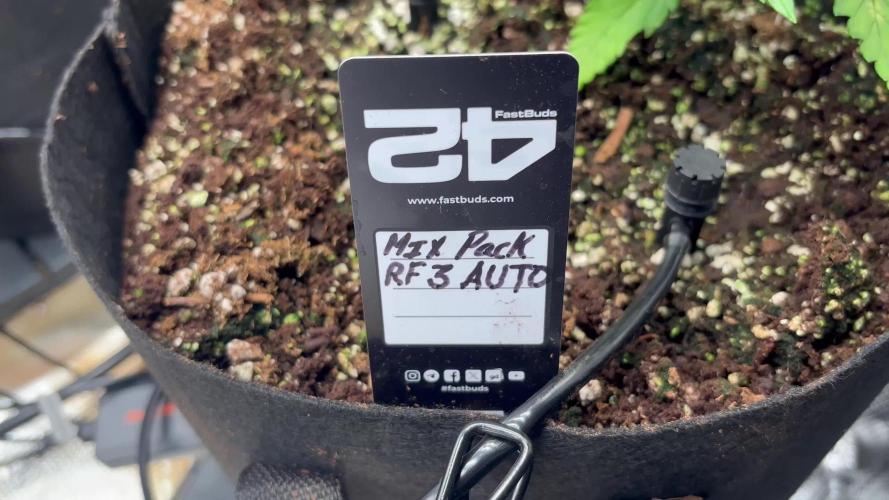
They’re all doing well. Seems like the #4 bag is using less water than the others.
I added the Spider Farmer Drip irrigation system. It’s set to trigger when the average is 25% water content.
Likes
6
Share


@JackSkellington
Follow
30/05/2021
sono emozionato ho fatto cambio ora non ve l ora di vedere i fiori....credo che avrò un pessimo raccolto
farò pochi grammi...piante irregolari di altezza dove prende piu luce e dove prende meno
purtroppo sbagliando si impara
spero solo di fare almeno 200g cosi da poter fumare per due mesi


Likes
14
Share


@Pennuts
Follow
finally the plants are ready and i harvested them, the trichomes were 70% white and 30% amber. In the next few weeks i will give an evaluation of the smell and taste and i will post pics of the buds

Likes
151
Share


@yan402
Follow
🌸🍊✨🍭🌸🍊✨🍭🌸🍊✨🍭🌸
Back at it with Kannabia — huge thanks for the NEW EXCLUSIVE Upcoming Kannabia's seed Launch 🙏🍨🍊
Grateful for the trust and for everyone following along, I’ll run her clean and showcase what she can do.
Dessert-party goals: berry–citrus sherbet terps, creamy finish, tight stacks, easy trim, zero drama.
Veg 24/0, clean manifold + LST, flip on a happy, even canopy.
Coco’s fresh, seed goes in now. 🚀
Added on 12.10.2025
🌞 Light conditions: Limited direct light for the first 4 weeks — ~4 h/day on weekdays and ~10–11 h on weekends due to tent sharing and work schedule.
🌸🍊✨🍭🌸🍊✨🍭🌸🍊✨🍭🌸
💭❗💭❗💭❗💭❗💭❗💭❗💭
❗Events & thoughts worth noting❗
💭❗💭❗💭❗💭❗💭❗💭❗💭
10.08.25 GW1 Sowed seed, soaked starter pot with #1
12.08.25 GW1 Seed popped hip hip hurray
28.08.25 VW2 Stopped using GreenBuzzBloom, took it out of the schedule.
01.09.25 VW3 TriPartMicro 10→30ml, TriPart bloom 10→30ml
12.09.25 VW4 Applied nemadodes against thrips and fungus gnats.
20.09.25 VW6 topped and trained for first time, decided against a full manifold as I lost a few weeks already.
26.09.25 VW7 Topped her one more time for 8 mains
27.09.25 VW7 Topped up the pot with perlite instead of clay pebbles this time, just trying things out, TriPartMicro 30→40ml , TriPartBloom 30→20ml
10.10.25 VW9 have her a haircut, umm be trimming the side shoots tomorrow, rest in the video 📹
12.10.25 VW9 done some extra trimming to clean up a bit and chose two extra side shoots to nurture info mains, so kept the 8 original mains plus 2 rest in the video 📹
17.10.25 VW9 FfJ/fpj fish mix 30 → 60 ml
20.10.25 VW10 Feed tweak: added 3 g Calcium Nitrate/ 30 L (≈ 15 ppm N + 10 ppm Ca)
24.10.25 VW11 did a defoliation and trimming session 📹
27.10.25 VW11 Epsom Salt 0 → 2.5, Calcium Nitrate 3 → 9 g
01.11.25 VW12 CalMag 60 → 30ml, TriPartBloom 20 → 30ml, Magnesium 2.5 → 3.5g
02.11.25 VW12 Did a cleanup in preparation for flowering, rest in the video 📸
12.11.25 VW13 Did another cleanup in the tent 🎥, also switched to the FERMAKOR PK Micro schedule, (10.11.25) added Phosphoric acid as a pH down in preparation for flowering
14.11.25 FW1 FERMAKOR PK Micros 40 → 50 ml
🌱💦🌱💦🌱💦🌱💦🌱💦🌱
🌿 Day to day tasks & actions 🌿
🌱💦🌱💦🌱💦🌱💦🌱💦🌱
14.11.25 VW13 – Fed 5l of FERMAKOR PK → 2l runoff
15.11.25 FW1 – Fed 5l of #1 → 2l runoff
16.11.25 FW1 – Fed 5l of #1 → 2l runoff
17.11.25 FW1 – Fed 5l of #1 → 2l runoff
18.11.25 FW1 – Fed 5l of #1 → 2l runoff
19.11.25 FW1 – Fed 5l of #1 → 2l runoff
20.11.25 FW1 – Fed 5l of #1 → 2l runoff
21.11.25 FW1 – Fed 5l of #1 → 2l runoff
(*RUNOFF reused for tomato plants)
🍶💧🍶💧🍶💧🍶💧🍶
💧 Nutrients in 30 L #1 Veg — FERMAKOR
🍶💧🍶💧🍶💧🍶💧🍶
💧 Calcium Nitrate (Calcinit / Nitcal): 45 → 40 g
= 1.33 g/L → 207 ppm N + 253 ppm Ca
🍶 PK Concentrate (FERMAKOR Base): 30 → 40 ml
= 1.00 → 1.33 ml/L → balanced 1:1 P:K + light micros (from extract)
💧 Home-made FFJ/FPJ (Fish + Veg): 30 ml
= 1.00 ml/L
🍶 Epsom Salt (MgSO₄·7H₂O): 8 g
= 0.27 g/L → 26 ppm Mg + 35 ppm S
💧 Fetrilon Combi 1 (Micros): 0.5 g
= 0.017 g/L → Fe 0.7 ppm • Mn 0.7 ppm • Zn 0.3 ppm • Cu 0.3 ppm • B 0.1 ppm • Mo 0.02 ppm
🍶Phosphoric Acid (pH down) + Citric Acid (chelation): as needed
→ First set pH with phosphoric acid, then add a little citric only if you want extra chelation
💧 Target pH: 5.8 – 6.0 (drop test yellow-green)
📦 TOTAL: 60 → 70 ml / 48.5 g inputs per 30 L
= 2.00 → 2.33 ml/L + 1.62 g/L
⚙️✂️⚙️✂️⚙️✂️⚙️✂️⚙️
✂️ Tools & equipment ✂️
⚙️✂️⚙️✂️⚙️✂️⚙️✂️⚙️
✂️ 2× MarsHydro SP3000
⚙️ MarsHydro 150mm ACF Ventilator
✂️ Trotec dehumidifier (big unit)
⚙️ Mini no-name dehumidifier
✂️ Kebab skewers (LST – stainless)
⚙️ Wire + roast skewers (LST assist)
✂️ Scissors (HST)
⚙️ Vacuum (for spills & cleanup)
✂️⚙️✂️⚙️✂️⚙️⚙️✂️⚙️✂️⚙️✂️⚙️
---
🍊🍧🌬️🍬🍊🍧🌬️🍬🍊🍧🌬️🍬 Mystery seed (Kannabia Seeds) — NEW EXCLUSIVE
🍊🍧🌬️🍬🍊🍧🌬️🍬🍊🍧🌬️🍬
Species: Hybrid (GF / swift-flowering line)
Genetics: TBA (breeder sheet pending)
THC: TBA
Effect: Euphoric, relaxed, creative (target profile)
Flavor: Berry–citrus sherbet, sweet candy, creamy finish
Flowering (indoors): ~6–7 weeks target (GF)
Resistance: High (aim: no drama)
Indoor yield: TBA
Outdoor yield: TBA
Structure: TBA
Notes: Brand-new exclusive from Kannabia’s GF line — I’ll update specs when the breeder card drops. Goal is rich sherbet terps (berry–citrus + cream), low leaf-to-calyx, easy trim. Stage harvest stays on the table if tops finish early.
YouTube Link: https://youtube.com/-m8h?si=A7x4Zlr2kj-_ga31

Likes
207
Share


@PEAKYPLANTERS
Follow
Hello weed brothers! How's it going?
We should soon notify the lady upstairs that there will soon be a tree in the house growing out of the floor. 😄😄😄😄
Likes
14
Share

@CheeRz
Follow
FINAL HARVEST REPORT: Permanent Bluez (IZI Seeds)
🌼 SUMMARY OF THE JOURNEY
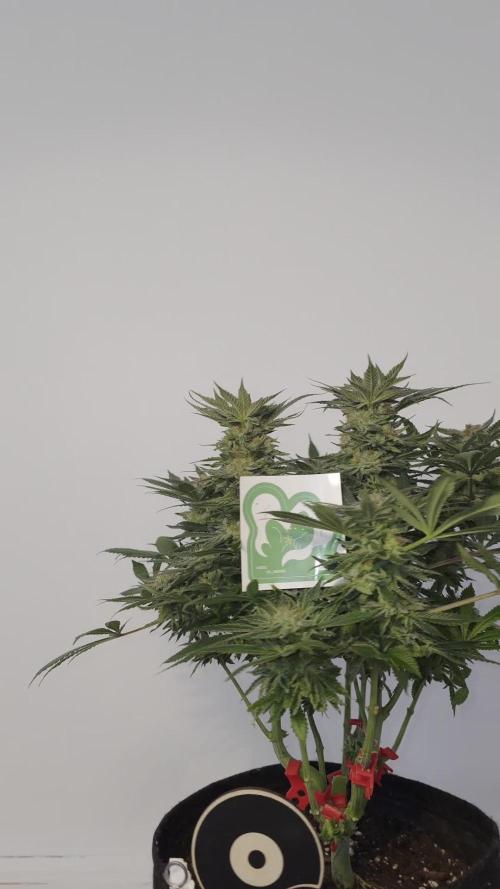
The cycle is complete. From a tiny seed to these resin-drenched, purple boulders, the Permanent Bluez has been a pleasure to grow. Despite a minor LST injury in the early stages, she bounced back with incredible vigor. She handled high VPD levels and a full BioBizz feeding schedule like a champion, staying vital and deep green until the final day.
❄️ THE HARVEST
Harvested at Day 70 of bloom. The buds are incredibly dense and heavy. The trichome coverage is top-tier – literally every millimeter is covered in "frost". The visual contrast between the anthracite-purple calyxes and the bright white resin is world-class.
👃 FINAL AROMA PROFILE
The scent is exactly what I hoped for: A dominant base of Sweet Berries with a sharp, Sour finish. The "Permanent Marker" funk is still lurking in the background, making it a very complex and exotic smelling harvest.
📊 TECHNICAL STATS
Total Time: 14 Weeks
Bloom Time: 10 Weeks
VPD at Finish: 1.69 kPa
Trichomes: 90% Cloudy / 10% Amber
💭 CLOSING THOUGHTS
A huge thanks to IZI Seeds for these amazing genetics. This strain is for anyone who wants high-end bag appeal combined with a robust and forgiving growth habit. I'm now moving into the drying phase (18°C / 60% RH) to preserve those precious terpenes. Final weight and smoke report coming soon! Keep it IZI 💚

Likes
13
Share


@masonandjayden
Follow
Week 2 of flower everything has been growing great praying leaves from start till now. Been really healthy four super sour s1 from copy cat genetixx 2 peanutbutter souffle from ilgm and 1 pressure clone from a cultivator in my neighborhood. Excited to see results in about 6-7 weeks

Likes
9
Share

@Brujha77
Follow
Start 4. Blütewoche
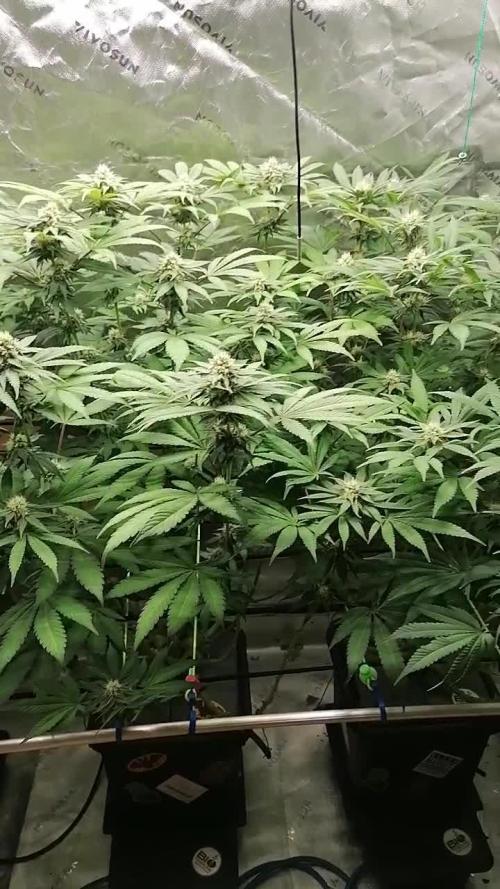
Heute wurden die 3 nochmal entlaubt und es wurde der Rest unten rausgeschnitten.
Dazu gab's heute für jede jeweils 1l Composttee (25g/l Biotabs Pk Booster Kompost Tee mit Melasse und Wurmhumus).
Langsam werden die Damen durstig, 50l Tank reicht aktuell knapp 3Tage🥀🥀
Bisher absolut entspannt. Die linke ist etwas kleiner, aber die hatte auch leichte Probleme.
Schaut trotzdem gut aus.
Die anderen 2 sind absolut identisch vom Wuchs.
Geruch sind bisher alle 3 recht gleich.
Werte sind ca. 900ppfd bei 1.4kpa VPD

Likes
14
Share


@ConspiracyFly
Follow
Week 12
Gorilla Cookies Auto (Fast Buds)
Keep getting fatter
Week 12....7 week of flowering (87 days)
It has 64 centimeters
16L
This Week - Defoliation - Only Water -
Godzilla Cookies (Herbies)
Keep getting fatter
Week 11 .... 4 week of flowering (77 days)
It has 71 centimeters
15L
This Week - Defoliation
Gorilla Glue Auto (Herbies)
It has 40 centimeters
8 Week...3 Week of flowering (52 days)
This Week - LST - Defoliation


Likes
4
Share


@Santica_Garden
Follow
So this is how the ladies are looking at the end of Week 1 from Seed, all 5 ladies are looking great, what I will do is pick the best looking 4 out of the 5 before transplanting 👍🏾😎

Likes
3
Share


@growerplatinum
Follow
I think she is a beautiful strain, but man is it a pain in the ass to trim here and there, and to LST. Her stems were always very fragile no matter what i did, not to break but to bend. Stayed short, and grew bushy, I couldn't get them to strengthen up. But overall I would say its pretty to look at and grows densely and might be worth a try.

Processing
Likes
37
Share


@RickJames_Mcdank
Follow
Well the leafs are turning yellow allot and quickly. But so far the buds are still nice and green. Buds are getting nice and frosty too. buds are getting denser so thats good too.
So far so good. 2 weeks left still as you can see not all the pistilles are red yet. 🙏🙏
