




Likes
22
Share


@SativaSteve88
Follow
Last update of pictures before harvest nothing much to write up on, been om a flush for 7 days now so far and will give her a few more before i cut her down, see you next time im back when i update my harvest overall results and final pics of the buds.
Next up i have a selection from barneys farm including Wedding cake autos and fems gorilla glue autos, tropicanna banana and dos si dos, and some amnezia haze from RQS see you soon 👊👍


Likes
43
Share


@TheBudWhisperer
Follow
Week 1 of veg. In the books and we have a stable of very healthy and incredibly vigorous plants on the grow here. Even the runty one (there’s always one) has shown some signs of strong growth and we may not end up culling her from the mix at all.
Over the last couple days, growth has exploded with no signs of slowing down - even after their transplant to the bigger pots👍. They’re doing everything they’re supposed to and showing that F1 vigour at every step. So far, so good and we really couldn’t ask for a better start to this run.
We incorporated a very mild solution of our primary nute this week - Druid Berkana. This stuff is a one part system designed for the whole cycle and its proven to be one of the best all-around nute brands we’ve tried to date. Some light foliar spraying with liquid karma continues to mid week and then they’re all on their own👌. Expecting big things from this run and if we get lucky with continued robust growth - might be able to take clones after the third week of veg and flip🤞🤞🤞. Til next week - keep it green and keep it growing👍👊.
Background
This project has been a year in strain selection (and another year in the actual making) to get to this point with a viable potential cross. It’ll be a true polyhybrid with a mix of sativa and indica leaning properties for each. We’ve combined an especially powerful hybrid sativa strain of Strawberry with an equally manageable and hard hitting strain of indica dominant Skywalker OG.
The hope has always been to combine them and boil out the best characteristics of each. The strawberry is phenomenal in terms of terp profile and a mix of strong head and body effects while the Skywalker is a mind bending, body butter kind of indica with that earthy Kush profile and flowery undertones.
The strawberry is prone to botrytis and fasciation but features excellent terps and yields if grown correctly. She’s Also stretchy and somewhat unruly when she gets going. The Skywalker is a contrast in growth characteristics with a squat structure, medium sized buds and excellent resilience and resistance.
The plan is to seed out the available females and take cuts of what we can post-stretch to get a closer look at any differing phenos. Still very much early stages for a stabilized new strain but we’ve got the right foundation of solid genetics. Now we just gotta get it off the ground to the next generation👍. We’re predominantly focused on the plants that demonstrate that hybrid vigour and wasting no time with any problem plants or runts. Stay tuned - with a little luck, this cross is gonna be straight 🔥😎👌.
Likes
18
Share


@CRK00
Follow
16th Week Report 30/01/20 - 06/02/20
Had a look to trichomes and she was almost ready, consequently I didn't filled/changed reservoir from last week
06/02/20
Harvest Day!
2nd Harvest Wet Weight Is 440g! 💦💦
All the lower growth yielded more than the bigger colas from first harvest (350g Wet Weight)
Nothing particular to say, trichomes are 5-10% 🔍 Amber, even the lower buds got some purple tones and while I was trimming them I sniffed the best weed flavour I ever felt in my life!
The 2nd Harvest day was a week away from the 1st Harvest day!
"Harvest Week" will be published when buds will be dry 😋
Last Update 06/02/20
See you guys ;)

Likes
14
Share


@Rock_n_Roll_Randy
Follow
FOR EVERYTHING MARS HYDRO VISIT:
www.mars-hydro.com
www.marshydroled.ca
PROMO CODE: rocknroll
VISIT THE ALIEXPRESS STORE:
@marshydro_aliexpress
Instagram: @marshydropenny
https://youtube.com/channel/UChU5ZWwNi-DvnO3oWVU3ceA
(NEW) STRIVE NUTRIENTS 💪
https://strivenutrients.com/
Thanks for taking the time to read and check out my diary🤜🤛
FC-E6500 LED GROW LIGHT:
FC-E6500 grow light with 3978pcs OSRAM BridgeLux Diodes & Moso Driver, market-leading PPF 2.7 µmol/J, Max 2.5g yield/watt with 30% higher Average PPE, more cost-effective when compared to same style type lights. Only consumes 650W, perfectly cover 5x5ft (personal), 4x4ft (commercial) grow space. Innovative Precise Uniform Lighting-Built-in removable bars interval & dimmability enable the exact & dynamic PPFD control over each of the plant growing stages, FC-E6500 detachable bars deliverSuperior Heat Dissipation: Real Aluminum heatsink together with 6 slim profile passive cooled bars (THINNER & LARGER surface) and detachable Meanwell Driver, create less heat. save 50% hydro than other old grow lights! Driver can be mounted remotely on the side of a grow tent/rack or on an adjacent wall to remove heat from grow space. Full Spectrum UV IR LED: With Yield Max spectrum (660nm Osram enhanced Deep Red,2800k-5000k,730-740nm IR,380-410nm UV LEDs), Average PPFD the FC-E6500 LED grow lamp enables cultivators to produce BIG FAT Dense Buds, perfect for full-cycle hydroponic, soil, grow tent/grow room.
Dimmable Commercial Grow Light: Cost-efficient, easy dimming & daisy chain With a max up to 20 lights, IP65 Waterproof, master light easily controls the rest. Perfect for commercial & home horticulture.
FC4800 LED GROW LIGHT:
GET THE MAX FROM MARS👍: Welcome one of the newest members of the Mars Hydro family🤜🤛🤘. The Mars Hydro FC 4800 480W LED Grow Light can accommodate up to a 4' x 4' area for flowering. It has OVER 2000 LED chips consisting of the best selling Samsung LM301B diodes which has a Luminous Efficacy of: 220 lm/W
0.2 W, 3 V mid power,
Osram 660nm Diodes, Infrared light and UV LIGHT👍. It boasts the incredible efficiency of 2.8 µmol/J, maximum 2.5gram yield per watt with 30% higher Average PPFD. This High-intensity spectrum is beneficial for plants at all stages - from veg to bloom, and creates Big dense Buds👍. achieve 50% higher yields & quality compared with the old lights! Only consumes 480W for 4x4ft personal grows, and 3x3ft for commerical grow. It comes with a dimmer and daisy chain function with a maximum of up to 15 lights, the master light controls the rest👍. Wide 6-bar design offers even & wide canopy coverage and can maximizes your grow space. slim 180° FOLDABLE DESIGN... YES I SAID FOLDABLE🤘🤣 , making it compact and easy to install, it's IP65 WATERPROOF and will give you no worries while growing in a humid environment and makes it a flexible high performance commercial grow light for enormous SUPER FROSTY yields.😛😛😛. MARS GETS EM FROSTY BOYS👍
AWESOME HEAT DISSIPATION: The Low energy consumption FC4800 growing light has 6 passive-cooled bars and an aluminum heat-sink a removable driver you can upgrade later or have it outside your tent. with zero noise you can save up to 50% in your electricity bill compared to HID's or HPS lights!
It also has a removable driver so you can upgrade it in the future or have it outside your grow space for better heat control in your growroom👍
UPGRADED FULL SPECTRUM: Yield Max Spectrum with enhanced red (Top-Bin Samsung 3000k-5000knm, Osram 660nm Deep Red), speed up blooming & fruiting, perfectly suited for full-cycle growing. The FC4800 LED grow lamp was born for Big Buds, perfect for commercial, grow tent, grow room, hydroponics, and all soil grows.👍
THE BEST SAMSUNG DIODES: THE FC4800 has Top Bin genuine Samsung Osram Diodes, combined with remarkable 2.8 µmol/J Efficacy, 30% higher Average PPFD, 50% less energy consumption, to maximize your yields. They give you a TRUSTED 3 years warranty 100% Satisfactory guaranteed!!!
TSW2000 LED GROW LIGHT:
INCREASE YIELD AND CROP QUALITY WITH MARS HYDRO LED GROW LIGHTS: NEWEST SMD LED technology provides the highest PAR/LUMEN output (1122umol@18") and can make you get 30% higher yield compared to OLD blurple led lights. Max 2.5g yield per wattage and achieve maximum quality and quantity, much better than traditional HPS grow systems
LOW ENERGY CONSUMPTION LED GROW LIGHT: Consuming only 300W true output with 684 LEDS! It saves up to 50% energy than other led grow lights. Perfect for 3.5x3.5ft bloom stage, 4x4ft veg stage. Over 90% light energy can be absorbed by plants, it will have higher intensity in a MARS HYDRO grow tent with diamond design mylar, or by crossing over using multiple TSW2000
HIGH EFFICIENCY FULL SPECTRUM INDOOR GROW: 3000K 5000K and IR 660nm 760nm RED, makes it close to natural light, highly engineered to provide improved growing performance for plants at all stages of growing, rapid plant response from seed to flower; Uniform and wide-beam light distribution for your plant's optimal growth
8x8 1680D GROW TENT
The MARS HYDRO 8x8 Grow Tent interior is made of a unique diamond design mylar which is highly reflective. (Other companies mylar and reflective rate is as low as 50%, and it won't provide efficient light. They use thick 1680D oxford canvas, and being double stitched, it is tear proof and perfect for locking in the light. Their grow tent keeps 100% of the light inside the tent and helps your plants absorb more light. EXTRA-THICK material means No light leaks or rips at all.👍
Strong Stable metal corner adapters and poles are the trustful supporters of the tent. It's very sturdy, neither rusting or paint flaking off. quick and easy tool-free setup. They use heavy-duty metal zippers, with double layer black lining, by far the best on the market which creates a light-proof seal.
The Easy observation windows are made by double layers of cloth. Observe the growing conditions of your plants without opening the tent and avoid disturbing your plants. The observation windows also serves to dissipate heat and ventilate the air.
The tent includes 2 removable waterproof floor trays to hold soil and water. The removable tray can be taken out to wash easily.
They guarantee the grow tents are easy to install even if you've never done something like this before. Clear Instructions and no tools needed! They also offer 30-day unconditional refunds for quality problems. Just contact their friendly 24 hours customer service 👍


Likes
23
Share


@Joni2017
Follow
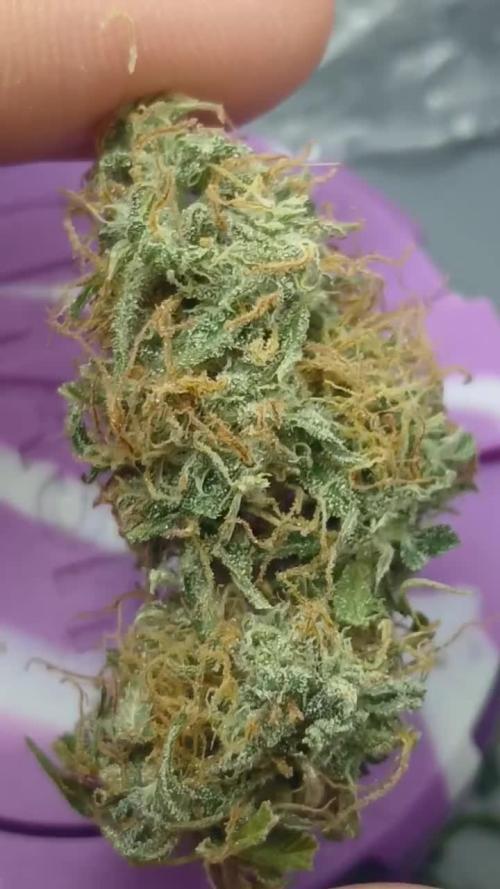
Day 66, she continues the very healthy flowering 🙌 size 80 cm👏🏻👏🏻 temperature 24º C ☀️, humidity 60% 💧 watering 750 ml alternating one day with nutrients and another without nutrients with osmotized water 💦💦 Session 45 min. of binaural sounds for growth and healing 🎼 and music 😉👍
Likes
28
Share


@Felloffthegrid420
Follow
Jumped up a few feet idk yet but look like I got a winner here guys might be going in to flower idk


Likes
20
Share

@Natrona
Follow
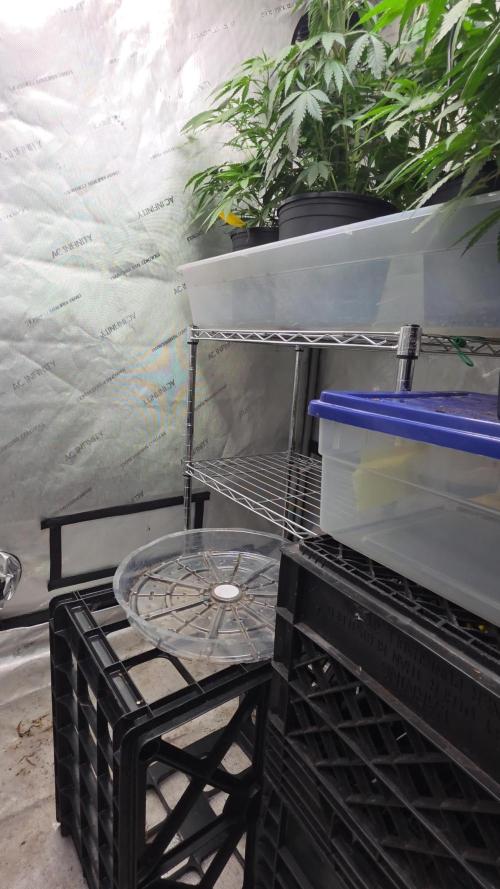
Strawberry Cadillac
W6 12/14-20
Important dates
11/9 Germination
11/25 Transplant to 1.5 gal,
12/1 Topped, Pinned and removed 2 large center leaves
12/5 Repositioned pins and removed lowest fan leaves
12/16 Topped 4 tops on each plant except Cadillac1 (first topping) and put manuka honey on the cut.
Nutrients:
12/16 1.5 ltr
Aptus Regulator 1.5ml
Aptus strtbooster 2.5ml
Flora micro 5ml/g
Flora grow 5ml/g
Grow Time 5ml/g
Plant Juice 2 TBSP/g
6.32ph, 825ppm, 60.9
12/19 Pics 1.5ltr
Aptus Regulator 1.5ml
Calmag 2.5ml/g
Recharge 2.5ml/g
5.71ph, 310ppm, 64f
The Strawberry’s received 1.5 liters 2 times on 12/13 &19.
12/16 On 12/16 after harvesting Apricot Auto, I had to move Cadillac1 off the shelving unit and put her on lower crate. She is as tall as the other plants positioned on the top shelf. I topped Cadillac1 but since she is asymmetrical, I don’t think topping will create 2 tops. Time will tell.
All the girls bounced back after the topping.
Strawberry Cadillac #1 27” #2 18.5“
Strawberry Trop Cherry #1 18” #2 13”
Straw-Lectric Lemonade #1 15” #2 14
Happy Holidays
Stay green, growers love 💚🌿
💫Natrona💫
Likes
24
Share


@MadeInGermany
Follow
Hi everyone 🤗
This week Topping was applied :-).
It starts to develop really well, the Green Buzz Liqudis fertilizer is noticeably good for you 😃👍.
There is unfortunately nothing more to report this week :-).
I wish you a nice week, stay healthy 🙏🏻 and let it grow 🌱.
You can buy this Strain at
https://www.amsterdamgenetics.com/product/kosher-tangie-kush/
You can buy this Nutrients at
https://greenbuzzliquids.com/
Type:
Kosher Tangie Kush
☝️🏼
Genetics:
Kosher Kush
X
Tangie
👍
Vega lamp:
2 x Todogrow Led
Quantum Board 100 W
💡
Bloom Lamp :
2 x Todogrow Led
Cxb 3590 COB 3500 K 205W
💡💡☝️🏼
Soil :
Canna Coco Professional +
☝️🏼
Fertilizer:
Green Buzz Liquids :
Organic Grow Liquid
Organic Bloom Liquid
Organic more PK
More Roots
Fast Buds
Humic Acid Plus
Growzyme Big Fruits
Clean Fruits
Cal / Mag
Organic Ph - Pulver
☝️🏼🌱
Water:
Osmosis water mixed with normal water (24 hours stale that the chlorine evaporates) to 0.2 - 0.4 EC. Add Cal / Mag 2 ml per l water every 2 waterings . Ph with Organic Ph - Pulver to 5.8 .

Likes
7
Share


@Nickalicious
Follow
I am sorry I haven't updated at all till now! I've been busy and the girls were stressing me out because they are the same strain, in the same tent and have the same light but my left plant is 2 feet shorter than my right and now I have 2 lights on them because of the height difference! But so far they are doing good, had some issues with deficiency, this strain is greedy but so far they aren't too bad! Still got a ways to go!


Likes
8
Share


@Ieiogrow94
Follow
Eccoci qui...
Per problemi di lavoro ho tardato un pò la pubblicazione delle foto, la piccola è molto vigorosa ed emana un forte odore.. Già si può vedere la resina che si inizia a formare sulle cime in alto...
Sono estremamente soddisfatto della sua crescita finora e sono sicuro che mi riserva sorprese.
Grazie a tutti per il supporto, NON VEDO L'ORA DI RACCOGLIERLA 🔥🌲❤️

Processing
Likes
10
Share


@A1420
Follow
Going to start flushing the shorter plant but keeping the taller on feeds for at least another week.

Likes
13
Share


@NordicClosetGrower
Follow
All quite steady overall. Would really like to have some internal ventilation going on in this cabinet.
No nutrient lock in site so far. Mayme time to start adding a bit more nutrients, the leafs are looking a bit discolored and on the yellow side in some spots.
Likes
14
Share

@GreenEldritchGardens
Follow
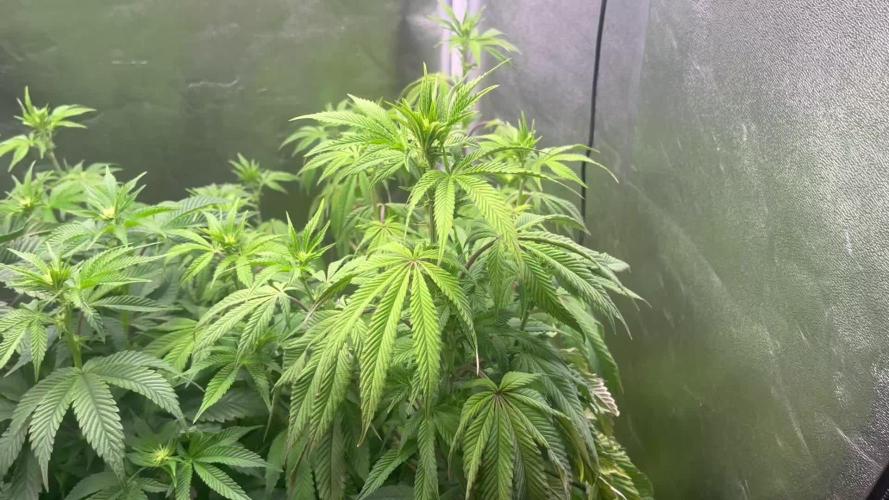
The curse is recovering but at slow pace, but at least is recovering. Second week of flower so a good defoliation happened along with lolliping.
nice bud formations coming up!

Likes
19
Share


@HisHope
Follow
6/7 Week 7, third of flower
She is just getting to be The Beast of CBD Mountain
Nuets are solid and light is plentiful to say the least, watching closely for ANY signs of bleaching, none at all so far.
Light defoliation she is not all that leafy
Keeping a close eye on the PH pens had to recal all three think that was what was responsible for the issue last week and not a double dose of Si.
6/8
Buds growing very fast, increasing PK to 1.5ml/gal
6/10
She is bulking very quickly, so pleased.
Removing Si from feed no longer need to keep dumping it in the pot.
Continue light defoliation
6/11
Showing signs of Phos deficiency,, reddish stems on some branches, lightening in lower leaves with tale tail calcium spotting.
The classic "fade"
All signs point to an advancing condition so we have upped the PK and will begin stepping PH down, 6.1 today , 6.0 from here on.
Give it a few days see what we get
Not looking at flushing until we get signs things are winding down which seems a week or so off at least.
Plan a 10 day flush but we all know about plans.
6/12
Another minor lockout not sure of cause flushed with carefully prepared nuets, gave the full gallon for good run off (about 1.5 quarts) to clean it out.
Eliminating the KoolBloom PK booster, its about time anyway, we want to simplify the feed till we sure about whats up.
6/13
No further issues may have just been a PH variance caused by a wonky pen.
Leaving the base nuets in place till flush
Likes
8
Share


@GarciasGarden
Follow
All in all this was an amazing harvest I usually have around 8-10 plants and harvest anywhere from 24-36 ozs per harvest with the 8 plants I had this harvest including the biscotti mintz and cookies USA I ended up with 898g total dry weight with all top quality flower. I’ve learned some things with all my previous runs when it comes to dialing in my quality and yield and definitely watching for those herms because I like to push my plants to the max when it comes to training !
GMO PUnch -Greenpoint
I’m giving this a total score of 7-10!
Biscotti Mintz- Barney’s farm
Total score 10-10
Cookies USA score
7-10

Likes
54
Share


@DogDoctorOfficial
Follow
And this girl is on fire and in flower mode, i mean in just a few days she wen from big girl to a retarded enormous one, and she is not stoping at all, and i kind beed her to stop growing , she is way to tall for and indoor closet auto plant , go and figure this one out , i have no idea whats happening but they all are getting massive beyond expectations ever imagined , not complaining at all, just saying , i mean look at the size on this freaking monster, and at the same time look how gorgeous she looks , at least yo me she looks sexy af hihihi and now that she is in flower i can start spanking her , staring by defoliate the hell out of this cutie at some point very soon <3 <3 <3
Lets see how all goes
She keeps going and going and dont want to stop, need to defoliate asap
OMG Not STOPING and not so much time to defoliate yet …. I will i promise, i must , space is kind a getting in an SOS situation … OMG lol <3 <3 <3
As always thank you all for stoping by, for the love you guys put in the community, in to growing and it all, i am blessed to walk among all of you and am blessed with it all.
Genetics :
AUTO SOMANGO GLUE @ ADVANCED SEEDS
All info and full product details can be find in can find @
https://aptus-holland.com/
https://advancedseeds.com/
https://autopot.co.uk/
https://lumatek-lighting.com/
#aptus #aptusplanttech #aptusgang #aptusfamily #aptustrueplantscience #inbalancewithnature #trueplantscience #growerslove #dogdoctoofficial
With true love comes happiness <3 <3 <3 Always believe in your self and always do things expecting nothing in return and with an open heart , be a giver and the universe will give back to you in ways you could not even imagine so <3 <3 <3
More info and updates @
https://growdiaries.com/grower/dogdoctor
https://instagram.com/dogdoctorofficial
https://youtube.com/channel/UCR7ta4DKLFMg2xxTMr2cpIg
<3 <3 <3 Growers love to you all <3 <3 <3
