Check the winners The Grow Awards 2026 🏆
Likes
Comments
Share
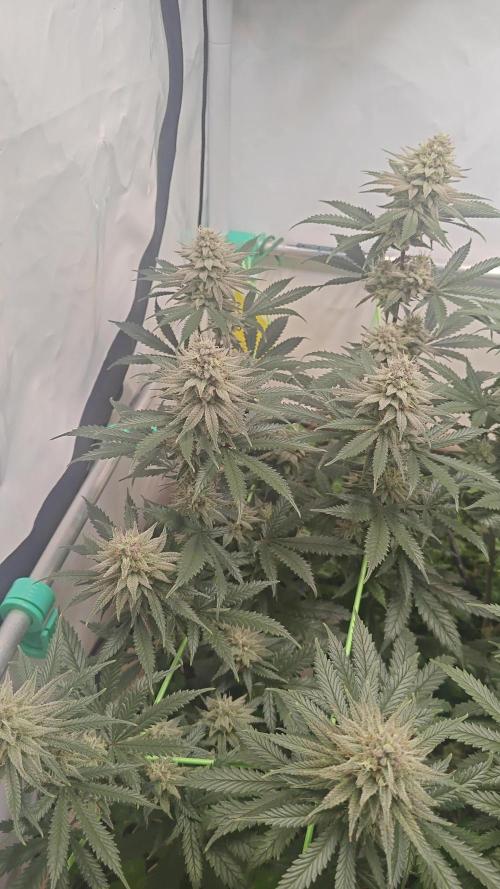
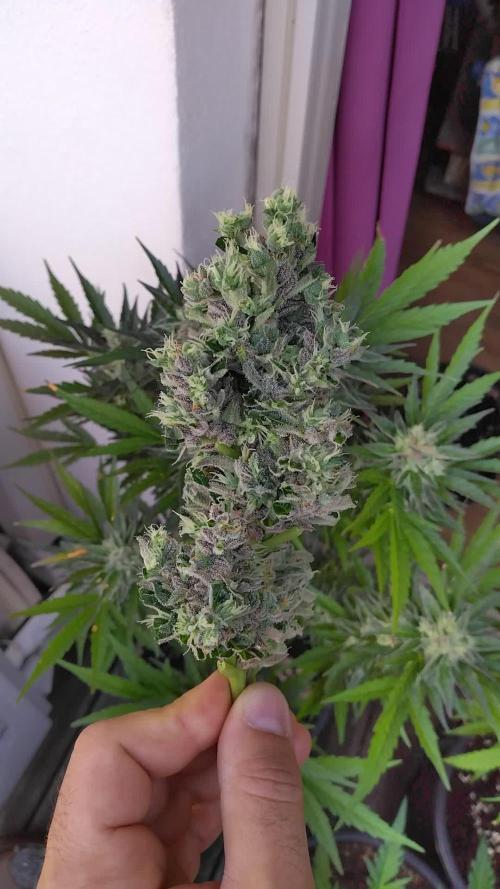
The Ganja Gelato girls are done! This was this their last week. I had been watching the trichomes closely daily, and by Thursday (day 77), they were ready. A nice mix of almost all cloudy and a few ambers peeking through 😋. They had 4 full water feeds to runoff, so I feel that they are ready to go. I no longer do a 48 hour dark period before harvest, so it’s happening, happy Gardening 🇨🇦❤️🌱😎💨
Likes
5
Share
Beautiful genetic, she is 4 days younger than the rest of the plants in this run and she has the same height as the rest of the ladies, beautiful stretch, the flowers are coming very nice and strong and I cannot wait to see what type of flowrs awaits me as I have never grown this genetic before however I'm starting to feel some sweet smell I don't know how she's gonna smell yet but I'm so excited, let's see how this lady perfoms! Stay tuned everybody! 💛💚❤️
Likes
62
Share
@wolfvb
Follow
I think the star of our diary will be the Pineapple Express, she took the toping like nothing happened and already looking great and she already has a week smell, The other girls are doing great, and the white runtz have some mesmerising colour to her leaves the kind from a shroom trip
Likes
2
Share
Day 90 The Sativa plant is beautifully swollen at the top. I've watered it minimally for the last three days. Today I'll mix up the solution and add a 1 g/l Bio Enchanter. It's alkaline (pH 8), so I'll first dilute 15 liters of the solution with 2 ml/l CalMag in the aquapot to 250 PPM. Then I'll lower the pH to 5.0, as recommended by the fertilizer manufacturer. After that, I'll dissolve a capful—one and a half liters of black powder. These 15 liters should be used within 24 hours. My slightly drying bushes will appreciate a third of the pot's volume being watered. The stems are showing red spots—it looks like I need to add 1-2 g/l Bio Bloom to the coco and mix 2-5 liters of the coco into the top layer. After bending and pruning, the plants feel stronger and healthier. To correct the nitrogen deficiency, I'll also add a liter of Simplex Start Up 4 ml/l. Day 95 They're doing well after moving to their new space. I didn't change the photoperiod to avoid stress. Yesterday, I didn't water them at all because they were experiencing water deficiencies. Today, I watered each plant 2 liters of solution, 10% of the solution before draining. I also added a weak concentration of Simplex Coco mineral fertilizer, 1 ml/l.
Likes
42
Share
Flowering day 44 since time change to 12 / 12 h Hey guys :-) The buds are becoming incredibly beautiful and smelling better and better ☺️. Today there was again the full load of food and will be slowly driven down as soon as it comes to an end :-) Was watered 3 times a week with 1.2 l each (nutrients see table above) Otherwise everything was cleaned. Have fun and stay healthy 💚💚💚 👇🏼👇🏼👇🏼👇🏼👇🏼👇🏼👇🏼👇🏼👇🏼👇🏼👇🏼👇🏼 You can buy this Nutrients at : https://greenbuzzliquids.com/en/shop/ With the discount code: Made_in_Germany you get a discount of 15% on all products from an order value of 100 euros. 👇🏼👇🏼👇🏼👇🏼👇🏼👇🏼👇🏼👇🏼👇🏼👇🏼👇🏼👇🏼 You can buy this strain at : Clearwater Seeds Water 💧 💧💧 Osmosis water mixed with normal water (24 hours stale that the chlorine evaporates) to 0.2 EC. Add Cal / Mag to 0.4 Ec Ph with Organic Ph - to 5.8 - 6.5 MadeInGermany
Likes
11
Share
@Sejnik
Follow
Poslední týden před přepnutím světel na 12/12. Světlo běží na 75% a 50cm od rostlin. Všechny rostliny vypadají naprosto spokojeně bez známek přehnojení nebo nedostatku živin. Sweet Orange 1 jsem přesadil do skutečného 1L květináče jako její sestry a krávu jsem zlikvidoval. D59 Úterý: Holky zality 1,5L vody s 0,5ml/l RQS Flowering Booster : Bigger Flowers D61 Čtvrtek: Defoliace před kvetením . Odstranil jsem jen ty listy, které branily pronikání světla a vzduchu (asi 5-7 listů z každé rostliny). Většinu vějířovitých listů jsem pouze zastrčil aby nepřekážely. Počkám ještě 2 dny, potom přepnu světla na 12/12. D63 Sobota: Holky dostaly 2L vody s živinami. Přepnuto na 12/12
Likes
14
Share
Grüßt euch Freunde! Wir sind nun am Ende der 4. Woche. Einige Blätter verfärben sich Lila. Habe in dieser Woche nicht viel getan, außer Wasser und Dünger zu geben. Die PPOG entwickelt in der 4 Woche wirklich heftig Resin. Sie sieht wirklich frosty aus, gefällt mir !☺️ Mir ist nun aufgefallen, dass die unteren Blätter alle die Spitzen nach unten neigen. Man nennt das auch ‚Adlerkrallen‘ und ist auf einen Stickstoff Überschuss zurückzuführen. Habe durch die Verfärbung der Blätter auf einen Mangel geschlossen, war vielleicht nicht die beste Idee mehr Bio Grow zuzuführen😂 Werde im laufe der 5 Woche keinen Bio Grow mehr verwenden und beobachten wie sich das entwickelt. Euch allen eine gute Woche !💚
Likes
55
Share
What's in the soil? What's not in the soil would be an easier question to answer. 16-18 DLI @ the minute. +++ as she grows. Probably not recommended, but to get to where it needs to be, I need to start now. Vegetative @1400ppm 0.8–1.2 kPa 80–86°F (26.7–30°C) 65–75%, LST Day 10, Fim'd Day 11 CEC (Cation Exchange Capacity): This is a measure of a soil's ability to hold and exchange positively charged nutrients, like calcium, magnesium, and potassium. Soils with high CEC (more clay and organic matter) have more negative charges that attract and hold these essential nutrients, preventing them from leaching away. Biochar is highly efficient at increasing cation exchange capacity (CEC) compared to many other amendments. Biochar's high CEC potential stems from its negatively charged functional groups, and studies show it can increase CEC by over 90%. Amendments like compost also increase CEC but are often more prone to rapid biodegradation, which can make biochar's effect more long-lasting. biochar acts as a long-lasting Cation Exchange Capacity (CEC) enhancer because its porous, carbon-rich structure provides sites for nutrients to bind to, effectively improving nutrient retention in soil without relying on the short-term benefits of fresh organic matter like compost or manure. Biochar's stability means these benefits last much longer than those from traditional organic amendments, making it a sustainable way to improve soil fertility, water retention, and structure over time. Needs to be charged first, similar to Coco, or it will immobilize cations, but at a much higher ratio. a high cation exchange capacity (CEC) results in a high buffer protection, meaning the soil can better resist changes in pH and nutrient availability. This is because a high CEC soil has more negatively charged sites to hold onto essential positively charged nutrients, like calcium and magnesium, and to buffer against acid ions, such as hydrogen. EC (Electrical Conductivity): This measures the amount of soluble salts in the soil. High EC levels indicate a high concentration of dissolved salts and can be a sign of potential salinity issues that can harm plants. The stored cations associated with a medium's cation exchange capacity (CEC) do not directly contribute to a real-time electrical conductivity (EC) reading. A real-time EC measurement reflects only the concentration of free, dissolved salt ions in the water solution within the medium. 98% of a plants nutrients comes directly from the water solution. 2% come directly from soil particles. CEC is a mediums storage capacity for cations. These stored cations do not contribute to a mediums EC directly. Electrical Conductivity (EC) does not measure salt ions adsorbed (stored) onto a Cation Exchange Capacity (CEC) site, as EC measures the conductivity of ions in solution within a soil or water sample, not those held on soil particles. A medium releases stored cations to water by ion exchange, where a new, more desirable ion from the water solution temporarily displaces the stored cation from the medium's surface, a process also seen in plants absorbing nutrients via mass flow. For example, in water softeners, sodium ions are released from resin beads to bond with the medium's surface, displacing calcium and magnesium ions which then enter the water. This same principle applies when plants take up nutrients from the soil solution: the cations are released from the soil particles into the water in response to a concentration equilibrium, and then moved to the root surface via mass flow. An example of ion exchange within the context of Cation Exchange Capacity (CEC) is a soil particle with a negative charge attracting and holding positively charged nutrient ions, like potassium (K+) or calcium (Ca2+), and then exchanging them for other positive ions present in the soil solution. For instance, a negatively charged clay particle in soil can hold a K+ ion and later release it to a plant's roots when a different cation, such as calcium (Ca2+), is abundant and replaces the potassium. This process of holding and swapping positively charged ions is fundamental to soil fertility, as it provides plants with essential nutrients. Negative charges on soil particles: Soil particles, particularly clay and organic matter, have negatively charged surfaces due to their chemical structure. Attraction of cations: These negative charges attract and hold positively charged ions, or cations, such as: Potassium (K+) Calcium (Ca2+) Magnesium (Mg2+) Sodium (Na+) Ammonium (NH4+) Plant roots excrete hydrogen ions (H+) through the action of proton pumps embedded in the root cell membranes, which use ATP (energy) to actively transport H+ ions from inside the root cell into the surrounding soil. This process lowers the pH of the soil, which helps to make certain mineral nutrients, such as iron, more available for uptake by the plant. Mechanism of H+ Excretion Proton Pumps: Root cells contain specialized proteins called proton pumps (H+-ATPases) in their cell membranes. Active Transport: These proton pumps use energy from ATP to actively move H+ ions from the cytoplasm of the root cell into the soil, against their concentration gradient. Role in pH Regulation: This active excretion of H+ is a major way plants regulate their internal cytoplasmic pH. Nutrient Availability: The resulting decrease in soil pH makes certain essential mineral nutrients, like iron, more soluble and available for the root cells to absorb. Ion Exchange: The H+ ions also displace positively charged mineral cations from the soil particles, making them available for uptake. Iron Uptake: In response to iron deficiency stress, plants enhance H+ excretion and reductant release to lower the pH and convert Fe3+ to the more available form Fe2+. The altered pH can influence the activity and composition of beneficial microbes in the soil. The H+ gradient created by the proton pumps can also be used for other vital cell functions, such as ATP synthesis and the transport of other solutes. The hydrogen ions (H+) excreted during photosynthesis come from the splitting of water molecules. This splitting, called photolysis, occurs in Photosystem II to replace the electrons used in the light-dependent reactions. The released hydrogen ions are then pumped into the thylakoid lumen, creating a proton gradient that drives ATP synthesis. Plants release hydrogen ions (H+) from their roots into the soil, a process that occurs in conjunction with nutrient uptake and photosynthesis. These H+ ions compete with mineral cations for the negatively charged sites on soil particles, a phenomenon known as cation exchange. By displacing beneficial mineral cations, the excreted H+ ions make these nutrients available for the plant to absorb, which can also lower the soil pH and indirectly affect its Cation Exchange Capacity (CEC) by altering the pool of exchangeable cations in the soil solution. Plants use proton (H+) exudation, driven by the H+-ATPase enzyme, to release H+ ions into the soil, creating a more acidic rhizosphere, which enhances nutrient availability and influences nutrient cycling processes. This acidification mobilizes insoluble nutrients like iron (Fe) by breaking them down, while also facilitating the activity of beneficial microbes involved in the nutrient cycle. Therefore, H+ exudation is a critical plant strategy for nutrient acquisition and management, allowing plants to improve their access to essential elements from the soil. A lack of water splitting during photosynthesis can affect iron uptake because the resulting energy imbalance disrupts the plant's ability to produce ATP and NADPH, which are crucial for overall photosynthetic energy conversion and can trigger a deficiency in iron homeostasis pathways. While photosynthesis uses hydrogen ions produced from water splitting for the Calvin cycle, not to create a hydrogen gas deficiency, the overall process is sensitive to nutrient availability, and iron is essential for chloroplast function. In photosynthesis, water is split to provide electrons to replace those lost in Photosystem II, which is triggered by light absorption. These electrons then travel along a transport chain to generate ATP (energy currency) and NADPH (reducing power). Carbon Fixation: The generated ATP and NADPH are then used to convert carbon dioxide into carbohydrates in the Calvin cycle. Impaired water splitting (via water in or out) breaks the chain reaction of photosynthesis. This leads to an imbalance in ATP and NADPH levels, which disrupts the Calvin cycle and overall energy production in the plant. Plants require a sufficient supply of essential mineral elements like iron for photosynthesis. Iron is vital for chlorophyll formation and plays a crucial role in electron transport within the chloroplasts. The complex relationship between nutrient status and photosynthesis is evident when iron deficiency can be reverted by depleting other micronutrients like manganese. This highlights how nutrient homeostasis influences photosynthetic function. A lack of adequate energy and reducing power from photosynthesis, which is directly linked to water splitting, can trigger complex adaptive responses in the plant's iron uptake and distribution systems. Plants possess receptors called transceptors that can directly detect specific nutrient concentrations in the soil or within the plant's tissues. These receptors trigger signaling pathways, sometimes involving calcium influx or changes in protein complex activity, that then influence nutrient uptake by the roots. Plants use this information to make long-term adjustments, such as Increasing root biomass to explore more soil for nutrients. Modifying metabolic pathways to make better use of available resources. Adjusting the rate of nutrient transport into the roots. That's why I keep a high EC. Abundance resonates Abundance.
Processing
Likes
24
Share
@GrowGuy97
Follow
Day 28 - RH 58% Temp 81F . Ladies are growing great, they are really starting to turn into little bushes & the double mainline is going strong 💪🏻 Thanks for following friends & make sure to check back for daily updates! Happy growing✌️🏼🌱 Day 29 - RH 57% Temp 78F . Couldn’t be happier with the growth! Day 30 - RH 60% Temp 78F . Everything is looking great! Day 31 - RH 51% Temp 78F . Watered today with PH at 6.5, all 3 ladies are doing amazing!👍🏼 Day 32 - RH 53% Temp 81F . Considering topping the ladies tomorrow not sure yet! Still growing beautifully! Day 33 - RH 52% Temp is 80F - Bushing out like crazy & growing strong! The double mainline seems to be bouncing back as well! So far very impressed with this strain😍👍🏼 Day 34 - RH 56% Temp is 79F - Decided to top the two bushy plants today, they also got fed today with PH about 6.3
Likes
12
Share
#AutoBlueberry breed by #DivineSeeds #DivineSeedsSquad #DivineSeedsBreedingCompany Origin:Afghani/Thai Type:50% Indica/ 40% Sativa/ 10% Ruderalis Flowering:56 days THC:22% Harvest:400-550 g/m2 Height:110-150 cm Thier Growing under the #Growatt600w and in my #TopoLite 24×24×48 Grow Tent! I'm also using #TNBNaturals #TheEnhancer Co2 Despersal Canister and using thier Ph⬆️⬇️ for my Decolinated Tap Water! Green and Growing Up Great! She's leaving her 1st week of Veg and Stretching out into her 2nd week! She's Growing in my special blend of ProMix potting mix, a 1/2 bag of Earthworm castings and 2 light handfuls of Diatomaceous Earth mixed Up well for before transplanted! Diatomaceous Earth: Diatomaceous earth is made from the fossilized remains of tiny, aquatic organisms called diatoms. Their skeletons are made of a natural substance called silica. WHAT IS DIATOMACEOUS EARTH? In a nutshell, DE comes from the fossilised remains of small marine organisms called diatoms. Over a 30 million year period, these hard-shelled algae collected on the bottom of bodies of water, eventually forming into a type of sedimentary rock. Fast forwarding, it wasn’t until around 1836 that a German peasant Peter Kasten discovered the ivory-coloured, powdery substance while drilling a well in northern Germany. Ever since, the usefulness of DE for multiple purposes, including industrial and horticultural applications, has been well-reported. Just sprinkle some diatomaceous earth on top of your soil and watch mother nature's secret weapon work its magic.CONDITIONS THE SOIL When it comes to growing cannabis, everyone strives to provide the best soil to grow the best plants—but there’s always a way to make it even better. Making the soil a better medium is called soil conditioning, which is exactly what diatomaceous earth does. It works by improving the retention of moisture in your potting soil, holding a large amount of fluid and drying at a rate that’s much slower. This natural soil additive also helps to retain nutrients and allows for better oxygenation of the substrate. NATURALLY CONTROLS PESTS DE is an all-natural, safe-to-use substance that doesn’t harm the cannabis plant with toxic chemicals. The nature of diatomaceous earth makes it useful against most types of insect infestation you might be experiencing; and unlike chemical insecticides, insects can’t develop a resistance to the effects of DE. So once they’re gone, they’re gone for good. DE is an abrasive. and when used as an insecticide, it gradually scrapes away an insect’s exoskeleton, absorbs the fluids, and dehydrates insects and other critters to eventual death. IMPROVES PLANT STABILITY When using DE in your soil, it can be especially beneficial as it frees up nutrients so that they are made available to the plants as needed. This works via the silica content of DE being absorbed into the plant tissue, which helps improve the plant’s ability to respond and receive more nutrients as DE activates. This in turn results in greater yields and better stability under small pH fluctuations! https://divineseeds.net/ https://instagram.com/divine.seeds?igshid=osxe2v7en33v https://divineseeds.net/ Thanks Again to All my Friends, Family's, Teams, Sponsors, Followers and Subscribers!!! Your Genetics are Merry Magnificent, Mega Marvelous and Mighty Medical! Love um!!! I really Can't stress enough how Thankful and Grateful I am of All of you and what you've Shared with Us! Means the World!!! It's definitely a Pleasure being able to Grow with these Phenomenal Grow Lights! Please Enjoy! BudBrothers4-Life! Cheers Famz!!! Much Props and Much Topz!💯🔥 #Osree #GrowStarStore #Growatt #TNBNaturals #TNBTeam #GrowYourOwn #Bliss https://instagram.com/as420.ca?igshid=1f116alw054wp The Grow Bags: https://www.as420
Likes
6
Share
Einfach schön zu sehen wie die buds anschwellen, alle sind sehr fest und voller Trichome. Just nice to see the buds getting bigger and bigger, they are all really dense
Processing
Likes
10
Share
Start of week 3! All three plants have had great bud site development during the last 2 weeks. The Super Lemon Haze is a bit thirstier than the Blueberries, so the Slh got and extra 2 liters of feed during week 2. The Slh is also showing deficiency, hopefully with the addition of B52 to the feed cycle, she'll come around. On th blueberries, there has been some rust spots appearing on the largest leaves, I removed the worst one's and will monitor more closely this week, if that issue continues or not. These babies are very bushy, they take up 80% of my grow room space, very excited about this grow and these plants.
Likes
15
Share
Went 60 days into flower could have possibly went longer but I felt like it’s where I wanted it to be also just couldn’t wait any longer. Overall great grow a lot of challenges but with the help of this site and my own research I’m happy with the results. I will weigh after drying and trimming
Likes
1
Share
@Kraken85
Follow
Pour un premier cycles : Les bourgeons sont bien gonflés, la croissance est exigentes en nutriments et humiditées pour avoir de meilleurs résultat en Flo. Car en Flo Très gourmants en nutriments. Sa va je trouve que je me suis bien démerdé. La partie afghane (Mazar-i-Sharif) est une très petite plante qui ressemble à un sapin de Noël. Grâce au croisement avec la Skunk#1 elle a une performance accrue et une meilleure saveur. 1er Prix Type de Forte Bologne 2008. 2e prix à la High Times Cup 1999. 2e prix Highlife Cup 2002. Gagnant du prix Soft Secrets Plant Of The Year 2014 Vivement le 2ème Cycles. Si vous avez des remarques, conseils ou autres .... Venez en discutez.
Likes
10
Share
@VovaFarms
Follow
Very easy to grow strain! It was a lot of fun growing it! I am very happy with the outcome and i cant wait to dry and cure it for further examination :) I am very happy with this grow and i would definitely recommend this masterpiece to everybody!
Likes
13
Share
@Vorghus
Follow
Last week was fantastic, they grow a lot, they are now in full flowering. im dealing with the management of the new and bigger colas, im thinking of putting the same orange fence on top and using it as a ScrOG trainer, ill try this in the next few days , ill put more pictures with the testing.
Likes
11
Share
*Week 3 Flower - 09/10* Blimburn Apple Fritter - Seedsman Genetics Critical+2.0 Healthy - 0 signs on of deficiencies Most fan leaves have been stripped; - Lighter defoliation - Aggressive LST on main colas *Week 3 Flower Mid-week update 09/13* Approximately 3 inch increase in Height on both plants - Critical+2.0 - Seedsman Genetics - Blumburn Apple Fritter 1 Gallon increase on water feed (Nutes included) Budsite density has increased. Light defoliation *End of week recap 09/16* (Week 3 Flower) BlimBurn - Apple Fritter - 47 Inches - Flowering processing accordingly - 0 deficiencies Seedsman Genetics - Critical+2.0 - 46 Inches - Flowering processing accordingly - 0 deficiencies Increased water feed (2.5 gallons every day +Nutes) *SEE UPDATE END OF WEEK VIDEO RECAP*
Processing
Likes
14
Share
@PlantGod
Follow
Excited to see the pistols keep coming and coming I have such tight spacing that the buds will probably start connecting by the end of the week on the Royal Gorilla Day 19- Tomorrow I will tie some branches down to open up the plants more. The LSD plants needs it the most!