Likes
12
Share
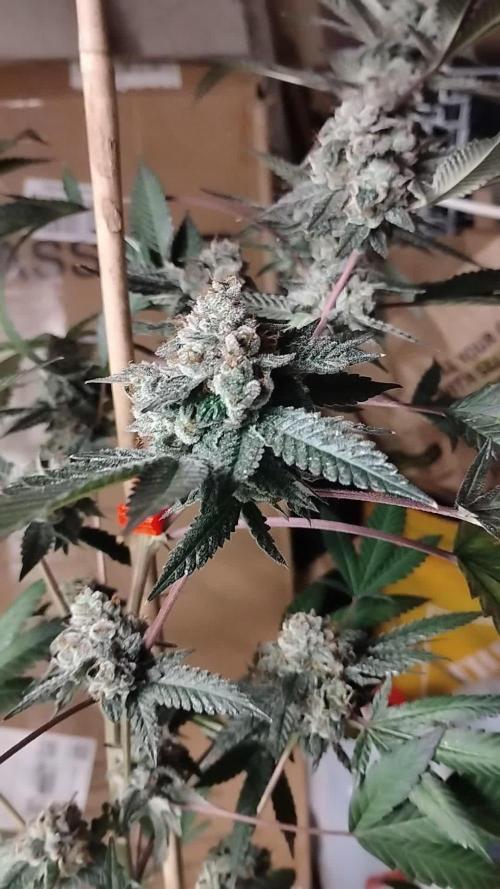
An amazing week for these beauties. At the start of week two they began forming really well, and by the end there was stacking and great nug production happening. They are filling out so well. Some of the tops were over achievers and got too lanky to manage, so I tucked as I could to manage them without damaging, but they still took off. I typically tuck and bend for the first week, then go hands off till week 3 with a defoliation, but with the bud production happening so quickly it became difficult and I didn’t want to risk snapping anything off and stressing the plant out. Temps have been consistent, around 80 degrees and 58 % RH. I’ve been checking daily for and pests or problems and haven’t had anything pop up. Also checking for signs of stress or ball/sack hermie production, but all signs say they are happy and healthy. Happy Gardening 🇨🇦👊❤️
Likes
9
Share
@Just_Weed
Follow
Dialin up nutrients and putting net over them this week to fill the space.
Likes
38
Share
@Skunkman
Follow
The buds are coming on nicely now 😎 another week and a half and the overdrive starts hopefully they’ll fatten up good and proper ✌️🏻
Processing
Likes
47
Share
@rhodes68
Follow
10/13 Day 15 and one week in the large pots. Still no need of watering not concerned as the pots are reasonably fertile, right now they are busy building roots which is just fine. Veg growth will increase just any time now. 10/15 First Watering/feed since transplant a week ago Fish Sh!T 5ml / Cal-Mag 5ml per gal @ 6.1 ph Each got 0.5 gal though I fear some over watering is unavoidable this time think only Maggie is showing the symptoms. 10/16 Explosive growth, more than an inch on Layla and the others are getting it together. May be getting a handle on this. 10/19 The uptick in Brandy and Maggie was not to continue and they worsened making an attempt to fix the issue with a 6.1 PH root drench of Cal-Mag 5ml and Kangaroots 10ml / gal about 2 gal for each plenty of runoff that tested at 6.1 PH. Layla looking great watering tomorrow 10/20 Update Made a spray of 6.5ph water with one tbs / gal Epson Salts and really soaked the leaves of both plants in attempt to help these poor guys, know a new week is due will get to it later 10/21 update When pots dry a bit using a solution of one cup hydrogen peroxide to one gal of 6.5 ph water (lowering ph has done nothing so going back to middle of the road) using as foliar spray as well, not sure if waiting on pots to dry first is called for here so yall chip in if you wish
Likes
80
Share
@Roberts
Follow
Pure Ice cream clone is very top heavy. She fills the whole tent. She has a good strong smell. Looking frosty, and just eating, and drinking everything I throw at her. Cokas are looking frosty, and dense. Thank you Spider Farmer, and Pure Instinto Seeds. 🤜🏻🤛🏻🌱🌱🌱 Thank you grow diaries community for the 👇likes👇, follows, comments, and subscriptions on my YouTube channel👇. ❄️🌱🍻 Happy Growing 🌱🌱🌱 https://youtube.com/channel/UCAhN7yRzWLpcaRHhMIQ7X4g
Likes
21
Share
Start of week 3, the three survivors are doing great! I did happen to find some algae growing on top of one of the rockwool cubes. (This was my fault for not fully covering the tops of them with hydroton to block out light.) As an attempted fix, I cut some square pieces of black cloth that I laid of the top of the cubes to block out the light completely. Hoping removing their light source, the algae will die off and discourage any further growth. If it gets any worse I’ll try using a hydrogen peroxide solution. Day 17, the three ladies are looking nice. Starting to see some nice healthy roots populate inside the buckets. I went ahead and upped their nutrients today. We will see how they are doing in the morning. -FloraFlex - 1.5g/gal of each V1 and V2. -Advanced Nutrients - 1/2 strength MGB and hobbyist additives. **Algae update: seems like using the black cloth to block out all the light has killed off that algae growth and I don’t see anymore so it’s working!** Day 18, I thought one of my plants had root rot. Which was weird for it to happen that fast in less than 24 hours since changing the res. Come to find out it’s just nutrient stain from the Advanced Nutrients, so thank god. #1 and #2 which are growing with FloraFlex got FIMmed today. I’ve topped plants before but never FIM. Not sure if I did it right, but that’s the fun in all this, is experimenting to see what works. Day 20, #1 and #2 are responding well after being FIMmed couple days ago. I decided to FIM #3 as well. I also decided to leave the 4th one out of this diary from here on out since she’s behind. We will stick with the original three that survived from the start. So far I’m really loving their bushy appearance and thick leaves. Their roots are coming out super nice as well! Pretty soon these babies are going to just take off!
Likes
47
Share
@GrowGuy97
Follow
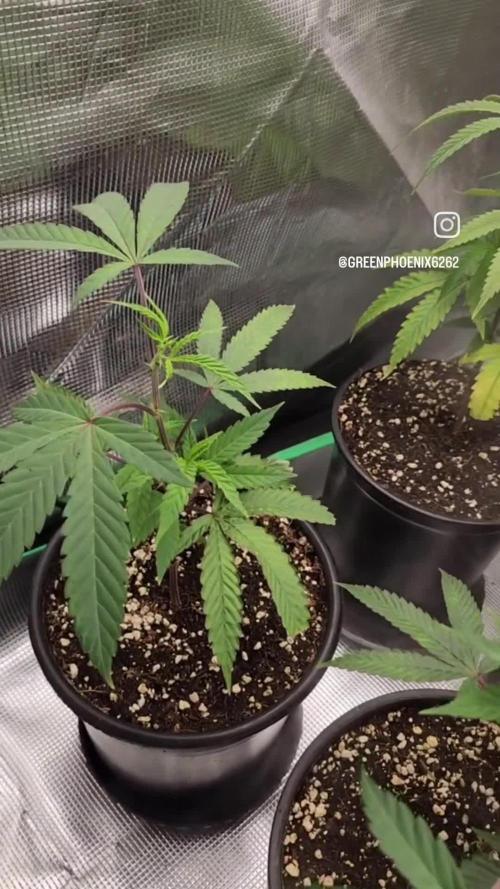
Day 7 - All 3 ladies are doing great so far, extremely excited to how they turn out! Watering with PH at 6.3, Temp 81 RH 55% Thanks for following & happy growing friends✌️🏼🌱
Likes
46
Share
Hello again, green warriors and cannabis aficionados! 🌱✨ We’ve now reached week 5 of flowering in our Runtz Battle, and the excitement is at an all-time high! The plants are deep into their flowering phase, and the results are beginning to show in the form of thick, resin-coated buds. Let’s dive into this week’s progress and explore what’s been happening. Week 5 Flowering Progress 🌿🌟 The Runtz strains continue to impress as they head into the final stretch of flowering. Here’s what’s been happening: • Bud Development 🌸: • The buds have significantly bulked up this week, with trichome production reaching new heights. The plants are covered in a frosty layer of resin, indicating that we’re on track for a potent and flavorful harvest. The F1 strain remains a standout with its compact and dense bud structure, showing off some serious bag appeal already. • Terpene Profile 🌿✨: • The aroma in the grow room is intensifying, with the distinct sweet, fruity, and slightly earthy notes of the Runtz strains becoming more pronounced. This rich terpene profile is a hallmark of the Runtz genetics, and it’s a good sign that the final product will be bursting with flavor. • Environmental Consistency 🌡️: • We’re keeping the environment steady with a room temperature of 30.3°C, water temperature at 18°C, and humidity at 51%. These conditions are perfect for continuing the flowering process and ensuring the buds develop fully and healthily. Defoliation Impact 🌿✂️ Last week’s deep defoliation continues to pay off: • Light Penetration and Bud Growth 🌞🌸: • The defoliation has allowed more light to reach the lower bud sites, and the impact is clear. These buds are now catching up in size and density, ensuring an even distribution of growth across the entire plant. The plants are responding beautifully, with all buds swelling and maturing at a consistent rate. • Air Circulation and Health 🌬️: • The increased airflow has kept the plants healthy, preventing any issues with mold or mildew as the buds become denser. This is crucial in the later stages of flowering when moisture can become a concern. Nutrient and Care Strategy 🌱💧 Our nutrient and care routine continues to support the plants as they push toward full maturity: • Watering and Nutrients 💧: • The Autopots are still providing consistent hydration, and we’re maintaining the Regulator and CaMg Boost in the reservoir. The soil, enriched with organic inputs, is doing an excellent job of supplying all the necessary nutrients. The plants are showing no signs of deficiencies, and their vibrant green color is a testament to their health. • Lighting and Environmental Control 🌡️: • The Lumatek Zeus 465 Compact Pro is continuing to deliver powerful, full-spectrum light, which is crucial at this stage for maximizing bud development and resin production. • The TrolMaster Hydro-X controller is keeping the environment perfectly balanced, ensuring that the plants are stress-free and focused on producing the best buds possible. The Road Ahead 🌟🌿 As we move into the final weeks of flowering, the anticipation is building. The Runtz strains are looking and smelling incredible, with dense buds covered in sparkling trichomes. The next few weeks will be crucial as the plants finish maturing, and we start preparing for the harvest. Stay tuned for more updates as we approach the finish line. The end is in sight, and we’re almost ready to reap the rewards of this epic Runtz Battle! 🌟💚 #RuntzBattle #Week5Flower #CannabisCommunity #BudDevelopment #TrichomesOnFleek #GreenMagic #LumatekZeus #TrolMasterHydroX #GrowStrong #StayPositive Germination method 🌱 @thecannakan Genetics Runtz F1 @zam.nesia Runtz auto @kannabiaglobal Nutrition @aptusholland 🌿 @aptus_world 🌎 @aptus_es 🌍 @aptusbrasil 🌱 @aptus_thailand 🌿 @aptus_portugal 🌳 @aptususa_official 🍀 @aptusplanttechnz 🌺 @aptusplanttechaus 🍃 Ambient controls🎮 @trolmaster.eu @trolmaster.eu.support @trolmaster.support @trolmaster.agro Soil @promix_growers_eur @promix_cannabis LED - @lumatekeu Watering- @autopot_usa @autopot_global Love and attention- @dogdoctorofficial #aptus #aptusplanttech #aptusgang #aptusfamily #aptustrueplantscience #inbalancewithnature #trolmaster #trolmastereurope #trolmastersecrets #Autopots #RuntzBattle #KannabiaVsZamnesia #GreenJoy As always thank you all for stopping by, for the love and for it all , this journey of mine wold just not be the same without you guys, the love and support is very much appreciated and i fell honored and so joyful with you all in my life 🙏 With true love comes happiness 💚🙏 Always believe in your self and always do things expecting nothing and with an open heart , be a giver and the universe will give back to you in ways you could not even imagine so 💚 More info and complete updates from all my adventures can be found ⬆️ link in the profile description ⬆️ Friendly reminder all you see here is pure research and for educational purposes only 💚Growers Love To you All 💚
Likes
141
Share
💩Holy Crap Growmies We Are Back💩 Well growmies we are at 35 days in and everything is going great 👌 👉 Shes a short chunky little plant 👈 We got some very pretty colors😍 👌 She's got some odd colors kinda like tiger leafing,😉 Lights being readjusted and chart updated .........👍rain water to be used entire growth👈 👉I used NutriNPK for nutrients for my grows and welcome anyone to give them a try .👈 👉 www.nutrinpk.com 👈 NutriNPK Cal MAG 14-0-14 NutriNPK Grow 28-14-14 NutriNPK Bloom 8-20-30 NutriNPK Bloom Booster 0-52-34 I GOT MULTIPLE DIARIES ON THE GO 😱 please check them out 😎 👉THANKS FOR TAKING THE TIME TO GO OVER MY DIARIES 👈
Likes
42
Share
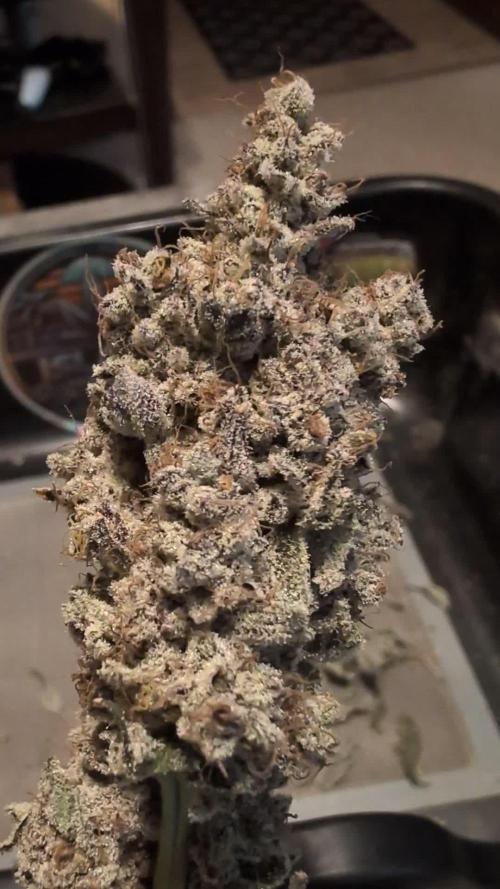
Hi guys been a way for a while but I'm back, the ladys are well into flower now. The strawberry chemdawg ogz are beasts and super frosty there a bit behind the blackberry moonrock. But alot bigger.
Likes
164
Share
@Hologram
Follow
Not much to say than to sing: I am the god of hell fire and i bring you: FIRE!!❤️‍🔥 ♫⋆。♪ ₊˚♬ ゚. happy growing for all✊ ***KISS!growingtechnique: KeepItSimple, Stupid! (think 2weex she is ready to BURN!😋)
Likes
32
Share
There is little time left to go to flowering, so I no longer stress the girls. I am giving new nutrients to prepare them for flowering
Likes
6
Share
Week 4 – Vegetative Stage – Mango Kush (Zamnesia Seeds) Grower: Dog Doctor Strain: Mango Kush Breeder: Zamnesia Seeds Tent: 8x8 Shared Environment Environment Control: • TrolMaster Ecosystem (Model One LED by ThinkGrow) • Future Of Grow Ecosystem (Black Series 600W) Watering: Hand-fed Nutrient Line: Aptus Holland (unchanged recipe) ⸻ 🌱 Two Paths, One Queen’s Blood This week marks a defining moment in the journey of our two Mango Kush phenotypes—Pheno #1 and Pheno #2—both sharing the same genetics, but taking very different roads toward flower. ⸻ 👑 Mango Kush #1 – The Trailblazer She’s taken the lead and she knows it. Currently at her 8th or 9th node, she’s branching out beautifully, vigor, symmetry, structure. This girl is showing early signs of dominance, with a wide frame and a hunger for light. Her architecture screams “future canopy queen.” 📸 We took her to the photo studio again this week and wow. She’s a natural in front of the lens. Her structure is clean, confident, and glowing under the full-spectrum light. ⸻ 🌱 Mango Kush #2 – The Rising Sister Much younger, but full of potential. Currently pushing her 4th pair of leaves, this one was a late germination and is only about 2.5 weeks old since she popped above soil. Despite her smaller size, there’s something familiar about her. Her leaf shape and structure closely mimic Mango #1 during her early days, tight internodes, round fans, calm posture. Genetics run strong here. We’re keeping her in veg for as long as possible, but next week we’re flipping everything to flower, which means she’ll start blooming early. It’s not ideal, but it’s necessary, as the older girls (Mango #1, the Lava Cake and the rest of the sisters) are growing fast and space must be balanced. ⸻ 💧 Nutrients – No Change, Still Precision We’re keeping the Aptus Holland formula exactly as it is for this week. The girls are loving it, and there’s no sign of deficiency or excess. Here’s what they’re still getting in each liter: • Regulator – 0.15 ml: Structure, resilience, and stress defense • CalMag Boost – 0.25 ml: Building the skeleton • 💧 All-In-One Liquid – 1 ml: A steady and complete base • 🌱 Start Booster – 0.25 ml: For root expansion and early shoot development This balanced, light recipe keeps things clean and focused, supporting both the rapid growth of Mango #1 and the early development of Mango #2. ⸻ 🌡️ Lights, Climate, & Ecosystem Balance Both Mango Kush plants are thriving under dual full-spectrum LEDs: • TrolMaster ecosystem running the ThinkGrow Model One LED • Future of Grow ecosystem running the Black Series 600W Each system is tuned to maintain optimal light intensity for its space and phase. Climate conditions are steady thanks to active airflow, dual controllers, and filtered intake/exhaust setups. 💨 Carbon filters from TrolMaster and Spider Farmer keep the air clean and pure, even though we haven’t reached flower yet, clean air is good air, and early filtering helps prevent environmental noise and pathogens. ⸻ 🔮 What to Expect… and What Not To What to expect: • Mango #1 will likely dominate flower structure, showing her potential early • Mango #2 may surprise us with a compact, denser canopy due to earlier light flip • Structural differences will emerge—same genetics, but different timelines = different expressions • Visual comparisons will help us understand Mango Kush’s phenotypic range What not to expect: • Uniform results—they’re the same strain, but on very different developmental clocks • Aggressive training—due to the timeline, we’re letting them grow mostly unmanipulated ⸻ 📣 Final Words – Community & Curiosity We thank you all for reading, growing, and following this journey with us. ✨ Every grow is a conversation between light, root, leaf, and time. And we’re sharing it all. ⸻ With light, love, and the rhythm of two sisters in sync but not the same, Dog Doctor 📲 Don’t forget to Subscribe and follow me on Instagram and YouTube @DogDoctorOfficial for exclusive content, real-time updates, and behind-the-scenes magic. We’ve got so much more coming, including transplanting and all the amazing techniques that go along with it. You won’t want to miss it. • GrowDiaries Journal: https://growdiaries.com/grower/dogdoctorofficial • Instagram: https://www.instagram.com/dogdoctorofficial/ • YouTube: https://www.youtube.com/@dogdoctorofficial There’s a new series blooming—and it’s more than just plants. It’s about process, patience, and paying attention. ⸻ Explore the Gear that Powers My Grow If you’re curious about the tech I’m using, check out these links: • Genetics, gear, nutrients, and more – Zamnesia: https://www.zamnesia.com/ • Environmental control & automation – TrolMaster: https://www.trolmaster.eu/ • Advanced LED lighting – Future of Grow: https://www.futureofgrow.com/ • Root and growth nutrition – Aptus Holland: https://aptus-holland.com/ • Nutrient systems & boosters – Plagron: https://plagron.com/en/ • Soil & substrate excellence – PRO-MIX BX: https://www.pthorticulture.com/en-us/products/pro-mix-bx-mycorrhizae • Curing and storage – Grove Bags: https://grovebags.com/ ⸻ We’ve got much more coming as we move through the grow cycles. Trust me, you won’t want to miss the next steps, let’s push the boundaries of indoor horticulture together! As always, this is shared for educational purposes, aiming to spread understanding and appreciation for this plant. Let’s celebrate it responsibly and continue to learn and grow together. With true love comes happiness. Always believe in yourself, and always do things expecting nothing and with an open heart. Be a giver, and the universe will give back in ways you could never imagine. 💚 Growers love to all 💚
Likes
13
Share
@Andres
Follow
She is very generous ... she has 126 days and her shoots are very heavy for the branches .. I feel satisfied for what this automatic gives me ...I believe that today or tomorrow I will cut it ... today I will dedicate myself to cprtar the tangerine ...
Likes
12
Share
Didn't realise my syntetic nutriton had so bad NPK for flowering (3-5-7) so my biggest girl got some nitrogen toxicity (dark and shiny leaves). This resulted in creating small and compact buds and slowing down the growth. Therefore i went back to my biobizz (organic) with better NPK (altho' still not optimal ratio). On the third and smallest Zkittlez i cut of the lowest 2 nodes during this week to promote some stress and therefore some seeds, she will produce max 20-25gram of dry weed anyways (maybe naive, but hey why not). Never actually smelled the terpenes of this lineage (grape) and yeah... I would use this as my perfume if possible. Really makes it rewarding to grow your own stuff. - 12L air-pot with 15% perlite - X6 COB LED Full Spectrum (303.5W±5%) Good vibes 🙏
Likes
Comments
Share
Day 28 and these girls are in full stretch. I see a difference in them almost daily now. I top dressed them with 3 Tbs of Gaia Green 4-4-4 All Purpose and 2-8-4 Power Bloom each. Then watered them in real good after that. I split 1 gallon of PH adjusted, declorinated tap water between them.
Likes
56
Share
What's in the soil? What's not in the soil would be an easier question to answer. 16-18 DLI @ the minute. +++ as she grows. Probably not recommended, but to get to where it needs to be, I need to start now. Vegetative @1400ppm 0.8–1.2 kPa 80–86°F (26.7–30°C) 65–75%, LST Day 10, Fim'd Day 11 CEC (Cation Exchange Capacity): This is a measure of a soil's ability to hold and exchange positively charged nutrients, like calcium, magnesium, and potassium. Soils with high CEC (more clay and organic matter) have more negative charges that attract and hold these essential nutrients, preventing them from leaching away. Biochar is highly efficient at increasing cation exchange capacity (CEC) compared to many other amendments. Biochar's high CEC potential stems from its negatively charged functional groups, and studies show it can increase CEC by over 90%. Amendments like compost also increase CEC but are often more prone to rapid biodegradation, which can make biochar's effect more long-lasting. biochar acts as a long-lasting Cation Exchange Capacity (CEC) enhancer because its porous, carbon-rich structure provides sites for nutrients to bind to, effectively improving nutrient retention in soil without relying on the short-term benefits of fresh organic matter like compost or manure. Biochar's stability means these benefits last much longer than those from traditional organic amendments, making it a sustainable way to improve soil fertility, water retention, and structure over time. Needs to be charged first, similar to Coco, or it will immobilize cations, but at a much higher ratio. a high cation exchange capacity (CEC) results in a high buffer protection, meaning the soil can better resist changes in pH and nutrient availability. This is because a high CEC soil has more negatively charged sites to hold onto essential positively charged nutrients, like calcium and magnesium, and to buffer against acid ions, such as hydrogen. EC (Electrical Conductivity): This measures the amount of soluble salts in the soil. High EC levels indicate a high concentration of dissolved salts and can be a sign of potential salinity issues that can harm plants. The stored cations associated with a medium's cation exchange capacity (CEC) do not directly contribute to a real-time electrical conductivity (EC) reading. A real-time EC measurement reflects only the concentration of free, dissolved salt ions in the water solution within the medium. 98% of a plants nutrients comes directly from the water solution. 2% come directly from soil particles. CEC is a mediums storage capacity for cations. These stored cations do not contribute to a mediums EC directly. Electrical Conductivity (EC) does not measure salt ions adsorbed (stored) onto a Cation Exchange Capacity (CEC) site, as EC measures the conductivity of ions in solution within a soil or water sample, not those held on soil particles. A medium releases stored cations to water by ion exchange, where a new, more desirable ion from the water solution temporarily displaces the stored cation from the medium's surface, a process also seen in plants absorbing nutrients via mass flow. For example, in water softeners, sodium ions are released from resin beads to bond with the medium's surface, displacing calcium and magnesium ions which then enter the water. This same principle applies when plants take up nutrients from the soil solution: the cations are released from the soil particles into the water in response to a concentration equilibrium, and then moved to the root surface via mass flow. An example of ion exchange within the context of Cation Exchange Capacity (CEC) is a soil particle with a negative charge attracting and holding positively charged nutrient ions, like potassium (K+) or calcium (Ca2+), and then exchanging them for other positive ions present in the soil solution. For instance, a negatively charged clay particle in soil can hold a K+ ion and later release it to a plant's roots when a different cation, such as calcium (Ca2+), is abundant and replaces the potassium. This process of holding and swapping positively charged ions is fundamental to soil fertility, as it provides plants with essential nutrients. Negative charges on soil particles: Soil particles, particularly clay and organic matter, have negatively charged surfaces due to their chemical structure. Attraction of cations: These negative charges attract and hold positively charged ions, or cations, such as: Potassium (K+) Calcium (Ca2+) Magnesium (Mg2+) Sodium (Na+) Ammonium (NH4+) Plant roots excrete hydrogen ions (H+) through the action of proton pumps embedded in the root cell membranes, which use ATP (energy) to actively transport H+ ions from inside the root cell into the surrounding soil. This process lowers the pH of the soil, which helps to make certain mineral nutrients, such as iron, more available for uptake by the plant. Mechanism of H+ Excretion Proton Pumps: Root cells contain specialized proteins called proton pumps (H+-ATPases) in their cell membranes. Active Transport: These proton pumps use energy from ATP to actively move H+ ions from the cytoplasm of the root cell into the soil, against their concentration gradient. Role in pH Regulation: This active excretion of H+ is a major way plants regulate their internal cytoplasmic pH. Nutrient Availability: The resulting decrease in soil pH makes certain essential mineral nutrients, like iron, more soluble and available for the root cells to absorb. Ion Exchange: The H+ ions also displace positively charged mineral cations from the soil particles, making them available for uptake. Iron Uptake: In response to iron deficiency stress, plants enhance H+ excretion and reductant release to lower the pH and convert Fe3+ to the more available form Fe2+. The altered pH can influence the activity and composition of beneficial microbes in the soil. The H+ gradient created by the proton pumps can also be used for other vital cell functions, such as ATP synthesis and the transport of other solutes. The hydrogen ions (H+) excreted during photosynthesis come from the splitting of water molecules. This splitting, called photolysis, occurs in Photosystem II to replace the electrons used in the light-dependent reactions. The released hydrogen ions are then pumped into the thylakoid lumen, creating a proton gradient that drives ATP synthesis. Plants release hydrogen ions (H+) from their roots into the soil, a process that occurs in conjunction with nutrient uptake and photosynthesis. These H+ ions compete with mineral cations for the negatively charged sites on soil particles, a phenomenon known as cation exchange. By displacing beneficial mineral cations, the excreted H+ ions make these nutrients available for the plant to absorb, which can also lower the soil pH and indirectly affect its Cation Exchange Capacity (CEC) by altering the pool of exchangeable cations in the soil solution. Plants use proton (H+) exudation, driven by the H+-ATPase enzyme, to release H+ ions into the soil, creating a more acidic rhizosphere, which enhances nutrient availability and influences nutrient cycling processes. This acidification mobilizes insoluble nutrients like iron (Fe) by breaking them down, while also facilitating the activity of beneficial microbes involved in the nutrient cycle. Therefore, H+ exudation is a critical plant strategy for nutrient acquisition and management, allowing plants to improve their access to essential elements from the soil. A lack of water splitting during photosynthesis can affect iron uptake because the resulting energy imbalance disrupts the plant's ability to produce ATP and NADPH, which are crucial for overall photosynthetic energy conversion and can trigger a deficiency in iron homeostasis pathways. While photosynthesis uses hydrogen ions produced from water splitting for the Calvin cycle, not to create a hydrogen gas deficiency, the overall process is sensitive to nutrient availability, and iron is essential for chloroplast function. In photosynthesis, water is split to provide electrons to replace those lost in Photosystem II, which is triggered by light absorption. These electrons then travel along a transport chain to generate ATP (energy currency) and NADPH (reducing power). Carbon Fixation: The generated ATP and NADPH are then used to convert carbon dioxide into carbohydrates in the Calvin cycle. Impaired water splitting (via water in or out) breaks the chain reaction of photosynthesis. This leads to an imbalance in ATP and NADPH levels, which disrupts the Calvin cycle and overall energy production in the plant. Plants require a sufficient supply of essential mineral elements like iron for photosynthesis. Iron is vital for chlorophyll formation and plays a crucial role in electron transport within the chloroplasts. The complex relationship between nutrient status and photosynthesis is evident when iron deficiency can be reverted by depleting other micronutrients like manganese. This highlights how nutrient homeostasis influences photosynthetic function. A lack of adequate energy and reducing power from photosynthesis, which is directly linked to water splitting, can trigger complex adaptive responses in the plant's iron uptake and distribution systems. Plants possess receptors called transceptors that can directly detect specific nutrient concentrations in the soil or within the plant's tissues. These receptors trigger signaling pathways, sometimes involving calcium influx or changes in protein complex activity, that then influence nutrient uptake by the roots. Plants use this information to make long-term adjustments, such as Increasing root biomass to explore more soil for nutrients. Modifying metabolic pathways to make better use of available resources. Adjusting the rate of nutrient transport into the roots. That's why I keep a high EC. Abundance resonates Abundance.