


Likes
Comments
Share


@TeknoRanger
Follow
🌱 Sour Apple⠀⠀⠀
🌸 flowering 9 weeks⠀⠀⠀⠀⠀⠀
💚 70% Indica, 30% Sativa⠀⠀⠀⠀⠀
💣up to 27% THC⠀⠀⠀⠀
👅Apple, lemon⠀⠀⠀
⚖️ 550g/m²⠀
Sour Apple was created by an intersection of the original Sour Diesel and a Pure Kush. It is an indica dominant hybrid with a combination of both indica and sativa effects. It has an delicious intense taste of sour apples and lemon and a gigantic potency.
The rockhard buds are covered in a thick layer of milky white trichomes and are packed with sweet resin. Users describe the high of the sour Apple as a strong mental shift, a uplifting head high that leaves you motivated and focused with a sense of overwhelming euphoria and social tendencies. This is followed by a slow fade into an intensely overwhelming couch-lock. Sour Apple sends her 27% of THC stright to your mind to kick you in other psychedelic spheres. We proudly present this unique goddess to all the growers in the world.
GROWING SOUR APPLE
When growing indoors it is a good idea using screen of green or sea of green methods. You can expect big yields of 500g or more per squae meter indoors, 700g per plant outdoors. The flowering time is 9-11 weeks. Indoors, Sour Apple is a vigorous grower with many side stems which can be trimmed to keep the plant in bounds. Indoors, the plants grow between 1,00-1,50 m depending on the introduction of the flowering phase, outdoors Sour Apple can reach four metres of hight.
MEDICAL USE
Because of its strong effects Sour Apple is an ideal strain for treating patients who suffer from conditions such as chronic stress or anxiety, chronic pain due to injury or illness, and sleep disorders (insomnia and sleep apnea). In low doses it is daytime suitable for medical applications, at higher doses, it is the ideal weed for medication at the evening.

Likes
28
Share


@J_diaz420
Follow
Comienza la floración de estas pequeñas!!
Cambiamos línea de fertilizantes gracias a b.a.c 👍👨🌾🏻🍀


Likes
24
Share

@Ribemarti
Follow
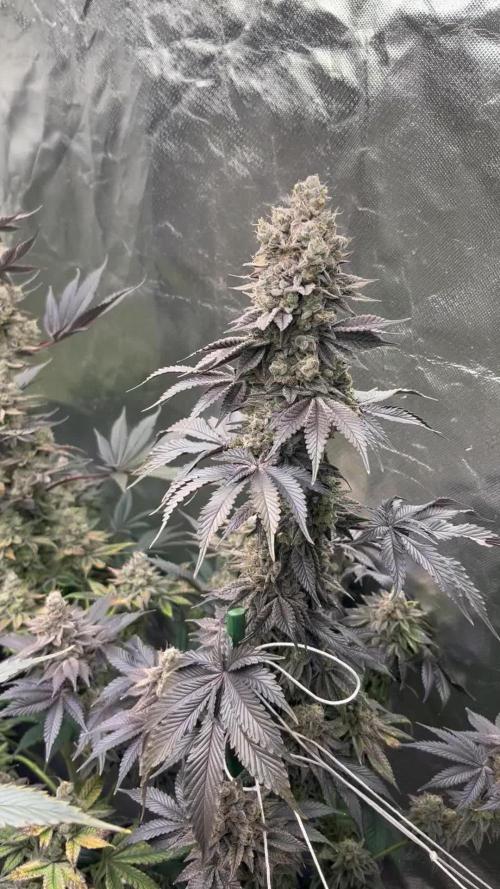
Ya lleganos al final del cultivo, muchas plantas se cortan con 75/80 dias de floración, los resultados son impresionantes, hasta ahora es la maxima produccion por planta que hacemos, en un par de semanas ya mostrare el resultado final, se secaran y a los botes de cristal, estamos muy orgullosos de estas semillas nos han sorprendido mucho

Likes
4
Share

@allfish
Follow
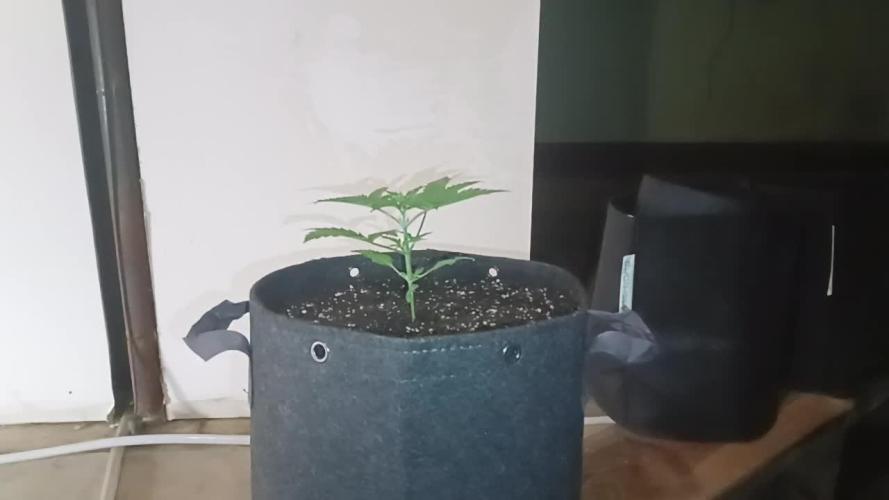
I was wanting to wait till next week to transplant, but I'm glad I didn't! I think she's going to be a rockstar!
Likes
34
Share


@iLoveGoodWeed
Follow
Both laide are growing super well. One is taller but second one is more bush on sides. So far Im very happy grwoing this strain and both ladies just growing so nice

Likes
48
Share


@Regenwurm
Follow
Klima durchweg sehr gut.
2 mal reines Regenwasser und 1 mal Zusätze von Green Buzz in dieser Woche gegossen.
Den Ladies geht es auch ohne Dünger (mit sehr wenig Dünger) in dieser Phase hervorragend.
Den Haupstamm HST um die Seitenteilen zu puschen. Lichtstärke auf 45 % erhöht bei gleichem Abstand von rd. 40 cm. Heute Licht auf 45 % erhöht.
Luftfeuchtigkeit und Temperatur punktlandung, in der Nacht etwas zu hoch und in dieser Woche nur 2 l Wasser zum befeuchten gebraucht. Heißt, wegen platzgründen kommt diese Woche der befeuchtet raus und der entfeuchter in das Zelt. Mitte bis Ende der Woche stelle ich um auf Blüte.

Likes
47
Share


@Mrs_Larimar
Follow
March, 19th.
The Triple G stopped stretching
They are concentrating in budforming.
The Plants looking "leggy"... bud flowers sitting along the Branches
I topdressed Silica, for making Branches stronger
Iam fertilising every other Day with 3ml/l Organic Bloom Liquid , and 2ml/l Organic more PK
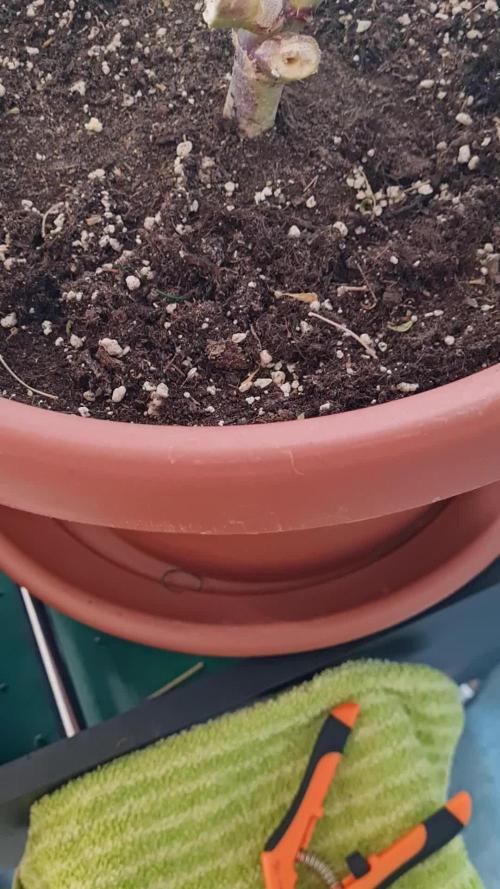
I discovered Spidermites on one Triple G Plant... aaaarg😈 I have no clue why😒
I ordered Predators, and Iam quite sure , i can beat them. Because i have seen them very early


Likes
31
Share


@Canna96
Follow
Hey now, hope everyone is having a great weekend! The Strawberry Banana Auto from Fastbuds is starting to smell very good and starting to stack up nicely. She is only 26 inches tall but I feel like her colas are going to be quite thick. I did a light defoliation this morning and took off all the LST tie downs. She is looking super healthy and loving this Medic Grow Spectrum X.
I currently have the Spectrum X running at 100% power and also integrating the UV/IR bars for 75 minutes just prior to lights off. I am super happy with this light so far, she puts out impressive PAR, and runs fairly cool. The only thing I would change is to add a timer just for the UV/IR bars, and allow the main light to be run on a timer.
I will probably do one last light defoliation in the next couple of days and that will be about it other than keeping the reservoir full and in the correct PH range. The tomatoes outside are absolutely loving the runoff from these autos, as that is all they have had to drink since they were about 3 weeks old.
Thanks for stopping by, Stay Safe and Blaze On!!! 💪
Website: https://medicgrow.com/
https://growdiaries.com/grower/medicgrowled
Processing
Likes
41
Share


@PrairieFrostGrow
Follow
********Week 1 Flower - Sept 19 to 25, 2020*******
We switched to flower this week and put in the first SCROG layer.....been busy😃
These girls have some very thick main branches and are pushing out some huge fan leaves💪 They were easily stretched out horizontally to fill in the net and the topping helped to keep the canopy at an even height. The girls are in the same tent as another strain that is known to grow big and will benefit from a SCROG. I don’t feel these girls necessarily need one though. To combat this I decided to set the Cream 47 on boxes before putting in the netting. I set them on boxes which put them 10” taller than Gorilla Girls......may still not have been enough but that is what we are running with🤞😃
Pest maintenance this week as we are getting the last days I am able to comfortably spray the girls. Lost Coast Plant Therapy to keep the gnats, aphids and thrips in check😃
Had a small mishap this week and a damn fan fell on one side of C471 while opening the tent. The net helped to not make this more disastrous but it still set her back a day or two. She has bounded back now and that side of her is coming back and getting taller.
At the end of the week I finally gave in and started to pull some of the upper fan leaves😗😗 There is so much leaf in this little 3’ x 3’ tent that it is impacting airflow.......would love a 4‘ x 4’😃 They have reacted very well to the removing of the leaves and those branches are standing up taller and look more healthy the next day!!
Keeping the waterings up and getting a fair bit of runoff from the feedings but that is best for Coco to avoid lockouts and pH issues. There were only three feeding days this week. We switched to bloom nutes for base and added silica for supplementals. Vitamin B and Kelp coming from B52 and sweetener for the microbes from bud candy. As well as Sensyzime to let the enzymes clean up the root zone because they have been in the pots for a few weeks now.
Little more detail:
Sept 19/20 - Day 1
- Plant Therapy @ 5ml in 1L water. Ph to 5.4.
- Folier spray applied to whole tent half hour before lights on, used 3/4 of mixture
- Feeding mixture was Sensyzime @ 1ml only
- 25ppm and 5.2pH......missed it a bit.
- each girl given 3L
- SCROG put in
Sept 20/20 - Day 2
- Sprayed the last of the IPM mixture on the tent tonight.
- Noticed several small shinny spots on leaves later today.....suspect from Folier spray on leaves.
Sept 21/20 - Day 3
- Nice full strength week 1 mixture applied today
- Rhino Skin, Cal Mag @ 2ml, Sensi Bloom A&B , B52, Bud Ignitor, Bud Candy @ 1ml.
- 625 ppm and 5.7pH
- 3L given to each girl.......not enough runoff.....bump feedings up to 4L going forward.
- silica added today.
- freaking fan dropped on C471 today in the one corner🤬 Could have been worse👌
Sept 23/20 - Day 5
- CalMag @ 2ml, Rhino, Sensi Bloom A&B, B52, Bud Candy, Bud Ignitor @ 1ml.
- 850ppm and 5.9pH
- 4L given to each girl.
- better run off amount
That wraps up the first week of flower........Cream 47 was more of a transition week while Gorilla Girl was well in flower. The net is in and the lights flipped. The girls were ready for flower and now we just need to keep giving them what they want for the next 6 weeks and then coast from there👍 Hopeful they will find another 12” of growth in them but not sure they will stretch that much in the net....time will tell. Sweet Seeds girls making me smile again with anticipation of some fat colas from these girls😃
Likes
41
Share


@bypado_farm
Follow
Day 56:
Watered the plants 0.5L with nuts, 4L total, 875 ppm, 1861 us/cm, PH 6.4
Day 58:
Watered the plants 0.5L with nuts, 4L total, 923 ppm, 1963 us/cm, PH 6.5
Day 60:
Watered the plants 0.5L with nuts, 4L total, 840 ppm, 1787 us/cm, PH 6.4
Day 62:
Watered the plants 0.5L with nuts, 4L total, 898ppm, 1910 us/cm, PH 6.4
Likes
44
Share


@Hempface86
Follow
Today is eight thirty two and this girl is happy happy 😊.. as you can see, I opened her up some with some LST and we're gonna give her a week or 2 to recover and then get her into flower.. Zamnesia Seeds this plant is doing amazing. Thank you so much forgiving me the opportunity to grow it.. i hope all is well God Bless.
https://growdiaries.com/diaries/239355-zamnesia-seeds-sundae-driver-grow-journal-by-hempface86/edit/week/1367925

Likes
2
Share


@Ultraviolet_
Follow
We become aware at such times of man's wonderful ability to bring seemingly unrelated elements into harmonic balance, and receive a glimpse into a world where everything exists in conscious sympathetic attunement to everything else. When we listen to a piece of music that seems to strike a beautiful chord somewhere inside us, or view a painting that simply glows with harmonic awareness well executed, we probably do not spare much time to contemplate the wonderfully intricate combination of vibrations that our sensors make it possible for us to perceive. We tend to appreciate the relationship between the parts of something by an awareness of the harmony or dissonance of the whole. This ability enables us to say "what a beautiful house!" instead of "analysis has proven that this collection of building materials exhibits certain elements of harmonic proportion." While this ability to instinctively appreciate the beauty of true harmony has an important role to play in evolution, a more analytical understanding of the laws involved can be most useful. This is especially so if we wish to create works of art where each part exists in true harmony, not only with the other part of that particular whole, but with the universe within which the creator and the created exist.
Everything vibrates. From the most dense matter to the most subtle cosmic rays, everything which our senses allow our thoughts to become aware of, can be specified in terms of wavelength or frequency of vibration. These two terms define the same thing, but from different points of view.
The following are the approximate wavelengths of various energy carriers:
Cosmic rays 0.000,000,001 mm
Gamma rays 0.000,000,1 mm
X rays 0.000,500 mm
Ultraviolet rays 0.003 mm
Visible light 0.006 mm
Infrared 0.01 mm
Sound waves 1 meter
Radio waves 300 meters
Violet light 400 nm to 450 nm
Blue light 450 nm to 500 nm
Green light 500 nm to 570 nm
Yellow light 570 nm to 590 nm
Orange light 590 nm to 610 nm
Red light 610 to 700 nm
1 nanometer (nm) = 0.000,000,1 cm = 1/10,000,000 cm
If a guitar string is plucked and we hear a sound, it is not too difficult for the human mind to associate this sound with the vibration of the guitar string. With color it is quite different. It is difficult for us to conceive that the color of a substance is not an inherent property of the substance itself, but an indication picked up by our senses of that substance's ability to absorb or reflect the light which happens to be shining on it at that moment. Neither the matter nor the light is colored. What happens is that the brain learns to differentiate between the frequencies reflected or transmitted by the substance the eyes are focused on. The same thing happens with sound. When we say "Oh! Listen, they're playing my favorite song," what we really mean is: "My brain has stored within it a particular pattern of frequencies. I have compared the new information being received with this stored pattern and have deduced the answer that the two patterns are similar within certain specified tolerances." The 'pleasure' involved could have something to do with our running the pre-recorded pattern at the same time, in 'sympathy' with the new pattern as it is received.
The word sympathy describes very well our ability to appreciate color and sound. It also describes the reason behind certain elements of harmony. For instance, if a substance vibrating at 100 cycles per second (tone 1) is in the proximity of another substance vibrating at 200 cycles per second (tone 2), we could perceive, if we had the right equipment, a certain sympathetic relationship between the two.
We will see from this that there is a uniform doubling of the first tone seen in the second. At various points along the waves, the two are the same in amplitude. At other points, they are at opposite poles to each other. This doubled frequency has more points of similarity to the original than any other frequency except the original itself. If the equipment we had available for measuring these two frequencies was a soundboard amplifier and a pair of ears, then we would hear what would sound to us like one tone. If we had the opportunity to hear one at a time, we would hear that although they sound the same, one is higher in pitch than the other. This characteristic of 'the same but different in pitch', musicians have called the octave. Any two tones produced where one has exactly doubled the frequency of the other is called an octave. Speaking in ratios, an octave would appear then as the ratio 2:1 or 1:2, depending on whether we are talking of an octave up or down.
A single note produced by almost any instrument will contain more than one wavelength or frequency. It will have a dominant frequency, the wavelength of which we would call the note's 'fundamental' or 1st harmonic. It will also have a varying number of upper harmonics, gradually fading in intensity into infinity or silence.
Natural harmonics always have the same pattern of intervals between them. The interval between the 1st and 2nd harmonic is a perfect octave; between the 2nd and 3rd a perfect fifth; between the 3rd and 4th a perfect 4th; and so on, the intervals becoming smaller and smaller until they lose any relationship with the western 12 tone scale as it exists at the moment. Just as an octave has certain elements of sympathy with its fundamental, so some intervals have been noted to be more perfectly in sympathy with the fundamental than others. The ratio of the 'perfect 5th' or interval of 7 semitones, as it occurs in the harmonic series, is 3:2 or 2:3, while that of the 'perfect fourth" is 4:3 or 3:4. All the tones in the western 12 tone scale can be expressed in terms of the ratio between the upper tone and its fundamental. This would seem to be an ideal way of generating a scale from any given fundamental and several attempts have been made to do this, the Pythagorean system being probably the most well known. Although when working with a single tone instrument playing on its own, the Pythagorean formula works wonderfully well, if we had several instruments tuned this way together and asked them to play almost any western music, we would find that at times they sounded quite out of tune to each other.
The lack of flexibility of the various scale systems based on the harmonic series has led to what is known as the 'tempered' scale. This uses as its primary unit of interval the ratio of the octave or 2:1. It then proceeds to divide the interval between any fundamental and its upper octave into 12 smaller intervals by applying the ratio: two to the one-twelfth power, to one (21/12:1). This equals 1.059463094, so by multiplying any frequency by this number, we will obtain the tempered semitone next up from our fundamental. We will also find that any tone twelve semitones up from any other tone, in a scale generated in this way, will have exactly double the frequency.
If we took the note middle C on a piano and halved the wavelength, we would have the note C one octave above. If we halved this, we would have the C above, and so on. However, within about 6 octaves, we would find that although a 'sound' was being produced, no human ear could perceive it. If we kept on going, halving and producing upper octaves of our fundamental C, we would proceed through the infrared band, into the visible light spectrum. If we happened to be outside during the day, we would, for one octave only, see the note C with our eyes. The next octave above would already be in the ultraviolet band, and outside the eye's sensitivity range. If we can think of color as being an indication of a substance's vibratory rate or wavelength, we may begin to see a relationship that could exist between the color and sound spectrums.
The logical extension of what has so far been said is that there exists a scale in the color spectrum that corresponds exactly to the scale in the sound spectrum, each color tone being an octave of the equivalent note in the sound range.
This is not the end of the story but only the beginning. If we can for the moment accept that any wavelength in one band has upper and lower octave stretching out to infinity, then the next question is 'fine, but what shall we use as our fundamental? A particular color? A particular sound frequency?' The musicians among us will probably say 'A 440'. This means that the note A should vibrate at 440 Hertz, or 440 times per second. They would tell us that this is standard pitch has been adopted by most orchestras around the world; pianos are tuned to it, instruments are constructed to formulas based on it, and so to them it would probably seem the most appropriate place to begin. Some of these musicians may know of the battle that is still raging with regards to this being the standard, but few would know why A = 440 Hz was chosen except that it worked when it was set to be a suitable compromise between the many different pitches in use at the time.
432 Hz is said to be mathematically consistent with the patterns of the universe. Studies reveal that 432 Hz tuning vibrates with the universe’s golden mean PHI and unifies the properties of light, time, space, matter, gravity, and magnetism with biology, the DNA code, and consciousness. When our atoms and DNA start to resonate in harmony with the spiraling pattern of nature, our sense of connection to nature is said to be magnified.
Another interesting factor to consider is that the A=432 Hz tuning correlates with the color spectrum, while the A=440 Hz is off. Audiophiles have also stated that A = 432 Hz music seems to be non-local and can fill an entire room, whereas A=440 Hz can be perceived as directional or linear in sound propagation.
Once you adopt the idea that sound (or vibration in general) can have an equalizing and harmonizing effect (as well as a disturbing effect), the science of harmony can be applied to bring greater harmony into one's life or tune to specific energies. There is a form of absolute and relative harmony. Absolute harmony can, for example, be determined by the tuning of an instrument. The ancients tuned their instruments at an A of 432 Hz instead of 440 Hz - and for a good reason. There are plenty of music examples on the internet that you can listen to in order to establish the difference for yourself.
Attuning the instrument to 432 Hz results in a more relaxing sound, while 440 Hz slightly tenses up the body. This is because 440 Hz is out of tune with both macro and micro cosmos. On the contrary, 432 Hz is in tune. To give an example of how this is manifested microcosmically: our breath (0,3 Hz) and our pulse (1,2 Hz) relate to the frequency of the lower octave of an A of 432 Hz (108 Hz) as 1:360 and 1:90.
It is interesting to note that 432 Hz was the standard pitch of many old instruments and that it was only recently (19th and 20th century) the standard pitch was increased. This was done in order to be able to play for bigger audiences. Bigger audiences (more bodies) absorb more of the lower frequencies, so the higher pitch was more likely to “cut through”. One of the oldest instruments of the world is the bell ensemble of Yi Zeng (dated 423 BC), tuned to a standard F4 of 345 Hz, which gives an A= 432 Hz. The frequency of 345 Hz is that of the platonic year! Similarly, many old organs are tuned in A=432 as well; for example, St. Peter’s Capella Gregoriana, St. Peter’s Capella Giulia, S. Maria Maggiore in Rome.
Maria Renold’s book “Intervals Scales Tones and the Concert Pitch C=128 Hz” claims conclusive evidence that 440 Hz and raising concert pitch above scientific “C” Prime=128 Hz (Concert A=432 Hz) disassociates the connection of consciousness to the body and creates anti-social conditions in humanity.
The difference between concert pitch A=440 Hz and Concert A=432 Hz is only 8 cycles per second, but it is a perceptible difference of awareness in the human consciousness experience of the dream we share called existence.
Likes
2
Share


@DELTA9_CANNABINOID
Follow
En esta nueva semana, he subido la dosis de Bio-Grow 1ml/l más, la planta en sí a desarrollado un tronco grueso con multitud de ramas, el crecimiento está siendo bastante rápido y no está creando demasiadas hojas.
En 1 o 2 semanas como mucho, esta Gelato empezará a tirar pistilos, lo que nos anuncia que pronto podremos catarla jajaja.
Dulces fumadas maquinas.💀.

Likes
8
Share


@BuddyBudster
Follow
Hi there peeps,
This week went great and they are really growing vigorously. The GSC is really stalky and is the hardest to controle but I'm managing. On the other hand, the Runtz requires little care to grow uniform and is a breeze to grow so far. The Monster Zkittlez has recovered nicely from her stress and is catching up with the other 2. I could not be more pleased atm.
I also found out that if I feed with BioCanna Vega, the solution's ph levels out at 6.6 so that is one less worry.
Next week it's switching time so stay tuned.
Have a good week growmies!
Likes
25
Share


@Tonks
Follow
Sorry to be mushy, but thanks to everyone on here for the comments and support. Been a particularly shitty year and it's been so nice to escape on here now and then and focus on something we all love to do and share.

Likes
48
Share


@CatnipGrower
Follow
I don't have anything to say for this week. Time seems to be moving slowly as harvest approach. Im hopping they do fatten up a little more, but who knows...


Likes
4
Share


@AestheticGenetix
Follow
Starting to chunk up. Giving Candy like sweet tarts or something or smarties
Likes
6
Share


@Mr_nugs_lover_David
Follow
Looks so beautiful and smells even better, so in love with this strain, has surprised me a lot, I would love to grow her again, very nice plant, maybe not the best in yield but quality is assured. 🤤💎🌱