


Likes
8
Share


@Shadowpup369
Follow
These two did great even through a lil stress they still came out on top. I almost want to run it back but I think it's time for something fruity maybe, maybe having a terpene profile that helps initiate a more stone heavy affect and be indica heavy.

Likes
14
Share


@rando_herber
Follow
This week I defoliated to get my RH to +-50%. I removed fan leaves, low bud sites, and some branches that would not have produced. If anyone regularly grows around 60%-65% RH please let me know if you have run into any issues.
After defoliating the roots still took nutes as if they had more fan leaves and now there is some burn on about 5% of the leaves and their tips, a couple days later. I expect this to stablize this week which I suppose is a benefit of growing organically.

Likes
3
Share


@Rko41
Follow
Température 14-28degres 7 cm stretch belle couleur beau buisson pompon bien apparent !

Likes
22
Share


@herbalistssword
Follow
This plant that I harvested today I've only defoliated and she took well to that. I LST and defoliated the other plant and she is still ripening will harvest her soon.
285gramms of wet bud is quite good for first grow, so i should get about 60g dry, I'll update actual value when dry. She was in the tent with 4 other plants under the Skyline 1000 lights which pull 500w from mains.
She filled the room with some sort of orange/lemon candy smell. Smells really nice.
I'll update when I harvest the other Candy Kush and report on taste/effect once dried.
-------
Day 79 I harvested the other Candy Kush, gave 280g wet, not much of a difference between the trained and untrained plants, although I think she could have gotten fatter had I left her longer. Looking at the buds now that they dried up they got much smaller :D
Really loving the smell, can't wait for them to cure.


Likes
3
Share


@123Grow
Follow
1. LABS - I suggest using distilled water for the entire process ( no chlorine or chloramine). I also suggest the type of rice product shown ( 1/2 cup), it has red, brown, white, and black rice blended together. You get the benefits of each type.
2. Take the rice that was used in making the rice rinse for labs and boil it in 3 cups of water for 30 mins. Strain the rice out. Add 1 TBSP molasses per 300 mls.
Use 300 mls of the above mixture during your watering cycles. It contains starches, b vitamins, aminos, trace minerals, calcium, magnesium, iron, phosphorus, potassium, and some nitrogen. The ppm’s are not higher than 200 ( if using distilled water). This is ONLY used if your plants are healthy. If your plants are sick…this will NOT help them. It will make stuff worse!!!
The Hulk-Berry got a new home. 1 tsp 7-3-1, 1/2 tsp 0-12-0, 1/2 tsp Langbeinite, 1 TBSP 2-2-2, 3 TBSP 4-3-3, worm castings, recharge (1/32 tsp) into the soil ( Mother Earth).
The 3 RuntZ are coming back from slow growth at the outset. I added LABS, Lentil SST, Photosynthesis Plus to the media. I did a foliar spray with recharge. 24-36 hours later the leaves exploded with growth and height. I added ZERO nutrients!!! I only used natural inputs and bacteria to get the root zone back in order.
11-3. Things are all in check! The LABS, SST’s and Rice wash have gotten the 3 RuntZ back on track. The Hulkberry is in full swing. I think I can get to 3 feet by flower time with the Hulkberry
11-5 All is well today!!! Everyone is very happy after the cal-mag, Photosynthesis Plus, kelp bath


Likes
15
Share


@MG2009
Follow
08/20/2020
Soil temp a little warm,it is hot and humid going to water her good,and mulch the topsoil.
Flowering has started!
Likes
5
Share


@BelBudz
Follow
Very excited to start a new grow!!
21/11/2023:
Placed the seed in a wet paper towel inside a zip lock bag and put it on the inside of the cabinet.
Whilst this is germinating I can setup and clean my tent and get the substrate ready.
This will be my first time using Biotabs nutrients and also the first time I won't be using the hydroponic DWC method.
Hoping for yet another great grow and tasty end result!
25/11/2023:
Transfered seedling to coco medium which I prepared with Bio Tabs nutrients.
Soaked the medium with Orgatrex and Bactrex disolved in tap water.
Set the light schedule to 18/6
27/11/2023:
Added some more water with nutrients because the medium felt dry.
Might have overwatered a bit since a lot of water ended up in the bottom tray.
I'll let it dry out a bit the next days before adding water again.

Likes
1
Share

@CheeRz
Follow
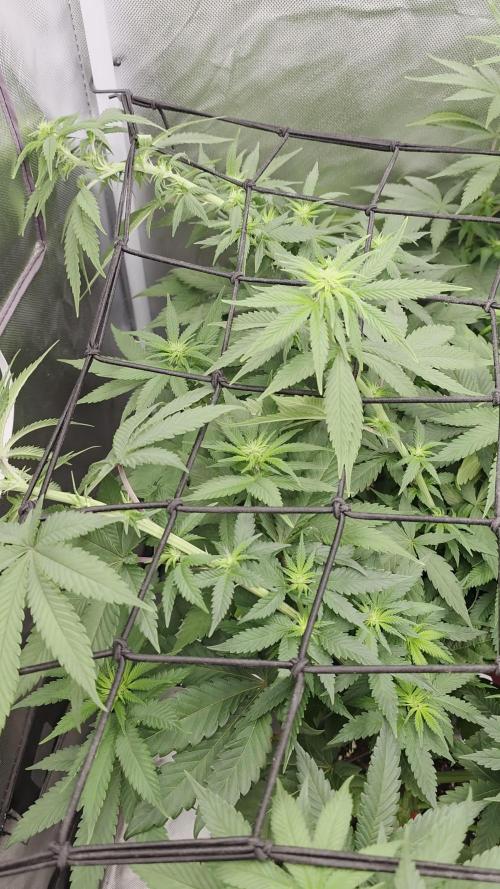
It is week three of flowering, and the net has been installed. Both ladies have also been defoliated. I am very happy with how things are going so far. Let's hope for buds as big as lemons! 🍋🍋🍋🍒🍒🍒


Likes
18
Share


@raulmoat123
Follow
Quick update week 3 flower these girls are putting on weight very very quickly. The blue gelato buds are already becoming dense like stones . Watermelon punch literally is the most satisfying smell I have smelt in a while . Wedding cake is the biggest in my tent and most gassiest plant. The terple inhouse genetics are also massive will show the inhouse section next week , just takes to long to take them out of tent


Likes
1
Share

@birdmountain
Follow
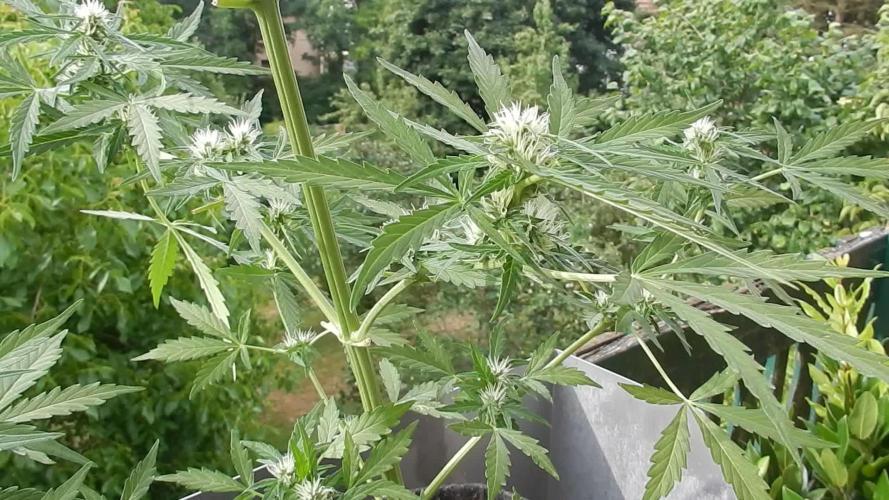
Die ACB XL stellt langsam das Höhenwachstum ein und beginnt mit der verstärkten Blütenausprägung. Ansonsten wurden nur ein paar der ganz großen Fächerblätter entfernt um möglichst viel Licht an die Blüten kommen zu lassen. Ob der Bananenschalensud funktioniert wird sich zeigen, bisher jedoch sieht es ganz gut aus.
Vielen Dank für euren Besuch und noch eine schöne Grow-Woche!
---
The ACB XL slowly stops growing in height and begins to produce more flowers. Apart from that, only a few of the very large fan leaves have been removed to allow as much light as possible to reach the flowers. It remains to be seen whether the banana peel decoction will work, but so far it looks quite good.
Many thanks for your visit and have a great grow week!

Likes
2
Share


@Ultraviolet_
Follow
"You will know them by their fruits"
46-47 days from germination, she fills the canopy herself, and the apical dominance is broken.
It's not all about the amount of light, but the ratio too, as this will dictate growth through the ratio of phytohormones. In order for correct bud development, there needs to be a correct ratio of RGB. Different wavelengths have different penetration depths. When one grows using top-down lighting, only the entire canopy is limited to 2-3 layers of leaf, meaning there will only be correct bud development in those layers, regardless of getting 45DLI.
The biomass potential of a plant is linked to root mass. Generally, when a plant reaches its maximum biomass, you can help to chop off parts of the plant that are in less than efficient areas of the plant (low light). So that it can create new biomass growing towards the light.
Strength is the maximum potential, and power is the rate of conversion. You can have the biggest veg period of 18 weeks, and it means nothing, as soon as you start flower, the chronological clock starts ticking, the only metric that matters to bud size is how much energy you convert each cycle, not by how long it took you to build the framework.
Each leaf is like a satellite receiver attached to an antenna called a stem; each leaf removed lowers the energetic potential of conversion.
Not saying you cannot defoliate for a reason, only that you should have one, and at the right time. Don't defoliate 30+% on autoflowers or 4 weeks into the flower period and expect an increase in yields; it doesn't work like that. There is certainly room for dictating growth patterns and clearing out overcrowded nodes, but it needs to be done in veg because once that timer starts and buds start growing, it's all just energy conversion. Most grows I barely defoliate at all in a 4x4 because with side lighting, turning a 2d canopy penetration into a 3d, even lower buds are 90% the quality and density of top ones. The rate of photosynthesis and the ultimate density of lower buds aren't just about the sheer number of photons PPFD. The specific ratio of R:G:B dictates canopy penetration and drives different photochemical reactions. The Electron Transport Rate (ETR) measures the speed at which electrons are driven through Photosystem II (PSII) during photosynthesis. The ratio of Red, Green, and Blue (RGB) light heavily dictates this rate.
Plant leaves continuously perform cellular respiration regardless of the time of day, using energy and oxygen to fuel essential metabolic maintenance. If you over-defoliate, the remaining canopy may be unable to produce enough net sugars during the day to offset the constant respiratory demands of the plant. Must balance fixation with assimilation; there's no point in capturing 45 DLI if you only convert 20% every cycle due to an extreme lack of respiratory capacity to perform cellular oxidative phosphorylation.
A crinkle-cut French fry has more surface area. When it cooks, it has a higher capacity for energy transfer/conversion, which is what makes it slightly crispier than a regular straight-cut French fry when it comes out of the oven.
You can have a 4x4 canopy or a 4x4x4 canopy. Oversimplified, but you get the idea, yes, we know that side lights are not as effective at absorption from the sides or underneath, but it's not about DLI, it's never been just about efficiency, it's about the penetration ratios of RGB that drive ETR of/photosynthesis and trigger correct bud development. The size of each bud is its own ability to perform the ETR required for its own personal growth, and bud development is dictated by the ratio of RGB. It drives localized growth and acts as a regulatory switch for that development. Turgor pressure is another very important factor in understanding if you want big buds, for it is the "steam engine" that dictates the rate of bud expansion. Simply, never going to happen playing it safe metabolically at ambient 75F.
Because buds have less chlorophyll, they do not suffer from the same photosynthetic shutdown that over-exposed, light-stressed leaves do. They can soak up direct light energy to swell in density and size. Their tolerance to intense light is heavily limited by the temperature and humidity, but if you can control those temps and keep the rot away, buds have a much, much higher tolerance to high light than leaves. Beneficial to hammer with high light before trichomes appear. Balancing this with trichome maturity is key for rich terpene and flavonoid profiles, want it just right, somewhere in the middle, not too much, not too little. Find cannabis plants can defoliate themselves come harvest, given the right signals. Every last ounce of potential is recycled into buds by the plant itself (senseceance), given you can keep the level of conversion high enough to prompt a need to do so.
Get the canopy @ optimal PPFD range, 45-55DLI, then let the plant "stretch" the stems into a "PPFD range much higher, one that leaves don't like to grow in, but buds thrive in. What is optimal for a bud is different than what is optimal for a leaf photosynthetically. Genes provide the blueprint, but the environment dictates how, when, and if those genes are expressed. Must first signal the condition to increase the expression you want to exist through stress and response, cause and effect. A well-buffered CEC medium prevents extreme nutrient swings, allowing plants to maximize their dedicated genetic expression.
A plant is either genetically expressing "growing" or "recycling" genes based on its nutrient starvation level in the medium. Constantly toggling between "growing" and "recycling" hormonal states creates a futile cycle that wastes valuable metabolic energy. Plants rely on sophisticated biochemical switches to manage this trade-off, and prevent rapid fluctuations that disrupt that balance.
This energy inefficiency is a recognized biological challenge. Plants avoid this costly "flip-flopping" by using hierarchical master regulators (like the TOR and SnRK1 protein kinases) that act as strict molecular switches. These networks enforce cellular commitment to either growth or survival, preventing mixed signals.
This is something that was missing from previous grows.
Under nutrient-rich conditions, TOR promotes protein synthesis, cell division, and structural expansion.
Under starvation, TOR is inhibited and SnRK1 is activated. This triggers autophagy—where the plant breaks down old macromolecules and organelles to scavenge and reallocate essential nutrients to critical sinks.
"What's the point in flushing?"
The core idea behind a PK booster is to deliver a massive, concentrated surge of P&K exactly when buds are swelling in conjunction with a N starvation. Because these are short, targeted windows, the nutrients must be highly bioavailable so the plant can process them immediately. As soon as you go "organic," that's out the window. Much slower release, uncontrolled, very difficult to "spike". to cause the ratio that will initiate a response.
High-volume PK spikes rely strictly on the immediate uptake capabilities of mineral fertilisers. Making it far less efficient in organic/living soil setups.
When you use organic nutrients, it changes the dynamic with which the plant delivers and trades its nutrients; organic is always releasing new nutrients into the immediate EC. This prevents a lot of autophagic responses from occurring due to a constant stream of new nutrients into the immediate medium's EC. This can prevent nutrient starvation signalling.
PK boost is essentially just N starvation, triggering an autophagic response. Concentrated ratio of P&K while tapering off the Nitrogen base. To the plant, the sudden drop in Nitrogen registers as a severe environmental stressor—essentially, the beginning of starvation protocols. She aggressively strips nutrients and proteins from older leaves and vegetative structures and shuttles them directly to the developing flowers and fruit. Ta daaa. Call it a PK booster and sell it. Nothing to do with the P and K itself, it's the ratio immediately available in the medium triggering a nutrient recycling mechanism within the plant itself; all the "booster" sells is the trigger to the signal.
Very difficult to initiate a response when organic nutes are doing their thing. It takes 4x5x more water significantly to leach or wash ammonia out than it does nitrates. This alone will prevent flushing from having its normal impact.
I'll be manipulating the C:N ratio in the medium instead. One autophagic response has multiple potential signal triggers. Nutrient starvation is not an option. Well, it is, just it's going to be manipulated Nitrogen starvation through Excess Carbon, instead of starving the medium entirely(EC).
Likes
13
Share


@Andres
Follow
The spring is coming. The T is 19 C max 15 C min. This winter was dificult this year because she grow up to slowly. I hope bog buds.
Likes
3
Share

@Jardin33ro
Follow
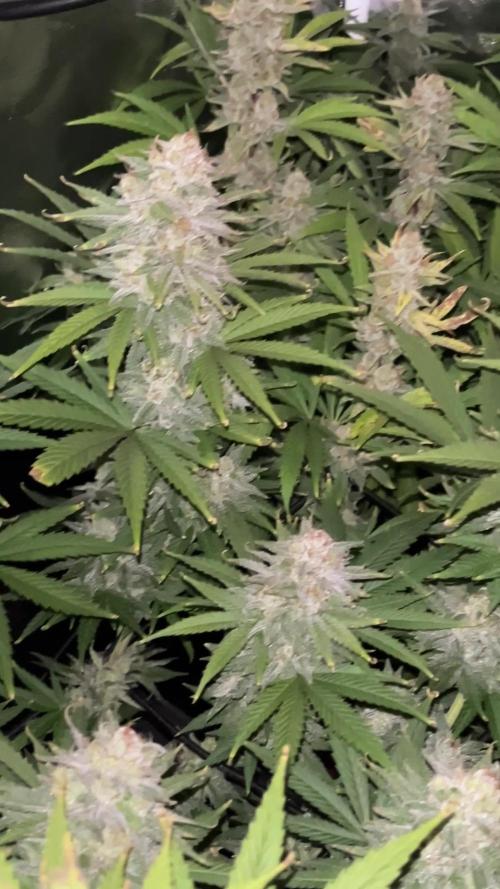
Estamos en las ultimas semanas de engorde, estamos tratando de tener un vpd dentro del rango 1.2 o 1.3 kpa. La T con luz prendida llega hasta 26 y de HR no pasa de 55 y no baja de 40. Con luz apagada llegamos a 21 de T y la HR entre 40-50. Vamos bajando ph de a poco y tambien la EC, buscando llegar al final de la semana en 1.3 o 1.4.
Likes
21
Share


@Excalibur
Follow
17 July 2018 -
Considerable size increase from both root and stem structure to the leaf development.
Heat has and is an issue.
Slight nutrient burnt tips, as nutrients was increased drastically.
20 July 2018 -
Mainlined CP from 4 nodes to just her 2nd nod.
Notice the stress.




Likes
12
Share


@Rich_Kolas
Follow
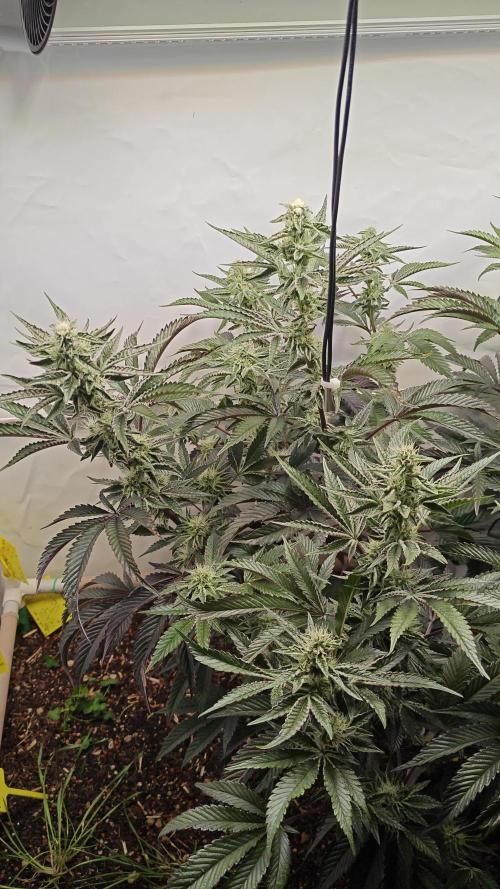
Today I moved two plants to their final pot (3.5 gal). Each of the plants has 2 nicely formed nodes. The root structure looked very strong. They were started in Pro-Mix HP and transplanted into the same medium. I just sprayed PH balanced water on the top of the soil to help them acclimate to the new pot. I still have 2 plants that have stopped growing so I am going to leave them in the seedling chamber till they get a little farther along.
