




Likes
48
Share


@Wackytabacky_420
Follow
Hey growers!! So this week I changed from the blurples to the Viparspectra vs1000s 4 flower. This is the feeding 4 the week...
1/11/2022
1/2ml calmag
2.5 ml micro
2.5 ml gro
1ml bloom
3/4ml ph down
Ph 6.42
510ppm
Solution temp 72.3°f
1/16/2022
6.3 ph water
Solution temp 73.0°F
Well pretty smooth sailing grow this far!! Thanks 4 stopping by!! Till next week stay zooted growmies!! Best of luck and Happy Growing!!😎🌱💚💪🏻💪🏻

Likes
9
Share


@Piorkeed
Follow
Week 1 (23-29/01)
During this week I will feed the plants with tap water and only 2 ml of Bio-Grow. I will also dimmer the light down to 30% because, being it at 20cm from the plants, I want to avoid burning them. The fan will be on 4 hours/day. By means of the inkbird thermostat I will control the heating/cooling system. Inkbird parameters will be: 23.5°C with -3°C for heating and +2°C for cooling.
23/01 D1: preparing the pots. A layer of gravel surronded by light-mix by BioBizz. Planted the three sprouts.
24/01 D2: added a support to each plant to avoid the fall due to the weight. Provided a glass of fresh water (25cl) to each of them.
25/01 D3: -
26/01 D4: watering day. Added 2ml of Bio-grow to 1.2l of tap water (approximately 40cl of water each plant).
27/01D5: -
28/01D6: watering day. Approximately 50cl of tap water to each plant. Powered on the fan.
29/01D7: -

Likes
8
Share

@Nickeluring
Follow
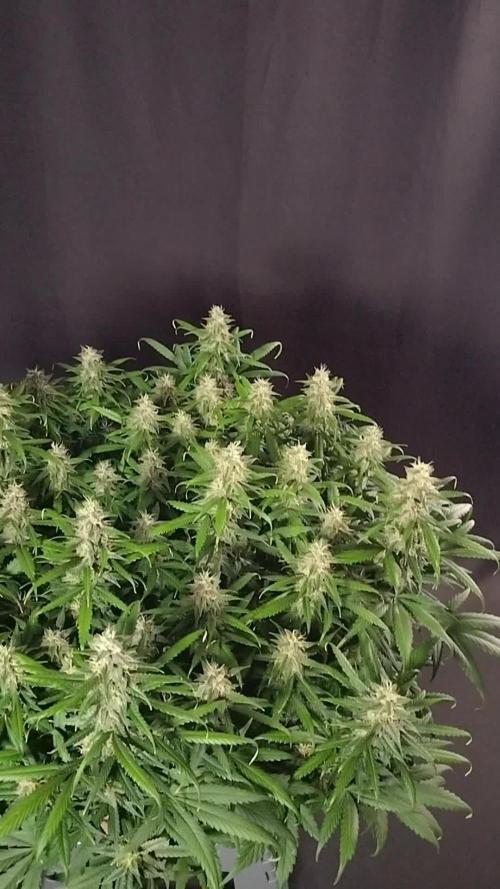
I have only removed a few leaves this week.
Lemon Cherry Cookies and Guava should be ready during the coming week. Apricot is still fattening up.


Likes
13
Share


@PopsFarm
Follow
Harvest day - Runtz Auto from @kannabiaglobal / @kannabiaseedsfr / @kannabiaseedsde / @kannabiaseedsint @kannabiaseedsus
Nutrients: @atami_deutschland / @atami.international / @stefan_atami / @daniel_atami
Soil: @promixgrowers_eur / @promixgrowers_global / @promixgrowers_unfiltered / @promixmitch
LED: @powerlux_spain
Tent: @secretjardin_
Thank you to everyone who follows and supports my work 🙏🏻💚
This means a lot to me and you should know you are a part of it and only with you all this is possible, you are the best community 😎
Growers love, love for everyone

Likes
18
Share


@SirBudAlotts
Follow
Wow! So I have reached the end of this journey with 4 wonderful ladies 🚺 ❤️ 💕..
This was the easiest grow of my life lol! And she packed on size and stinky aromas everywhere..
Big shout out to the Kannabia Team!!!! Excellent strain, amazing colors, fat Colas, everything that makes you smile during harvest! Thick Frost coating..
Also big shout out to everyone that has been keeping an eye on this diary..Much love from my heart grow community ♥️
Perfecto 😀😃🌿🌿

Likes
Comments
Share

@Lynx_361
Follow
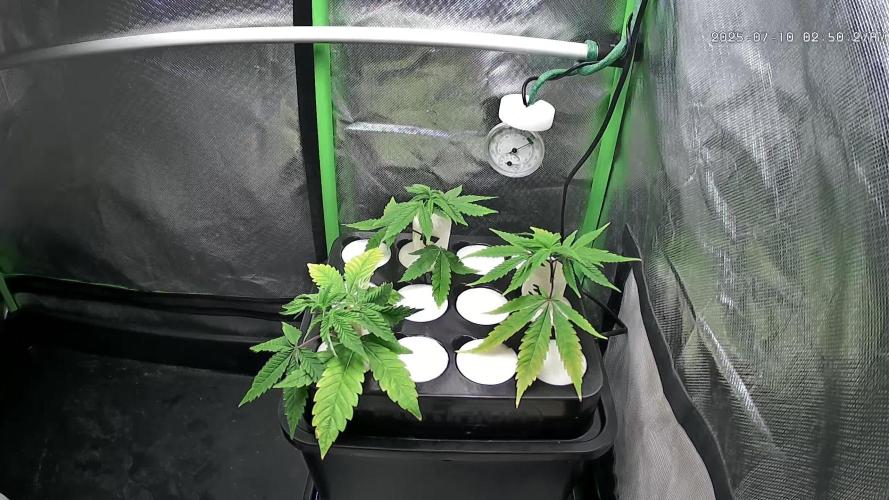
07.07.2025
Flowering day 9 and rooting day 9. Both, flowers and roots show up now.
08.07.2025, 09.07.2025 | Flowering day 10 and 11
Did some lollypoping

Likes
100
Share


@AsNoriu
Follow
Day 106. Plants are okeish , A got last watering, think Saturday is last day for her. Will try to push plant C for 7-8 days after. Plant B looked almost revenging, didn't liked standing in the shade for sure ... Will feed him at least twice.
Happy Growing !!!

Processing
Likes
12
Share


@UK420hydrogrow
Follow
Ok so finally decided to harvest the big beast of critical mass after a week of flush and two days of darkness shes finally down and in drying net will post updates on pics vids when its dried properly so harvested the big critical mass now have the 3 critical mass and 2 white widdow x big bud so taken a few pics will now push these over the next 4 weeks do some slight leaf stripping and then put on overdrive for last two weeks to get the best from this strain the longer u leave it the better the taste and overall flavour will be trust me guys

Likes
5
Share
@4hundert20
Follow
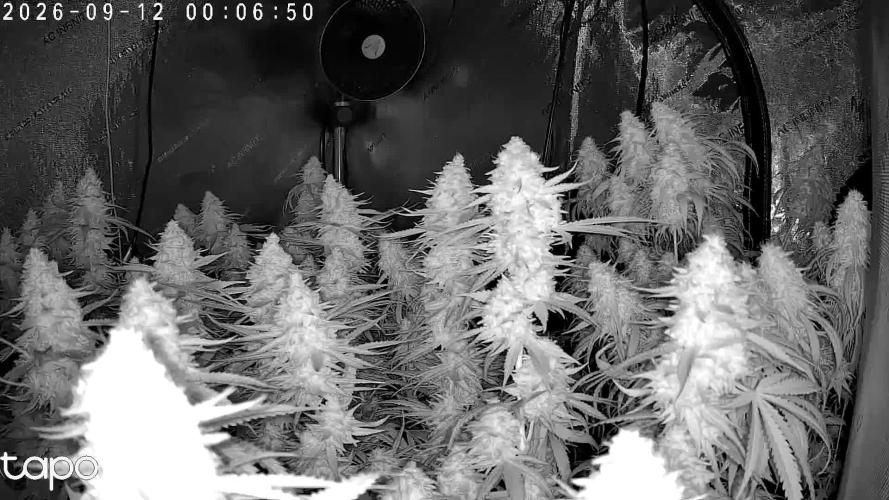
Herbst! 🍂
Seit einigen Tagen gieße ich nur noch Wasser, werde demnächst Trichome kontrollieren und die Ernte in 7-10 Tagen einleiten. Aber den richtigen Zeitpunkt wissen nur die Trichome 😇


Likes
16
Share


@Mopish
Follow
24 Jan - 30 Jan
Started Flushing on Sunday night (23 Jan)
----
25 Jan
A lot of leaves are starting to die, from all of the plants, maybe due to nutrients maybe due to climate, or maybe is just the strain on the end of its life.
Either way, I'm planning to harvest next week.
Likes
27
Share
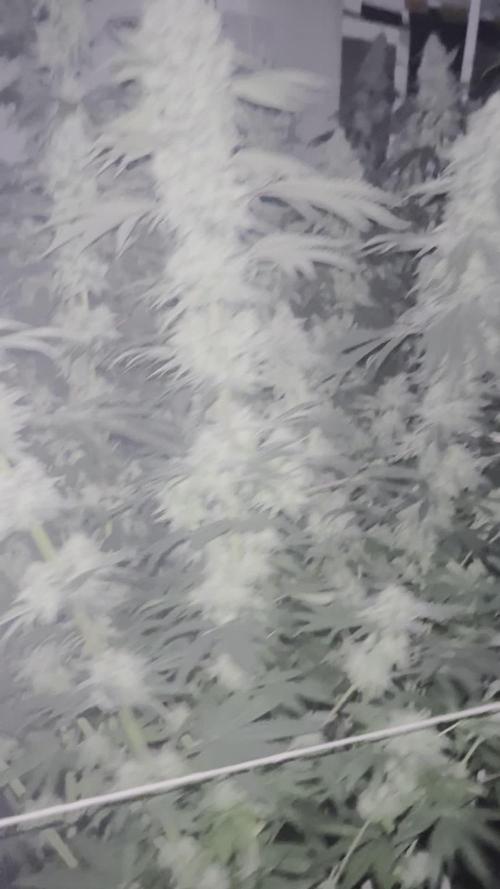

@Ribemarti
Follow
DIA 78 DE FLORACIÓN YA TENEMOS LAS DE COGOLANDIA TODAS CORTADAS,
AHORA QUEDAN LAS RUNTZ X LAYER CAKE EN 10 DIAS PODRIAN ESTAR LISTAS POR LO QUE VEO
💦💦 LOS RIEGOS AHORA SON CADA DOS DIAS IGUAL EC 1800 PH 6,7 LOS PROXIMOS RIEGOS YA SERAN COM AGUA QUE EN 10’DIAS PUEDEN ESTAR APUNTO


Likes
18
Share


@AuntMeanie
Follow
Praying my girls are not all in different stages of dying 😭More to follow...
1/9/21 These girls were finally dry enough to water I weighed each post before and after watering. I am going to try weighing the pots and water when the weight is about half as dry.as I normally do. So Maybe I should water @ 3lbs heavier... somewhere between 8-9lbs
1/10 I changed the light cycle so that my "night time" is in the middle of the day for heating reason, so this morning when I woke up, after being under the lights for 18 hours I actually had growth on two plants. Gorilla Glue and my photo plant Chocoloope that is growing with the autos. They were both under the VIPARSPECTRA 2020 Pro Series P1000 LED Grow Light. The other two plants were under BLOOMSPECT Double Chips Series 1500W LED Grow Light Full Spectrum.
I wish I hadn't made so many mistakes with this grow because I know there is no way to know if it is the light that made them grow better than the other two or they were just a little healthier. I don't think so because Gorilla Glue is the worst plant and she actually grew but who knows. Anyways I switched the plants around so they are under the opposite light when their day time starts and we will just have to see.
PE
Length 8'
Height 7'
Width 8.5"
Dry weight 6lb 4oz
Wet weight 13lb 11oz
GG
Length 8"
Height 7"
Width 8.5"
Dry weight 5lb 14 oz-
Wet weight 11lb
NB
Length 11"
Height 10 "
Width 10.5"
Dry weight 6lb 9 oz
Wet weight 12lb
Choco
Length "
Height
Width "
Dry weight
Wet weight
1/11/21 DAY 46S HELP if ANYONE SEES THIS .... last night I decided not to switch the plants around after all, but I did rearrange the tent because I had a plug running through door and I am still struggling to regulate the humidity and temp. I thought I still had good air circulation but apparently I did not and the plants are not happy. Gorilla Glue is not going to make it. She turned real dark green after watering her on Saturday, she had a small amount of growth Sunday but now all the leaves are laying down. I don't know if I should use Sledge hammer but after flushing a week ago letting her dry for a week and then watering Saturday I don't know if I flushed her with sledge hammer if that would finish her off or perk her back up. I weighed her and she was 4 pounds lighter than when I watered her on Saturday and still 2+ pounds lighter than when she is the driest.
Some background on how I tried to kill my plants... 😭
I started this grow by watching a zillion videos with my key take away being
1-don't over water
2- don't transplant autos
3- don't feed full strength.
I took it seriously, so my tiny little sprouts were put into 3 gallon pots of Fox Farm happy frog potting soil. (didn't realize this already had enough nutrients to last several weeks so I started nutrients in the 2nd week of Veg) I use Fox farm nutrients and follow their soil feeding schedule. I bought the Dirty Dozen starter kits and it did not have 2 products in that the feeding schedule but since they were not in the kit I assumed they must not be too important. They were.... Wholly Mackerel & Marine Cuisine fertilizer.
I used a turkey baster to slowly drip a couple ounces of water around each plant I water just like in this picture. https://prnt.sc/wjq0gi for over a month. I didn't realize by watering like this for a month that I was making the nutrients build up just below the the root line each watering. I waited to water till the plants were very dry. Now looking back Way way to dry before watering. I am sure that is why they were not growing. I was only giving them enough to stay alive not thrive. So a little more back info
Day 14 I watered the plants with plan water
Day 23 after not having to water the plants for 9 days I watered them, 1/4 gallon each with week 2 schedule, with the addition of calmag+(2-0-0) @ 50% strength
Day 27 they were light and needed to be watered and they had grown a little. so I gave them nutrients same as above
Day 30 The plants were not quit as dry as usual but I was beginning to think I was underwatering them so I gave them 1/2 gallon of
THIS IS WERE IT ALL GOES WRONG...(Actually after reviewing my grow journal just now my problems started Day 1 and was showing signs I just didn't know it and I still am not sure how to fix any of it Almost makes me think I should scrap it all and start over. These poor plants will be lucky to produce anything) Someone could seriously use my grow journal as a "everything not to do" guide.
Day 35 since the plants were finally big enough to soak the pots fully. I also decided since they had used 1/2 gallon water in 3 days and they grew a ton I upped the nutrients to full strength and the calmag plus as well. This was the first time I had any runoff sadly I let the plants sit in the runoff and reabsorbed all the runoff.
Day 38 Flushed each plant with with 5 gallons of tap water that had a PH of 6.4 & water temp was 62 degrees. My run off started at 4300ppm with a ph of 6.2. The PH was consistent in every plants runoff and all of them had off the chart PPMs. I brought NB down to 250ppm. Gorilla Glue and Pineapple express I brought the runoff down to 450. For some reason I decided that since my plants were probably in shock from no water and nutrients to more water and a whole lot of nutrients and I figured flushing them would reset the soil and I reasoned they would need food after not getting any from being in shock so I gave them each a half strength nutrients. I waited a full week then posted this question.
Day 45 I have each plant plain water and checked the run off. The Gorilla Glue had a run off of 584ppm with a ph of 6.47 , The northern lights X had 750ppm and 6.38ph pineapple express had 1170ppm runoff so I ran a less less than an extra half gallon of water and that brought the ppm down to 706. PH was 6.3. I have a photo period that I didn't add to this dairy but has been with these plants and it is starting to show the same signs as the others they are just all in different phases of whatever I did to almost kill them. I started the next week on Friday so I will be adding pictures and a couple videos I took from today in my grow dairy tonight. I don't know what to do next.

Likes
13
Share


@Lfuego22
Follow
This is week 5. My schedule didn’t let me go back and adjust. You’ll see day 33-39 and a new clone (which in hind sight ended up being a male and waste of time)