Likes
Comments
Share


@GreenQueenz420
Follow
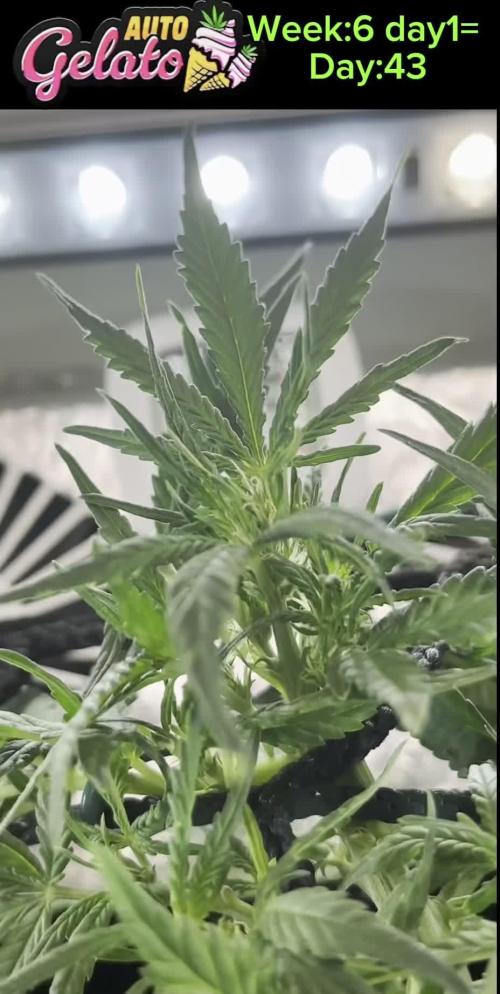
Started low stress training on June 29th in the first video. Second video is July 1st she grew quite a bit since adjusting the stakes. Really looking forward to her training seeing how big she can get.

Likes
47
Share


@Ultraviolet
Follow
What's in the soil? What's not in the soil would be an easier question to answer. 16-18 DLI @ the minute. +++ as she grows.
Probably not recommended, but to get to where it needs to be, I need to start now.
Vegetative @1400ppm 0.8–1.2 kPa 80–86°F (26.7–30°C) 65–75%, LST Day 10, Fim'd Day 11
CEC (Cation Exchange Capacity):
This is a measure of a soil's ability to hold and exchange positively charged nutrients, like calcium, magnesium, and potassium. Soils with high CEC (more clay and organic matter) have more negative charges that attract and hold these essential nutrients, preventing them from leaching away.
Biochar is highly efficient at increasing cation exchange capacity (CEC) compared to many other amendments. Biochar's high CEC potential stems from its negatively charged functional groups, and studies show it can increase CEC by over 90%. Amendments like compost also increase CEC but are often more prone to rapid biodegradation, which can make biochar's effect more long-lasting. biochar acts as a long-lasting Cation Exchange Capacity (CEC) enhancer because its porous, carbon-rich structure provides sites for nutrients to bind to, effectively improving nutrient retention in soil without relying on the short-term benefits of fresh organic matter like compost or manure. Biochar's stability means these benefits last much longer than those from traditional organic amendments, making it a sustainable way to improve soil fertility, water retention, and structure over time. Needs to be charged first, similar to Coco, or it will immobilize cations, but at a much higher ratio.
a high cation exchange capacity (CEC) results in a high buffer protection, meaning the soil can better resist changes in pH and nutrient availability. This is because a high CEC soil has more negatively charged sites to hold onto essential positively charged nutrients, like calcium and magnesium, and to buffer against acid ions, such as hydrogen.
EC (Electrical Conductivity):
This measures the amount of soluble salts in the soil. High EC levels indicate a high concentration of dissolved salts and can be a sign of potential salinity issues that can harm plants.
The stored cations associated with a medium's cation exchange capacity (CEC) do not directly contribute to a real-time electrical conductivity (EC) reading. A real-time EC measurement reflects only the concentration of free, dissolved salt ions in the water solution within the medium.
98% of a plants nutrients comes directly from the water solution.
2% come directly from soil particles.
CEC is a mediums storage capacity for cations. These stored cations do not contribute to a mediums EC directly.
Electrical Conductivity (EC) does not measure salt ions adsorbed (stored) onto a Cation Exchange Capacity (CEC) site, as EC measures the conductivity of ions in solution within a soil or water sample, not those held on soil particles.
A medium releases stored cations to water by ion exchange, where a new, more desirable ion from the water solution temporarily displaces the stored cation from the medium's surface, a process also seen in plants absorbing nutrients via mass flow. For example, in water softeners, sodium ions are released from resin beads to bond with the medium's surface, displacing calcium and magnesium ions which then enter the water. This same principle applies when plants take up nutrients from the soil solution: the cations are released from the soil particles into the water in response to a concentration equilibrium, and then moved to the root surface via mass flow.
An example of ion exchange within the context of Cation Exchange Capacity (CEC) is a soil particle with a negative charge attracting and holding positively charged nutrient ions, like potassium (K+) or calcium (Ca2+), and then exchanging them for other positive ions present in the soil solution. For instance, a negatively charged clay particle in soil can hold a K+ ion and later release it to a plant's roots when a different cation, such as calcium (Ca2+), is abundant and replaces the potassium. This process of holding and swapping positively charged ions is fundamental to soil fertility, as it provides plants with essential nutrients.
Negative charges on soil particles: Soil particles, particularly clay and organic matter, have negatively charged surfaces due to their chemical structure.
Attraction of cations: These negative charges attract and hold positively charged ions, or cations, such as:
Potassium (K+)
Calcium (Ca2+)
Magnesium (Mg2+)
Sodium (Na+)
Ammonium (NH4+)
Plant roots excrete hydrogen ions (H+) through the action of proton pumps embedded in the root cell membranes, which use ATP (energy) to actively transport H+ ions from inside the root cell into the surrounding soil. This process lowers the pH of the soil, which helps to make certain mineral nutrients, such as iron, more available for uptake by the plant.
Mechanism of H+ Excretion
Proton Pumps: Root cells contain specialized proteins called proton pumps (H+-ATPases) in their cell membranes.
Active Transport: These proton pumps use energy from ATP to actively move H+ ions from the cytoplasm of the root cell into the soil, against their concentration gradient.
Role in pH Regulation: This active excretion of H+ is a major way plants regulate their internal cytoplasmic pH.
Nutrient Availability: The resulting decrease in soil pH makes certain essential mineral nutrients, like iron, more soluble and available for the root cells to absorb.
Ion Exchange: The H+ ions also displace positively charged mineral cations from the soil particles, making them available for uptake.
Iron Uptake: In response to iron deficiency stress, plants enhance H+ excretion and reductant release to lower the pH and convert Fe3+ to the more available form Fe2+. The altered pH can influence the activity and composition of beneficial microbes in the soil. The H+ gradient created by the proton pumps can also be used for other vital cell functions, such as ATP synthesis and the transport of other solutes. The hydrogen ions (H+) excreted during photosynthesis come from the splitting of water molecules. This splitting, called photolysis, occurs in Photosystem II to replace the electrons used in the light-dependent reactions. The released hydrogen ions are then pumped into the thylakoid lumen, creating a proton gradient that drives ATP synthesis.
Plants release hydrogen ions (H+) from their roots into the soil, a process that occurs in conjunction with nutrient uptake and photosynthesis. These H+ ions compete with mineral cations for the negatively charged sites on soil particles, a phenomenon known as cation exchange. By displacing beneficial mineral cations, the excreted H+ ions make these nutrients available for the plant to absorb, which can also lower the soil pH and indirectly affect its Cation Exchange Capacity (CEC) by altering the pool of exchangeable cations in the soil solution.
Plants use proton (H+) exudation, driven by the H+-ATPase enzyme, to release H+ ions into the soil, creating a more acidic rhizosphere, which enhances nutrient availability and influences nutrient cycling processes. This acidification mobilizes insoluble nutrients like iron (Fe) by breaking them down, while also facilitating the activity of beneficial microbes involved in the nutrient cycle. Therefore, H+ exudation is a critical plant strategy for nutrient acquisition and management, allowing plants to improve their access to essential elements from the soil.
A lack of water splitting during photosynthesis can affect iron uptake because the resulting energy imbalance disrupts the plant's ability to produce ATP and NADPH, which are crucial for overall photosynthetic energy conversion and can trigger a deficiency in iron homeostasis pathways. While photosynthesis uses hydrogen ions produced from water splitting for the Calvin cycle, not to create a hydrogen gas deficiency, the overall process is sensitive to nutrient availability, and iron is essential for chloroplast function.
In photosynthesis, water is split to provide electrons to replace those lost in Photosystem II, which is triggered by light absorption. These electrons then travel along a transport chain to generate ATP (energy currency) and NADPH (reducing power). Carbon Fixation: The generated ATP and NADPH are then used to convert carbon dioxide into carbohydrates in the Calvin cycle. Impaired water splitting (via water in or out) breaks the chain reaction of photosynthesis. This leads to an imbalance in ATP and NADPH levels, which disrupts the Calvin cycle and overall energy production in the plant. Plants require a sufficient supply of essential mineral elements like iron for photosynthesis. Iron is vital for chlorophyll formation and plays a crucial role in electron transport within the chloroplasts. The complex relationship between nutrient status and photosynthesis is evident when iron deficiency can be reverted by depleting other micronutrients like manganese. This highlights how nutrient homeostasis influences photosynthetic function. A lack of adequate energy and reducing power from photosynthesis, which is directly linked to water splitting, can trigger complex adaptive responses in the plant's iron uptake and distribution systems.
Plants possess receptors called transceptors that can directly detect specific nutrient concentrations in the soil or within the plant's tissues. These receptors trigger signaling pathways, sometimes involving calcium influx or changes in protein complex activity, that then influence nutrient uptake by the roots. Plants use this information to make long-term adjustments, such as Increasing root biomass to explore more soil for nutrients. Modifying metabolic pathways to make better use of available resources. Adjusting the rate of nutrient transport into the roots. That's why I keep a high EC. Abundance resonates Abundance.
Processing
Likes
6
Share


Likes
17
Share


@Budophile
Follow
9 plants, 5 different strains, 3 different seed banks.
So yeah, some background info.. I was going to go 6 girls in 15l pots at first for even distribution but fucked up the germination process sticking them seeds eagerly straight to soil and some didn't germinate and some took almost two weeks to push above soil so I popped a few more and here we are. Oldest ones are about 6-7weeks old and the rest are around 3-4weeks.. not sure about exact days since I wasn't planning on running a diary but then again figured it could be helpful IF(when) running into problems. Been mainlining/topping/defoliating/binding when necessary to keep them at pretty much the same height before flipping the switch. First photos shown here are from the last session of high stress training.. now we're just playing the waiting game for them to recover and then it's off to flowering time baby!
This week is the first time dem bitches have been getting the full recommended dosage of Bio-Bizz nutrients I still have available (bought the "try-pack" for best bang for buck.) Gonna run out of root-juice and bio-heaven after next watering but think that's ay-ok since we're going to flowering anyways and in the last grows haven't really seen any notable difference using the insanely expensive bio-heaven. Fucked up topping few plants taking "wrong" nodes being way too drunk but we'll see how it goes. Also start of this week is the first day I hanged Viparspectra V900 to accompany Mars Hydro TSW-2000 which has done an amazing job so far!😍😍 Using only the blue grow spectrum on the V900 for the recovery since I know from experience the bloom mode runs hot as fuck and I still need to figure out how to improve the airflow in the cabin without ruining good nights sleep.
Day 3: After last trimming session
Girls are recovering quite nicely. Watered today and just like I suspected ran out of root-juice and bio-heaven, the runtier Sunset Sherbet didn't get to taste any of that sweet sweet nectar:( Everyone took about the same amount of water (2l) with pretty much no runoff so boy were they thirsty. SS runt was having a little bit of trouble drinking since the soil was way too dry and had become a bit hydrophobic but with patience took it all like a champ. Had to remove some of the bindings to avoid snapping the stems but looks like they're still at pretty even height. OG Kush has a trunk thicker than my thumb already although she's less than 20cm high!
Ditched the tower fan from taking up too much space and replaced it with Garden Highpro oscillating clip-fan which is like a frigging hurricane even at lvl1! Lets see how it affects the temps which are quite high after adding the Viparspectra: topping at almost 30c during the last hours of day and I'm not even using the red blooming leds yet!😐
Still giving them the full 4ml/l of bio-grow every feeding but I'm thinking about cutting it back a bit since ran out of the snakeoils and not sure yet does that affect the uptake in a bad manner. Been also foliar feeding them w/ bio-grow every second day with 1-1.25ml/l to keep the humidity at around 60-70% all times and they seem to like it, leaves are nice dark green colored.
Realized just how tightly packed the tent will be so I'm going to put them into flowering as soon as they have at least 2-3 healthy nodes per branch so guessing at around start of the next week. Probably going to defoliate most of the leaf mass day before flipping the switch.. might even get excited enough to try schwazzing 1-2 plants since I've never tried that technique before and I really need to promote some airflow.
Day 4: Well that lasted long.. The fan cut its lead wires loose while oscillating because the cable clamps were set too tight straight out of the package, not giving it enough slack to turn full cycle.. Goddamn it.. Seems like an easy fix but got no time to start tinkering before going to work so I'll get it replaced by tomorrow and hope I wont get a dud made on mondays. Cranked up the inline duct fan a bit to compensate the loss of airflow and temps are staying in the 28C range but there's definitely some hotspots forming.. hopefully that leads to nothing too serious.


Likes
3
Share


@Franco123
Follow
Hi today I realized that the plant is a male, and it came out autoflowering being an f2 of DonDiablo that in F1 a cross of a photodependent female and an autoflowering male there was a 25% chance that it develops if an autoflowering, but or decided not to keep it because I don't like autoflowering plants very much and I want to get it to become competent photodependent so later I will put other seeds in the hope that they come out photodependent
Likes
14
Share


@ConspiracyFly
Follow
Week 9 Amnesia
Amnesia 1 (Seedstockers)
With LST
5 weeks of flowering
It has 55 centimeters
14L
LED 25 cm
Lux 59.000
Amnesia 2 (Seedstockers)
Without LST
3 week of flowering
It has 60 centimeters
14L
LED 20 cm
Lux 70.000
Gorilla Cookies Auto (Fast Buds)
4 Week (31 days)
It has 11 centimeters
16L
LED 56 cm
Lux 25.000
This Week - Defoliation and LST
Godzilla Cookies (Herbies)
3 Week (21 days)
It has 9 centimeters
15L
LED 60 cm
Lux 24.000


Likes
8
Share


@FrostyAutoflowersTV
Follow
I harvested 2 of the 5 plants on day 71. The other 3 plants got harvested on day 80 and are in the drying process. My inline fan is running on 25% and I got a fan running on the lowest setting on the bottom of the tent, so I doesnt blow on the buds directly.
Processing
Likes
7
Share


@GanjaFarmar
Follow
So heres the heavyweight Fast and vast. Id say im abit disappointed for the false advertisement on the heavyweight seeds range. It states that in good conditions the plants will be ready in 8-9 weeks with outstanding yileds. But fingers crossed, i cant talk big. Never know what these will produce!
Day 35 from seed now and it’s already showing its pre flowers. I will update week 6 on tuesday!
One Love

Likes
161
Share


@DogDoctorOfficial
Follow
My apologies but time as not been on my side and with the runnings not many photos for now, i promise this will change for 2023 and that i will start uploading more and more often, with this said she is doing great, she is the smaller one on the photos but also almost a month beyond them in days so its normal, still she is getting huge and one can already see the potential on this one, my apologies on the out of control room with the massive sisters next to her, they keep growing and i need to defoliate them , but wtf they are all growing huge lately .
As always thank you all for stoping by for the love and for it all, wishing you all an outstanding 2023, surrounded with love , health, blessing to you all <3 <3 <3
Genetics :
PURPLE OG PUNCH AUTO @ Super Sativa Seed Club
All info and full product details can be find in can find @
https://aptus-holland.com/
https://supersativaseedclub.com/cannabis-seeds
https://autopot.co.uk/
https://lumatek-lighting.com/
#aptus #aptusplanttech #aptusgang #aptusfamily #aptustrueplantscience #inbalancewithnature #trueplantscience #growerslove #dogdoctoofficial
With true love comes happiness <3 <3 <3 Always believe in your self and always do things expecting nothing in return and with an open heart , be a giver and the universe will give back to you in ways you could not even imagine so <3 <3 <3
More info and updates @
https://growdiaries.com/grower/dogdoctor/official
https://instagram.com/dogdoctorofficial
https://youtube.com/channel/UCR7ta4DKLFMg2xxTMr2cpIg
<3 <3 <3 Growers love to you all <3 <3 <3
I know that i still have to change to the auto on the dearie profile, but its a new strain and i cant find it in there so asap i will change it to the proper one <3 <3 <3

Processing
Likes
89
Share


@biggreens420
Follow
Late update thought I did it when I did the critical so this is a week late pics are on time though shes booming all is good just added the 3rd light a led not hps though upped nutes to max feed all is good sorry for the late update only just realised put sum pics of its mum on pre harvest thanks for reading happy growing guys
Likes
5
Share


@hi_bengal
Follow
Everything in the 2x2 is looking good! Started some LST to open the plants up and get light to all the lower spots. Humidty around 60 to 65 percent bottom watered for the first time in the earthbox. Filled it up until it ran out of the overflow with Springwater. Will water again when chamber goes dry to prevent any root issues so far I am loving the earthbox!

Likes
12
Share


@iiTzToasty
Follow
She’s almost ready. Really surprised me around the 5th week of flower letting this one go a little later. I feel she still needs more time. Probably gonna water/nutes one more time, and start the flushing process.
Likes
9
Share

@GERGrowDesigns
Follow
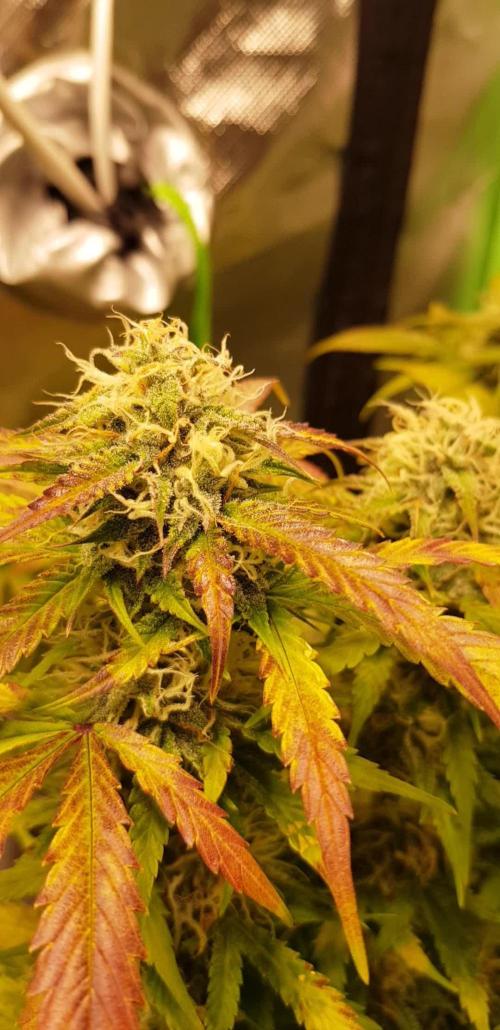
Welcome to Flower Week 5-6 of Divine Seeds Auto Fractal
I'm excited to share my grow journey with you all as part of the Divine Seeds Autoflowering Competition 2025. It's going to be an incredible ride, full of learning, growing, and connecting with fellow growers from all around the world!
For this competition, I’ve chosen the Feminized Automatic strain: Auto Fractal
Here’s what I’m working with:
• 🌱 Tent: 120x60x80
• 🧑🌾 Breeder Company: Divine Seeds
• 💧 Humidity Range: 50
• ⏳ Flowering Time: 60 Days
• Strain Info: 23%THC
• 🌡️ Temperature: 26
• 🍵 Pot Size: 0.5l
• Nutrient Brand: Narcos
• ⚡ Lights : 200W x 2
A huge thank you to Divine Seeds for allowing me to be a part of this amazing competition and Sponsoring the Strains. Big thanks for supporting the grower community worldwide! Your genetics and passion speak for themselves!
I would truly appreciate every bit of feedback, help, questions, or discussions – and of course, your likes and interactions mean the world to me as I try to stand out in this exciting competition!
Let’s grow together – and don’t forget to stop by again to see the latest updates!
Happy growing!
Stay lifted and stay curious!
Peace & Buds!

Likes
44
Share


@RakonGrow
Follow
Note :
+ jegliches Zubehör wird in der GermniationsWoche aufgelistet . Zeitraffer Videos folgen immer nachträglich.
+ videos werden so geschnitten das nur ein geschlossenes Zelt erscheint , ergo Fehlen paar reale Minuten (ca 1 Std) .
Sanlight Tageslichtzyklus in Lebenswoche 6 :
+ 200PPFD - 1h - 750PPFD - 16h - 750PPFD - 1h - 200PPFD = DLI 46.60
+ + Formel : DLI = PPFD * h * 0.0036
+ + in LebensWoche 6 ist der Max-DLI ohne CO² : 45.0
Dazu kann man sich gerne die Zeitraffer angucken . Die Pflänzchen brauchen schon Ihre Zeit auf touren zu kommen . Ergo ist Sonnenaufgang und Untergang reines Stromsparen .
Day 36:
+ 2Liter Flaschenwasser
+ + Dünger für Büte
+ + + Canna Terrar Flores (Achtung wirkt wie PH-)
+ + + Canna Boost
+ + + Cannazym
+ + + Canna Rhizotonic
+ Final : PH 6.2
Nach dem die Mangelerscheinungen wie gewünscht aufgetreten sind, gehts jetzt mit Blütedünger weiter . Sie hat sich prächtig in die neue Umgebung eingelebt. Wetter werte sind hier Super , also ist auch im Zelt super Stimmung :))
Videos folgen in den Tagen .
Day 37:
Sie wächst gerade noch paar Zentimeter :)) Blühten werden mehr .
Day 38 :
Und wieder das Licht etwas höher händen , den Sie wächst noch immer !!!
Day 39 :
+ 2Liter Flaschenwasser
+ + Dünger für Blühte
+ + + Canna Terrar Flores (Achtung wirkt wie PH-)
+ + + Canna Boost
+ + + Cannazym
+ + + Canna Rhizotonic
+ + + Greenhouse Feeding BioEnhancer als PH+
+ Final : PH 5.5 (das Urgesteinsmehl zieht das sowieso auf mindestens PH 6.5)
+ etwas Entlaubung der defiziet Blätter.
Day 40:
Day 41:
+ 2Liter Flaschenwasser
+ + Dünger für Blühte
+ + + Canna Terrar Flores (Achtung wirkt wie PH-)
+ + + Canna Boost
+ + + Cannazym
+ + + Canna Rhizotonic
+ + + Greenhouse Feeding BioEnhancer als PH+
+ Final : PH 5.5 (das Urgesteinsmehl zieht das sowieso auf mindestens PH 6.5)
Day 42:
+ 2Liter Flaschenwasser
+ + Dünger für Blühte
+ + + Canna Terrar Flores (Achtung wirkt wie PH-)
+ + + Canna Boost
+ + + Cannazym
+ + + Canna Rhizotonic
+ + + Greenhouse Feeding BioEnhancer als PH+
+ Final : PH 5.6 , Drain PH 6.89

Likes
3
Share

@ukojesita
Follow
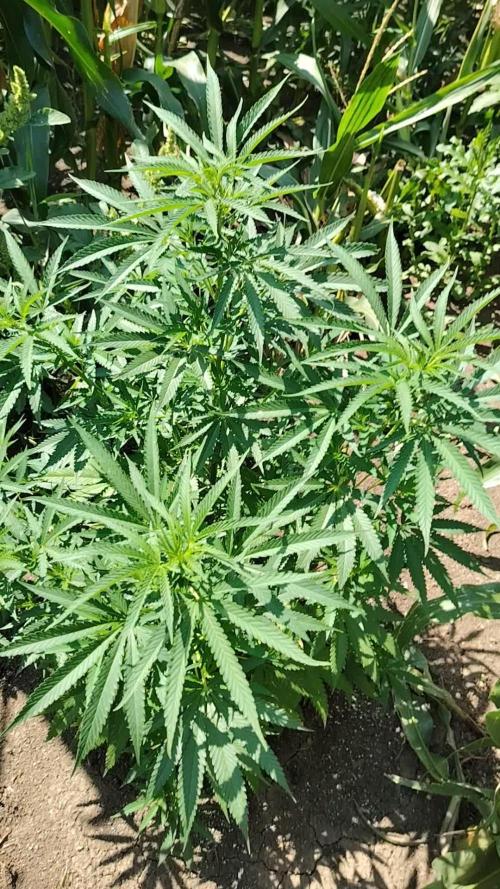
Zrarec pěstiči, tak po dvou týdnech co sem byl na dovče se holky pěkně vytáhli, asi o 25cm, Dostali pořádnou zálivku a vypadá to že brzo půjdou do květu takže začnu sypat Bio-Bloom a další dobroty... Zatím Čus.

Likes
11
Share


@Homestickycannabis
Follow
I'm excited for this one, really skunky smell and lovely buds. Hey growth was right on point with a auto and having her under 24 hours if light a day really fattened up her flowers. She grew with zero stretch between nodes and stacked nothing but nice colas. I would definitely recommend this strain for anyone looking for a fast turnaround of fat resinous buds.
Cheers.

Likes
Comments
Share


@SirNutalot
Follow
First day in flower and they looking good but there some burnt leaves from to much fertiliser is my diagnosis

Likes
2
Share


@Ninjabuds
Follow
The strawberry gorilla has come out of the soil and it pushed itself up very well without having to dig it up out the soil. This is one plant I’m excited for I hope it grows to look like the photos
The temps are rising around here making it some much easier to start seedling than in the winter with heater on full blast


Likes
5
Share

@Growfather1
Follow
Hello everyone.
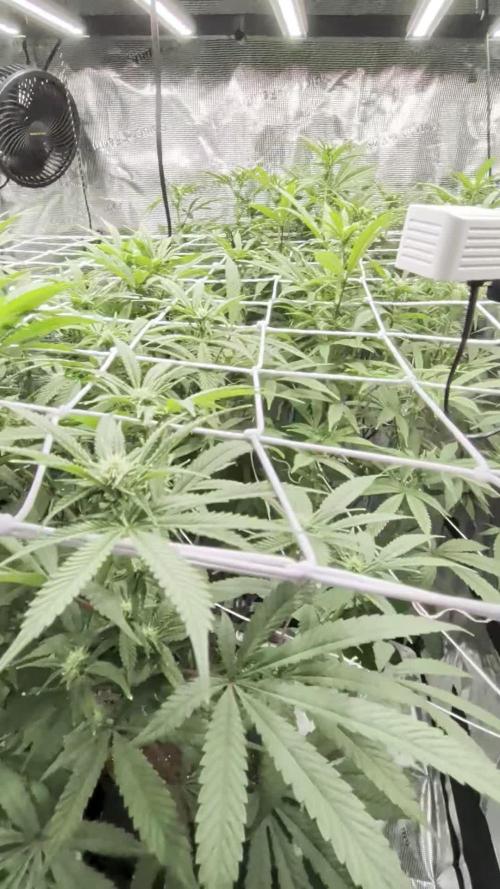
My Gorilla Glue NR 4 x White Widow is now on Day 13 of flower.
Everything is looking okay, and I see so many side branches.
I gave her a light defoliation. The girl is drinking a lot more. I added the light/CO2 sensor of Spider Farmer and a dehumidifier because the humidity went up to 75% during nights.
So many side branches that will only produce small buds is the reason to not grow this strain anymore. I have two clones from this strain that I will throw in the trash can.
There is still much room left in the left corner behind to be filled, but I'm sure the plant will stretch a lot more in the coming week. So, next week it will be fully filled.
For the rest, there is nothing much more to tell.
Thank you for stopping by and have a nice day.
Best regards,
Growfather.