


Likes
Comments
Share


@Brick_Bazuha
Follow
Неделя прошла хорошо, перестал давать удобру, листья по немногу начали отсыхать и отпадать по этому провёл небольшую дефуляцию плохих листьев уже, кустик стал красивее и почти набрал полные обороты, соцветия почти все распустились, ждём скорого харва)

Likes
4
Share


@ChitownCannaChica
Follow
Moving along- had some leaf damage from foliar. She will be fine


Likes
17
Share


@804GrowTent
Follow
Didn't do ice flush towards the end but regular flush water was at about 65-67°F Night temps dropped as low as 67°F have been flushing for a total of 10 days firdt flush started with 2 tbsp molasses and fresh water and afterwards just plain water til the end. Will give pot 2 more days to dry out before cutting down. This will be the last post until the drying trimming and curing is complete. These are way to big for me to try and squeeze on my 10 inch long 10 pound scale. These plants are 2 inches short of 3 feet tall from soil level 😂😂

Likes
19
Share


@pifflestikkz
Follow
Day29F - still showing vast growth on buds, swelling and trichomes blossoming out. The colours starting to form nicely on the buds. Smells like a pungent caramel now.
Day32F - This plant is so thick and strong, and can resist a dry and hot climate.
For me this plant has been so easy, and she sucks up nutrients and loves it, 💪
Buds are getting dense and so sweet to smell. So fat and so many, I'm surprised on this auto 👏 well done again RQS.
Day 68- Day 33F - the buds continue to swell and devolope. Trichomes flooding through now. Starting to see cloudy so will push for another week of nutes if she'll allow it after Friday, we'll see 😏✌️💚


Likes
11
Share


@ADHDselfmedication
Follow
3 seeds from barneys farm : glue gelato auto.
Diary :
Day 1:
I dug a pit and cleaned my dirt with metal grid and a wheelbarrow & Installed the greenhouse.
Day 2 : I rotated my dirt and added universal soil. 4 x 70l to area of 6m2. I also planted seeds in universal soil without sprouting first.
Day 3 :
I gave water and checked for sprouts. Bought moist meter and dripping hose.
Installed those and making the greenhouse more moisty now.
Feeling : Verry happy for my first time. Lots to learn.. . Excited

Likes
66
Share


@Earthling37
Follow
58 Days have passed in flower.
Cheese left, Gorilla Girl right.
The "Just water no pH" experiment has failed me around week 5 of flower.
I have not done anything to keep the soil biology alive so thats probably the issue.
Its all good though, it was fun while it lasted and definitely worth a try.
I have let the soil dry as much as possible and then i watered in a tablespoon molasses per gallon water.
pH'd to 6.6.
I just need atleast 3-7 more days of flower and hopefuly the buds will mature a little more.
I took a snip of the bottom leafs to check for trichomes maturity, those are the weakest of trichomes on the plants.
---1st time growing with FLO - Florian Living Organics.---
They claim that there is no need to pH when watering and that their living fertilizer is the only thing that i will need throughout the whole grow so i only need to mix with soil and just water with plain water.
If this stuff works then it can simplify my future grows ALOT!
Happy growing. 😎


Likes
1
Share

@BB-COLLECTIVE
Follow
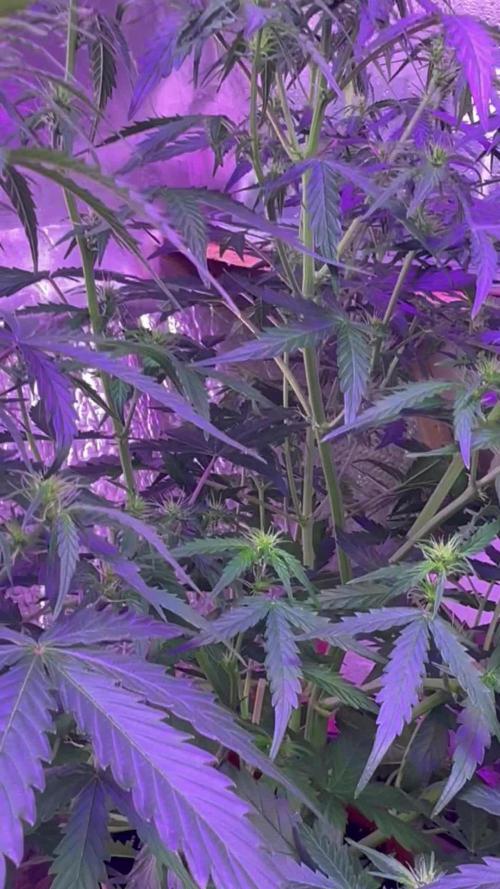
Slightly slower start and flower initiation with this one but impressed with the amount of flower sites all over and is pretty pungent although it’s merely just started flowering can’t wait to kick back and taste this one

Likes
4
Share


@Erich2025
Follow
I did some trimming this week. The plant grows well and healthy. I didn‘t use any nutrients because of the slight burn last week.
Next week I am going to transplant the plants in their final pot and prepare them for flower at week 6.
🌴🍪
Likes
16
Share


@DrLaggis
Follow
Day 64 - Beginning of the Final Flowering Week 🌱
Hello, my grow friends! We’re entering the last flowering week, and it looks like I’ll be harvesting the plant around Friday, which will be roughly Day 68.
💭 Harvest Decision:
It’s a tough decision because while the buds are still growing, the trichomes in the middle and lower parts of the plant are already about 80% milky and 10% amber. I’ll keep an eye on things and plan to check the trichomes again on Day 65, two days before harvest, to make a final decision.
🌿 Trichome Considerations:
I have a feeling that even after cutting the plant and hanging it upside down to dry, some nutrients might still move into the buds, potentially causing them to swell a bit more. This is something I’m curious to see.
💧 Humidity, Water, and Temperature:
As I mentioned in my last update, I flushed the plant yesterday, just before the start of the final week, with 4 liters of water. This should help flush out any remaining nutrients, and I likely won’t need to water again before harvest since the pots are thoroughly soaked.
The humidity and temperature are holding steady between 52-58% and 20-24°C, which I find ideal. I’ve got my exhaust system and fan running continuously to ensure no mold develops.
📸 Final Updates:
I’ll check in again with an update just before harvest to let you know how things are looking. Remember, I’m posting new pictures and videos of my plant every day.
Likes
13
Share


@Bryankush
Follow
Molto contento e soddisfatto adesso vediamo la fioritura
Giorno 2 ho fatto una leggera defogliazione e lollipopping nel suo interno per fare passare più luce e più aria
Giorno 3 viene annaffiata con 1,5L di acqua
Giorno 5 leggera defogliazione
Giorno 7 la sera viene annaffiata con 1L di acqua


Likes
6
Share


@CalGonJim
Follow
11/10 12AM MONDAY
11/11 626AM how about a WWII German Hero Grow?
11/11 255PM great news neck bleeding so no plant work today...how am I not dead yet??, this is bullshit.
11/12 440AM THE DEMON REVEALED ITS SELF TONIGHT. BIG MISTAKE!!!! GREAT NIGHT FOR ME.....DARK DEVIL AUTO IS IN MY LUNGS AND BLOOD RIGHT NOW AND ITS ALL HAPPY!!! GOOD LUCK FOR ME, DEMON HUNTERS PARADISE!!!
11/12 501AM. DDA is PERFECT RIGHT OFF THE TREE. SOMETHING AUTOFLOWERS ARE GREAT AT IS SMOKING WITHOUT HAVING TO CURE AND DRY. ITS 100 TIMES BETTER WHEN I DO, BUT ITS GOOD FOR MEDICAL USE AND NOT OVERLY STRONG WITH ALL THE FLAVORS OF BERRY AND VANILLA!!!!!
11/13 944am....holdy flushing shirt that was hard....major flushes...but my neck not hurting so GREAT!! Ordered wound care, Bactine, medical supplies....doing ok.
11/14 1258AM DARK DEVIL AUTO.....I CAN NOT BELIVE I CAN GET SEEDS FROM SPAIN, AND THEY ALL GROW LIKE THEY WERE TAKEN RIGHT FRM THE MOUNTAINS, SO STRONG AND NICE FLAVOR EVERY TIME.!!! 106AM DDA DRIED OVERNIGHT AND ITS ALRADY STRONGER THAN I AM USED TO!!!!!! I NEED TO MIX THIS WITH CBDK. THIS IS WHY I GROW MY OWN, STORE BOUGHT WEED IS WEED...ITS JUNK. THIS CAN CURE ALMOST ANYTHING AND THE ACT OF GARDENING WILL BE BETTER THAN ANYITNG ELSE THAT WILL PREPARE YOU FOR YODR TIME TO DIE. I KNOW WHEN TO HARVEST AND IM GOOD WITH IT.
11/14. using the vaporizer as a hot oil air machine... everything smells like vanilla basil cedar lemon and WEED LOT AND LOTS OF WEED!!!!! GREATEDST DAY OF MY NIGHT.
11/14 237AM A RAINBOW OF DARKENSS not the gay one losers HAS DECENDED UPON MY LEAVES OF DISPARE!!!! PURPLE, RED...GETTING THE COLOR FADE NOW!!! AMINOS WILL LINGER LIKE DEATH UPON THE LEAVES PUMPINNG NITROGEN INTO THE PLANT CAUSING LEAFY BUDS.....A DEMONIC CURS ONLY GOD, OR MAYBE DEMI-GOD BUT SOMETHING REALLLY HIGH UP THERE..... I forgot what I was talking so drastically about!!!!
11/14 2:53 AM I think my advanced nutrients connoisseur bloom might’ve expired or gone bad or evaporated or cross contaminated. It’s pretty old. I’m getting tip burns on leaves when I use it even at low EC so I think I will buy some new stuff and I might try their powders. It goes a long way 1 L can last me two years sometimes even longer for the grow.👍 but I think it expired so I’m gonna have to try something else and maybe in a smaller container. 🚨
11/14 NosfurGardenertu......Vampire gardener..... maybe I need more caffeine and ultra methyl blue...
11/15 dressed as a 1 cent coin went shopping at the deli, got lots of hugs.
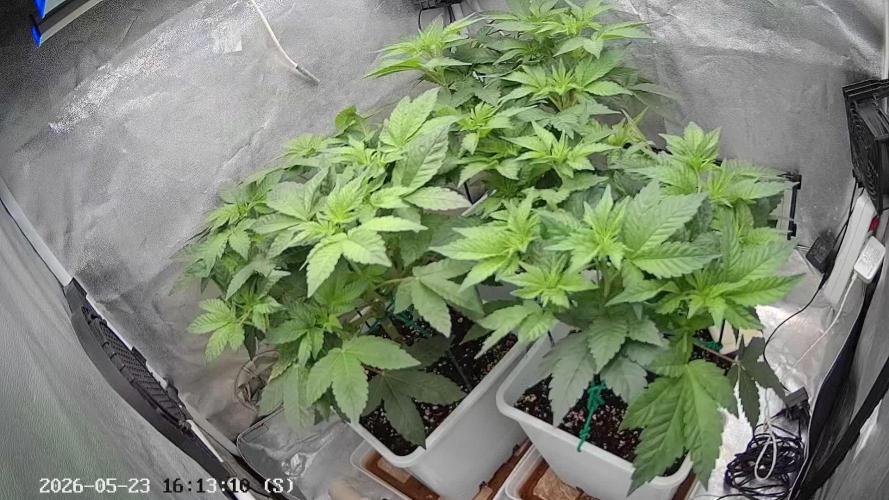
11/15 917pm. FORGOT CAL/MAG....ALL THE AMINOS AND LOW DOES NUTES MADE FOR SOME CAL/MAG PROBLEMS. CORRECTING FOR THEM NOW. BPP smells not so good...there are soil bugs now



Likes
43
Share


@TheCannaProphet
Follow
~ FastBuds PAPAYA SHERBET Photoperiod~
Well here we go on another journey together through 'Canna-land' and this one's kinda special... forget that, it's VERY special because this is FastBuds newest surprise for the community, a FEMINIZED PHOTOPERIOD STRAIN!🤯
I was fortunate enough to score these seeds, of which only 1000 were available and can't wait to see what this strain can do! This Papaya Sherbet, according to FastBuds, is a hybrid with a 9-10 weeks flowering period. For a more detailed and accurate description of this strain the following from FastBuds says it best:
"Combining the massive stature of Papaya (Oni Selection) with the strength and resilience of one of our best keeper cuts (Sunset Sherbet), this strain develops into a big, expansive bush adorned with numerous bud sites that later transform into a generous harvest of medium-sized buds. Papaya Sherbet flowers deliver a signature flavor of premium cannabis with subtle citrus undertones that emerge upon inhaling. During growth, her aroma makes for a sweet yet pleasantly bitter fragrance, giving you an idea of what the smoke will taste like. Notably stress-resistant, Papaya Sherbet is a great choice for growers working in challenging environments. She is very forgiving and rebounds quickly from any adversity, allowing growers the freedom to experiment with confidence that she will take everything like a champion she is. This strain embodies resilience, flavor, and abundant yields in every grow cycle."
Sounds like an epic strain and I personally cannot wait for this lady to strut her stuff!😍
________________________________________________________________________________________________________________________________________________________________________________________________________________________________________________________________________________________________________________________
The Setup:
This is going to be an outdoor grow, but I have started the Papaya Sherbet photoperiod indoors as our weather is still a bit too chilly to put a newly sprouted seedling outside (nighttime temp's dipping regularly into the 40's℉).
The plan is simple... let her grow inside under a 19/5 light schedule until the nighttime temperatures are in the mid 50's℉, which shouldn't be long. After which, she'll be moved outside and transplanted into the soil which I have already setup and inoculated with beneficial microbes from BioTabs and slow release dry amendments from Gaia Green. Once she's established herself outside she'll be given periodic top dressings of Gaia Green 4-4-4 and 2-8-4 along with worm castings and Compost Tea's. Her grow area is approx. 5'x5' and I have posts and a trellis net set up already for when she gets bigger to aid in training her. Let the fun begin!🤪💚
________________________________________________________________________________________________________________________________________________________________________________________________________________________________________________________________________________________________________________________
Weekly Updates:
8/3- After eleven weeks in veg the FastBuds Papaya Sherbet photoperiod has finally stopped stretching and I think that this girl's getting ready to transition into flower thank goodness!
Our weather has moderated somewhat with daytime high temp's now in the 89-93℉ range but it still remains very dry requiring the daily watering to continue.
8/5- Today I watered the Papaya Sherbet photoperiod as usual at sunset with around 8g of well water from the garden hose.
8/7- We finally have some much needed rain on the way in the way of a tropical system which will be bringing on and off showers from today through the 9th. As a result of this gift from above I will not have to water the rest of this week! I am going to add a 7 foot support stake next to the plant to help support her if we should get any high winds.
8/9- I'm thankful for the support stake that I installed next to the plant, then tied the plant to it as we encountered pretty strong winds yesterday and I think that without the stake, the plant may have gotten knocked over! The rain is supposed to end this evening and be sunny
tomorrow so I'll be outside first thing in the morning to check on the plant to see how she made out through the storms.
Hopefully next week the Papaya Sherbet photoperiod by FastBuds will be shifting gears and then the fun can begin!!!
Thank you for checking out my diary, your positive comments and support make it all worthwhile! 💚Growers Love!💚😎🙏
Likes
10
Share


Likes
11
Share


@SteffenX
Follow
week 27
18.10.2024
near harvest
19.10.2024
2nd partial harvest
20.10.2024
ca. 4g of dry buds

Likes
149
Share


@CBD_Sweden
Follow
Hi all the happy people here in GrowDiaries.
This is my second cultivation ever and it will be fun to try a bigger space than my closet grow.
First, I'm just going to say I'm done with the construction of my new growroom.
I put some pictures on the construction here in week one.
The room is 2.14 meters by 1.7 meters and has a ceiling height of 2 meters.
It provides a floor area of 3.6 square meters.
I use a 54 Watt Lightwawe T5 for germination and 2 Pcs 400 Watt HPS lamps.
I have a channel fan that replaces the room air about 40 times an hour to get a comfortable theme in the room, the air enters a fresh air intake from the outside.
The air is purified through a carbon filter to then leave the room to the rest of the basement.
Then I use that heat to heat the rest of the basement.
I will use 8 pcs 15 liter Autopots to grow with and a 100 liter water tank that supplies the pots of water and nutrition.
I will grow completely organically in soil and will watercure my buds to get the best possible medicine for me.
But there are no cultivation rooms to be displayed here, so I continue with what is most important.
Today I have put my seeds in my moisture dome and hope the seeds have germinated within a few days.
I am very excited to see how the new growroom will work and how this Blue cheese Auto from Royal queen seeds will turn out.
Blue Cheese automatic cannabis seeds are a cross of Blueberry Automatic and Cheese Automatic that has been perfected over five years of breeding and careful selection. The result is a feminized, autoflowering strain with superior yield, flavor, and effects to either of its distinguished parent strains.
THC: 16%
CBD: Low
Yield Indoor : 325 - 375 gr/m2
Yield Outdoor: 60 - 110 gr/plant
Height Indoor: 40 - 70 cm
Height Outdoor: 60 - 110 cm
Flowering: 7 - 8 weeks
Harvest month: 9-10 weeks after planting
Genetic Background: Blueberry x Cheese x Ruderalis
Type: Sa 35% In 40% Ru 25%
Effect: Cerebral and uplifting
Climate: Mild
..............................................................................................................................................................................................................................................................................................................................................
Update 2017-08-15. All 4 seeds have germinated and planted in small pots inside the humidity dome.
I'm so glad it worked so well and now it's just hoping they'll start growing and become 4 big healthy girls :)
...............................................................................................................................................................................................................................................................................................................................................
Update 2017-08-16. I have mixed my own soil today. Its 40% sieved peat harrow H2-H4 0-30 mm, 45% sieved peat harrow H4-H6 0-30 mm. 5% sand and 10% of compost soil. And i use 15% of perilite and mix it all together.
................................................................................................................................................................................................................................................................................................................................................
Update 2017-08.20. Nr1 and 2 grow and thrive.
Number 3 just got rid of the seedpod and is folding out the sheets.
Number 4 is a bit shy and can only be seen if you look carefully into the soil.
.........................................................................................................................................................................................................................................................................................................................................
Update 2017-08-21. Nr 1 and 2 is doing well. Nr3 is trying to catch up and Nr4 is still shy.
--------------------------------------------------------------------------------------------------------------------------------------------------------------------------------------------------------
2017-08-23. Transplanted 2 girls from humidity dome and the small germinating pots to 15 liter autopots. The other 2 girls have to wait a little more before transplant to the autopots.
................................................................................................................................................................................................................................................................................................................................................................................
2017-08-27. The girls have settled in to there new home of the 15 liters autopot after a little transplant chock. Now the real week 1 starts for me and the girls.
--------------------------------------------------------------------------------------------------------------------------------------------------------------------------------------------------------
2017-08-28. New pic and movies.
---------------------------------------------------------------------------------------------------------------------------------------------------------------------------------------
2017-08-28. Nr3 is transplanted in 15 liter autopot.
-------------------------------------------------------------------------------------------------------------------------------------------------------------------------------
2017-08-29. New movie of the girls. Its no water for 3 days now for Nr1 and 2 so the roots develop more and match the plant above the soil. The temp controlled fan is awesome, its easy to set what temp you like to have in the room. Right now its 28 celcius. And humidity is 56%.
------------------------------------------------------------------------------------------------------------------------------------------------------------------------------------------
2017-08-29.
Hello to you who read my diary, I just want to say that I am pleased that you have chosen to check in with me and in my diary.
I just want to say that I do this for myself and for a steady flow of my medicine.
Everything you read and see in my diary is 100% honest and I will never distort or beautify anything here.
I document my crops so that I can learn from my mistakes and also to look back at those different crops.
I try to update with pictures every day and with text if something special has happened in the garden.
This is my strainhunt for the best medicine and the beginning of my journey with cannabis and the cultivation of it.
-----------------------------------------------------------------------------------------------------------------------------------------------------------------------
2017-08-30. Cleaned the room this morning, just vacuuming and cleaning with chlorine solution. Im testing the fan to control temp and humidity, it works great.
Added some pics with measurements and movie. Everything is looking great right now.
---------------------------------------------------------------------------------------------------------------------------------------------------------------------------
2017-08-31. New pics and videos.
---------------------------------------------------------------------------------------------------------------------------------------------------------------------------------
2017-09-01. New pics and videos. Gave each of the girls with 2 ml Alg-A-Mic, 4ml Bio-Grow, 4ml Bio-Heaven and 10 ml Formulex mixed in 2 liters of water.
I hope they like it :)
-------------------------------------------------------------------------------------------------------------------------------------------------------------------------------------------------------------------------------------------
2017-09-02. New pics and the girls liked the water and nutrients yesterday.
-------------------------------------------------------------------------------------------------------------
2017-09-03. New videos of the girls this morning. Nr1 and 3 looks great and nr 2 is looking a little funny, maby a little stressed.
Kl. 16.00. Did some defoliation on the girls. Added video.
Kl.. 23.00. New videos, defoliation and leaftucking.
-----------------------------------------------------------------------------------------------------------------
2017-09-04. Kl. 11.00. Week 3 starts. Trying to LST the girls and defoliate/leaftuck. New picks.
KL 23.00. New video.
--------------------------------------------------------------------------------------------------------------
2017-09-05. KL 08.00. Cleaned the room this morning, just vacuuming and cleaning with chlorine solution.
KL 12.00. The girls got 2 liters of water each with nutes in it, added a video.
----------------------------------------------------------------------------------------------------------------
2017-09-06. KL 08.00. The girls woke up after their beauty sleep, the leaves are always a bit down after 6 h of darkness, but they will stretch now when the HPS lamp starts.
Everything looks good and I keep trying to tuck the leaves so they get the maximum amount of light where needed. Added pics and video.
The Nr 3 girl is still a little bit behind the other 2 girls and all the 3 girls look like there 3 different pheno of the same plant.
KL 23.30. Did some LST.
----------------------------------------------------------------------------------------------------------------------
2017-09-07. Day 21 from sprouting, Nr3 is 17 days from sprouting. I have never tested PH in my grows, when growing organic in soil iv learned that it adapt PH by it self. But im curious by nature so i had to test.
Kl 10.00 Tested PH in the soil, it was 6.9 and tested my tap water and it was 6.8. Added a video of the girls, its 10 H after defoliation, LST and leaftucking. I think its looking good.
Kl 22.30. New pics.
Likes
4
Share


