Likes
Comments
Share
@Unkraut
Follow
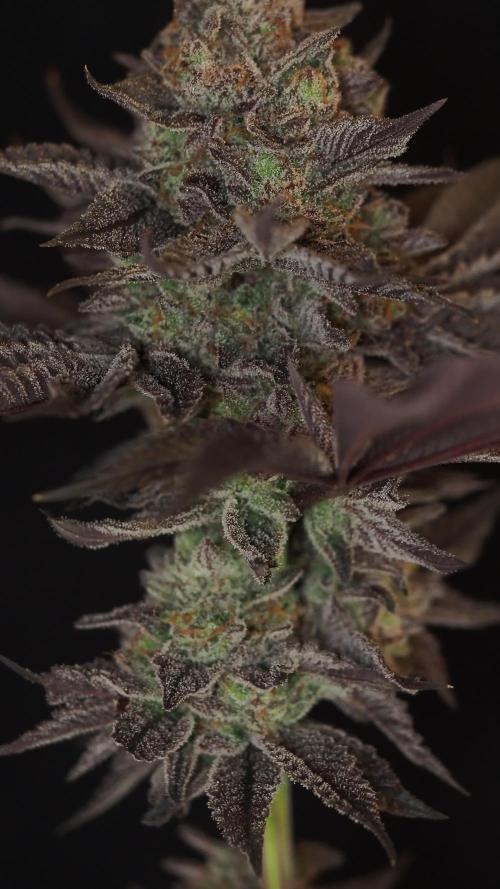
I'm not happy with the overall harvest...it produced some good tasty smoke due to fine nutes and a wonderfull strain but i fu**ed it up by using a very bad soil...growth was very slow and also lost like 25g due to budrot/mold...again my fault as i set up ventilation the wrong way (RH was good but some buds didn't get enough airflow) Again i learned alot of things and got 275g of good, great smelling smoke...so not that bad...but could be much better 🙂
Likes
46
Share
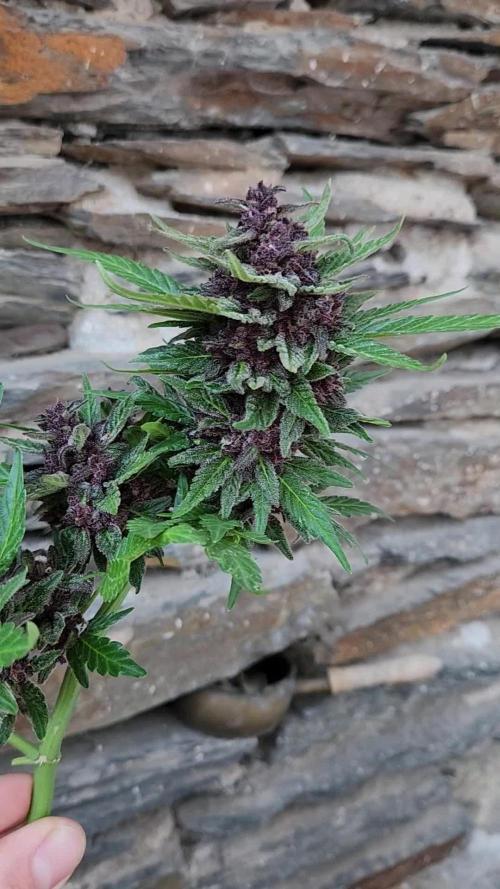
Vamos familia que ya actualizamos la cosecha de estas Candy Rain de Zamnesia, para el concurso POWER BUDS Plagron x Zamnesia CONTEST. Ya era hora de cosechar, estoy bastante contento con los resultados. Vaya flores que se han marcado repletas de tricomas, y las flores se marcan aromas dulces y afrutados. Es una variedad bastante fácil de cultivar y muy resistente, crecieron desde el principio bien vigorosas, sin problemas y al final de todo recompensó. Las condiciones ambiéntales han sido máximas en 25 y mínimas en 20 y una humedad estable en torno al 36% al final de floración y en el secado. Os comento que tengo un descuento y para que compréis en la web de Zamnesia de un 20%, el código es ZAMMIGD2023 The discount 20% and the code is ZAMMIGD2023 https://www.zamnesia.com/ Espero que disfruteis este diario, buenos humos 💨💨
Likes
43
Share
@Hashy
Follow
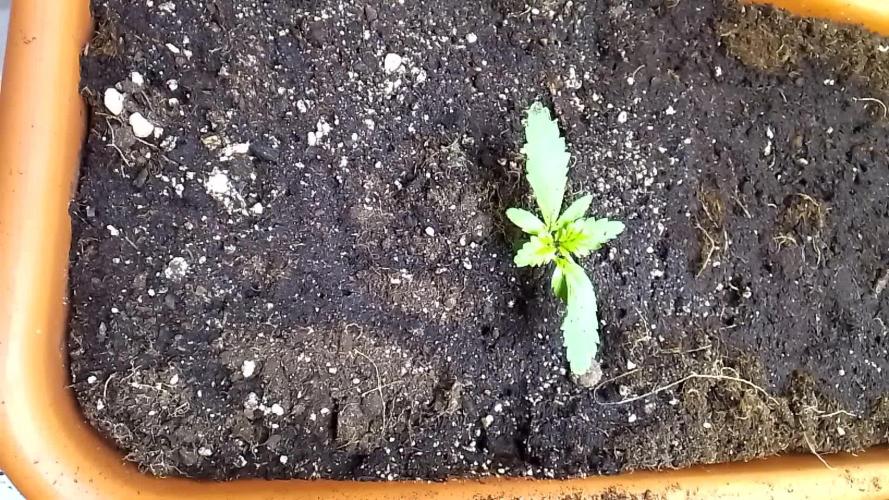
Week 1 seedling. ******************************************** Light cycle=18/6 Light Power=90w 37% Extractor controller settings High temp= 26c Low temp= c Temp step=0c High Rh= 70% Low Rh= % Rh step=0% Speed max=8 Speed min=1 Smart controller settings (during lights on). Lights on=4.00am Humidifier on=--60% Humidifier off=+70% Smart controller settings (during lights off). Lights off=10.00pm Humidifier on= off Humidifier off= off VPD aim=0.4-0.8 DLI aim=12-16 EC aim=0.2-0.8 PH aim=6.0-7.0 💧💧💧💧💧💧💧💧💧💧💧💧💧💧💧💧 Method= Autofeed 1 dripper. Feed=Seedling Nutes Neutralise=0.1ml/L Roots=5ml/L Volume=1L Easy Ph down= 0 drops/L Ec=0.23 PH=6.5 Runs=6 Run times=1min Gap times=15min Total runtime=6mins Total flowrate= 30ml/min (15ml/min each) Auto start time=5.00am Auto stop time=6.05am 💧💧💧💧💧💧💧💧💧💧💧💧💧💧💧💧 ******************************************** 📅19/5/24 Sunday (Day 1) 📋 (Day 2) Filled up humidifier at 8.00am 9.00pm lowered light H=6cm D=66cm Dli=14.0 Ppfd=216 📅20/5/24 Monday (Day 2) 📋 (Day 3) Wet soil a little. 📅21/5/24 Tuesday (day 3) 📋 (Day 4) Filled up humidifier at 8.00pm Setup drip system for little pot. Pot is raised off the ground so it's a bit closer to the light. 📅22/5/24 Wednesday (day 4) 📋 (Day 5) H=8cm D=60cm Dli=16.2 Ppfd=250 💧💧💧💧💧💧💧💧💧💧💧💧💧💧💧💧 Method= Autofeed Feed=nutes Volume=1L Ec=0.23 PH=6.5 Volume left=0.875L Volume used=0.125L Volume each=62ml Runoff. Total runoff=0 Ec=PH= 💧💧💧💧💧💧💧💧💧💧💧💧💧💧💧💧 📅23/5/24 Thursday (day 5) 📋 (Day 6) Filled humidifier at 6.00pm 📅24/5/24 Friday (day 6) 📋 (Day 7) H=8cm D=60cm Dli=16.2 Ppfd=250 💧💧💧💧💧💧💧💧💧💧💧💧💧💧💧💧 Method= manually Feed=nutes Volume=0.1L Ec=0.23 PH=6.5 Volume left=L Volume used=L Volume each=ml Runoff. Total runoff=0 Ec=PH= 💧💧💧💧💧💧💧💧💧💧💧💧💧💧💧💧 6.00 Pm went away. 📅25/5/24 Saturday (day 7) 📋(Day 8) away. Weekly roundup. 📋 It's just been a week of trying to keep a happy environment for her, I had to go away for the end of the week so left everything on autopilot until I get back. As usual being a Fastbuds strain she is developing at a nice fast rate. The weather has now flipped to summer mode so its a completely different battle now. Take it easy. Back soon.
Likes
6
Share
10/13: I fed her about 24 ounces of compost tea today. I had brewed 5 gallons of tea using 90% rainwater collected the day before, and 10% aquarium water. My tea contained about 2 cups of very rich compost a handful of biochar, a tablespoon of 7 diff species of endo-mycorrhizal fungi + 25 species of beneficial bacteria, 8 tablespoons of big bloom (mainly for the earthworm castings), 2 tablespoons of liquid molasses, and a tablespoon of kelp me kelp you. It had been brewing for 48 hours and was very frothy. I'm seeing signs of calcium deficiency on a few plants today, but the tea should correct that. I'll add cal/mag to the watering regimen anyway. 10/14: With so much light and airflow, she's drying out very quickly. I fed her about a half-gallon of water with grow big, big bloom, kelp me kelp you, boomerang, cal-mag+iron, armor si, and soluble humic acid. I also foliar fed her a few times with humic acid and big bloom. 10/15: I foliar fed with big bloom and a little kelp a few times today and peeled back the insulation in the attic above the closet now that it's getting colder outside. It brought my daytime temp down to 81f! 10/16: I fed her about a quarter-gallon containing all the good stuff, at full strength for the first time. I also misted her really well with Ph adjusted spring water a few times throughout the day, just to rinse off any built-up nutes. She never showed any signs of a calcium deficiency, but I dosed her heavy with cal-mag with this feeding anyway. I did some leaf-tucking today, but have decided not to FIM her. I really don't want to increase her individual footprint since she has so many neighbors. 10/17: I rearranged the garden a little bit and sprayed her down with ph adjusted tap water a few times today. She's looking great! 10/18: Today, I did a myco root drench, with a little added boomerang for all the aminos, vitamins, and earthworm castings, and some cal-mag. I soaked her thoroughly with about 3/4 gallon and let her sit in her tray to soak it all up. I'll let her go completely dry before I feed her again so that she really drinks it all in next time. I lowered the lights to 20 inches above her right at dark, so she'll wake up to an especially bright sunshiny day! 10/19: I was gonna rearrange this morning and had no space to work with, so I moved the 4 smallest plants in the garden into the "upper deck." Now she has a little more elbow room. It's the last day of week 3 and I'm really impressed with her progress. If I had more space to work with, I'd definitely be doing a little training to try and maximize my yield from her.
Likes
27
Share
@GodG420
Follow
Great week my friend's!
Likes
21
Share
Likes
19
Share
Yellow butterfly came to see me the other day; that was nice. Starting to show signs of stress on the odd leaf, localized isolated blips, blemishes, who said growing up was going to be easy! Smaller leaves have less surface area for stomata to occupy, so the stomata are packed more densely to maintain adequate gas exchange. Smaller leaves might have higher stomatal density to compensate for their smaller size, potentially maximizing carbon uptake and minimizing water loss. Environmental conditions like light intensity and water availability can influence stomatal density, and these factors can affect leaf size as well. Leaf development involves cell division and expansion, and stomatal differentiation is sensitive to these processes. In essence, the smaller leaf size can lead to a higher stomatal density due to the constraints of available space and the need to optimize gas exchange for photosynthesis and transpiration. In the long term, UV-B radiation can lead to more complex changes in stomatal morphology, including effects on both stomatal density and size, potentially impacting carbon sequestration and water use. In essence, UV-B can be a double-edged sword for stomata: It can induce stomatal closure and potentially reduce stomatal size, but it may also trigger an increase in stomatal density as a compensatory mechanism. It is generally more efficient for gas exchange to have smaller leaves with a higher stomatal density, rather than large leaves with lower stomatal density. This is because smaller stomata can facilitate faster gas exchange due to shorter diffusion pathways, even though they may have the same total pore area as fewer, larger stomata. Leaf size tends to decrease in colder climates to reduce heat loss, while larger leaves are more common in warmer, humid environments. Plants in arid regions often develop smaller leaves with a thicker cuticle and/or hairs to minimize water loss through transpiration. Conversely, plants in wet environments may have larger leaves and drip tips to facilitate water runoff. Leaf size and shape can vary based on light availability. For example, leaves in shaded areas may be larger and thinner to maximize light absorption. Leaf mass per area (LMA) can be higher in stressful environments with limited nutrients, indicating a greater investment in structural components for protection and critical resource conservation. Wind speed, humidity, and soil conditions can also influence leaf morphology, leading to variations in leaf shape, size, and surface characteristics. Small leaves: Reduce water loss in arid or cold climates. Environmental conditions significantly affect gene expression in plants. Plants are sessile organisms, meaning they cannot move to escape unfavorable conditions, so they rely on gene expression to adapt to their surroundings. Environmental factors like light, temperature, water, and nutrient availability can trigger changes in gene expression, allowing plants to respond to and survive in diverse environments. Depending on the environment a young seedling encounters, the developmental program following seed germination could be skotomorphogenesis in the dark or photomorphogenesis in the light. Light signals are interpreted by a repertoire of photoreceptors followed by sophisticated gene expression networks, eventually resulting in developmental changes. The expression and functions of photoreceptors and key signaling molecules are highly coordinated and regulated at multiple levels of the central dogma in molecular biology. Light activates gene expression through the actions of positive transcriptional regulators and the relaxation of chromatin by histone acetylation. Small regulatory RNAs help attenuate the expression of light-responsive genes. Alternative splicing, protein phosphorylation/dephosphorylation, the formation of diverse transcriptional complexes, and selective protein degradation all contribute to proteome diversity and change the functions of individual proteins. Photomorphogenesis, the light-driven developmental changes in plants, significantly impacts gene expression. It involves a cascade of events where light signals, perceived by photoreceptors, trigger changes in gene expression patterns, ultimately leading to the development of a plant in response to its light environment. Genes are expressed, not dictated! While having the potential to encode proteins, genes are not automatically and constantly active. Instead, their expression (the process of turning them into proteins) is carefully regulated by the cell, responding to internal and external signals. This means that genes can be "turned on" or "turned off," and the level of expression can be adjusted, depending on the cell's needs and the surrounding environment. In plants, genes are not simply "on" or "off" but rather their expression is carefully regulated based on various factors, including the cell type, developmental stage, and environmental conditions. This means that while all cells in a plant contain the same genetic information (the same genes), different cells will express different subsets of those genes at different times. This regulation is crucial for the proper functioning and development of the plant. When a green plant is exposed to red light, much of the red light is absorbed, but some is also reflected back. The reflected red light, along with any blue light reflected from other parts of the plant, can be perceived by our eyes as purple. Carotenoids absorb light in blue-green region of the visible spectrum, complementing chlorophyll's absorption in the red region. They safeguard the photosynthetic machinery from excessive light by activating singlet oxygen, an oxidant formed during photosynthesis. Carotenoids also quench triplet chlorophyll, which can negatively affect photosynthesis, and scavenge reactive oxygen species (ROS) that can damage cellular proteins. Additionally, carotenoid derivatives signal plant development and responses to environmental cues. They serve as precursors for the biosynthesis of phytohormones such as abscisic acid () and strigolactones (SLs). These pigments are responsible for the orange, red, and yellow hues of fruits and vegetables, while acting as free scavengers to protect plants during photosynthesis. Singlet oxygen (¹O₂) is an electronically excited state of molecular oxygen (O₂). Singlet oxygen is produced as a byproduct during photosynthesis, primarily within the photosystem II (PSII) reaction center and light-harvesting antenna complex. This occurs when excess energy from excited chlorophyll molecules is transferred to molecular oxygen. While singlet oxygen can cause oxidative damage, plants have mechanisms to manage its production and mitigate its harmful effects. Singlet oxygen (¹O₂) is considered a reactive oxygen species (ROS). It's a form of oxygen with higher energy and reactivity compared to the more common triplet oxygen found in its ground state. Singlet oxygen is generated both in biological systems, such as during photosynthesis in plants, and in cellular processes, and through chemical and photochemical reactions. While singlet oxygen is a ROS, it's important to note that it differs from other ROS like superoxide (O₂⁻), hydrogen peroxide (H₂O₂), and hydroxyl radicals (OH) in its formation, reactivity, and specific biological roles. Non-photochemical quenching (NPQ) protects plants from damage caused by reactive oxygen species (ROS) by dissipating excess light energy as heat. This process reduces the overexcitation of photosynthetic pigments, which can lead to the production of ROS, thus mitigating the potential for photodamage. Zeaxanthin, a carotenoid pigment, plays a crucial role in photoprotection in plants by both enhancing non-photochemical quenching (NPQ) and scavenging reactive oxygen species (ROS). In high-light conditions, zeaxanthin is synthesized from violaxanthin through the xanthophyll cycle, and this zeaxanthin then facilitates heat dissipation of excess light energy (NPQ) and quenches harmful ROS. The Issue of Singlet Oxygen!! ROS Formation: Blue light, with its higher energy photons, can promote the formation of reactive oxygen species (ROS), including singlet oxygen, within the plant. Potential Damage: High levels of ROS can damage cellular components, including proteins, lipids, and DNA, potentially impacting plant health and productivity. Balancing Act: A balanced spectrum of light, including both blue and red light, is crucial for mitigating the harmful effects of excessive blue light and promoting optimal plant growth and stress tolerance. The Importance of Red Light: Red light (especially far-red) can help to mitigate the negative effects of excessive blue light by: Balancing the Photoreceptor Response: Red light can influence the activity of photoreceptors like phytochrome, which are involved in regulating plant responses to different light wavelengths. Enhancing Antioxidant Production: Red and blue light can stimulate the production of antioxidants, which help to neutralize ROS and protect the plant from oxidative damage. Optimizing Photosynthesis: Red light is efficiently used in photosynthesis, and its combination with blue light can lead to increased photosynthetic efficiency and biomass production. In controlled environments like greenhouses and vertical farms, optimizing the ratio of blue and red light is a key strategy for promoting healthy plant growth and yield. Understanding the interplay between blue light signaling, ROS production, and antioxidant defense mechanisms can inform breeding programs and biotechnological interventions aimed at improving plant stress resistance. In summary, while blue light is essential for plant development and photosynthesis, it's crucial to balance it with other light wavelengths, particularly red light, to prevent excessive ROS formation and promote overall plant health. Oxidative damage in plants occurs when there's an imbalance between the production of reactive oxygen species (ROS) and the plant's ability to neutralize them, leading to cellular damage. This imbalance, known as oxidative stress, can result from various environmental stressors, affecting plant growth, development, and overall productivity. Causes of Oxidative Damage: Abiotic stresses: These include extreme temperatures (heat and cold), drought, salinity, heavy metal toxicity, and excessive light. Biotic stresses: Pathogen attacks and insect infestations can also trigger oxidative stress. Metabolic processes: Normal cellular activities, particularly in chloroplasts, mitochondria, and peroxisomes, can generate ROS as byproducts. Certain chlorophyll biosynthesis intermediates can produce singlet oxygen (1O2), a potent ROS, leading to oxidative damage. ROS can damage lipids (lipid peroxidation), proteins, carbohydrates, and nucleic acids (DNA). Oxidative stress can compromise the integrity of cell membranes, affecting their function and permeability. Oxidative damage can interfere with essential cellular functions, including photosynthesis, respiration, and signal transduction. In severe cases, oxidative stress can trigger programmed cell death (apoptosis). Oxidative damage can lead to stunted growth, reduced biomass, and lower crop yields. Plants have evolved intricate antioxidant defense systems to counteract oxidative stress. These include: Enzymes like superoxide dismutase (SOD), catalase (CAT), and various peroxidases scavenge ROS and neutralize their damaging effects. Antioxidant molecules like glutathione, ascorbic acid (vitamin C), C60 fullerene, and carotenoids directly neutralize ROS. Developing plant varieties with gene expression focused on enhanced antioxidant capacity and stress tolerance is crucial. Optimizing irrigation, fertilization, and other management practices can help minimize stress and oxidative damage. Applying antioxidant compounds or elicitors can help plants cope with oxidative stress. Introducing genes for enhanced antioxidant enzymes or stress-related proteins over generations. Phytohormones, also known as plant hormones, are a group of naturally occurring organic compounds that regulate plant growth, development, and various physiological processes. The five major classes of phytohormones are: auxins, gibberellins, cytokinins, ethylene, and abscisic acid. In addition to these, other phytohormones like brassinosteroids, jasmonates, and salicylates also play significant roles. Here's a breakdown of the key phytohormones: Auxins: Primarily involved in cell elongation, root initiation, and apical dominance. Gibberellins: Promote stem elongation, seed germination, and flowering. Cytokinins: Stimulate cell division and differentiation, and delay leaf senescence. Ethylene: Regulates fruit ripening, leaf abscission, and senescence. Abscisic acid (ABA): Plays a role in seed dormancy, stomatal closure, and stress responses. Brassinosteroids: Involved in cell elongation, division, and stress responses. Jasmonates: Regulate plant defense against pathogens and herbivores, as well as other processes. Salicylic acid: Plays a role in plant defense against pathogens. 1. Red and Far-Red Light (Phytochromes): Red light: Primarily activates the phytochrome system, converting it to its active form (Pfr), which promotes processes like stem elongation and flowering. Far-red light: Inhibits the phytochrome system by converting the active Pfr form back to the inactive Pr form. This can trigger shade avoidance responses and inhibit germination. Phytohormones: Red and far-red light regulate phytohormones like auxin and gibberellins, which are involved in stem elongation and other growth processes. 2. Blue Light (Cryptochromes and Phototropins): Blue light: Activates cryptochromes and phototropins, which are involved in various processes like stomatal opening, seedling de-etiolation, and phototropism (growth towards light). Phytohormones: Blue light affects auxin levels, influencing stem growth, and also impacts other phytohormones involved in these processes. Example: Blue light can promote vegetative growth and can interact with red light to promote flowering. 3. UV-B Light (UV-B Receptors): UV-B light: Perceived by UVR8 receptors, it can affect plant growth and development and has roles in stress responses, like UV protection. Phytohormones: UV-B light can influence phytohormones involved in stress responses, potentially affecting growth and development. 4. Other Colors: Green light: Plants are generally less sensitive to green light, as chlorophyll reflects it. Other wavelengths: While less studied, other wavelengths can also influence plant growth and development through interactions with different photoreceptors and phytohormones. Key Points: Cross-Signaling: Plants often experience a mix of light wavelengths, leading to complex interactions between different photoreceptors and phytohormones. Species Variability: The precise effects of light color on phytohormones can vary between different plant species. Hormonal Interactions: Phytohormones don't act in isolation; their interactions and interplay with other phytohormones and environmental signals are critical for plant responses. The spectral ratio of light (the composition of different colors of light) significantly influences a plant's hormonal balance. Different wavelengths of light are perceived by specific photoreceptors in plants, which in turn regulate the production and activity of various plant hormones (phytohormones). These hormones then control a wide range of developmental processes.
Likes
18
Share
@Hashy
Follow
Week 6 Light cycle=18/6 Light Power=120w 50% Extractor controller settings High temp= 25c Low temp= c Temp step=0c High Rh= 56% Low Rh= % Rh step=0% Speed max=8 Speed min=2 Smart controller settings (during lights on). Lights on=06.00am Radiator on= below 21c Radiator off= above 22c Smart controller settings (during lights off). Lights off=00.00am Radiator on= below 18c Radiator off= above 19c VPD aim=0.6-1.4 DLI aim=35-40 EC aim=1.9 PH aim=6.2 Fri 26/1/24 #3 (Day 36) 📋 defoliate lower leaves that hardly get any light. Sat 27/1/24 #3 (Day 37) 📋 H=35cm D=45cm DLI=31.9 Raised light about 10cm Increased light power to 140w H=35cm D=56cm DLI=30.5 Sun 28/1/24 I have decided today is going to be the last day of veg before I flip to flower. Lights will have come on today at 6.00am and go off at 10.00pm, they will get 14hrs light today and tomorrow will be day 1 of 12/12. 💧💧💧💧💧💧💧💧💧💧💧💧💧💧💧💧 Method= automatic Feed=Veg nutes. Neutralise=0.1ml/L Silicon=1.0ml/L Calmag=1.0ml/L Terra grow=4.0ml/L Roots=0.2ml/L Easy Ph down=0.125ml/L Ec= 2.05 PH=6.1/6.3 Time start=12.00pm Finish time=13.45pm (11×5 minute runs with 5 minute gaps) Total flow rate=181ml/min Flow rate per plant=45ml/min. Total volume made=12L Total volume left=2L Total volume used=10L Volume per plant=2.5L (Est) Runoff. Total runoff=1L Ec=2.7 PH=6.1/6.3 💧💧💧💧💧💧💧💧💧💧💧💧💧💧💧💧 #3 (Day 38) 📋 With no information for flower time I'm going to have to guess she will be finished in 45-60 days. I removed quite a few lower nodes that probably won't break through the canopy, they where ideal candidates for clones. Light cycle=12/12 Light Power=140w 58% Extractor controller settings High temp= 25c Low temp= c Temp step=0c High Rh= 56% Low Rh= % Rh step=0% Speed max=8 Speed min=2 Smart controller settings (during lights on). Lights on=10.01-21.59 Radiator on= below 21.5c Radiator off= above 22.5c Smart controller settings (during lights off). Lights off=22.00-10.00 Radiator on= below 18c Radiator off= above 19c Mon 29/1/24 Lights on at 10.00am off at 22.00pm #3 (Day 39)(Day 1 flower) 📋 H=37cm D=54cm DLI=22.0 At 9.00pm increased light to 150w H=37cm D=54cm DLI=23.0 Tue 30/1/24 #3 (Day 40)(Day 2 flower) 📋 Wed 31/1/24 #3 (Day 41)(Day 3 flower) 📋 H=41cm D=50cm DLI=24.0 🚿 foliar sprayed (Sumo Boost 2ml/L). Thur 1/2/24 💧💧💧💧💧💧💧💧💧💧💧💧💧💧💧💧 Method= automatic Feed=water Neutralise=0.1ml/L Roots=0.2ml/L Easy Ph down=0.ml/L Ec=0.2 PH=6.6/6.6 Time start=12.00pm Finish time=13.45pm (11×5 minute runs with 5 minute gaps) Total flow rate=181ml/min Flow rate per plant=45ml/min. Total volume made=14L Total volume left=4L Total volume used=10L Volume per plant=2.5L (Est) Runoff. Total runoff=1L Ec=2.0 PH=6.1/6.2 💧💧💧💧💧💧💧💧💧💧💧💧💧💧💧💧 #3 (Day 42)(Day 4 flower)***** 📋 H=41cm D=50cm DLI=24.0 Lifted light and increasd power to 196w. H=41cm D=58cm DLI=26.5 Released the Lst to see if that will help. It's not been that bad a week for this one, she hasn't done overly well in the battle for space and hasn't quite managed to grow as tall as the other 3 plants by about 10cm. She has been in 12/12 for the majority of the week. Back soon. Take it easy.
Likes
6
Share
Ein Zelt ist voll in der Blüte und neigt sich schon langsam dem Ende zu. Das andere Zelt frisch in der Blüte hat einen starken thripse Befall -- Raubmilben + Blautafeln reingehängt und aufs beste hoffen
Likes
13
Share
@Pede97
Follow
smoking it makes you breathless I get very high TOP WEED 👹 TOP PCG
Likes
15
Share
ok,ok,ok I know ive been slacking. Today is day 84. And after pondering for a very long time, i decided to chop her. The trichs were almost 100% white with lots of amber scattering around. Id say about 20% amber. She really hasnt gained any size in the past couple days, just more color. As you can see, the color on her is insane. She will be hanging in an herb drier for the next week before i trim her and cure her. She smells like gassy lemon candy. Super terpy. I aim to preserve those terps by taking it nice and slow. Stay tuned! Ill add more pics as time goes on. Idk why the video i uploaded is white-washed. Boooooo!
Likes
18
Share
Hey bro's!😜 Week 7 bloom is done day 53 after flip..Franco's Fullgas.. lovely smell frosty sour nice buds... Was the last week feeding from now on phd water and thricomes check up... almost there!
Likes
20
Share
WEEK 10 - 25/9/2021 - 1/10/2021 30/9/2021 - No major issues these past week. Plant 1,2 and 3 responding really well to scrogging. The original purpose of the net was to support the buds actually. But since the net is in place, I thought it would make more sense  to use the opportunity to bring the 3 plants to the same level as plant 4. Despite that, plant 4 still has trouble catching up and plant 1-3 just stretched like crazy. Plant 1-3 have started flowering and stretching. Not plant 4 though. No signs of stigmas yet. Weird genetics. Been having issues since germination. Major defoliation done for all plants. Sucker branches removed and LST readjusted. Complete res change done. 30 gallons of water mixed with the following: Liquid Silicon - 1ml/gal - 30ml Cal-Mag - 2.5ml/gal - 75ml Micro - 3.5ml/gal - 105ml Gro - 2.5ml/gal - 75ml Bloom - 3.5ml/gal - 105ml Hydroguard - 2ml/gal - 60ml pH - 6.12 EC - 1.21 mS/cm T - 24.5
Likes
20
Share
Pas de nutriments cette semaine, le sol continue de s'acidifier donc on laisse la plante utiliser les nutriments du sol. J'ai par contre donner du cal-mag en petite quantité car elle en manque définitivement, du Boo-bloom en foliar feed et des enzymes. Je vois du mauve qui commence à apparaître sur les sugar leaves et les stems sont rouge pétant ce qui est bizzare car je ne crois pas que ce soit un trait normal de cette strain. J'ai même contacté Q.C.S par rapport à ça mais aucune réponse. À chaque jour j'enlève des feuilles jaunes. Je me suis aussi débarassé des clones, c'était trop de travail en plus pour 3g. Les racines ont poussées et c'est tout ce que je voulais voir.
Likes
1
Share
@kdifiori_
Follow
The sixth week is over! This girl is taking it easy, while becoming more and more beautiful. Pistils, pistils everywhere, as Buzz would say. The prospects are really excellent. This week she grew to 83 cm and drank a total of 3.5 L, 2.5 with nutrients and 1 L of water only. The lamp is now fixed at 30 cm at 100%. Week seven is coming! Show us some calyxes, girl!
Likes
2
Share
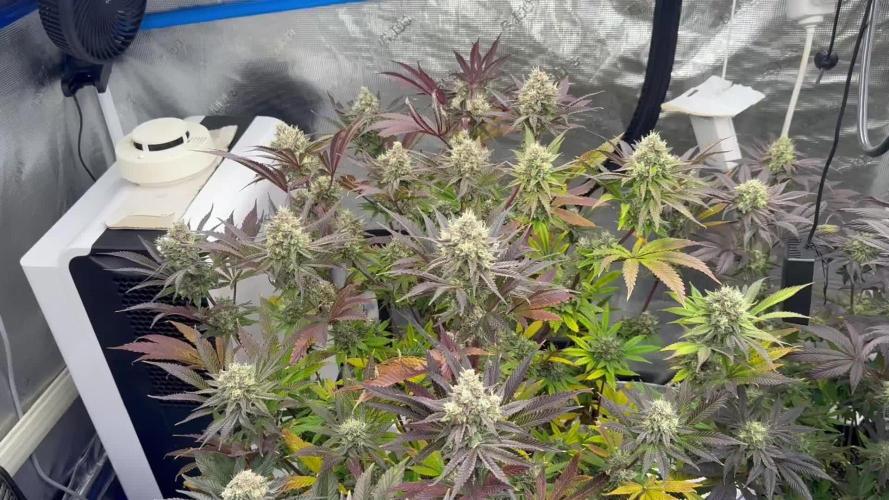
Así cumple su 11va semana de vida y 7ma semana en Floración, esta semana han habido cambios en el jardín ya que al fin pude adquirir un tent, muy contento puesto a que es lo suficientemente espacioso como para meter 6 planta. La Amnesia luce preciosa en el tent, los capullos están bien pesados y llenos de resina, tuve que amarrar los capullos principales dado a que el peso de los mismos se llevaban las ramas para abajo. En esta semana se regó una vez con fertilizantes, en la solución de riego se utilizó: 3ml Flora Gro, 4.5ml Flora Bloom, 3ml Flora Micro y 3ml MagiCal. La solución de riego marcó 515ppm y 6.0 PH.