


Likes
Comments
Share


@GODSGIFT_2005
Follow
🍼Greenhouse Feeding BioGrow & Bio Enhancer
⛺️MARSHYDRO
The ⛺️ has a small door 🚪 on the sides which is useful for mid section groom room work. 🤩
☀️ MARSHYDRO FC 3000 LED 300W
☀️Also special thanks to VIPERSPECTRA P2000 (200W) & XS2000(240w) LED growlights
🌱 DUTCH HEADSHOP SEEDS:
www.dutch-headshop.eu
www.dutch-headshop.nl
ONE STOP SHOP
. 100% germination success on first try! with HUGE seed selection!
. Very friendly customer service
. Best bio-seed packaging
. Sells other products @ best prices:
. Nutrients
. Vaporizers
. Smoking accessories (grinders, cones)
. CBD Tinctures
. Resin Extracts
. Boveda humidity packs
. Ziplock bags
. Other health supplements such as:
. Lion’s Mane Organic Capsules
. Hemp Seed coffee

Likes
25
Share

@k0nz1
Follow
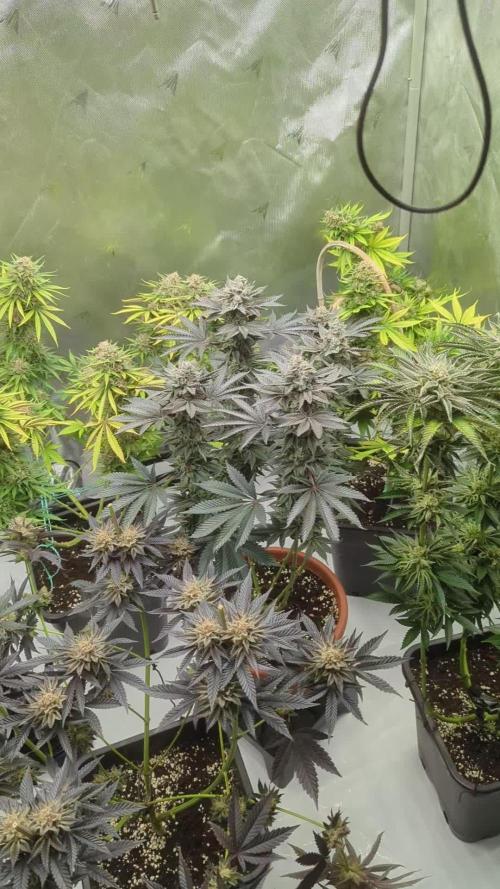
Flower day 56. Strong yellow and purple fade in the leaves. We are getting close to finish. On one LO I cut the main colas already and put them in dryferm bags. The rest will be hung up for drying. Just a few days left.
LO sweet citrus with lots of trichomes. Smaller leafy buds .
BBP fruity sweet aroma with big ass Buds and heavy weight.
RJ with spicey aroma and very dense and heavy buds.
For the last 2 waterings only ph regulated water with just a very little calmag und flores nutes.




Likes
138
Share


@DogDoctorOfficial
Follow
They are doing great and so is the rest of the room lol i let them dry out a bit too much to my eyes and some leafs felt it , apart from that they look and smell amazyng for week 4 flowering, i think , mb is just me, that they are all moving faster than they did last run
As always thank you all for reading and checking out my diaries, im humbled by it all, much love to you all 💚💚💚🙏🙏🙏💚💚💚
Thank you MARSHYDRO and APTUSHOLLAND for having faith in my love for growing , lets make magic together 🙏🙏🙏
Genetics - Gorilla Blue - Advanced seeds
Grow tent - MARSHYDRO 4x4
Ligth - MARSHYDRO TSW 2000 @ 100%
Food - HAPTUS HOLLAND
Filter - vanguard hydroponics Falcon Filters
Extraction - 2 x vanguard hydroponics 280m3h
Extraction control - SMSCOM Smart MK2
All i grow is medicine for myself, for me and for my best friend with is me 😆 nothing to sell, so don’t even ask 😅💚💚💚
All info and full product details can be find in can find @
https://www.mars-hydro.com/grow-tent
https://www.mars-hydro.com/led-grow-light/mars-ts-series-led-grow-light/mars-tsw-2000-led-full-spectrum-hydroponic-led-grow-light
https://marshydro.eu/ DISCOUNT CODE - DOGDOCTOR 💚💚💚🙏🙏🙏💚💚💚
https://marshydroau.com/
https://aptus-holland.com/
#marshydro #aptus #aptusplantteck #aptusgang #aptusfamily #aptustrueplantscience #inbalancewithnature #trueplantscience #growerslove
With true love comes happiness 💚🙏 Always believe in your self and always do things expecting nothing and with an open heart , be a giver and the universe will give back to you in ways you could not even imagine so 💚💚💚
More info and updates @
https://growdiaries.com/grower/dogdoctor
https://instagram.com/dogdoctorofficial
https://youtube.com/channel/UCR7ta4DKLFMg2xxTMr2cpIg
💚💚💚Growers love to you all 💚💚💚

Likes
5
Share

@DaedalusGrow
Follow
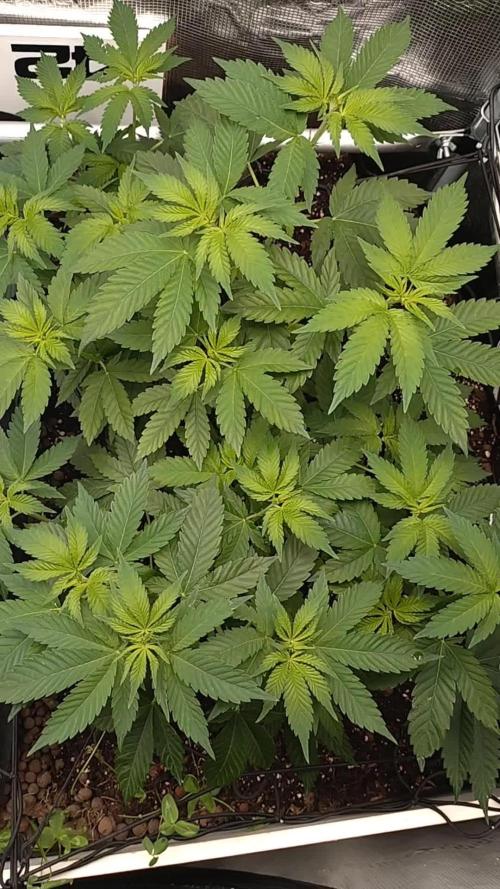
Sie entwickeln sich sehr prächtig, hat viele Abzweigung bekommen. Ich werde sie schön wachsen lassen. Meine Lemon Mandarin ist getoppt und Main-Lined👇
Sie ist jetzt 50 Tage im Wachstum und hat den Stress sehr gut verkraftet. Sehr stabile und robuste Genetik💪 von FastBuds, @42breeding Danke dafür 🤗
http:2fast4buds.com/de
Jetzt bilden sich viele Seitentriebe 🌱 und die Pflanze wächst nicht mehr stark in die Höhe, sondern geht mehr in die Breite🌿
Das Licht kommt von einer @greenception.worldwide
Und einer @marshydro.official
Als Medium habe ich Living Soil am Start 🐛

Likes
3
Share

@Papadubz
Follow
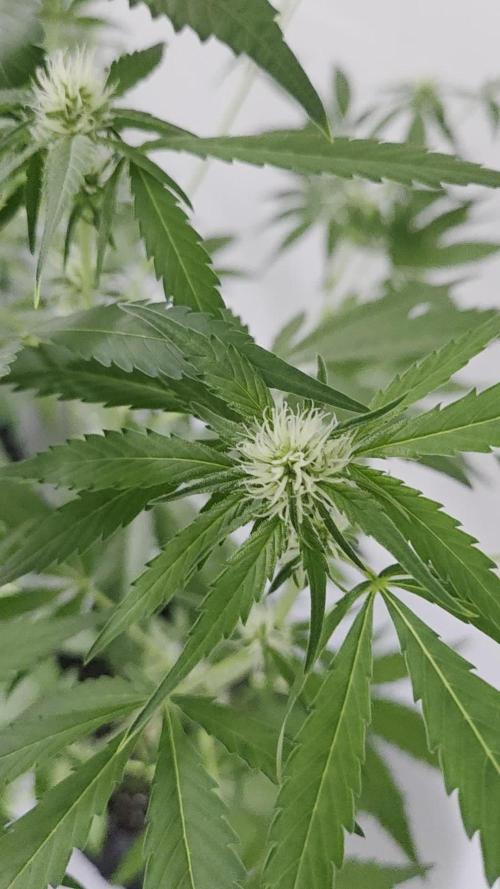
They are both getting huge, Zup 1 is a Christmas tree 🎄
Zup 2 is getting wide. Buds are popping all over and resin is beginning to appear. ( good times coming)


Likes
3
Share

@smoking_hills9
Follow
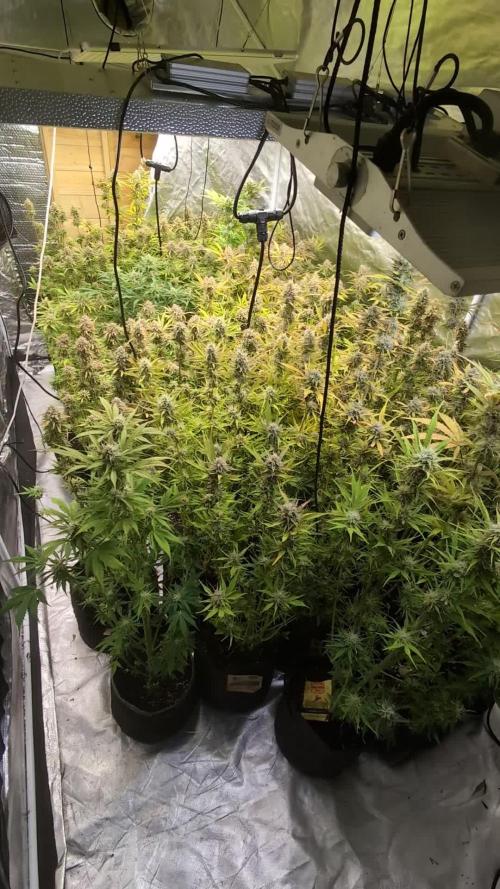
These cali genetics are blowing my mind 🤯 super sticky, very frosty rock dence buds with extra strong smells. All 3 strains are 10 out of 10, very impressed. Done last defoliation few days ago, preparing for the harvest so it's much easier. Stalks are super fat, same as buds.
Got big surprise from Atami, plant food, and many extras. Crazy. Thanks a lot guys. 💚 Start adding you Bloombastic food already. They love it. Smell is mad. I think most of plants ready in week or so.


Processing
Likes
19
Share


@self_sustainer
Follow
Okay, so I didn’t think this seed would actually terminate as it was a joke. I didn’t use the cup of water and seed soak technique. I just planted it directly into some dollar tree soil I got for my kitchen window garden. So because the soil was so cheap, I didn’t even expect the seed to sprout. So I figured I’m going to grow it and see what I produce.
I’m not sure if the picture I chose uploaded, but the other plants in the picture are bell pepper plants.
Likes
2
Share


@PalmaGrow
Follow
Hermosa floración mucha resina
Defoliación para permitir mejor ingreso de luz
25 - 31 agosto

Likes
30
Share


@WeWantItToGrow
Follow
Simply put I am so very pleased with the way this plant has performed my only worry is how to properly dry and cure this magnificent specimen

Likes
4
Share


@TeamQuality420
Follow
Dec 26th- took clones from the plants labelled them accordingly. As well took the first couple inches of my plant out on the bottom layer ; took as many fan leaves as I could see .
Any shoots that were too small were removed to prevent lack of growth on the top half of the canopy .
They will receive water for 2days or so . Dried out and then given the pre flower routine!
These plants havent had a single deficiency nor have they been over stressed in any way .

Likes
3
Share


@hinterhofgrower
Follow
.
📹 : Full Video on YouTube @hinterhofgrower, please like & subscribe
🌱 : Supercropping on day 44 & day 47
💧 : 4l day 44, 4l day 48
💡 : Dli: 45 mol/m²/d
🤔 : Because the plant grew so vigorously, supercropping, a high-stress training (HST) method, was necessary to keep it from getting too tall. There's only 20cm of space left above the lamp, and I expect further growth. Supercropping involves first softening the branches between the fingers and then carefully bending them 90°.
Likes
2
Share


@420DeepGrow
Follow
📆 Semana 8
Llegamos a la última semana, con los cogollos mostrando una buena presencia de resina y una estructura floral ya bien definida. La planta completa su ciclo manteniendo una evolución estable y un aspecto cada vez más maduro.
Esta semana toca cosecha, poniendo el punto final a un cultivo en el que la resina ha sido una de las grandes protagonistas.
🔥 Nota de cultivo: Final de ciclo para esta planta, con los cogollos bien formados y una capa de resina que destaca a simple vista. Una última semana antes de cerrar el cultivo y valorar el resultado final.
¡Seguimos creciendo fuerte! 💪

Likes
16
Share


@Chaos85
Follow
everything coming along nice density being created benefits from the added cal mag can be seen even in the old damaged leaves turning out to be a great grow


Likes
37
Share


@Vegetoo420
Follow
Starting week 3 like this ! Bud sites are legions and it seems like stems gonna be full of buds ! Can’t wait to put this lady alone into the 4x4 tent !!!
D Day homies! This baby is finally into her new home ! Now I can play with her legz!!!

Processing
Likes
Comments
Share


@Majin
Follow
i am eagerly growing more of bliss genetics gear, he really impressed me with the first set of testers


Likes
17
Share


@BLAZED
Follow
Week 11 (10-4 to 16-4)
10-4
Temperature: 24.4 degrees (lights on) 21.1 degrees (lights off)
Humidity: 60% (highest) 52% (lowest)
No pictures.
Added 10L to the reservoir, and turned it on for a couple of minutes.
11-4
Temperature: 24.4 degrees (lights on) 21 degrees (lights off)
Humidity: 61% (highest) 52% (lowest)
12-4
Temperature: 25.5 degrees (lights on) 22 degrees (lights off)
Humidity: 65% (highest) 57% (lowest)
Turned the reservoir on for a couple of minutes.
13-4
Temperature: 26.5 degrees (lights on) 23 degrees (lights off)
Humidity: 65% (highest) 56% (lowest)
14-4
Temperature: 26.4 degrees (lights on) 22.1 degrees (lights off)
Humidity: 64% (highest) 45% (lowest)
Turned the reservoir on for a couple of minutes.
The reservoir is almost empty, there is 850 ml left.
15-4
Temperature: 24.4 degrees (lights on) 20 degrees (lights off)
Humidity: 59% (highest) 49% (lowest)
No pictures.
16-4
Temperature: 23.5 degrees (lights on) 19.5 degrees (lights off)
Humidity: 60% (highest) 53% (lowest)
Today i defoliated both plants heavily for the last time, you can say i did a method called: schwazzing.
Dont know why but while i was defoliating the Chemdog smelled a little bit like soap haha.
Turned on the reservoir for a couple of minutes. (Till the AutoPots are full and the valve closes)
Rised the pots aswell, so the canopy is very even.
I let them recover from the heavy defoliation i did, and next week i will slowly increase the light's strength. (Now still at 50% 50cm)
Likes
9
Share


@Mr_nugs_lover_David
Follow
It's been a beautiful plant to grow, I thought she was gonna be a little bigger, however she has produced an amazing quality flowers, very sticky, terpy and stinky, the citric aroma it's absolutely wonderful just because of that I could grow her again and again. You definitely need to try this strain if you lovd weed.💚🌱🤤